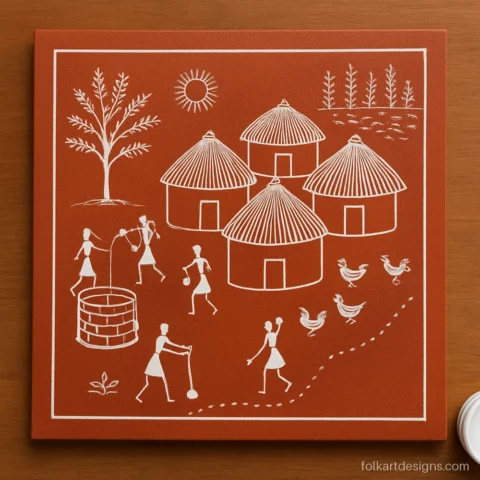
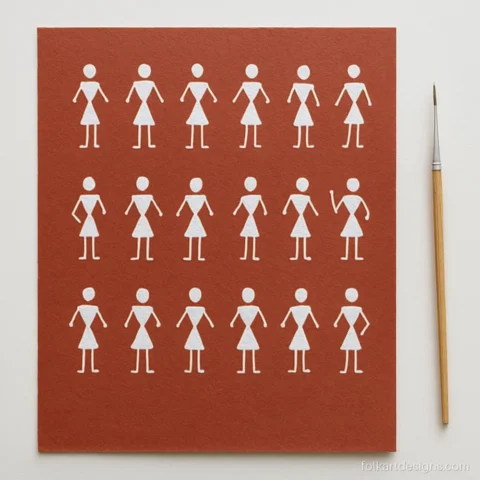
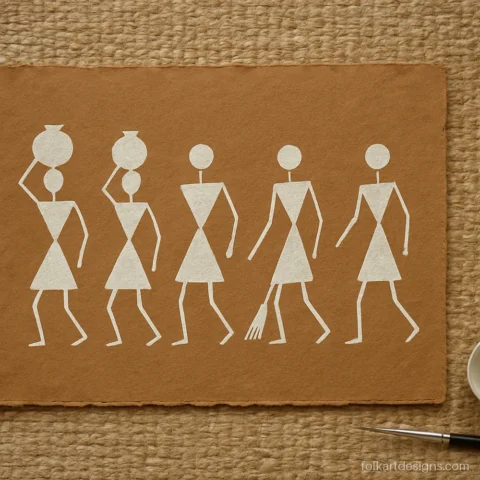
Warli Art Painting on Walls, Pots, Sarees and More
12 designs Warli art Updated 9 Oct 2026
Warli art painting takes the white figures of the Warli tribe of Maharashtra off paper and onto walls, pots, bottles and cloth. These warli art painting images show 12 original pieces you can make at home.
Each one lists its base, motifs, best spot and a tip. Want a quick start? Learn the basic figure first, then pick a surface below.
Warli Art Wall Painting
A warli art wall painting turns a plain wall into a village. Use a terracotta or brown base and white emulsion or acrylic for the figures.

A full mural with a dance circle, huts and trees behind a sofa. The kind of warli art wall decor that becomes the talking point of a home.
Artist tip Snap a chalk line for the ground first so the whole scene sits level.
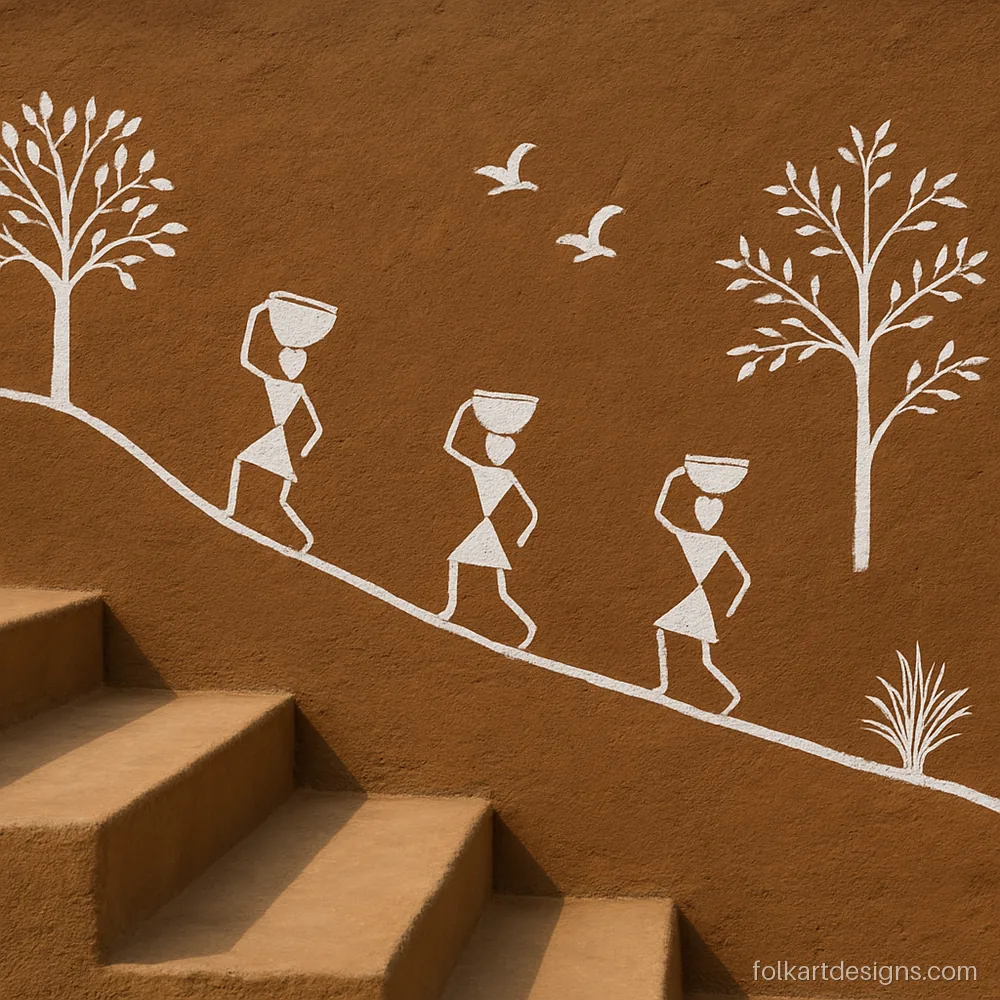
Figures climb a hill that follows the stairs up. A clever way to fill an awkward slanted wall.
Artist tip Draw the hill line parallel to the stair rail so it looks planned.
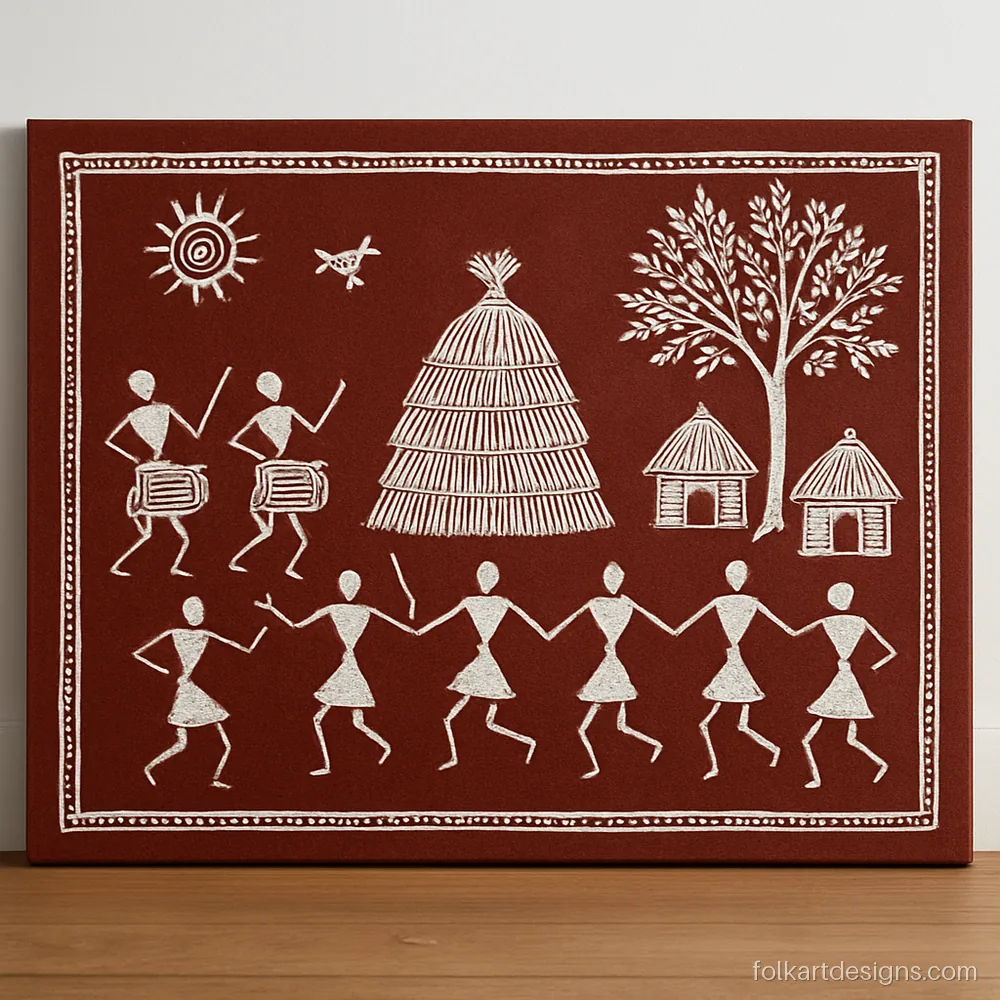
A large canvas of harvest dancing, sheaves and drums. A portable alternative to painting on a wall.
Artist tip Use a 1 inch flat brush for the ochre base and two thin coats.
Warli Art Wall Hanging
A warli art wall hanging is the easiest way to bring the style home without painting a wall. These use cardboard, MDF and cloth.
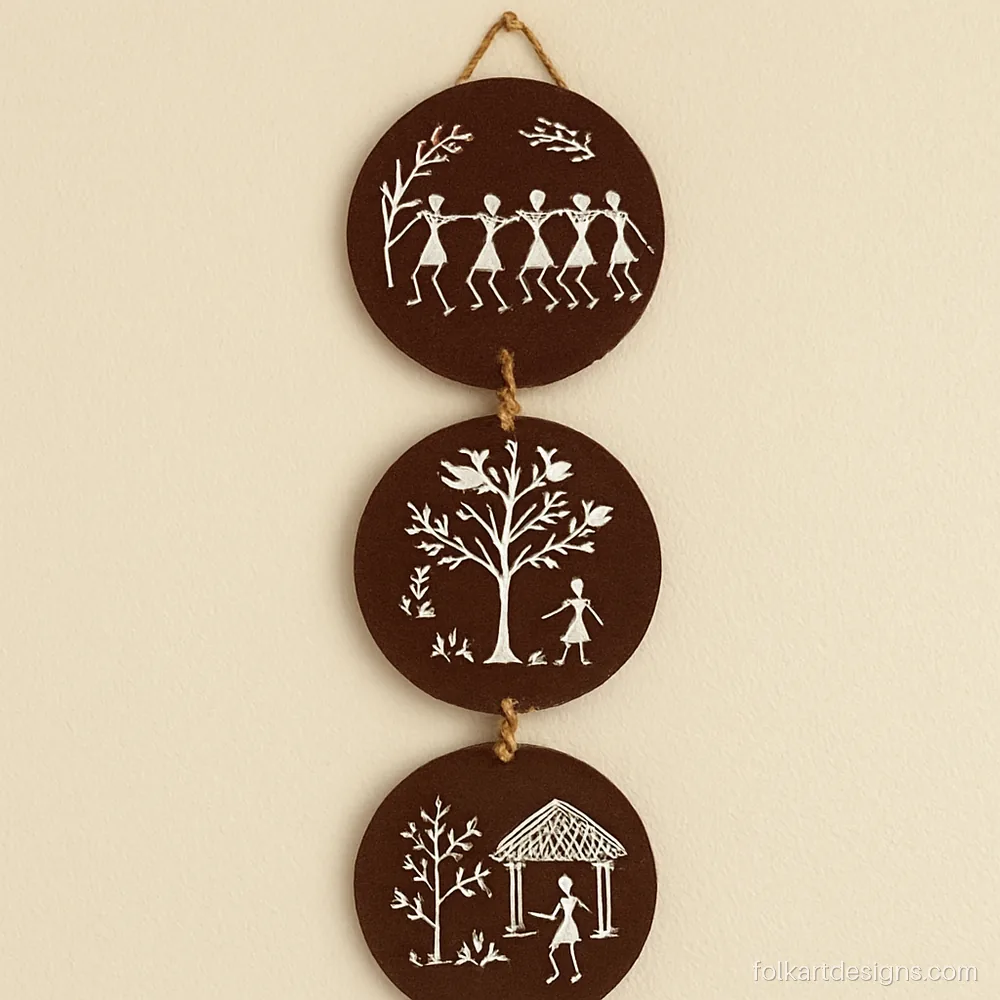
Three cardboard discs painted brown with warli scenes, tied on jute. An upcycled craft that costs almost nothing.
Artist tip Glue two layers of cardboard together for each disc so they do not curl.
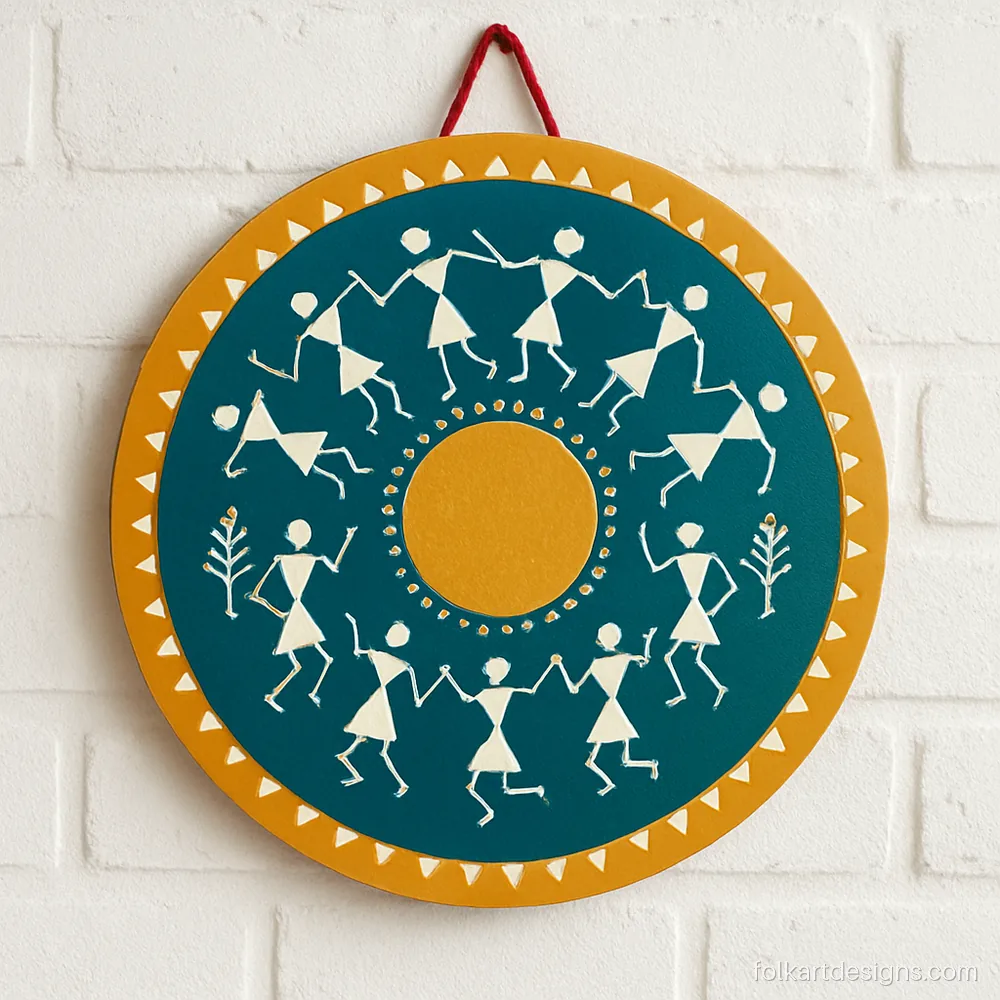
A colourful twist with white figures on a teal ground and a yellow border. Bright for a kids room or a cafe.
Artist tip Paint the border colour last with a small flat brush for a clean edge.
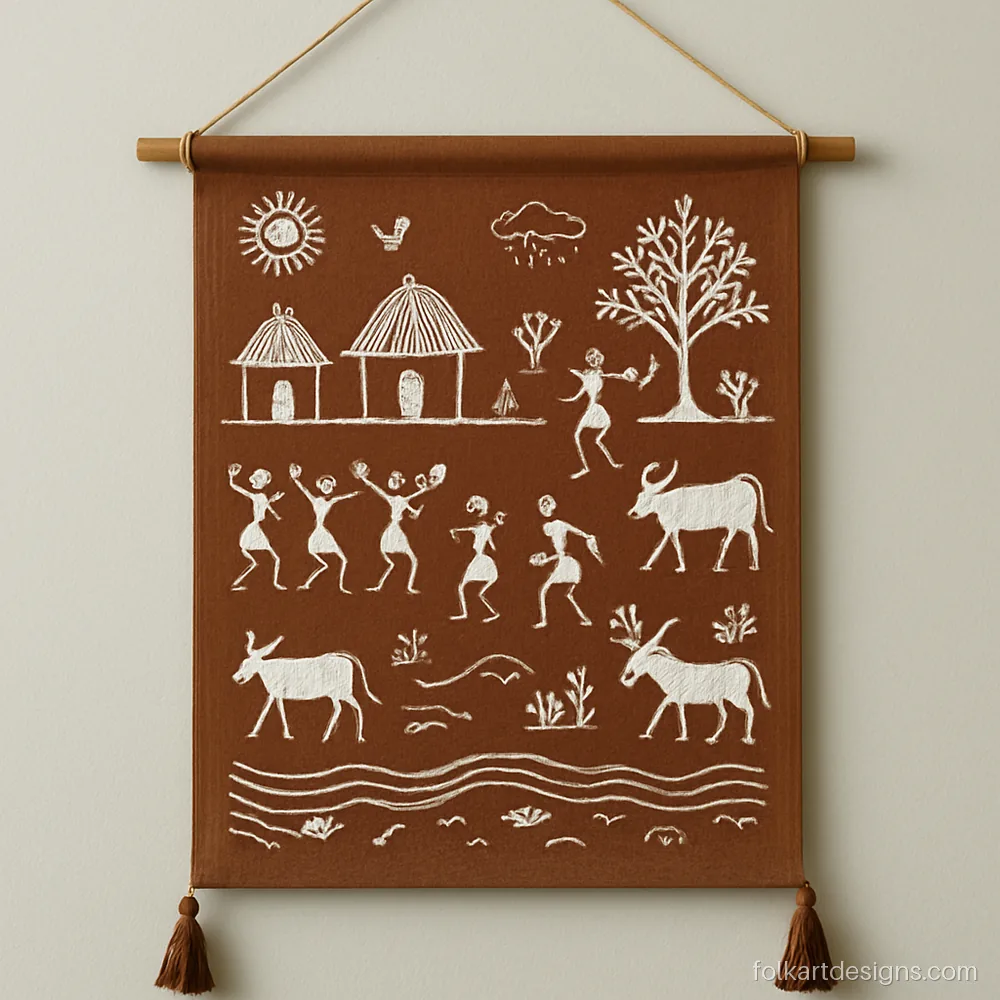
A cloth scroll on a bamboo rod with a village scene. Light, easy to roll and good for travel gifts.
Artist tip Iron the reverse after 24 hours to set fabric paint before hanging.
Choosing a Surface for Warli Painting Art
Warli painting art began as wall work in village huts, where rice paste white was painted on mud walls for weddings and harvests. Today you can pick any surface that holds paint. Use this table to choose.
| Surface | Base | Paint | Drying and care |
|---|---|---|---|
| Warli art on wall | Terracotta or brown emulsion | White emulsion or acrylic | Dry a day, seal with matt varnish |
| Canvas or MDF | Red ochre acrylic | White acrylic | Dry two hours, varnish if handled |
| Clay pot | Natural terracotta or sealed base | Acrylic | Seal inside and out before planting |
| Glass bottle | Primer or chalk paint | Acrylic or glass paint | Dry a day, wipe gently |
| Cotton saree or cloth | Brown or rust fabric | Fabric paint | Heat set after a day, cold hand wash |
Bigger surfaces take more planning, not more skill. The figure is the same two triangles whether it is on a bottle or a living room wall.
Warli Art on Pot, Bottle and Plate
Round objects suit warli because figures can dance all the way around. Seal anything that will be handled or near water.
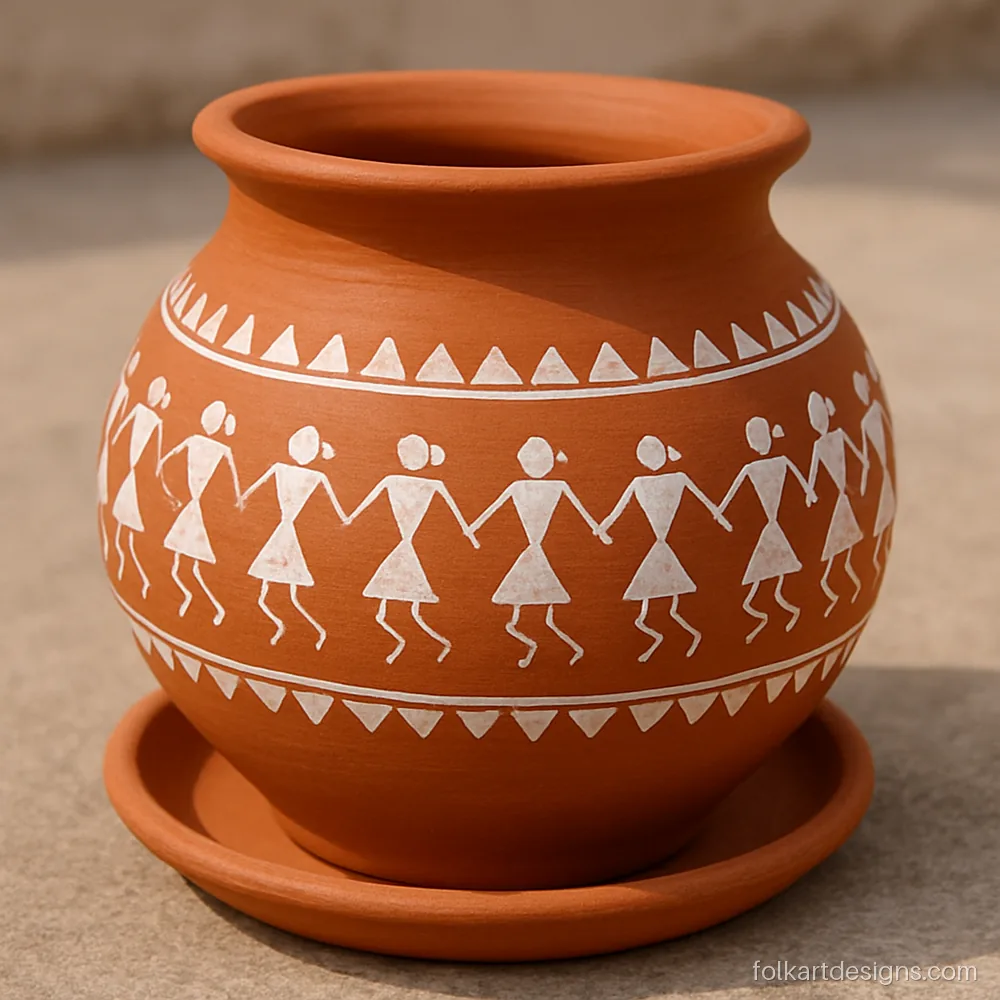
A band of dancers runs around the belly of a clay pot. Nice as a planter for a balcony.
Artist tip Seal the pot inside and out with varnish before planting so water does not lift the paint.
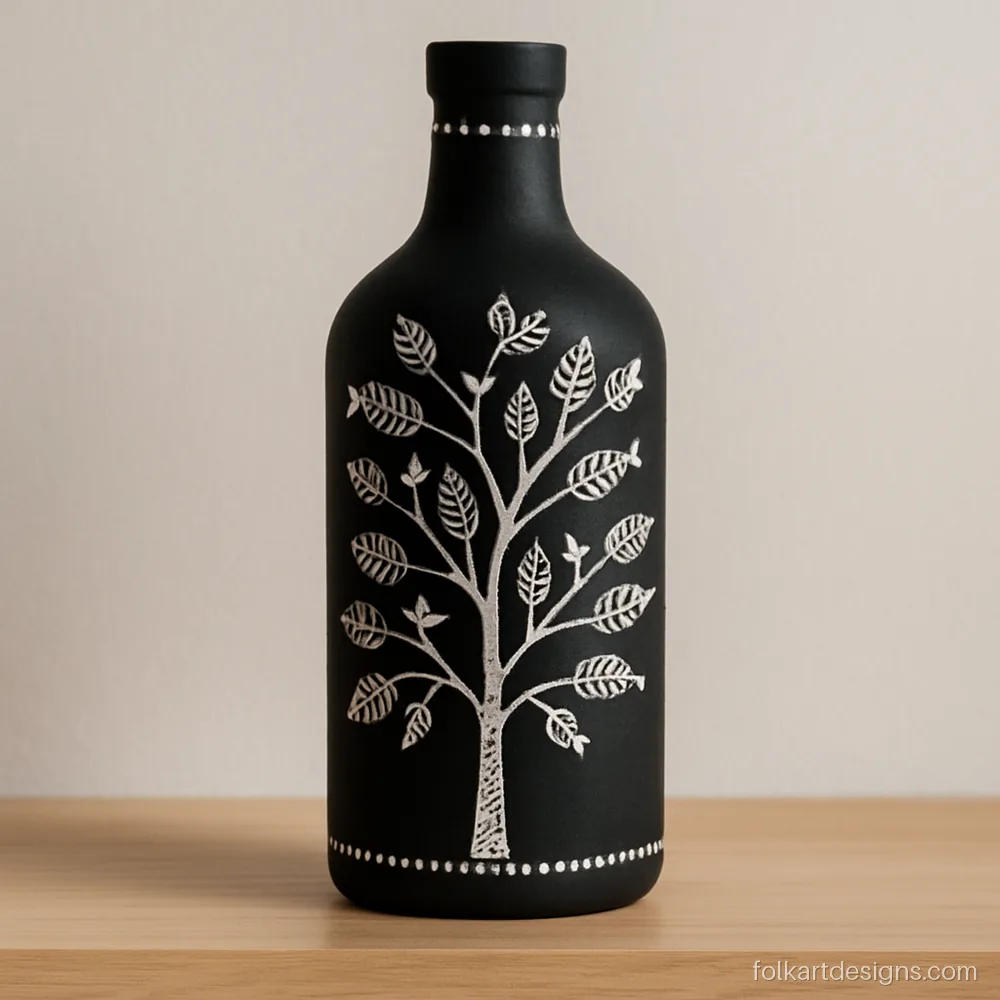
A reused glass bottle painted black, with a white tree and birds. Simple desk decor.
Artist tip Use a primer or chalk paint base so acrylic sticks to the glass.
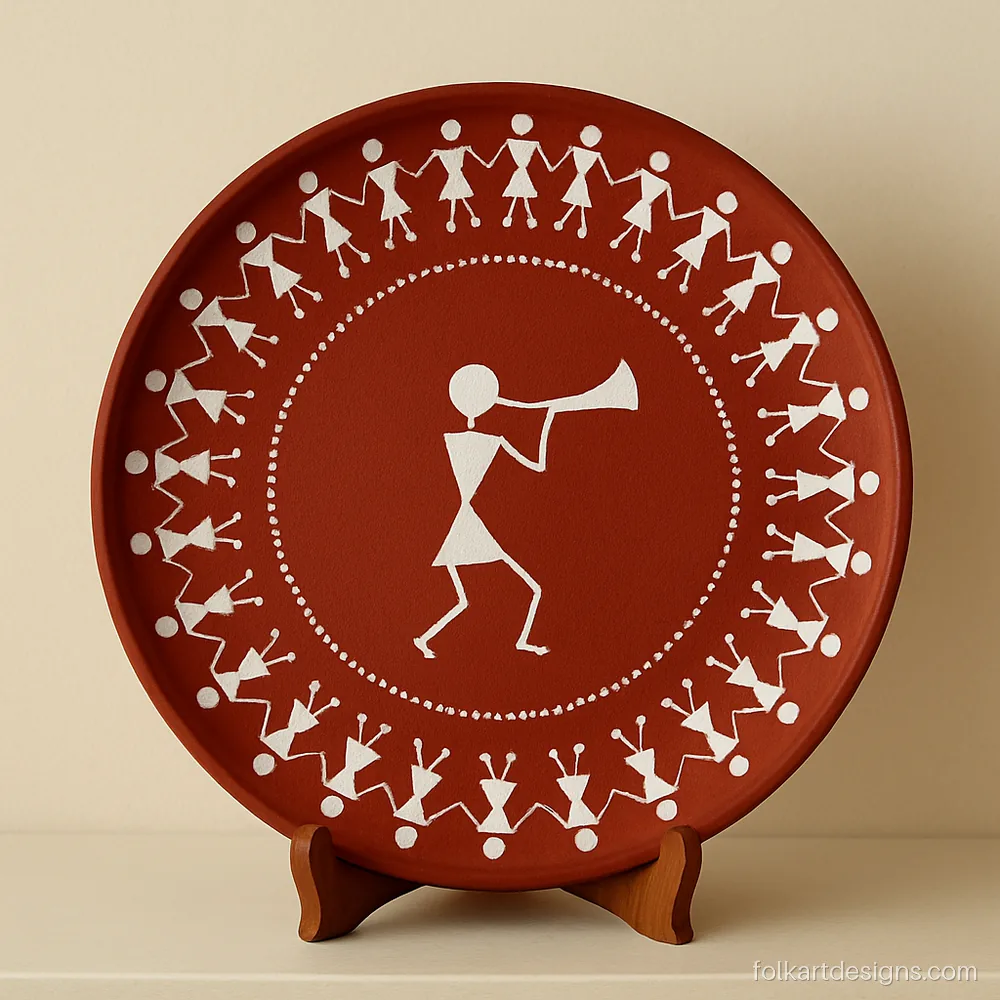
A decorative plate with a tarpa player in the centre and dancers on the rim. A neat gift for housewarming.
Artist tip Use a plate stand or a wall plate hook. This is for display, not food.
Warli Art Border Design, Saree and Rangoli
A warli art border design repeats one small motif in a strip. The same idea works on a saree, a door frame or a rangoli.
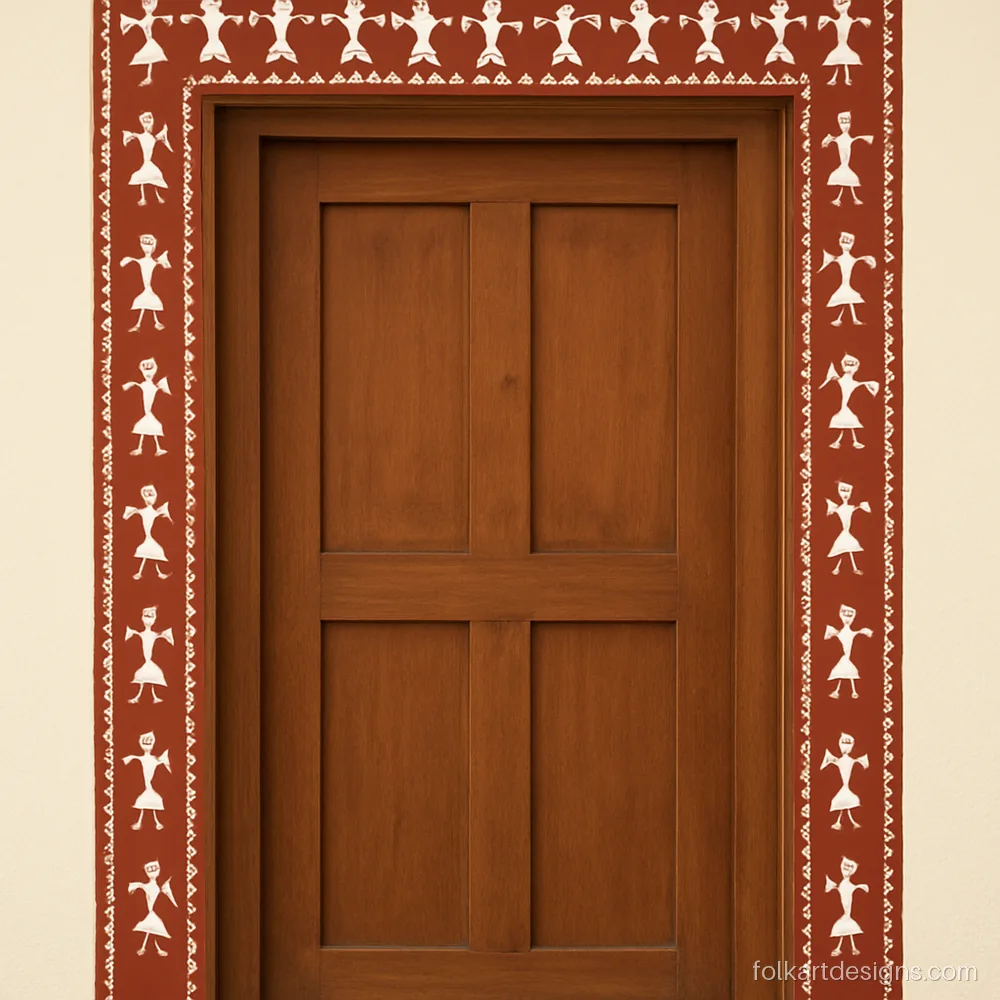
A strip of linked figures and triangles around a door frame. Small effort, big change to a plain entrance.
Artist tip Use painter's tape to mark the top and bottom of the border.
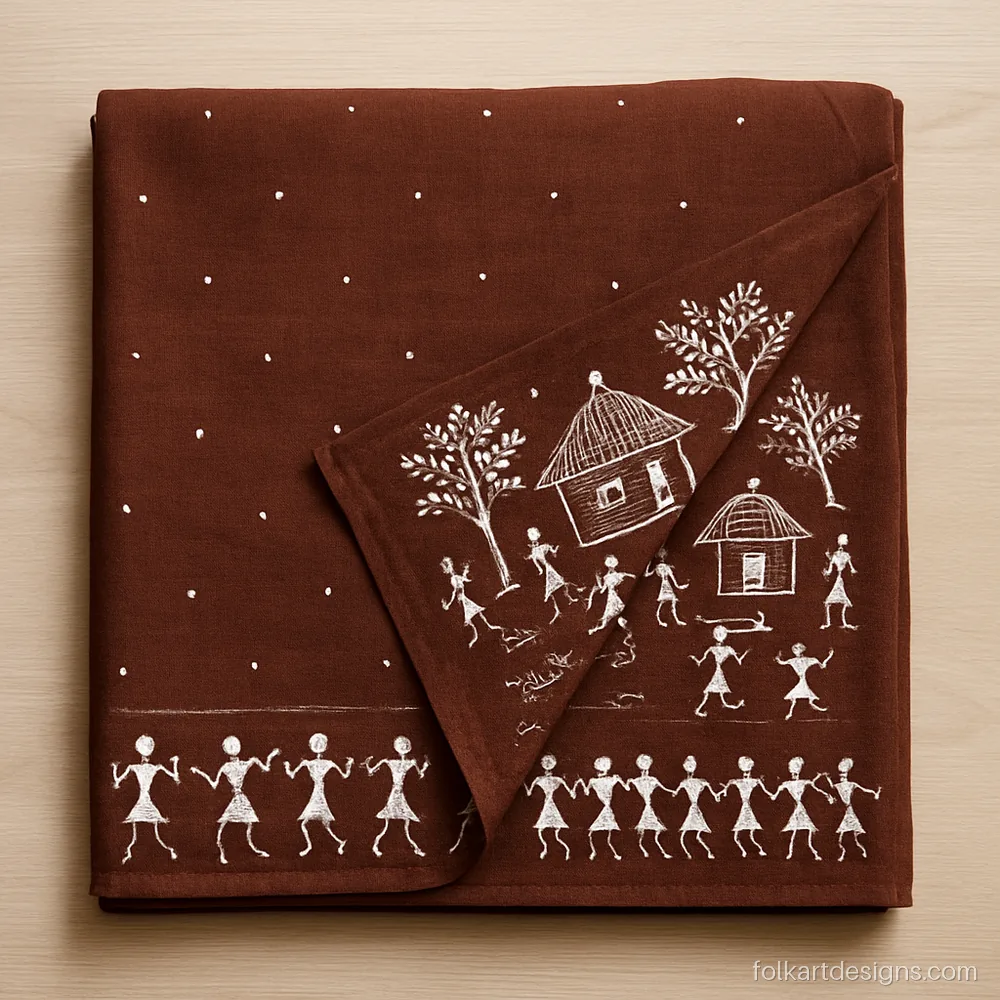
A brown cotton warli art saree with dancers on the border and a village on the pallu. Easy daily wear with a story.
Artist tip Wash a painted saree by hand in cold water and dry in shade.

A warli art rangoli in white powder on a red floor. A quick idea for festivals or a school competition.
Artist tip Draw the circle with chalk on a string first, then fill with powder.
How to Paint Warli Art on a Wall
- Clean the wall and paint a base of terracotta or brown emulsion. Let it dry overnight.
- Sketch with chalk. Start with the ground line and the big shapes.
- Paint figures with white acrylic or emulsion using a size 2 round brush.
- Add small details like dots and leaves with a size 0 brush.
- Let it dry for a day, then seal with a matt varnish.
For a starting point, practise figures on paper with easy warli art first.
Painting on Pots, Bottles and Fabric
For clay pots, seal both sides first so water does not lift the paint. For glass, use a primer or chalk paint base. For cloth, wash and iron the fabric, use fabric paint, and heat set it with an iron after a day. Warli painting tribal art looks best when you keep to white on one base colour.
See more ideas on our main warli art page and on warli art drawing.
Questions about these designs
Which paint is best for warli art wall painting?
White acrylic or emulsion on a terracotta or brown base. Seal with matt varnish so it can be wiped clean.
How do I make warli art on pot?
Seal the clay pot, paint a base if you want one, then draw white figures with a fine brush. Seal again before using it as a planter.
Can I make a warli art saree at home?
Yes. Use fabric paint on washed cotton. Paint a border of figures and a village on the pallu, then heat set with an iron after a day.
What is a good warli art border design for beginners?
A repeated strip of linked figures with triangles above and below. It is easy to repeat and works on walls, sarees and files.
Is warli art the same as folk art warli painting?
Yes. Warli art painting is a folk art from Maharashtra, made by the Warli tribe. It uses white figures on red ochre or brown.
What can I use for a warli art wall hanging?
Cardboard, MDF, cloth or even old plates. Paint a brown or red base and add white figures. Add a cord or rod to hang it.