Bidri Art: Black Metal and Silver Inlay from Bidar
12 designs Tribal crafts Updated 9 Oct 2026
Bidri art is a metal craft from Bidar in Karnataka, known for its deep black surface and bright silver patterns. Craftsmen cast an alloy of zinc and copper, cut fine grooves into it, press silver wire or sheet into those grooves, and then darken the whole body with a paste made from local soil. The black never touches the silver, so the pattern shines out like moonlight on a dark night.
This gallery of bidri art work shows 12 original pieces: tall surahis, boxes, trays, bowls, jewellery and close views of the classic patterns. Each picture lists what it is made of, the motifs, where it suits and one tip for keeping it at its best.
If you enjoy Indian metal craft, compare it with dhokra art, the lost-wax casting of tribal India, which has a warm brass glow instead of black and silver.
Bidri Vases and Surahis
Vases and surahis (long-necked water pots) show off the craft best, because the curved body gives the silver vines room to wrap all the way round.
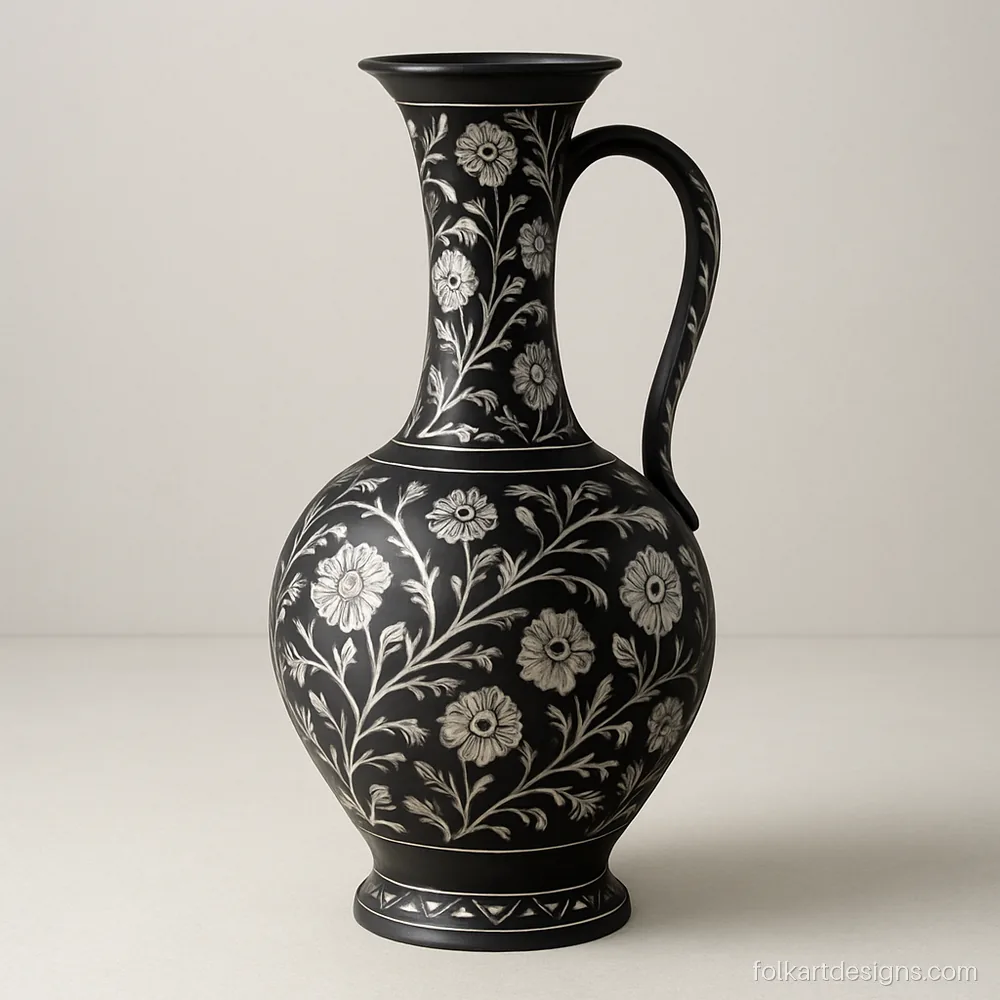
The poppy is the best loved bidri flower, and here it climbs from the base to the lip in fine wire. A tall piece like this suits a hallway console.
Artist tip Keep a tall surahi away from the edge of a table; the neck is the first part to dent.
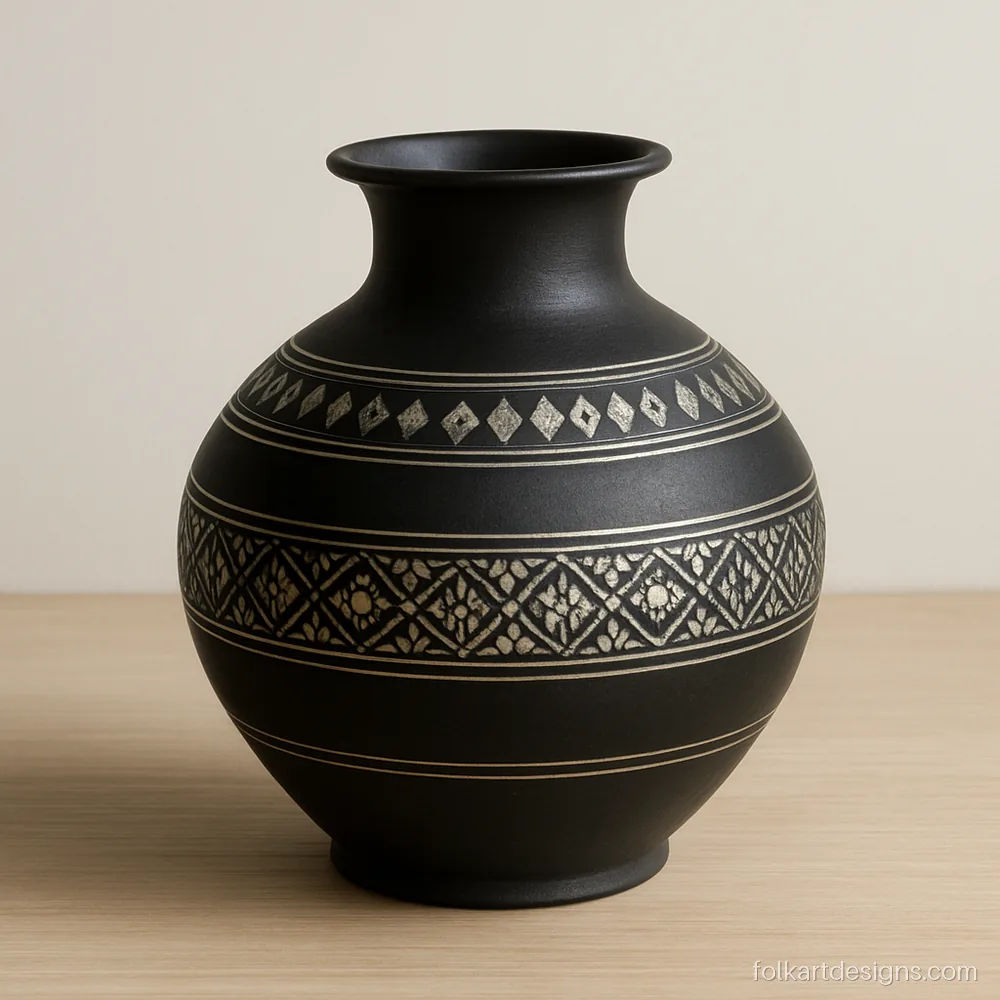
Stacked geometric bands give this vase a crisp, modern feel. It works on a plain white shelf where the pattern can stand out.
Artist tip Use dry flowers only; water left inside a bidri vase can stain the black from within.
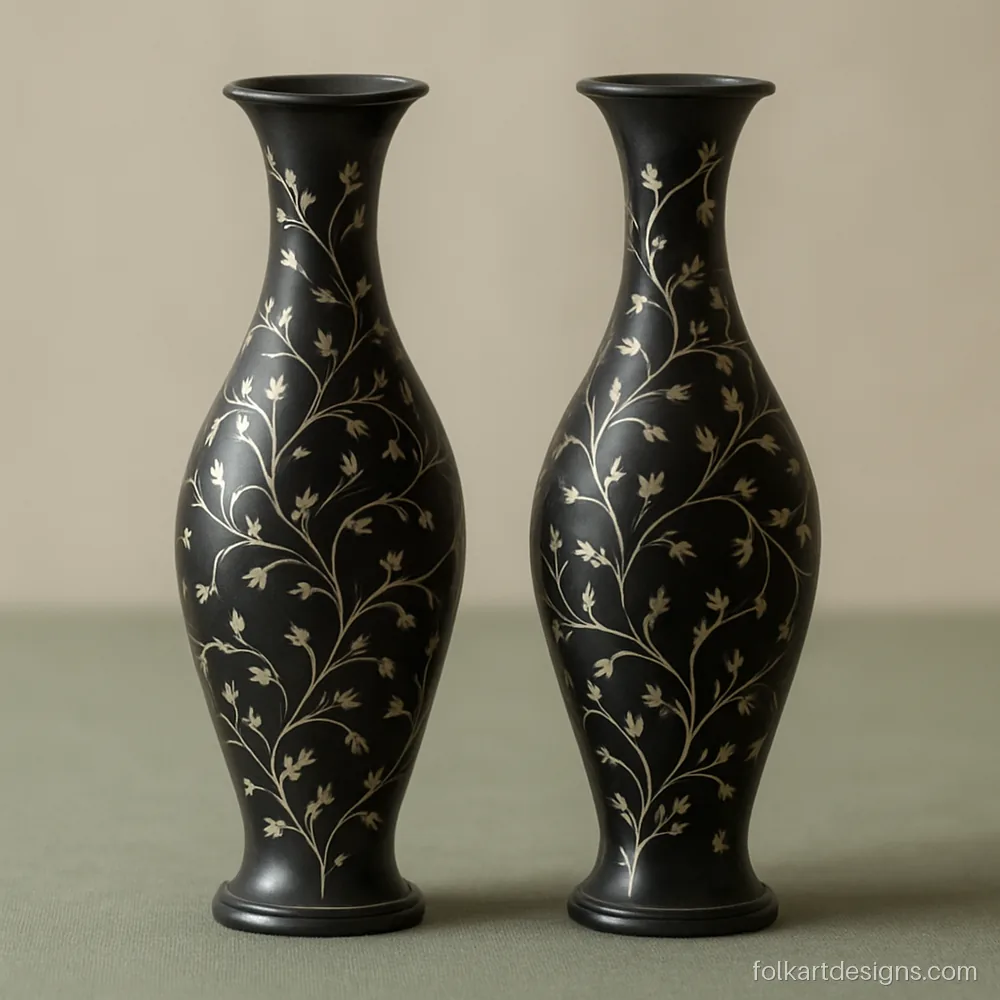
A matching pair looks balanced on a dining table or study desk. The thin creeper lines show how fine tarkashi wire work can be.
Artist tip Place a single stem in each bud vase; more crowds the silver vines and hides them.
Bidri Boxes, Trays and Bowls
Boxes, trays and bowls are the everyday side of bidriware handicraft. Flat lids and wide rims give the craftsman space for big medallions and star patterns.

A star medallion in the centre and leaf sprays at each corner make this box a classic. It is a good size for rings, cards or keys.
Artist tip Line the inside with a small felt pad so rings and keys do not scratch the black.

This wide tray is meant for display more than daily serving. Lean it on a plate stand so the central flower faces the room.
Artist tip Never put hot cups straight on bidri; heat and moisture can leave pale rings.
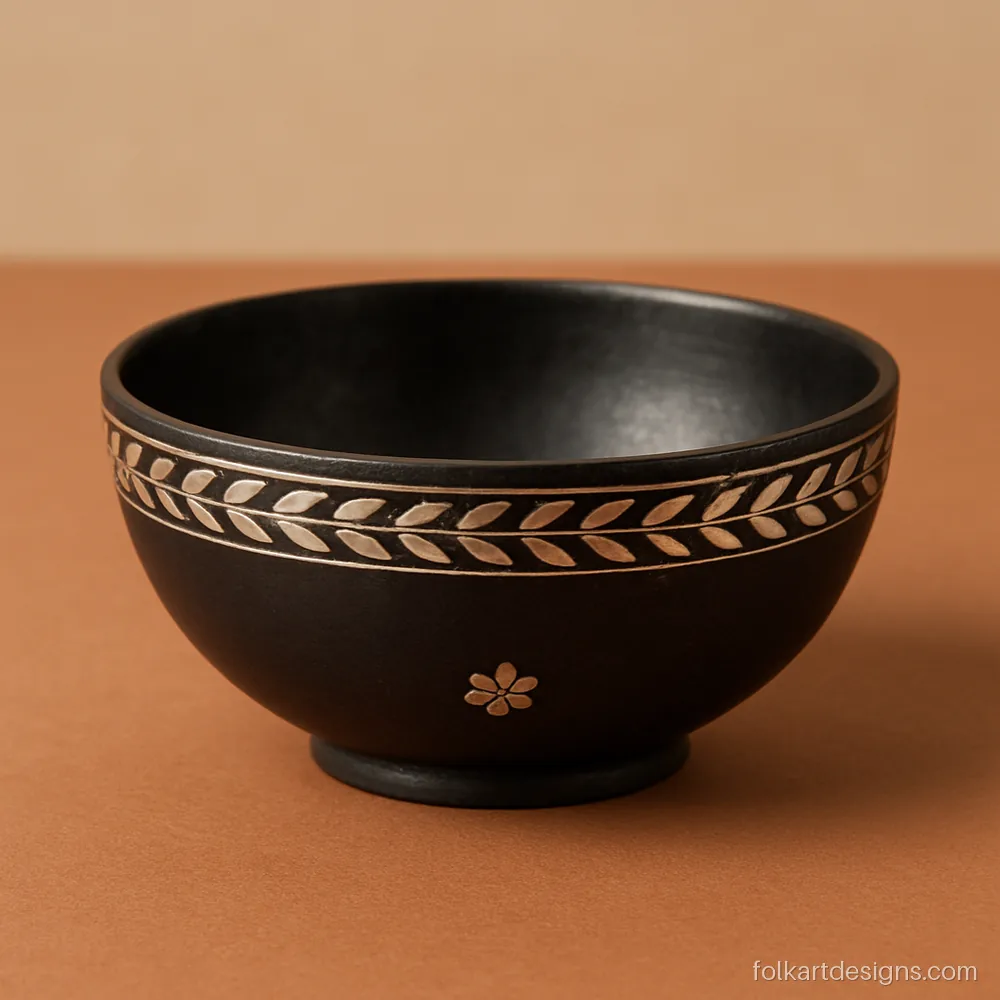
A small bowl like this is perfect for dry fruits on a festive table or for loose earrings on a dresser.
Artist tip Serve only dry food in bidri bowls and wipe them clean with a soft dry cloth after use.
How Bidriware Is Made in Bidar
Bidriware takes its name from the town of Bidar in northern Karnataka. A single piece passes through many careful stages:
- Casting. An alloy that is mostly zinc with a little copper is melted and poured into a mould to get the basic shape.
- Smoothing. The rough cast is filed and smoothed until the surface is even.
- First darkening and drawing. The surface is darkened lightly so the craftsman can scratch the pattern on it with a sharp point.
- Engraving. Fine grooves and hollows are cut along the pattern with small chisels.
- Inlay. Silver wire (tarkashi) or silver sheet (teh nishan) is hammered gently into the grooves.
- Buffing. The piece is filed and polished so the silver sits flush with the metal.
- Blackening. The piece is warmed and rubbed with a paste of special soil from the Bidar fort area mixed with water and salts. The alloy turns deep black, while the silver stays bright.
- Finishing. A light coat of oil deepens the black and gives a soft sheen.
A medium vase can take many days of work, which is why real bidri art work is never cheap.
Bidri Jewellery and Small Pieces
Small bidri handicraft pieces are light, easy to gift and a good first buy. The black and silver contrast goes with both ethnic and western clothes.
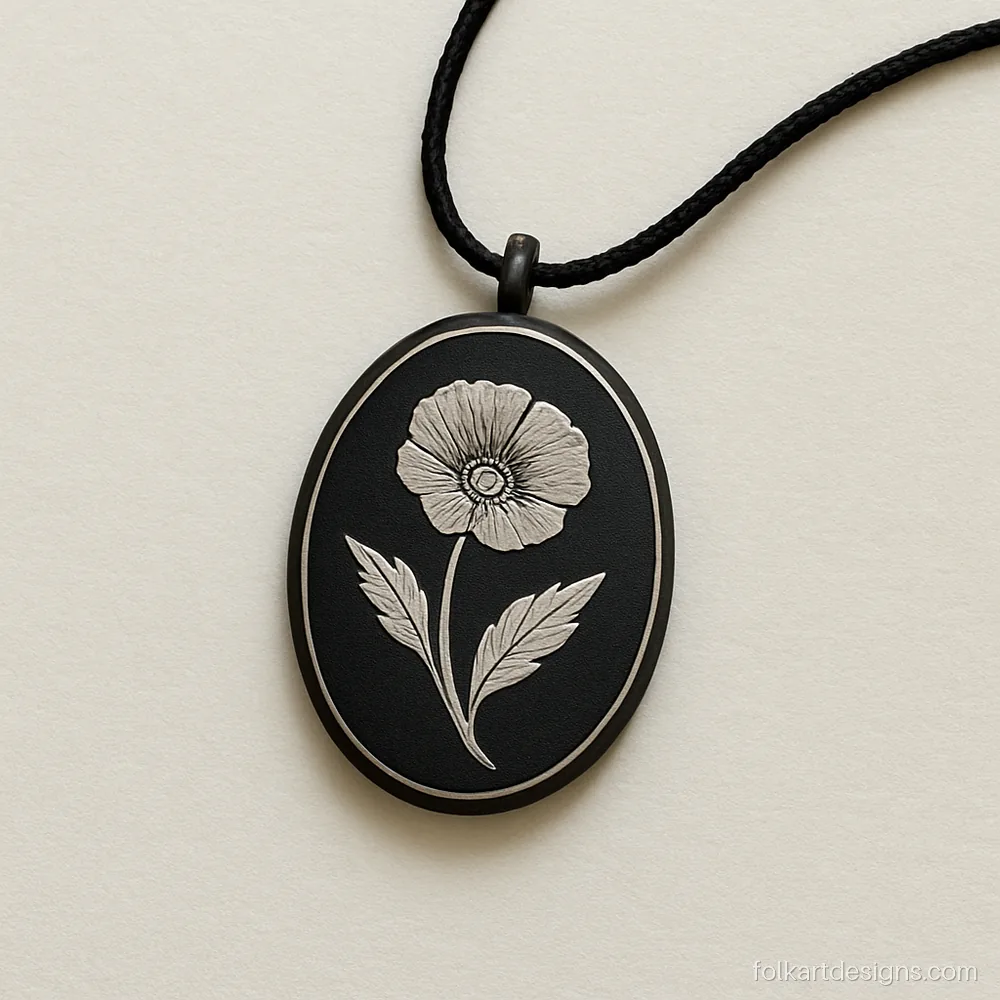
One poppy on an oval of black makes a quiet, elegant pendant. It pairs well with a plain cotton kurta or a black dress.
Artist tip Take the pendant off before a bath or a swim, and dry it if it gets wet.

Rings of tiny silver dots catch the light as they move. They are light enough to wear for a full day at work.
Artist tip Store each earring in its own small pouch so the dots do not rub against other metal.
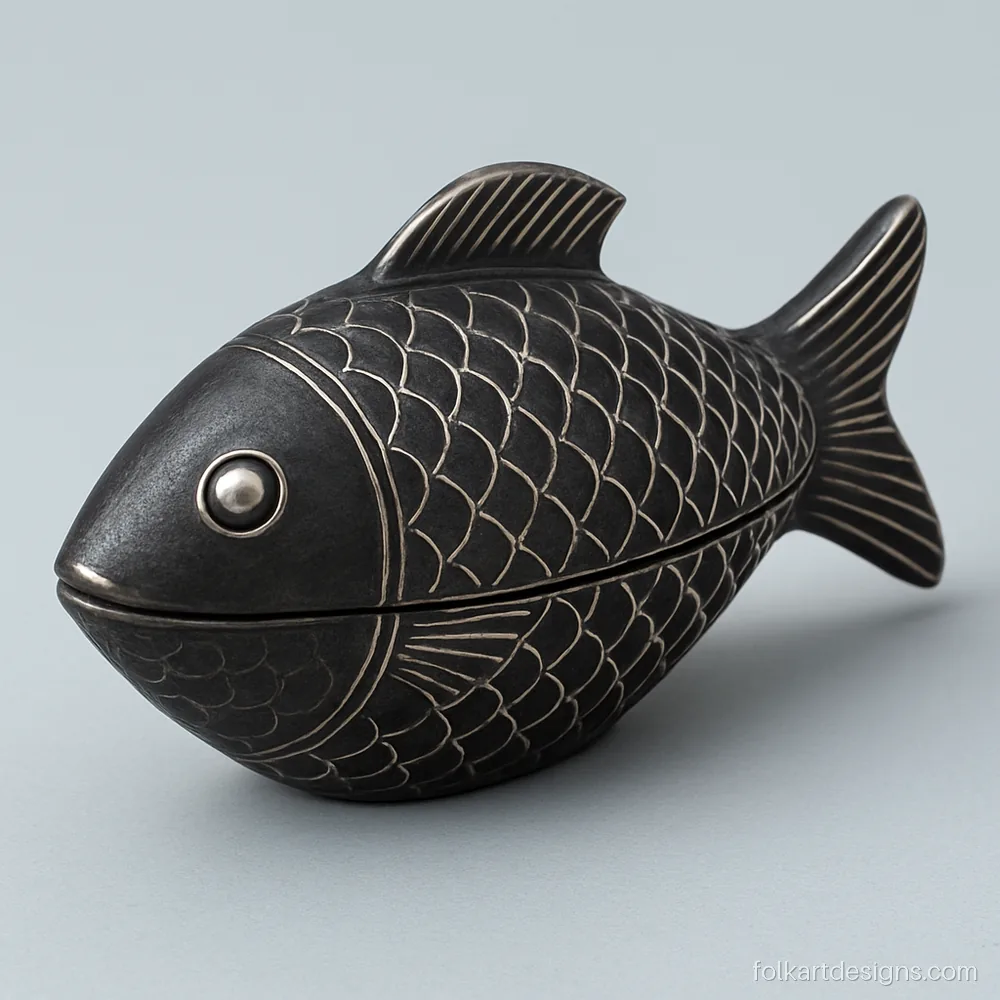
The silver scale pattern follows the curve of the fish body, so it reads well from every side. A fun piece for a study table.
Artist tip Open the lid from the side seam, not the tail, to keep the small hinge strong.
Bidri Patterns: Poppies, Vines and Geometric Work
Up close you can see how bidri art work is built. Thin wire draws the lines, while flat sheet fills the larger shapes, and every piece of silver sits level with the black.
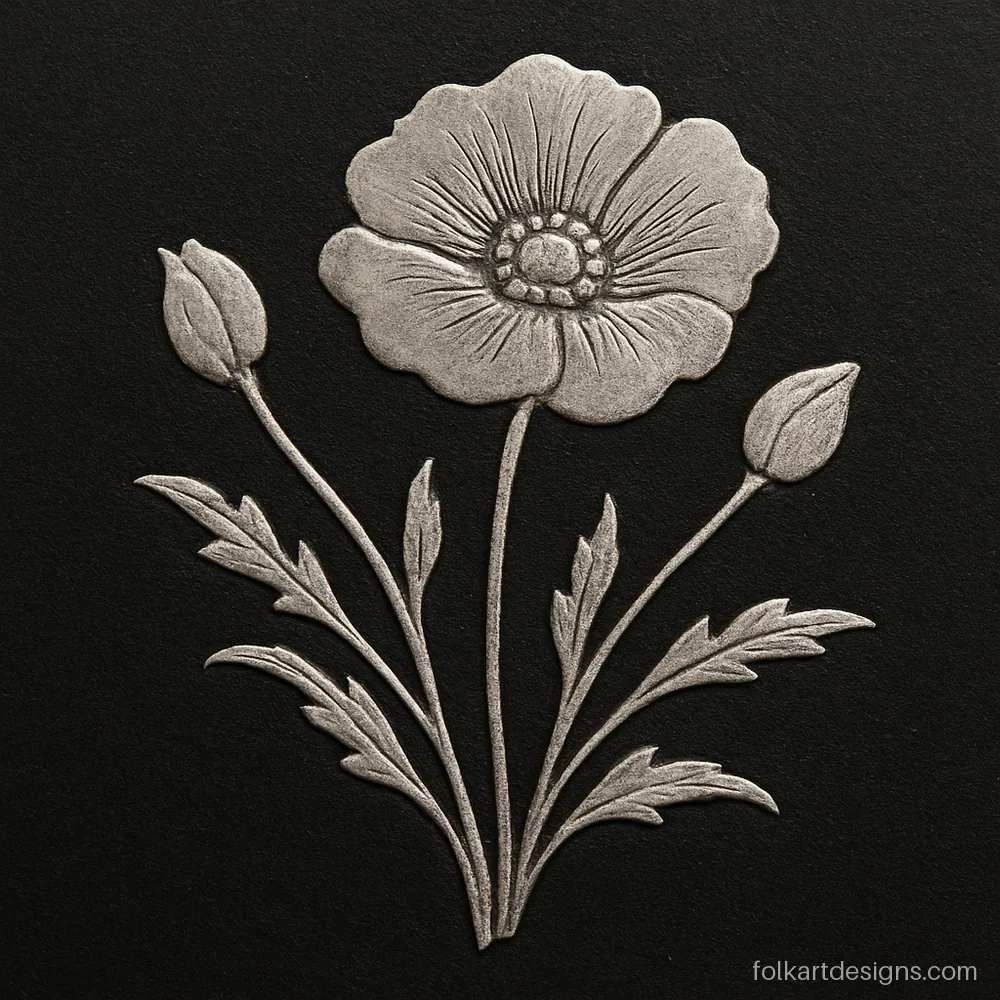
Each petal is cut from thin silver sheet and set into a matching hollow. This is called teh nishan work and it gives bold, solid shapes.
Artist tip Run a fingertip over sheet inlay; on good work you feel no edge between silver and black.
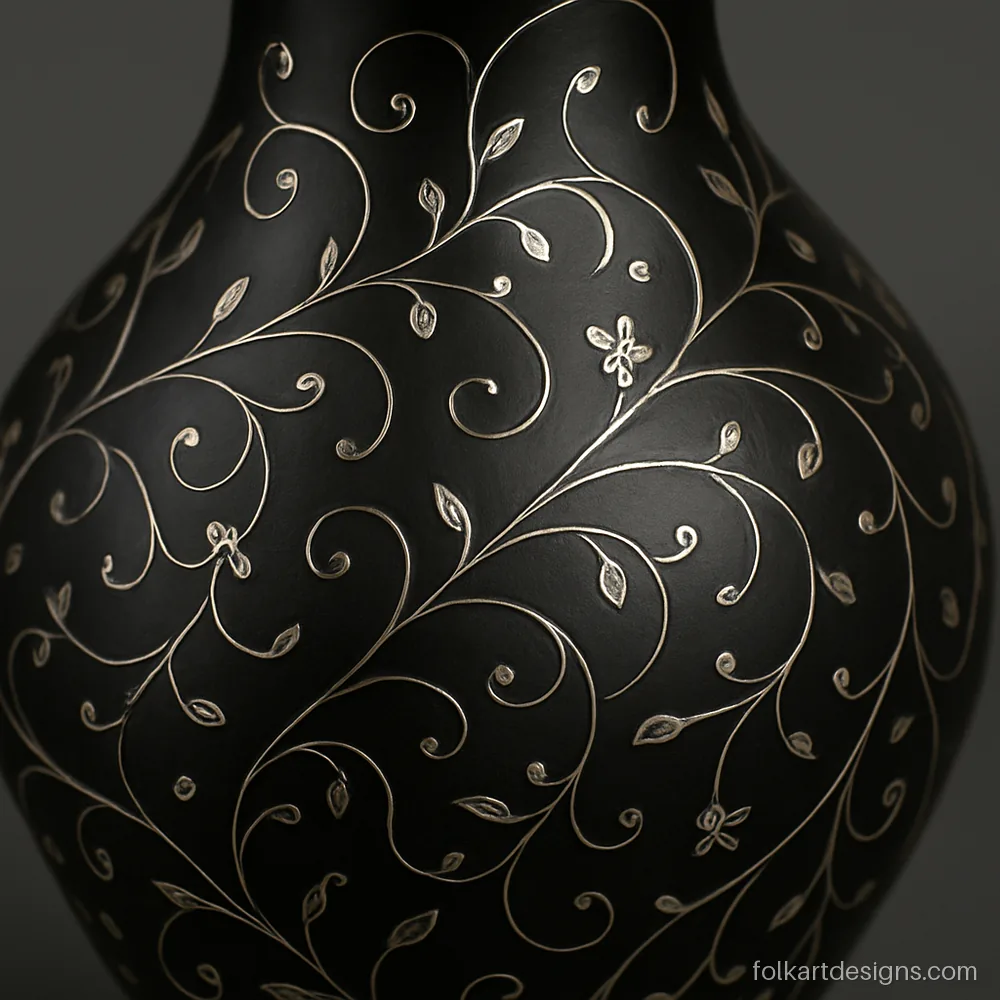
Fine wire curls into scrolls and tendrils in tarkashi work. It takes the longest to make and is often the mark of a skilled craftsman.
Artist tip Look for even gaps between wire curls; uneven spacing points to rushed work.
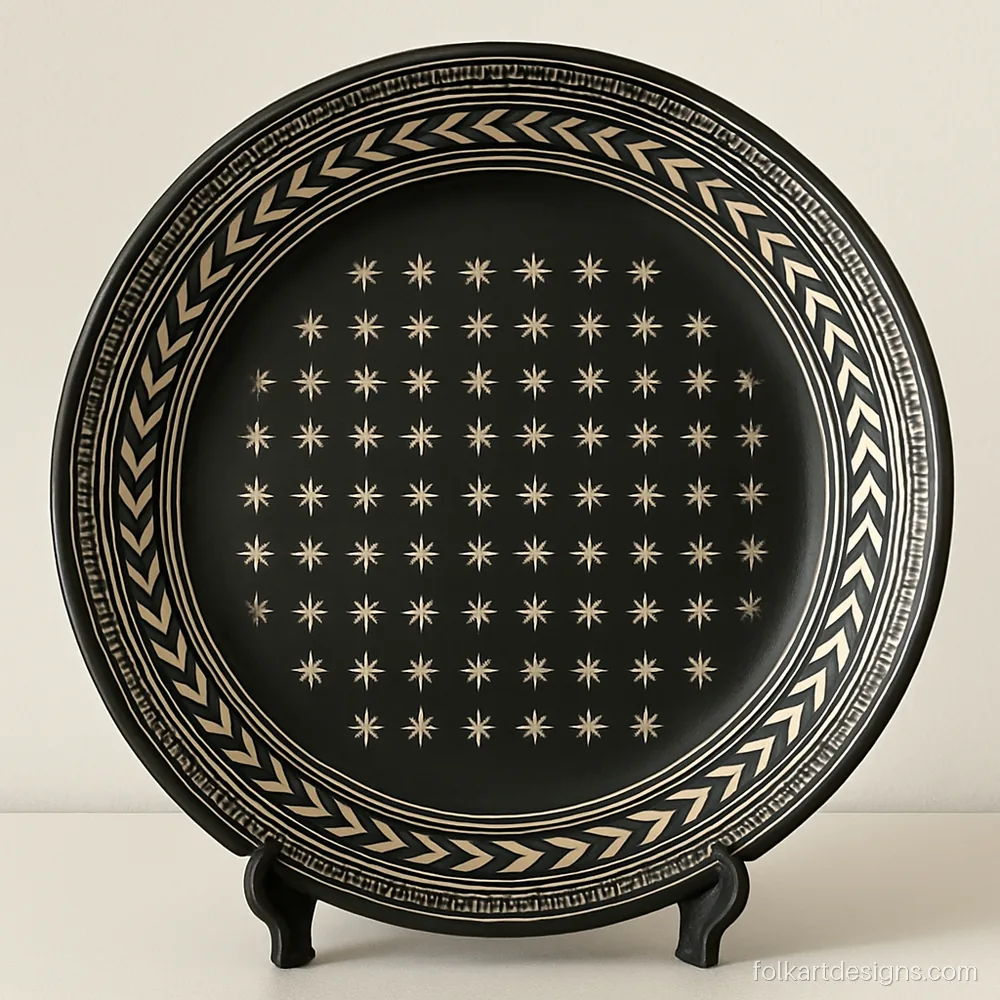
Geometric bidri shows the craft in a cleaner, modern mood. Chevrons and star grids suit minimal homes and office spaces.
Artist tip Hang a geometric plate at eye level on a pale wall so the lines read clearly.
Choosing Real Bidri and What Affects the Cost
Pieces sold as bidri handicraft are not always the real thing. Here is what to check:
- Flush inlay. Real silver is set level with the black. Painted copies have raised or flat shiny lines with soft edges.
- Matte black. True bidri black is soft and matte, not glossy like paint, and it does not chip off.
- Fine detail. Even wire spacing and clean curves show skill.
Cost rises with size, the amount and thickness of silver, wire work over sheet work, and the hours spent. A large surahi covered in tarkashi vines costs far more than a small pendant with one flower.
Bidri sits in the wider family of Indian metal craft. For tribal metal work from central India, see Bastar art. For painted art that pairs well with bidri on a wall, try a pichwai painting.
Caring for Bidri at Home
- Dust gently. Use a soft dry cloth or a clean makeup brush once a week.
- Restore the black. Every few months, rub in a few drops of coconut or mustard oil with a cotton cloth, then wipe off the extra.
- Skip metal polish. Polish and abrasive powders strip the black layer and leave grey patches.
- Keep it dry. Do not wash bidri in water or soak it. Wipe off any splash at once.
- Silver tarnish. If the silver dulls, rub only the silver lines lightly with a dry soft cloth.
For other handmade pieces that need similar gentle care, read about lippan art mirror work and kalamkari textiles.
Questions about these designs
What is bidri art?
It is a metal craft from Bidar, Karnataka. A zinc and copper alloy is cast, inlaid with fine silver, and then blackened with a soil paste so the silver pattern stands out against a deep black body.
Why is bidri black?
The black comes from soil found around the Bidar fort area. When it is mixed into a paste and rubbed on the warm metal, it reacts with the alloy and darkens it. The silver inlay does not react, so it stays bright.
What is the difference between bidri and dhokra?
Bidri is a black zinc alloy with silver inlay from Karnataka. Dhokra is brass or bronze cast by the lost-wax method by tribal makers in central and eastern India. Bidri is about fine surface pattern, while dhokra is about the cast form.
Which motifs are used in bidri art work?
The poppy flower is the favourite, along with vines, creepers, leaves and small buds. Geometric work with stars, chevrons and diamonds is also common, and many pieces mix both.
Is bidri jewellery good for daily use?
Yes. The pieces are light and strong. Keep it away from water, perfume and creams, and wipe it with a dry cloth before you store it.
How do I clean a bidriware handicraft piece?
Dust it with a soft dry cloth and rub in a little oil every few months. Never use water, soap or metal polish, because they spoil the black finish.