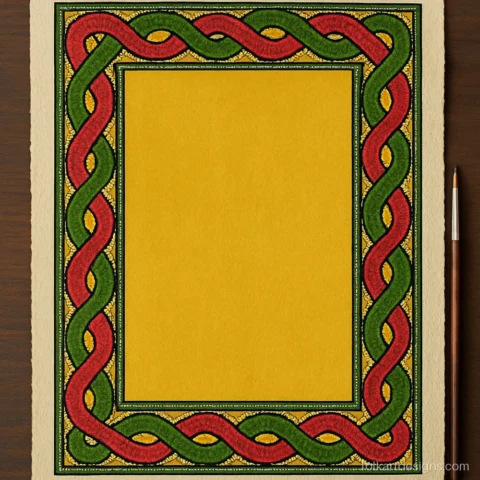
Rajasthani Art Gallery: Camels, Phad Panels and Mandana
15 designs Folk paintings Updated 9 Oct 2026
Rajasthani art is a family of bright, proud desert traditions, from long phad scrolls and white mandana floor patterns to tiny palace scenes and printed cotton. Strong reds, saffron, deep green and indigo show up again and again, as if to answer the sand outside.
Every picture in this rajasthani folk art gallery is an original design. You will see camels, elephants, peacocks, riderless horses, palace arches, haveli walls, mandana patterns and block print motifs, each with its medium, motifs and one practical tip. Several of these traditions are traditionally narrative or devotional, but we show only animals, trees, buildings and pattern.
For more desert and craft ideas, see our Kutch lippan art gallery and the lotus and cow paintings of pichwai painting, which also comes from Rajasthan.
Rajasthani Art Painting of Camels, Elephants and Peacocks
Animals of the desert and the royal courts are the easiest way into rajasthan folk art. Big shapes, decorated saddle cloths and bold colour make them striking even at a small size.

Five camels in a line against a huge orange sky give a strong sense of the Thar. Hang it over a sofa or a long dining sideboard.
Artist tip Paint the camels as dark silhouettes first, then add tassels and saddle cloths in bright red.
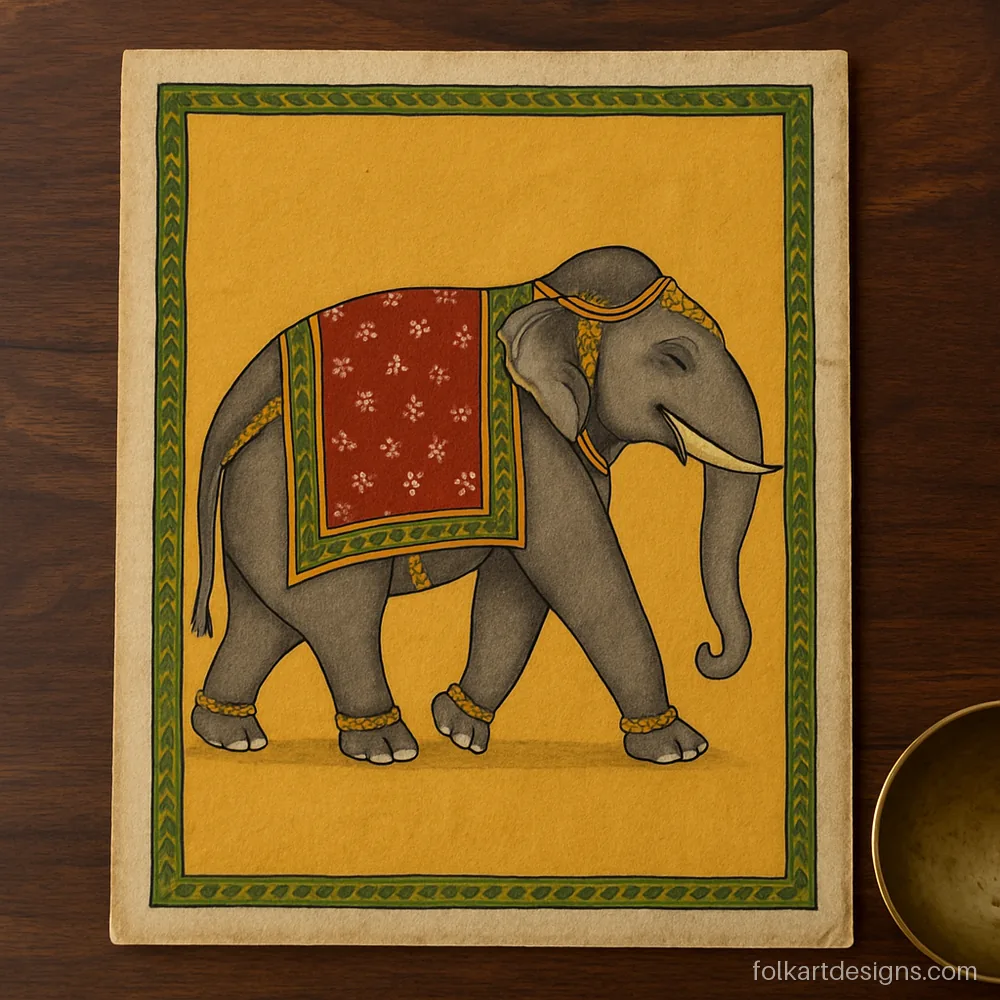
The elephant wears a jewelled head piece and a cloth full of tiny flowers. A lucky-looking piece for an entrance or office.
Artist tip Rule the cloth into small squares with a pencil, then fill each square with one flower.
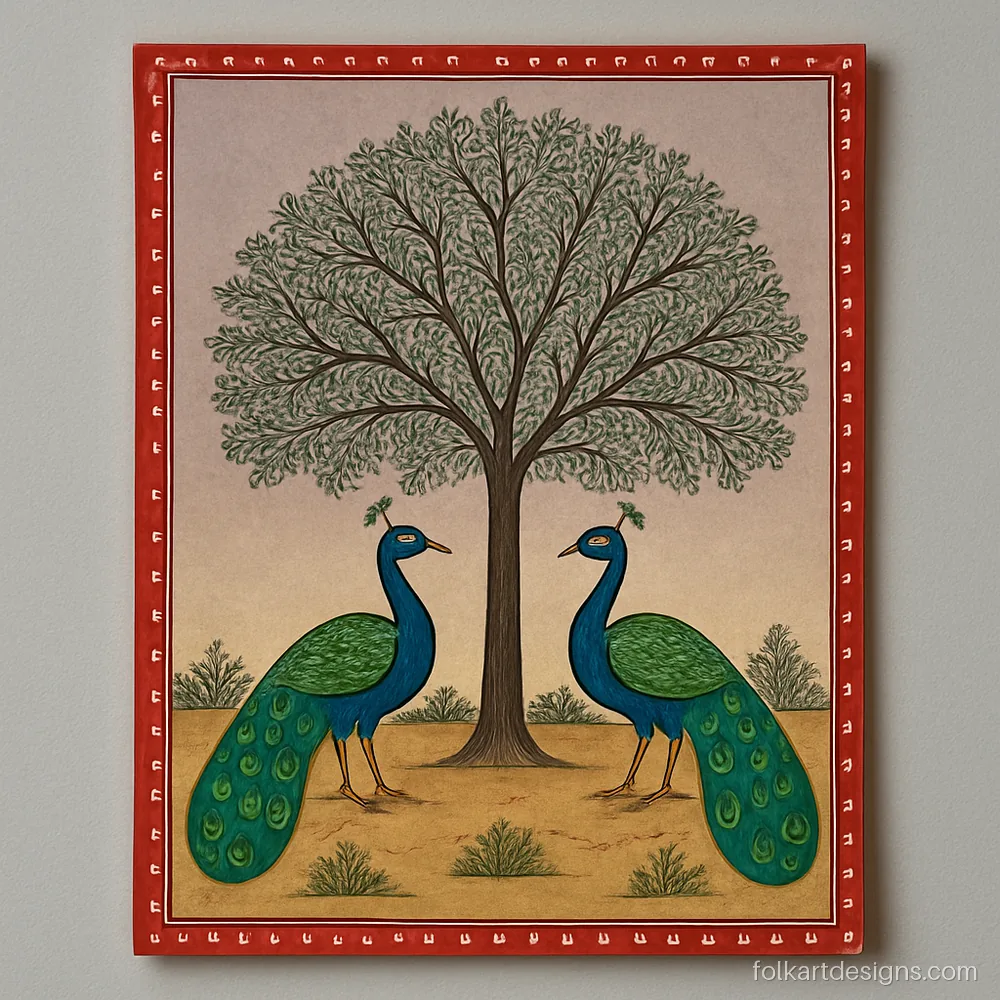
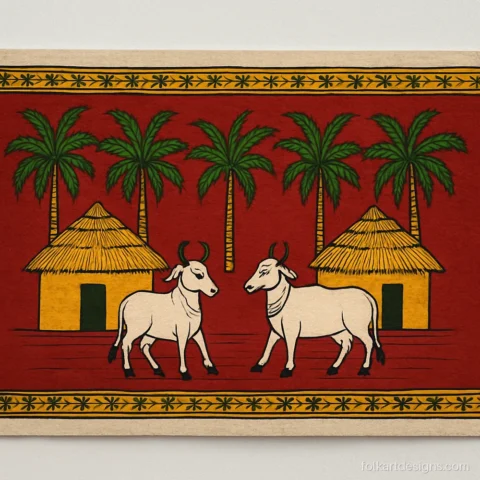
The khejri is the hardy tree of Rajasthan, and two peacocks below it bring colour to the dry scene. Lovely for a bedroom.
Artist tip Mix ultramarine with a little green for the neck, then add a touch of white on top.
Phad Scroll Painting Panels with Horses and Palaces
Phad is a long cloth scroll from Bhilwara, painted in bright panels and traditionally used for night-time storytelling. Our panels borrow its colours and layout but show only animals, trees and buildings.
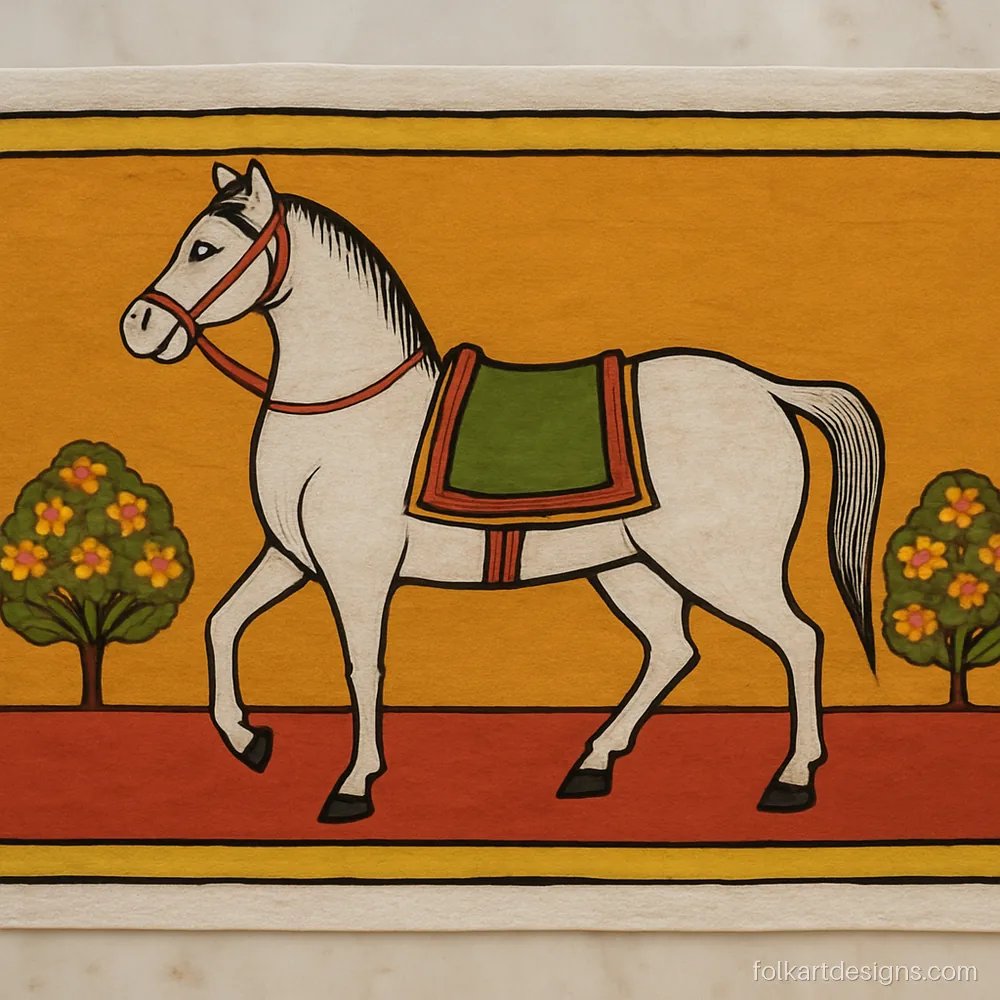
A white horse with a saddle cloth stands proudly in a red frame, with trees at both ends. A strong choice for a study or hall.
Artist tip Outline in black only after every flat colour is dry, as phad painters do.
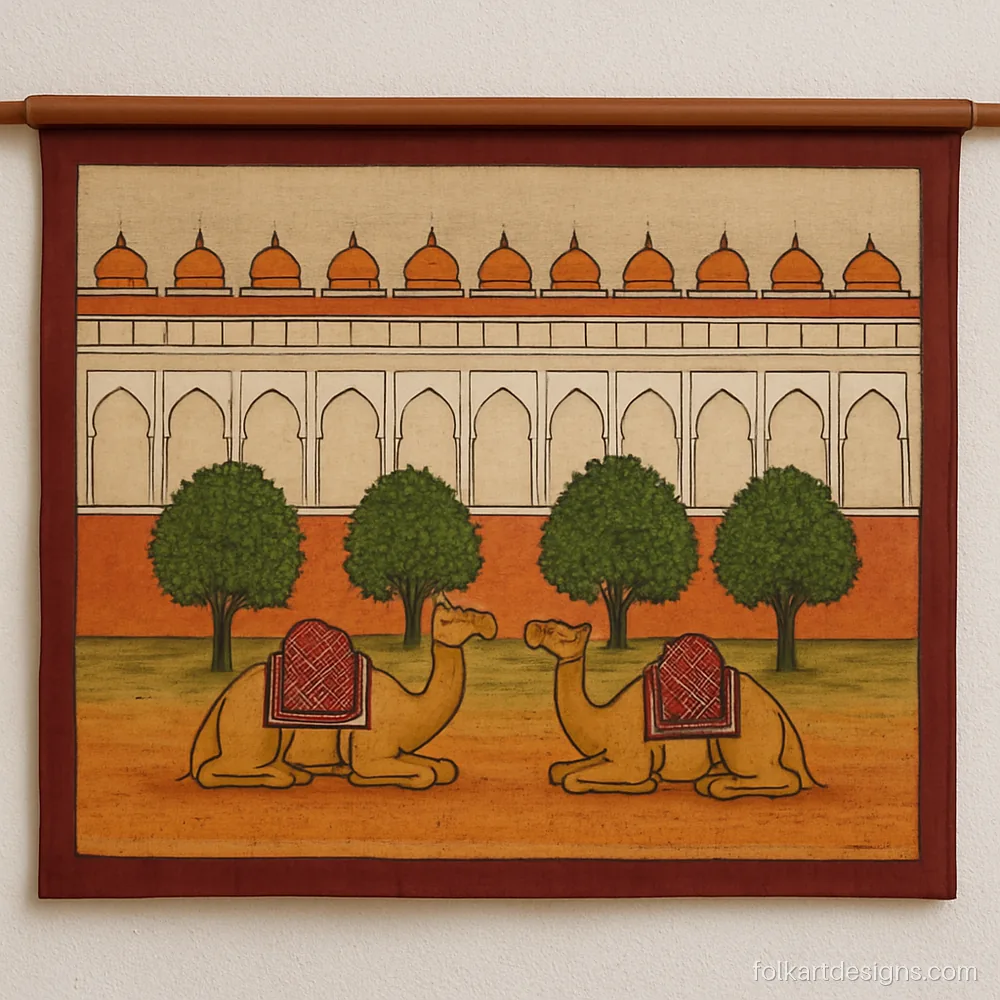
Rows of arches and little domes are packed side by side, just as a scroll fills every bit of cloth. Great above a long console table.
Artist tip Plan the strip in equal boxes with a long ruler so every arch matches its neighbour.
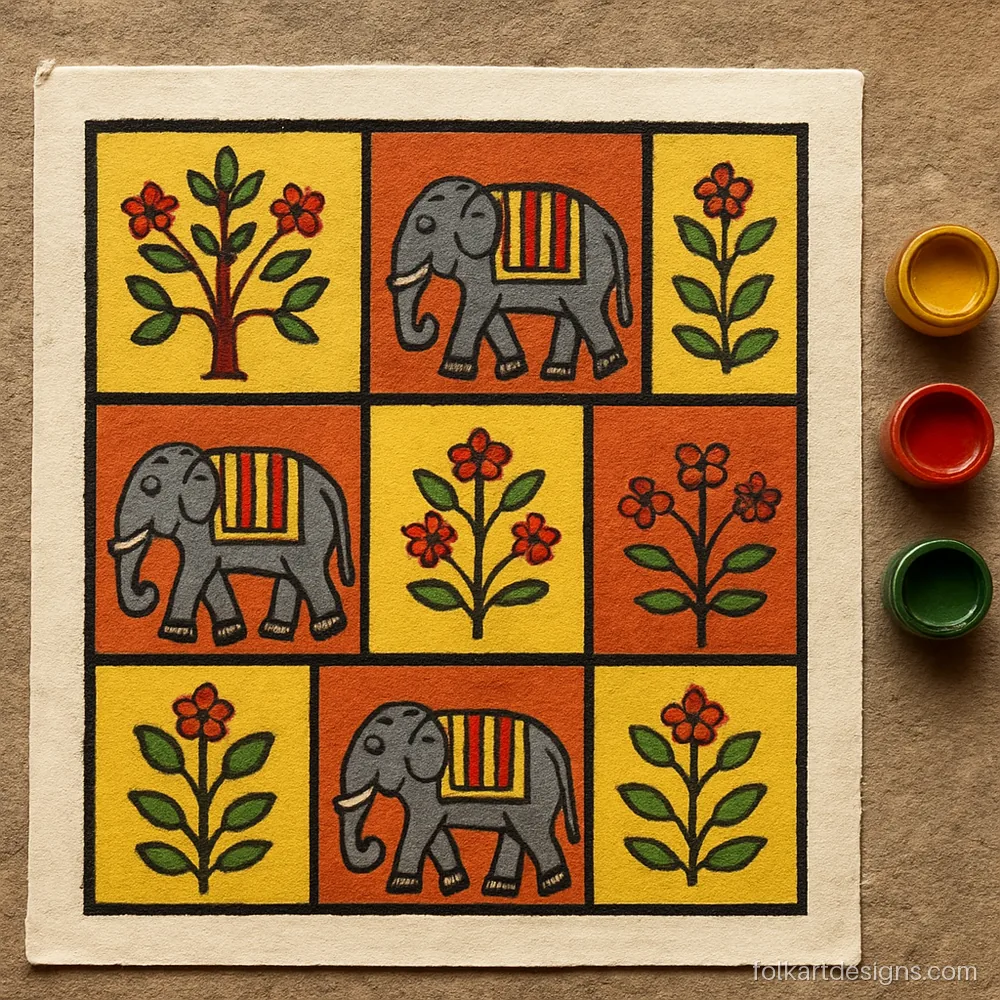
Six boxes alternate between an elephant and a tree, a neat way to practise the phad look. Good for students and craft fairs.
Artist tip Keep only four or five colours, the way a real phad palette is limited.
Rajasthani Art Forms at a Glance
Rajasthan folk art is not one style but many. These are the rajasthani art forms that hobby painters ask about most.
| Art form | Where | Medium | Signature look |
|---|---|---|---|
| Phad | Bhilwara | Natural colours on long cloth scrolls | Bright flat panels, black outlines, traditionally narrative and devotional |
| Mandana | Villages across Rajasthan | White chalk or lime on red earth | Geometric floor and wall patterns, peacocks, flowers |
| Miniature painting | Royal courts of Rajasthan | Fine pigment on paper | Palaces, lakes, gardens, tiny detail |
| Haveli wall painting | Shekhawati | Lime plaster walls | Arches, vines, birds |
| Block print | Sanganer, Bagru | Wooden blocks on cotton | Small butas, leaves, indigo dabu |
Any rajasthani culture painting leans on bold colours for a reason: saffron, red, green and indigo stand out against sand and stone. Phad in particular uses only a few pure colours, laid flat, with a strong black outline last.
Mandana Art: White Patterns on Red Mud
Mandana is drawn with white chalk paste on floors and walls coated with red earth, usually around festivals. The patterns are geometric, with peacocks, flowers and steps worked into them.

A square frame with a peacock in each corner looks bold from a distance. Perfect for a courtyard or the doorstep.
Artist tip Draw with a cotton wick dipped in chalk paste and keep the line thin and steady.
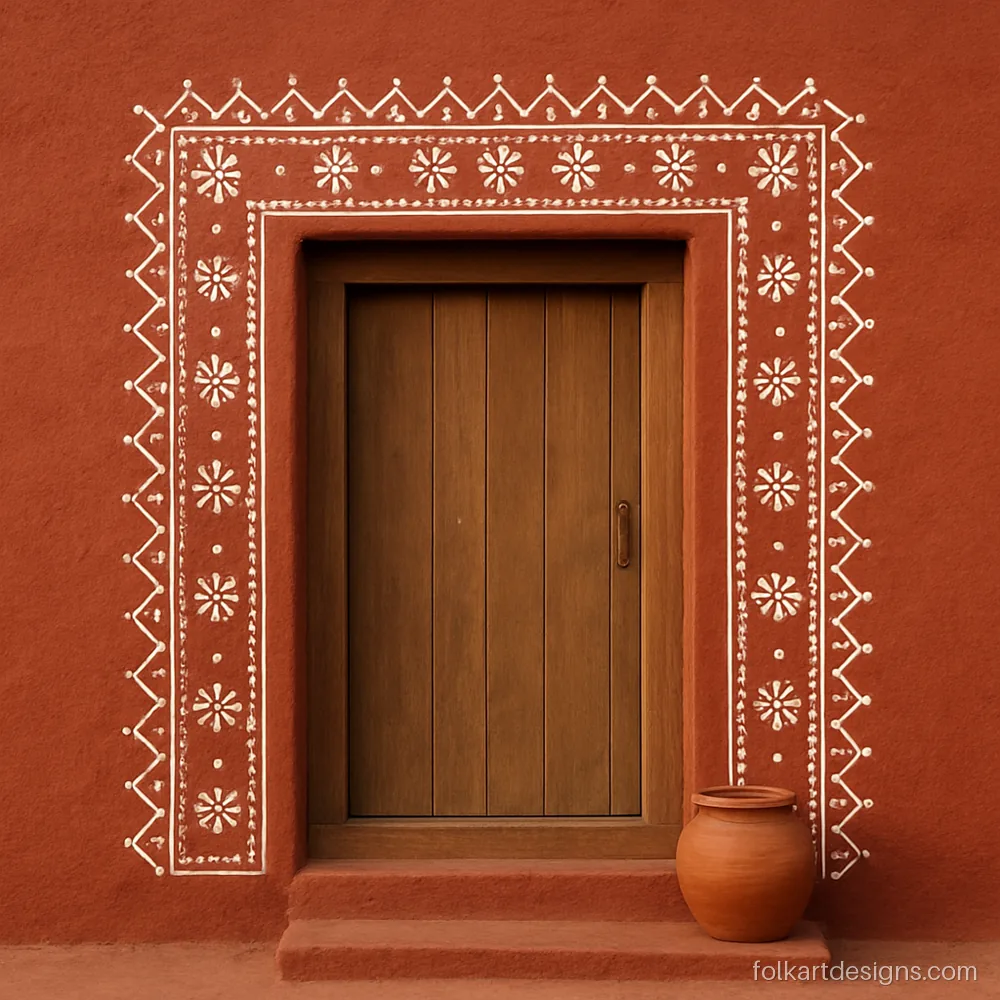
A border of zigzags and flowers frames the doorway like a welcome. A simple idea for village homes, farm stays and resorts.
Artist tip Mark the repeat with small dots first so the zigzags stay even all the way round.
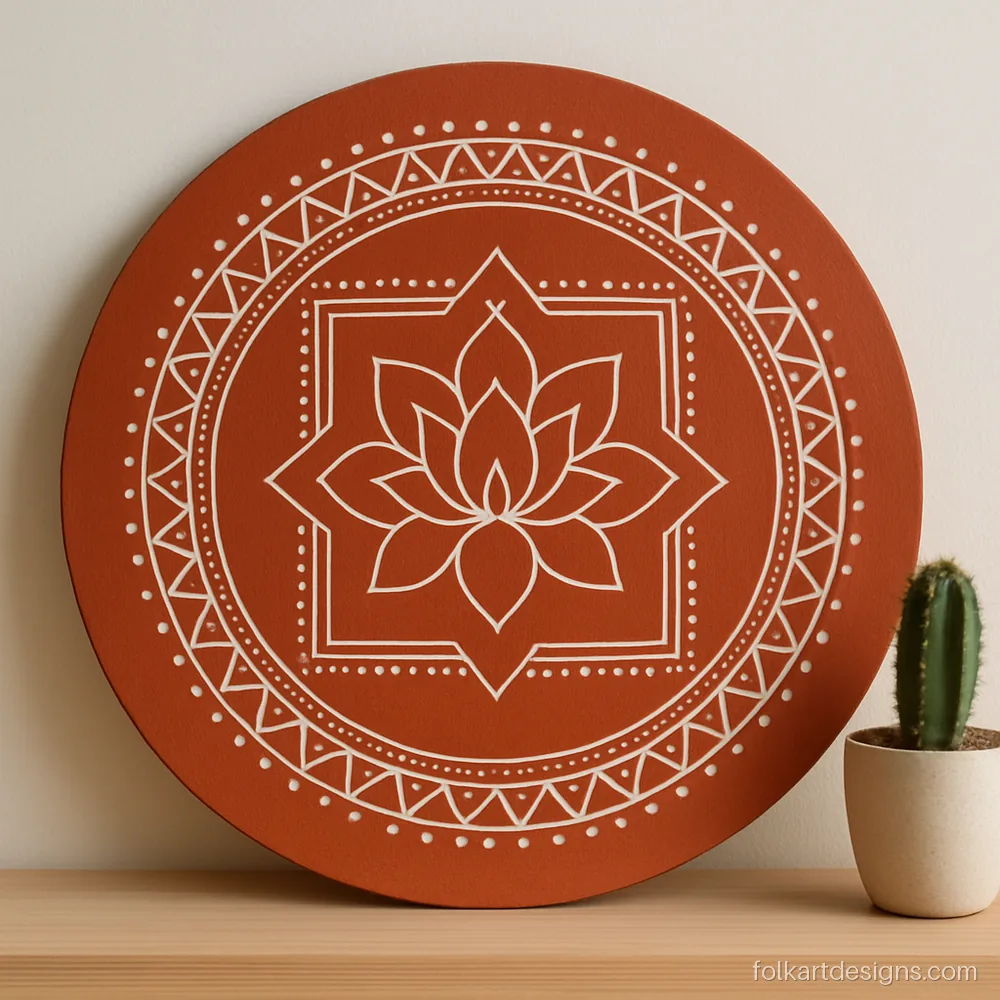
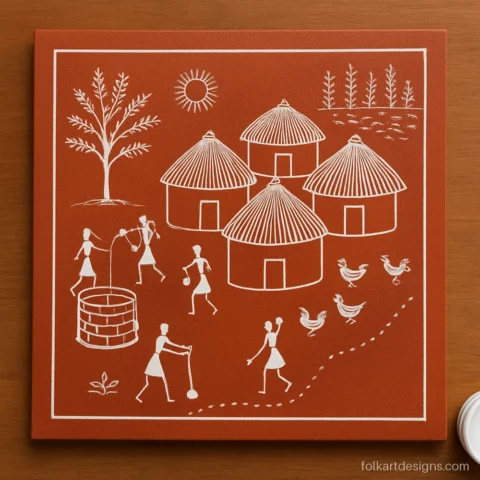
A round board painted terracotta red lets you keep mandana on a wall all year. Easy to sell at festive season stalls.
Artist tip Use a white paint marker of 0.8 mm for steady lines on painted MDF.
Rajasthani Wall Art, Havelis and Miniature Palaces
The painted havelis of Shekhawati and the fine miniature schools of the royal courts both love arches, domes and lakes. These designs make good rajasthani wall art for a home.

Curling vines fill the arch the way old haveli walls were painted. A fine idea for a wall niche or an entrance arch.
Artist tip On a wall, test colour on a hidden patch first, because lime and paint dry lighter.
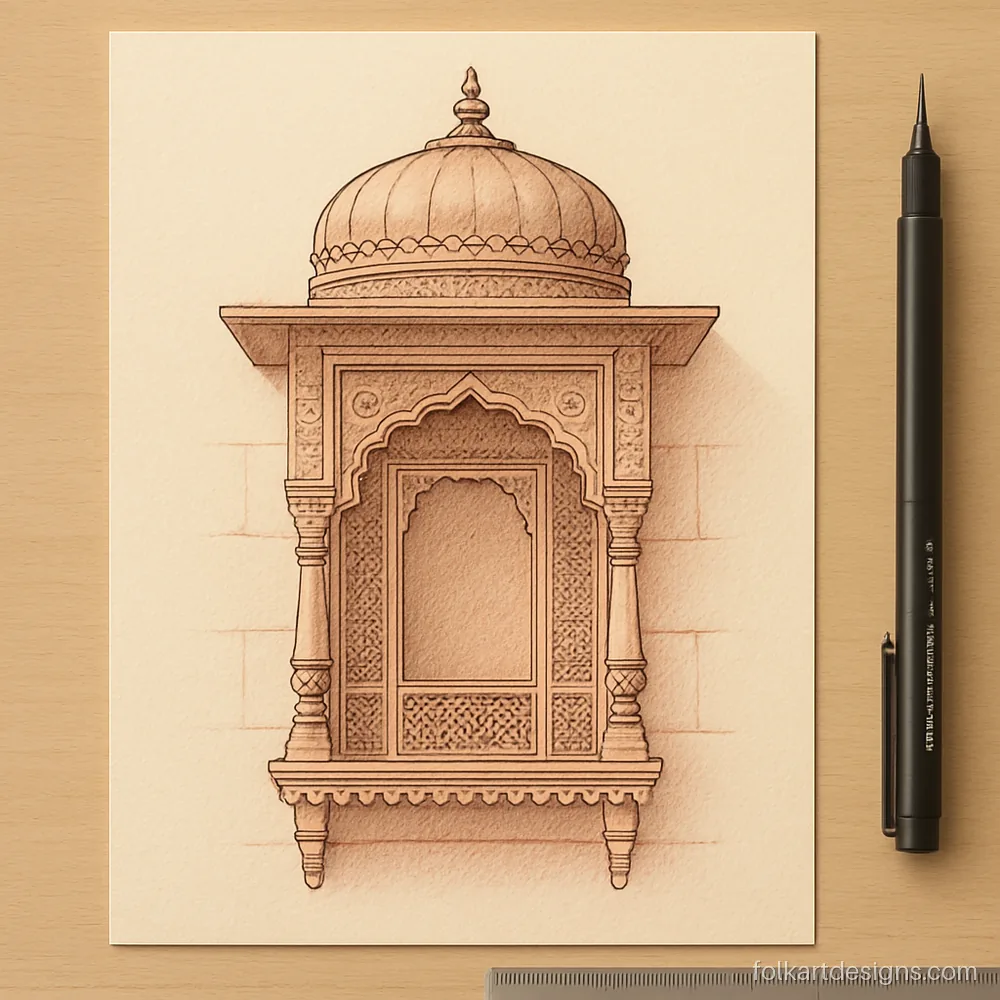
A jharokha is a carved hanging balcony window, and drawing one is great practice for symmetry. Good for architecture students.
Artist tip Fold the paper in half to find the centre line, then mirror each carving.
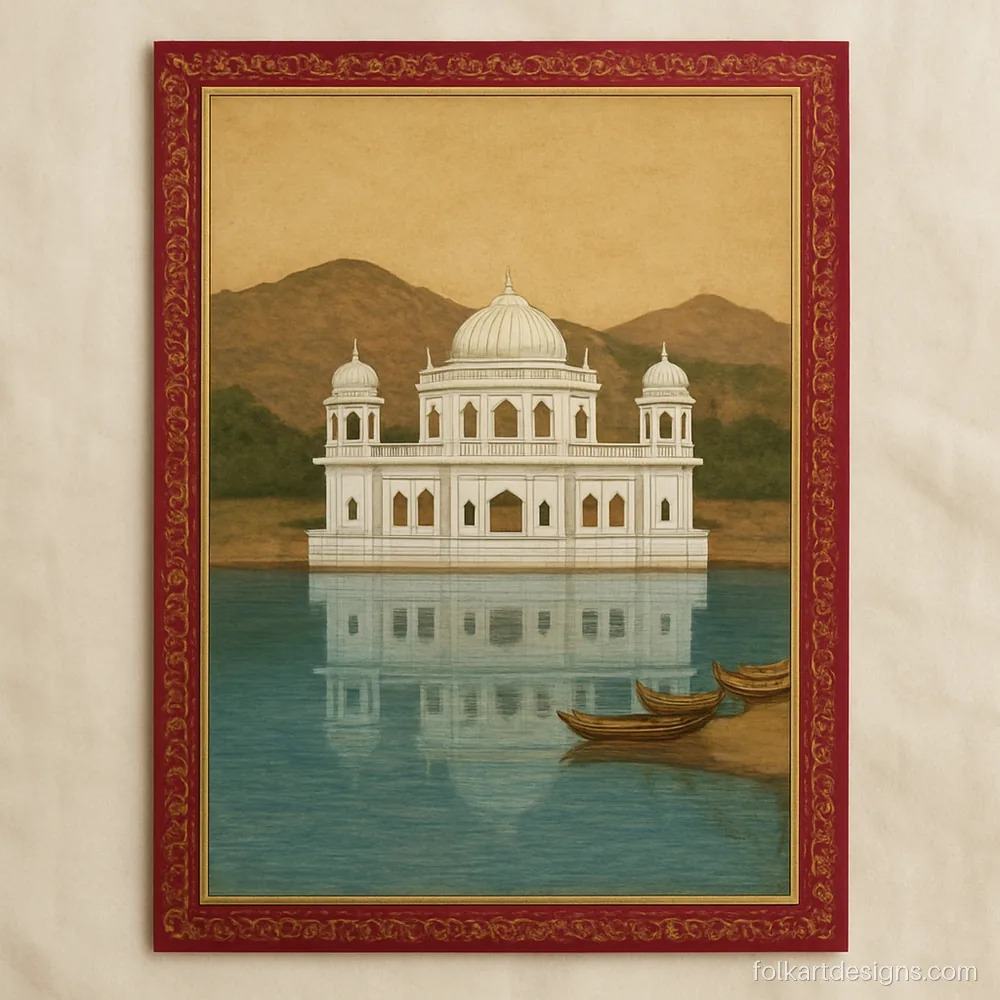
A white palace floats on a calm lake with hills behind, a scene seen in many miniatures. Calm and grand for a living room.
Artist tip Paint the reflection with the same colours as the palace, just thinned and slightly greyer.
Rajasthani Art Design in Block Print Motifs
Sanganer and Bagru near Jaipur are known for hand block printing on cotton. Their small flowers, leaves and buta shapes are an easy source of rajasthani art design ideas for paper and fabric.

Tiny pink and green flowers in neat rows show the light, fresh Sanganer look. Ideal for kurtis, cushion covers and quilts.
Artist tip Look for slight gaps or overlaps where blocks meet, a sign the print was done by block.

Mud resist printing leaves white shapes on deep indigo, with fine crackle lines. Great for dupattas, bedsheets and table runners.
Artist tip Wash indigo prints alone in cold water the first few times, and dry them in shade.
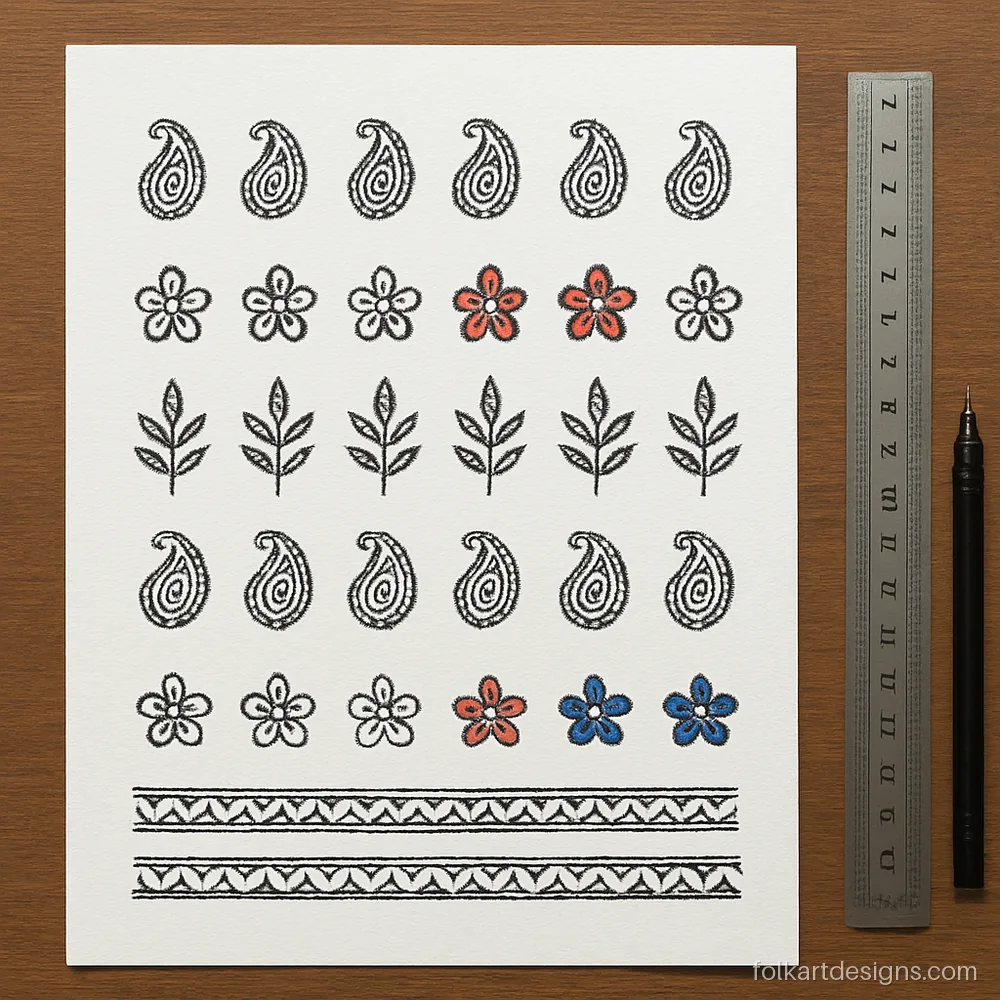
A page of butas, paisleys and borders drawn by pen is a handy library for future projects. Useful for students and small sellers.
Artist tip Draw each motif inside a 3 cm square so you can repeat it evenly later.
How to Make a Simple Phad Style Panel
- Choose a base. Use plain cotton fabric stretched on a frame, or 300 gsm paper if you are new.
- Prime the cloth. Brush on a thin coat of white acrylic gesso so paint does not bleed. Wait about an hour before painting.
- Plan the boxes. Divide the panel into boxes. Put one animal or one building in each, with a tree to fill gaps.
- Fill flat colours. Work light to dark: yellow, then orange, red, green and finally blue. Fabric paint or acrylic both work.
- Outline last. Use a size 0 liner brush or a 0.5 mm black fabric marker for every edge.
- Add white dots. Saddle cloths and borders look richer with tiny white dots.
Acrylic on cloth is dry to touch in about 30 minutes but should cure for a day before rolling. Store scrolls rolled with the painted side out, wrapped in cotton. A piece costs more when it is larger, painted with natural colours and full of fine detail.
If you enjoy panels that tell a story, compare this with Cheriyal scroll painting from Telangana, and for white-on-red patterns try Warli art.
Questions about these designs
What is phad painting of Rajasthan?
Phad is a long horizontal cloth scroll painted in Bhilwara, Rajasthan. It uses bright flat colours, strong black outlines and many panels, and is traditionally narrative and devotional. Hobby versions often show horses, camels, trees and palaces instead.
What are the main rajasthani art forms?
The best known are phad scroll painting, mandana floor and wall art, miniature painting, haveli wall painting and block printing on cloth. Each uses different materials but shares bold colour and strong pattern.
What colours are used in traditional rajasthani painting?
Saffron, yellow, red, green and indigo are the main colours, often with black outlines and white or gold details. Mandana keeps to just two: white lines on a red earth base.
How do I make mandana art at home?
Paint a board or floor tile with red oxide or terracotta acrylic and let it dry. Draw a centre dot and guide lines in pencil, then build squares, steps and petals with a white paint marker or thick white paint. Seal board pieces with a matt varnish.
Is rajasthani folk art painting easy for beginners?
Yes, if you start with one animal on a flat background. Camels, elephants and peacocks have simple outlines. Rajasthani traditional painting in the fine miniature style can wait, once you are comfortable with a size 0 brush.
How can I tell real block print from screen print?
Hand block printed cloth shows small gaps, overlaps and slight colour changes where each block was pressed. The colour often shows on the back too. Screen prints look perfectly even from one end to the other.