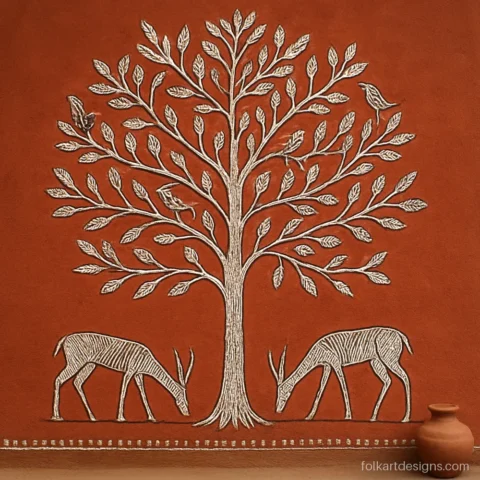
Lippan Art: Kutch Mud and Mirror Work Gallery
24 designs Lippan art Updated 9 Oct 2026
Lippan art comes from Kutch, Gujarat, where raised clay coils and small glass mirrors turn a plain wall into a pattern that sparkles. The Rabari and other communities traditionally pressed this lippan kaam onto the inside walls of their bhungas, the round mud houses of the desert.
This gallery has 24 original pieces, from old-style white walls to painted boards you can make at home on MDF. Under each picture you will find what it is made with, its motifs, where it fits and a working tip. For more pattern ideas, open our lippan art designs page. For clay, glue and mirror buying help, read lippan art materials.
Traditional Lippan Art from Kutch with Mirrors
These stay close to the old village style: white or mud-coloured relief, zigzags and lots of mirrors.
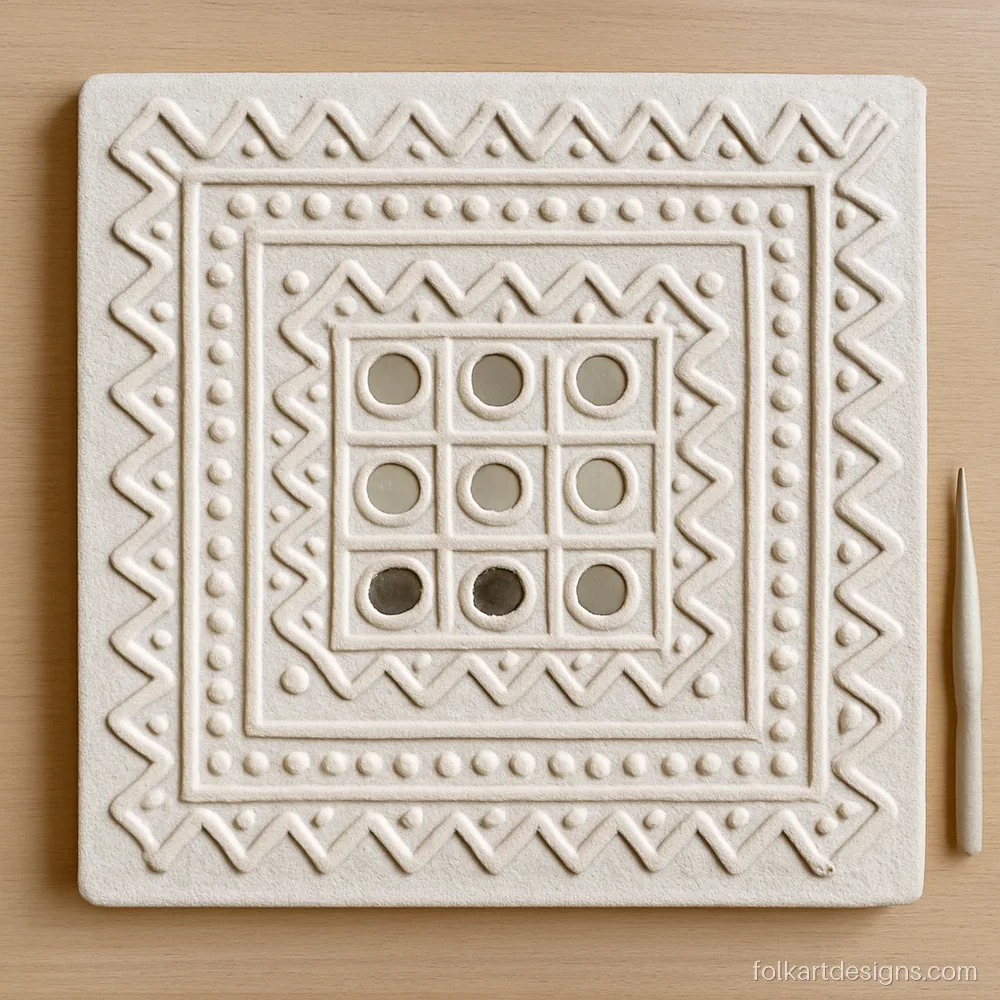
Raised white coils frame rows of round mirrors, just as on old Kutch walls. A good first piece.
Artist tip Press each mirror into soft clay, then run a thin coil around it.
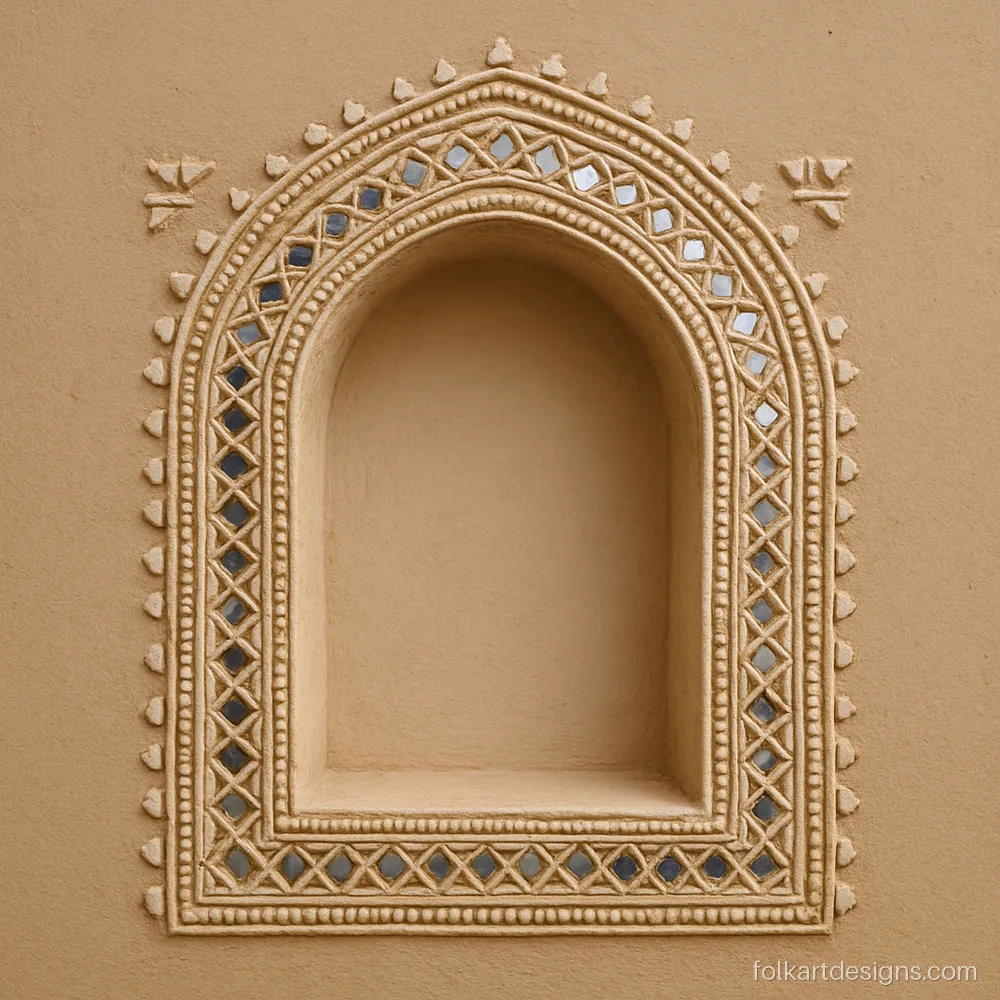
An arched niche edged with diamond mirrors, the way bhunga homes framed their shelves.
Artist tip Mark the arch with pencil and a string compass so both sides match.
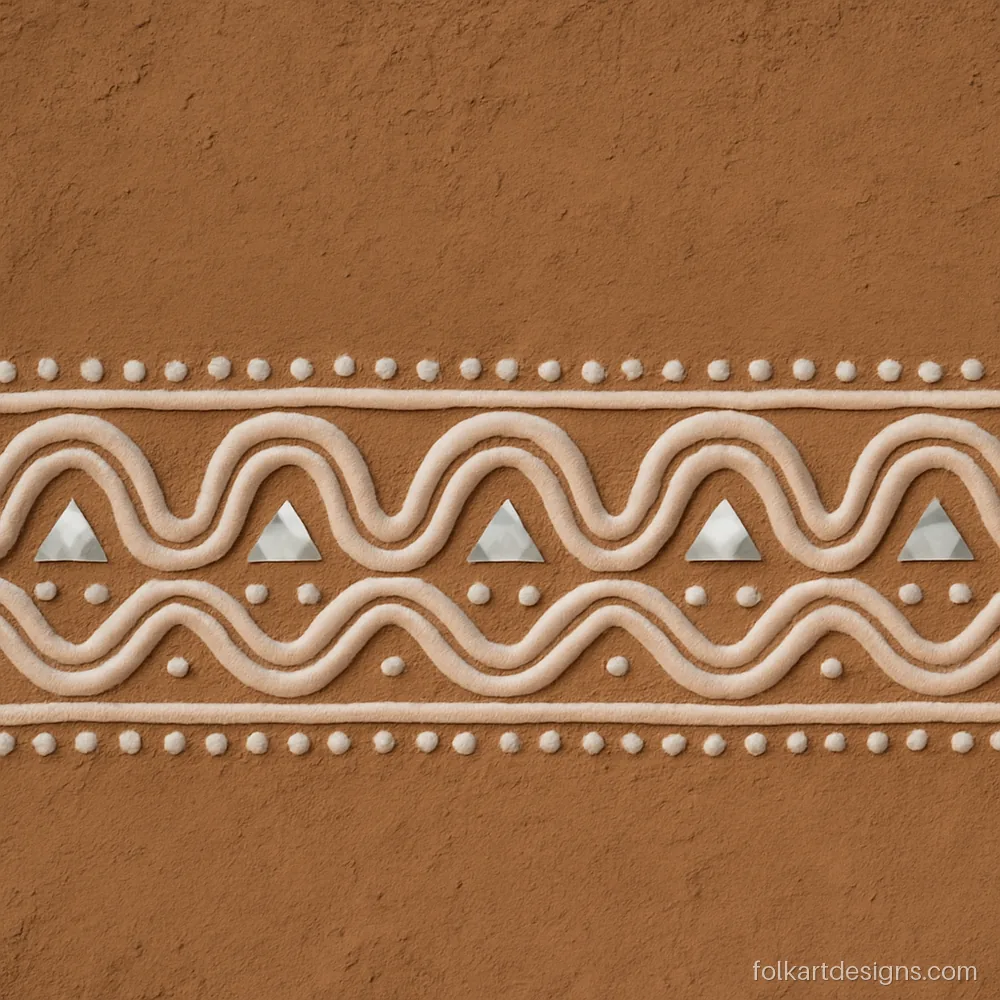
A long band of wavy coils and triangle mirrors, the classic way to run lippan kaam along a wall at eye level.
Artist tip Snap a chalk line first so the strip stays the same height all along.
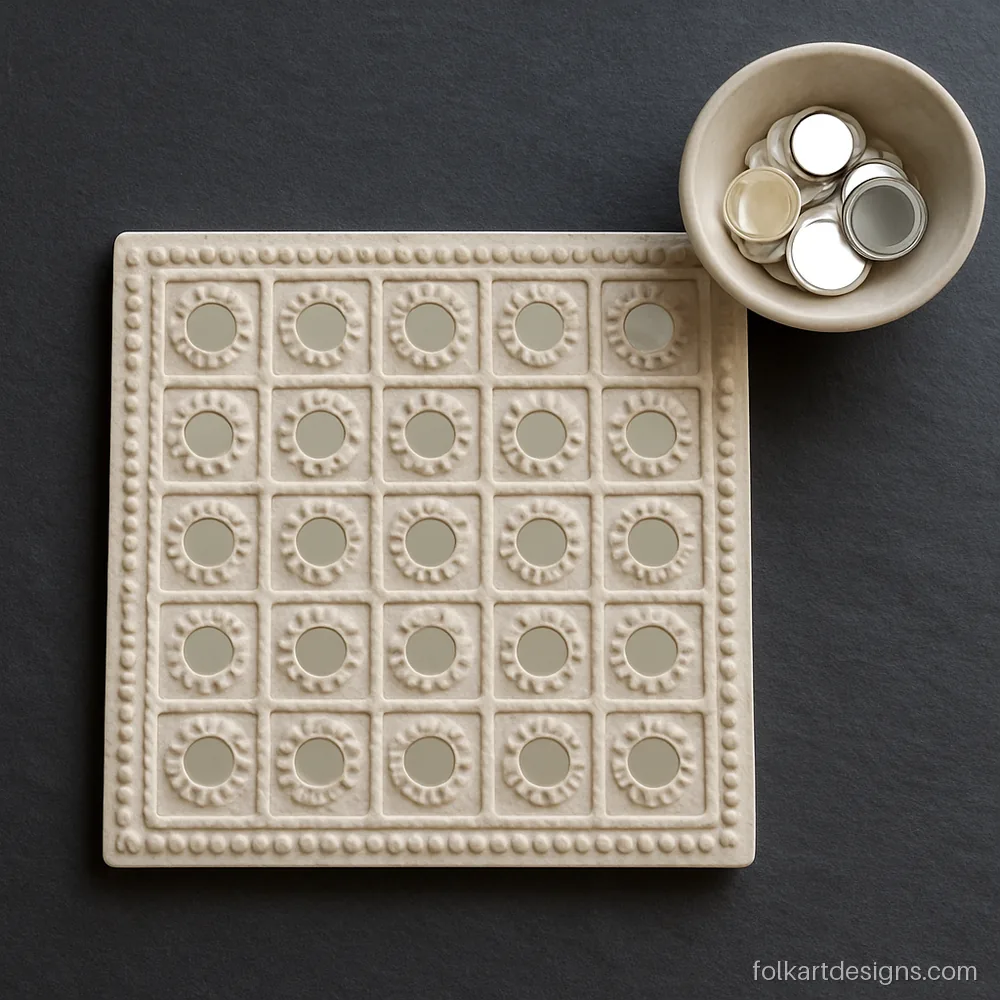
Tiny clay dots fill the gaps between mirrors, a detail seen in many Rabari homes. A neat weekend project for a shelf.
Artist tip Roll every clay dot to the size of a pea so the tile looks even.
Round Lippan Art Painting Panels
Round boards are the most popular home format. Plan them like a mandala, from a centre mirror outward.
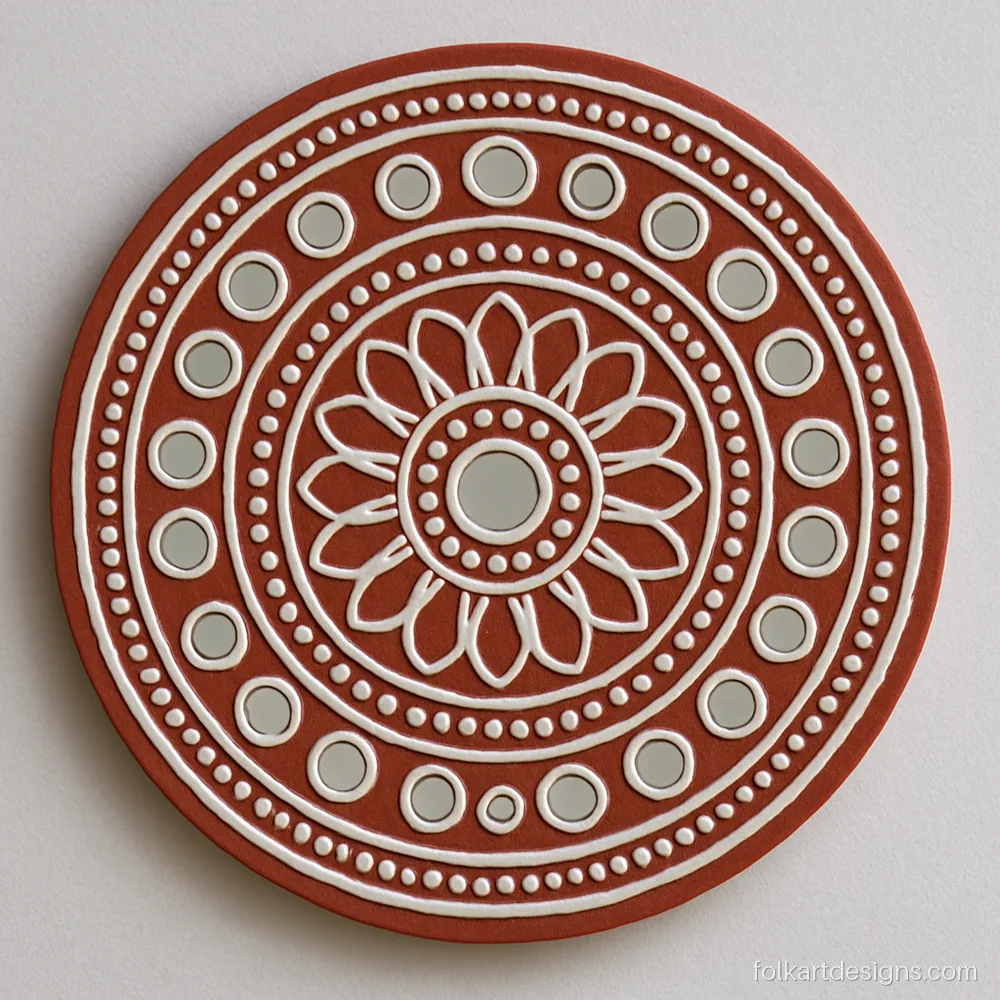
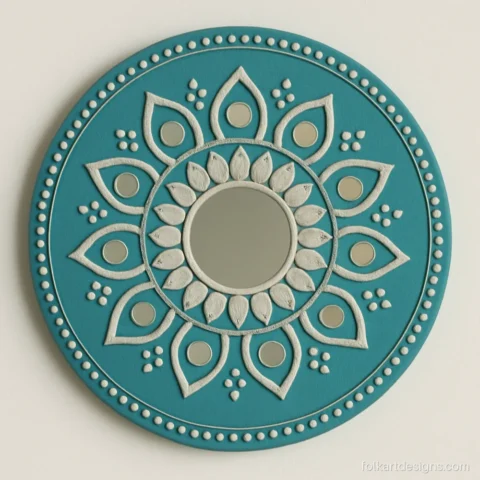
A brick red base makes white coils and mirrors stand out. This lippan painting suits a sofa wall or study.
Artist tip Give the base two coats of paint and let it dry fully before adding clay.
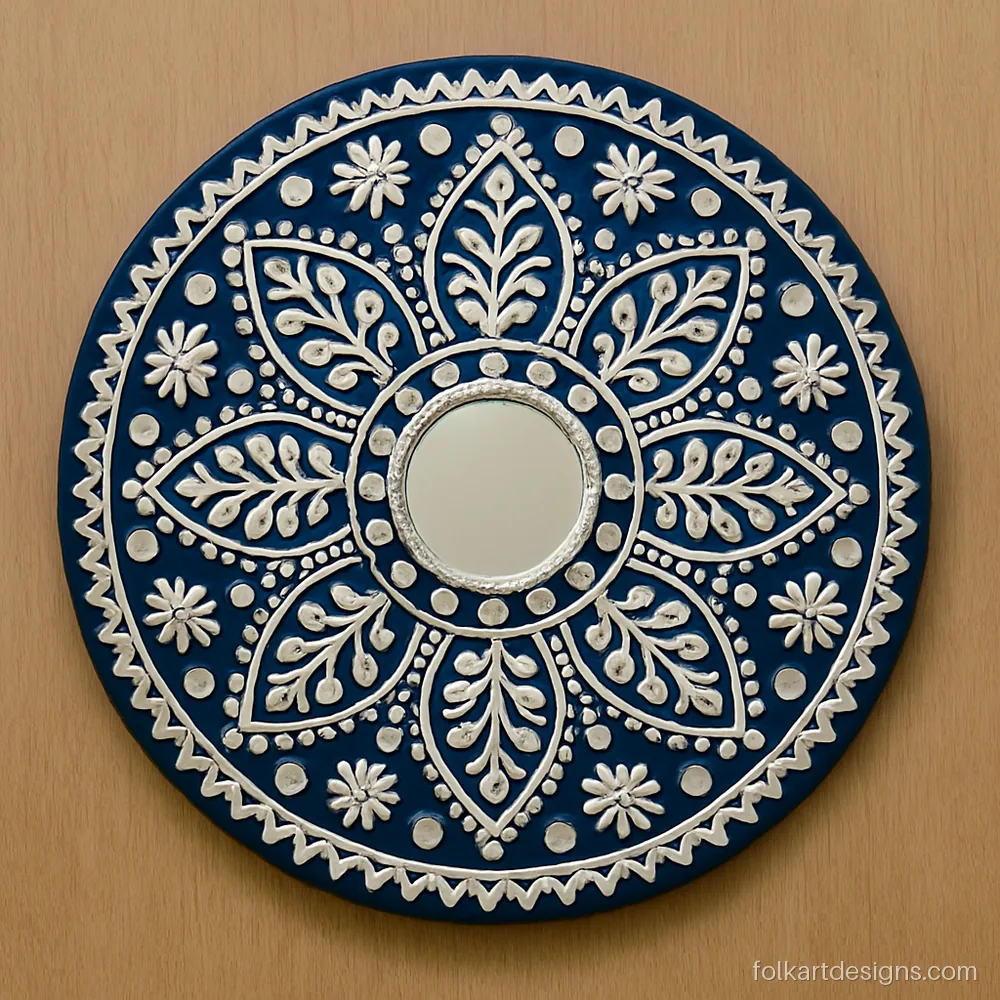
Eight even sections grow from one big centre mirror. A natural next step for anyone who already draws mandalas.
Artist tip Draw eight pencil guide lines from the centre before laying the first coil.
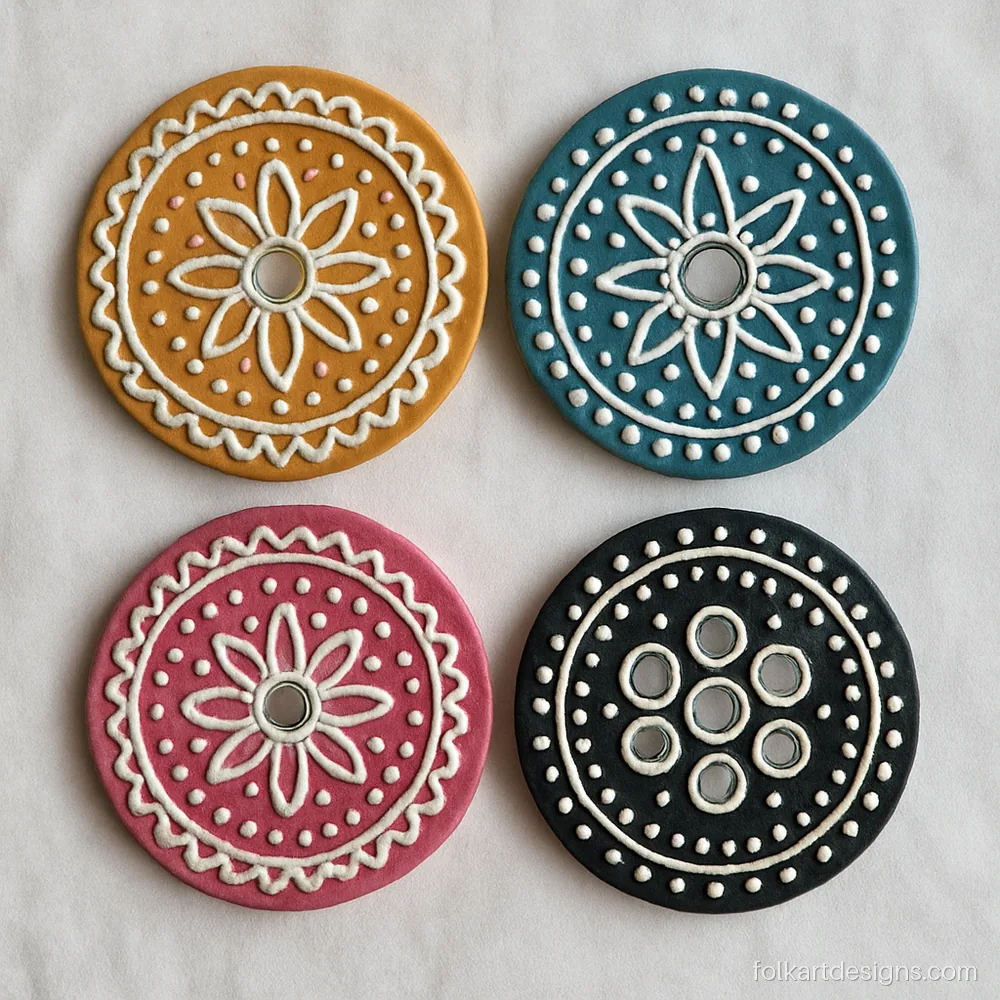
Four 10 cm rounds with simple rings and dots. Quick to finish and tidy as return gifts.
Artist tip Seal with two coats of matt varnish if you plan to use them as coasters.
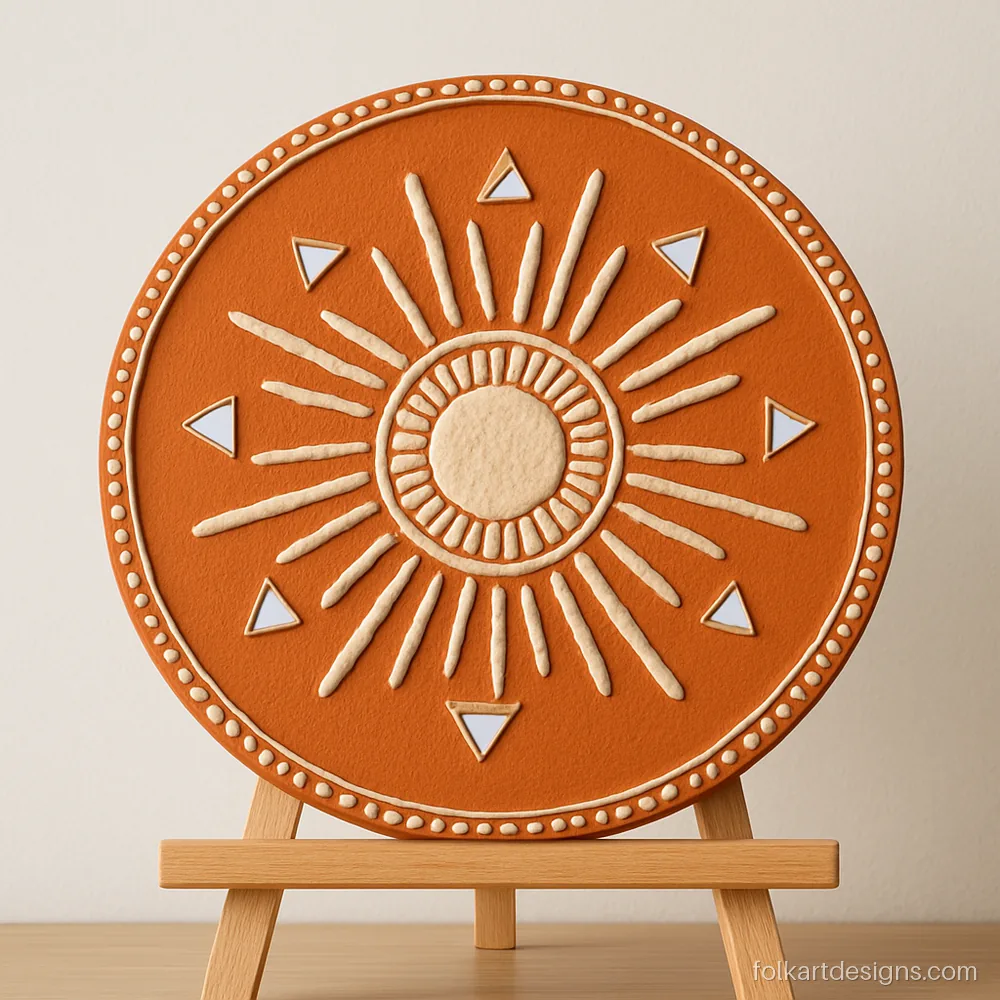
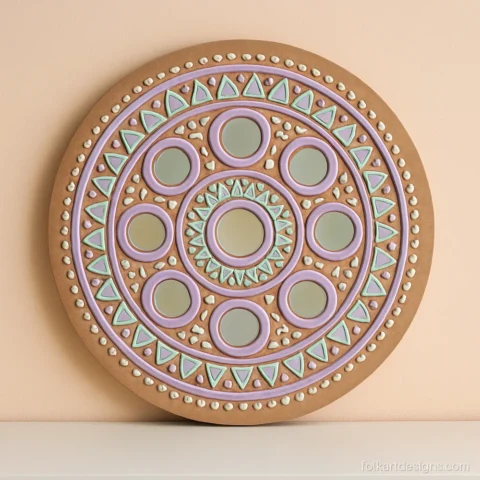
Triangle mirrors point outward like rays from a central circle. The terracotta base keeps it warm and close to the old style.
Artist tip Space the triangle mirrors with a protractor, one every 15 degrees.
What Is Lippan Art? Meaning and History
"Lippan" means to plaster or coat. In Kutch, families sealed bhunga walls with a mix of clay and dung, then raised patterns in the same mix and pressed in mirrors so oil lamps would light up the room. Lippan art history is mostly passed down at home, from mother to daughter, by the Rabari and other Kutch communities.
| Point | Traditional lippan | Modern hobby lippan |
|---|---|---|
| Base | Mud wall of a bhunga | MDF board, pot or plaster wall |
| Clay | Clay mixed with dung | Air-dry or shilpkar clay |
| Colour | White or earthy | Painted bases, any colour |
| Mirrors | Small cut glass pieces | Round, diamond and triangle glass mirrors |
Lippan Art with Peacocks and Trees
Peacocks, birds and trees are favourite Kutch figures. Keep shapes chunky so the coils hold.
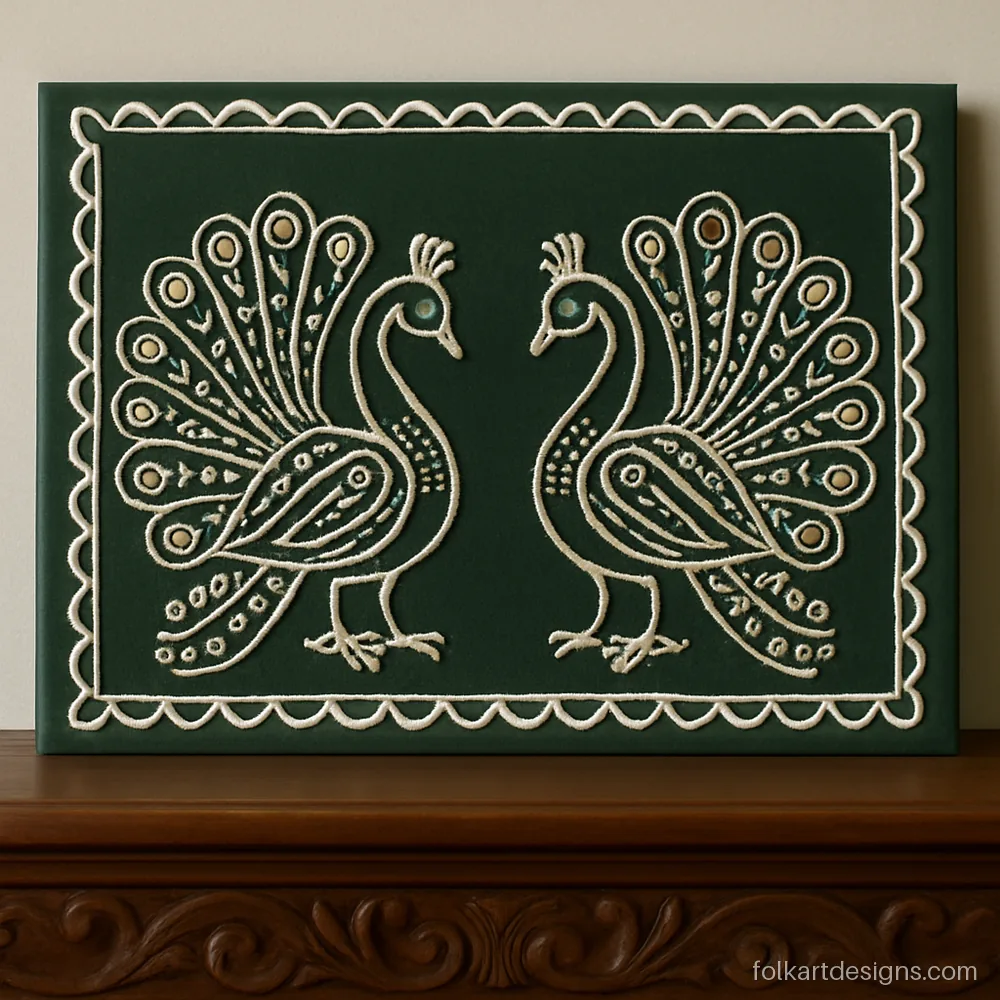
Two peacocks with mirror-studded tails face each other under a scalloped arch. A strong main piece for a living room.
Artist tip Shape each neck from one thick coil and taper it towards the head.

Each leaf holds a tiny mirror, so the tree glints as light moves. Suits a long passage.
Artist tip Build trunk and branches first, then fill leaves from the top down.

One peacock in profile, its tail wrapping round the circle. Mustard and white feel cheerful in a play room or cafe corner.
Artist tip Use round mirrors for the feather eyes and paint a thin teal ring around each.
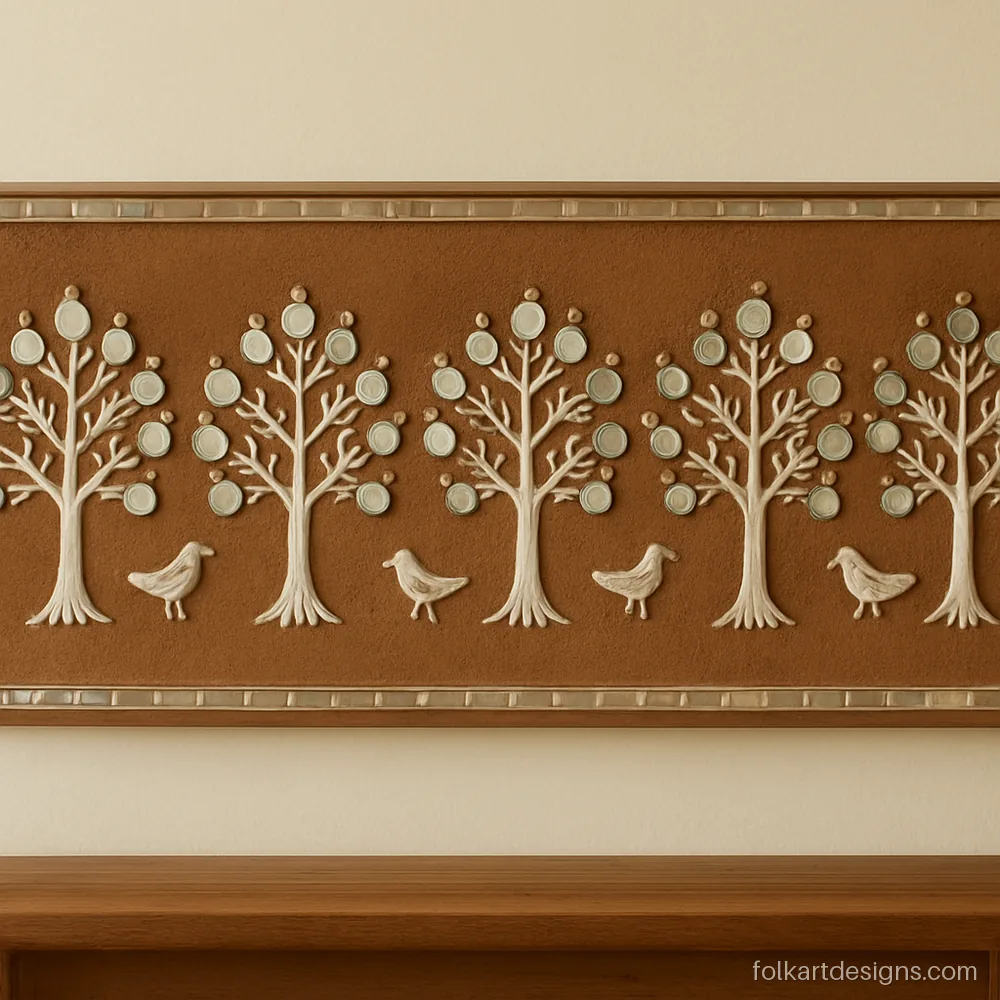
A row of little trees with birds between them reads like a village scene. Hang it above a bed or a long bench.
Artist tip Tint the background clay brown so any small chips do not show white.
Mud Mirror Work on Wall
Mud mirror art can go straight onto a dry inner wall. Damp makes clay crack and lift.
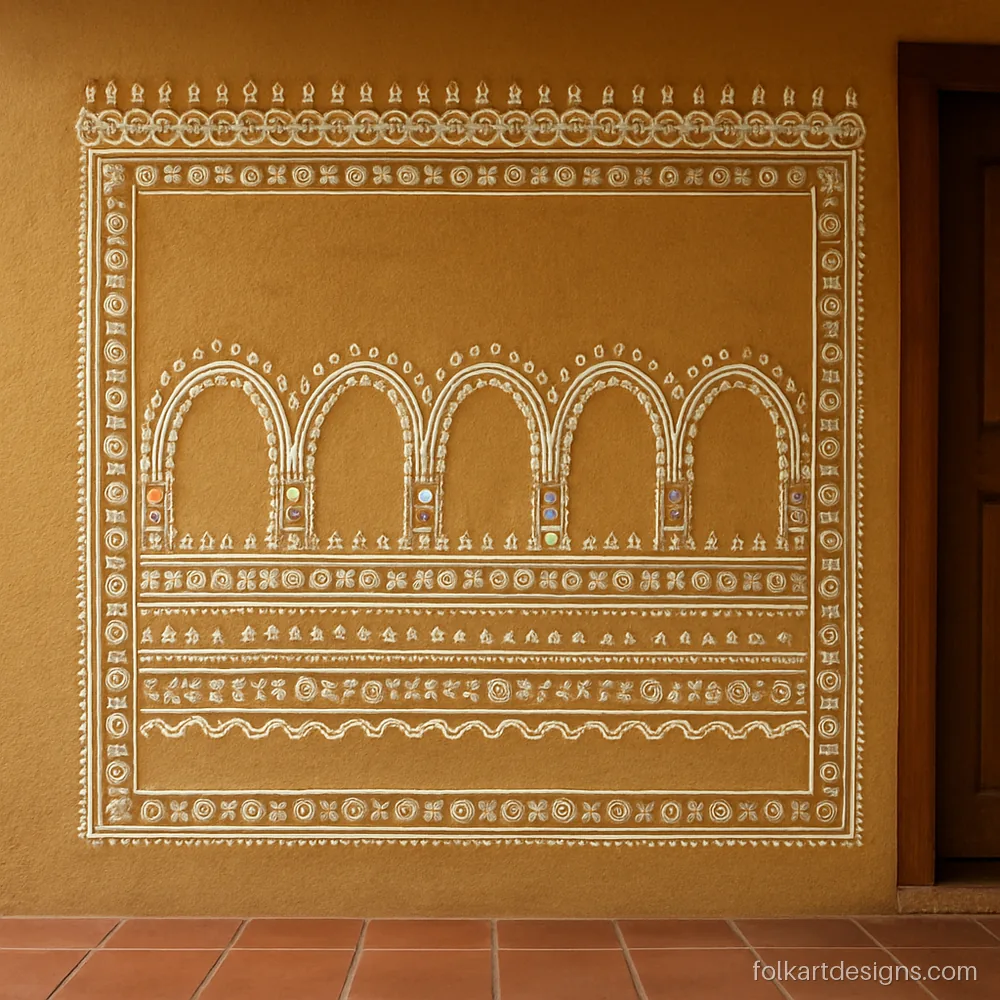
Raised arches and mirror bands at door height greet guests as they walk in. Best on a primed wall that never gets wet.
Artist tip Mix a spoon of white glue into each cup of clay for better grip.
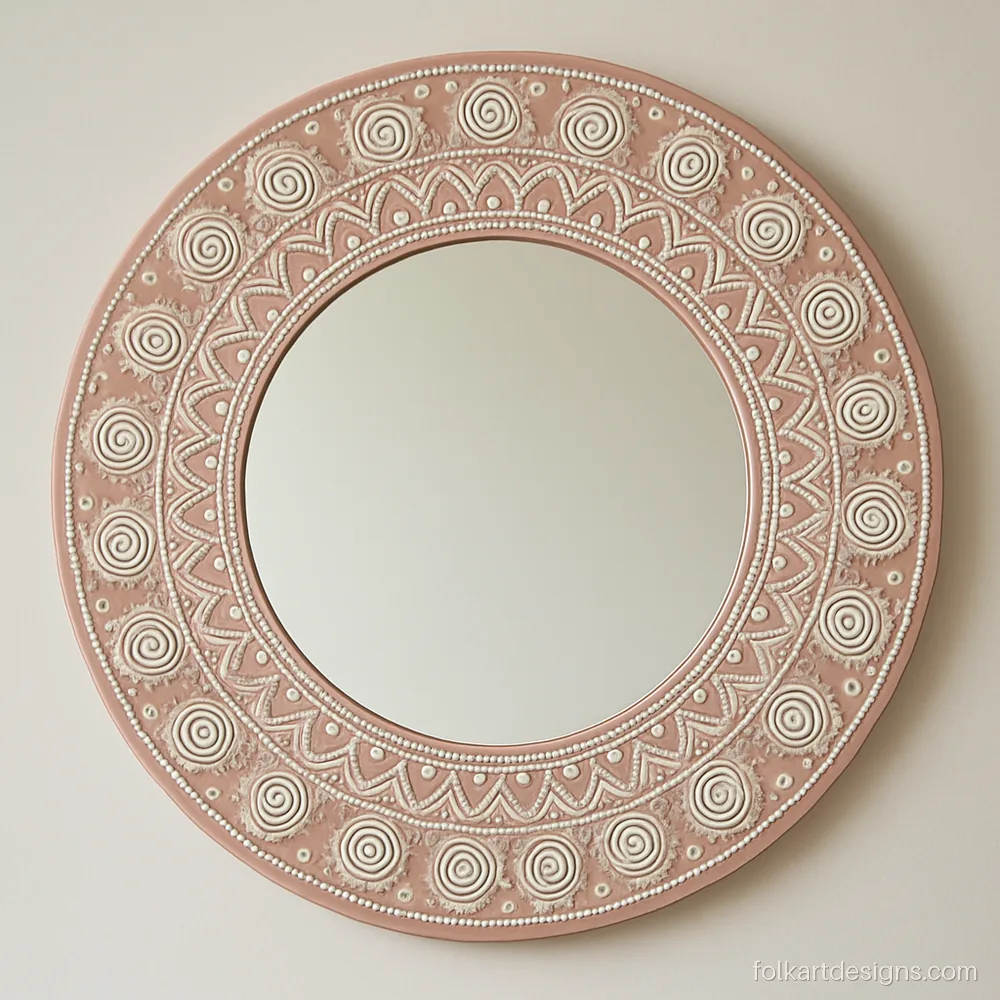
A plain round mirror gets a wide surround of coils and tiny mirrors. Keep it away from splashes.
Artist tip Leave a 2 cm clay-free gap around the big mirror so it is easy to wipe.
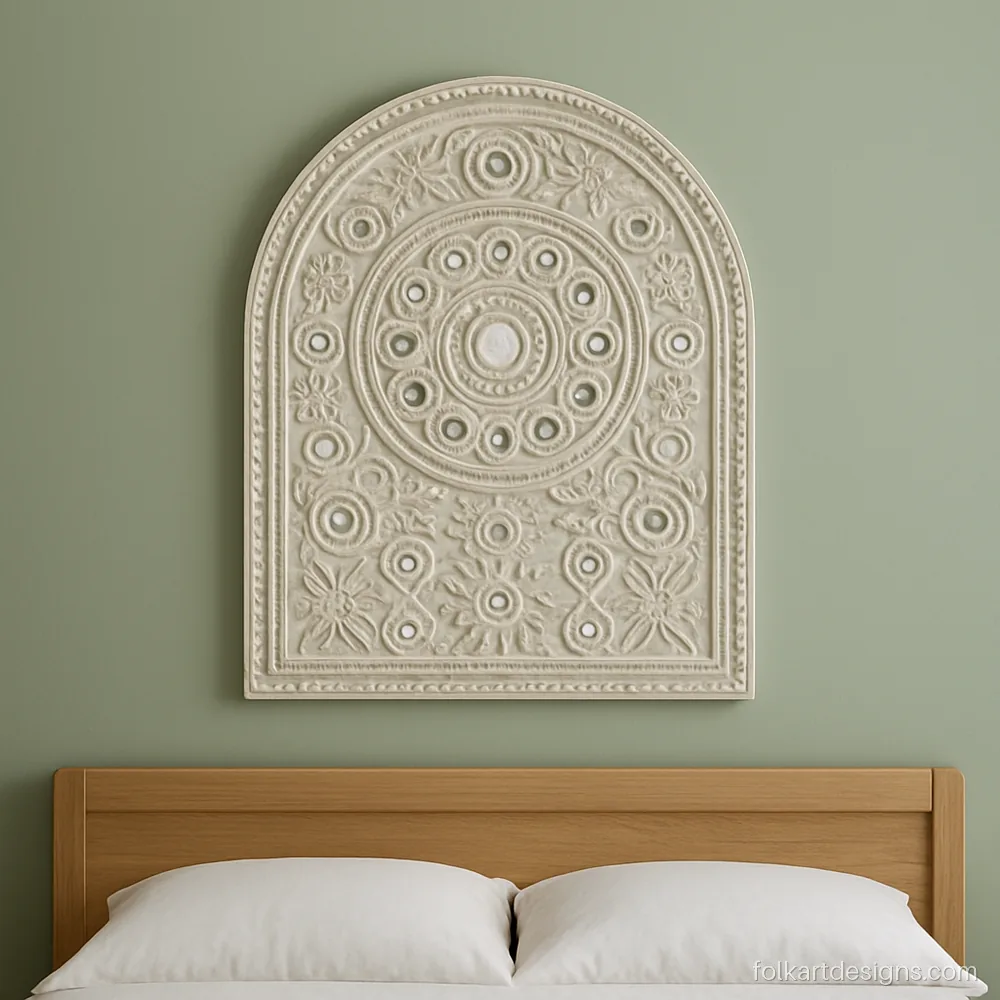
A wide arch of coils and mirrors takes the place of a headboard.
Artist tip Sketch the arch in chalk, then step back to check balance.
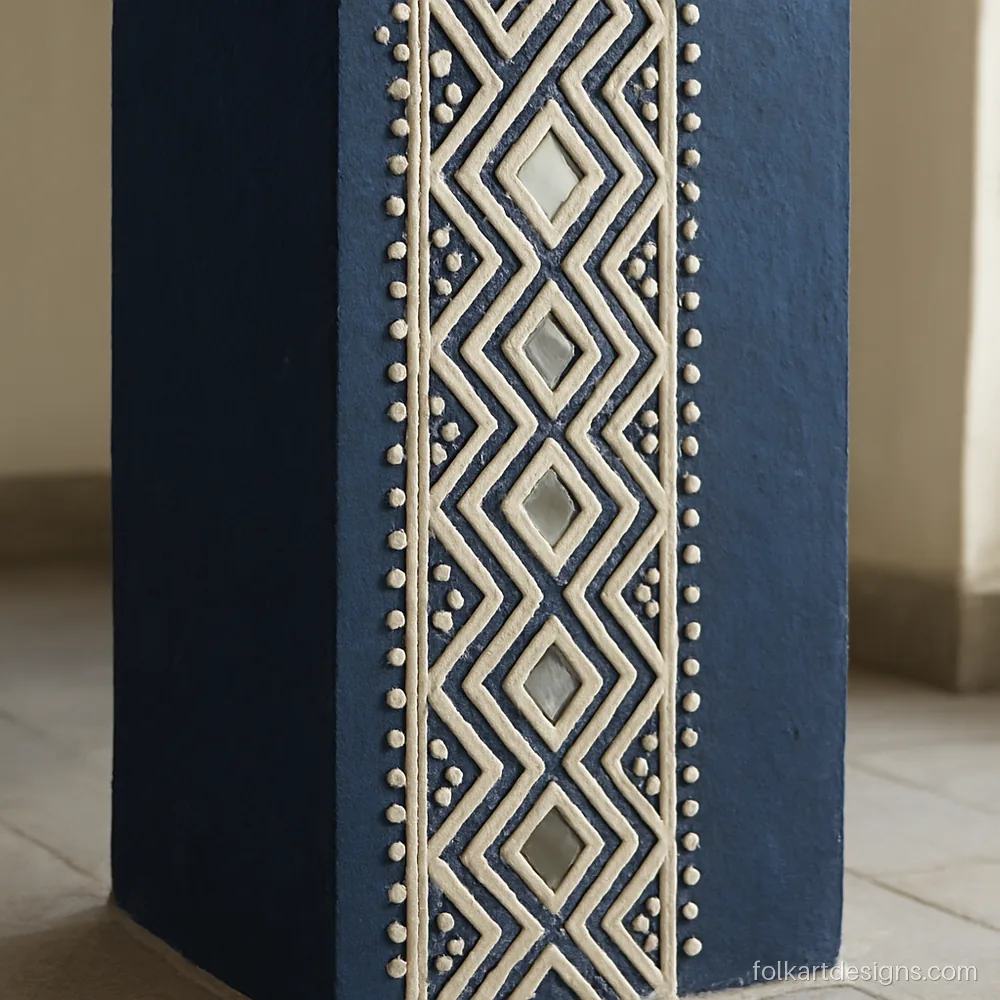
A vertical band wraps a square pillar and catches light from every side. A smart touch for verandas and hotel lobbies.
Artist tip Work one face of the pillar at a time and let it firm up before turning.
Lippan Art in White and Earthy Colours
White, cream, sand and terracotta are the colours of a real mud house.
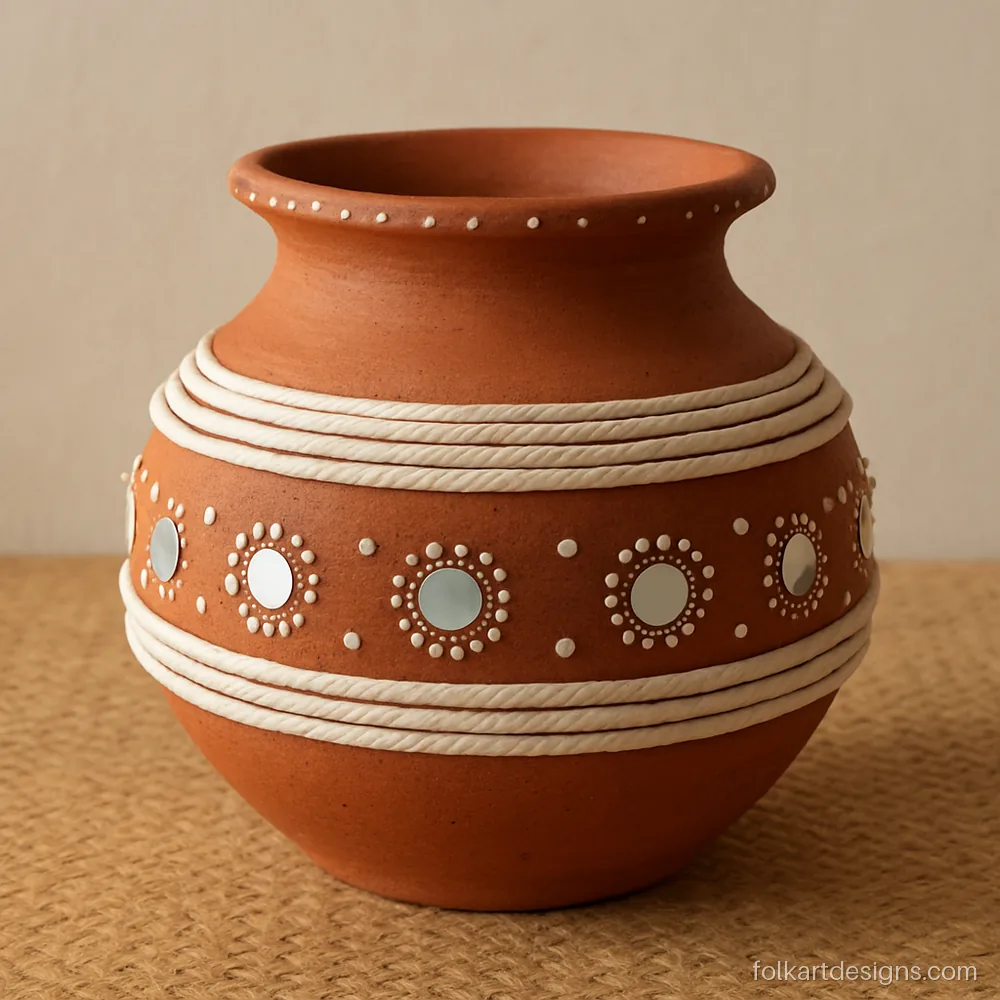
Two bands of coils and mirrors circle the belly of a plain clay pot. An easy way to try lippan art on pot shapes.
Artist tip Wipe the pot with a damp cloth first so fresh clay grips the curve.
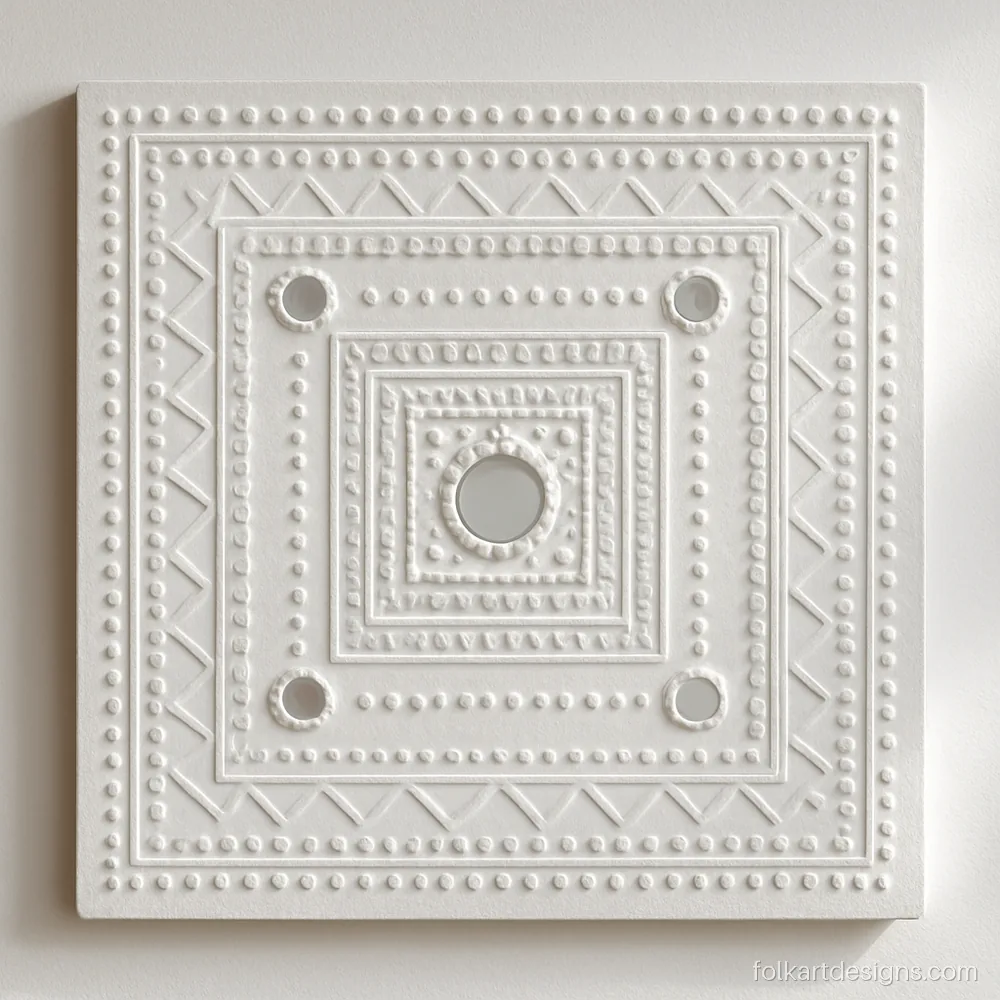
White on white puts the focus on shadow and sparkle. Suits small, simple rooms.
Artist tip Hang it where side light falls across it, or the relief will look flat.
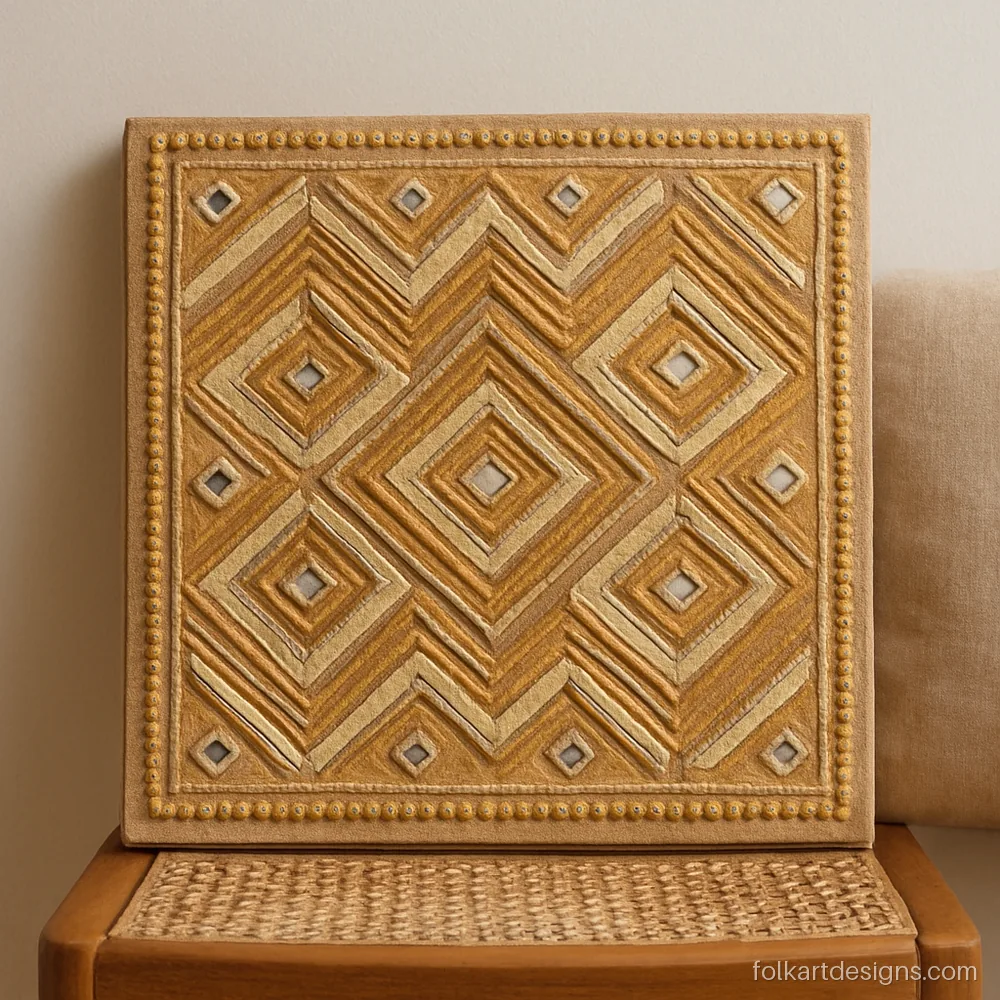
Sand, ochre and cream copy the walls of a Kutch village home. Pair it with cane chairs and cotton cushions.
Artist tip Stir a little multani mitti into white paint for a soft, chalky earth tone.
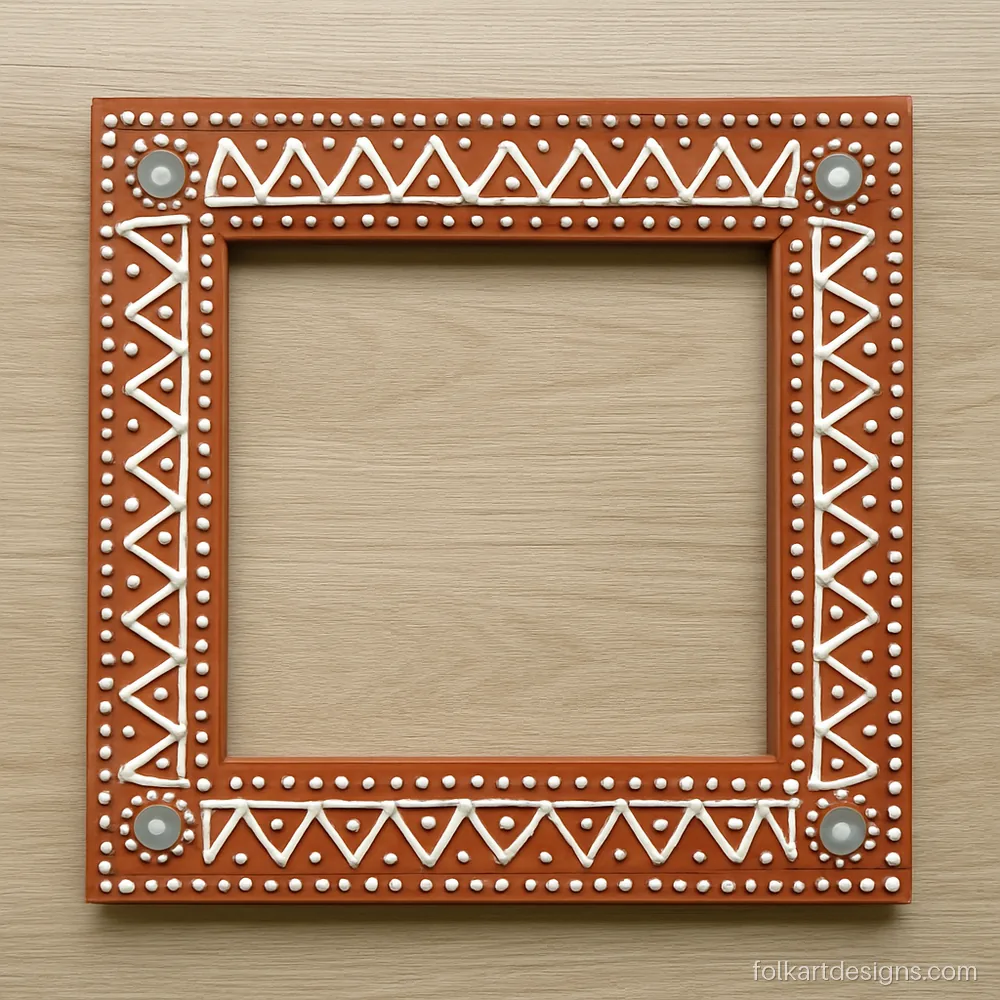
This lippan art border is a hollow frame, so a photo or small mirror can sit inside. Good practice for repeat patterns.
Artist tip Try the border on paper first, then repeat it on all four sides.
Large Lippan Art Work for Wall Installations
Split big designs into panels or tiles so each part is light enough to hang safely.
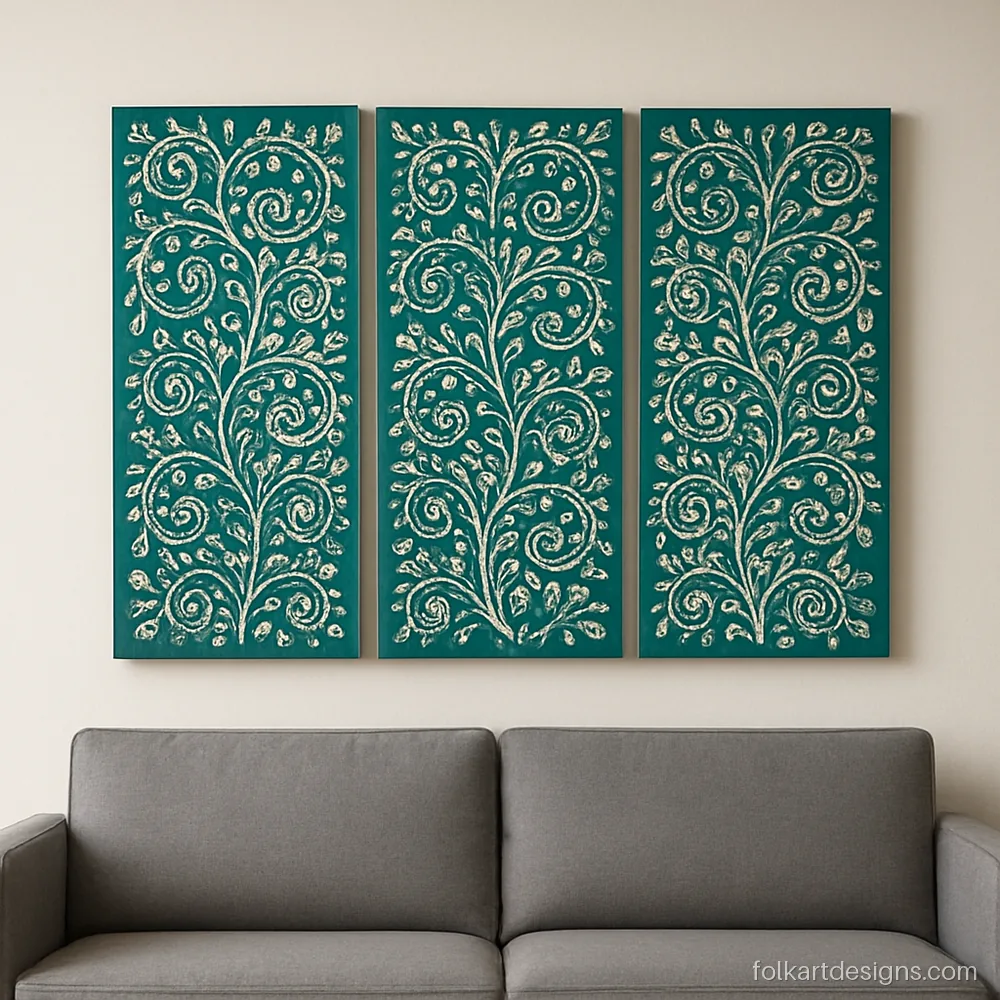
Three tall panels share one pattern that flows over the gaps, filling a wide wall without one heavy board.
Artist tip Lay all three boards side by side while you work the joins.
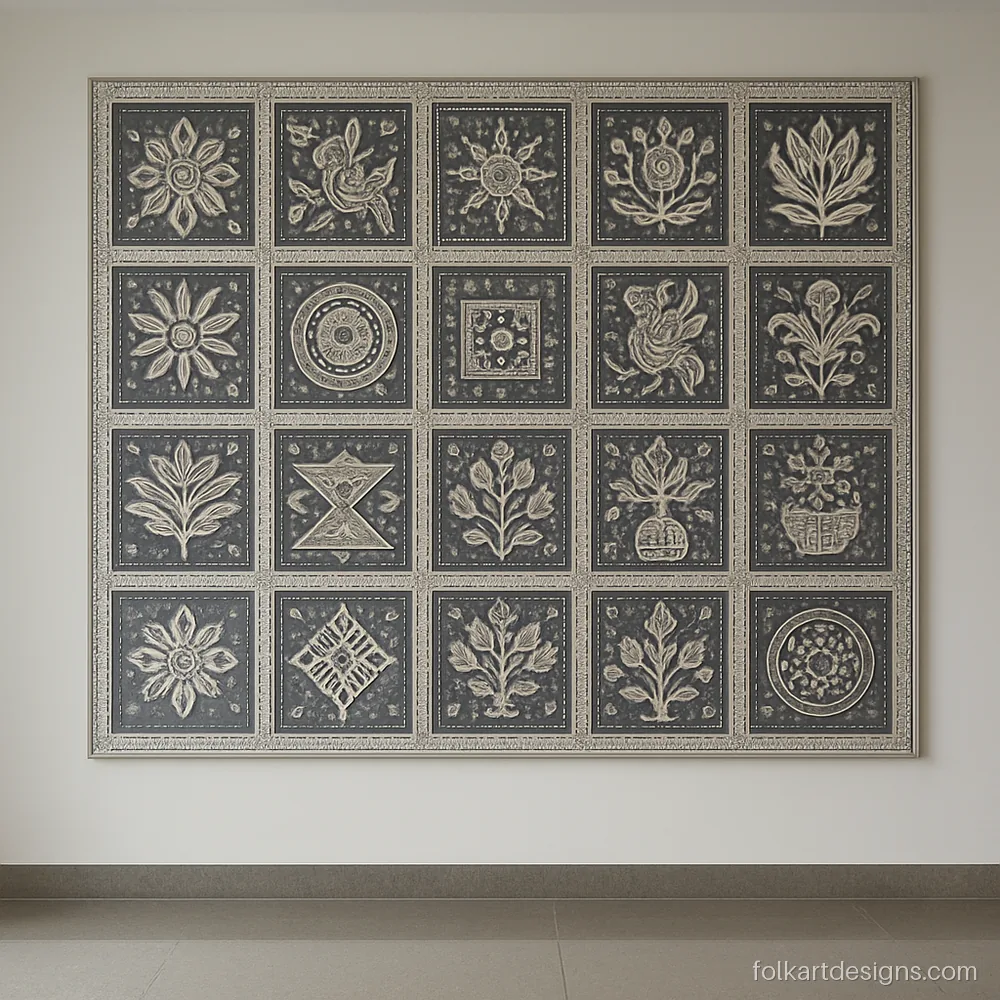
Twenty square tiles, each with its own motif, cover a lobby wall. Small tiles are easy to carry and repair.
Artist tip Make tiles in batches of six so clay thickness and colour stay matched.
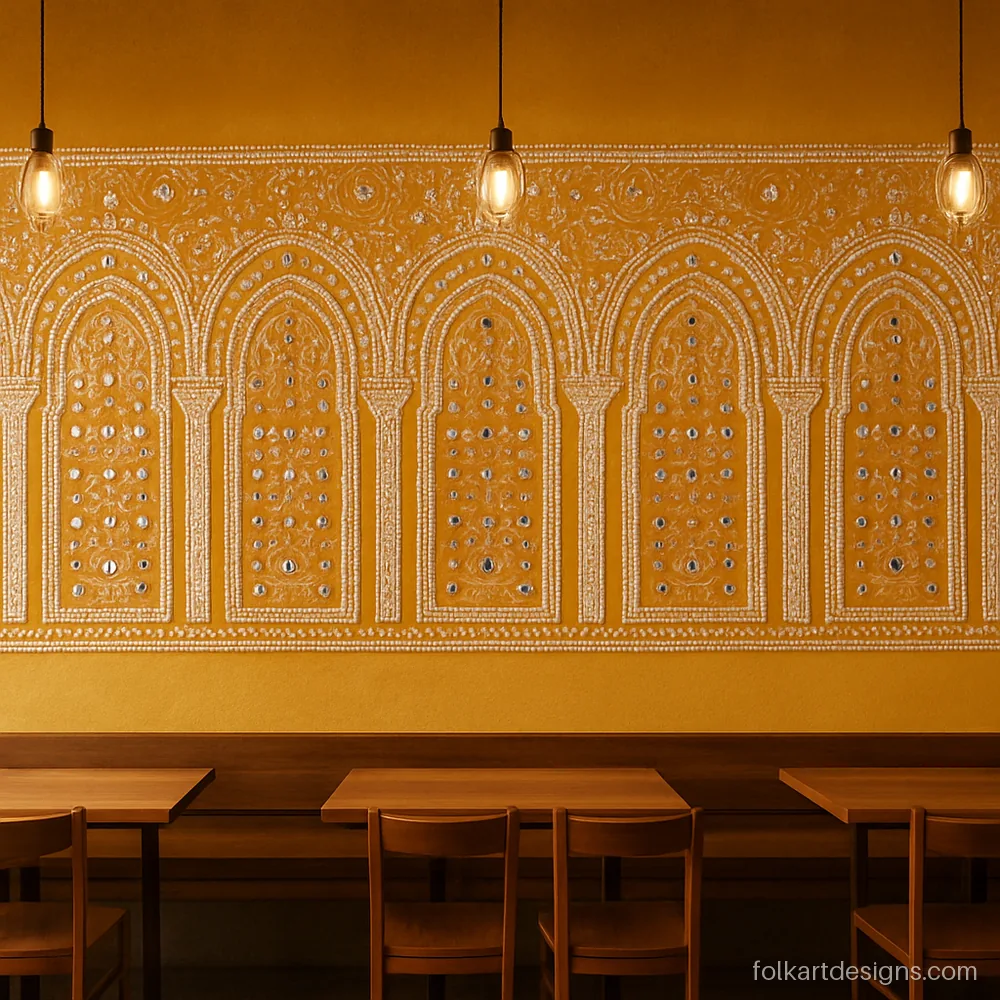
Tall arches and mirror bands glow under warm lamps at night. Popular in theme restaurants and resorts.
Artist tip Use tile adhesive under heavy sections on walls taller than 2 metres.
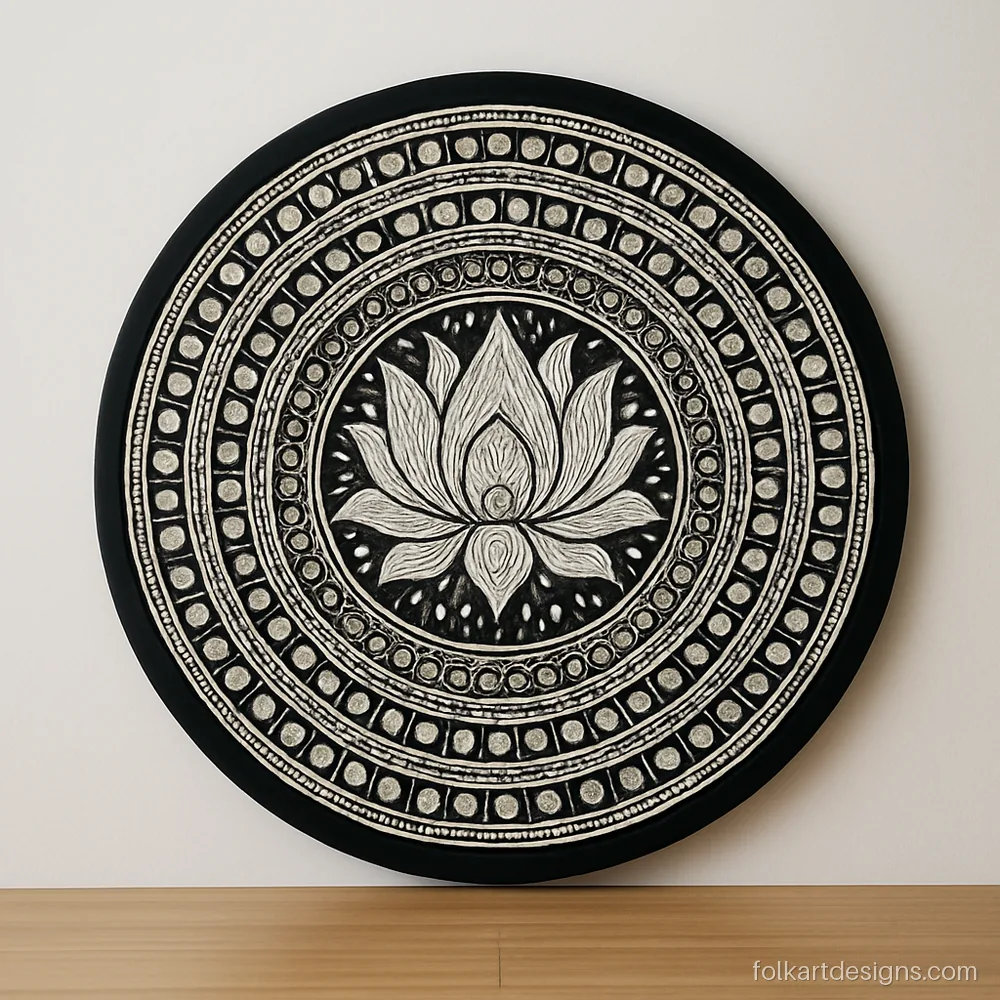
A 90 cm black round with bold white relief. The strong contrast reads clearly even from across a big hall.
Artist tip Use 9 mm MDF for big rounds so the board does not bend as the clay dries.
How to Make DIY Lippan Art on MDF
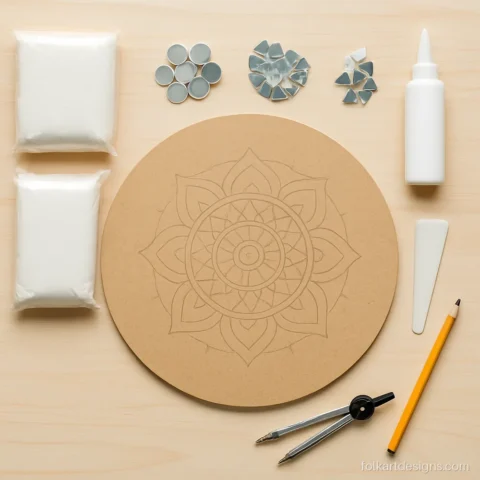
- Paint a 6 or 9 mm MDF board and let it dry for a few hours.
- Draw the design in pencil. Use a compass for rounds and a ruler for borders.
- Stick mirrors with white glue where the plan shows them.
- Roll clay into thin, even coils, about 3 to 4 mm thick. Lay them along the lines and around each mirror.
- Add dots and small shapes, then smooth joins with a damp brush.
- Leave it to dry for 24 to 48 hours away from fans and sun, then paint the clay white or a colour of your choice.
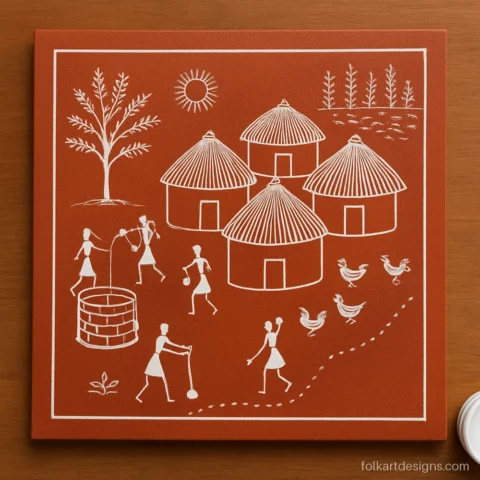
For colour ideas see modern lippan art, and for a related tribal wall style try warli art.
Sealing, Cleaning and Care
When fully dry, brush on one or two coats of matt or gloss varnish so dust does not stick to the clay. Clean with a soft dry paintbrush and wipe mirrors with a cotton bud. Keep lippan away from bathrooms, kitchens and outer walls.
Questions about these designs
What is lippan art?
It is the mud and mirror relief craft of Kutch, Gujarat. Raised clay lines and small mirrors are used to decorate walls, and today also boards, pots and frames.
What is the history of lippan art?
It began as wall decoration inside bhungas, the round mud houses of Kutch. Rabari and other families made it with clay and dung, and the mirrors caught lamp light.
Is lippan art painting the same as lippan kaam?
Lippan kaam is the local name for the craft. Lippan art painting usually means the modern version on a painted MDF board, where the base and clay are coloured with acrylics.
Which clay is best for DIY lippan art?
Air-dry clay or shilpkar clay. Both stay soft long enough to shape coils, stick well to MDF and dry hard without baking.
How many hours does a lippan board need to dry?
A small board dries in about a day. Thick or large pieces can take two days or more in humid weather, so wait before you varnish.
Can I do lippan art on a pot or bottle?
Yes. Clean the surface, sand it lightly if glossy, and use small mirrors so they sit flat on the curve.