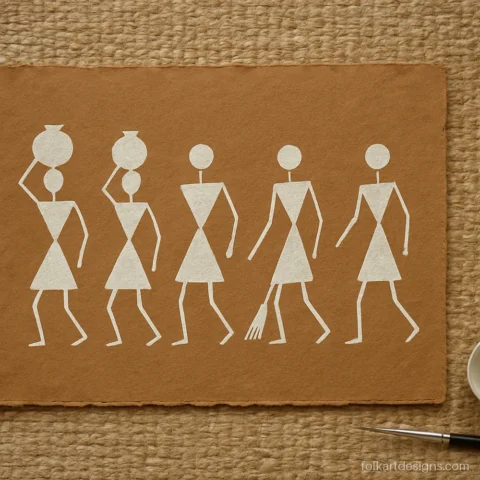
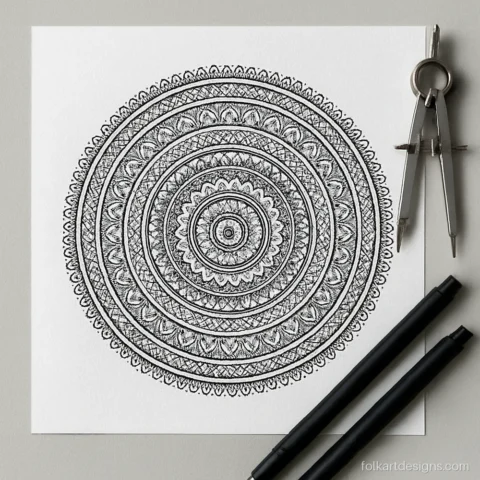
Madhubani Drawing: Line Work, Sketches and Outlines
18 designs Madhubani art Updated 9 Oct 2026
Madhubani drawing is all about the line. Before any colour goes on, a Mithila artist builds the whole picture from double outlines, hatching and small repeated marks. In the kachni style the line work is the finished art, usually in black alone or black with one red.
This page is for pen and pencil lovers. Every madhubani folk art drawing here is an original black and white piece: kachni line work, pencil sketches, outlines ready to colour, fish, peacock and elephant studies, and fine borders. Each card lists the tool, the motifs, who it suits and one drawing tip.
Want to fill your lines with colour? Our madhubani art designs page has painted pieces, and the main madhubani painting gallery covers the history of the style.
Madhubani Drawing in Black and White: Kachni Line Work
Kachni simply means line work. These madhubani art black and white pieces use hatching, parallel strokes and tiny dashes in place of paint to show shape and shade.
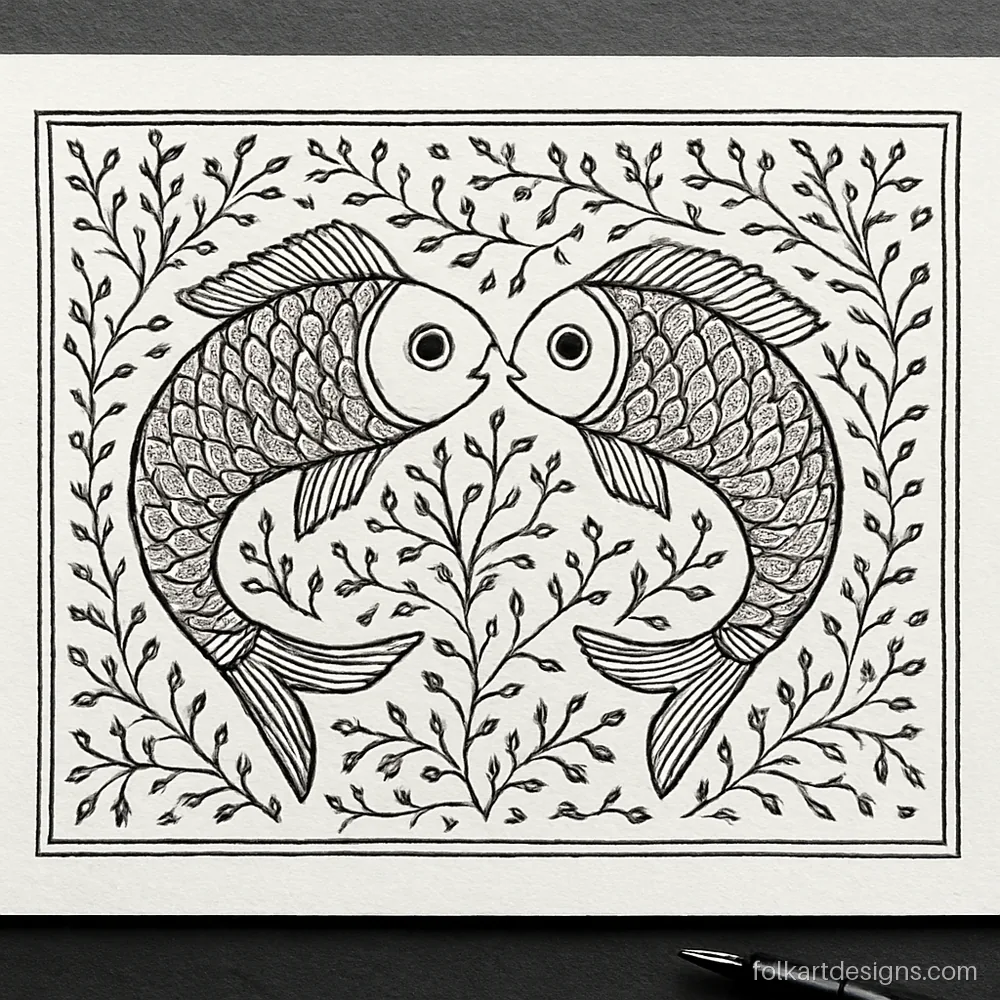
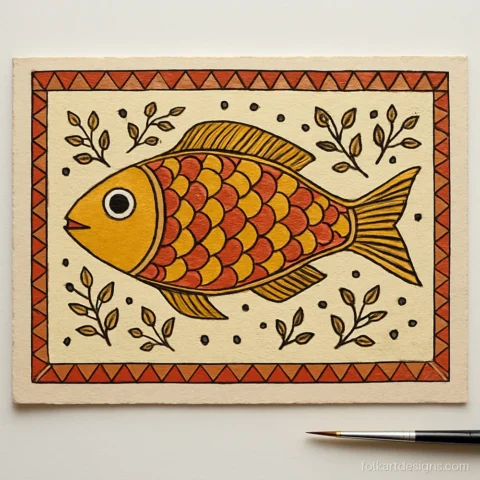
Two fish curve towards each other, every scale packed with fine parallel lines. It looks rich with only one pen.
Artist tip Turn the paper as you hatch so every stroke pulls towards you. The lines stay straighter.

A tall tree with spiral branches and leaf clusters, black for the main lines and red for the inner outline. Two tones is the classic kachni pairing.
Artist tip Finish every black line first. Add red only after the black has dried for ten minutes.
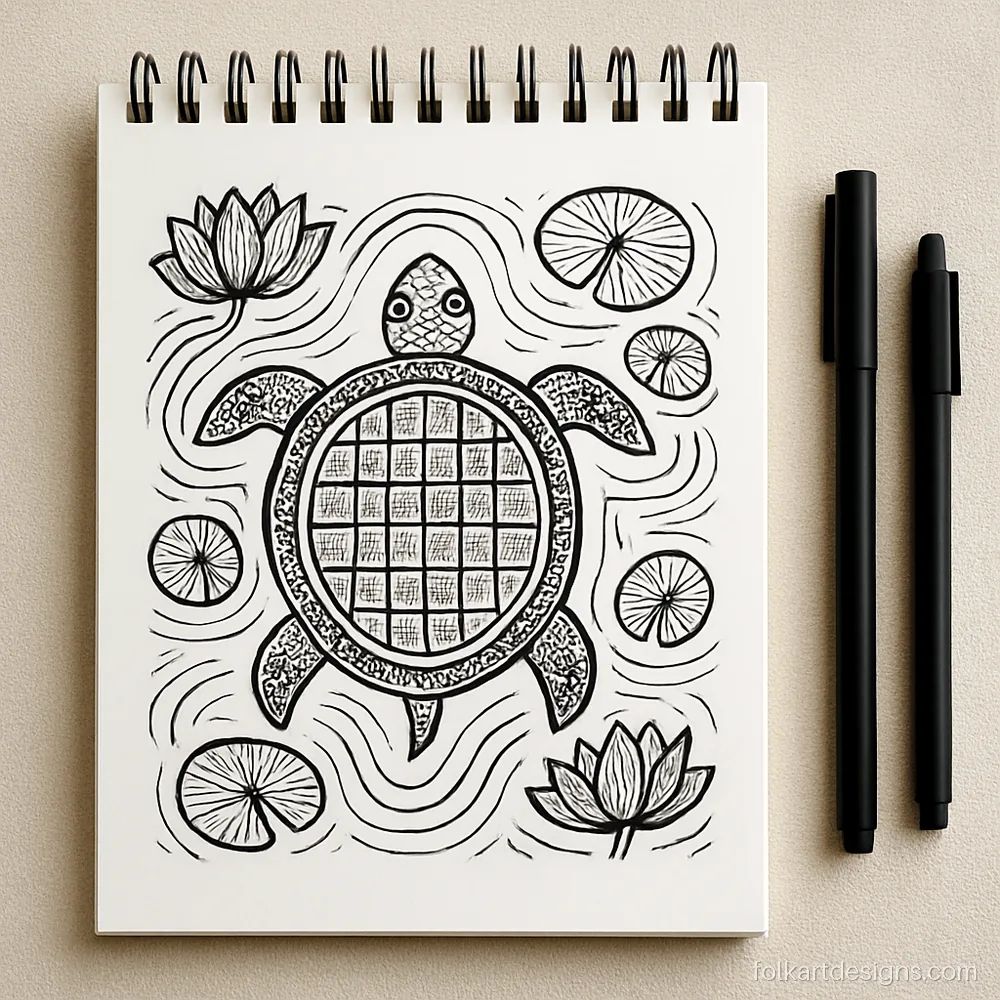
A turtle with a shell of tiny squares swims among lotus leaves and ripples. Every gap is packed, so the eye keeps moving.
Artist tip Use 0.1 mm for the shell grid and 0.5 mm for the outlines. The contrast gives depth.
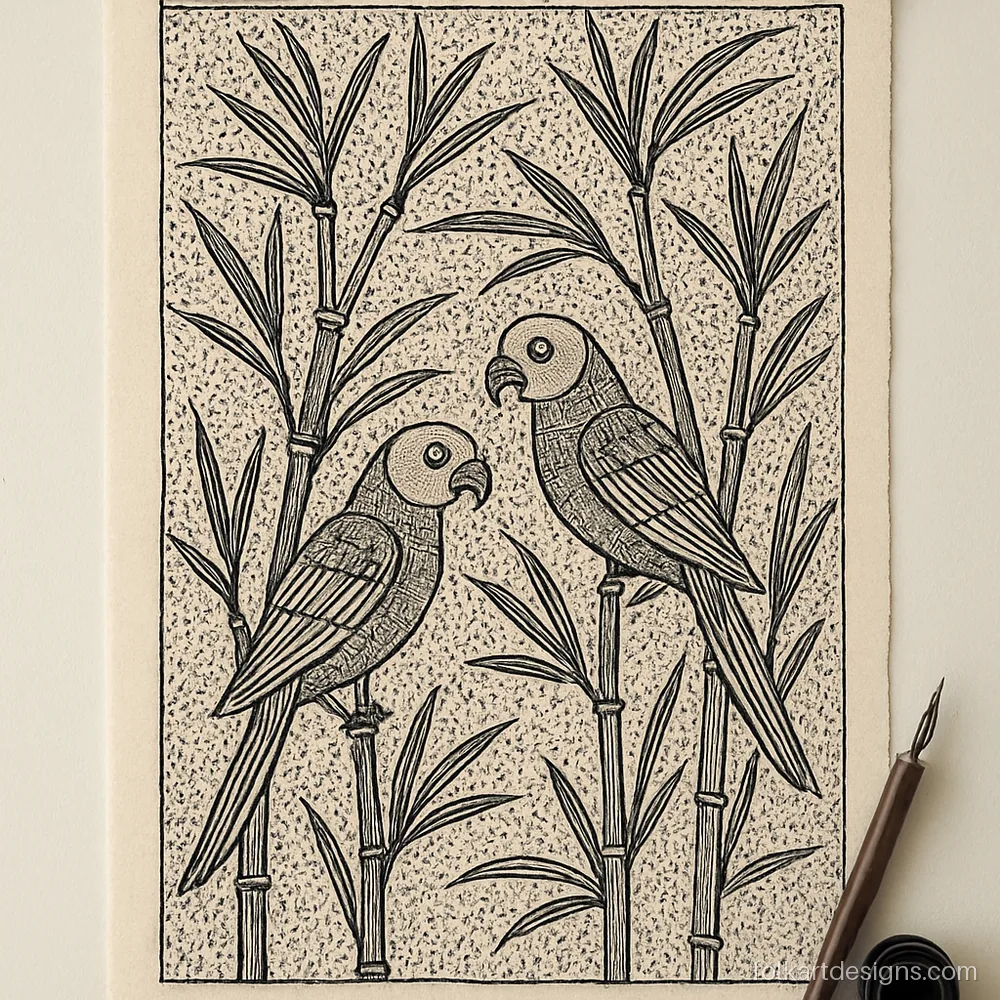
Upright bamboo stems with ringed joints and two parrots tucked between them. The repeated upright lines make a calm, tall picture.
Artist tip Dip the nib often and wipe it on a rag. A loaded nib blots on the joints.
Madhubani Pencil Sketch Ideas
Every madhubani painting drawing starts in pencil. These madhubani sketches show the planning stage, with light guide lines, a centre mark and the main shapes blocked in.
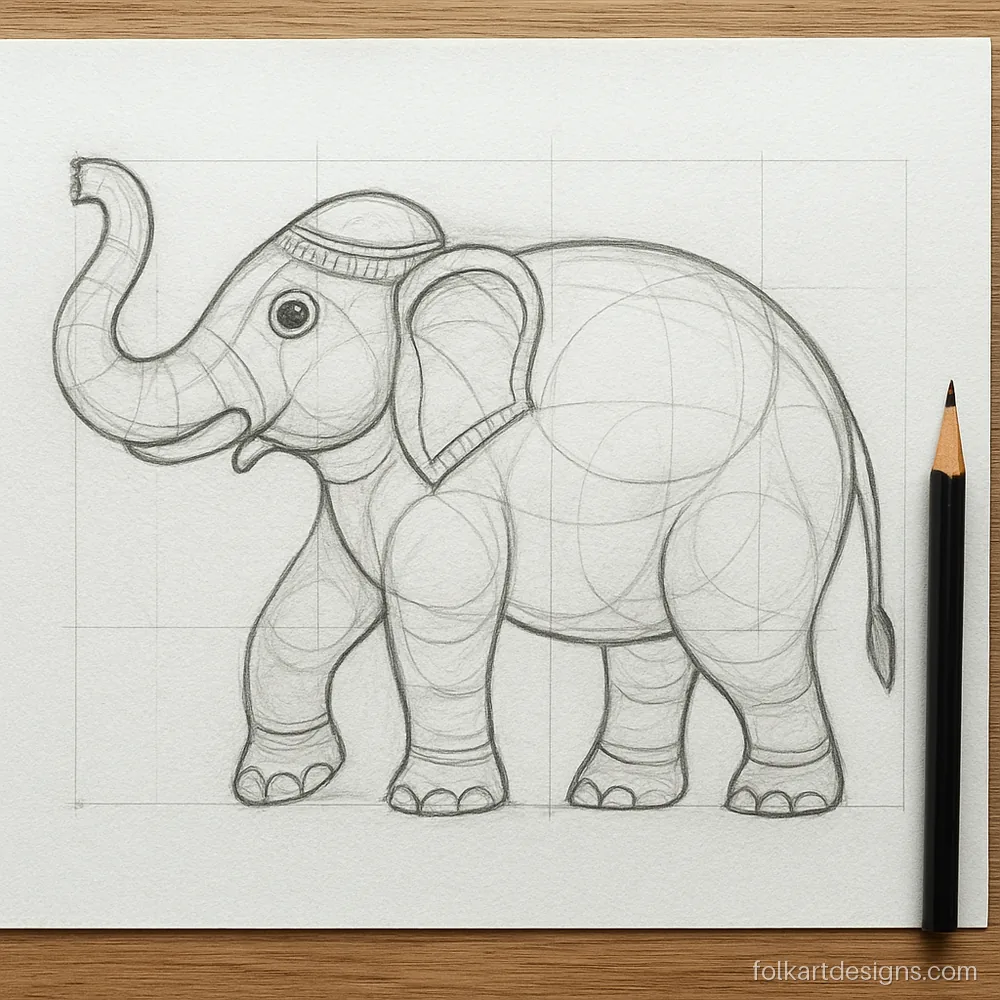
An elephant blocked in with ovals over a faint grid. This madhubani art sketch shows how to get the size right before any ink.
Artist tip Press lightly with an HB pencil. Dark graphite shows through thin ink lines later.
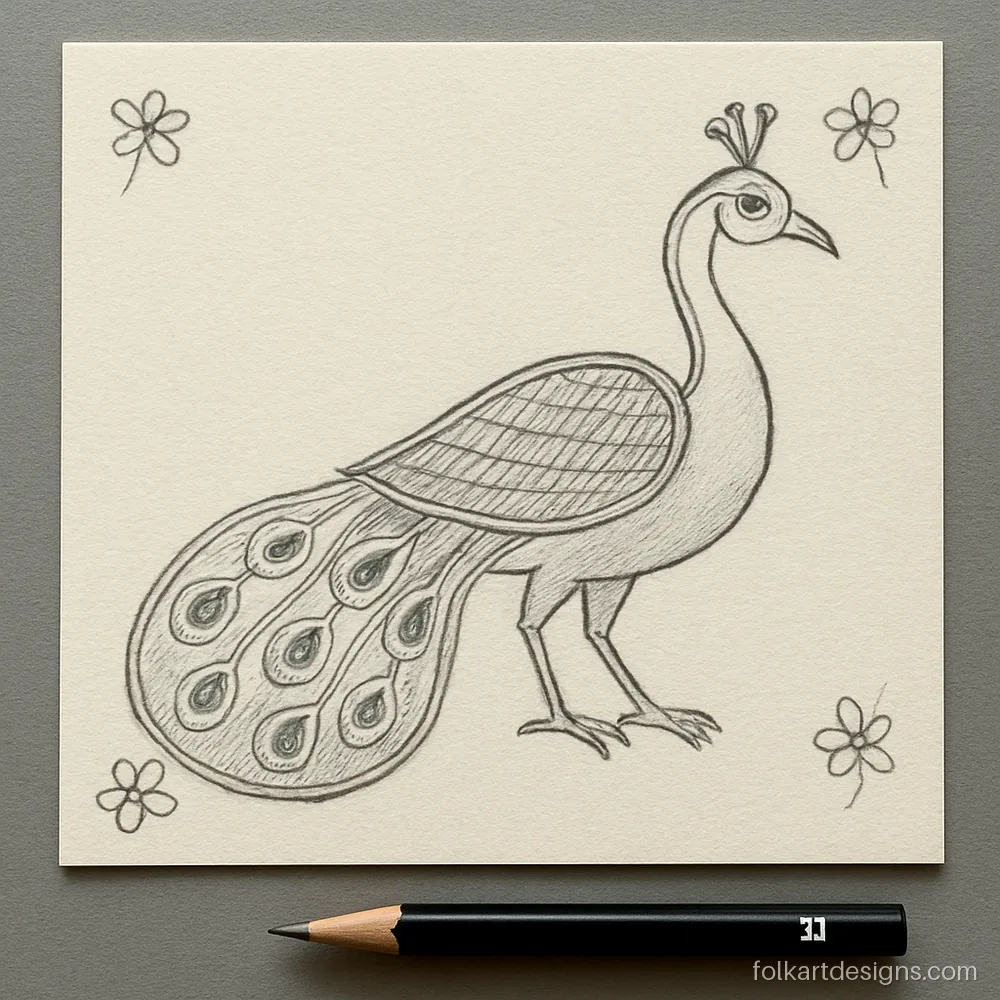
A peacock sketched in 2B with soft shading on the tail. Some artists keep a pencil sketch like this as the final piece.
Artist tip Spray a light coat of fixative from 30 cm away so the graphite does not smudge.
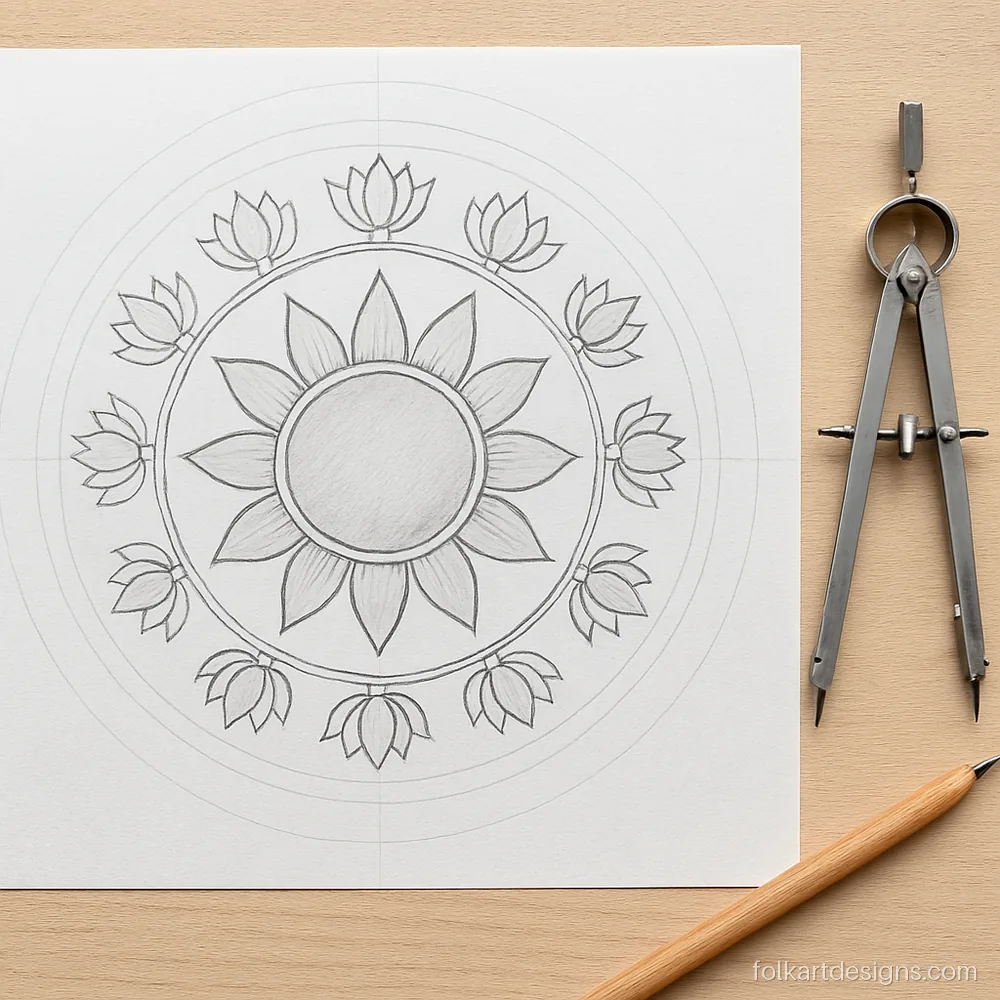
A sun with petal rays inside a ring of lotus flowers, still in pencil with compass arcs visible. Ready to ink the next day.
Artist tip Mark the centre with a small dot before you set the compass point down.
How to Draw Madhubani Art Step by Step
- Fold or measure your sheet to find the centre, and draw a border band about 1.5 cm in from the edge.
- Sketch the main animal or tree lightly in HB pencil. Make it large, so it fills most of the space inside the border.
- Ink the outer outline with a 0.5 or 0.8 mm pen.
- Add the second outline just inside, with a 0.3 mm pen. Keep the gap even.
- Divide the body into bands or sections and give each one its own fill: hatching, scales, dots or stripes.
- Fill the background gaps with leaves, buds and dots so no paper is left empty.
- Finish the border pattern, wait ten minutes, then erase the pencil.
When drawing madhubani art, work from the biggest shape to the smallest. A good drawing of madhubani art looks busy up close but calm from a distance.
Madhubani Painting Outline Drawings Ready to Colour
A clean madhubani painting outline lets you or your students add colour later. These are inked with double lines and open shapes, with no fill yet.
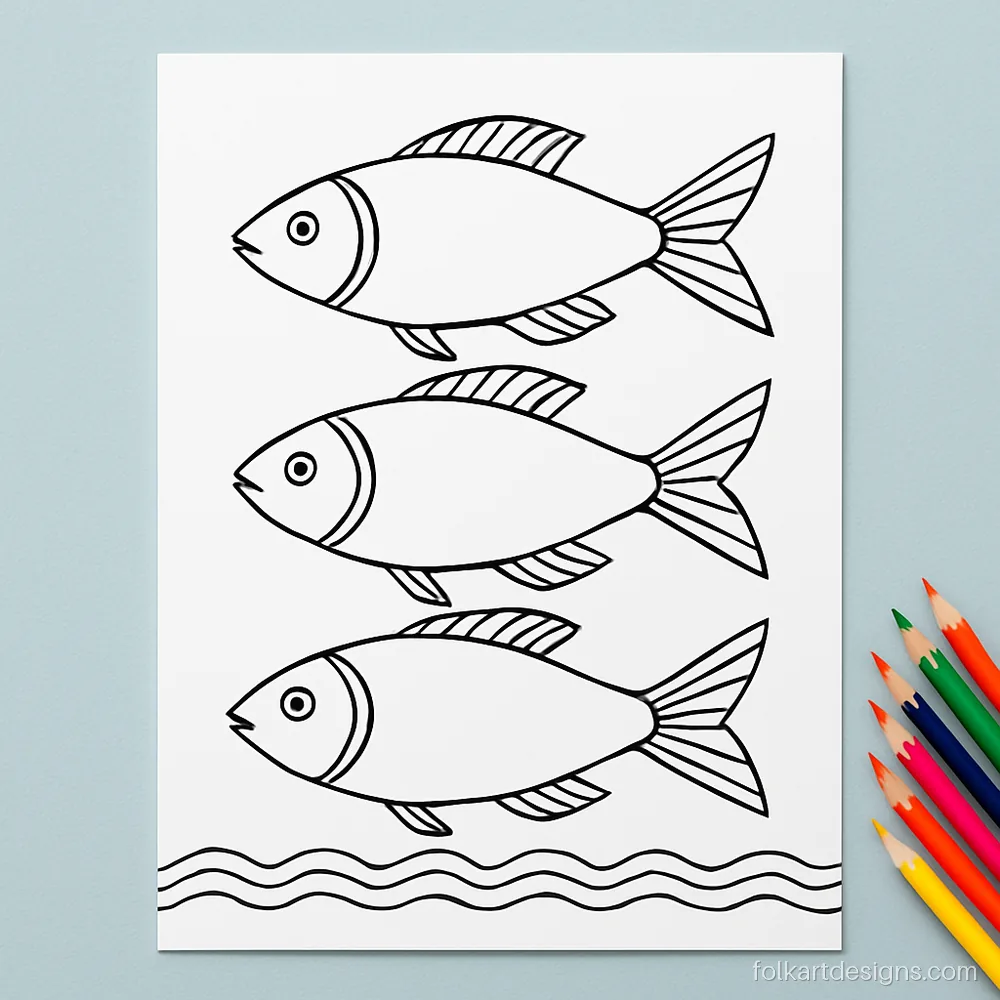
Three fish with clear double outlines and empty bodies. Photocopy it and hand out sheets for a colouring class.
Artist tip Make the outer line 0.8 mm and the inner line 0.3 mm so colouring stays inside.
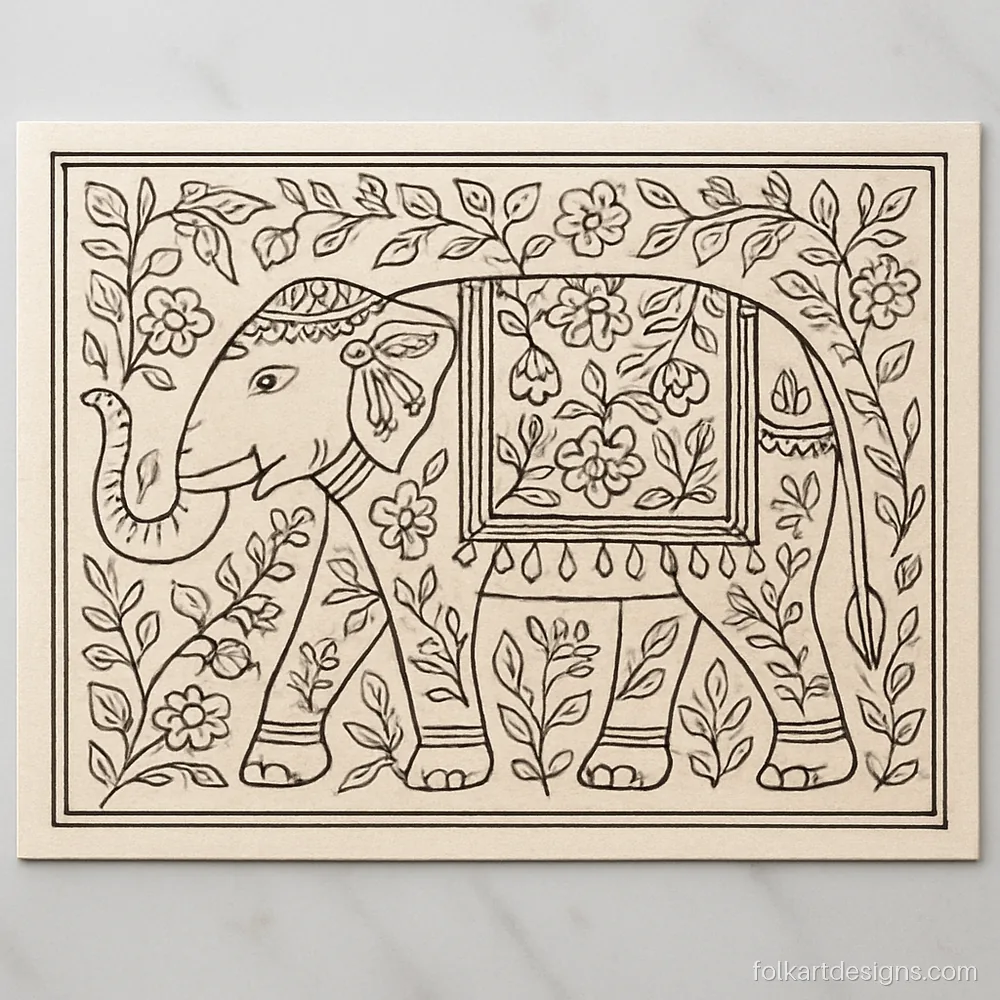
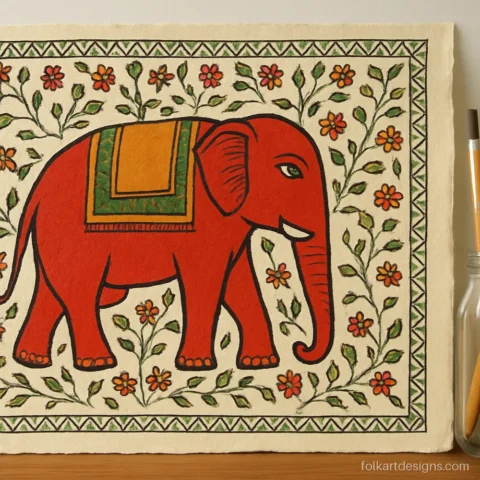
A side view elephant with a raised trunk, a blanket edged with tassels and flowers in each gap. The blanket gives the most room for colour.
Artist tip Draw the tassels last as small teardrops hanging from one line. Keep them evenly spaced.
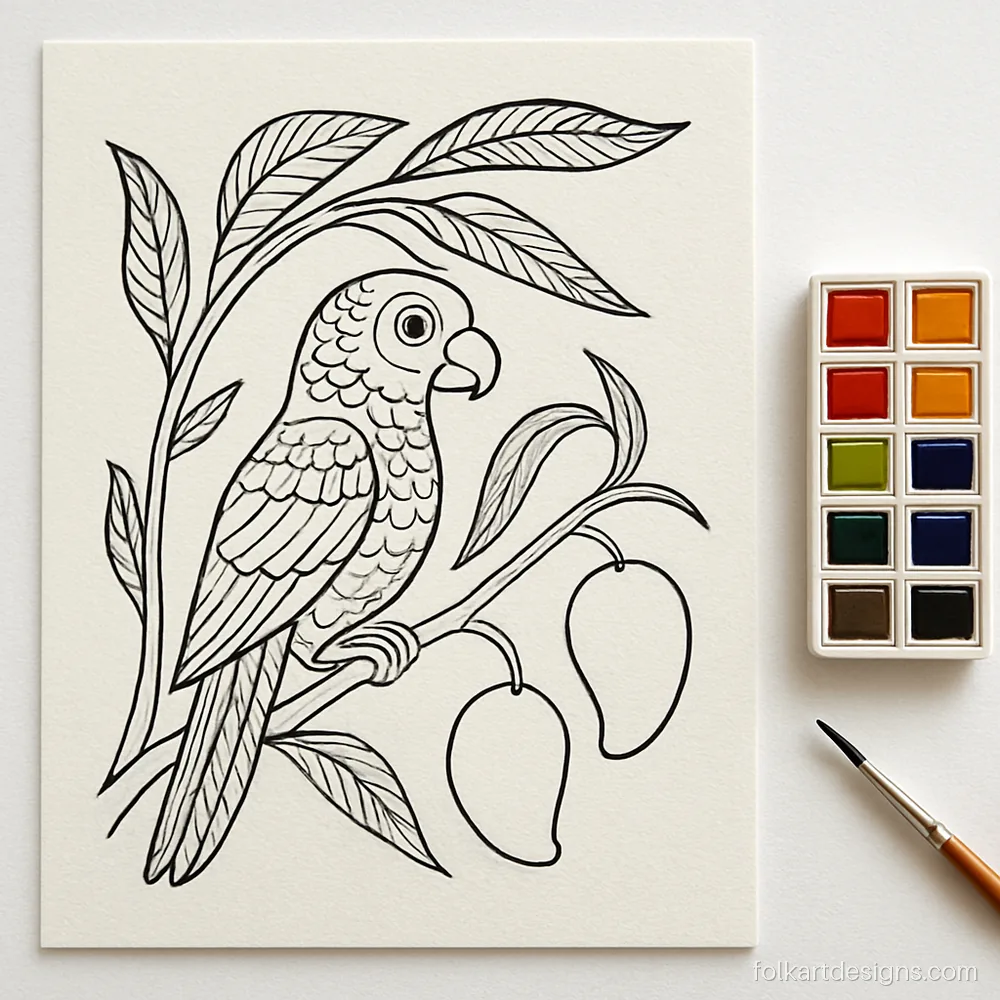
A parrot on a mango branch with long leaves and two hanging fruits. Light enough to colour with pencils or watercolour.
Artist tip Use waterproof ink if you plan to add watercolour. Test one corner of the sheet first.
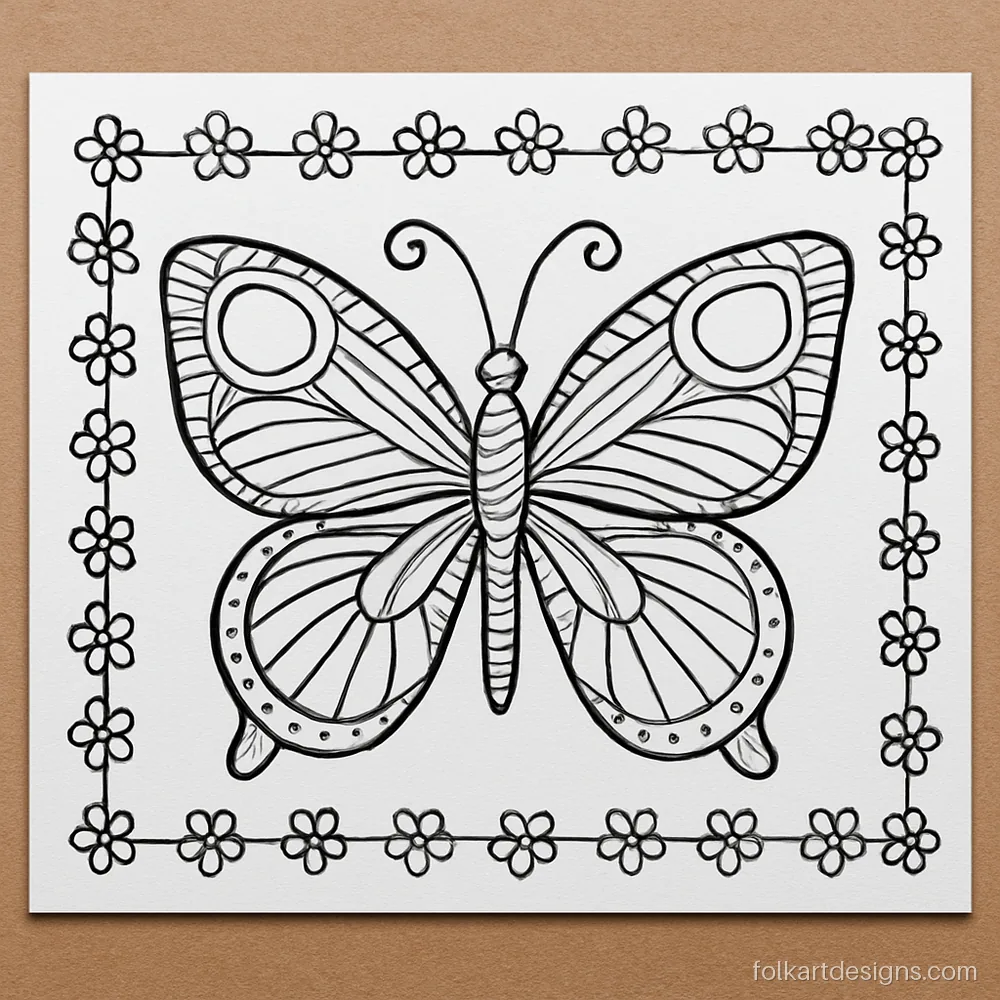
A wide winged butterfly framed by a square of small flowers. A good fit for cards and notebook covers.
Artist tip Finish the left wing, then hold the card to a sunny window and copy it for the right.
Black and White Madhubani Peacock, Fish and Elephant
These animals are the heart of madhubani bird drawing and animal work. In black and white, the patterns inside each body do the job colour usually does. See our peacock and fish motifs page for more.
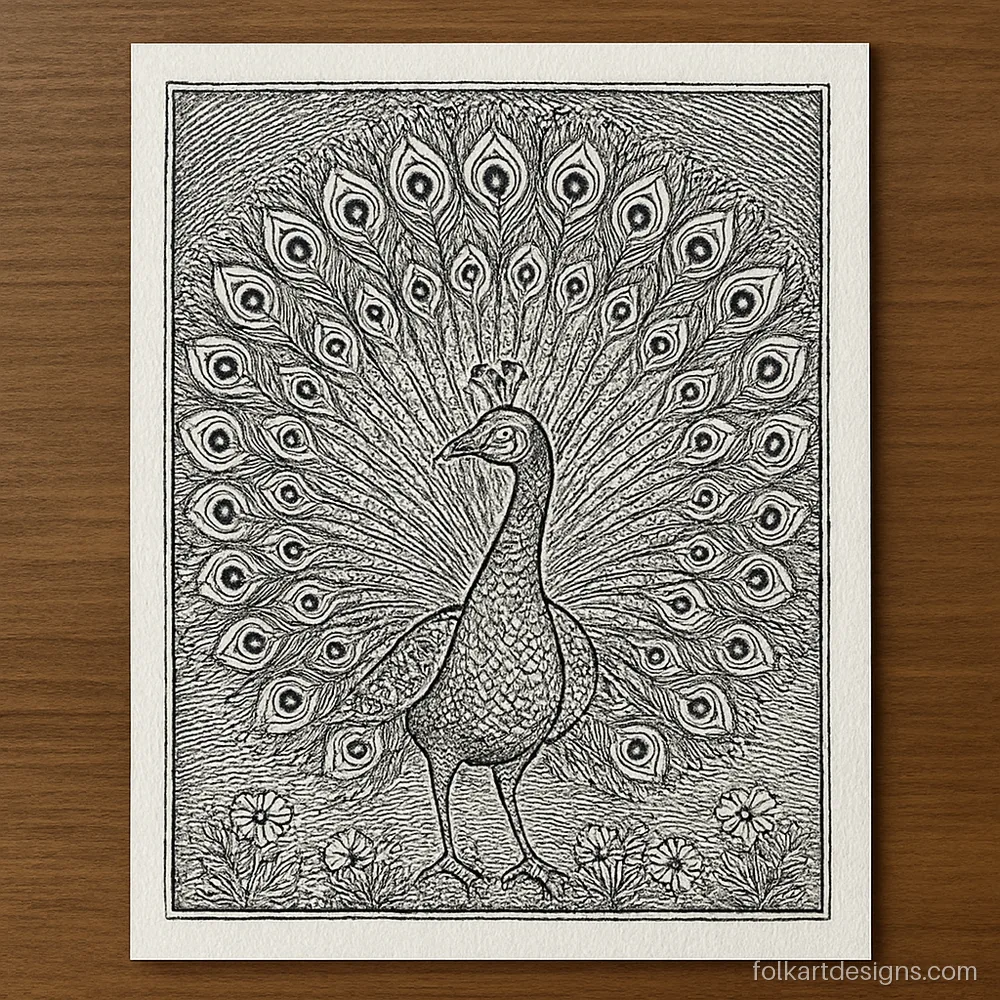
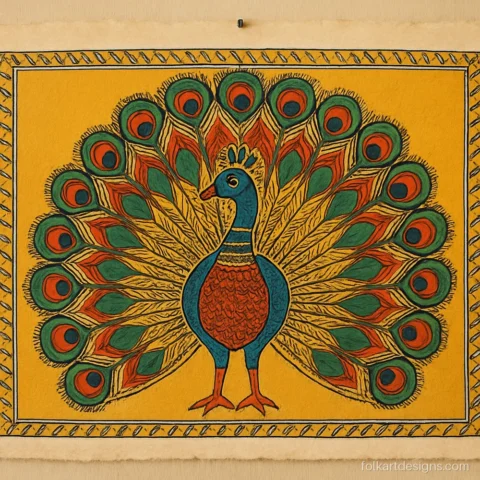
A peacock with its fan open, each feather eye ringed with tiny dashes. It takes patience but no colour at all.
Artist tip Plan the feather eyes in pencil as evenly spaced circles before inking anything.
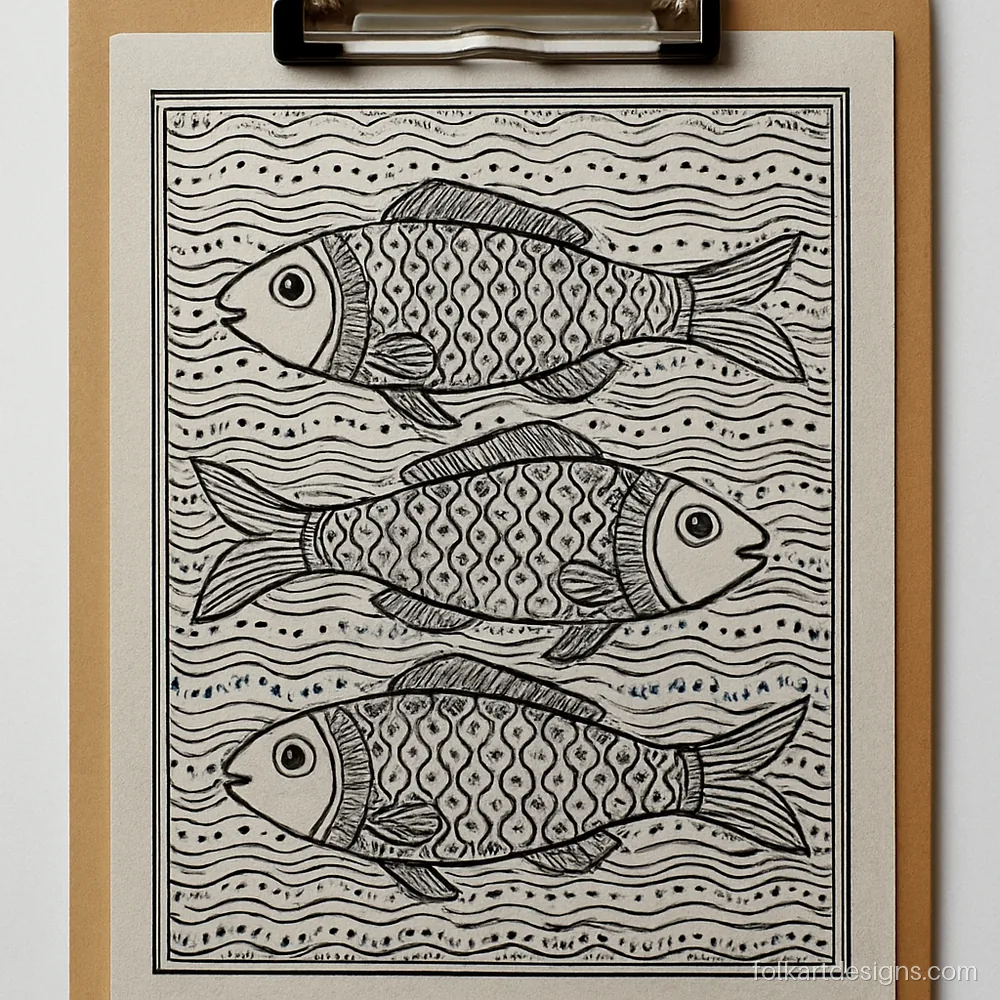
Four fish swim over bands of waves and dots. The waves fill the background so no paper is left bare.
Artist tip Draw the fish first, then the waves around them, never the other way round.
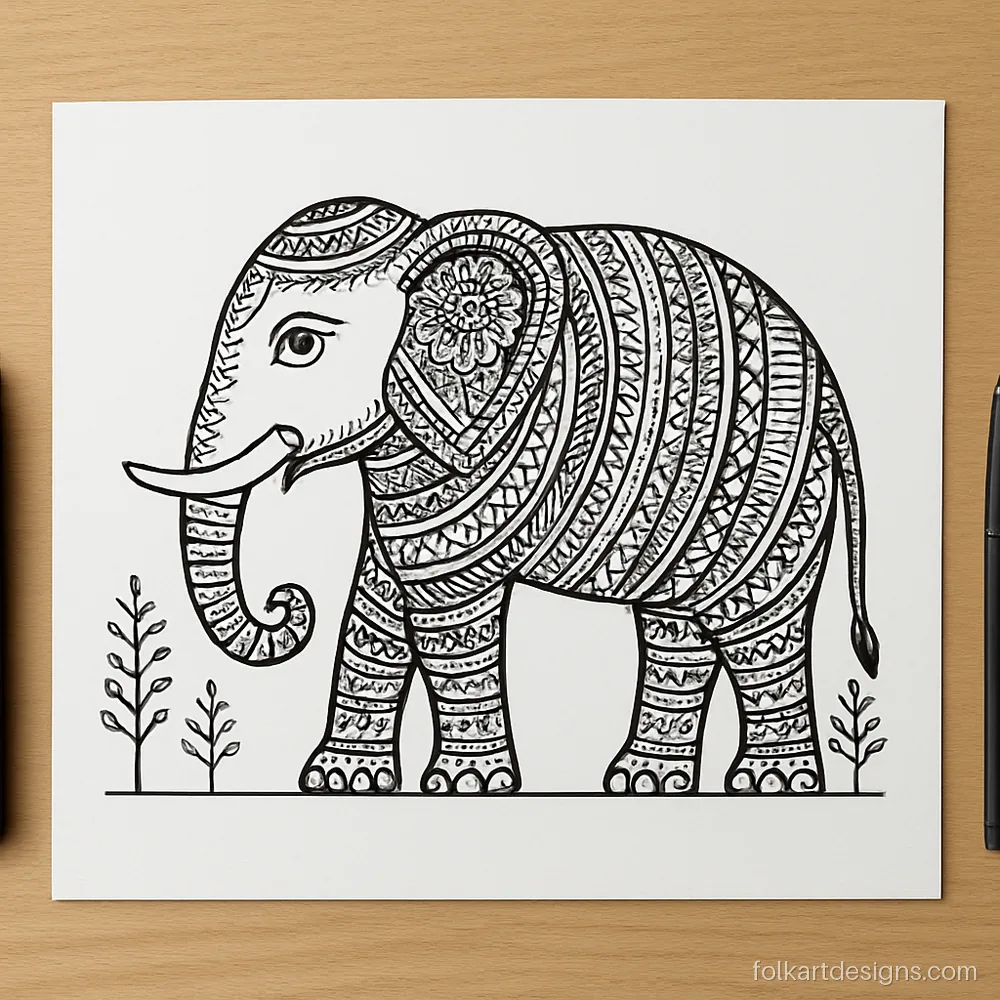
An elephant with stripes, scallops and circles inside its body. Each band uses a new fill, which is the secret of good black and white work.
Artist tip Divide the body with curved pencil lines first, then give each band its own fill.
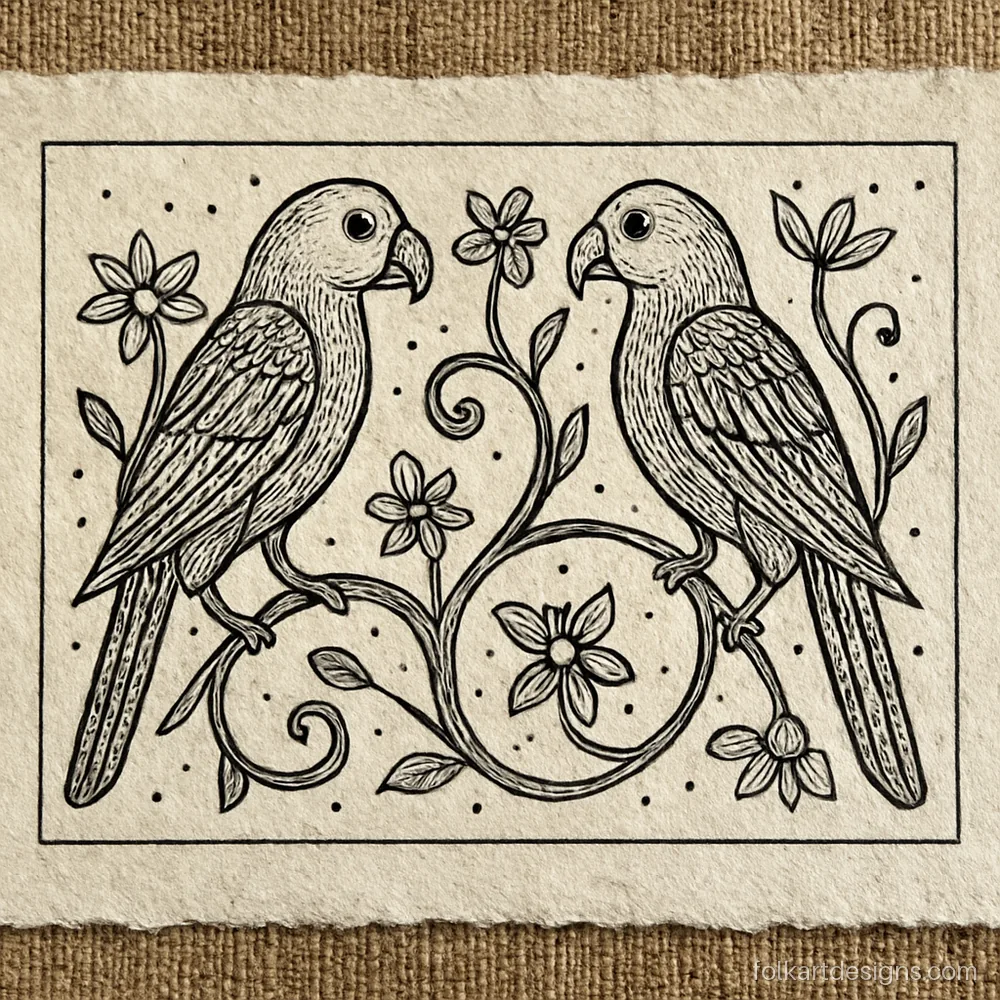
Two parrots face each other on a curling vine. A bird piece like this pairs well with a fish drawing on the same wall.
Artist tip Handmade paper drinks ink. Use a lighter touch and let each line dry before the next.
Fine Line Madhubani Borders
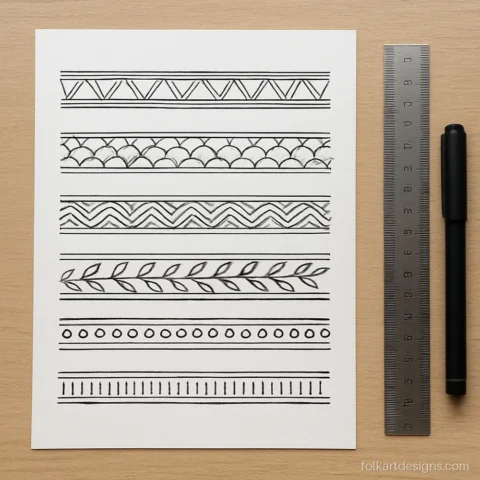
Borders frame every Mithila piece. These are drawn with fine pens and can go around any drawing or stand alone as a pattern study.
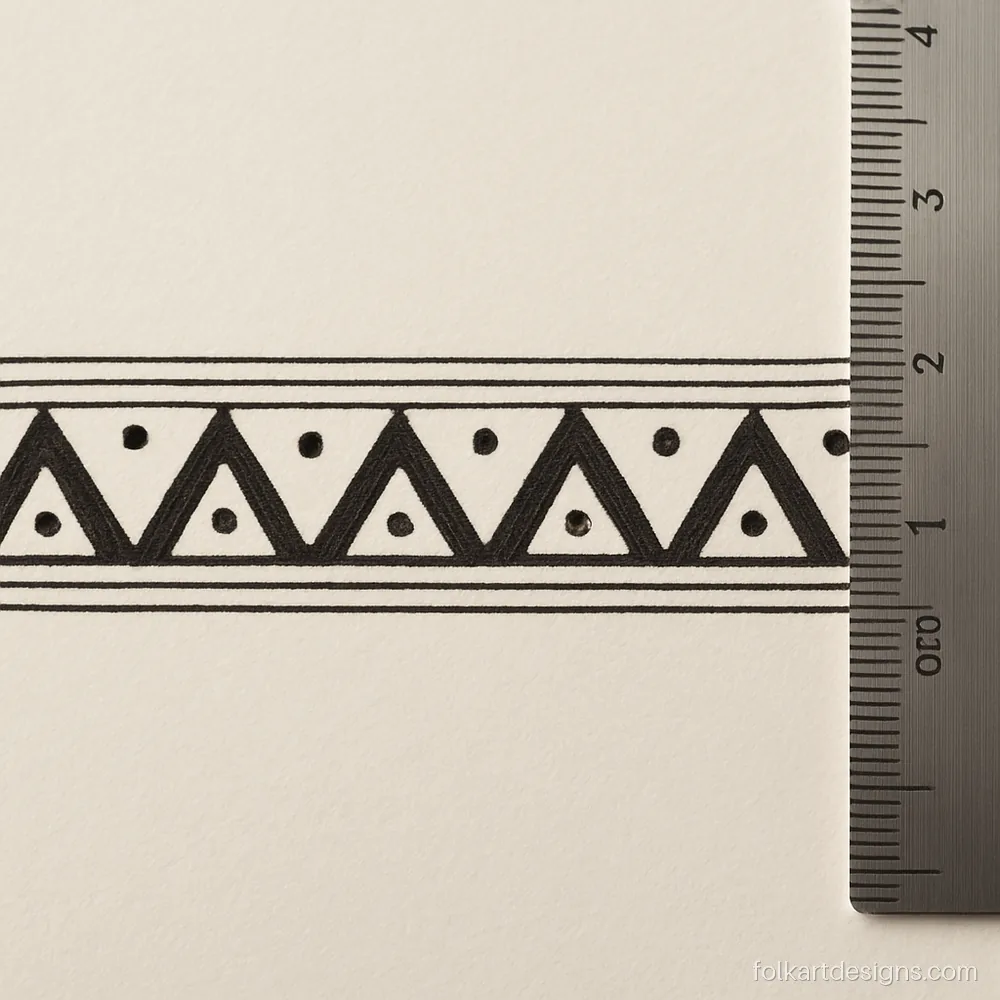
A band of alternating solid and open triangles with a dot in each. Good practice for keeping lines even.
Artist tip Mark the triangle points with tiny pencil ticks every 1 cm before inking.
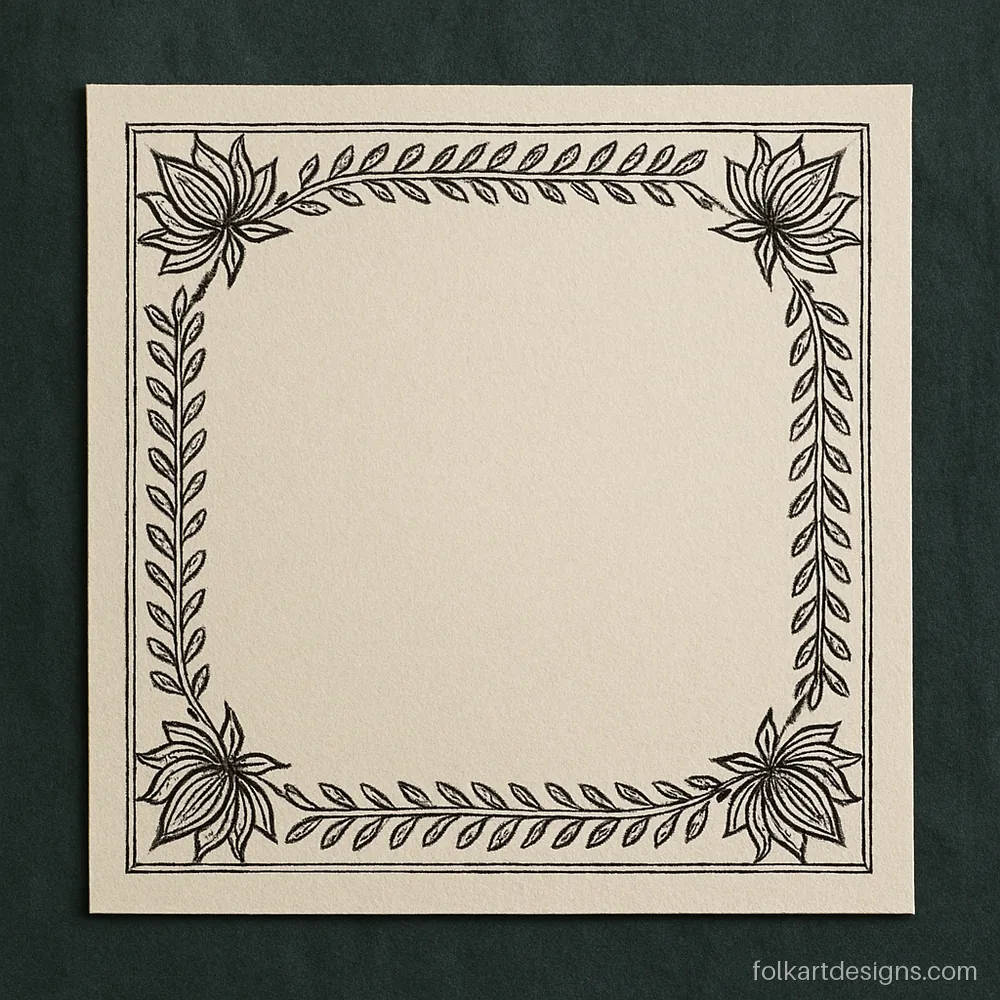
A leaf chain runs round a square, turning at each corner with a small lotus. Use it around any square drawing.
Artist tip Draw the four corner flowers first, then fill the sides so the chain meets cleanly.
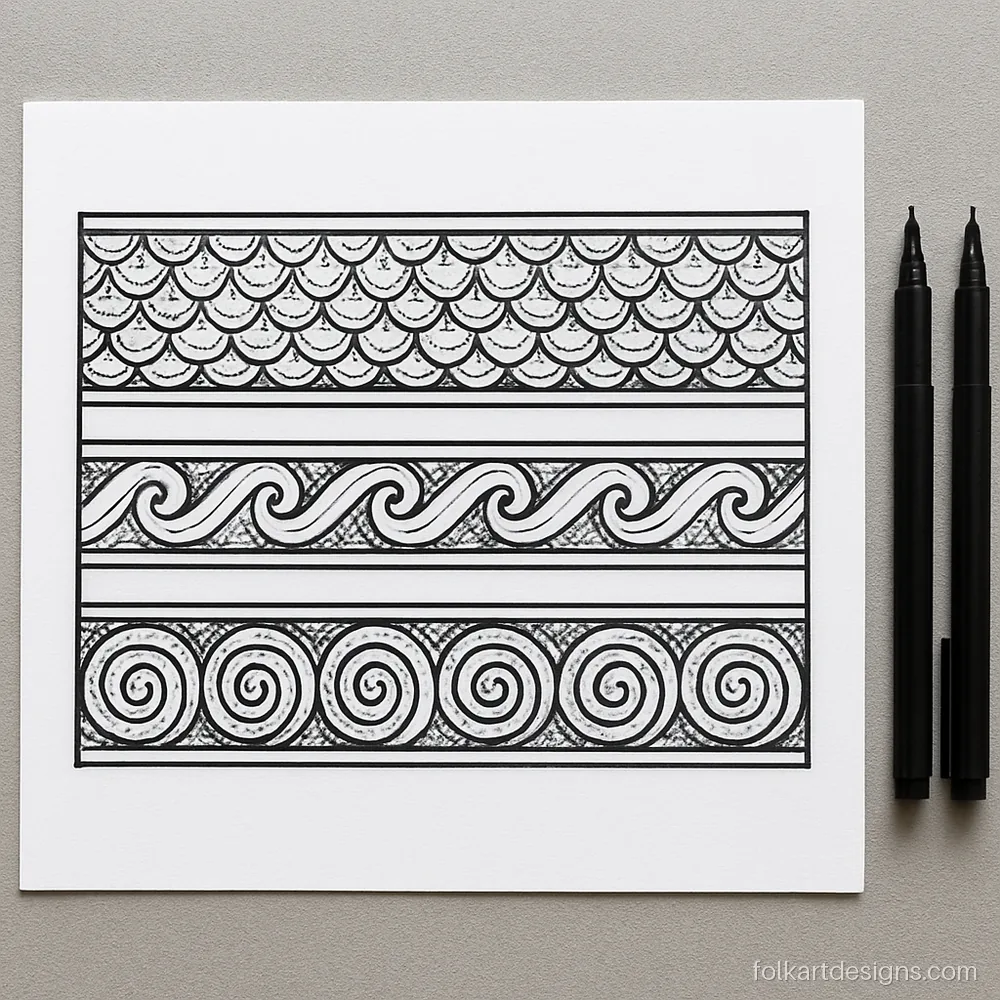
Three stacked bands: fish scale, wave and spiral. Keep this sheet as a pattern bank for future drawings.
Artist tip Try 0.1, 0.3 and 0.5 mm pens on the three bands to find the weight you like best.
Pens, Paper and Pencils for Madhubani Line Work
| Tool | Size or type | Use it for |
|---|---|---|
| Pencil | HB for planning, 2B for shaded sketches | Guide lines and layout |
| Fineliner | 0.1 and 0.3 mm | Hatching, dots, inner outlines |
| Fineliner | 0.5 and 0.8 mm | Outer outlines, borders |
| Nib or bamboo pen | Fine nib with ink | Traditional kachni lines |
| Paper | 180 to 300 gsm, smooth | Clean lines without bleeding |
Traditional artists drew with a nib or a sharpened bamboo stick dipped in lamp black. Waterproof fineliners are easier for beginners and let you add colour later without smudging.
Kachni, Bharni and Godna Line Styles
Madhubani has a few main styles. Kachni uses fine line hatching, often in one or two colours, and suits pen work best. Bharni fills shapes with solid colour, so the drawing is only the first stage. Godna repeats small tattoo-like marks in rows. Other styles from the region are traditionally ritual and are not shown here.
Start with kachni if you love pens. When you are ready for paint, move to easy madhubani painting projects. For more black and white pattern practice, try black and white mandala art too.
Questions about these designs
How to draw madhubani art for the first time?
Pick one motif, such as a fish. Draw it big in pencil, ink a double outline, then fill the body with scales or lines. Add leaves and dots in the gaps and finish with a simple border.
What is kachni in madhubani drawing?
Kachni is the line work style. Shapes are filled with fine hatching and dashes instead of solid paint, usually in black or black with red. It is the best style for pen lovers.
Which pen is best for madhubani painting drawing?
A set of waterproof fineliners in 0.1, 0.3, 0.5 and 0.8 mm covers everything. Use the thick tips for outlines and the thin ones for hatching. A dip nib gives a more traditional line.
How to draw madhubani fish?
Draw a leaf shape with a forked tail and a large round eye near the front. Add a second outline inside, then fill the body with rows of scale arcs. Fish are often drawn in pairs facing each other.
Is mithila painting drawing the same as madhubani?
Yes. Mithila is the name of the region in Bihar and nearby Nepal, and Madhubani is one of its main districts. Both names describe the same art.
Can I colour a madhubani drawing later?
Yes, if you ink with waterproof pens. Let the ink dry for ten minutes, then add poster colour, acrylic or watercolour inside the outlines.