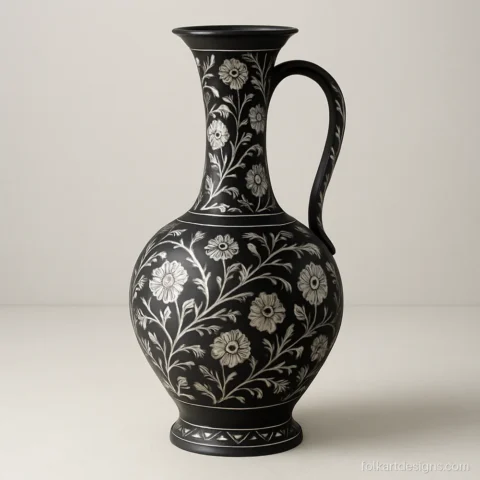
Dhokra Art: Lost-Wax Metal Craft of Tribal India
15 designs Tribal crafts Updated 9 Oct 2026
Dhokra art is metal casting by the lost-wax method, made by tribal artisans in Chhattisgarh, West Bengal, Odisha and Jharkhand. Every piece starts as a wax model over a clay core, and every mould is broken to free the metal. So no two pieces are ever exactly the same.
These dhokra art images show 15 original pieces: animals, small figures, lamps, jewellery and wall hangings. Each comes with what it is made of, where it suits and one care tip. For the wider tradition of the region, see our Bastar art page.
Dhokra Elephants and Horses
Animals are the most loved dhokra forms. Look for the fine raised wire patterns on the body, a sign that the wax model was built thread by thread.

The coiled texture on the body comes from thin wax threads laid on before casting. A classic shelf piece.
Artist tip Polish only the raised lines with a dry cloth and leave the dark grooves alone; they give the depth.
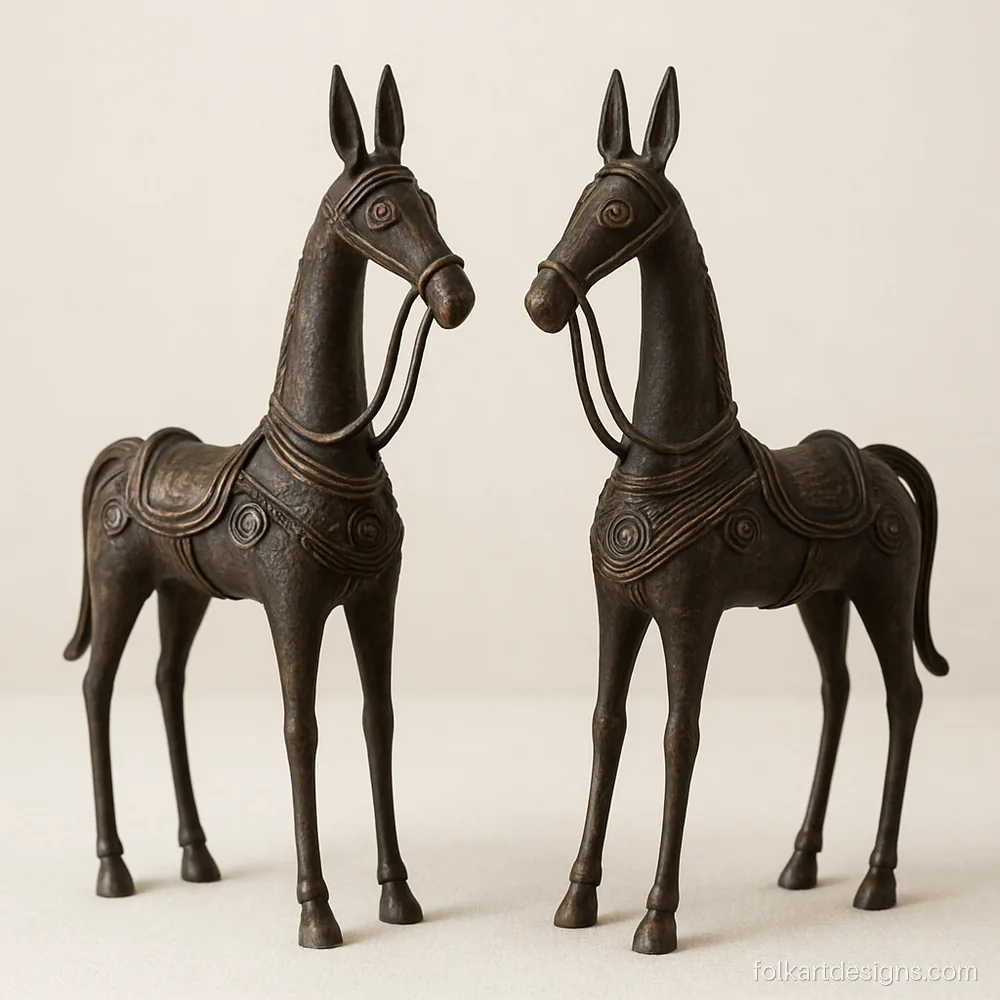
Bastar dhokra horses have long necks, tall ears and patterned saddles. Set them facing each other on a console.
Artist tip Place them on felt pads so the uneven cast base does not scratch polished wood.
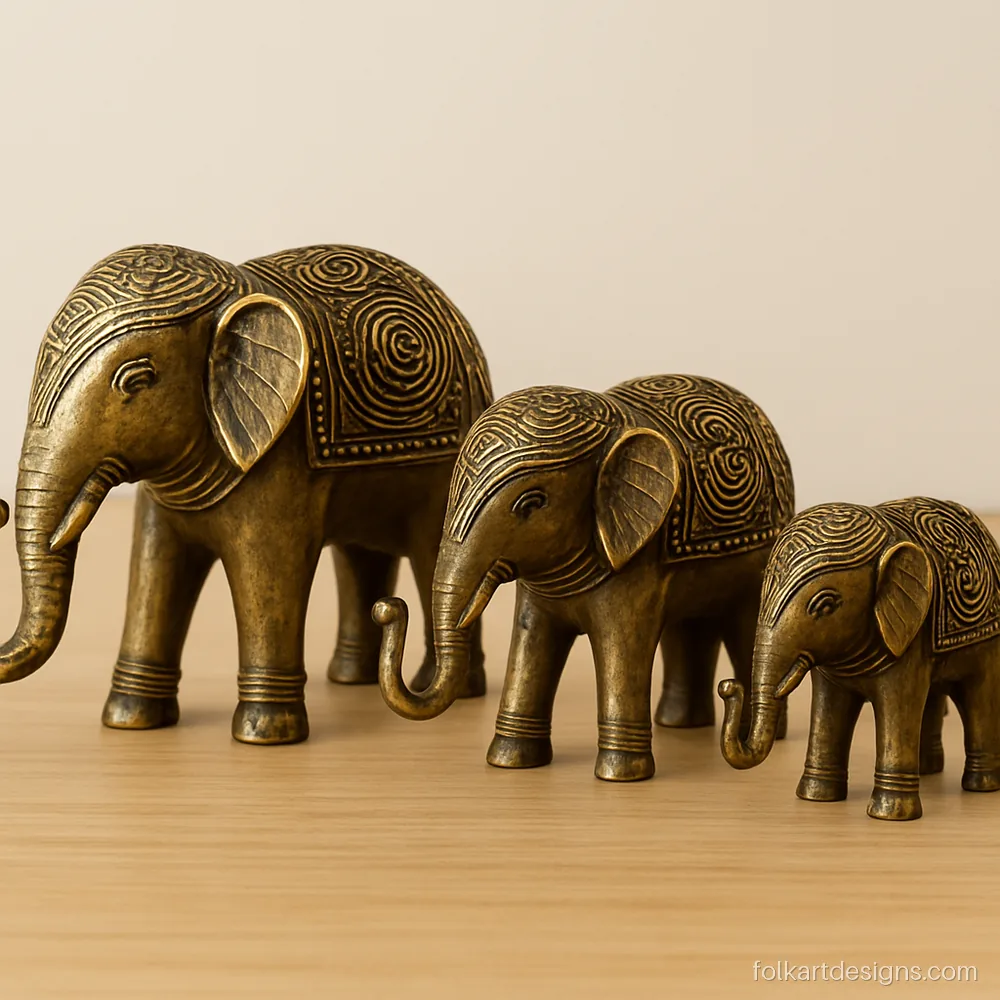
Three elephants in graded sizes make a friendly group for a living room shelf or a reading nook.
Artist tip Group figures in odd numbers; three or five look more natural on a shelf than two or four.
Dhokra Figurines of Village Life
Dhokra artisans also cast small figures from daily life in the village: drummers, farmers and water carriers. Each is simple in shape and rich in surface detail.
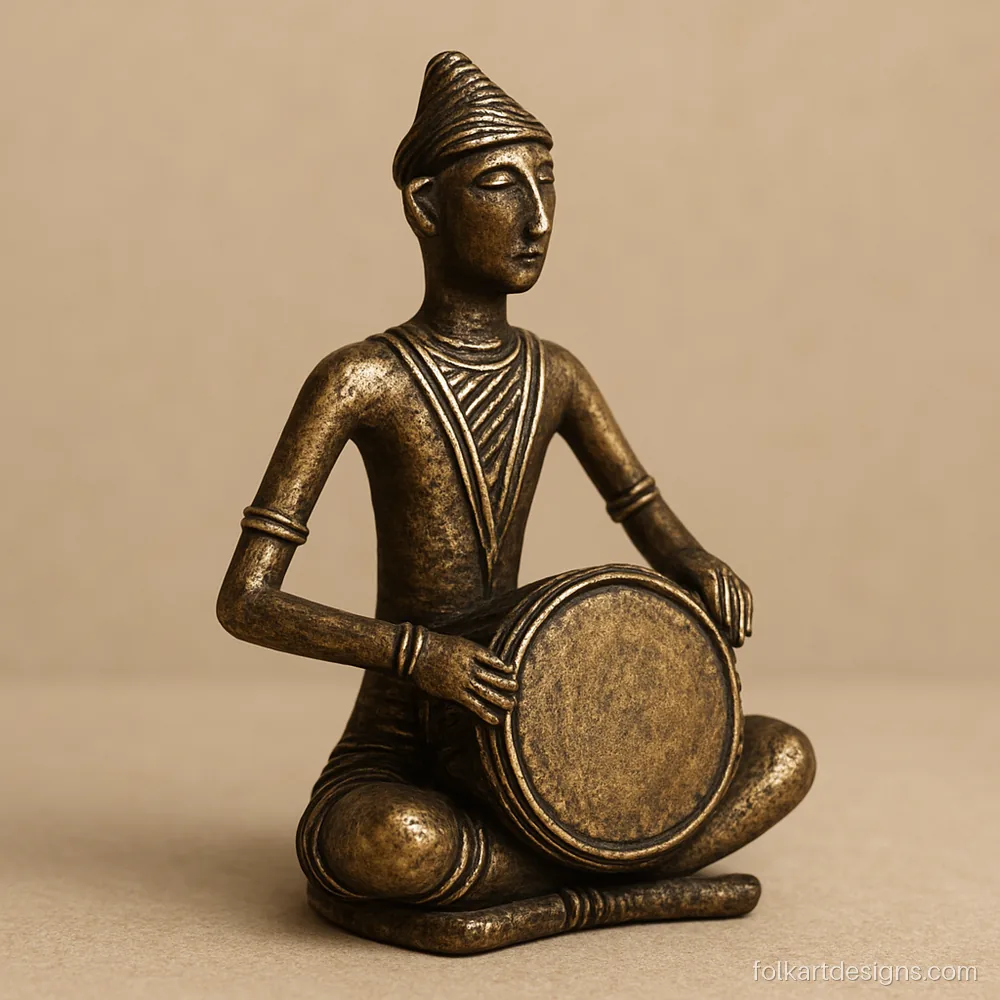
A seated drummer captures village music in a figure small enough for a study desk.
Artist tip Dust once a week with a soft paintbrush, because dust settles quickly in the fine wire grooves.
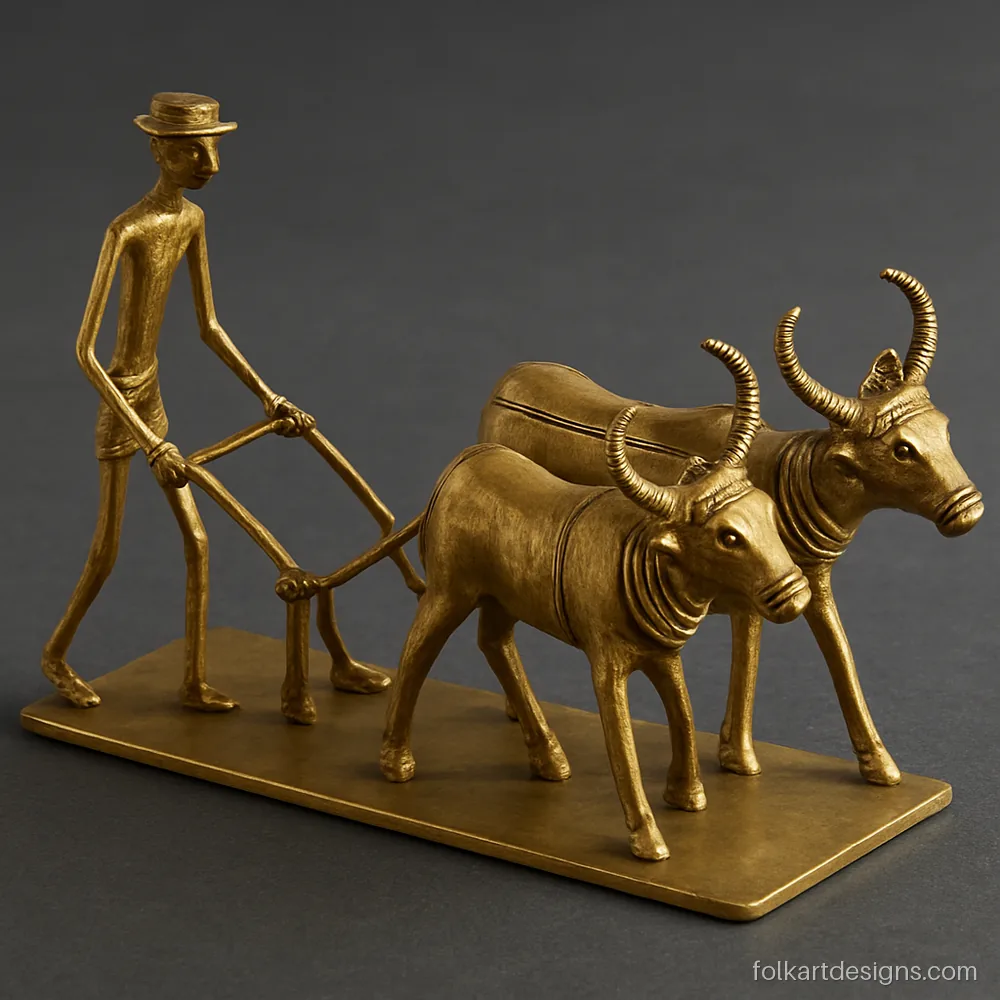
A plough scene shows daily farm life, with two bullocks and a slim, stylised farmer figure.
Artist tip Thin parts like the plough shaft bend easily, so always lift the piece by its base.
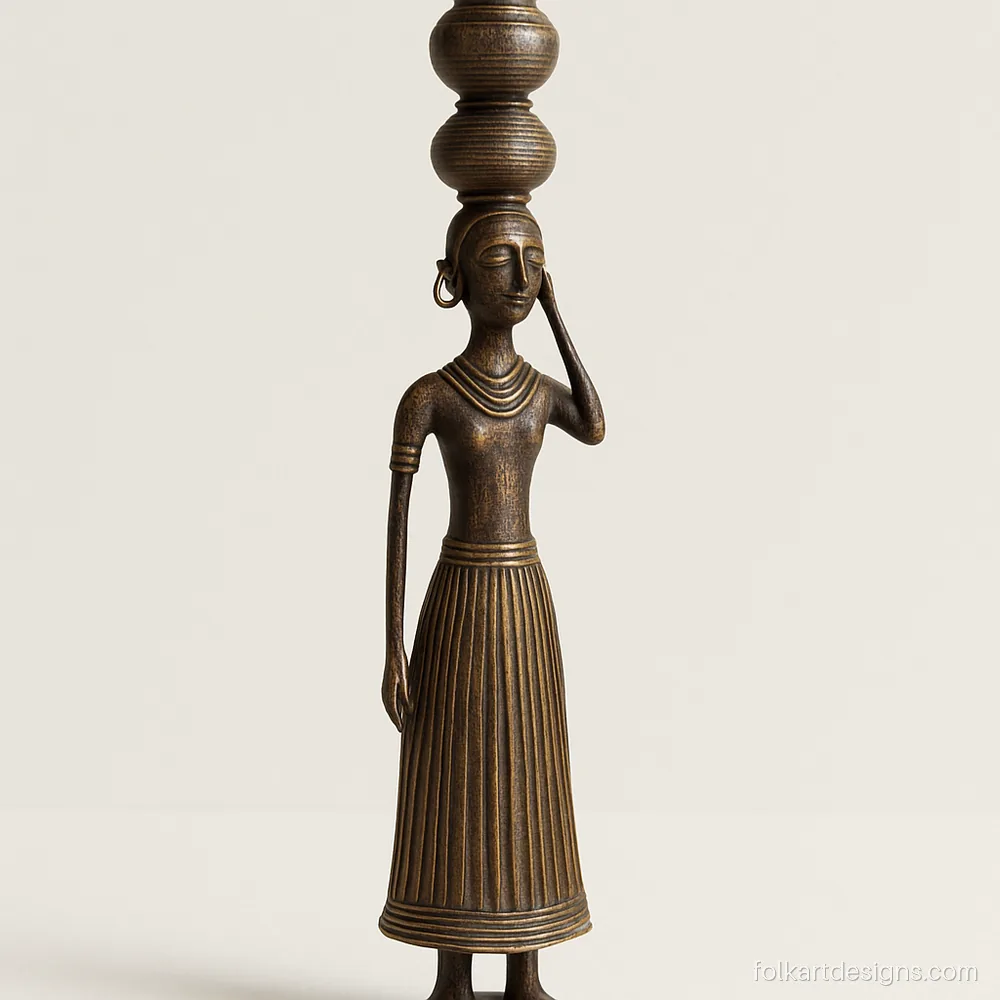
A water carrier with stacked pots is among the best loved dhokra handicraft figures.
Artist tip Buy a pair and compare: small differences prove each was cast from its own clay mould.
How Dhokra Casting Works, Step by Step
- Clay core. The artisan shapes a rough core from clay and dries it in the sun.
- Wax layer. A layer of wax is pressed over the core to form the final shape.
- Wax threads. Thin threads of wax are coiled and laid on top. These become the raised spirals and lines you see on the finished piece.
- Outer mould. Fine clay is coated over the wax, then thicker clay, leaving a small channel.
- Melt out. The mould is heated. The wax melts and runs out, leaving an empty space shaped like the model.
- Pour. Molten non-ferrous metal, usually brass or bronze, is poured into the space.
- Break and finish. Once cool, the clay is broken away and the piece is cleaned and polished.
Because the mould is destroyed each time, every dhokra sculpture is one of a kind.
Dhokra Lamps and Bells
Lamps and bells are some of the oldest dhokra forms. They are useful as well as decorative, and they age to a warm, darker shine.

Five small oil cups hang below a peacock top. Light it on festive evenings or keep it simply as decor.
Artist tip Clean oil residue with warm water and a little lemon juice, then dry completely.
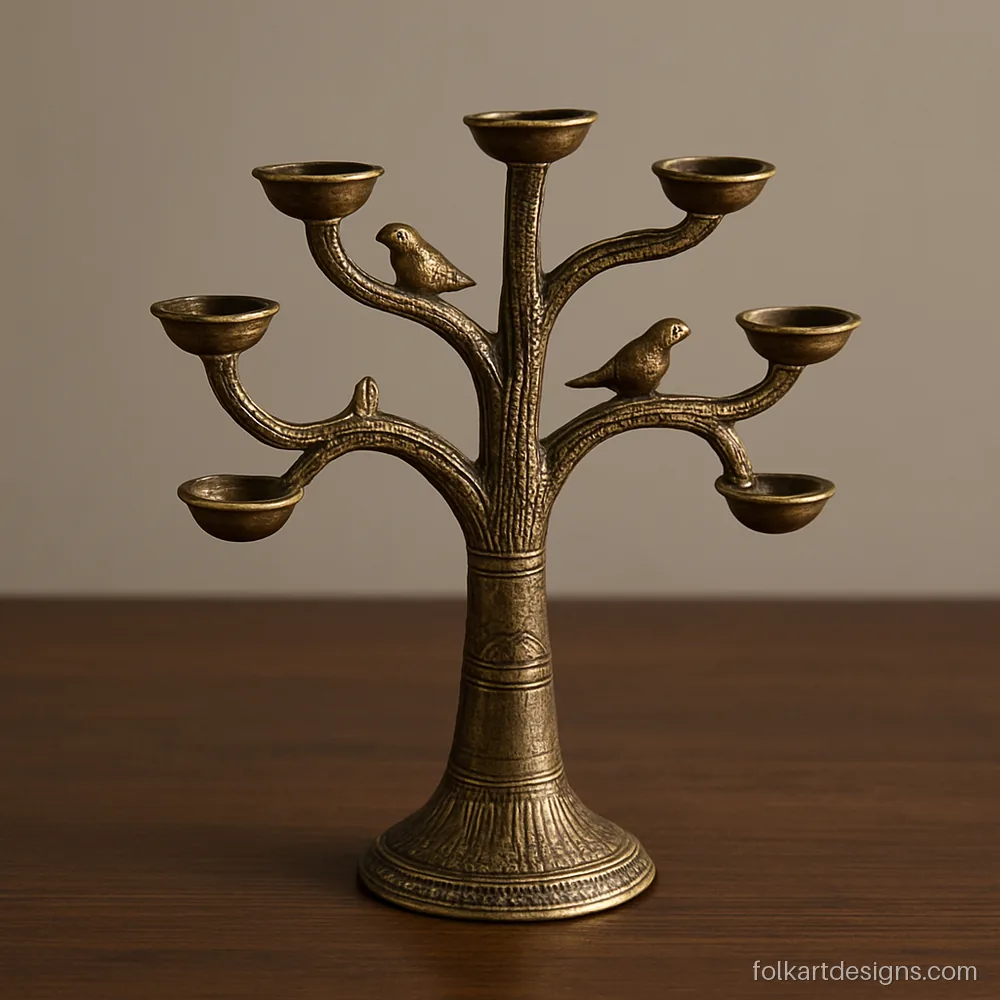
A tree lamp with oil cups on every branch makes a warm centrepiece for a dining table.
Artist tip Keep a metal tray under the lamp to catch any oil drips.
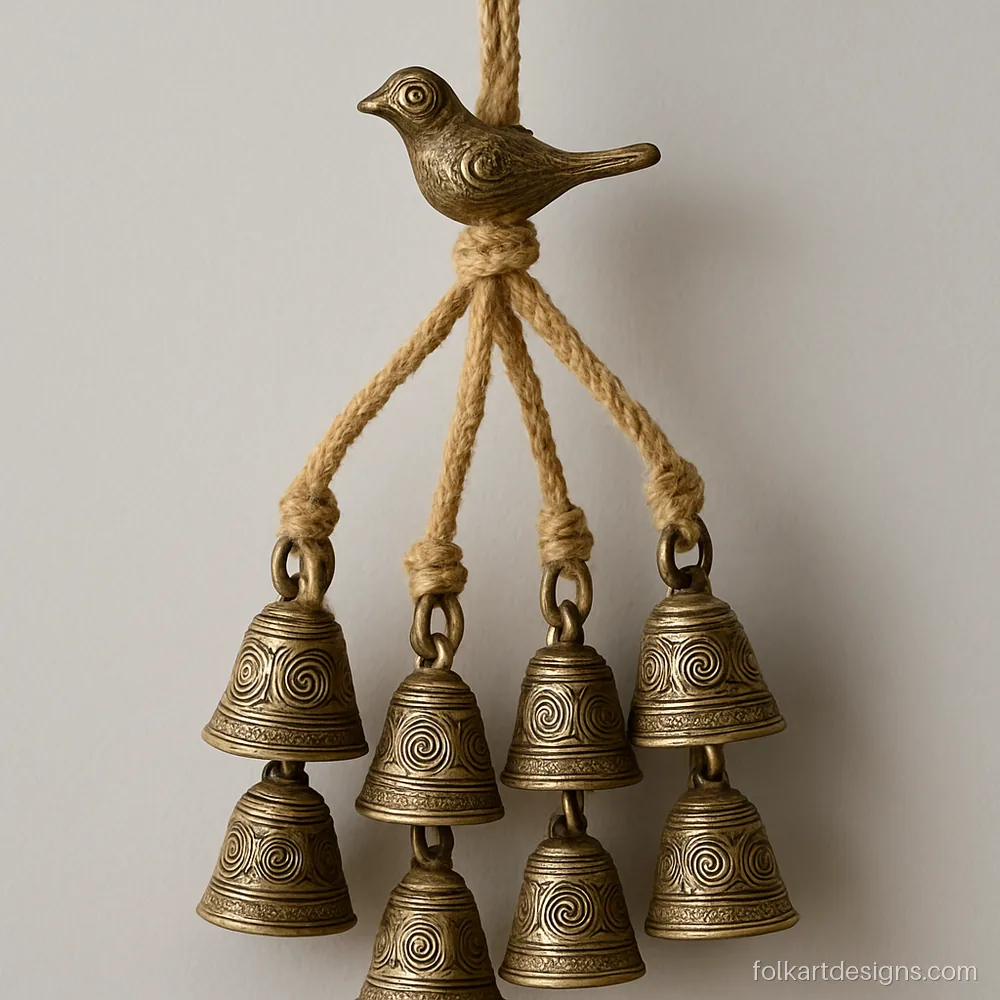
Small cast bells strung on jute make a soft ringing chime for a doorway or balcony.
Artist tip Hang chimes under a roof edge so the bells stay dry and darken more slowly.
Dhokra Jewellery
Small dhokra castings make earthy jewellery that pairs well with cotton and handloom. Pieces are light, each one slightly different.
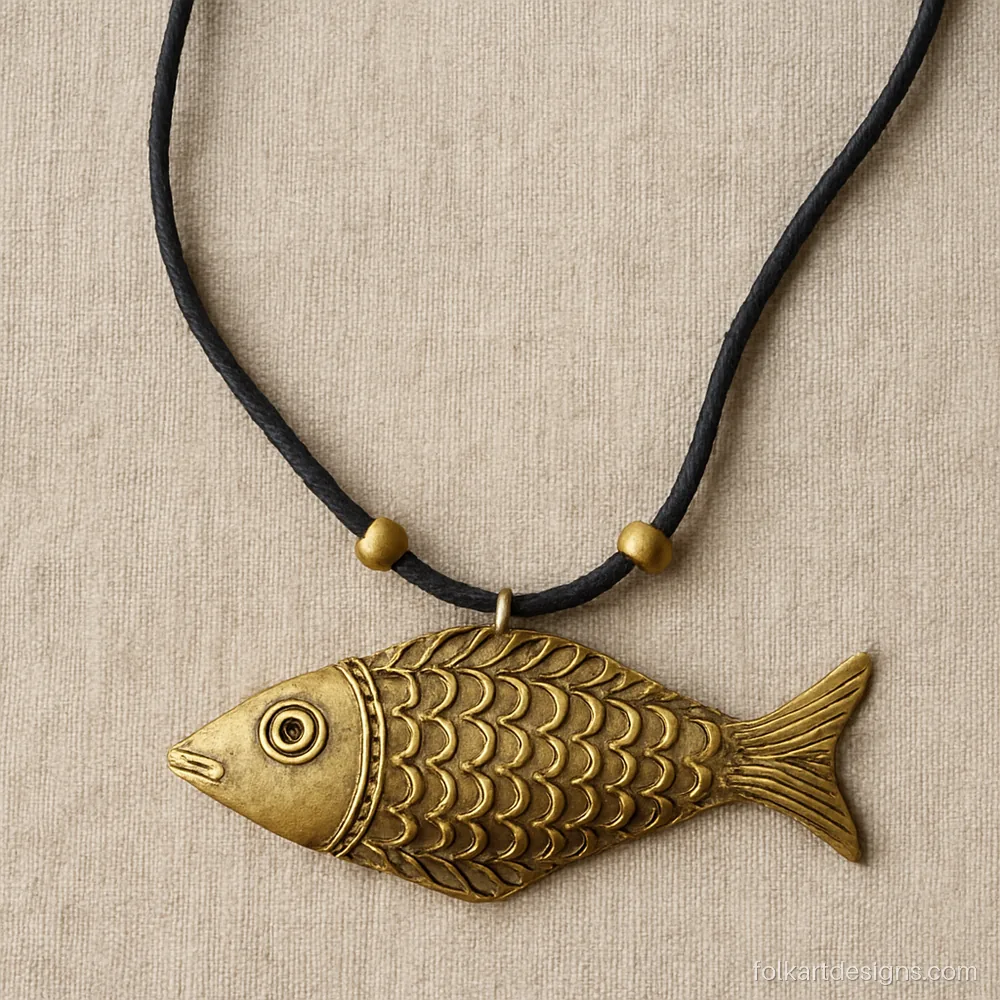
A fish pendant on a black cord adds an earthy accent to a plain kurta or a cotton saree.
Artist tip Store metal jewellery in a zip pouch with a piece of chalk to slow darkening.

Owl earrings with tiny bells ring softly as you move. Light enough for daily wear.
Artist tip If your ears are sensitive, ask for silver or surgical steel hooks to be fitted.
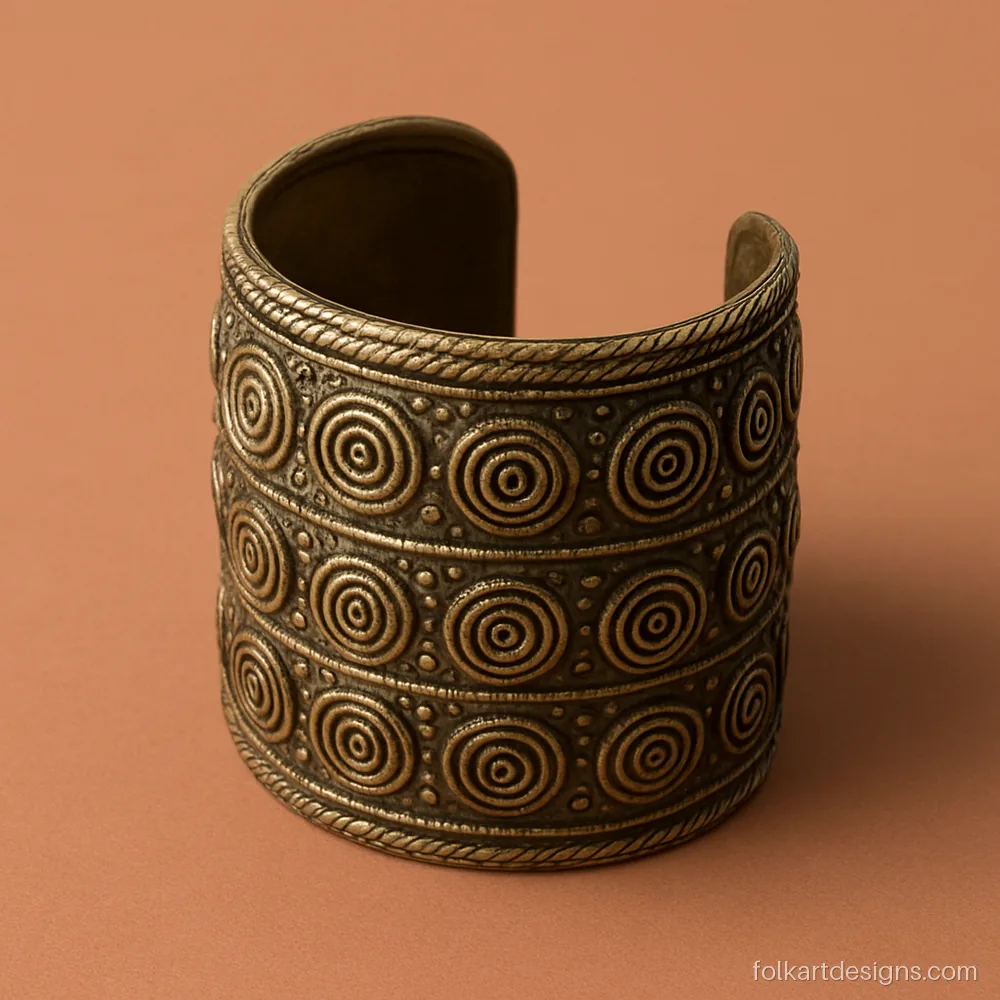
A wide cuff with spirals and dots works as one strong piece with handloom sarees.
Artist tip Wipe with a dry cloth after wearing, since sweat darkens brass quickly.
Dhokra Wall Hangings
Flat dhokra castings fixed to wood or hung on cords bring metal texture to a wall without needing shelf space.
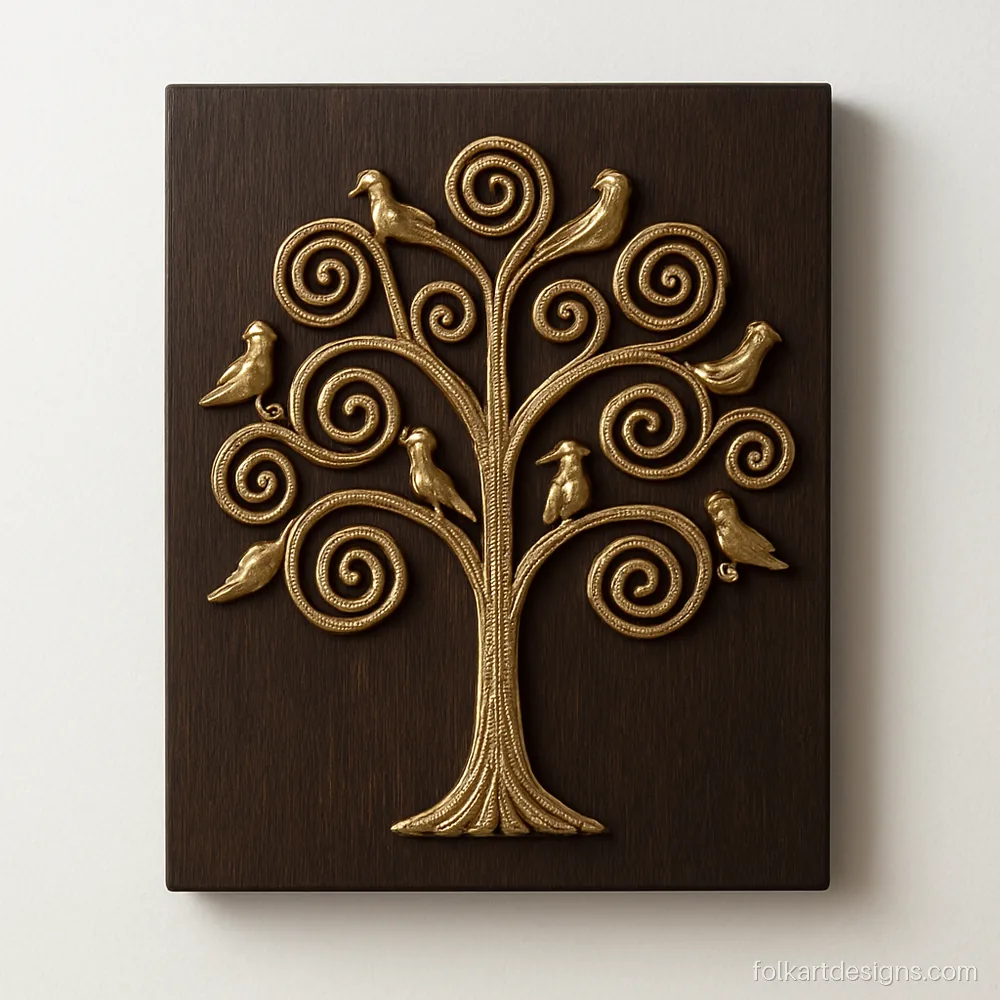
A cast tree with small birds fixed to a dark board makes a strong feature on a plain wall.
Artist tip Fix the board with two screws into wall plugs; cast brass panels are heavier than they look.
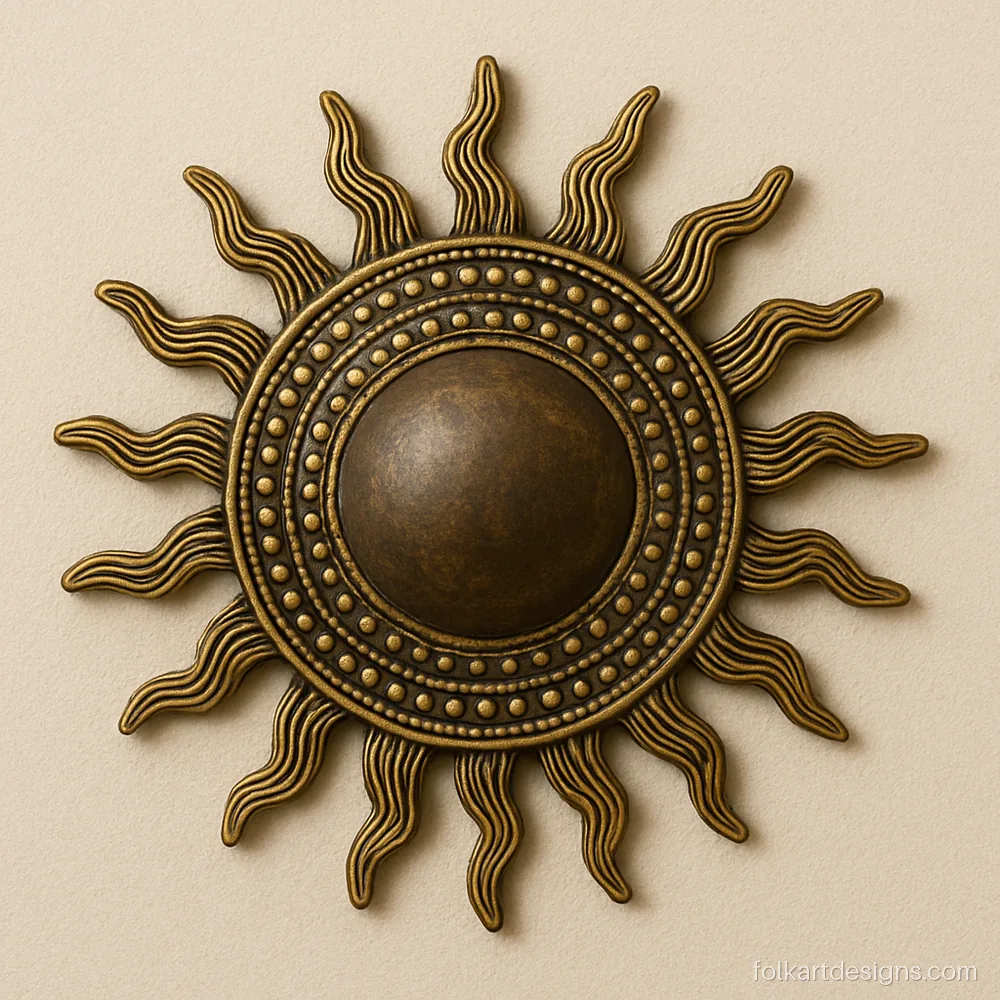
A round sun disc with spiral rays catches the light beautifully near a window.
Artist tip Avoid lacquering old pieces; the natural darkening is part of the look.
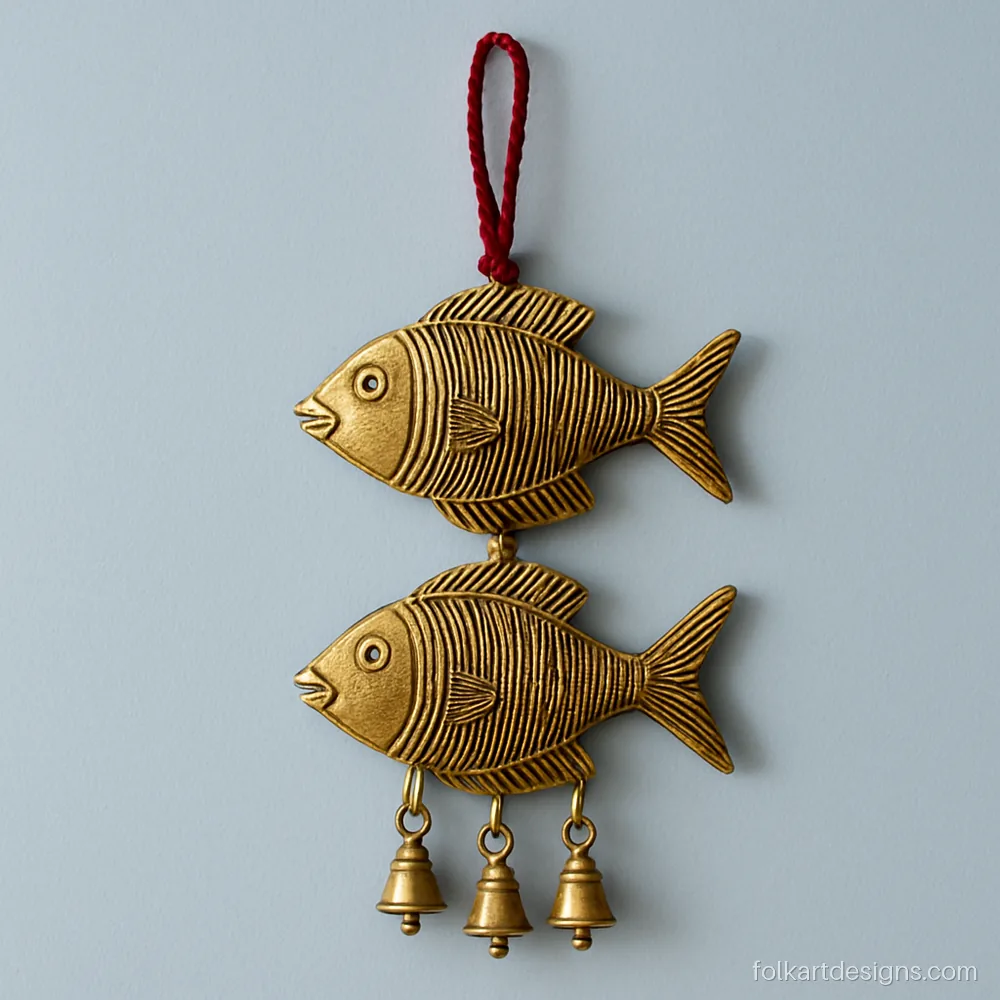
Two cast fish on a cord with small bells below make a light hanging for a door frame.
Artist tip Clean once a year with tamarind pulp and a pinch of salt, then rinse and dry well.
Where Dhokra Craft Is Made
| Region | Known for |
|---|---|
| Bastar, Chhattisgarh | Tall horses, elephants, lamps and slim village figures |
| West Bengal | Animals, small figures and household items |
| Odisha | Animals, lamps and decorative boxes |
| Jharkhand | Figures, bells and jewellery |
Bastar dhokra sits beside other tribal arts of the region, such as wall painting and wrought iron. The patterned style is close in spirit to Gond art from neighbouring Madhya Pradesh.
Buying and Caring for Dhokra
Size, weight of metal, fineness of the wire work and hours of labour decide what a piece costs. A real cast piece feels heavy for its size and shows small, uneven marks from the broken mould. Very smooth, light and identical pieces are usually machine made.
For care, dust weekly with a soft brush. Wipe with a dry cloth, and avoid water unless you dry it at once. A dark patina is normal and wanted; polish only the raised lines if you want contrast.
Questions about these designs
What is dhokra art?
It is a traditional way of casting brass and bronze by the lost-wax method. A wax model is covered in clay, the wax is melted out, and molten metal takes its place.
Is dhokra art Chhattisgarh's own craft?
Chhattisgarh, especially Bastar, is one of its best known homes, but dhokra is also made in West Bengal, Odisha and Jharkhand. Bastar pieces are known for tall horses and slim figures.
Is it dhokra or dokra?
Both spellings are used for the same craft. You may also see dhokra handicraft labelled as tribal brass or bell work.
Is there such a thing as dokra painting?
Not really. Dhokra is metal casting, not painting. Some painters borrow dhokra shapes, the horse or the elephant, for wall art, but that is a design idea rather than the craft itself. For painted tribal art, look at Gond or pattachitra painting.
Why does my dhokra piece look darker over time?
Brass and bronze slowly react with air and moisture. The darker tone is called patina and most collectors like it. Polish only if you prefer a bright finish.
Can dhokra jewellery be worn every day?
Yes. It is light and sturdy. Keep it away from perfume and water, wipe it after use, and store it dry.