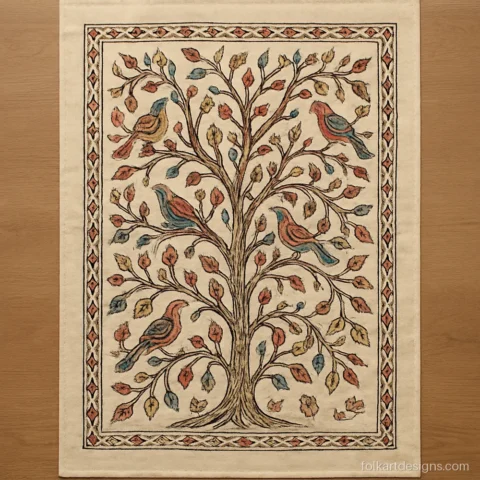
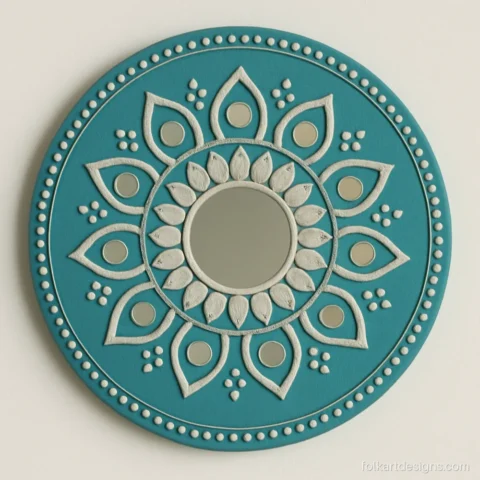
Madhubani Art Designs: Borders, Motifs, Fabric and Pot Ideas
18 designs Madhubani art Updated 9 Oct 2026
Madhubani art designs are built from a small kit of parts: double line borders, corners, fish, peacocks, lotus and filled patterns. Learn the parts and you can decorate a wall, a saree, a pot or a tray. This catalogue of madhubani painting designs groups 18 original pieces by where they go.
Each picture of madhubani painting here lists the medium, motifs, best use and a working tip. Treat these madhubani art pictures and mithila painting images as a starting point and change the colours freely.
For history and styles, read our main madhubani painting page, or begin with easy madhubani painting.
Madhubani Painting Border Designs
The border closes every Mithila painting, and most borders are one small shape repeated between two lines. These beautiful madhubani borders can frame anything from an A4 sheet to a wall.
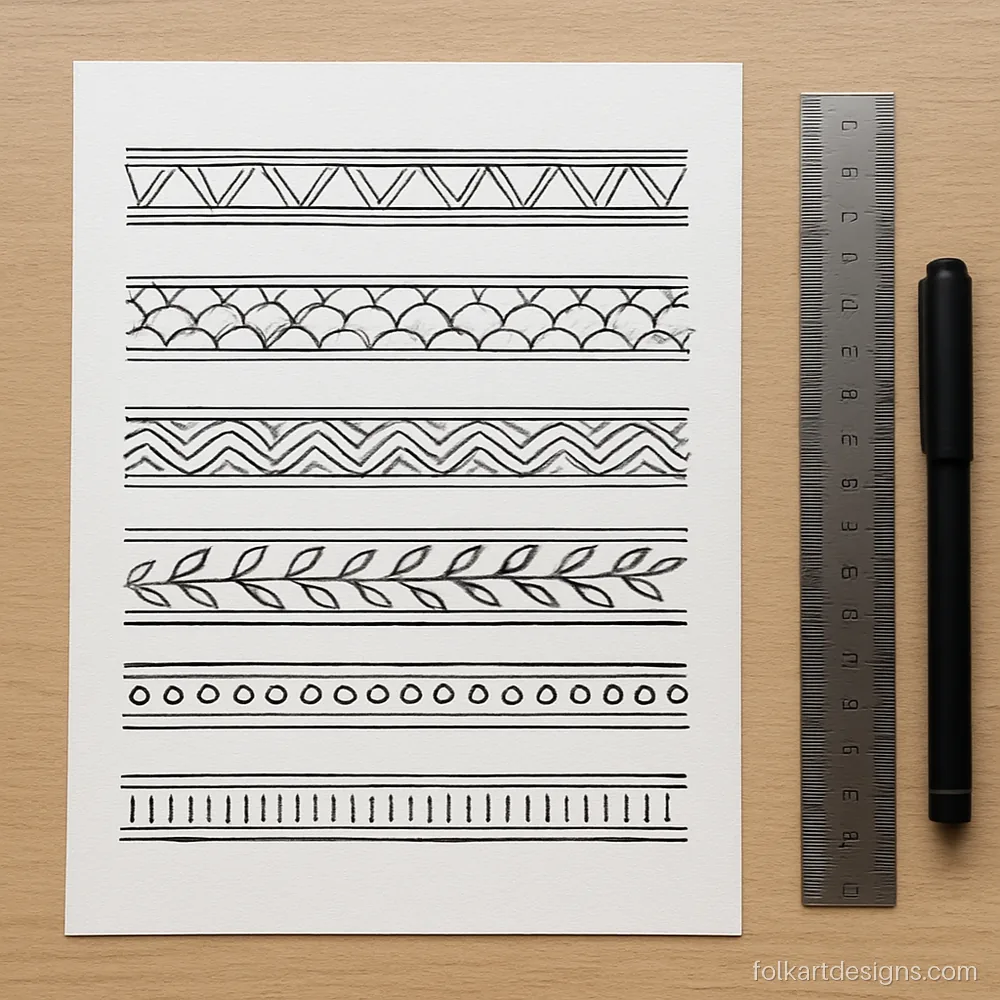
Six strips on one sheet: plain double line, triangles, fish scale, zigzag, leaf chain and dots. Keep it beside you as a reference.
Artist tip Rule both border lines with a scale, then draw the shapes freehand between them.
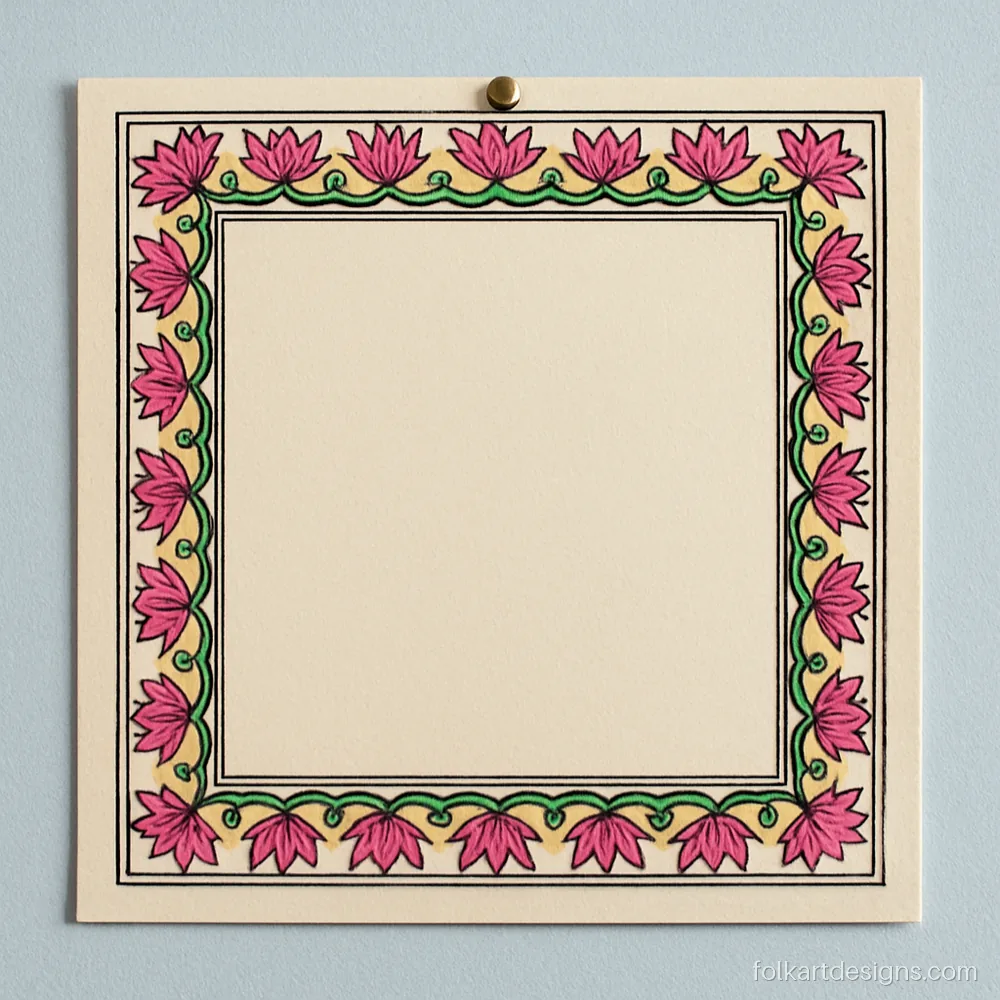
Small lotus heads joined by one green stem run all the way round. Colour borders like this suit framed gifts.
Artist tip Mark the middle of each side first so the lotus heads meet neatly at the corners.
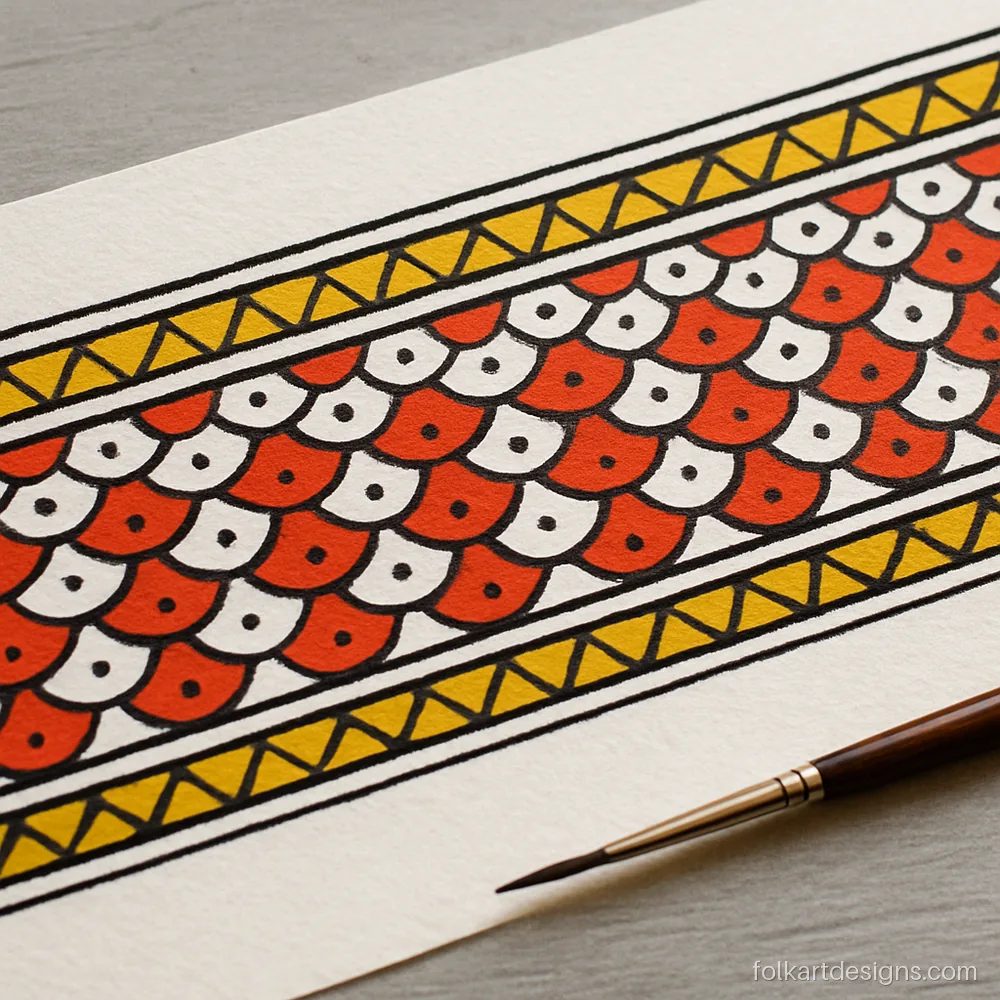
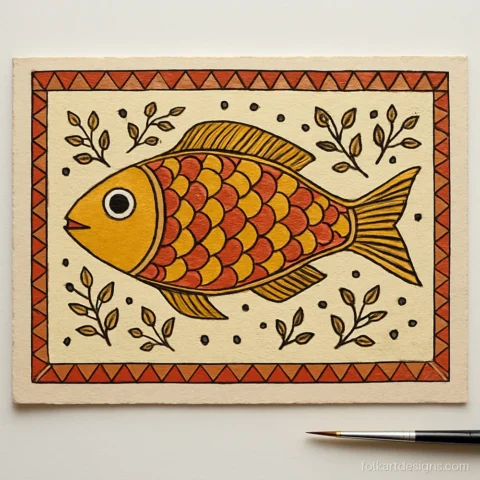
Tiny arcs, every other one filled red. Fish scale is among the easiest borders yet looks rich on cards.
Artist tip Trace round a coin or bottle cap if your freehand arcs keep wandering.
Madhubani Painting Frames and Corner Designs
Corners are where borders turn, so they deserve a design of their own. A neat corner makes even a plain border look finished.
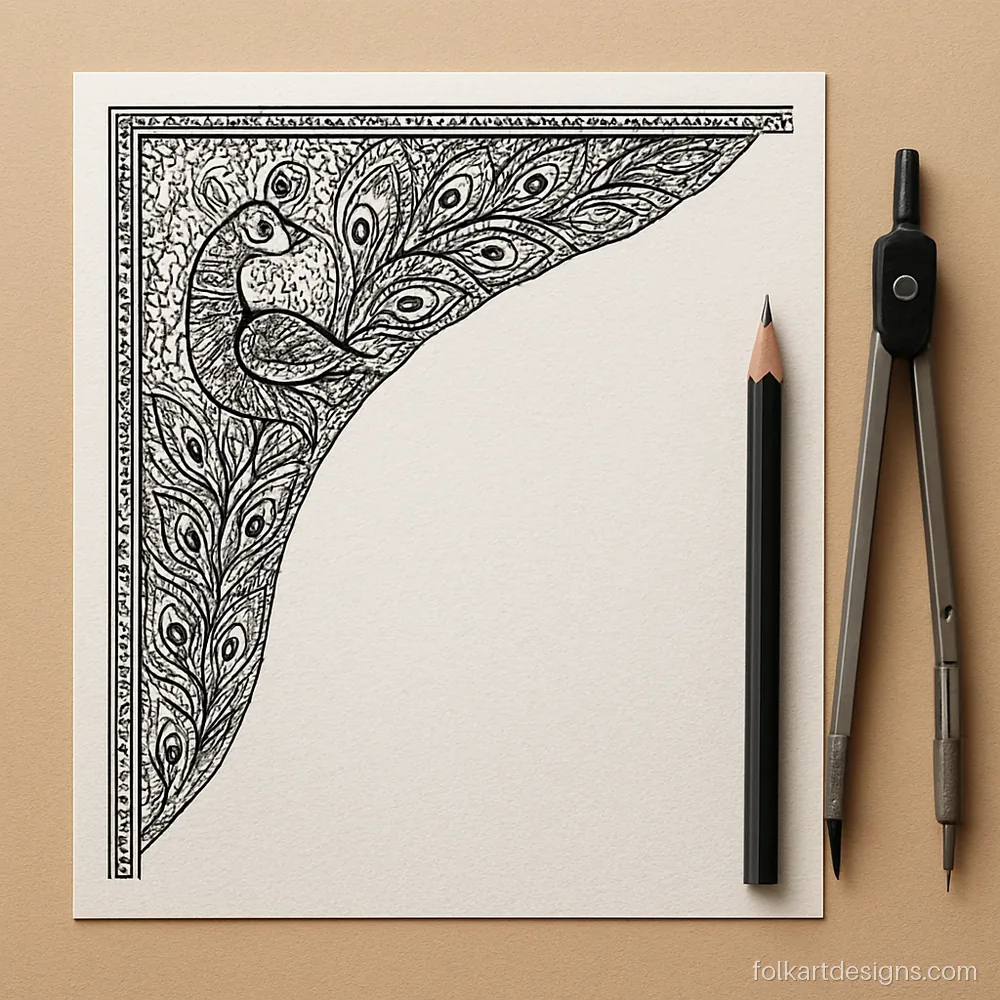
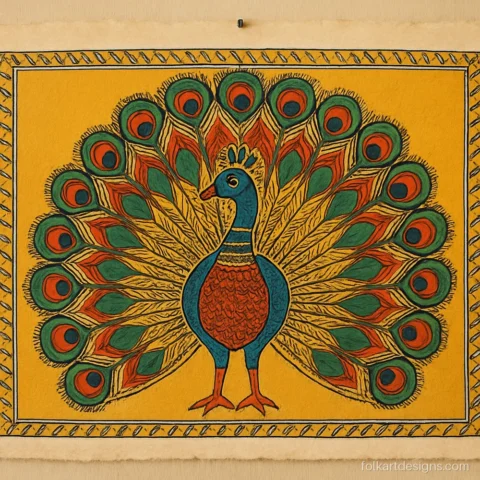
A peacock tucked into the corner, its tail running along both edges. Repeat it in all four corners of a page or tablecloth.
Artist tip Set your compass to 5 cm, draw a quarter circle, then fit the bird inside it.

A plain mirror frame, now with fish swimming round it. A good stall item for small sellers.
Artist tip Sand the wood lightly and give one primer coat so the paint grips and never peels.
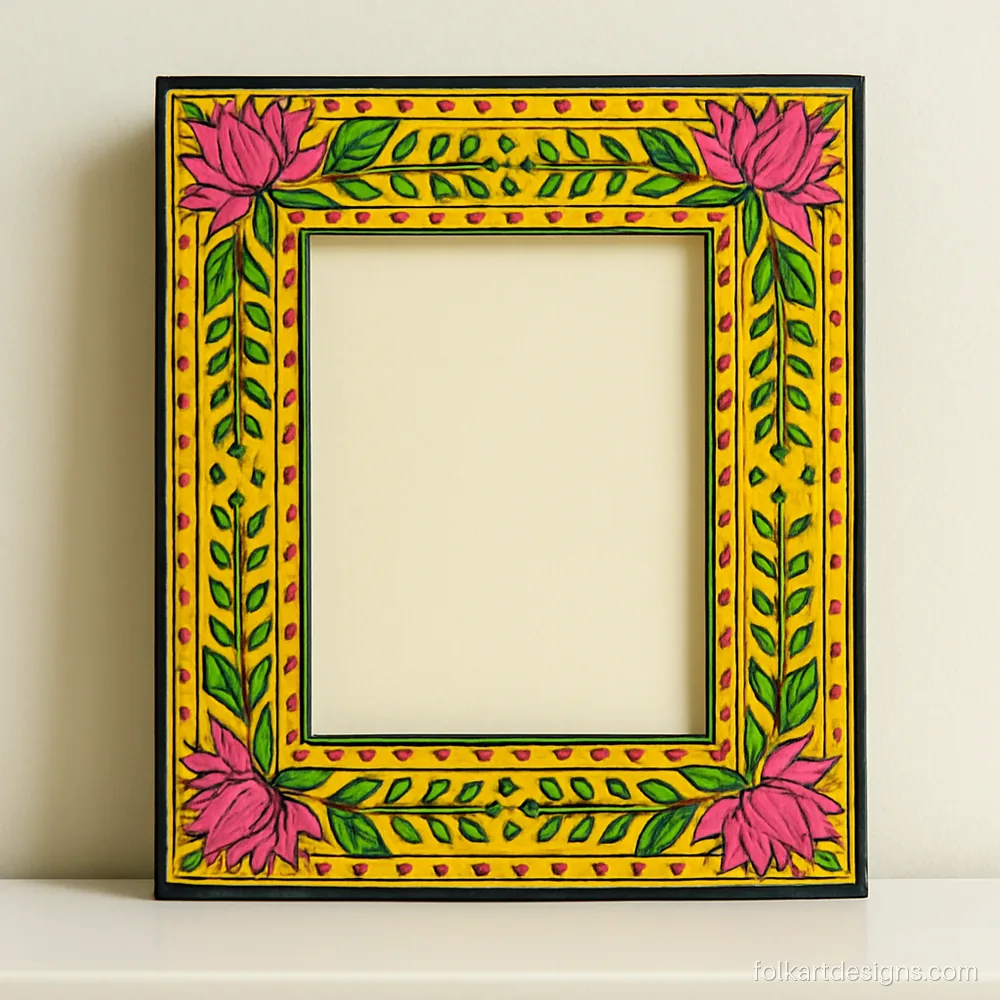
Lotus flowers in each corner, a yellow band between. Madhubani painting frames like this suit family photos.
Artist tip Paint the corners first. Once they are neat, small wobbles in the band go unnoticed.
Which Paint to Use for Each Surface
| Surface | Paint | Before you start | Dry and finish |
|---|---|---|---|
| Paper | Acrylic or poster colour, fineliners | 250 to 300 gsm sheet | 30 minutes, frame behind glass |
| Cotton or silk | Fabric paint | Wash and iron the cloth | 24 hours, then iron the back |
| Terracotta | Acrylic | One primer coat | A day, then clear varnish |
| Glass | Acrylic or glass paint | Clean with spirit | A day, keep away from water |
| MDF and wood | Acrylic | Sand lightly and prime | Three coats of varnish |
| Wall | Emulsion | Smooth, dry plaster | Two days before cleaning |
For how to do madhubani painting on fabric, sketch with a washable fabric marker, outline with a fine liner brush and fill with flat colour. Keep a board under the cloth.
Madhubani Motifs and Patterns by Layout
Most madhubani patterns follow one of three layouts: a motif sheet, an all-over repeat or a mirrored pair. Choose the layout first and the motif second. Save these madhubani painting images as layout guides.
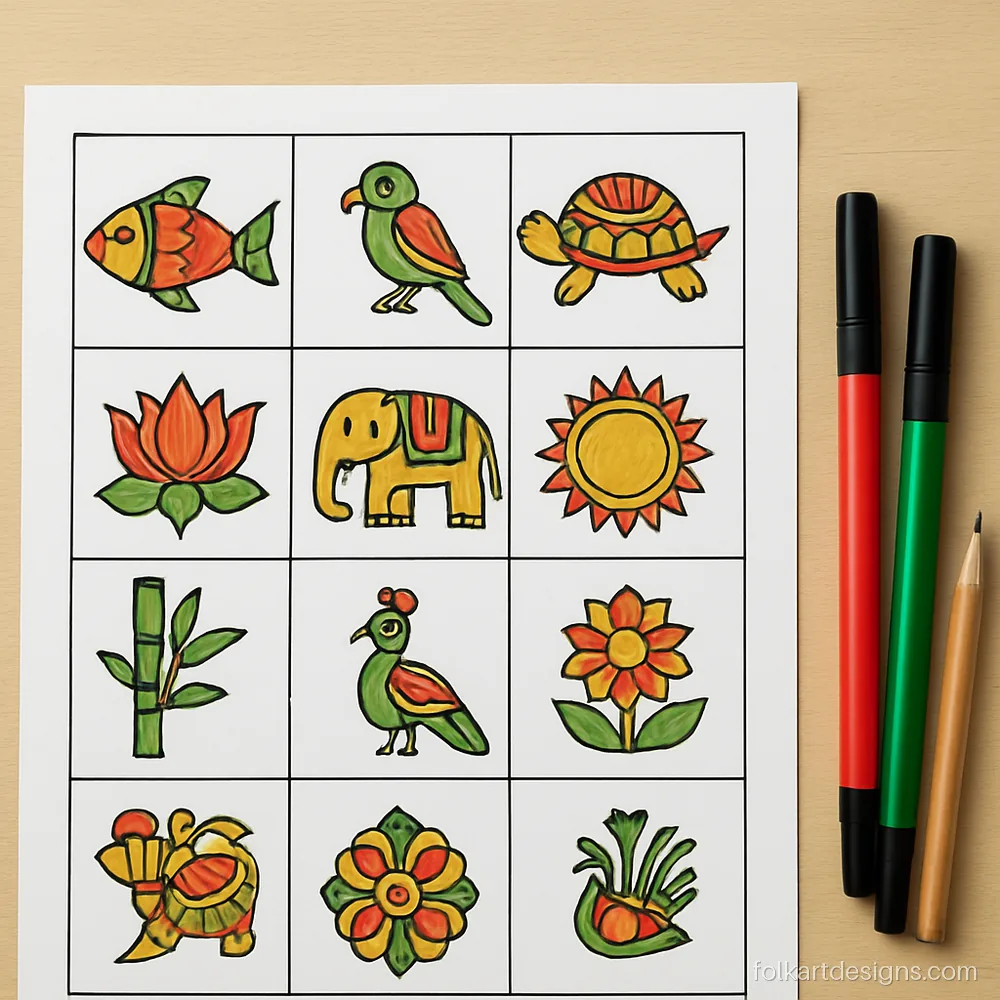
Twelve small motifs, each in its own box. These work well as madhubani designs for tracing.
Artist tip Draw each motif three times at small size before scaling it up for a wall.
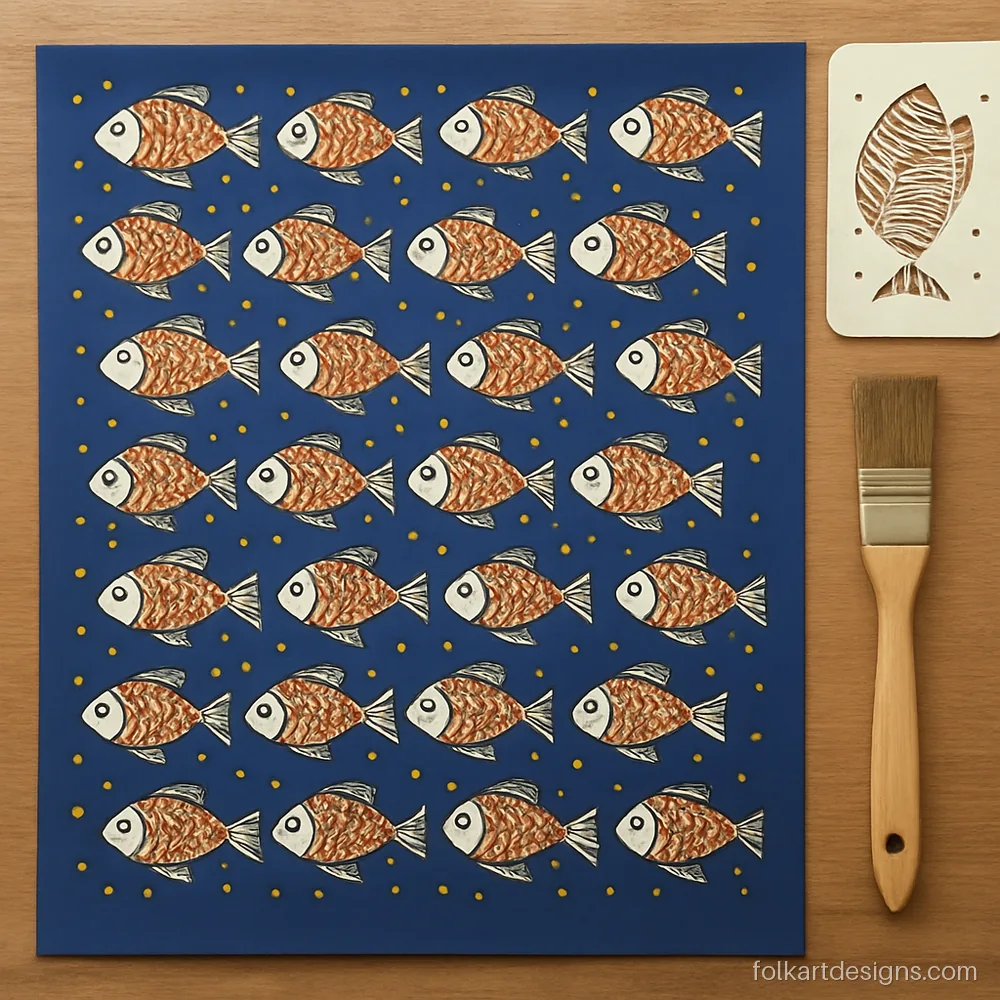
One fish repeated in rows, facing alternate ways. Use it as a madhubani painting background design or as gift wrap.
Artist tip Cut a fish stencil from card and shift each row by half a fish.
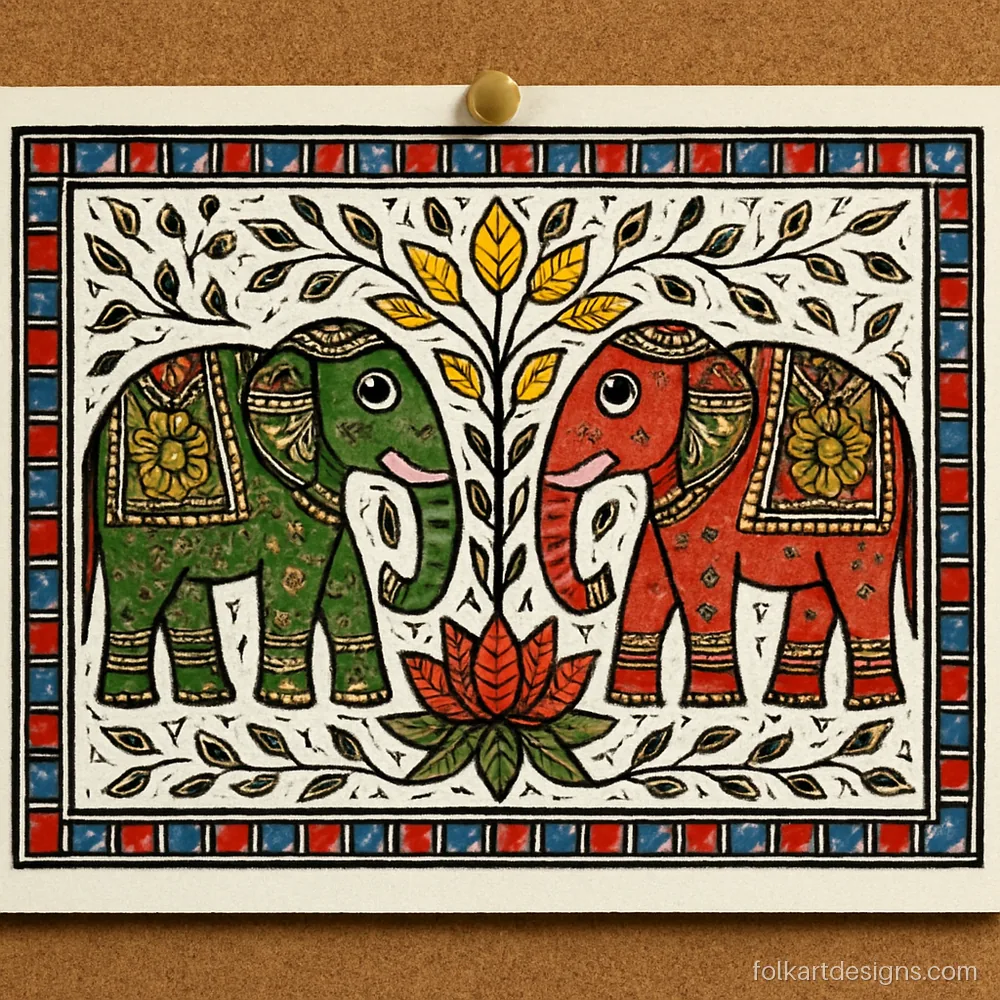
Two elephants face a small tree. Balance is easy to see, so it teaches symmetry well.
Artist tip Draw a faint vertical centre line and check both halves against it as you go.
Madhubani Wall Painting and Wall Art Designs
Madhubani painting for wall decor can be a framed canvas, a cloth hanging or a mural. Bigger pieces need simpler motifs so the shapes read from across the room.
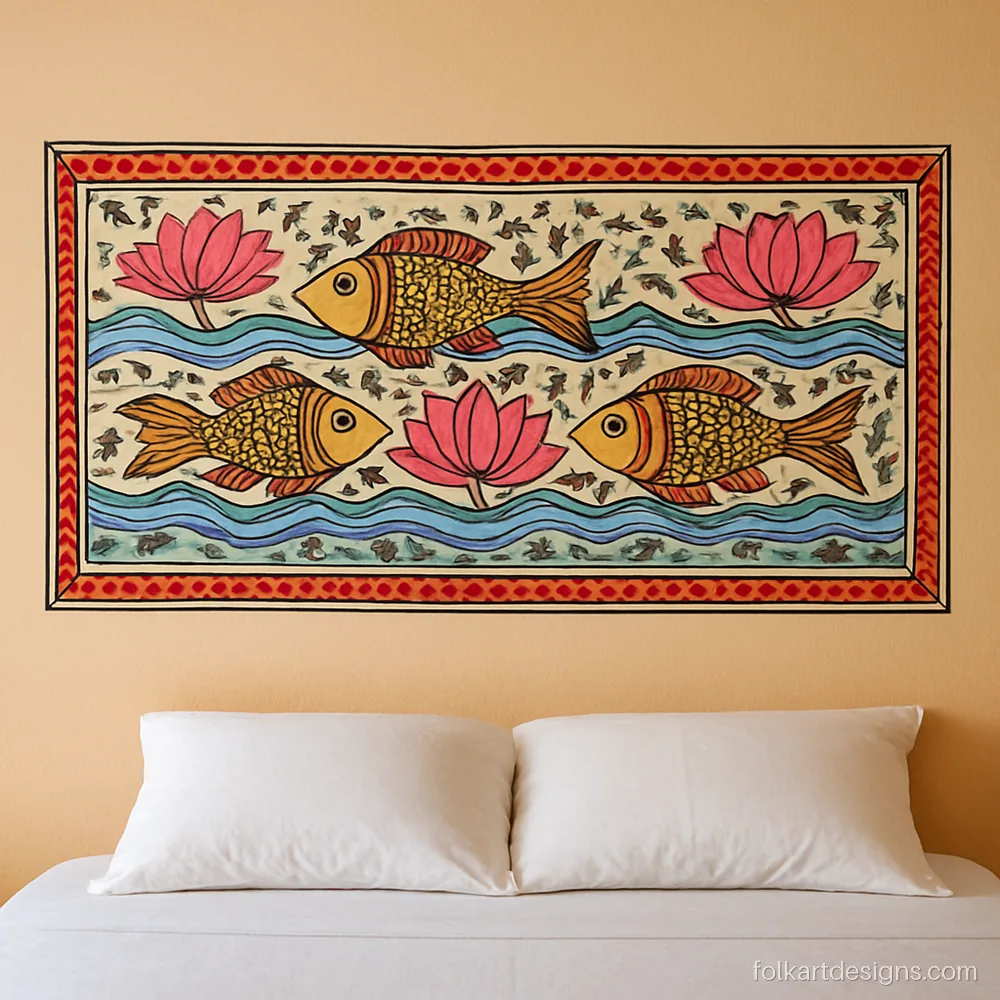
A wide band of fish and lotus in place of a headboard. Soft peach keeps the room restful.
Artist tip Draw the design full size on paper, prick the lines and pat chalk through the holes.

Painted cotton on a wooden rod. A madhubani wall hanging is light, so it moves easily between rooms or homes.
Artist tip Hem all four edges before painting so the cloth does not fray once hung.
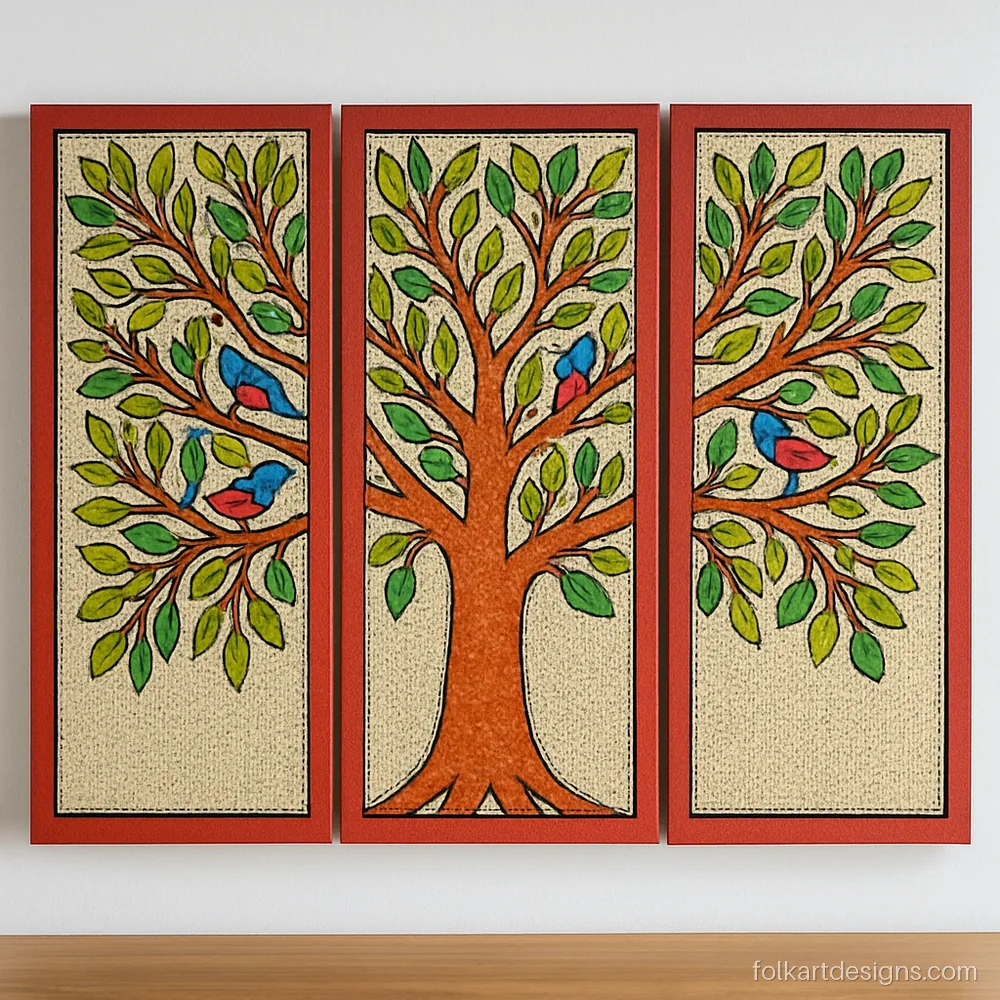
One tree split over three canvases. This kind of madhubani painting on canvas fills a long dining wall.
Artist tip Paint the trio together, edges touching, so every branch continues cleanly to the next panel.
Madhubani Fabric: Saree, Dupatta and Kurti Designs
Madhubani fabric is painted with fabric paint or sold as madhubani print fabric. Painted pieces show small changes in line, and the colour shows faintly on the back. Compare the dye work in kalamkari fabric.

Fish and lotus fill the pallu while a slim triangle border runs along the body. Suits day functions.
Artist tip Dry clean the first time, then wash gently in cold water and dry in shade.

Peacocks walk along both ends of a cream dupatta. It lifts a plain kurta for daily wear.
Artist tip Slip cardboard under the cloth while painting so colour does not soak into the layer below.
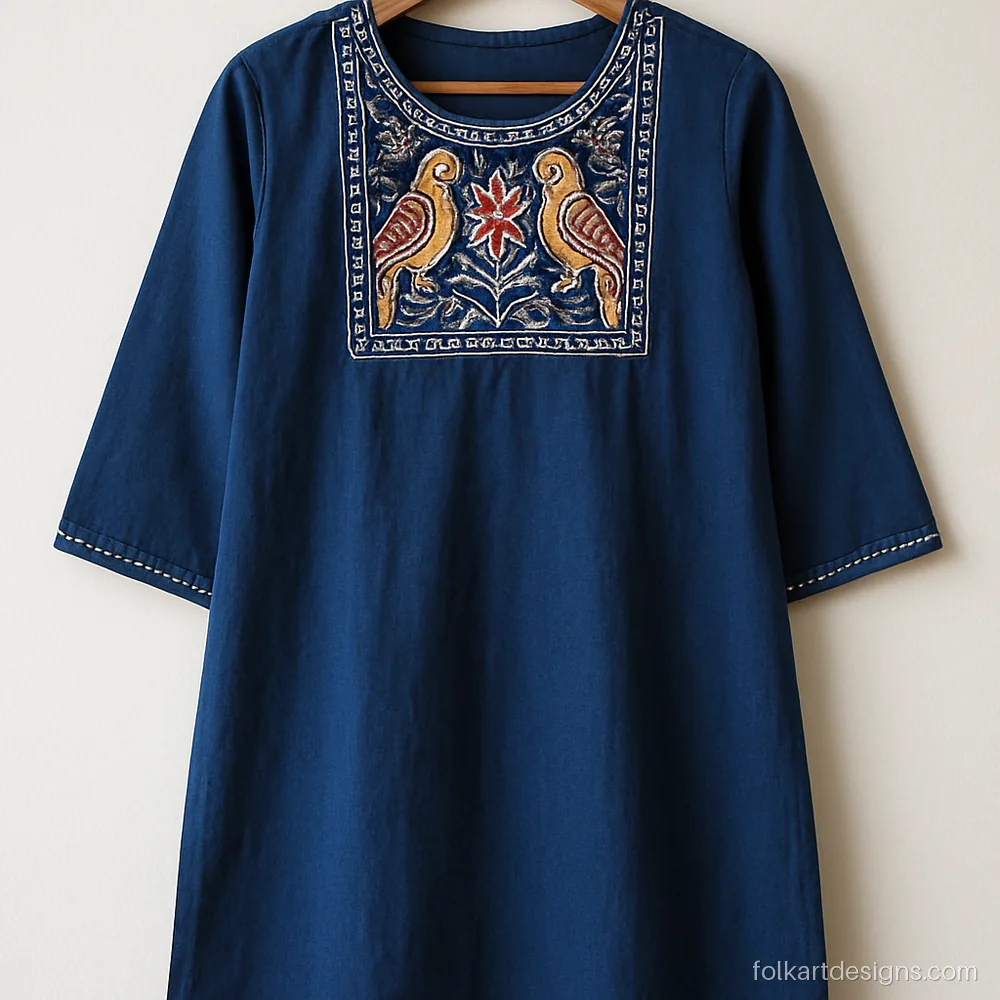
The design stays on the yoke, so the kurti remains office friendly. Madhubani designs for kurtis look best kept to one area.
Artist tip Put a plastic sheet inside the kurti before painting so the back stays clean.
Madhubani Pot Painting, Bottles and Trays
Curved objects are a good test, because the design must bend with the surface. Small repeats work better here than one big motif.
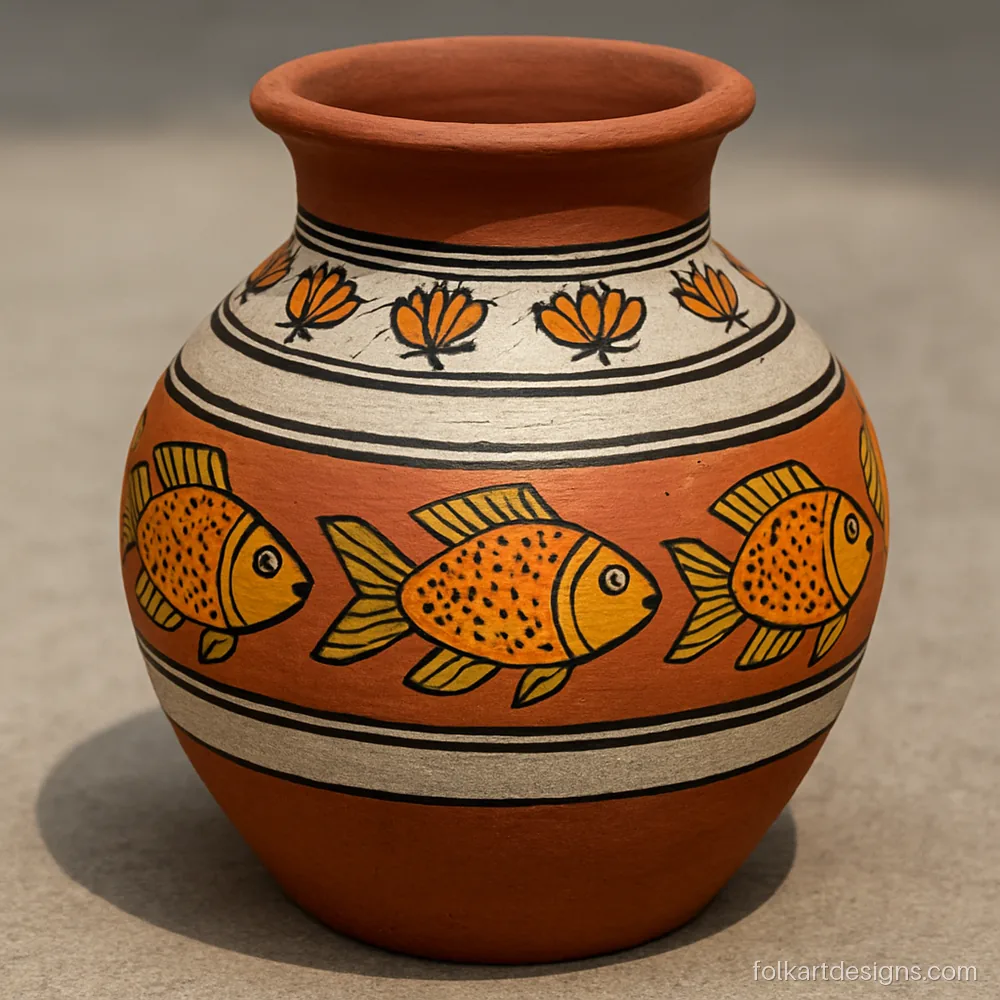
A fish band wraps the widest part of the pot. This is madhubani art on pot at its most classic.
Artist tip Prime raw terracotta first. Bare clay drinks paint and leaves it dull.
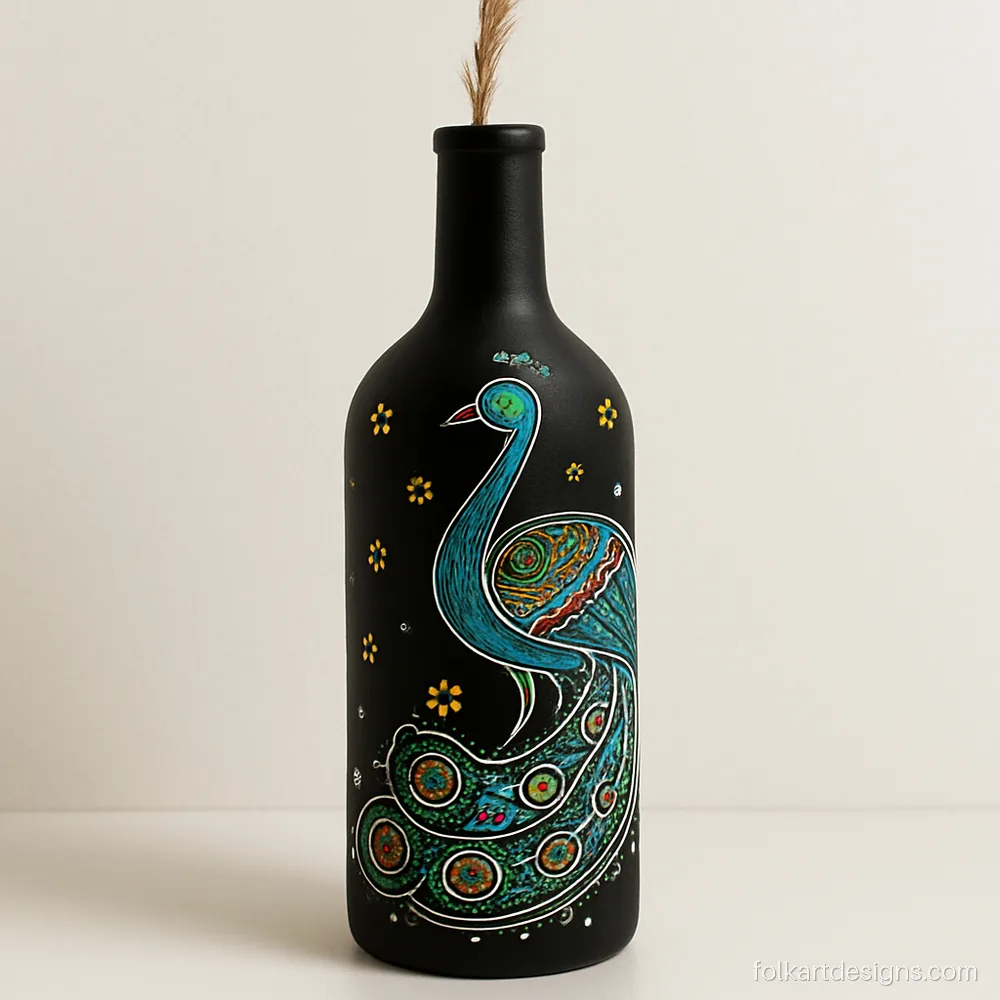
A recycled bottle painted black, then a bright peacock. It sells well as a vase or lamp base.
Artist tip Wash the bottle in soapy water and wipe it with spirit so the base coat sticks.
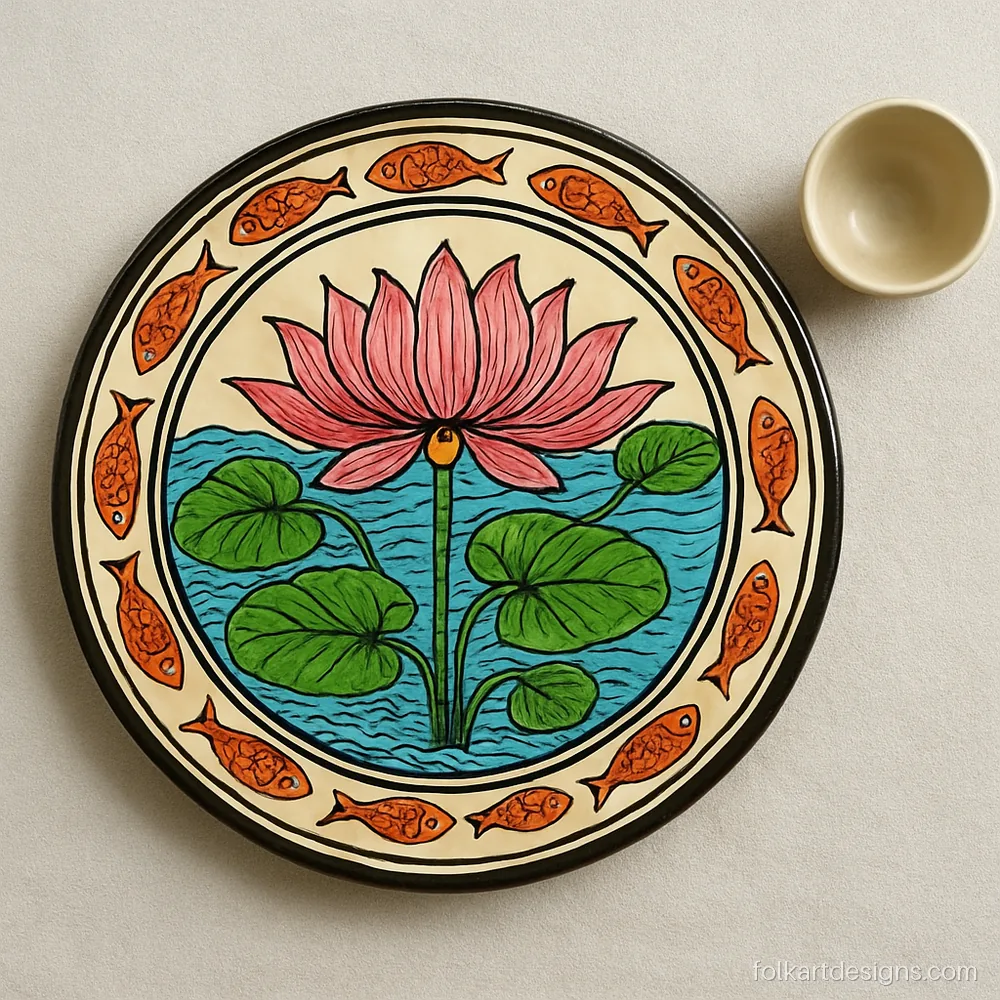
A lotus pond in the centre and fish round the rim. Varnished, it holds dry snacks or sits as decor.
Artist tip Finish with three coats of clear varnish and let it cure for three days.
How to Build Your Own Mithila Painting Design
- Layout: pick a single motif, a mirrored pair or an all-over repeat.
- Border: rule a double line and choose one repeating shape.
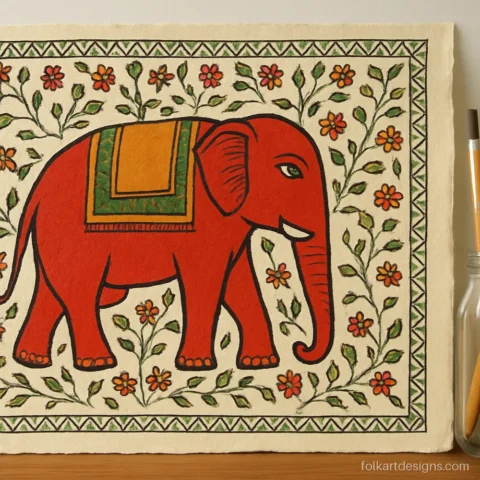
- Main motif: fish, peacock, elephant, turtle or tree of life.
- Fill: leave no gap empty. Add leaves, flowers, dots or hatching.
- Colour: stay with four or five colours plus black.
A traditional madhubani painting design always keeps the double outline. The same borders also work as a madhubani rangoli design on the floor. For outline practice, see madhubani drawing, and for raised wall pieces try lippan art designs.
Questions about these designs
What are the main madhubani motifs?
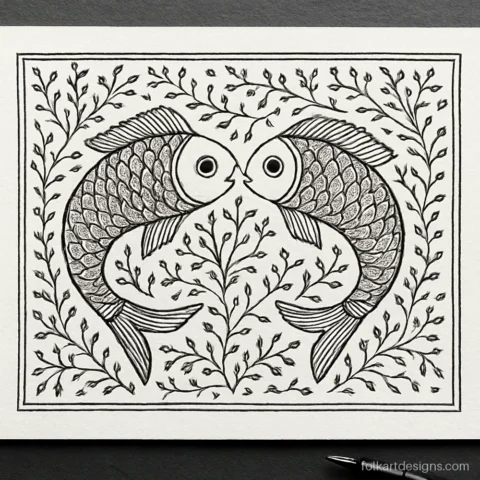
Fish, often in pairs, peacocks, parrots, elephants, turtles, the tree of life, lotus and bamboo. Borders of triangles, fish scale and leaf chains frame them.
How do I draw a madhubani painting border?
Rule two lines 1 to 2 cm apart, then repeat one shape between them, such as triangles or small arcs. Ink with a 0.5 mm pen and fill alternate shapes with colour.
Can I use these madhubani art images for tracing?
Yes, for personal practice. Any madhubani picture with clear double outlines traces well. The motif sheet and border sheet are the easiest. Trace lightly in pencil, then outline and fill in your own colours.
Which paint is best for madhubani pot painting?
Acrylic over one primer coat works on terracotta. Finish with clear varnish so the design survives dusting and light handling.
What is the madhubani saree origin?
Painted sarees grew out of the Mithila painting tradition of Bihar, when the motifs moved from walls to paper and cloth. Tussar and cotton are the usual bases.