Sohrai Painting: Earth-Colour Wall Art of Jharkhand
15 designs Folk paintings Updated 9 Oct 2026
Sohrai painting is the mud wall art that women of the Hazaribagh area of Jharkhand paint around harvest time, using the red, black, white and yellow earth of their own land. Cattle, deer, elephants, peacocks, trees and climbing plants spread across the outer walls of village homes, so the whole house becomes a picture.
This gallery has 15 original pieces: earth-colour murals, animals, birds, comb-scraped khovar work and modern sohrai art on paper and canvas. The notes under each picture cover materials, subjects, a good spot for it and a practical tip.
If you enjoy wall-based folk art, compare it with the white-on-ochre warli art of Maharashtra and the mud and mirror lippan art of Kutch.
Sohrai Painting on Mud Walls in Earth Colours
Real sohrai murals are painted straight onto freshly plastered mud. The palette is short: red earth, black, white clay and yellow ochre, which is why the walls look warm and calm rather than bright.
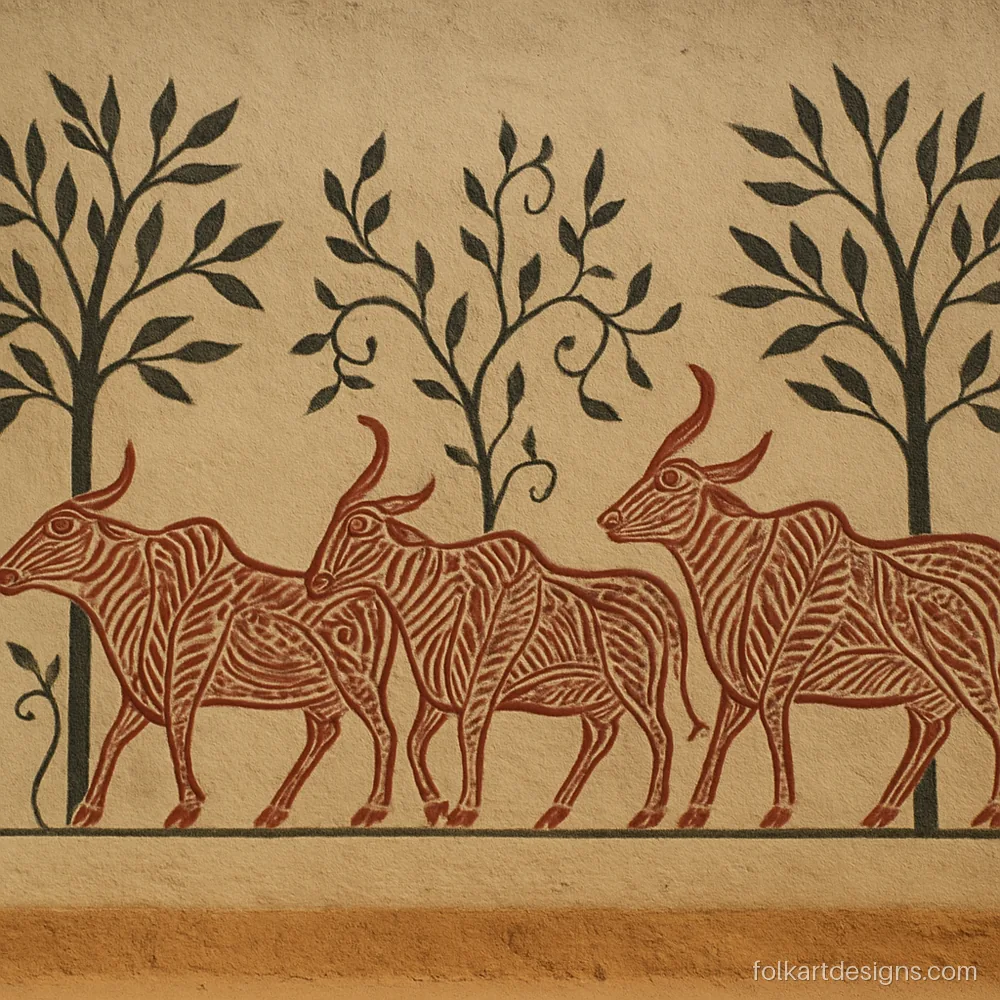
A long wall with cattle walking between leafy trees. The red earth outlines on a pale mud base are the classic look of the region.
Artist tip Plaster the wall a day ahead. Paint while it is just dry to touch so the colour sinks in.

Black plant stems curl across white clay with small birds tucked in. Two colours only, yet the band carries the eye along the whole wall.
Artist tip Work in arm-length sections so each part stays wet enough to blend at the joins.
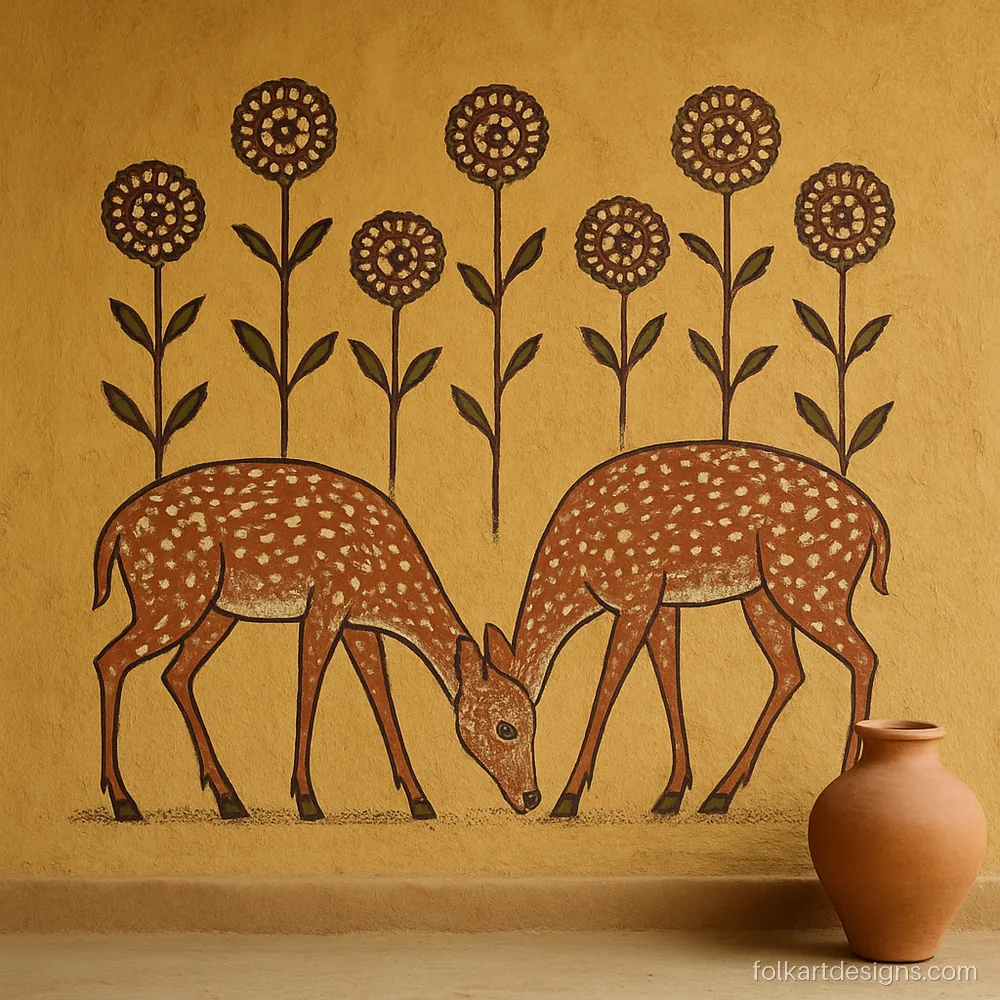
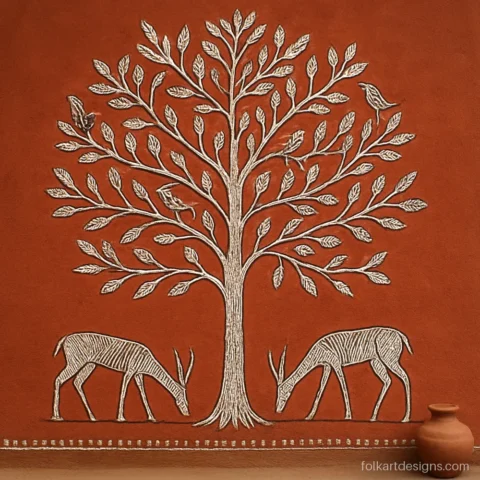
Deer graze under flowering plants on a yellow ochre wall. The warm ground suits a shaded veranda where strong colours would feel heavy.
Artist tip Mix earth pigments with a little water and plant gum so they do not dust off later.
Animals in Sohrai Art: Cattle, Deer and Elephants
Animals are the heart of this sohrai art form. Cattle come first because the paintings are linked with harvest and the herd, but deer and elephants are just as common.
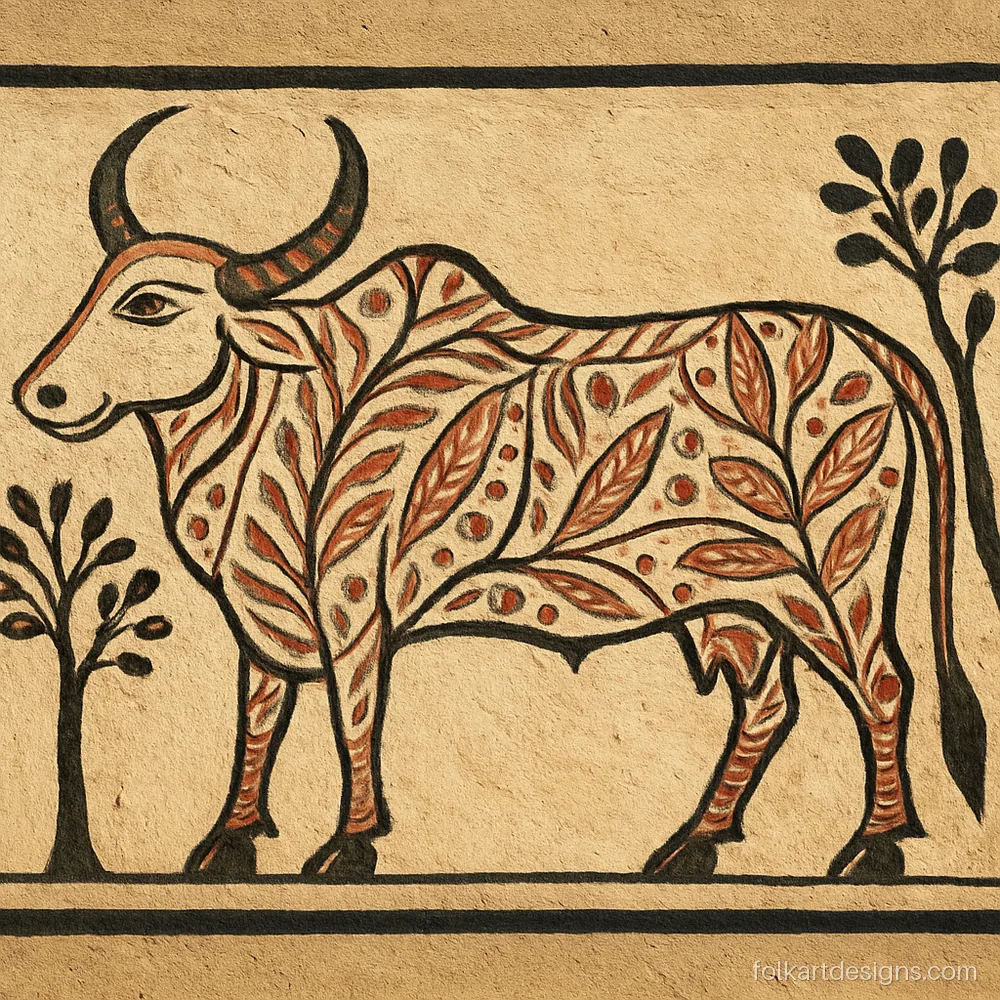
One big bull fills the panel, its body packed with leaves and curved lines. Single large animals like this make a strong focal wall.
Artist tip Draw the outline in charcoal first. It brushes off the mud easily if you need to correct it.
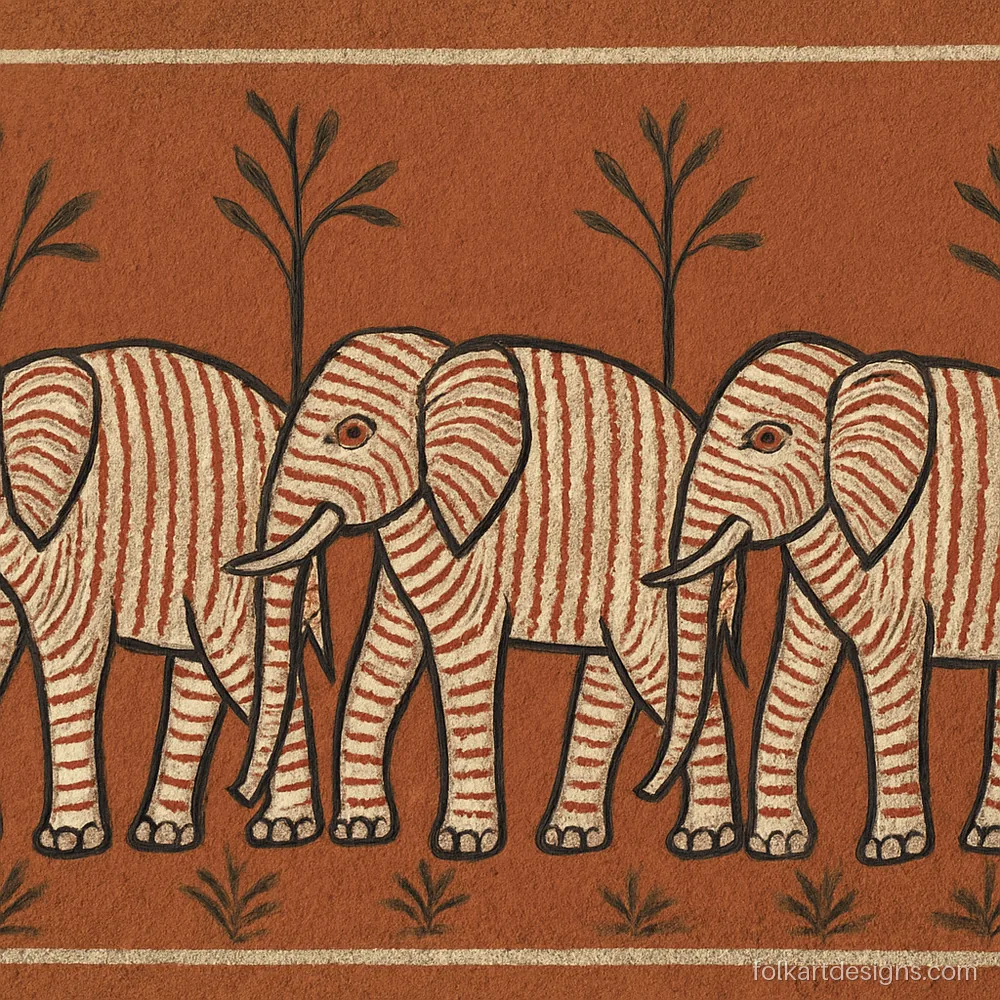
Three elephants walk trunk to tail through a line of trees. Repeating one animal is an easy way to fill a long wall evenly.
Artist tip Cut one elephant shape from cardboard and trace it three times so the herd stays even.
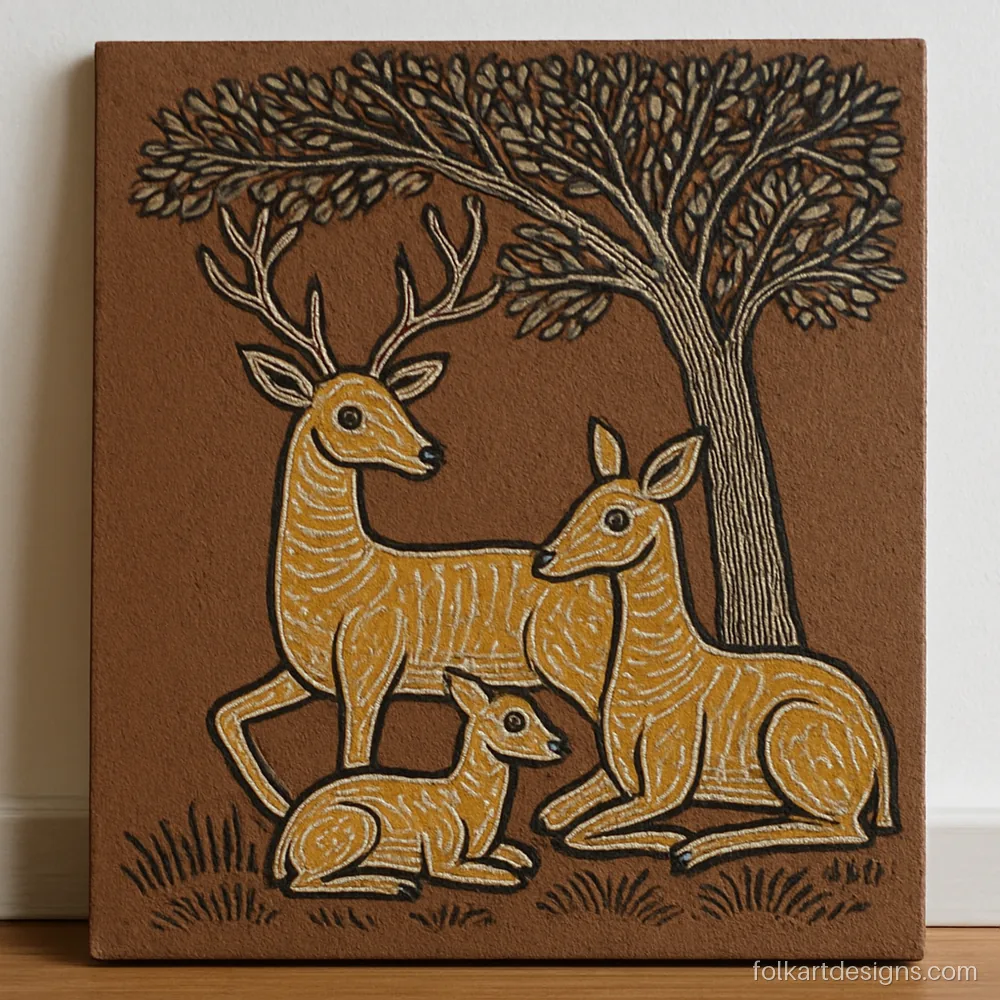
A stag, a doe and a fawn rest under one tree. Painted on a mud-coated board, it brings the wall look indoors without plastering a room.
Artist tip Coat MDF with a thin mix of clay and fabric glue, let it dry overnight, then paint.
Sohrai and Khovar of Hazaribagh, Jharkhand
Sohrai and khovar are the two wall painting styles of the Hazaribagh area of Jharkhand, both made by women on mud houses with natural earth colours. Sohrai is painted with brushes, twigs or fingers around harvest time, when walls are freshly plastered. Khovar is made by scraping a comb through layered mud. Together they are often called sohrai and khovar painting.
| Feature | Sohrai | Khovar |
|---|---|---|
| Technique | Painted with brush, twig or cloth | Comb scraped through layered mud |
| Colours | Red, black, white, yellow ochre earth | Usually two: dark under, light on top |
| Look | Soft filled shapes and outlines | Ridged lines and strong contrast |
| Motifs | Cattle, deer, elephants, birds, trees | Plants, leaves, animals, borders |
Like madhubani painting, it began on house walls and moved to paper, and it shares nature motifs with gond art from neighbouring Madhya Pradesh.
Sohrai Painting Peacock and Other Birds
Birds sit on branches, walk beside cattle and fill the spaces between bigger animals. The sohrai painting peacock is the showpiece, with a long tail drawn in simple lines.
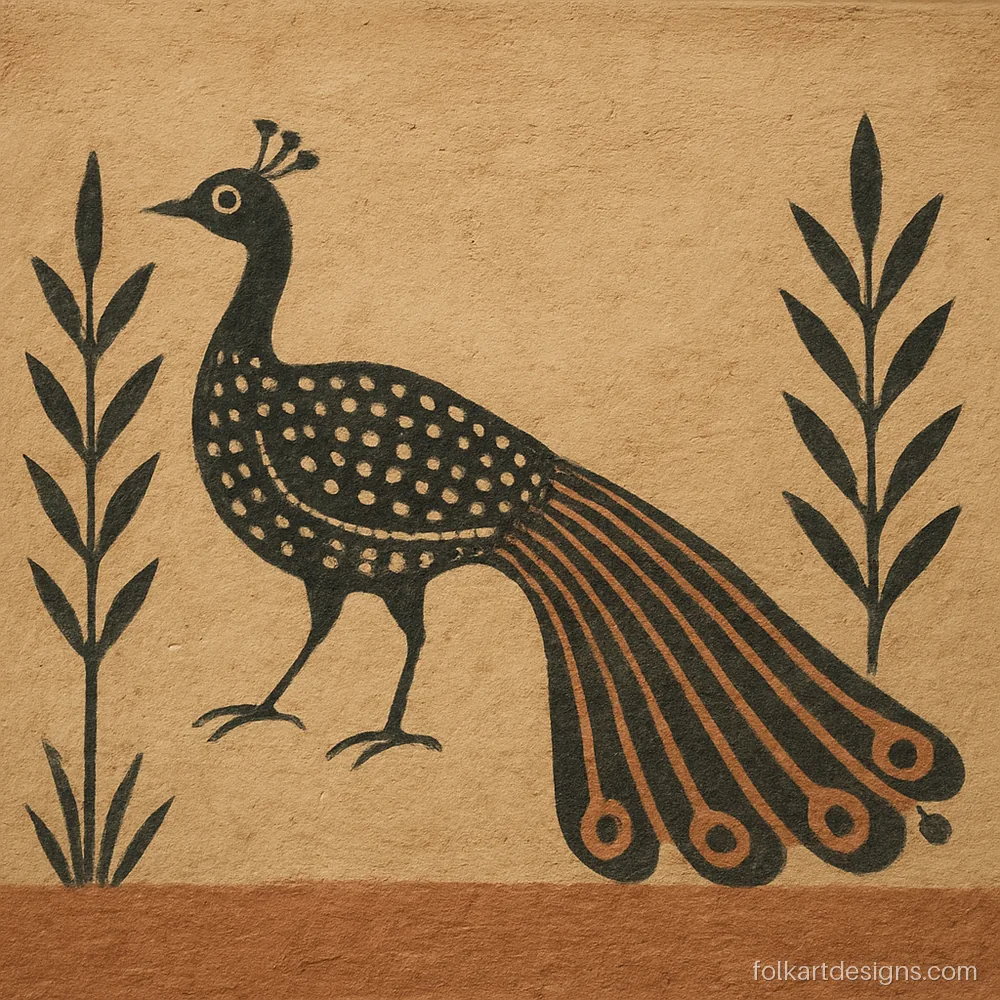
A peacock with its tail sweeping low between tall plants. The tail is lines, not colour, which keeps the whole wall in earth tones.
Artist tip Use a twig or a flat stick dipped in colour for the long tail lines. They come out steadier.
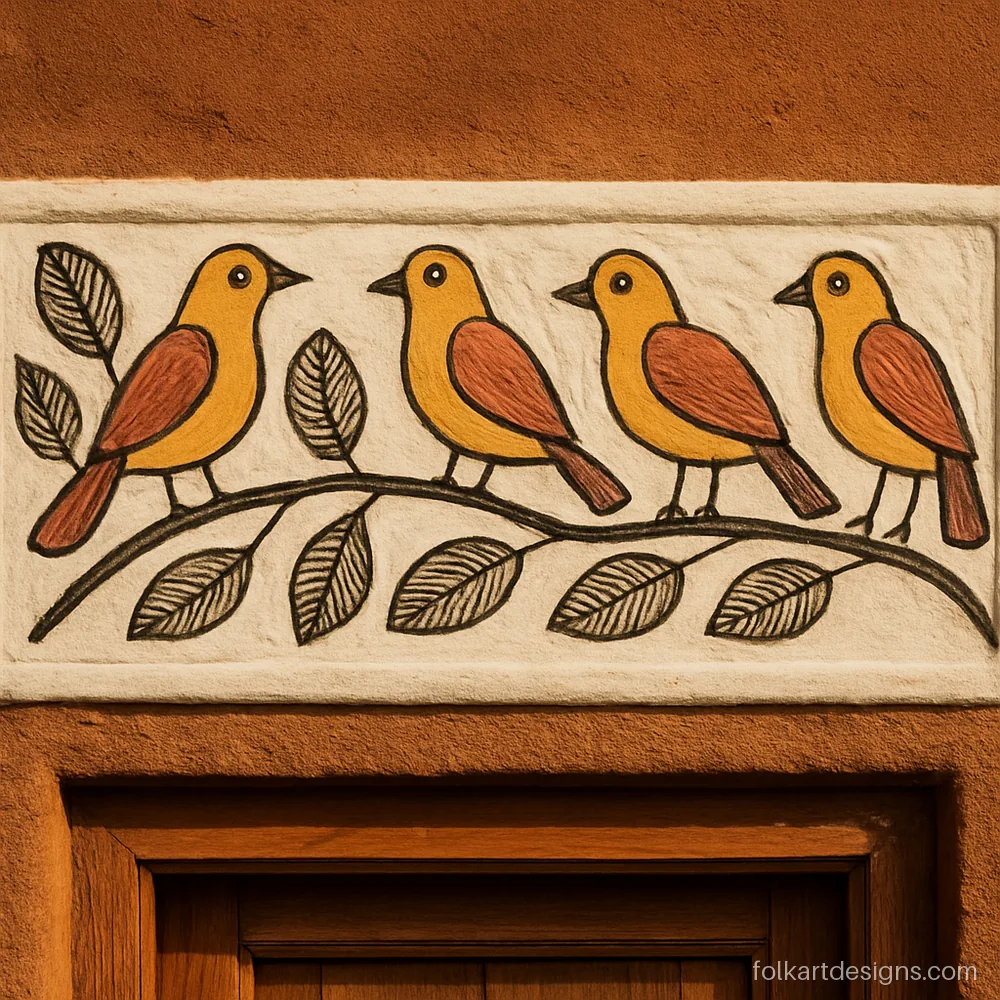
Four small birds on one curving branch. Simple and quick, this works as a narrow panel above a door or window.
Artist tip Give each bird a different tail angle so the row feels alive, not stamped.
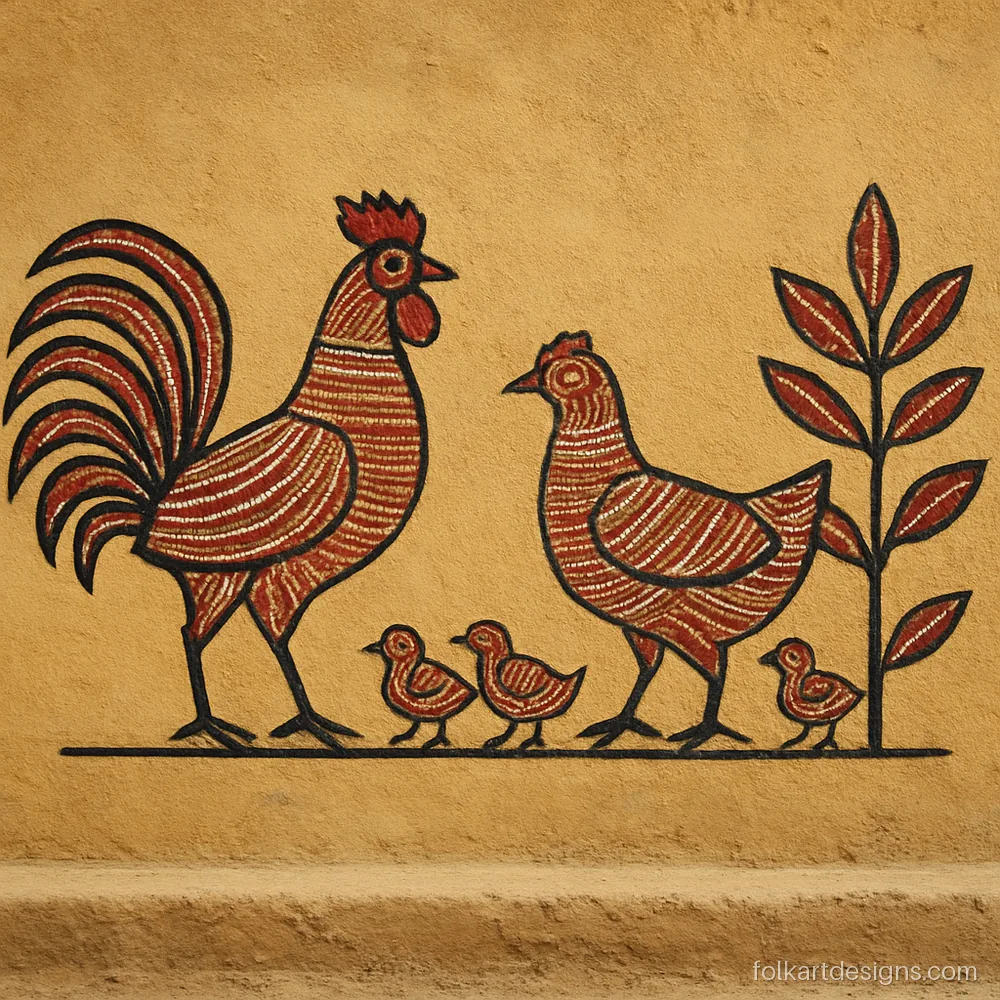
A hen, a rooster and their chicks near a small plant. Farmyard birds belong to village life, and children love spotting each chick.
Artist tip Keep the chicks as simple ovals with two lines for legs. Small shapes need fewer details.
Sohrai and Khovar Painting: Comb-Scraped Patterns
Khovar painting uses a comb instead of a brush. A dark layer of mud goes on first, a light layer goes over it, and the top is scraped away to show the lines below.
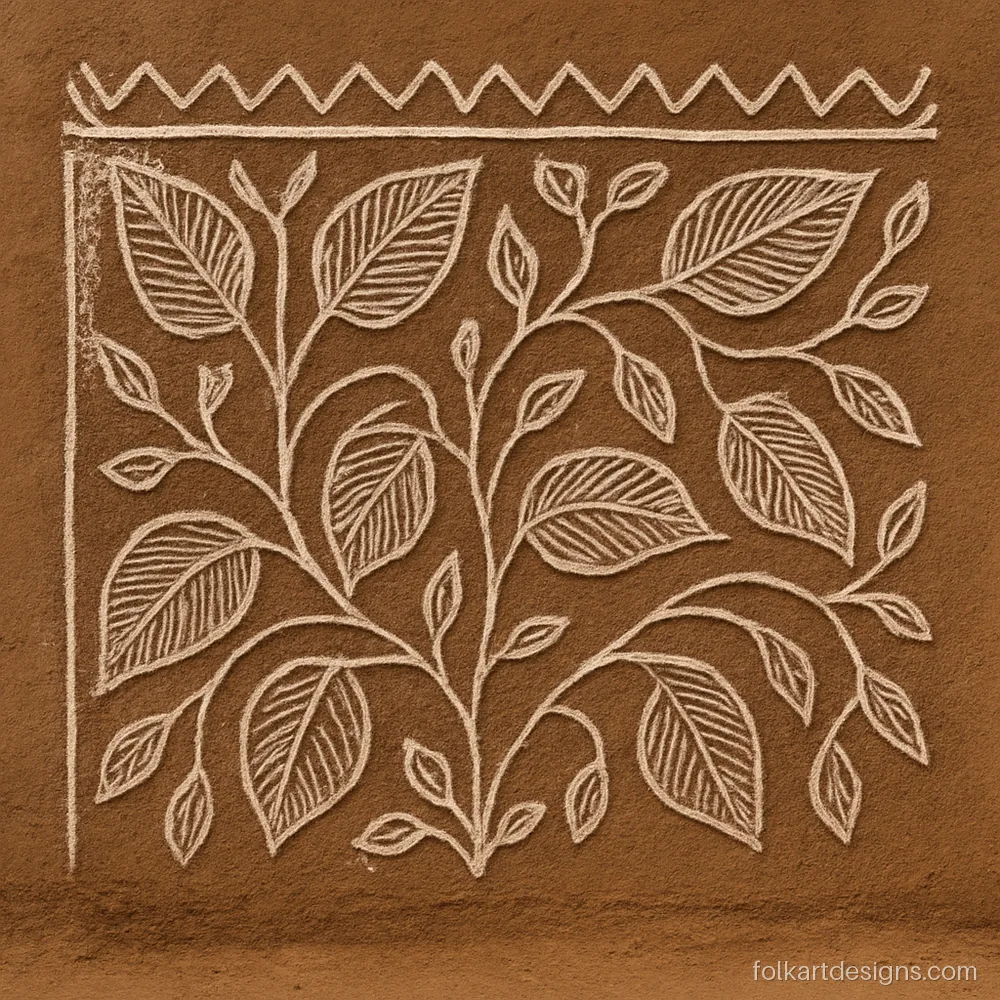
Rows of scraped lines turn into leaves, plants and borders. The contrast of black under white gives khovar its graphic, carved look.
Artist tip Scrape while the top layer is still damp. Once it dries the comb chips instead of gliding.

An elephant built entirely from combed lines. The ridged texture catches side light, so the panel changes look through the day.
Artist tip Cut a comb from stiff card with 3 to 5 mm teeth. Wider teeth give bolder lines.
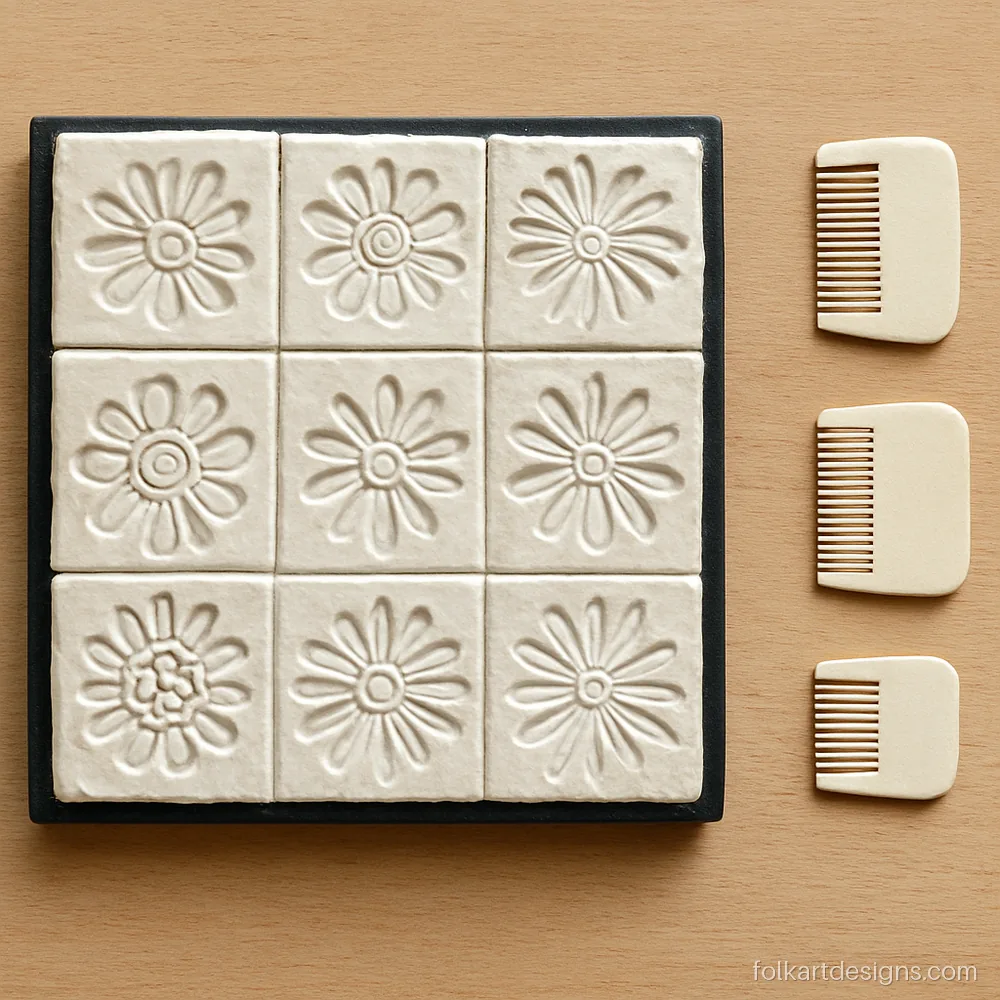
A practice board with nine small flower squares, each scraped with a different comb pattern. A neat way to test tools before a big wall.
Artist tip Use air-dry clay over a black painted board. It stays workable for about 20 minutes.
Sohrai Drawing and Sohrai Art on Canvas and Paper
Many artists now paint sohrai on paper and canvas so the work can travel and be framed. The motifs stay the same, and acrylic in earth shades stands in for mud colours.

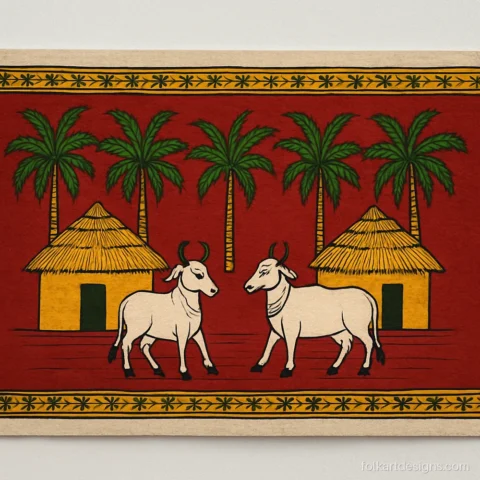
Two cattle facing each other on a deep red ground. It keeps the village wall look but hangs neatly in a flat or office.
Artist tip Mix burnt sienna with a touch of black for a red earth shade that looks natural, not shiny.
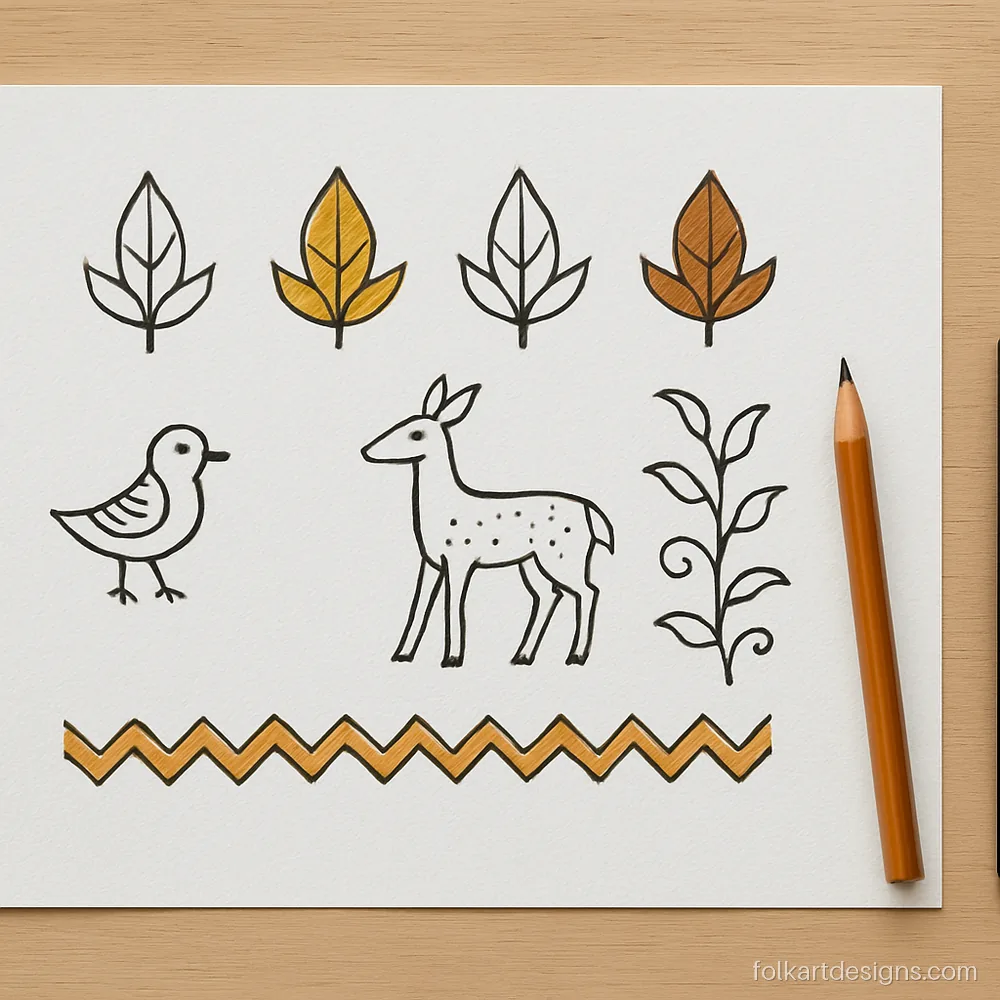
A sheet of simple motifs: leaves, a bird, a deer and a plant. Draw these until they feel easy, then combine them into a scene.
Artist tip Practise each motif three times on one row. The third one is usually the keeper.
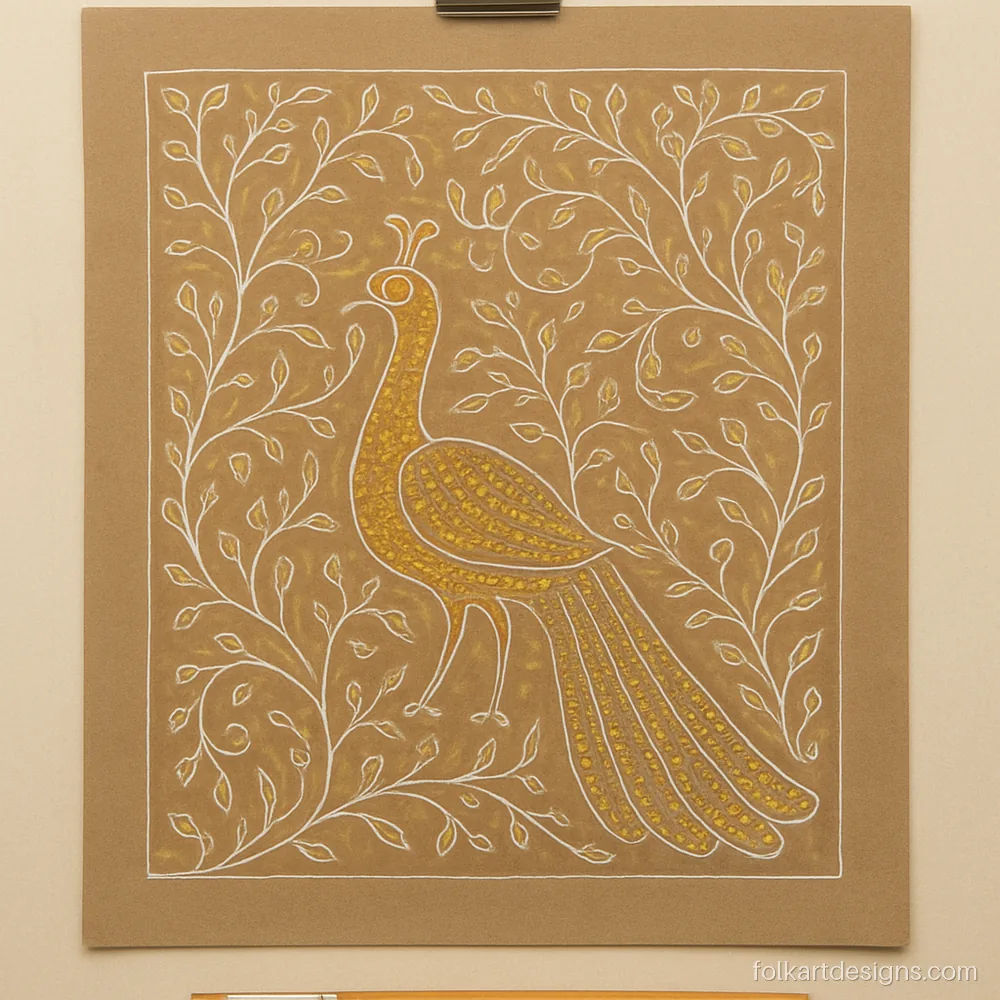
Brown kraft paper looks like a mud wall at a fraction of the effort. White and ochre lines on it give a quick, earthy sohrai piece.
Artist tip Thin the white paint slightly with water so it flows from a size 0 brush in long lines.
How to Make a Sohrai Painting at Home
- Base: use brown kraft paper, a canvas painted in red earth, or MDF coated with clay mixed with fabric glue. Let a clay coat dry overnight.
- Colours: keep to four: red earth, black, white and yellow ochre. Earth pigments mixed with gum, or matt acrylic, both work.
- Outline: sketch one large animal in charcoal or soft pencil, then add trees or plants around it.
- Fill: pack the body with leaves, wavy lines and dots. Leave the background mostly plain.
- Khovar option: paint the board black, spread a thin layer of white clay, and scrape lines with a card comb while it is damp.
Acrylic is touch dry in about 30 minutes. Clay layers need a full day. Seal clay boards with matt varnish spray, then clean them only with a soft, dry paintbrush.
Questions about these designs
What is sohrai art?
Sohrai art is a wall painting tradition from the Hazaribagh area of Jharkhand. Women paint mud walls with natural earth colours around harvest time. Animals, birds, trees and plants are the main subjects.
Which state is sohrai painting from?
It is a sohrai painting of Jharkhand, centred on the Hazaribagh area. You will also hear it called jharkhand sohrai painting or simply sohrai painting in Jharkhand.
What is the difference between sohrai and khovar art?
Sohrai is painted with brushes, twigs or cloth in several earth colours. Khovar is scraped with a comb through a light layer of mud to show a dark layer underneath. Both come from the same area and are often shown together.
What colours are used in sohrai painting?
Natural earth colours: red, black, white and yellow ochre. They come from local soils, clay and soot. For hobby work, matt acrylic in the same shades gives a similar look.
Can I find sohrai painting in Ranchi?
The style belongs to the Hazaribagh area, but sohrai painting in Ranchi and other Jharkhand towns is now common on paper, canvas and some public walls. Village walls near Hazaribagh still show it in its original form.
How do I start a sohrai drawing as a beginner?
Practise single motifs first: a leaf, a bird, a deer. Then draw one animal large in the centre and fill it with lines and dots. Brown kraft paper and earth-tone paints give the right feel. For more tribal ideas, see bastar art.