Gond Art: Paintings, Drawings and Easy Ideas from Madhya Pradesh
18 designs Folk paintings Updated 9 Oct 2026
Gond art is the bright, busy painting style of the Gond community of Madhya Pradesh, and once you learn its patterns you start seeing them everywhere. A tree is never just green. Its trunk is filled with fish scales, its leaves with rows of dots, and a bird sits on every branch.
These 18 gond art images are all original pieces: trees of life, birds and peacocks, animals, beginner drawings and a page of patterns to practise. Under every picture you will find what it is painted with, its main motifs, the room or reader it fits, and a tip from our classes.
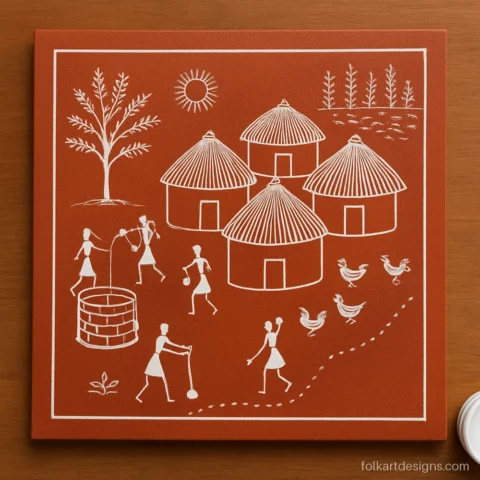
If you like tribal art built from simple shapes, also look at warli art from Maharashtra and the wider bastar art traditions of Chhattisgarh.
Gond Art Tree of Life
The tree is the heart of traditional gond art. Roots, trunk and branches each get their own filling pattern, and birds or animals rest around it.
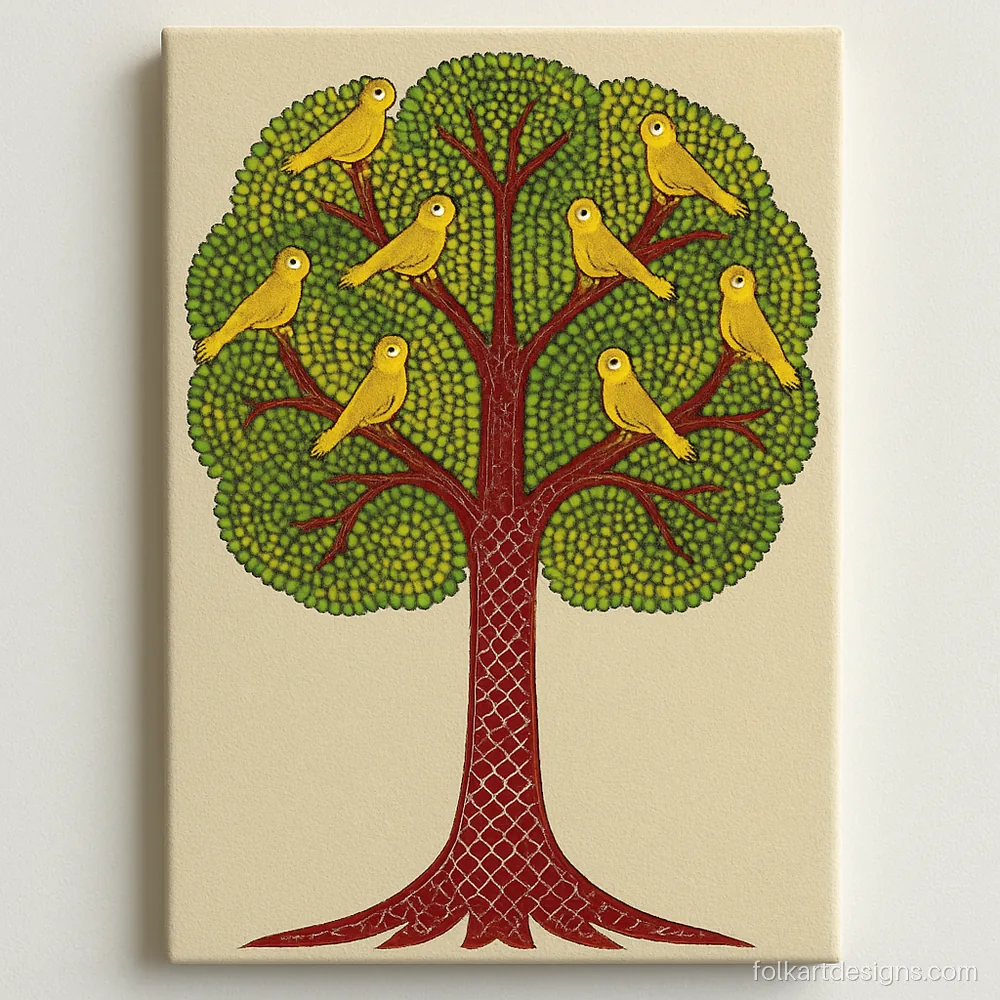
A tall tree with a fish-scale trunk and dotted leaves. The birds on top bring the eye up the page. Good for a living room frame.
Artist tip Paint all flat colours first, let them dry an hour, then add line fillings in white.
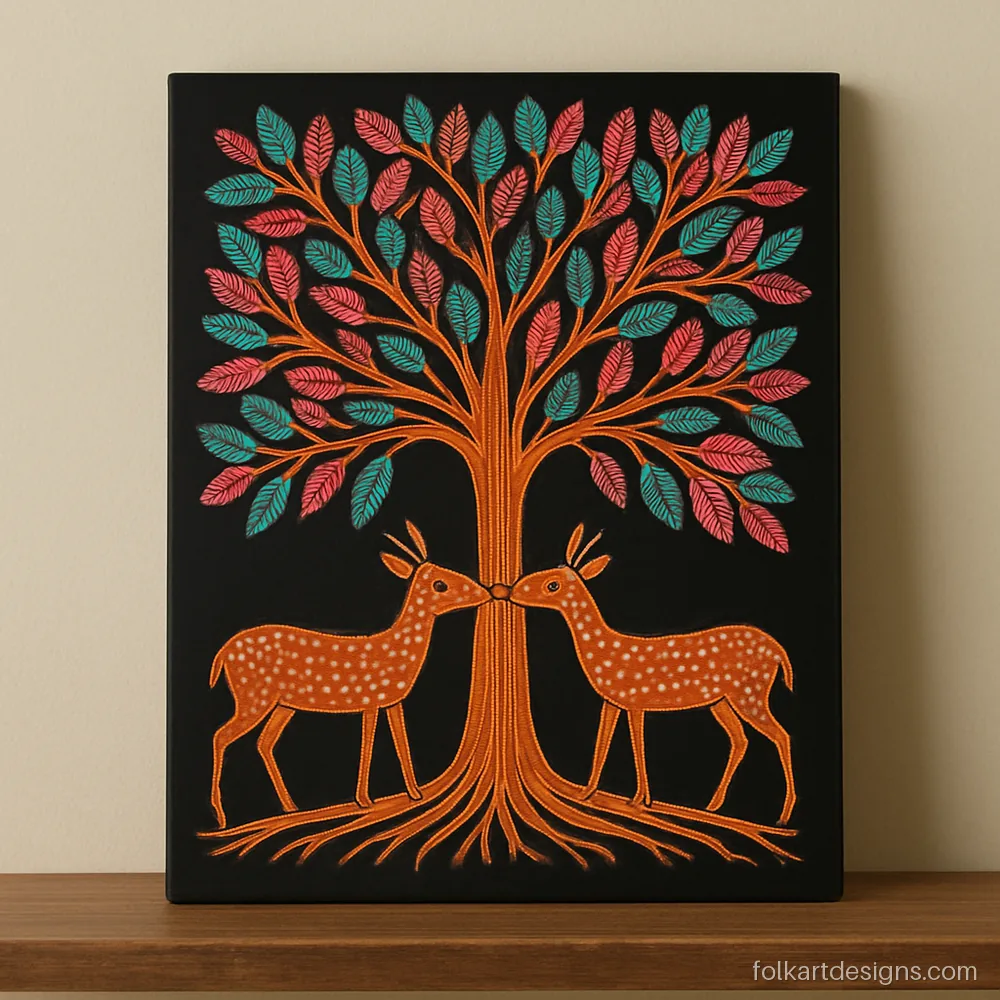
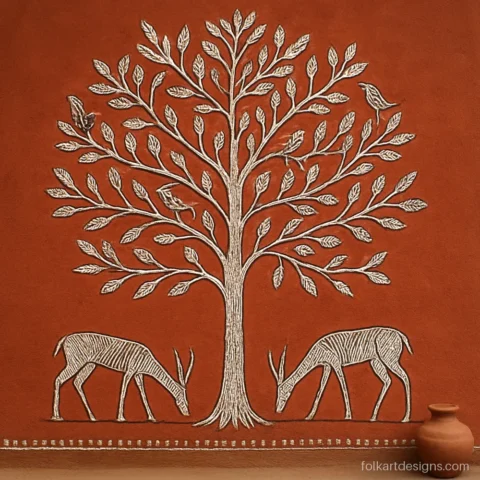
On black, the bright fillings glow. Two deer under the tree make a calm, balanced scene that suits a study or reading corner.
Artist tip On a black base, give colours two thin coats so they look solid and bright.
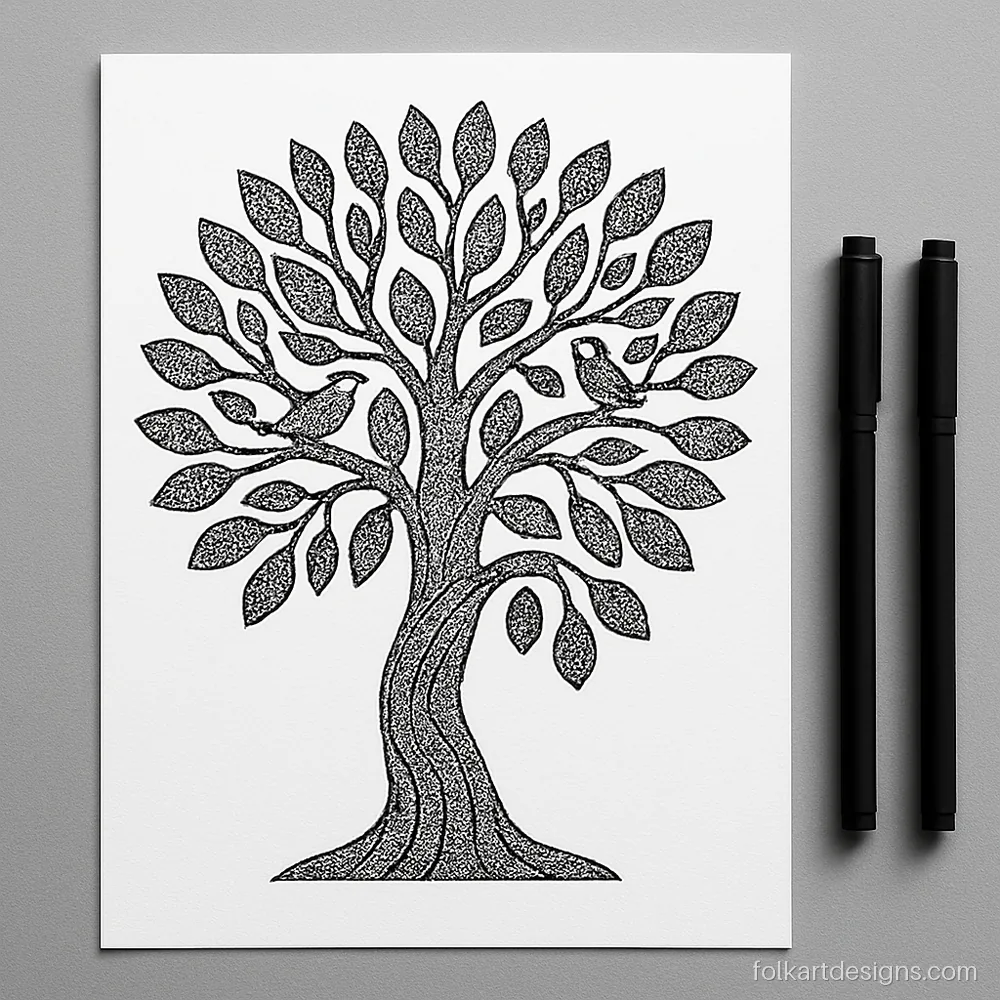
A pen-only tree on A4. All the beauty is in the line fillings, so it is a good practice sheet before you use colour.
Artist tip Use a 0.5 mm pen for outlines and 0.1 mm for the tiny dots and dashes inside.
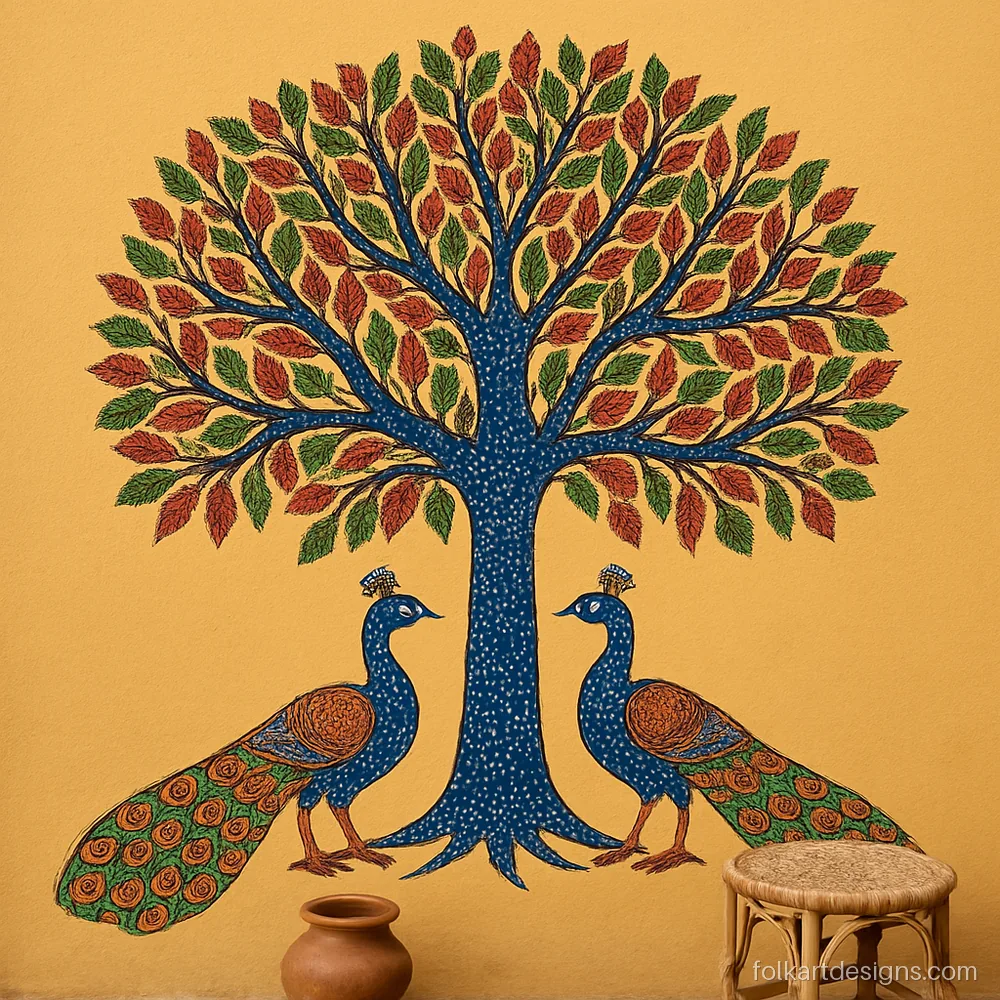
Painted straight on a wall, the tree spreads like a real one. Two peacocks frame the base. Good for a veranda or entrance.
Artist tip Sketch the outline with chalk first. It wipes off easily if you change your mind.
Gond Art Birds, Peacocks and Butterflies
Gond art birds are round and full, with tails that turn into patterns. Peacocks are favourites, and butterflies make easy small pieces.
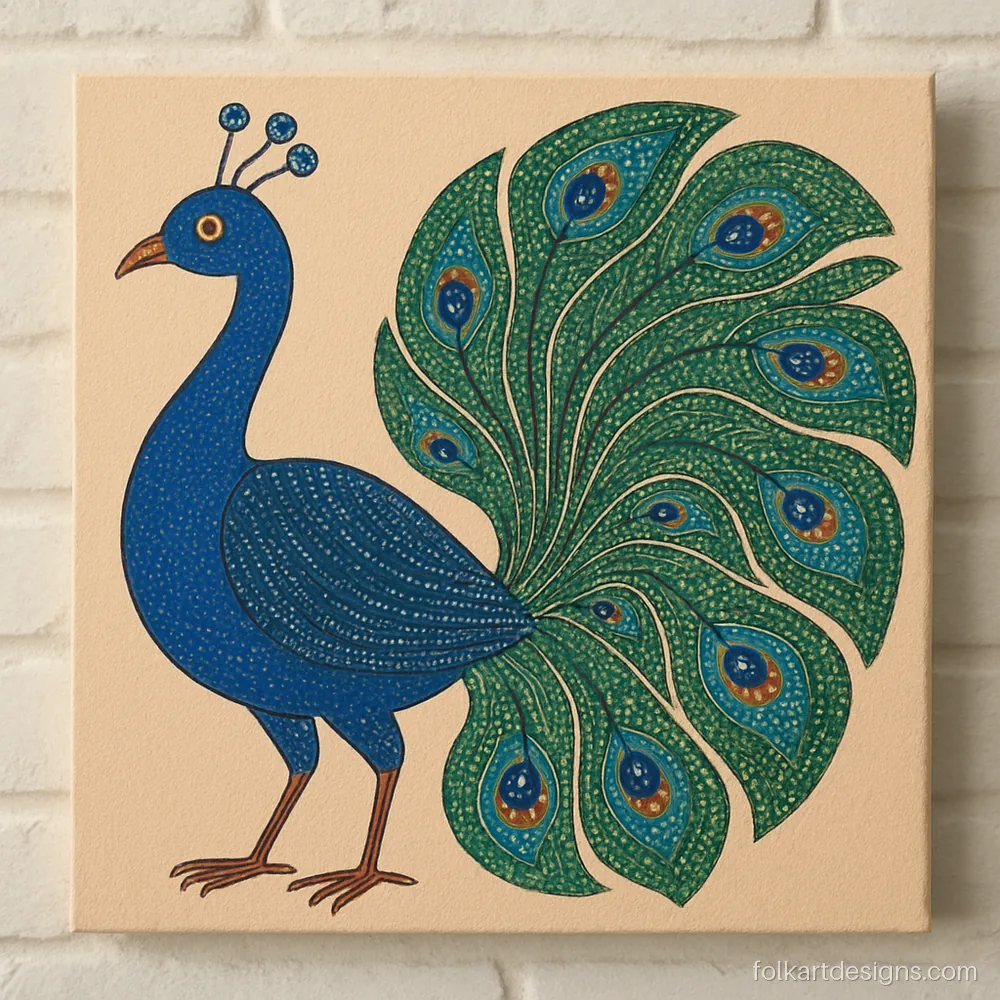
A single peacock with its tail swept down and out. Every feather has a different filling, which keeps the eye moving.
Artist tip Plan feather fillings in pencil first so neighbouring feathers never repeat the same pattern.
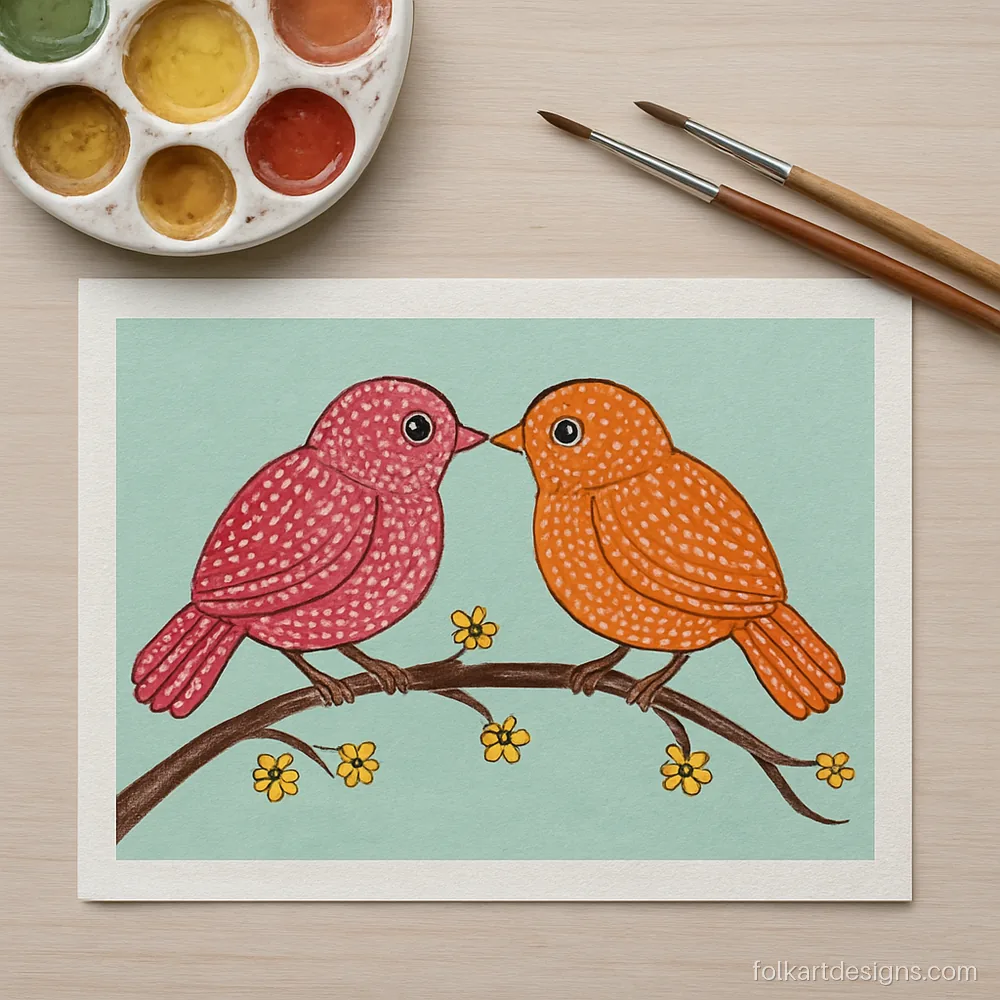
Two birds facing each other on a branch. The warm pink and orange make it cheerful for a kids' room or a gift card.
Artist tip Poster colours dry fast. Work one shape at a time so edges stay clean.
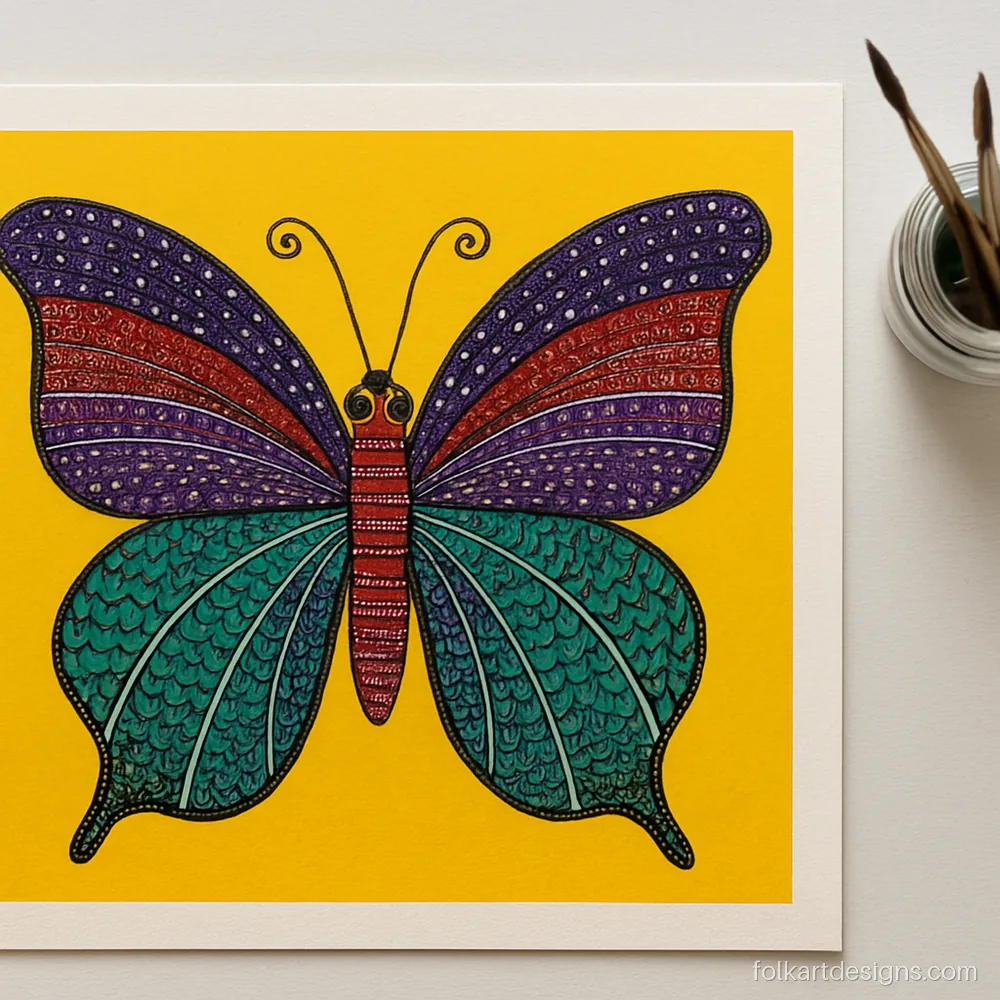
This gond art butterfly is an easy one. Two big wings, four fillings, done in an evening. Kids and beginners enjoy it.
Artist tip Divide each wing into four parts with pencil and fill each part with one pattern.

A mother bird and three chicks around a round nest. Soft greens and browns give a quiet, homely feel.
Artist tip Make the nest from short curved strokes in two browns so it looks woven.
What Is Gond Art
Gond art comes from the Gond community, one of the largest tribal groups of central India. It is closely linked with Madhya Pradesh, which is why people search for gond art of Madhya Pradesh, and Gond families also live in nearby Chhattisgarh. The old practice was painting on mud walls and floors at home. Today you see it on paper, canvas, fabric and walls.
Its signature is the filling. An outline is drawn first, then packed with dots, dashes, fine lines and fish-scale patterns in bright colour. Trees, birds, deer, fish and tigers are the most loved subjects.
| Feature | Gond | Warli |
|---|---|---|
| State | Madhya Pradesh | Maharashtra |
| Colours | Bright, many colours | White on red ochre or brown |
| Main idea | Shapes filled with patterns | Figures built from circles and triangles |
| Favourite motifs | Trees, birds, deer, fish, tigers | Tarpa dance, village life |
Gond Art Animals: Deer, Tiger, Elephant and Fish
Animals in gond art painting are drawn with simple outlines and then packed with pattern. The filling, not the shape, carries the detail.
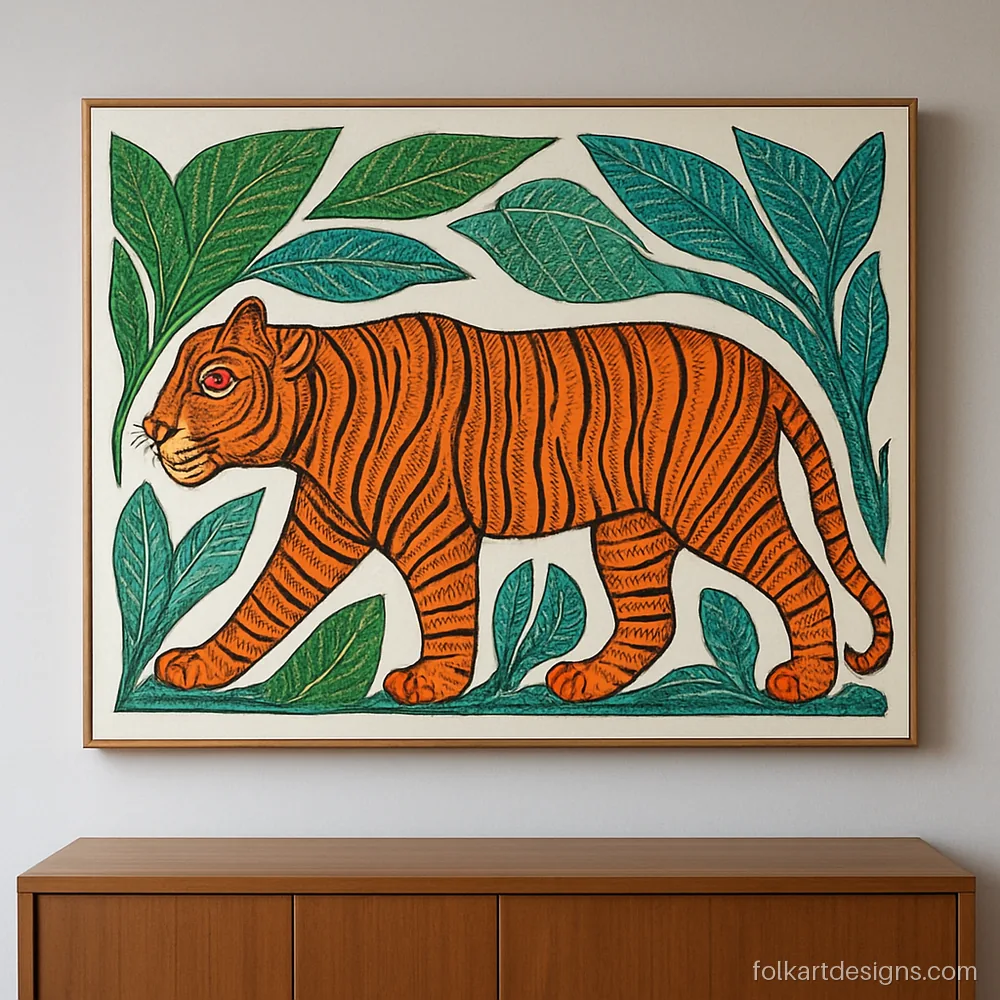
The tiger's stripes are filled with fine lines and dots instead of plain black. Bold and bright, it suits a large wall.
Artist tip Leave a thin gap between colours. It acts like a border and looks neater than touching edges.
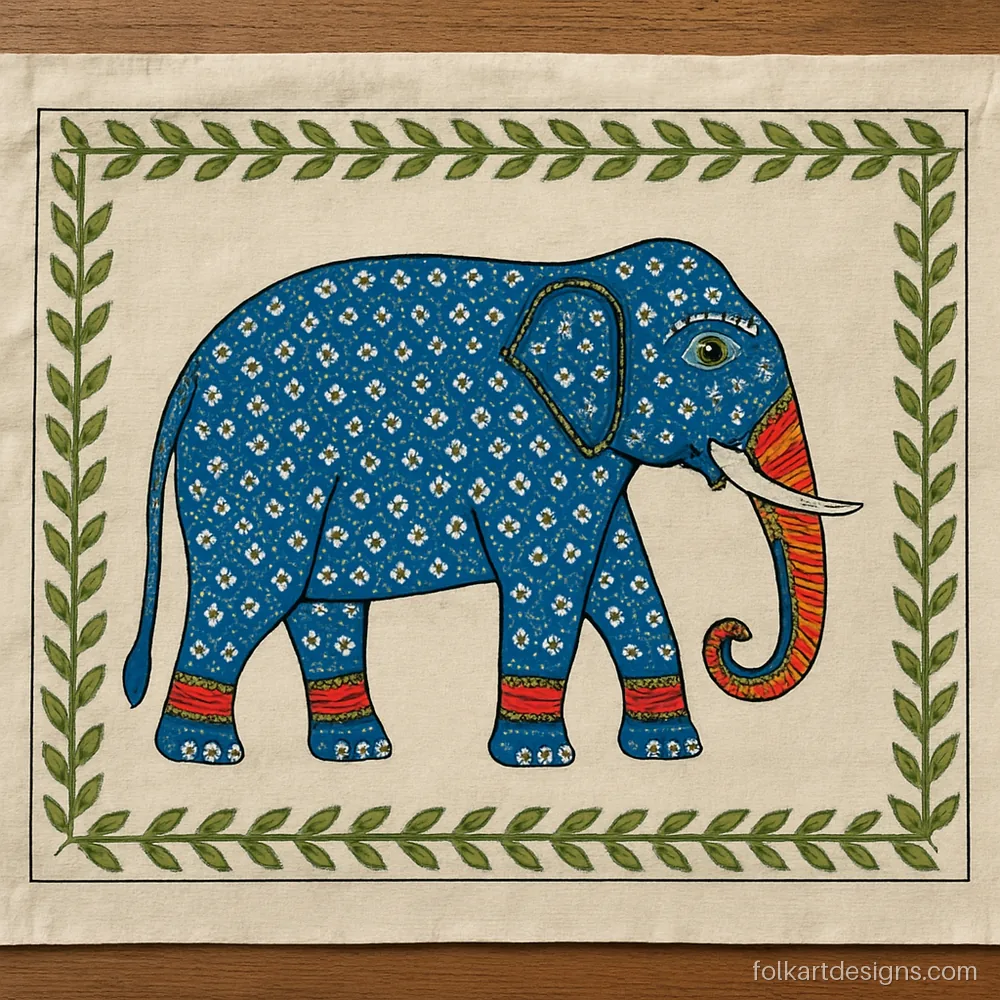
A gentle elephant whose body becomes a garden of small flowers. The calm blue makes it easy to place in any room.
Artist tip On cotton, iron the back for two minutes after 24 hours to set fabric paint.

Two fish curve around each other, their scales drawn as tiny arches. Wavy lines suggest water. A nice pick for a bathroom or hallway.
Artist tip Draw fish scales in rows from head to tail so the arches overlap neatly.
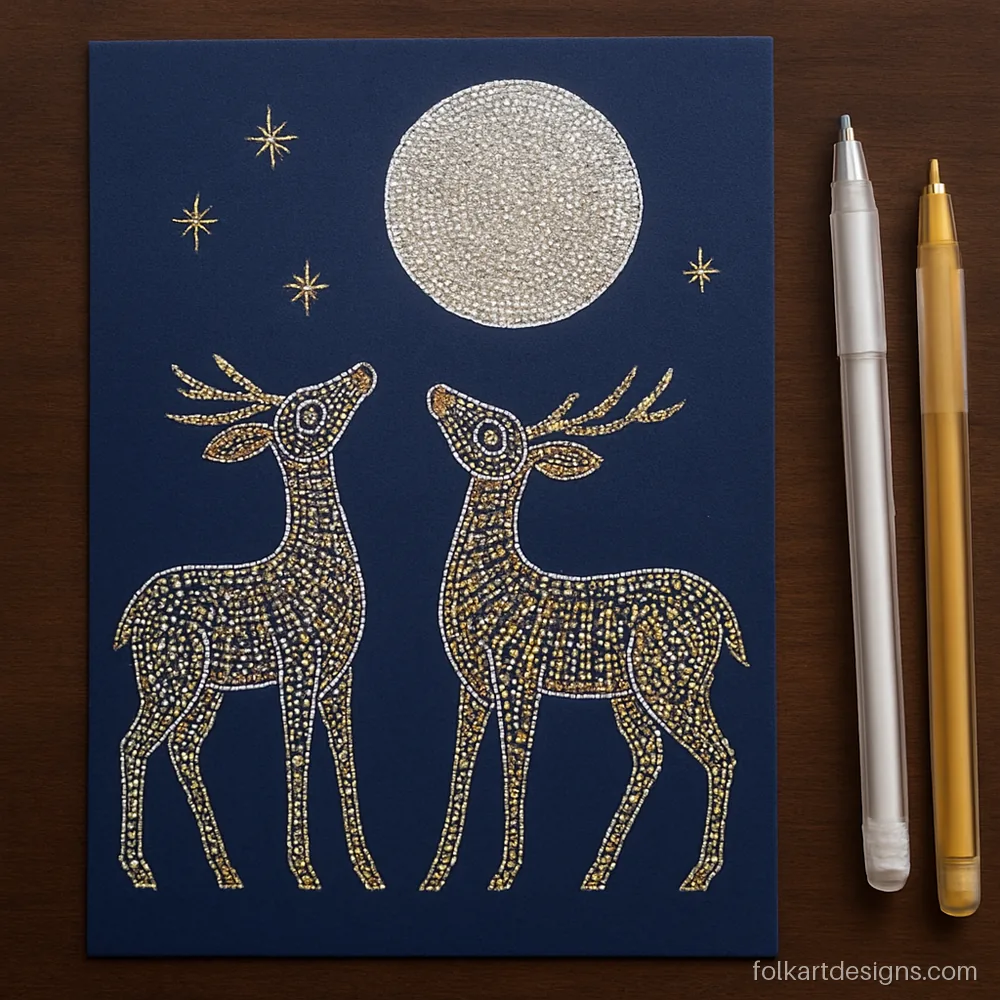
Two deer look up at a full moon. The deep navy background and white dot fillings give it a soft night-time mood.
Artist tip White gel pens skip on rough paper. Use smooth navy card for clean dots.
Easy Gond Art for Beginners
Simple easy gond art starts with one shape and one filling. These three are quick, low cost and good for classes.
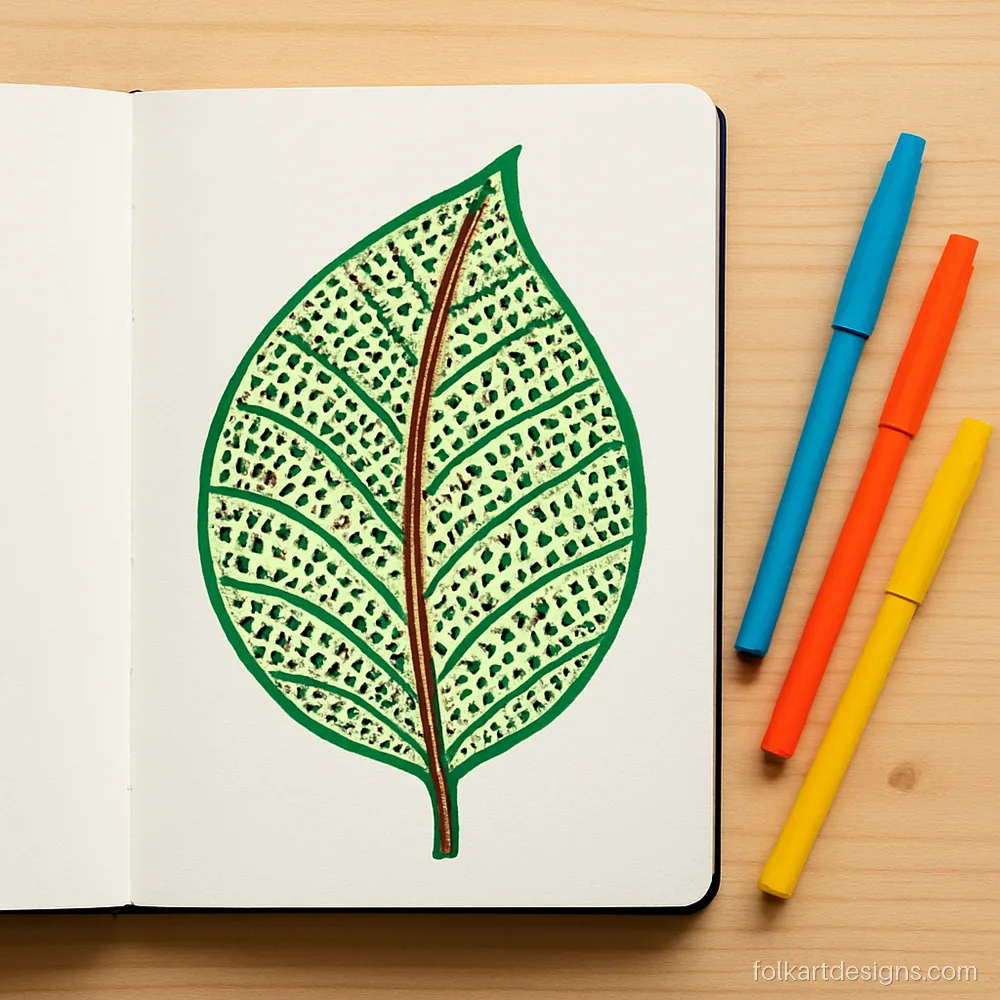
One big leaf, one filling. This is how most students start. It teaches line spacing before you try a whole tree.
Artist tip Keep dots the same size. Press the pen lightly and lift straight up each time.
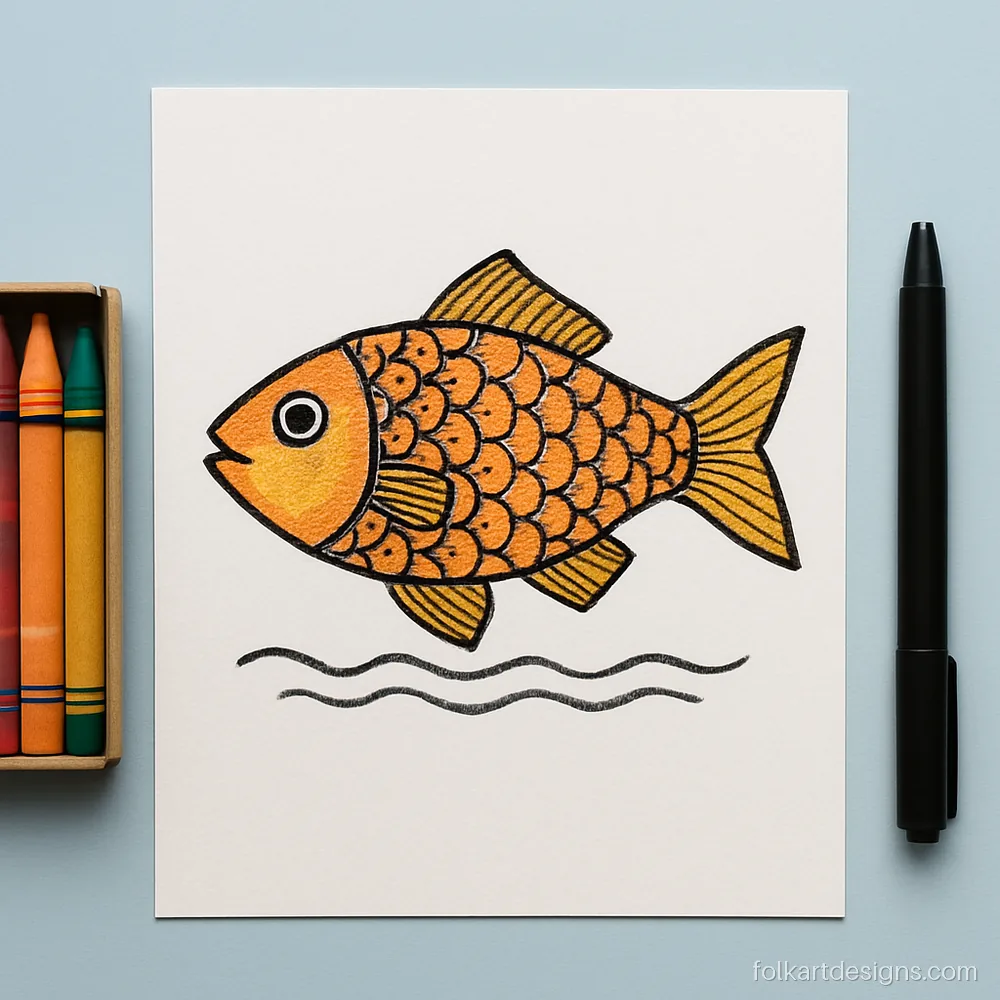
Gond art for kids made easy: a fish outline, crayon colours and pen patterns on top. Great for a school activity or holiday afternoon.
Artist tip Colour with crayons first, then add pen patterns. Pen over crayon wax smudges less.
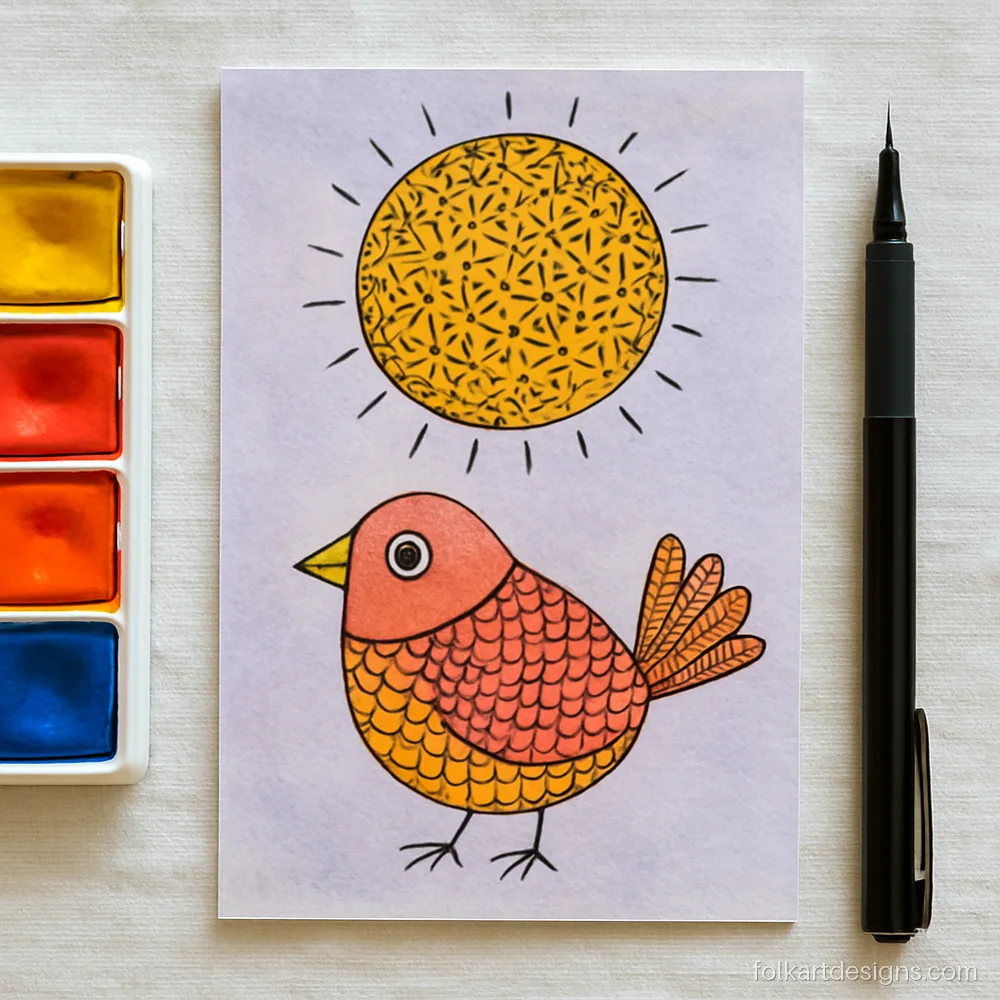
A postcard sized bird under a sun. Small enough to finish in 30 minutes, which makes it a good warm-up piece.
Artist tip Let watercolour dry fully before inking, or lines will feather and blur.
Gond Art Patterns: Dots, Dashes and Fish Scales
These practice sheets show the gond art patterns you will use again and again. Master these and any outline becomes a gond piece.
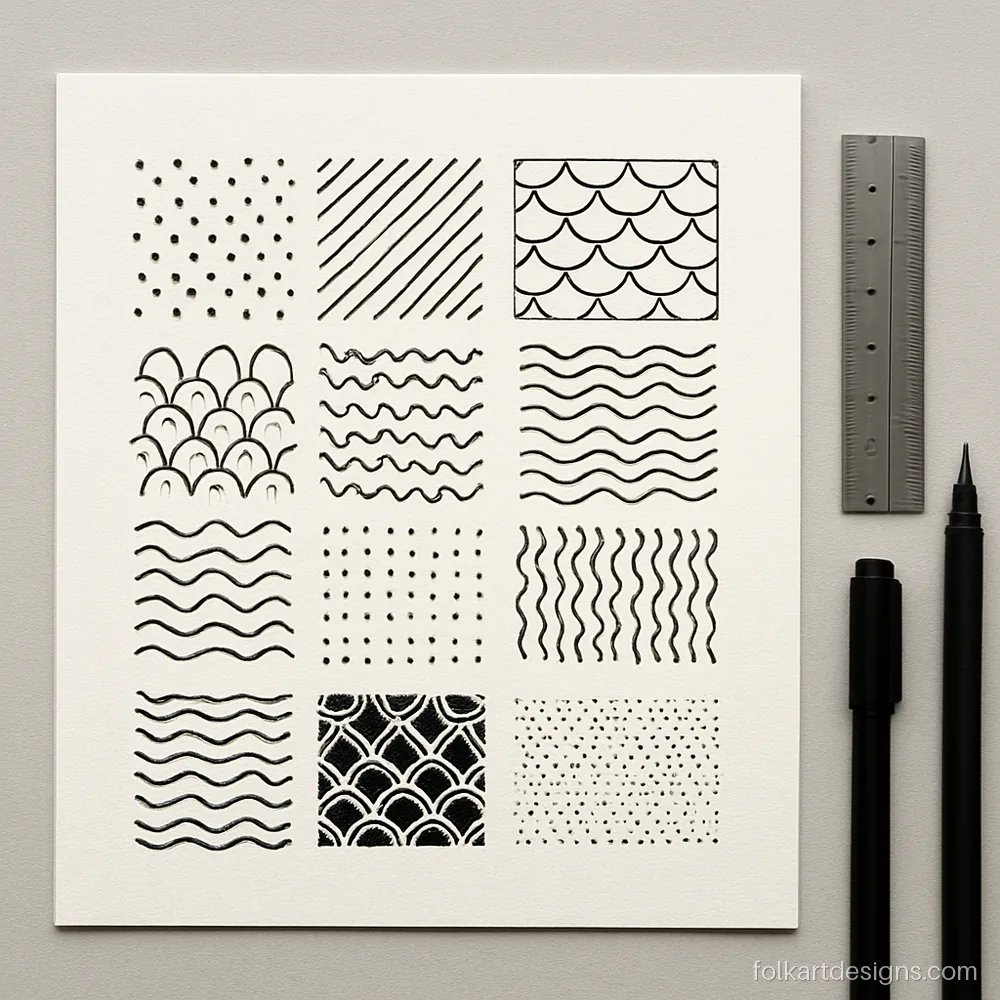
Twelve boxes, twelve fillings. Keep this sheet beside you as a reference while you paint bigger pieces.
Artist tip Draw the same grid every week. Your lines get steadier faster than you expect.
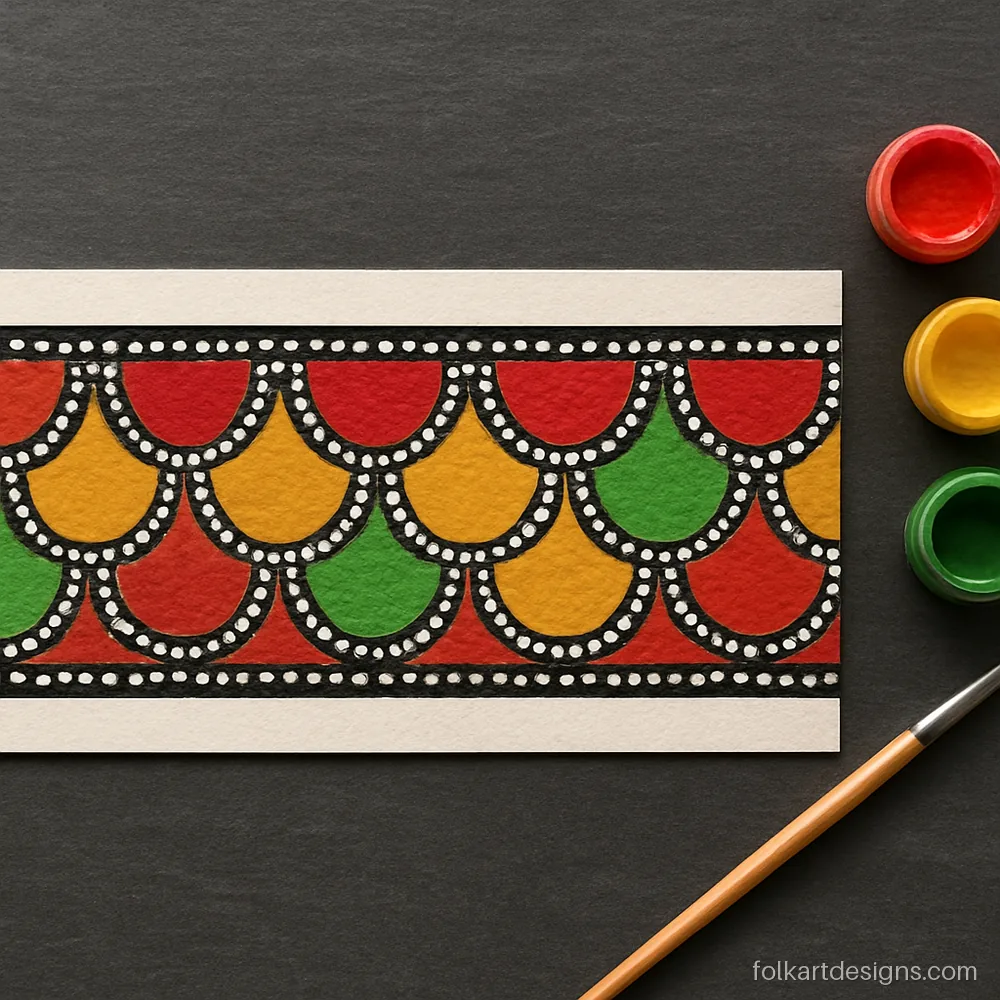
A long border strip in fish scales and dots. Use it to frame a page, a notebook cover or the edge of a wall mural.
Artist tip Mark border width with two pencil lines so the pattern stays even end to end.

Circles and leaves packed with different fillings make a modern panel. It looks good as a set of three in a hallway.
Artist tip Use a round brush size 0 for the finest white lines on a dark base.
How to Do a Gond Art Drawing Step by Step
- Outline: draw one simple shape lightly in pencil. A leaf, fish or bird is enough.
- Divide: split the shape into 3 to 6 parts with curved lines.
- Colour: fill each part with flat acrylic or poster colour. Let it dry.
- Fill: add patterns with a 0.1 to 0.3 mm pen or a size 0 brush. Change the pattern in each part.
- Outline again: go over the main shape with a 0.5 or 0.8 mm pen so it stands out.
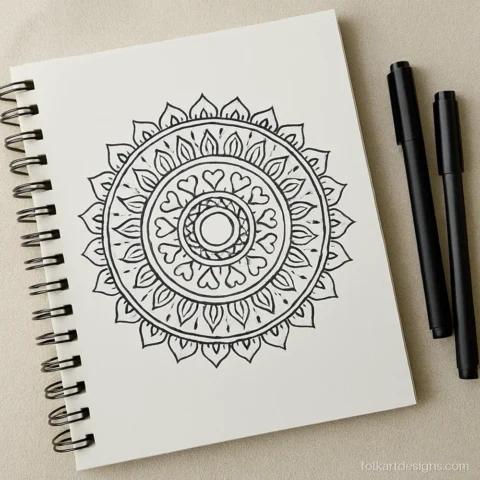
Use 180 to 300 gsm paper so it does not curl when wet. If you enjoy pattern filling, our doodle mandala art page uses the same skill in a circular layout.
Choosing and Caring for a Gond Art Painting
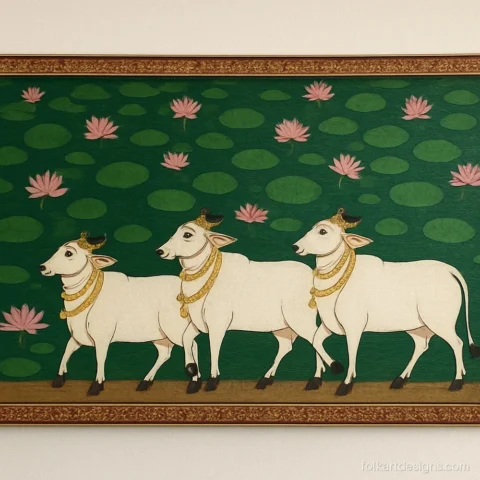
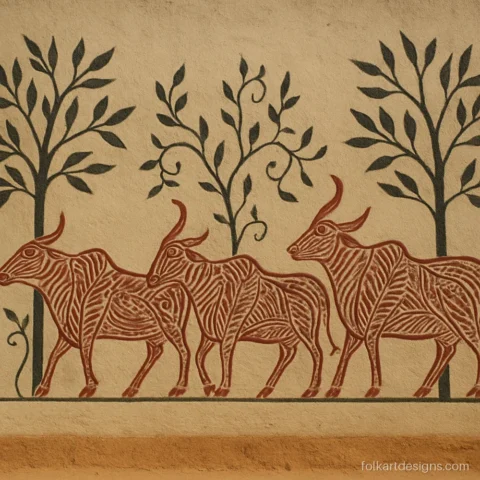
When buying, look closely at the fillings. Hand-painted pieces have small changes in dot size and line spacing. Printed copies look too even. Size, canvas over paper and hours of fine detail all add to the cost. Frame paper pieces behind glass and keep canvas away from damp walls. Dust with a soft dry brush. For other painted traditions, see pattachitra painting and pichwai cow painting.
Questions about these designs
What is gond art?
Gond art is a tribal painting style of the Gond community of central India. It uses bright outlines filled with dots, dashes, lines and fish-scale patterns. Trees, birds and animals are common themes.
Which state is gond art from?
Gond art is mainly from Madhya Pradesh. Gond families also live in neighbouring states such as Chhattisgarh. That is why both madhya pradesh gond art and gond art of Chhattisgarh are common searches.
How do I start easy gond art as a beginner?
Draw one leaf or fish, divide it into a few parts and fill each with a different pattern. Use a 0.3 mm pen and good paper. Try the beginner pieces in this gallery first.
What colours are used in traditional gond art?
Bright reds, yellows, greens, blues and pinks, often on a plain light or dark ground. Earlier work used natural colours from soil, charcoal and plants. Modern hobby work uses acrylic or poster colour.
Can kids do gond art?
Yes. Gond art for kids works well with crayons for colour and a felt pen for patterns. Keep shapes big and patterns simple. Our mandala art for kids page has more easy ideas.