Modern Lippan Art: Easy Ideas for Walls, Bottles and Gifts
15 designs Lippan art Updated 9 Oct 2026
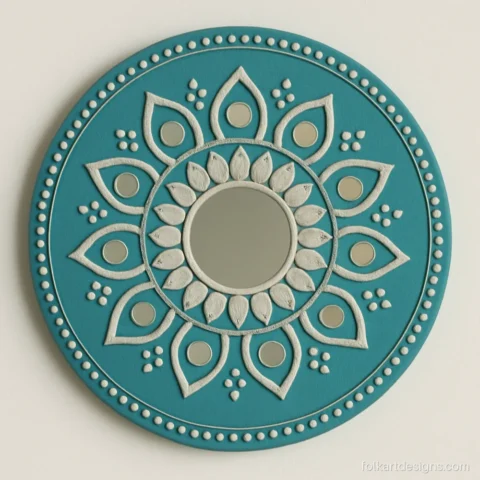
Modern lippan art takes the clay and glass relief craft of Kutch, Gujarat, and moves it onto boards, bottles, clocks and plates in colours of your choice. The method is the same: raised lines of clay with small glass mirrors pressed in. Only the base and the paint have changed.
Below are 15 original pieces, from a one hour coaster to a wall full of mirrors. If you are new to the craft, read about its roots on our lippan art page, and check the clay and mirror list on lippan art materials.
Modern Lippan Art in Pastel and Bold Colours
Traditional pieces stay white or earthy. Modern lippan art adds paint, so you can match a piece to your room, from soft pastels to deep black and gold.
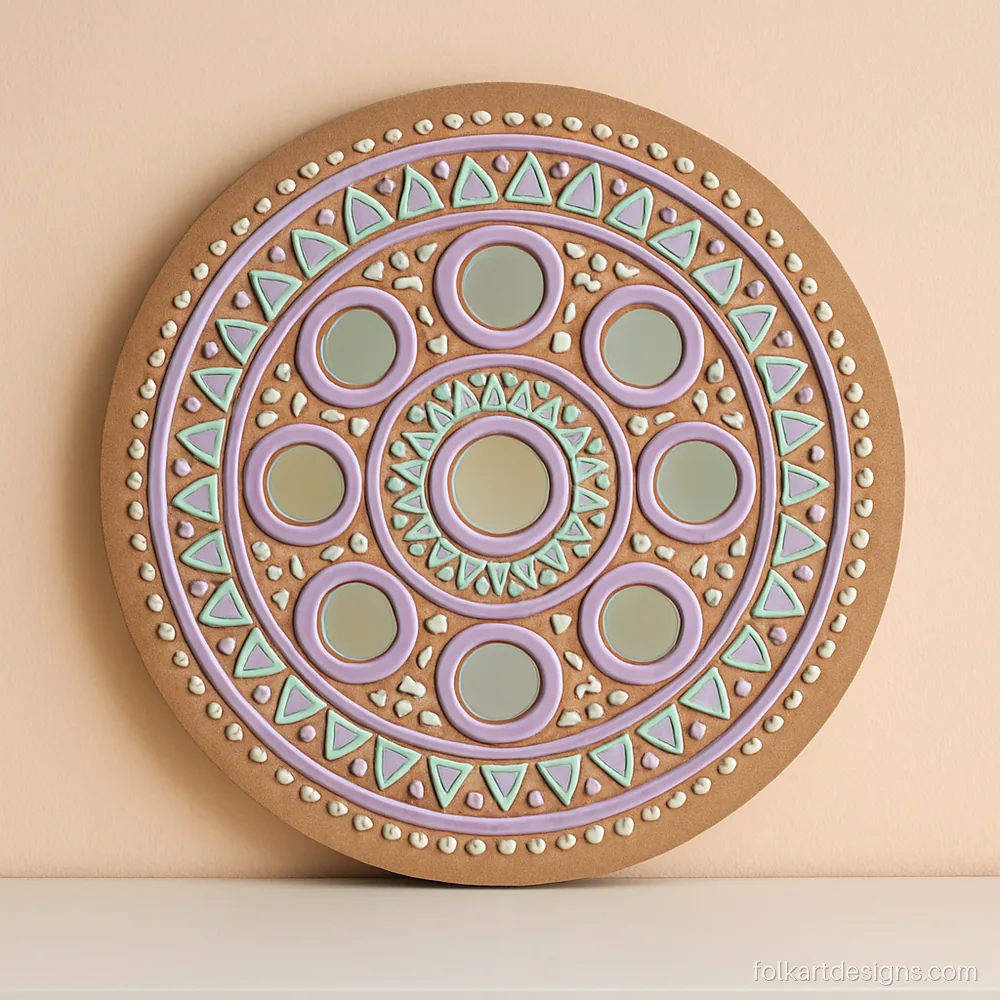
Soft pastels replace the old white on mud look, so this piece sits easily in a light, airy room.
Artist tip Paint pastel acrylic on the clay only after it is bone dry, usually 24 to 48 hours.
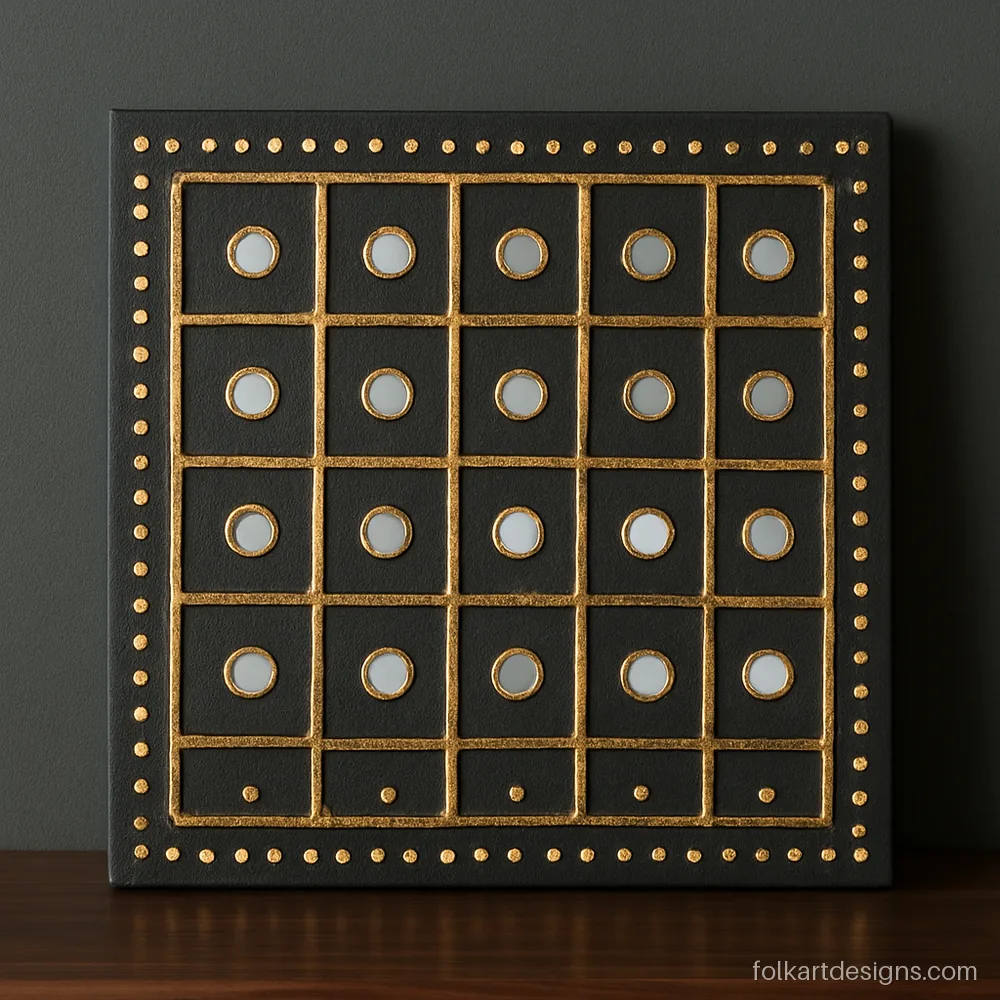
A black base with gold clay lines and round mirrors looks rich and pairs well with dark wood furniture.
Artist tip Use metallic acrylic over the clay lines; two thin coats cover better than one thick coat.
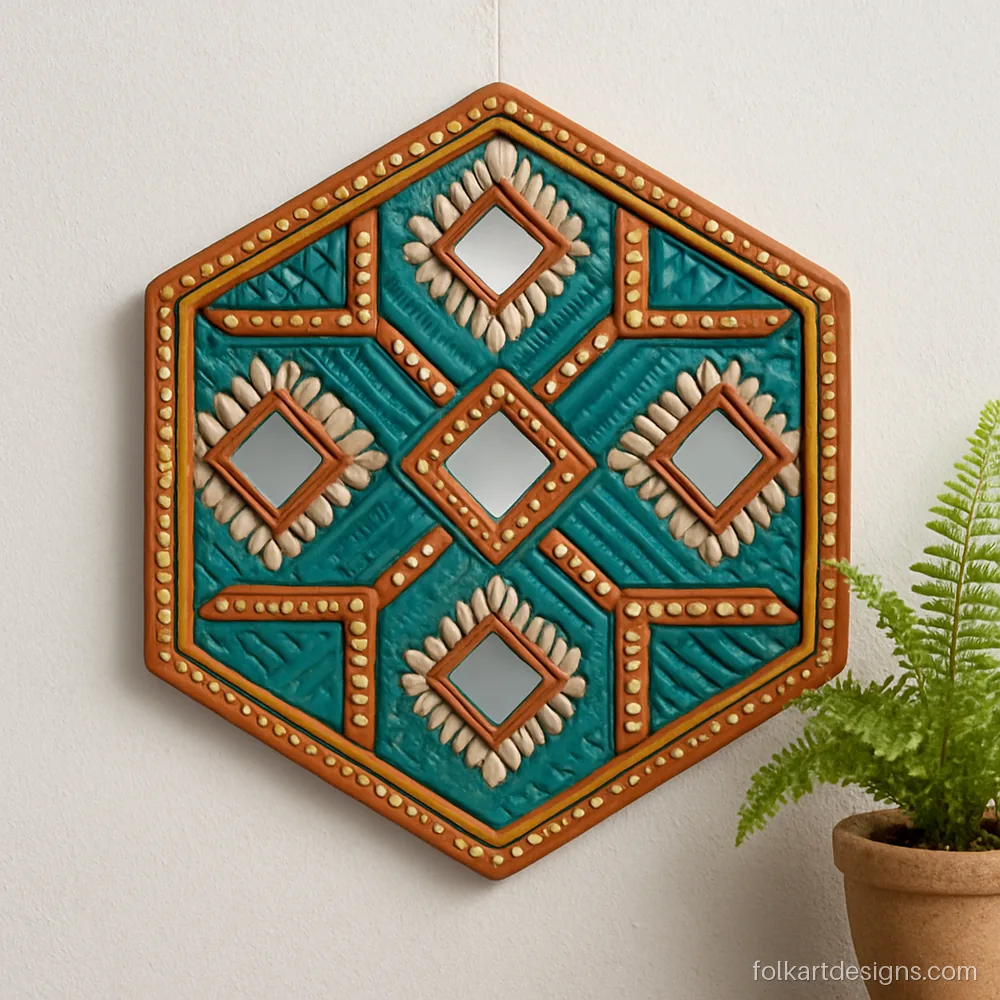
Earthy terracotta with teal accents keeps a link to Kutch colours while still looking fresh.
Artist tip Diamond mirrors need a clay rim on all four sides so their points do not lift.
Easy and Simple Lippan Art for Beginners
Start small. A coaster or a palm sized cutout teaches you how clay behaves and how to set mirrors, without a big investment of time.
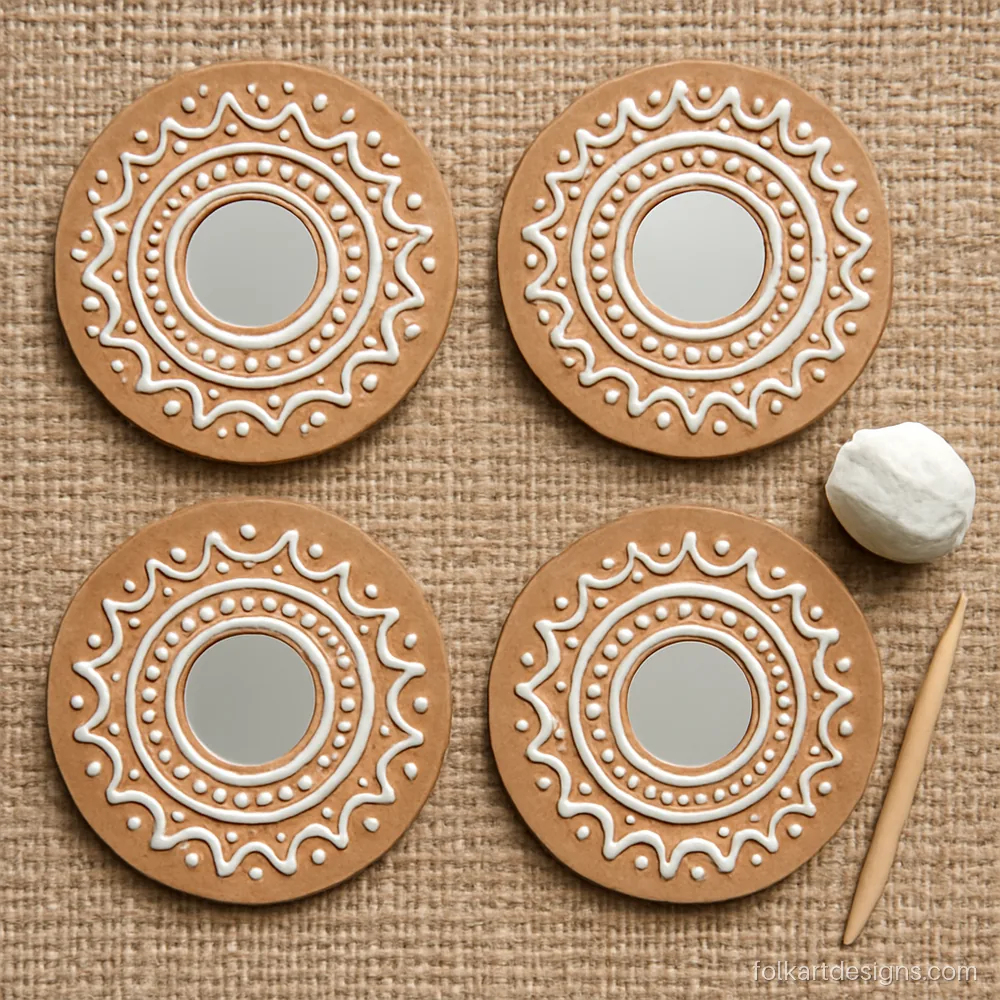
Easy lippan art begins small. One mirror and two clay rings on a coaster take about an hour.
Artist tip Roll clay into thin coils about the width of a matchstick for neat, even rings.
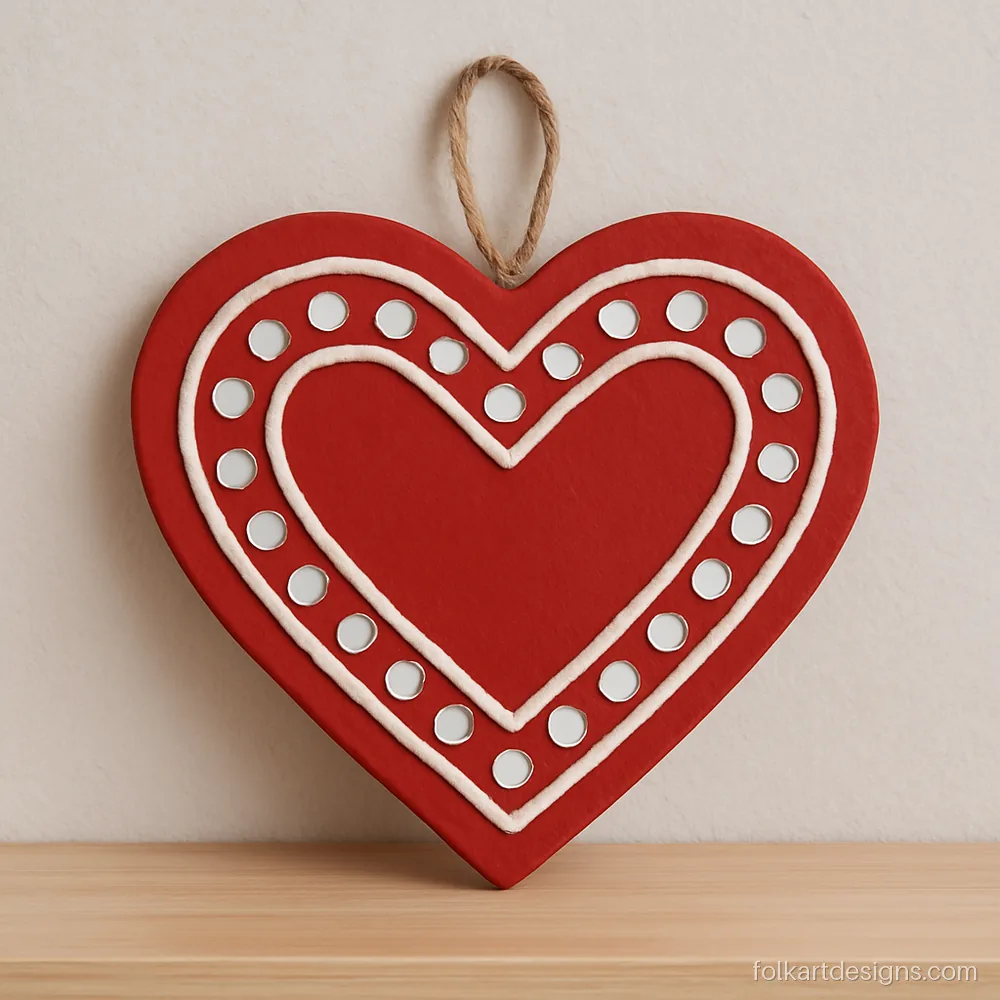
A simple lippan art heart in white clay with tiny mirrors makes a sweet return gift.
Artist tip Stick each mirror with a dab of clear craft glue first, then press the clay rim around it.

Lippan art for kids works well on cardboard with plastic mirror stickers, which are safer than glass for small fingers.
Artist tip Use plastic mirror stickers for children under ten to avoid cuts from glass edges.
How to Make Modern Lippan Art at Home
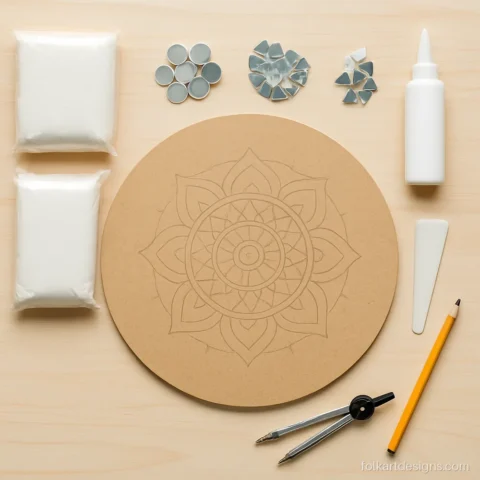
- Prepare the base. Use 4 to 6 mm MDF, sanded lightly. Paint the base colour and let it dry for an hour.
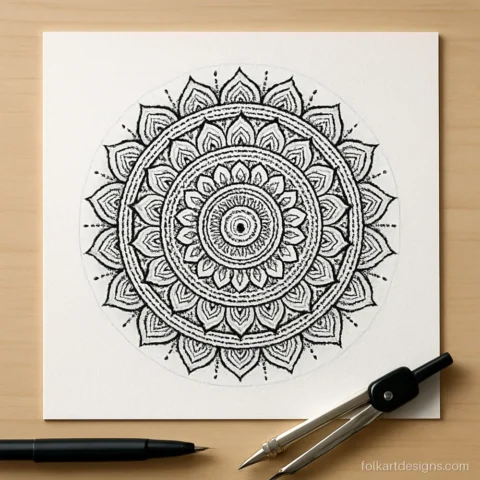
- Sketch the layout. Draw circles and lines in pencil. A compass helps, the same way it does in mandala art.
- Place the mirrors. Fix round, diamond and triangle mirrors with a small dot of clear glue.
- Add clay. Roll air-dry or shilpkar clay into thin coils, press them along the pencil lines and build a rim around every mirror. Keep a damp cloth nearby so the clay stays soft.
- Dry slowly. Leave it flat in the shade for 24 to 48 hours. Fast drying in the sun causes cracks.
- Paint and seal. Paint the clay with acrylic, wipe the mirrors clean with a cotton bud, then add a clear matte varnish.
Lippan Art on Bottles, Plates and Clocks
Clay and mirrors stick to almost any firm surface. These everyday objects are good second projects once you are happy with flat boards.
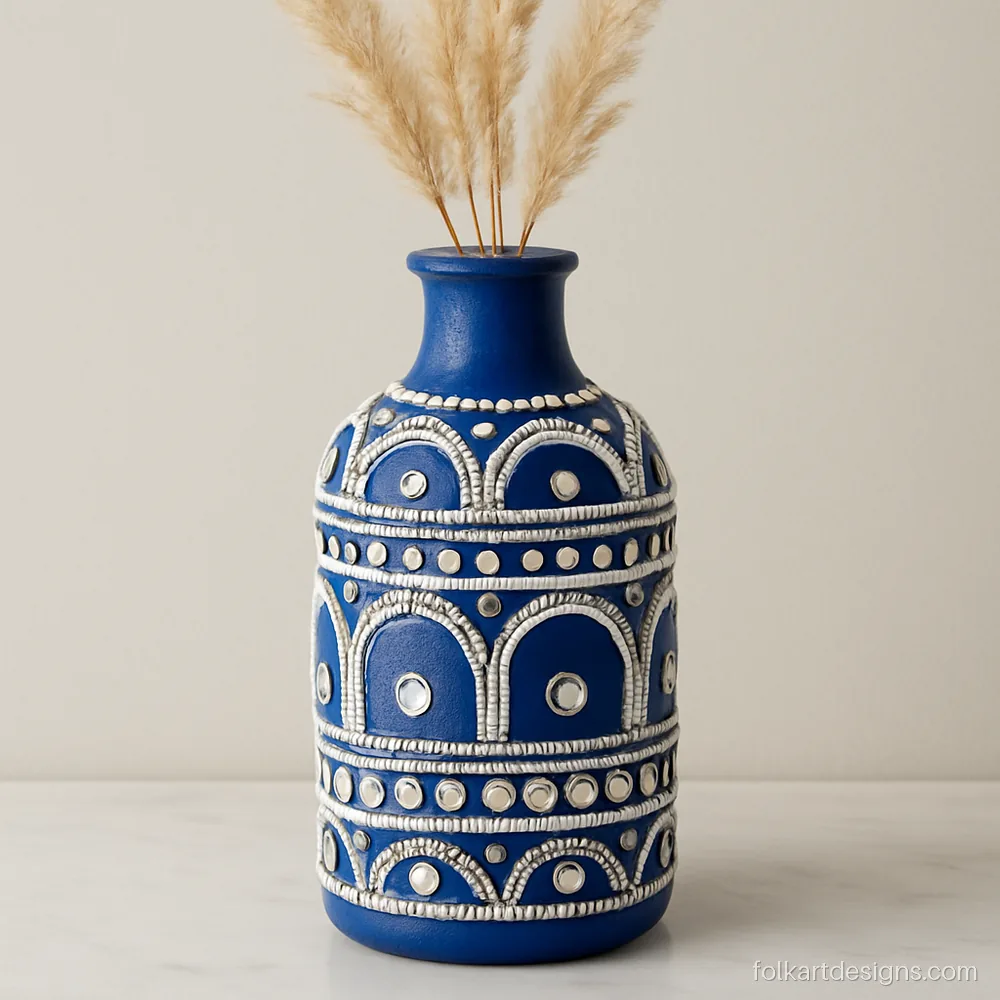
Lippan work on bottle shapes turns empty glass into table decor or a vase for dry flowers.
Artist tip Paint the base coat first; clay grips a matte painted surface far better than bare glass.
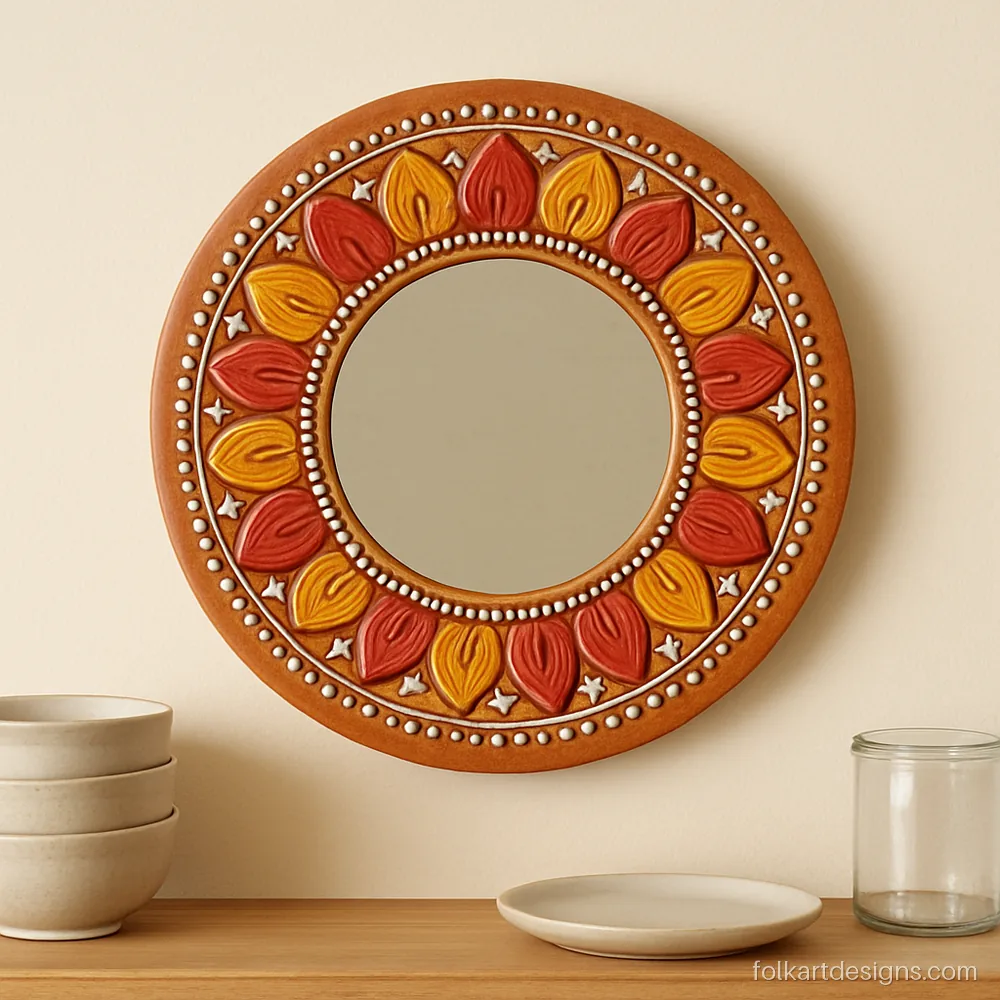
A wall plate with one large central mirror is a quick way to brighten a small wall.
Artist tip Choose a plate with a raised rim; it frames the clay work and protects the edges.
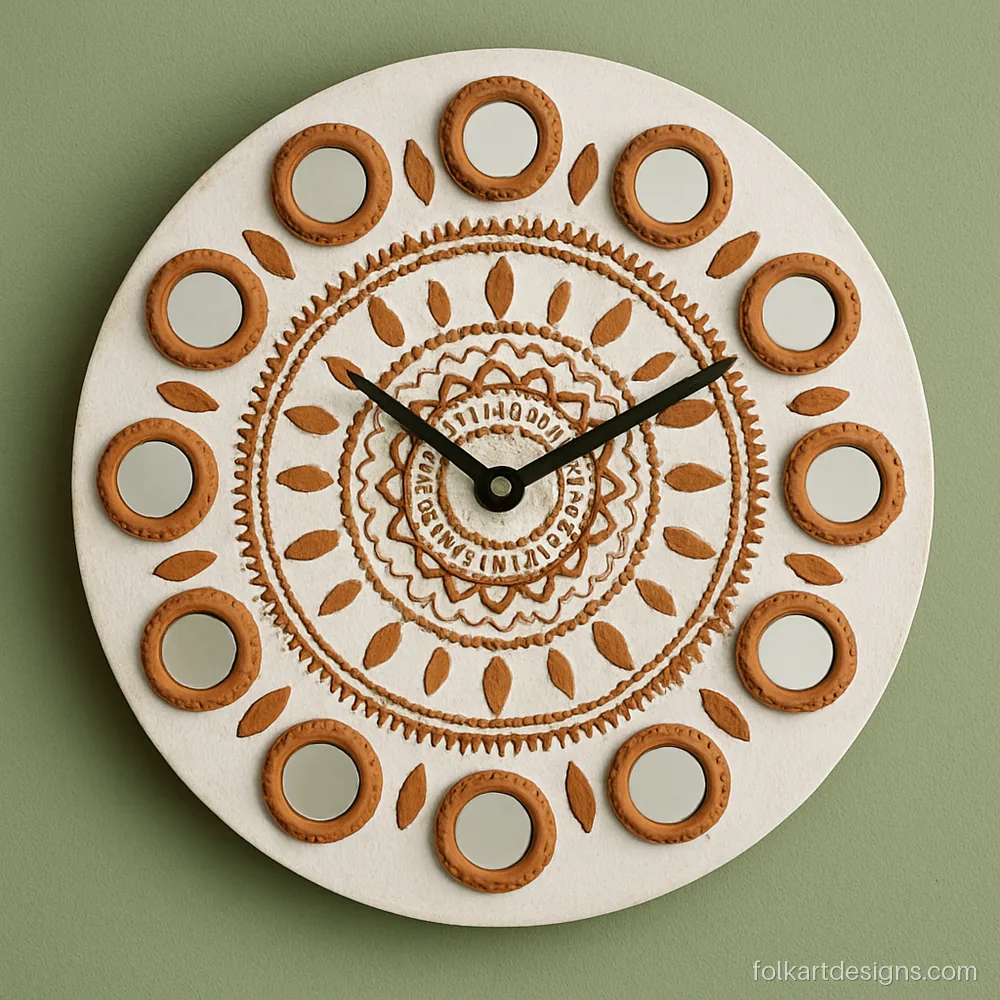
Twelve small mirrors replace numbers, so the design and the clock work together.
Artist tip Drill the centre hole for the clock motor before you add any clay or mirrors.
Lippan Art on Wall
In Kutch, lippan was done directly on the walls of round mud houses. Today you can work on the wall itself or hang boards, and both look striking in plain rooms.
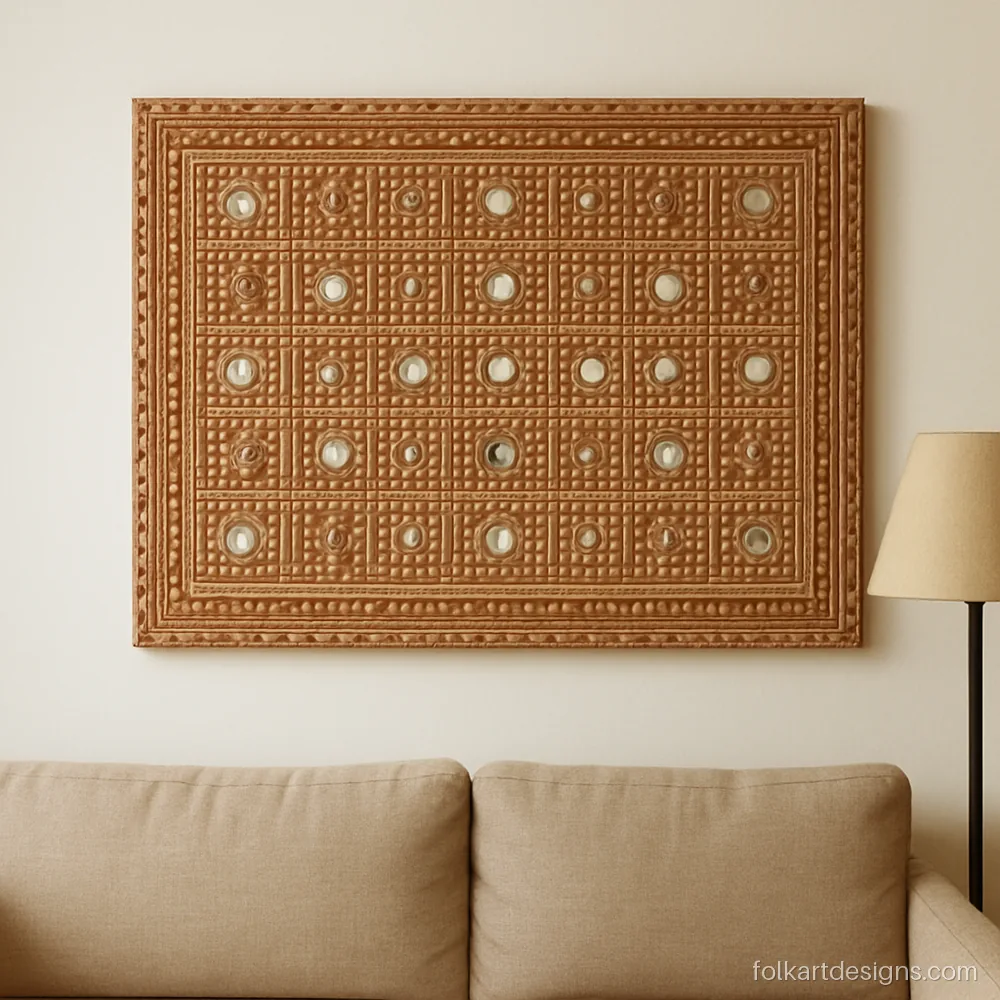
A large lippan wall art panel catches lamp light in the evening and lifts a plain living room wall.
Artist tip Hang heavy panels on two hooks fixed into wall plugs, never on a single nail.
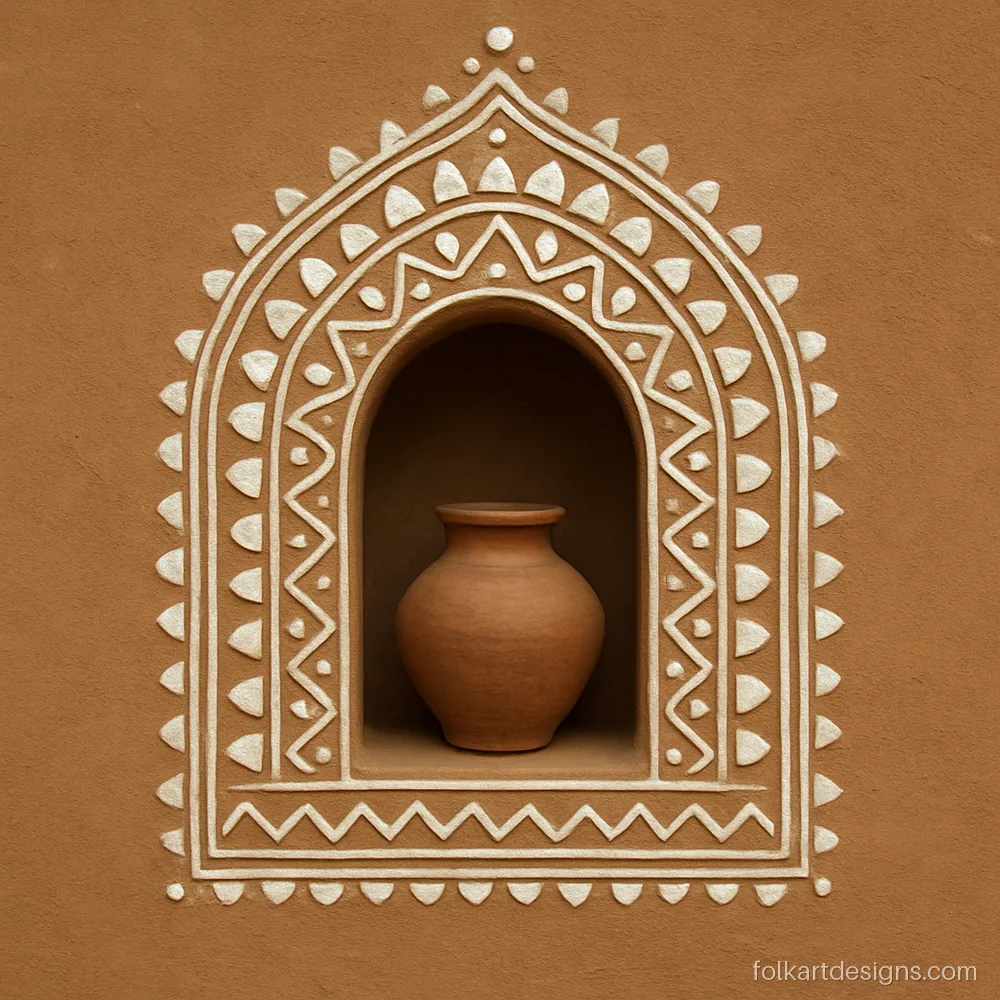
Lippan work on wall plaster, the way it is done in Kutch homes, here framing an arched niche.
Artist tip Seal wall work with a matte clear varnish so you can dust it with a soft dry brush.
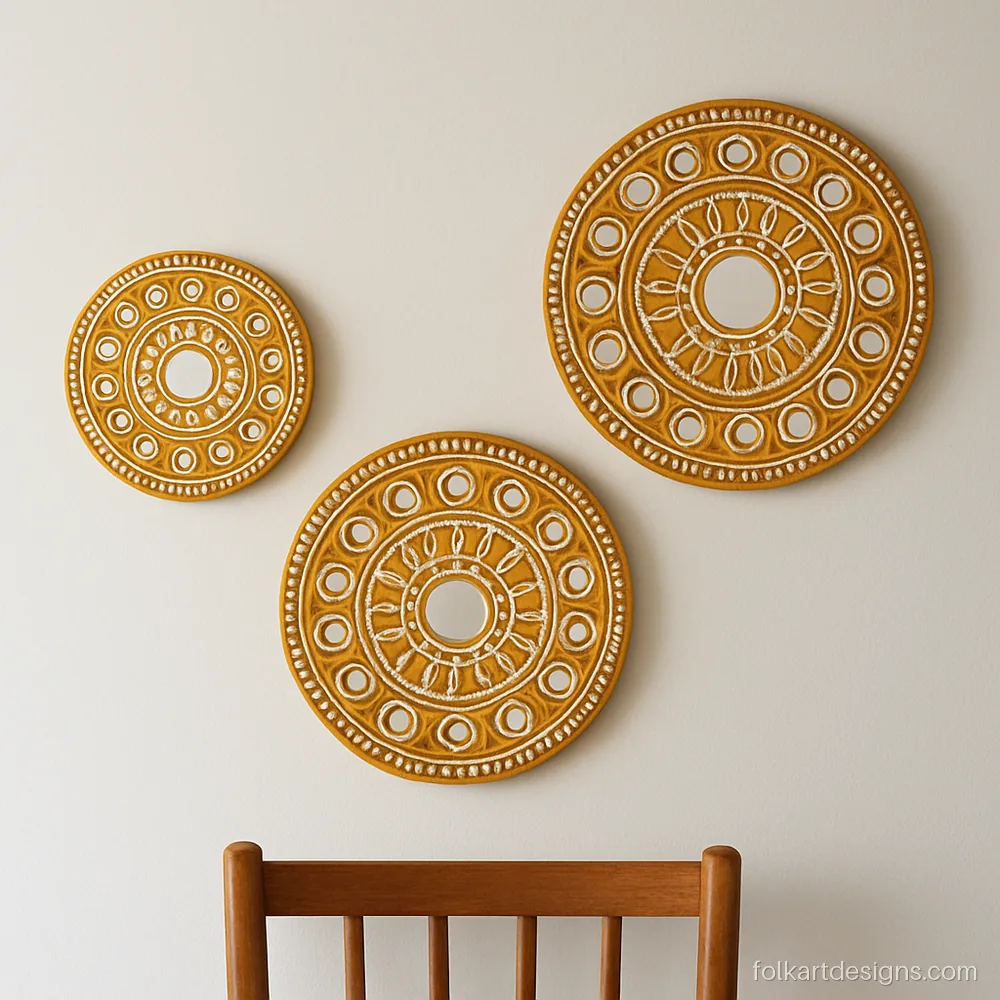
Three circles in graded sizes fill a wall without one heavy piece. Easy to make over three weekends.
Artist tip Lay the set out on the floor and photograph it before you drill any holes.
Mirror Heavy Statement Pieces
When you want one piece to carry the whole room, add more mirrors. These designs use mirror shapes as the main pattern, not just accents.
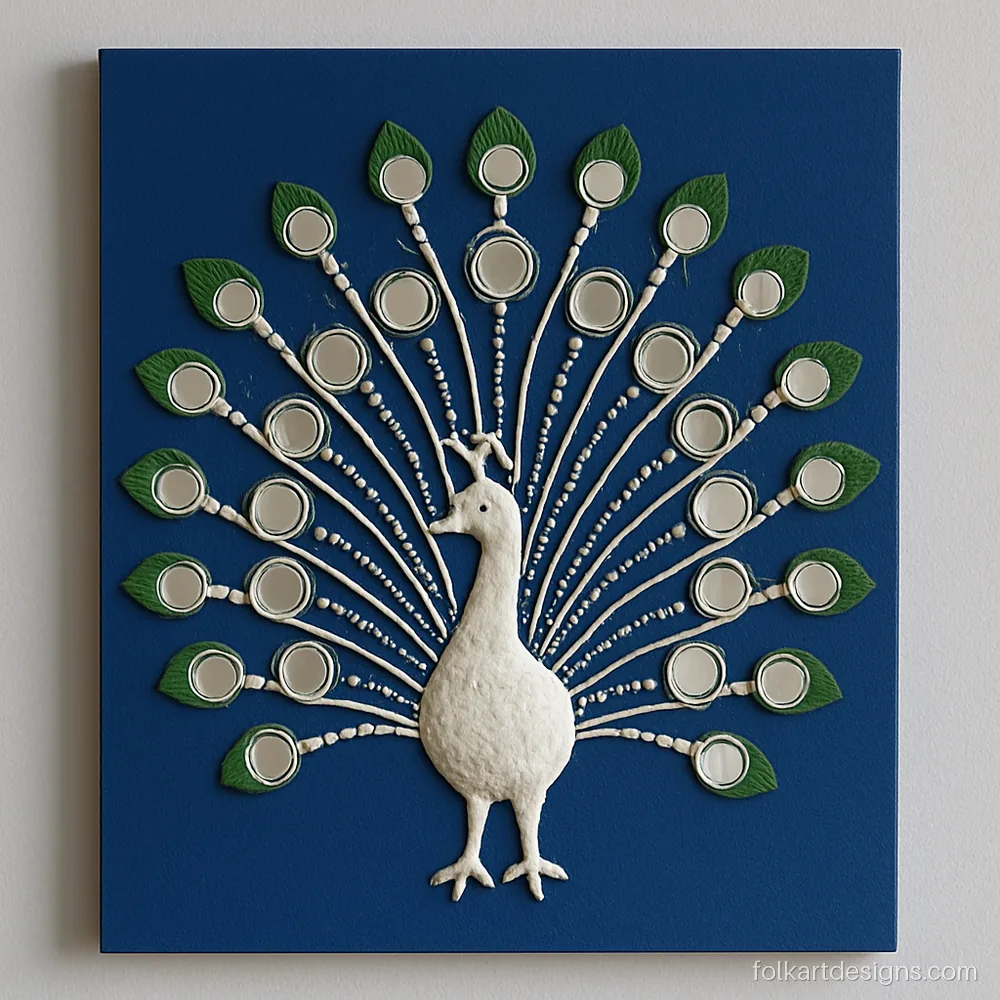
This lippan art peacock uses dozens of round mirrors in its tail, so it sparkles as you walk past.
Artist tip Set the tail mirrors from the body outwards, in rows that grow slightly larger each time.
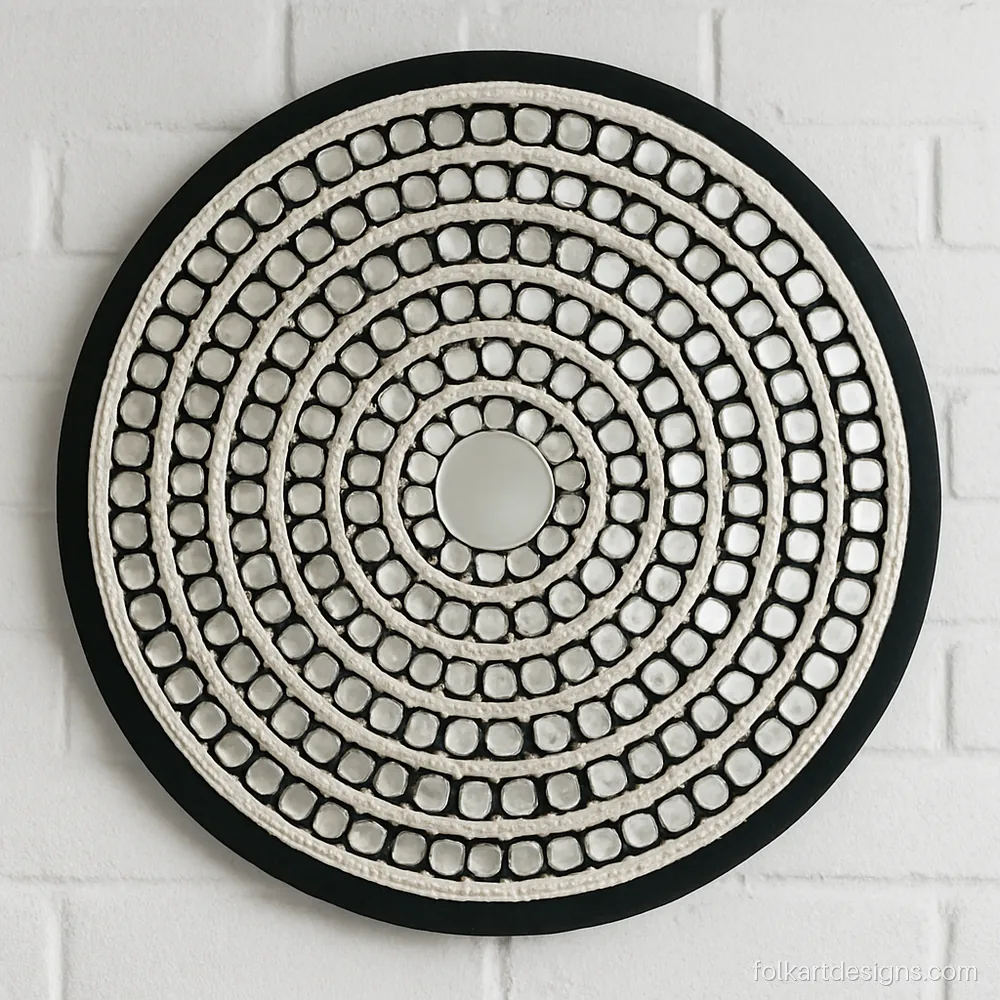
Hundreds of small mirrors set close together make the whole surface shimmer. It needs patience and a steady pace.
Artist tip Sort mirrors by size into small bowls before you start; it saves a great deal of time.
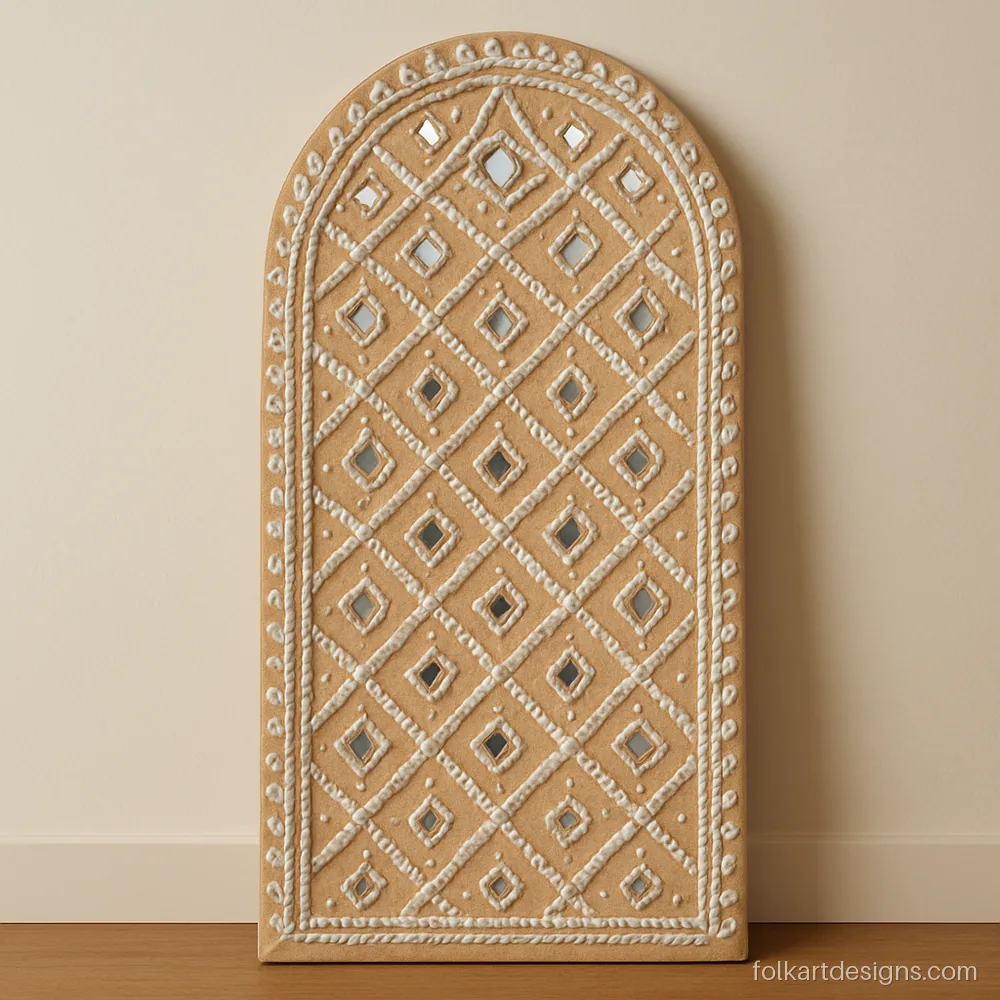
A tall arch panel with diamond and triangle mirrors works as a headboard or a decorative foyer piece.
Artist tip Repeat mirror shapes in a fixed rhythm, such as round, diamond, triangle, then start again.
Old and New: What Changed
| Traditional lippan | Modern lippan | |
|---|---|---|
| Surface | Walls of bhungas, round mud houses | MDF board, glass, plates, clocks |
| Clay | Local mud blended with dung | Shilpkar clay or air-dry clay |
| Colour | Plain white or earth tones | Pastels, bold shades, metallics |
| Makers | Communities such as the Rabari of Kutch | Hobby artists, students, small sellers |
For more pattern ideas in both styles, see lippan art designs.
Choosing, Hanging and Cleaning
Match the base colour to your wall, not your furniture. A white wall takes almost any colour, while a coloured wall looks best with white or gold clay. Bigger size, more mirrors and finer clay work all add to the cost of a finished piece.
To clean, dust with a soft, dry paintbrush once a week. Wipe mirrors with a barely damp cotton bud. Keep pieces away from bathrooms and kitchen steam, because moisture softens air-dry clay.
Questions about these designs
What makes lippan art modern?
Mainly the base and the colours. Modern pieces use MDF or glass instead of a mud wall, air-dry clay instead of clay with dung, and painted colours instead of plain white.
Is lippan art easy for a complete beginner?
Yes, if you start small. A coaster with one mirror and two rings teaches the basics in an hour. Move to a 12 inch board once you can roll even coils.
Can I do lippan work on wall plaster directly?
You can. Clean and prime the wall, sketch the design, then fix mirrors and clay as you would on board. Work on a small patch at a time so the clay does not dry before you shape it.
What is the drying time for lippan art?
A thin piece dries in about 24 hours. Thicker relief or humid weather can take up to 48 hours. Wait until the clay is pale and hard before painting.
Which clay is best for lippan art on bottle glass?
Air-dry clay works well. Paint the bottle first with a matte base coat so the clay grips, and press the coils firmly into place.
Is lippan art safe for kids?
With small changes, yes. Use cardboard instead of MDF, plastic mirror stickers instead of glass, and let an adult handle any cutting.