Pichwai Painting Designs: Lotus Ponds, Peacocks and Gold
18 designs Folk paintings Updated 9 Oct 2026
Pichwai painting is a style of large cloth painting from Nathdwara in Rajasthan, known for deep colours, lotus ponds and fine gold work. The tradition is devotional. Our designs show only its nature side: lotus, cows, peacocks, trees and borders.
These 18 pichwai painting images are original pichwai art painting designs on cloth, canvas, MDF board and walls. Under every design you get the base, the motifs, the best spot for it and a practical pointer. Easy pieces for beginners have their own section.
Love the cows? See our pichwai cow painting gallery. For other painted traditions, try pattachitra and Kangra painting.
Pichwai Lotus Pond Painting
The lotus pond is the heart of many pichwai painting designs. Rows of open blooms, buds and round leaves fill the whole surface.
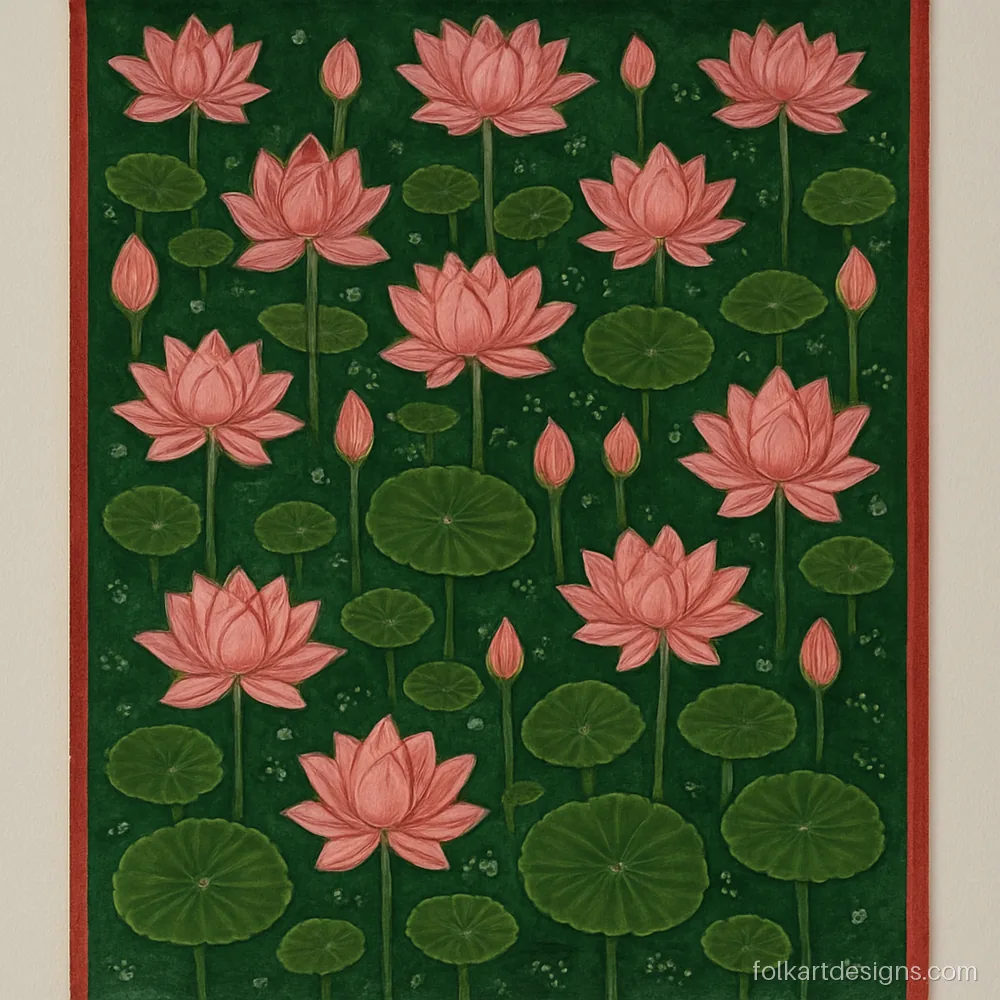
Rows of pink lotus on dark green look rich even from across a room. It suits a large living room wall.
Artist tip Paint all the leaves first and the blooms after, so overlapping petals stay crisp.
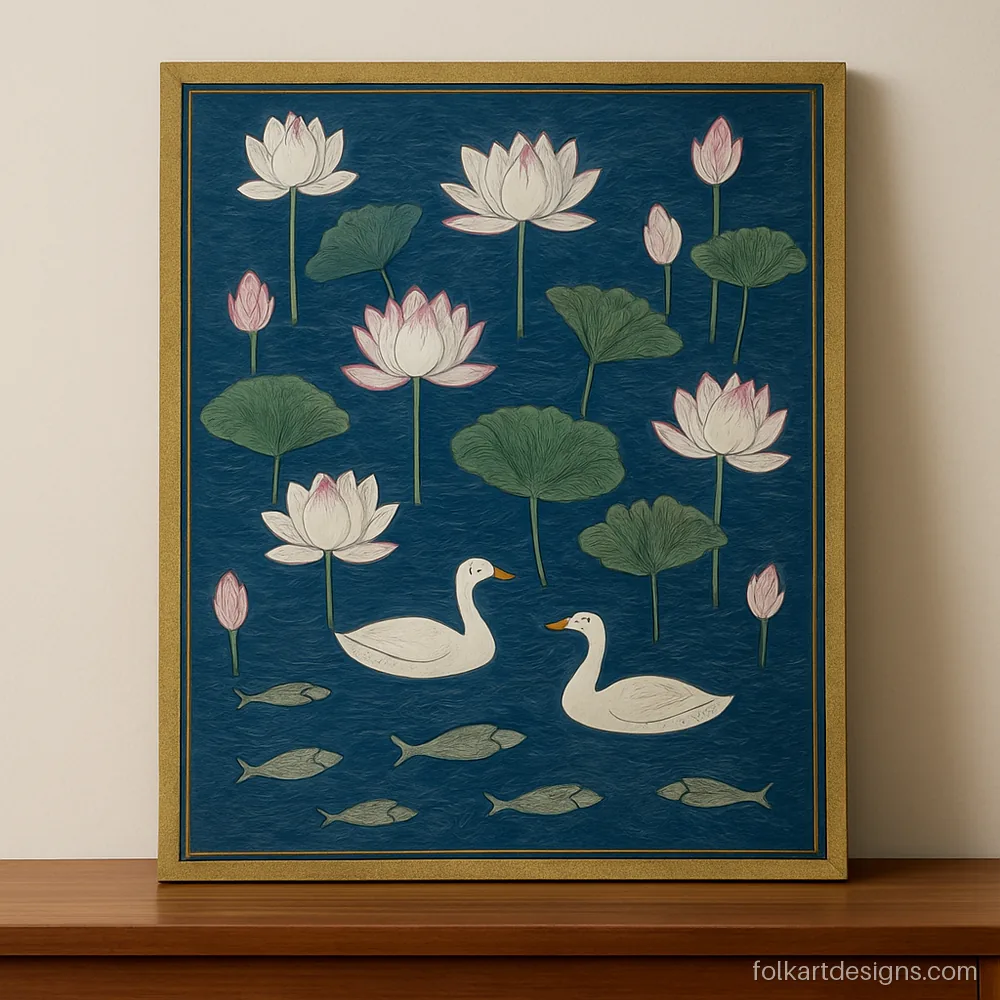
Fish and ducks add movement between the flowers. A lovely choice for a dining area or a calm bedroom.
Artist tip Paint the fish in pale silver grey so they read clearly against the blue water.
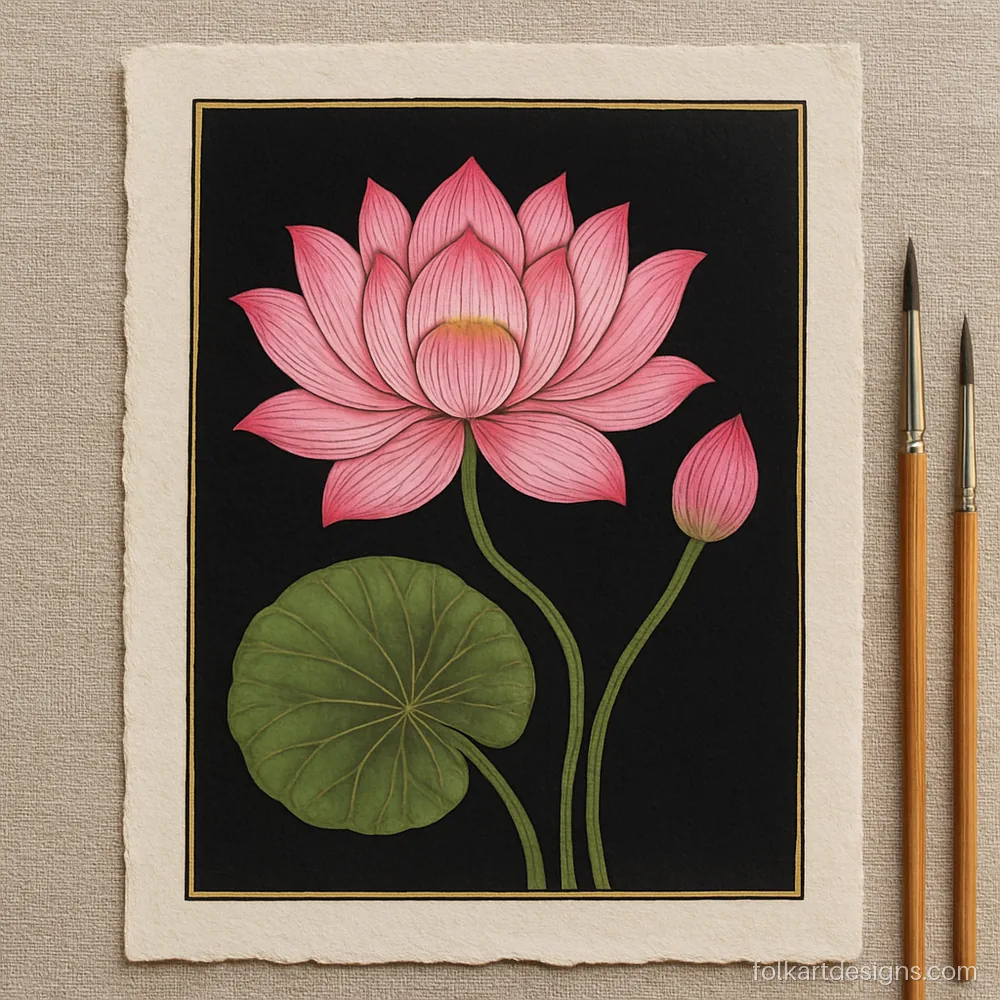
One big bloom is a good study before you attempt a full pond. It also looks neat as a small frame.
Artist tip Shade each petal from dark pink at the base to pale at the tip with a size 2 brush.
Pichwai Painting with Peacocks and Trees
Peacocks, flowering trees and banana plants frame many pichwai scenes. Here we make them the main subject.

A pair of peacocks under one tree gives a balanced, mirror-image layout. It suits a foyer or the wall above a sofa.
Artist tip Build each tail eye in three layers: dark blue, then green, then a gold dot.
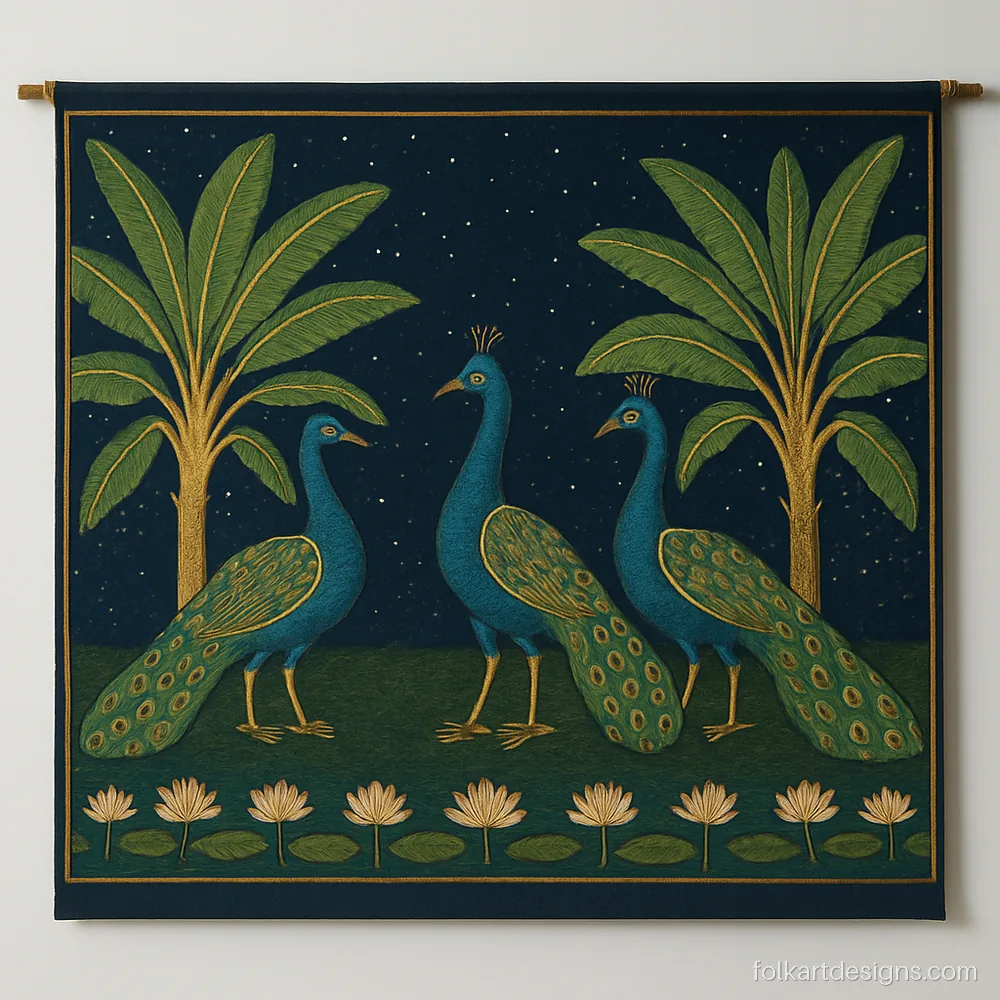
The dark sky with small white stars makes the green plants glow. A good piece for a bedroom wall.
Artist tip Add the stars last with the tip of a brush handle dipped in white paint.
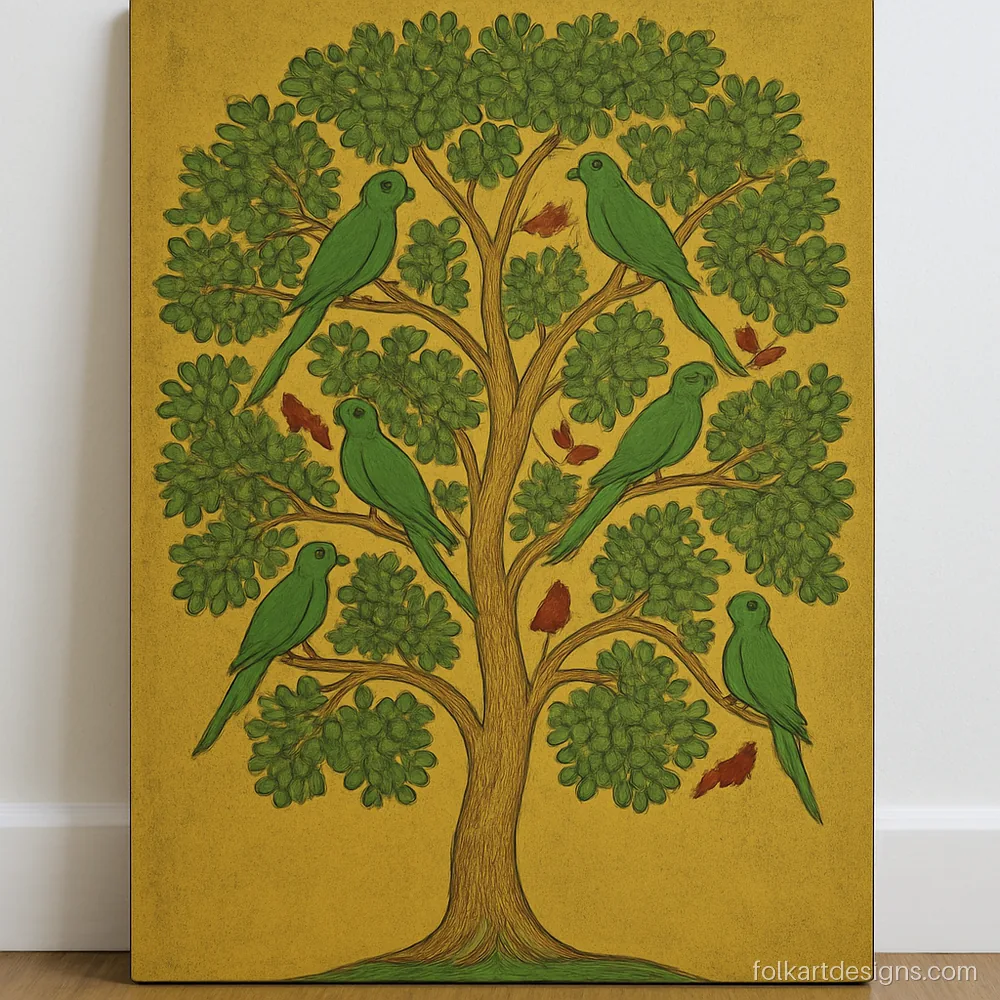
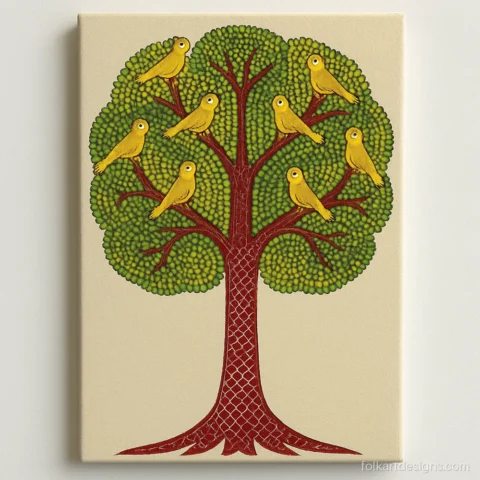
One big tree full of birds fits tall, narrow walls. Mustard yellow brings warmth to a dull corner.
Artist tip Keep the leaves to two greens only so the birds stand out clearly.
What Is Pichwai Painting? Origin, Meaning and Colours
Pichwai painting comes from Nathdwara, a town near Udaipur in Rajasthan. The word means a cloth that hangs at the back. These large paintings on cloth are traditionally devotional. Artists show the seasons through lotus ponds, cows, peacocks, trees, night skies and a lot of gold.
| Colour | Where it is used |
|---|---|
| Deep green, indigo, black, maroon | Backgrounds, water, night skies |
| Pink and white | Lotus blooms, cows and calves |
| Leaf greens | Trees, banana plants, lotus leaves |
| Gold | Borders, ornaments, highlights |
Traditional pieces use natural mineral colours on cotton. Hobby artists today mostly use acrylic on canvas or MDF, which is easier to handle and dries fast.
Pichwai Painting Designs on Canvas and MDF Board
Canvas and MDF are easy bases for home artists. Cotton cloth is traditional, but board is more forgiving when you are still practising.
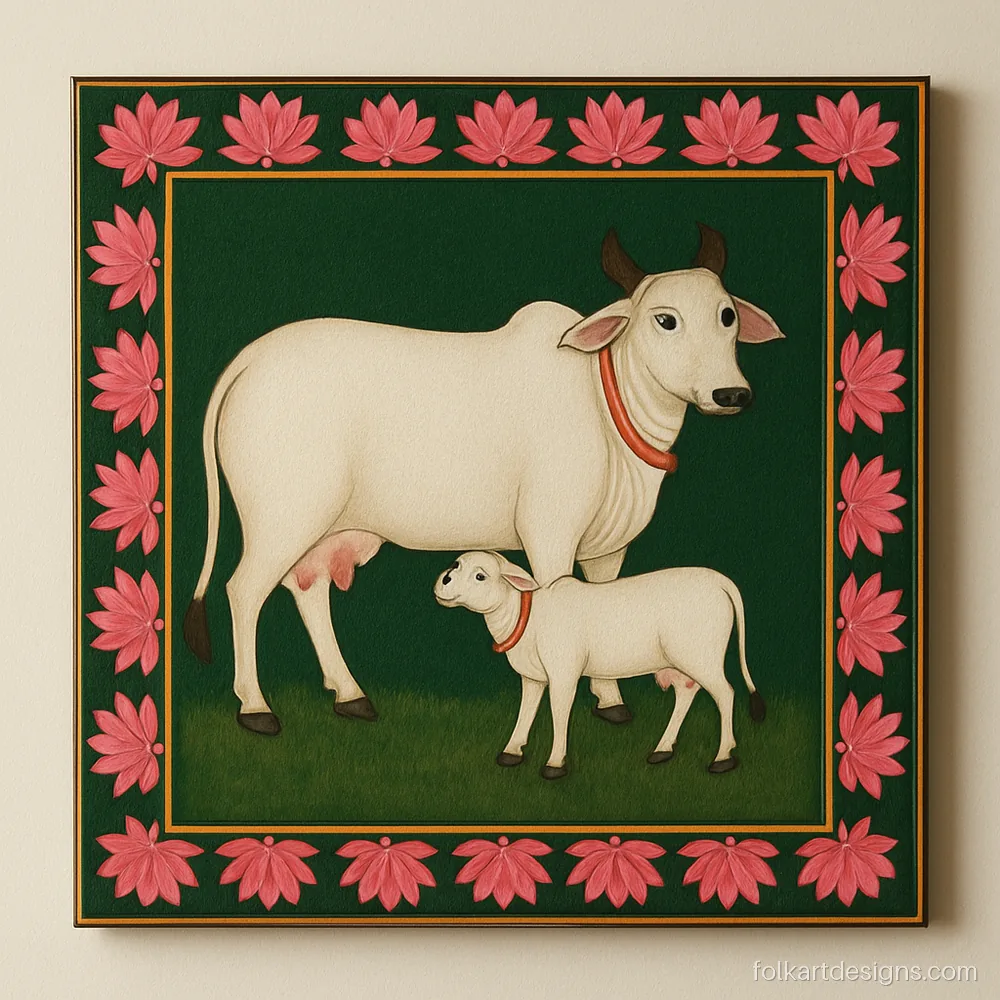
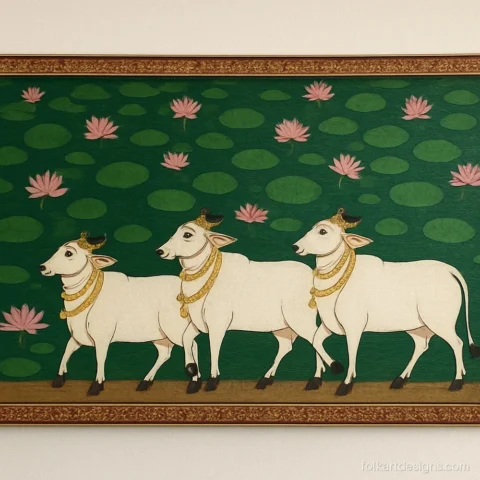
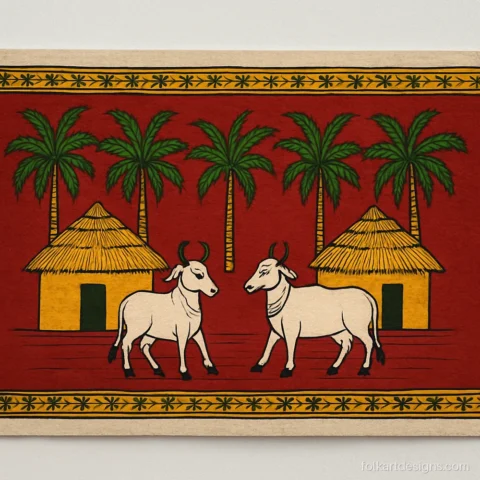
A cow and calf framed by lotus is a classic pichwai pairing. It suits a family room.
Artist tip Paint the cows in warm off-white, not pure white, with soft grey shading under the belly.

A round plate is a small, quick project and a popular gift. Good for craft fairs and festive hampers.
Artist tip Base coat the MDF twice with gesso so the paint does not soak in.
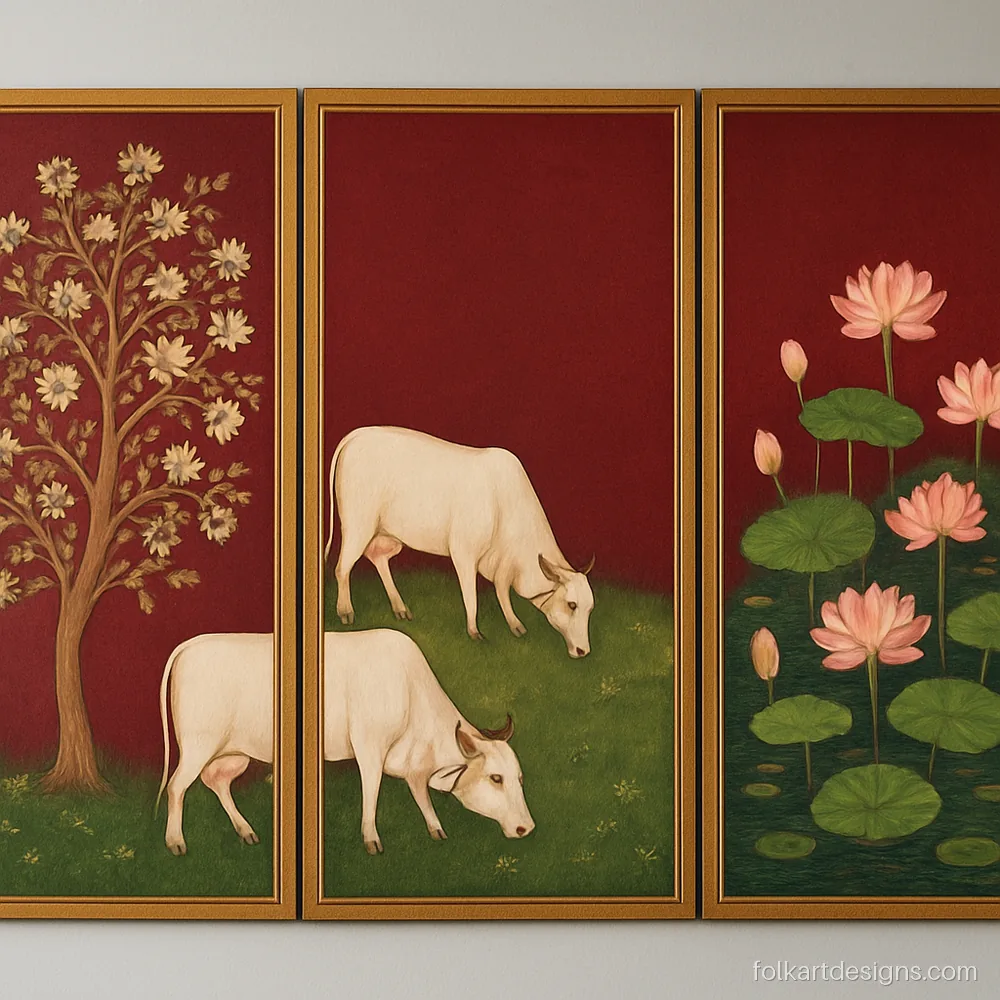
Three panels split one big scene into small, easy parts. It suits a long sofa wall.
Artist tip Tape the three boards edge to edge while sketching so the lines meet across panels.
Easy Pichwai Painting for Beginners
An easy pichwai painting uses one or two motifs, a flat background and a simple border. The best pichwai painting for beginners starts on paper or a small board.
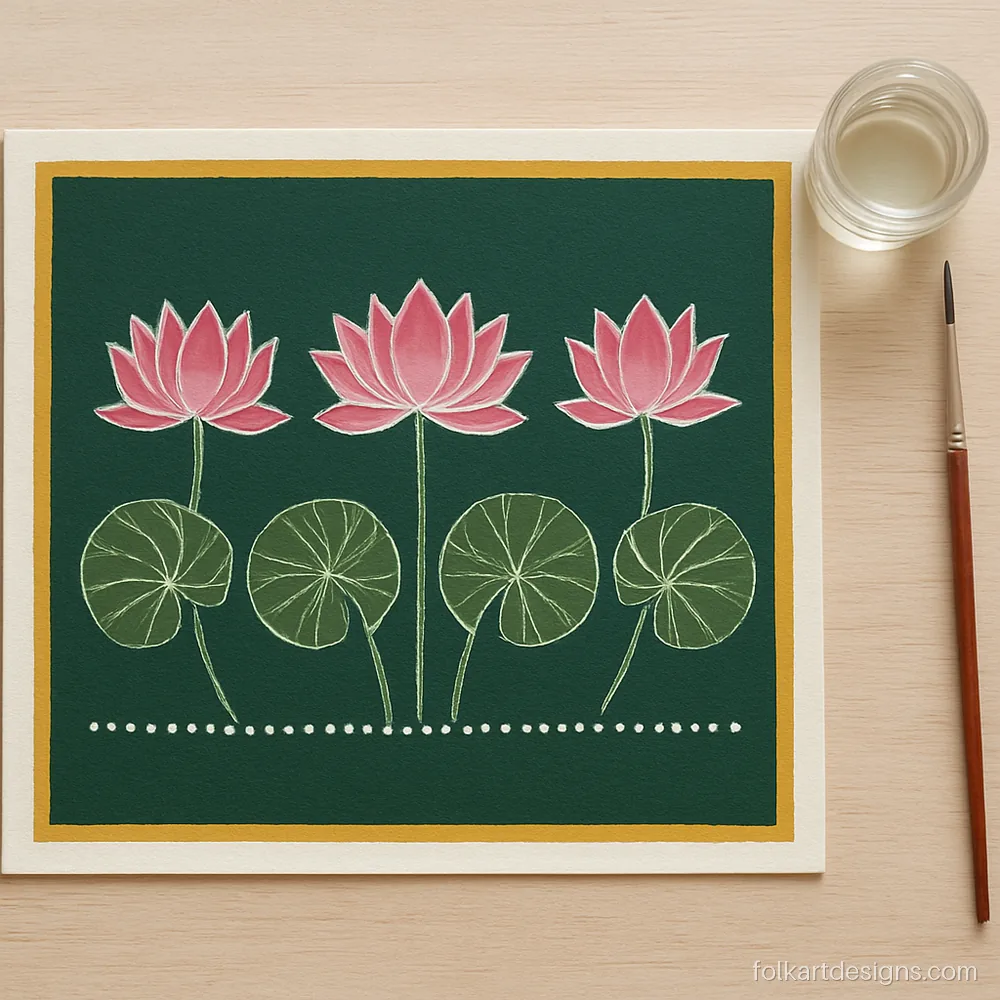
Three lotus flowers in a row teach petal shading without crowding the page. A first project for students.
Artist tip Draw one lotus on tracing paper and transfer it three times for even flowers.
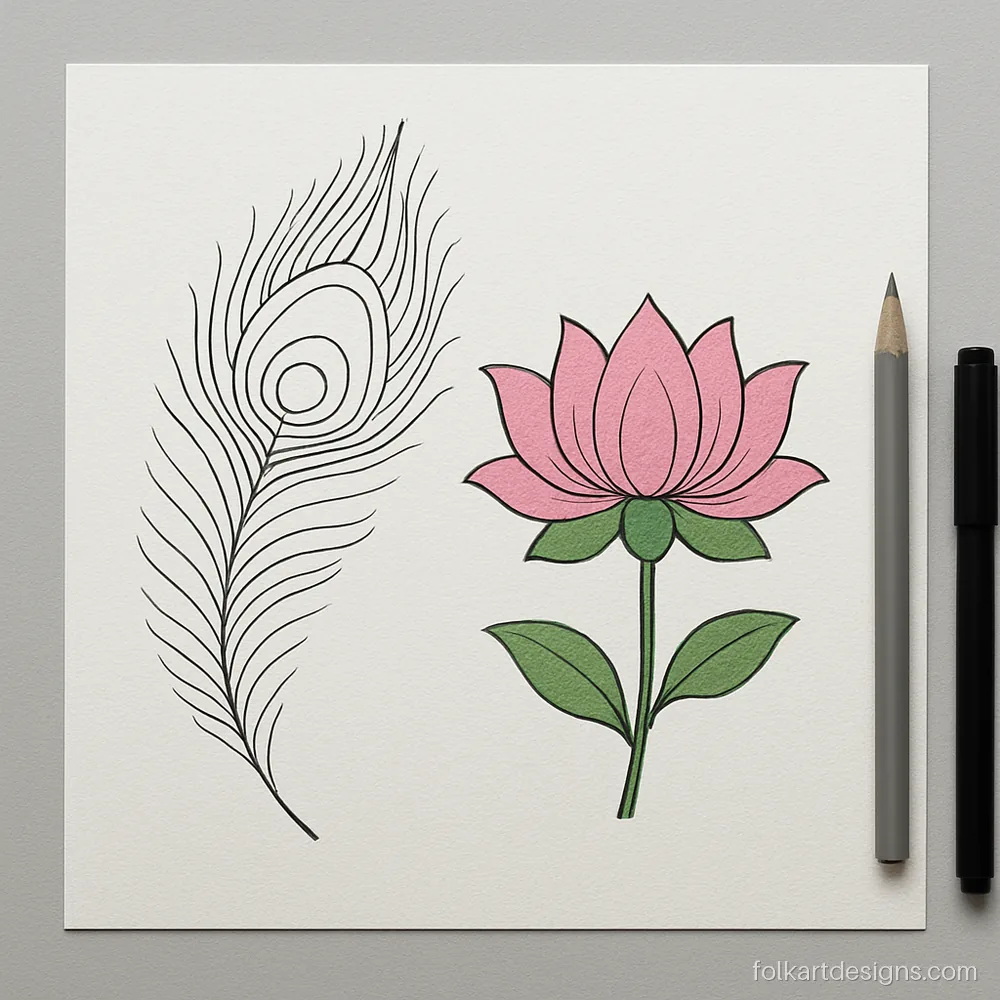
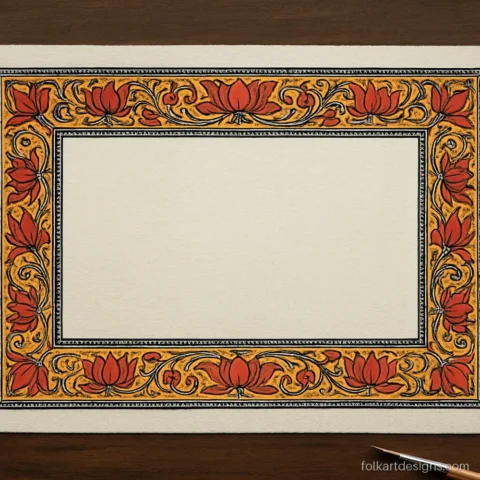
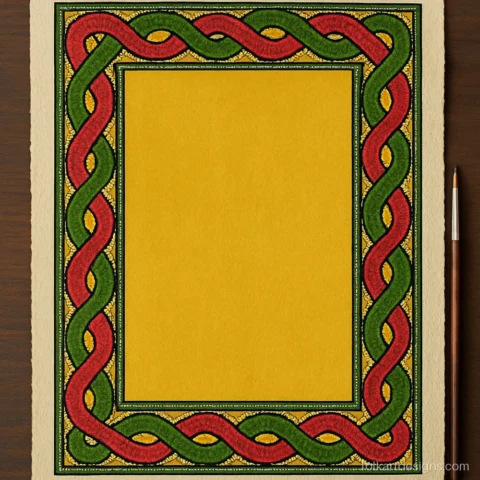
Part of the outline is left unpainted to show the process, and you can finish it in an hour. Good for printable practice sheets.
Artist tip Go over pencil lines with a 0.3 mm fineliner before painting so they stay visible.
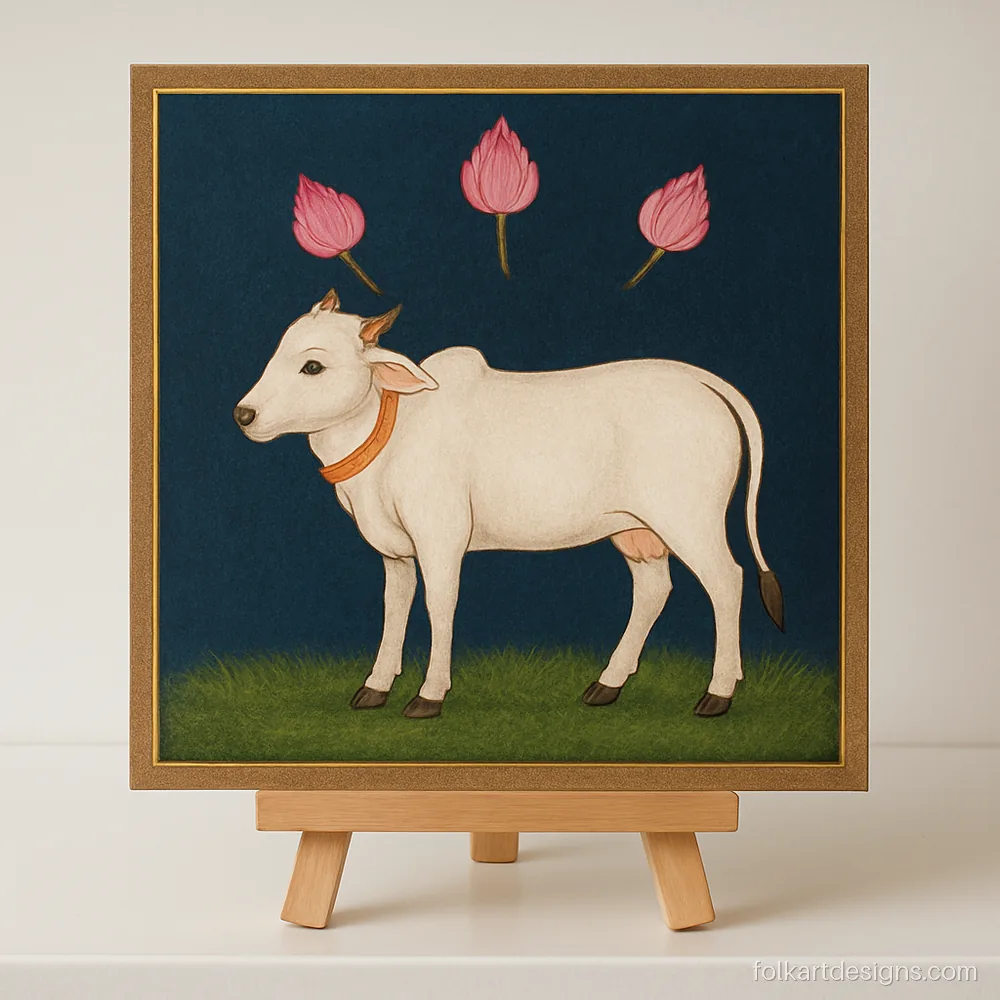
A tiny calf on a six inch board is quick and sweet. It suits a shelf or a study table.
Artist tip Use a size 0 brush for the eyes and ear tips, and keep the details simple.
Pichwai Wall Painting Ideas
A pichwai wall painting makes a bare wall feel like a garden. Use wall-safe acrylic or emulsion, and plan the layout in chalk first.
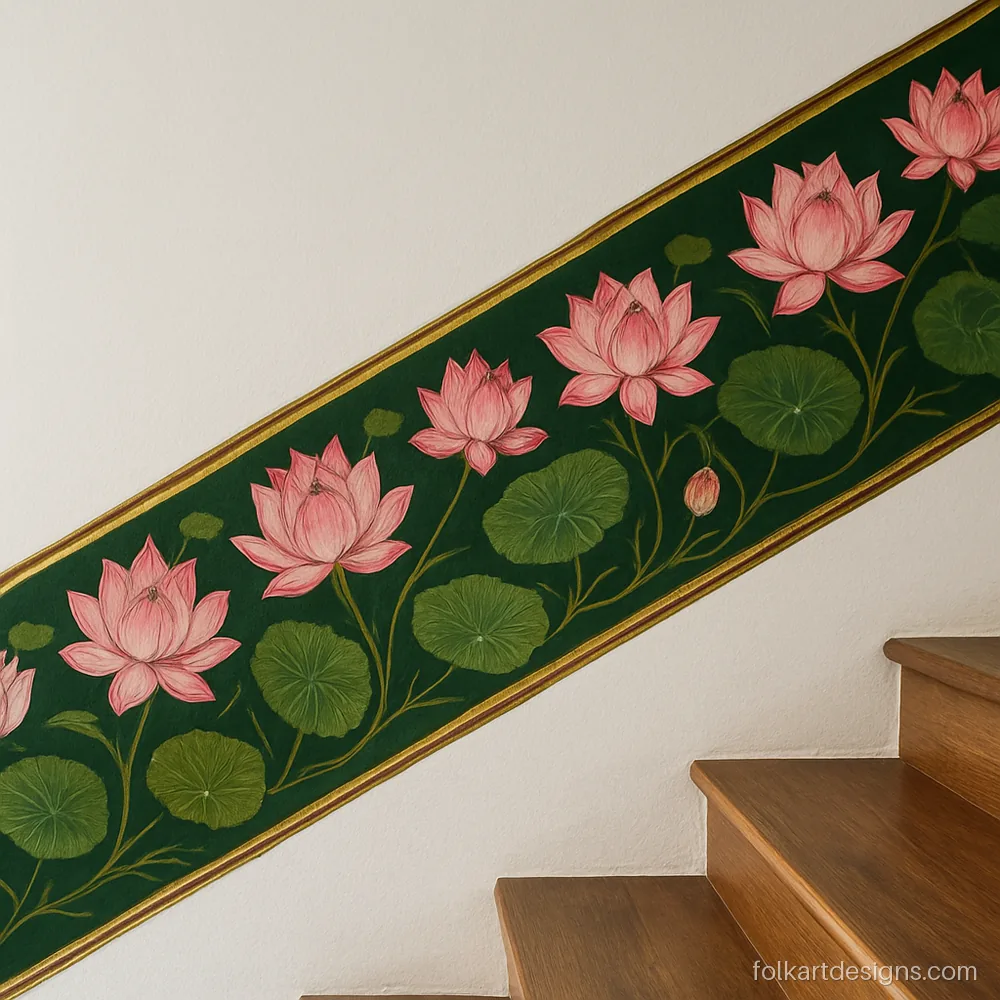
A lotus band that follows the stairs leads the eye upward. It suits duplex homes and narrow stairways.
Artist tip Snap a chalk line along the stairs so the band stays parallel to the steps.
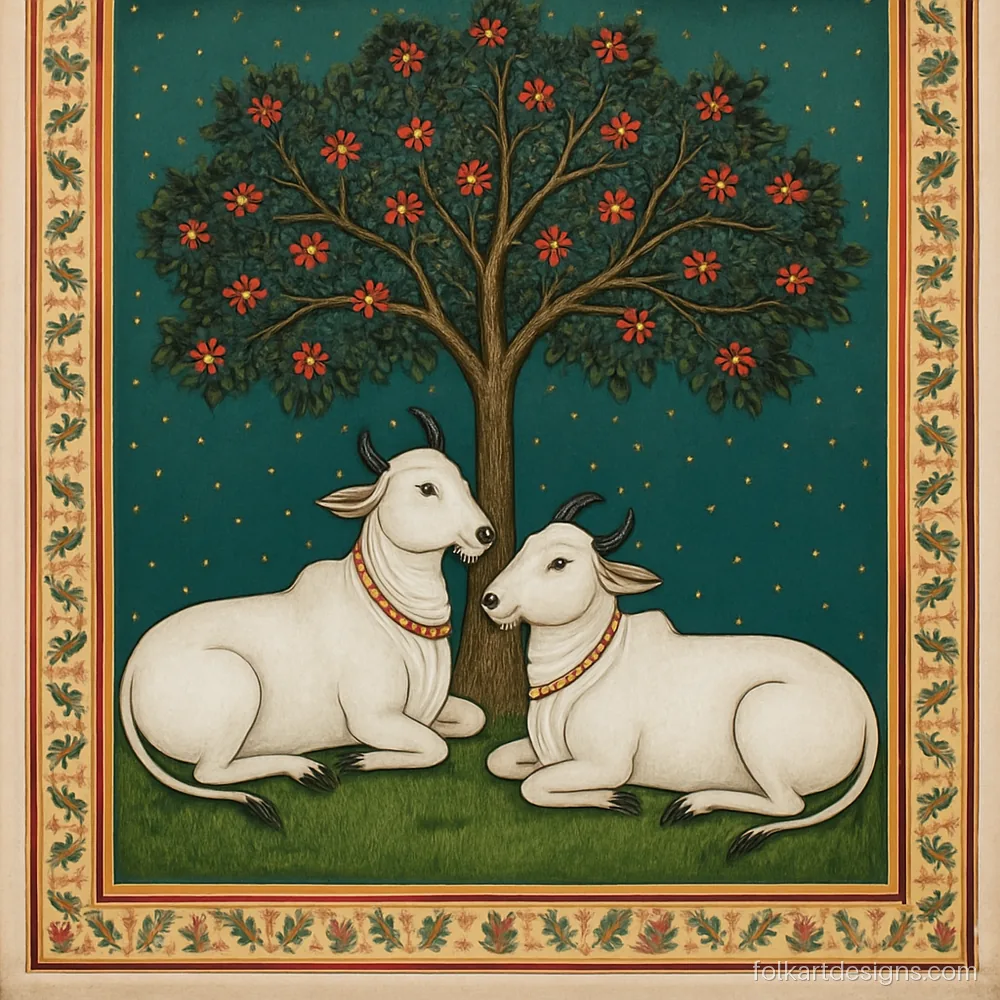
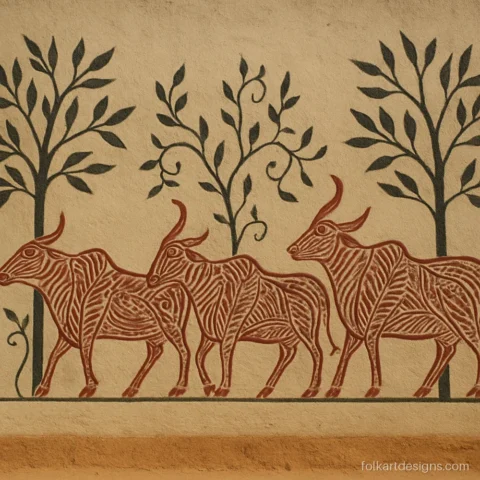
Cows resting under a tree give a welcoming feel at the door. A good choice for a home entrance or a cafe wall.
Artist tip Seal outdoor murals with a clear exterior coat to protect the colours from sun.

A wall niche gives a ready frame for a small mural. It suits bedrooms and reading corners.
Artist tip Paint the niche background first and let it dry for a full day before adding motifs.
Gold Leaf Details in Pichwai Painting
Gold is what makes pichwai glow. Real gold leaf costs more, while imitation leaf and gold paint suit practice pieces.
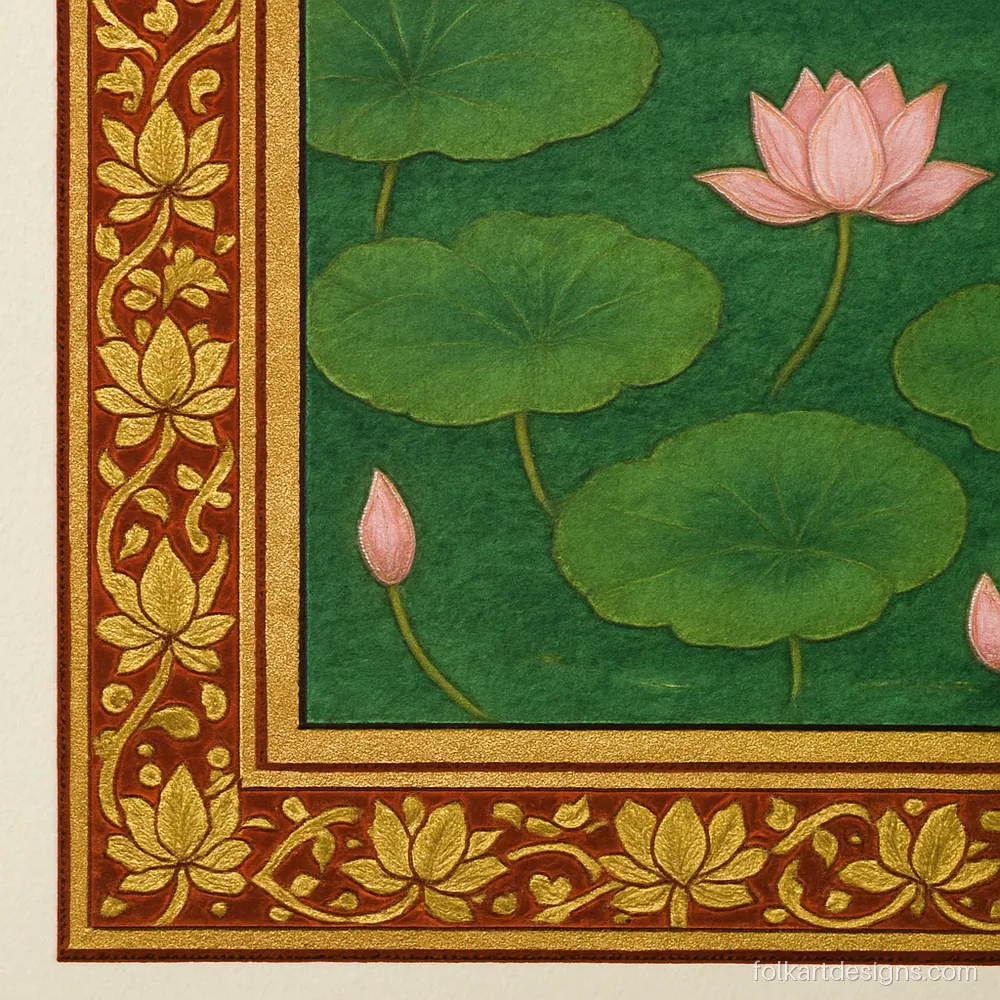
Gold leaf on the border catches the light differently at every angle. It suits an heirloom piece.
Artist tip Apply size glue, wait until it turns clear and tacky, then press the leaf on gently.
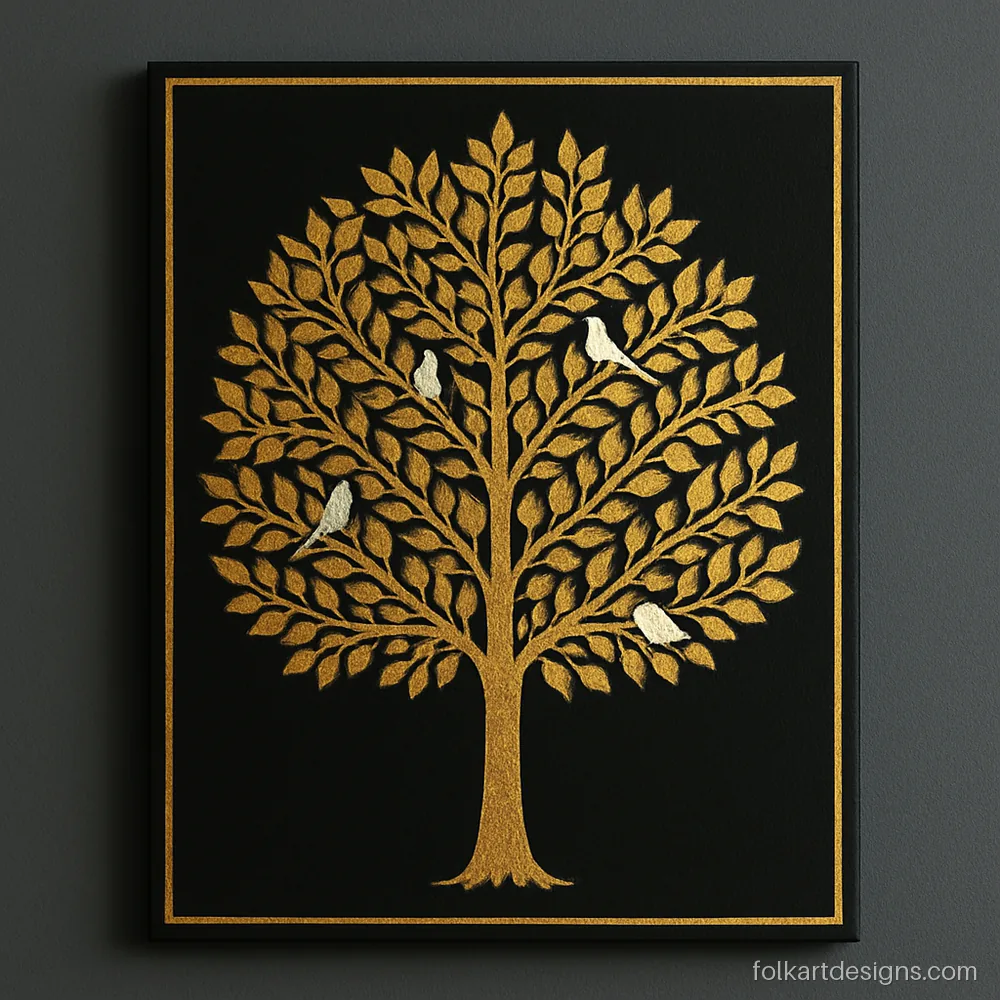
A gold tree on black looks bold and modern while keeping the pichwai feel. It suits a dark accent wall or an office.
Artist tip Burnish the leaf with a soft brush, not your finger, to avoid smudges and tears.

Raised gold dots on the ornaments give a jewel-like finish. Try this detail once your brush dots are steady.
Artist tip Use thick gold acrylic and a toothpick for raised dots; they dry in about an hour.
How to Make an Easy Pichwai Painting Step by Step
A basic pichwai painting kit needs: a canvas or MDF board, gesso, acrylic paints (dark green, pink, white, black, yellow), round brushes in sizes 0, 2 and 6, tracing paper and a gold paint or leaf.
- Prime MDF with two coats of gesso. Canvas is usually ready to use.
- Paint a dark background in two thin coats and let it dry for an hour.
- Trace your lotus, cow or peacock outline onto the dry base.
- Fill large areas first: water, leaves, then bodies and blooms.
- Add petal shading and fine outlines with the size 0 brush.
- Finish with gold borders and dots, then seal with matte or satin varnish after a day.
If you want a calmer folk style to practise line work first, try Gond art fills.
What Makes a Pichwai Painting Cost More
- Hand-painted vs printed: a pichwai painting printable or a print costs far less than an original painted piece.
- Gold: real gold leaf costs much more than imitation leaf or gold paint.
- Base: traditional cotton cloth with natural colours takes longer than acrylic on canvas.
- Size and detail: a full lotus pond with hundreds of petals can take weeks of work.
The same motifs also work on clothes. A pichwai painting on blouse backs or a pichwai painting saree pallu uses fabric paint on cotton or silk. For printed and painted textiles from the south, see kalamkari art.
Questions about these designs
What is pichwai painting?
Pichwai is a style of large cloth painting from Nathdwara in Rajasthan. It is known for lotus ponds, cows, peacocks, trees and rich gold work on deep backgrounds.
Which state is pichwai painting from?
Pichwai painting is from Rajasthan. It grew around the town of Nathdwara, close to Udaipur.
Is pichwai painting easy for beginners?
Full scenes are detailed, but single motifs are easy. Start with one lotus or a small calf on a dark background, then move to a pond with many blooms. A small board takes two or three sittings.
What colours are used in pichwai painting?
Deep green, indigo, black or maroon for backgrounds, pink and white for lotus and cows, leaf greens for trees and gold for borders and ornaments. Hobby artists usually use acrylic.
Can I do pichwai painting on fabric?
Yes. Use fabric paint on washed cotton or silk and fix it with an iron once dry, as the paint label says. Lotus buttis and small cows look lovely on a blouse back or saree border.
How long does a pichwai painting take to dry?
Each acrylic layer dries to touch in 20 to 30 minutes. Wait a full day before varnishing. Gold size glue needs about 15 minutes to turn tacky before you lay the leaf.