Easy Madhubani Painting for Beginners and Kids
18 designs Madhubani art Updated 9 Oct 2026
Easy madhubani painting starts with a few bold shapes: a fish, a leaf, a round sun and a border of small triangles. This folk style was born in north Bihar, in the districts of Madhubani and Darbhanga, as wall and floor art made by the women of each home. Today it is done on paper and cloth.
Draw every shape with a double outline, fill it with colour or lines, and leave no empty space. Gaps get tiny flowers, leaves and dots, which is how simple madhubani painting looks rich.
Below are 18 original small pieces: easy traditional madhubani painting for beginners, madhubani art for kids, simple fish and peacock designs, step by step sheets and class projects. Cards note paint or pen used, key shapes, a good home for it and one small trick. For the history and bigger works, visit our main madhubani painting gallery.
Easy Traditional Madhubani Painting for Beginners
These four keep the old look: double outlines, flat bright colour and a patterned edge. Each fits on an A5 or A4 sheet and takes one or two sittings.
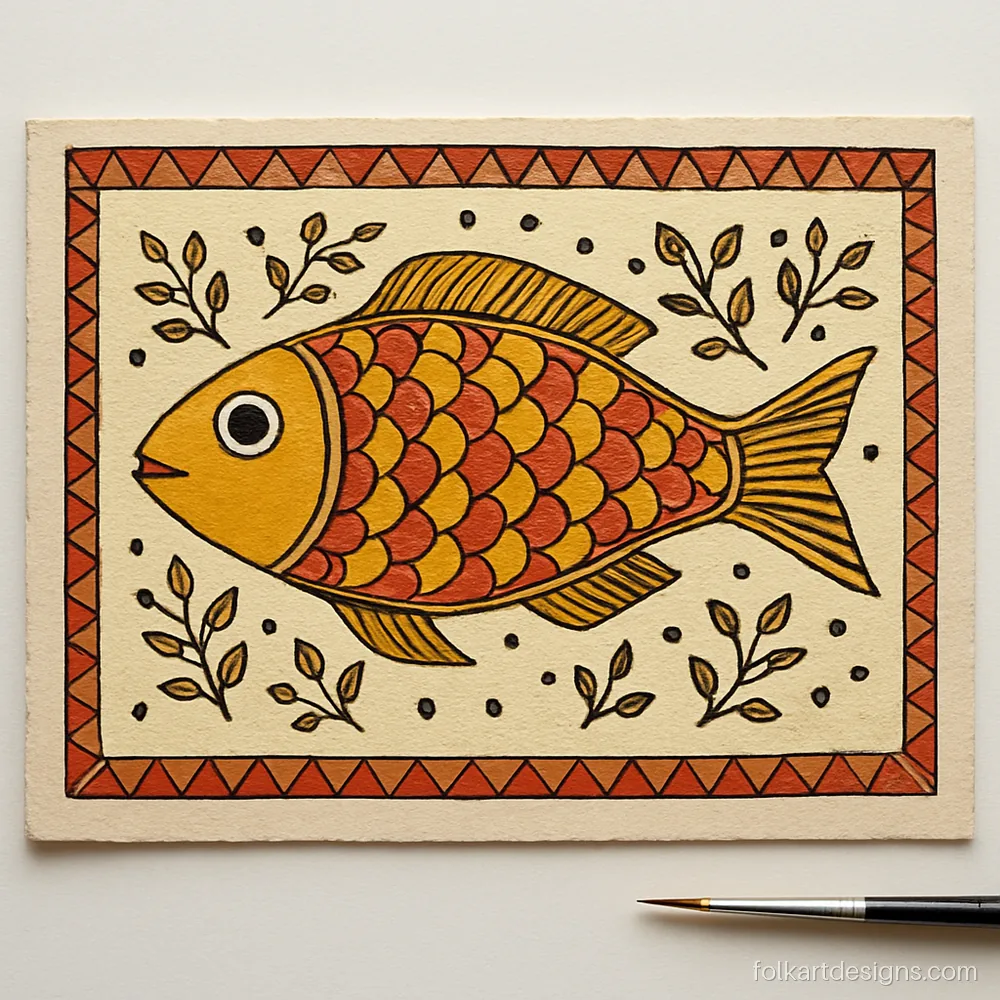
One large fish in turmeric yellow and red, with rows of scales inside and leaf sprigs around it. The best first piece for anyone new to the style.
Artist tip Draw the second outline 2 to 3 mm inside the first. Keep that gap even all the way round.
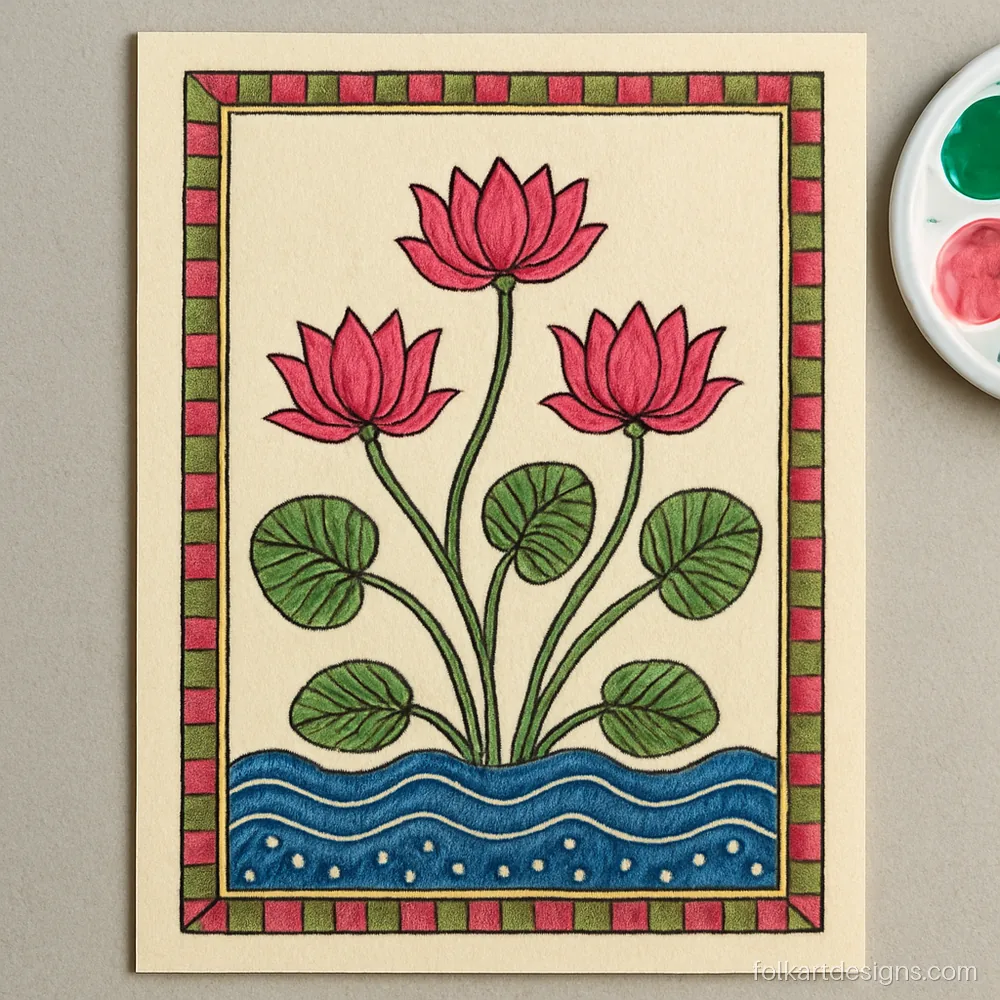
Three lotus heads on curving stems over a band of indigo water. Flat colour and a few lines make it a calm first frame.
Artist tip Paint the pink petals first and the indigo water after, so the two colours do not run together.
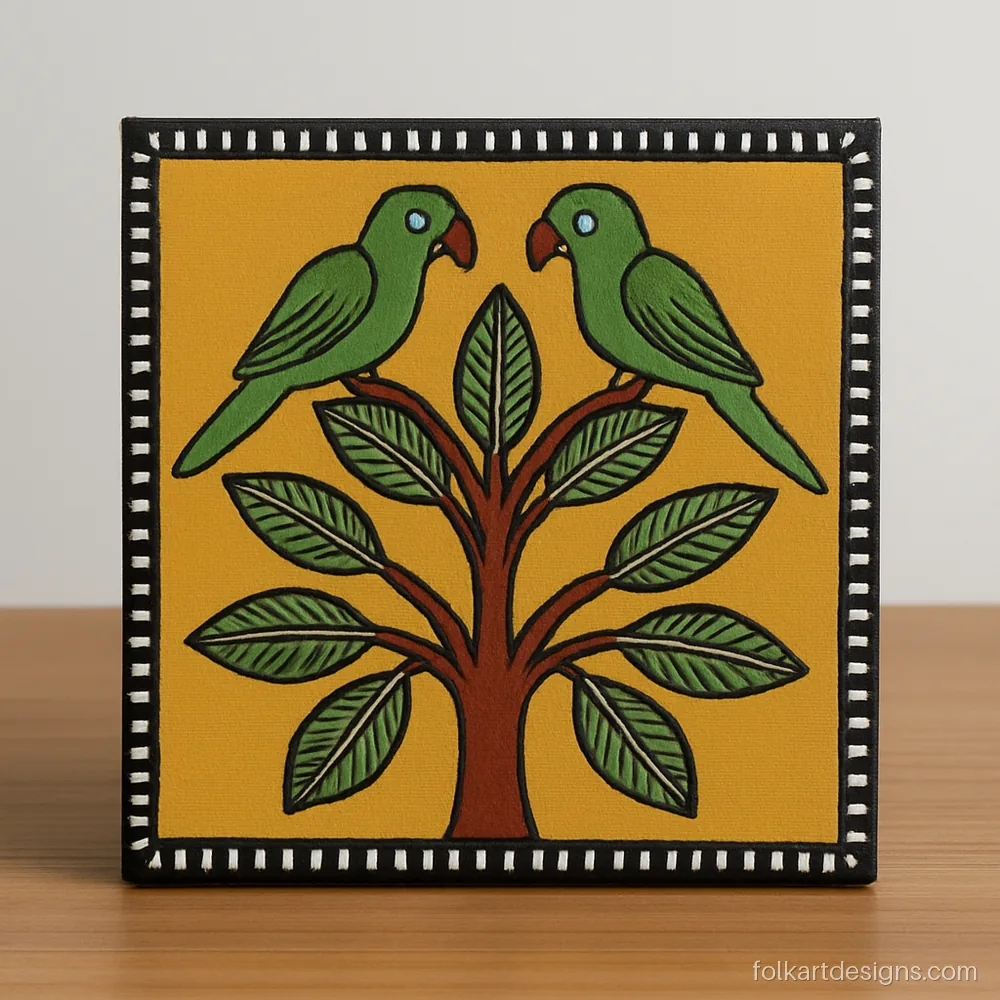
A short trunk, round leafy branches and two parrots on top. A simple madhubani painting tree like this suits a study table or a gift card.
Artist tip Fill each leaf with a centre vein and short side strokes. It reads as Mithila work at once.
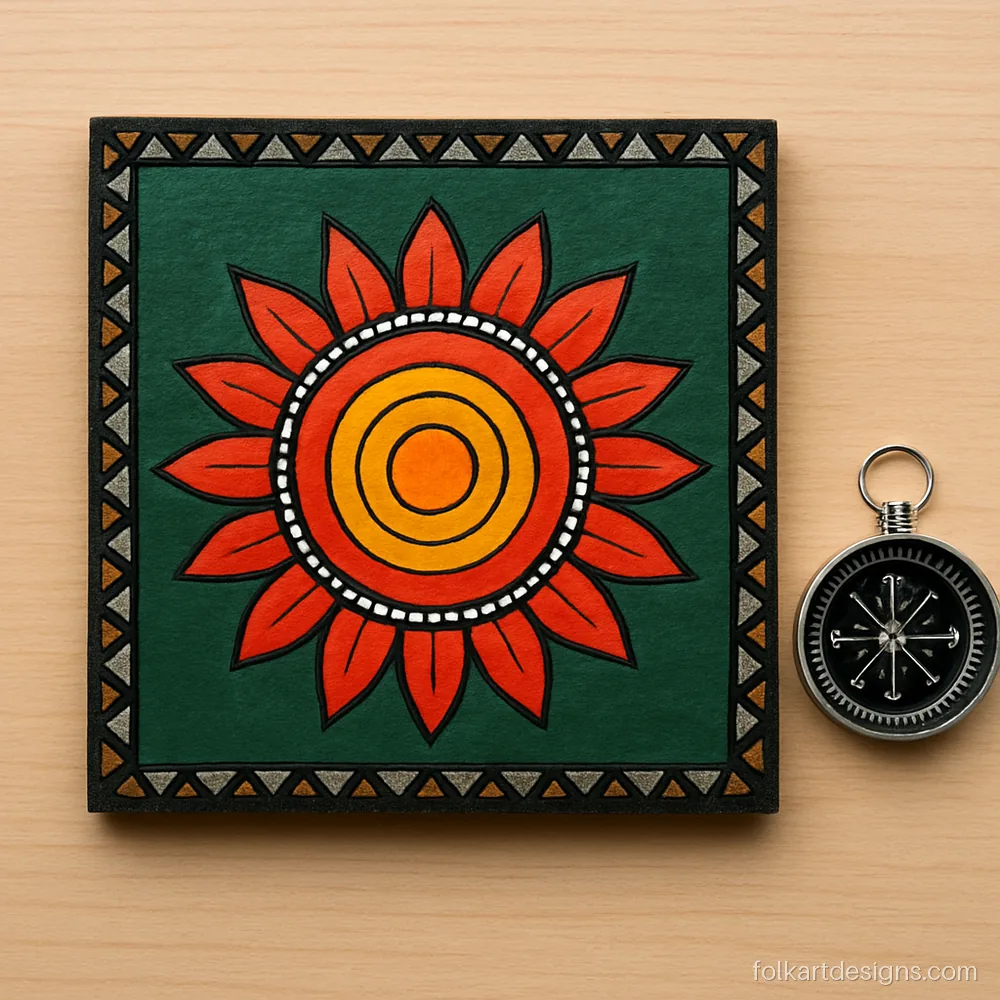
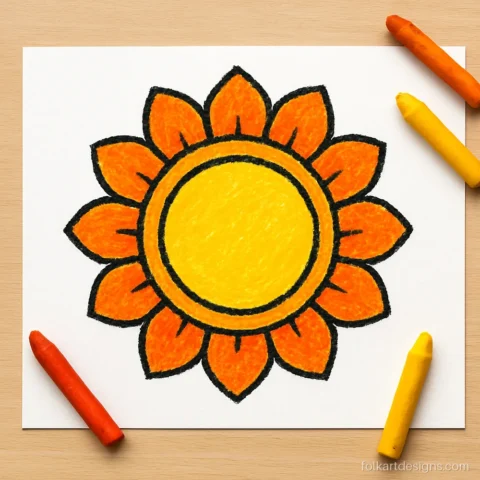
A round sun with petal rays and a ring of dots. Easy madhubani painting sun designs are cheerful and fill a small square well.
Artist tip Use a compass for the centre circle and the outer ring, then draw the rays between them.
Madhubani Art for Kids
Madhubani art for kids works best with thick lines, big shapes and only three or four colours. These use sketch pens, crayons and poster paint, and each takes under an hour.
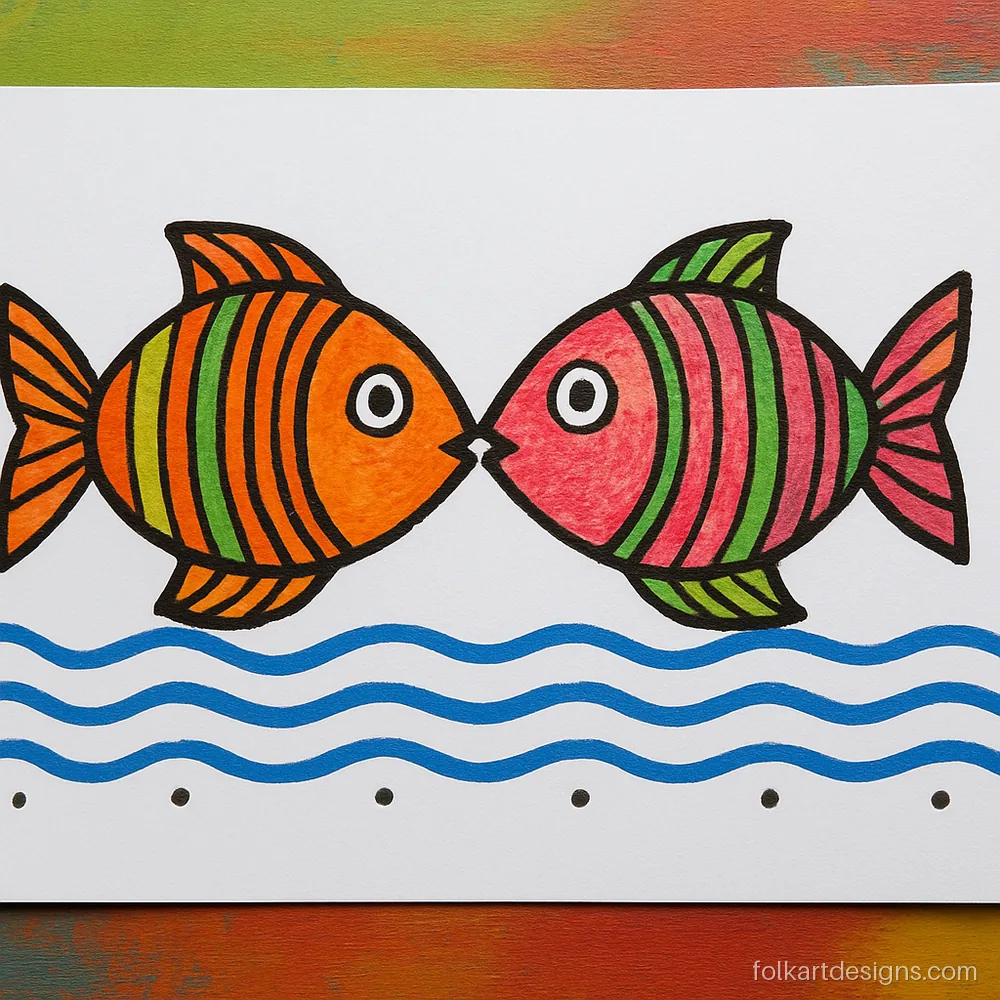
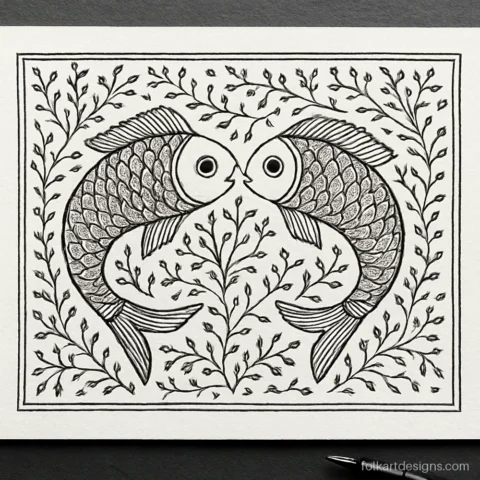
Two fish face each other, outlined in black and coloured with orange, green and pink sketch pens. Madhubani painting for kids does not need any paint.
Artist tip Draw the outline with a black pen first and wait a minute before colouring inside it.
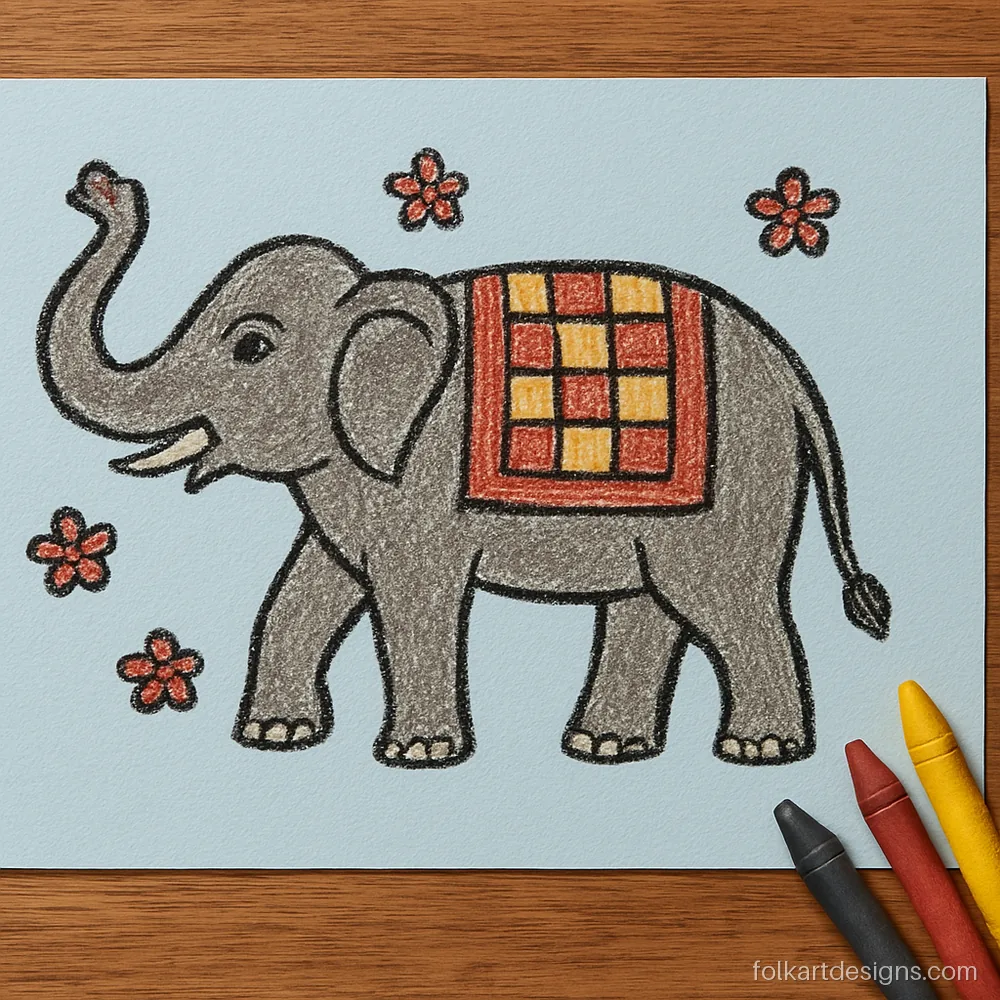
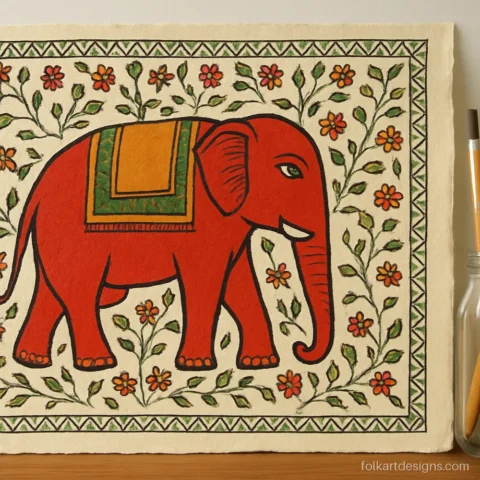
A round elephant wearing a checked blanket, with tiny flowers around it. The big shapes are friendly for small fingers and wax crayons.
Artist tip Make the body one big oval. Add the trunk, ears and legs after the oval looks right.
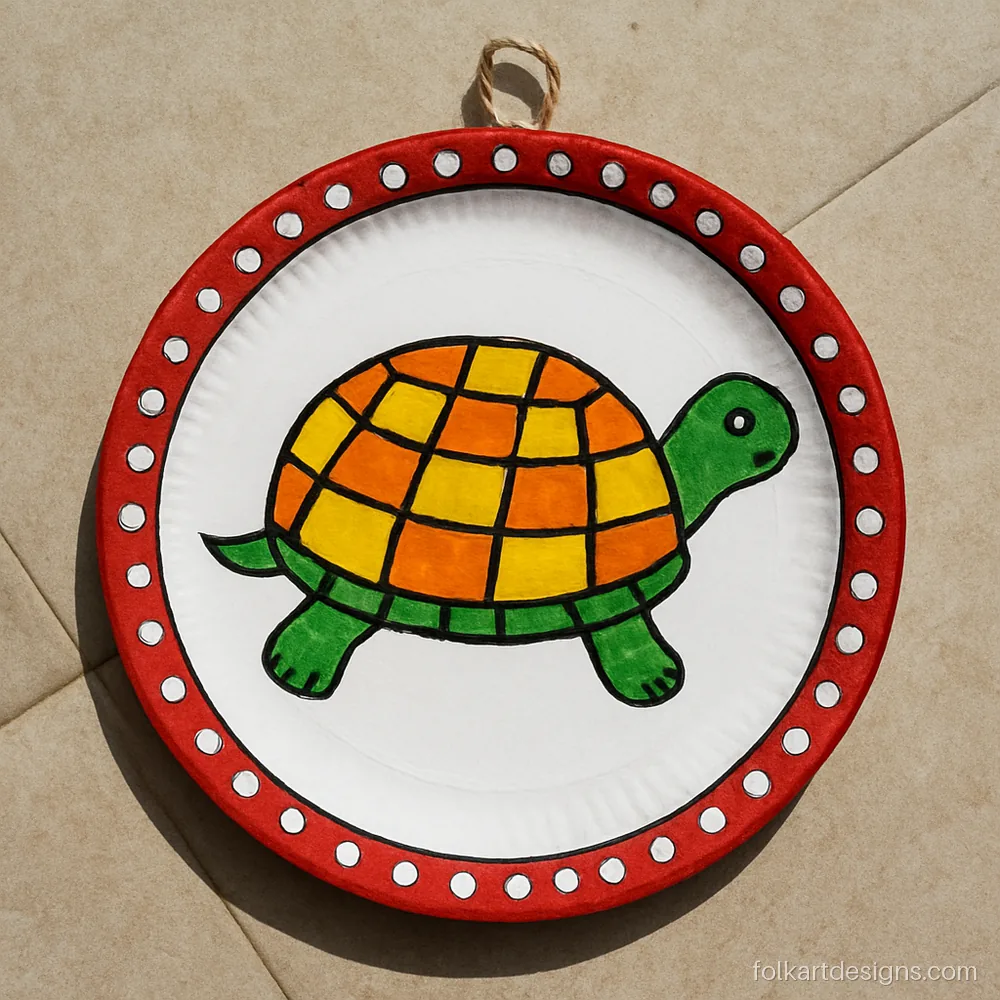
A turtle on a paper plate, its shell made of small squares, with a dotted rim. Hang it on a door with a loop of thread.
Artist tip Paint the plate rim first and leave it twenty minutes to dry before you draw the turtle.

Two wing shapes, a thin body and a ring of leaves. Quick to draw and very bright on yellow card.
Artist tip Fold the card lightly in half to mark a centre line, then match both wings to it.
How to Make Easy Madhubani Art: Basic Steps
- Pick one main motif: a fish, a bird, a tree or a sun. One is plenty for a first piece.
- Sketch it lightly in pencil. Keep it big, so it fills about half the sheet.
- Draw a border band about 1 cm wide around the edge.
- Ink the outline, then a second line just inside it. This double outline is the signature of the style.
- Fill the shape with flat colour (bharni style) or with lines and dots.
- Fill every gap with small leaves, flowers and dots, then finish the border pattern.
- Rub out the pencil once the ink and paint are fully dry, usually after an hour.
Good madhubani easy art comes from patience with the fill, not from a hard drawing.
Simple Fish and Peacock Madhubani Paintings
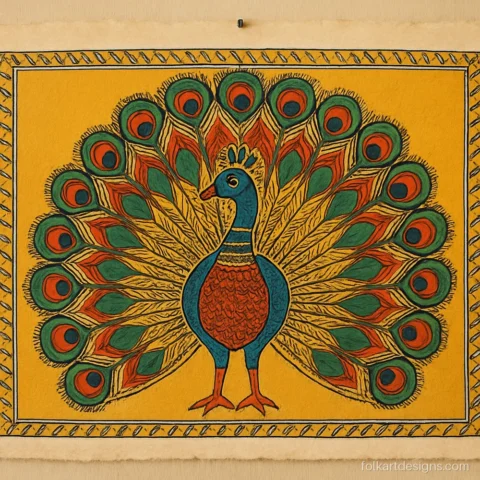
Fish and peacocks are the motifs learners ask for most. A fish pair stands for plenty in Mithila homes, and a peacock tail is perfect for pattern practice. Our peacock and fish motifs page goes deeper.
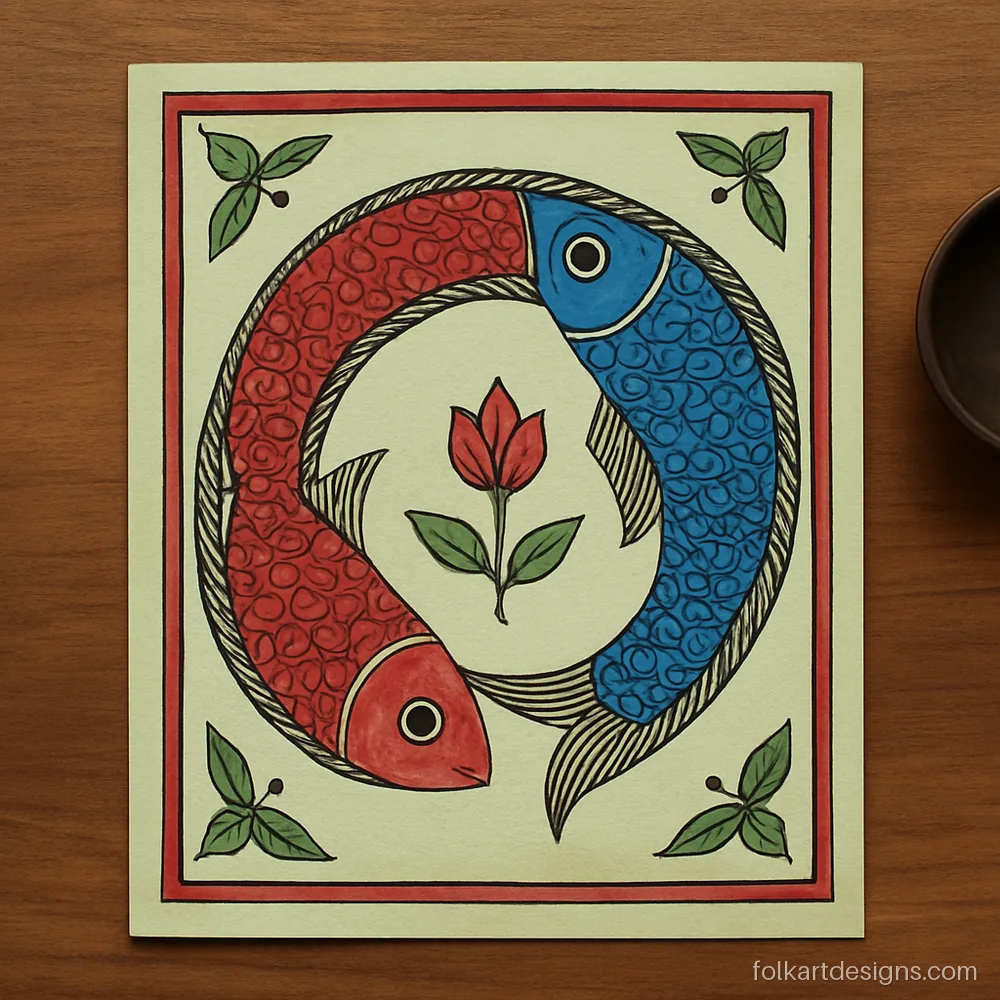
Two fish chase each other in a ring, with a lotus bud in the middle. One of the simplest round layouts to balance.
Artist tip Trace a bowl for the ring, then draw both fish along it, head to tail.
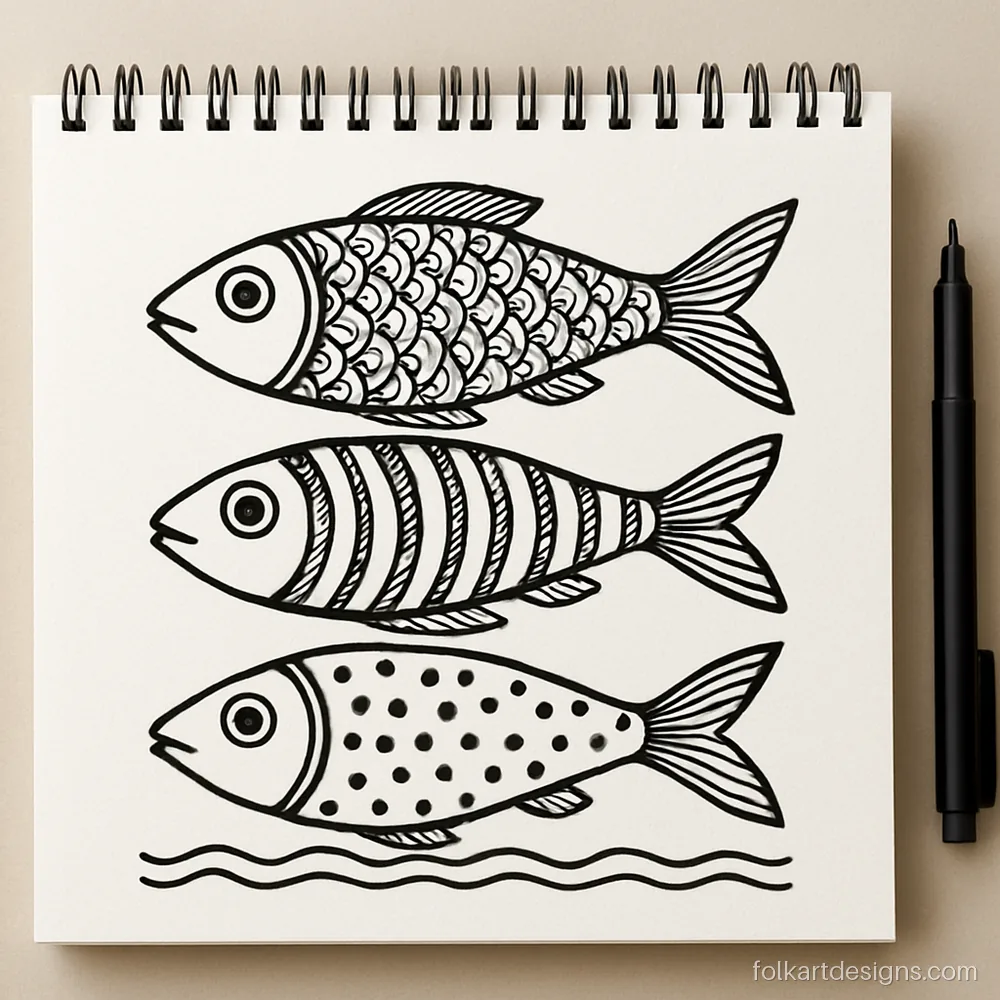
Black and white madhubani painting easy enough for a first try: three fish, one 0.5 mm pen and simple line fills.
Artist tip Give each fish a different fill, such as scales, stripes or dots. Variety keeps it lively.
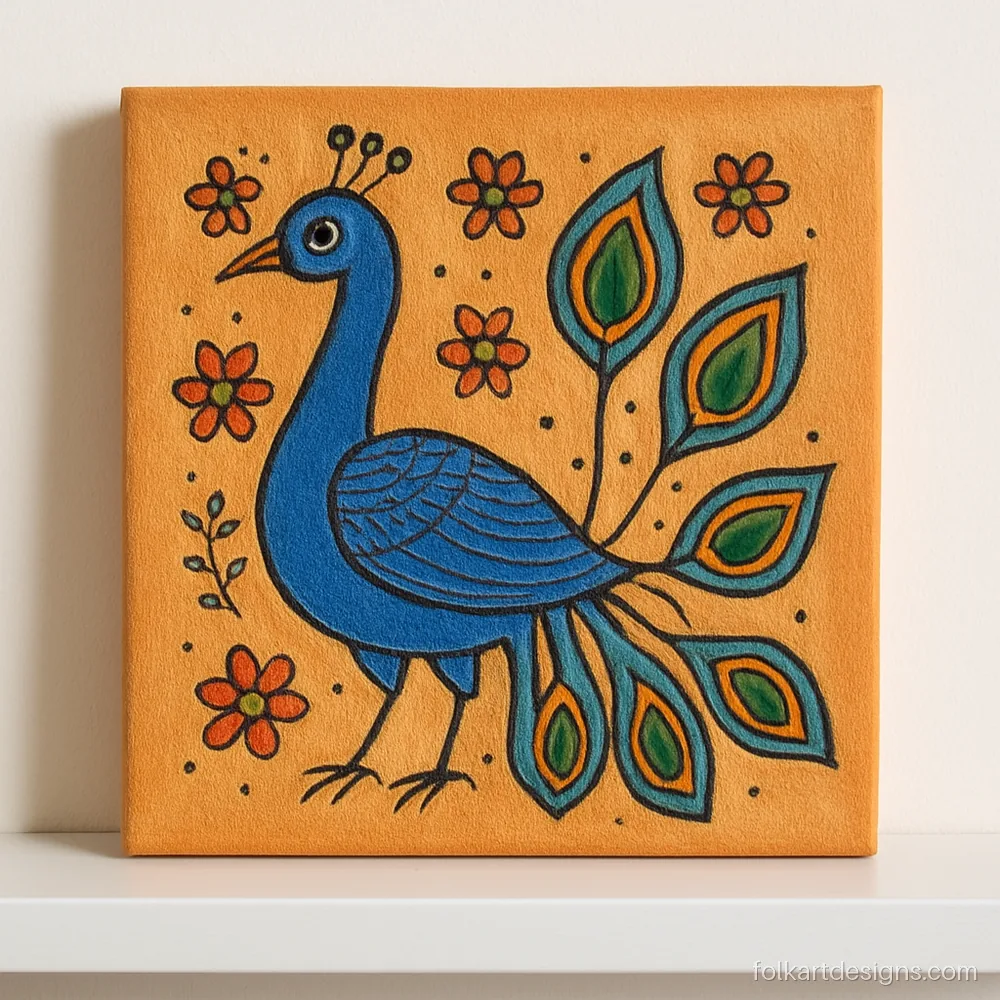
A side view peacock with its tail resting down in five feathers. Learn this pose before you try the open fan.
Artist tip Draw each feather as a teardrop with an eye inside. Five feathers are enough.

Two green parrots share one branch, with red beaks and small buds. Simple madhubani birds like these fill a long narrow frame.
Artist tip Paint both parrots the same green, then add one wing stripe in a darker shade.
Madhubani Painting Easy Step by Step
Read each sheet from left to right, one stage per picture. Copy one stage at a time and stop when your lines feel steady.
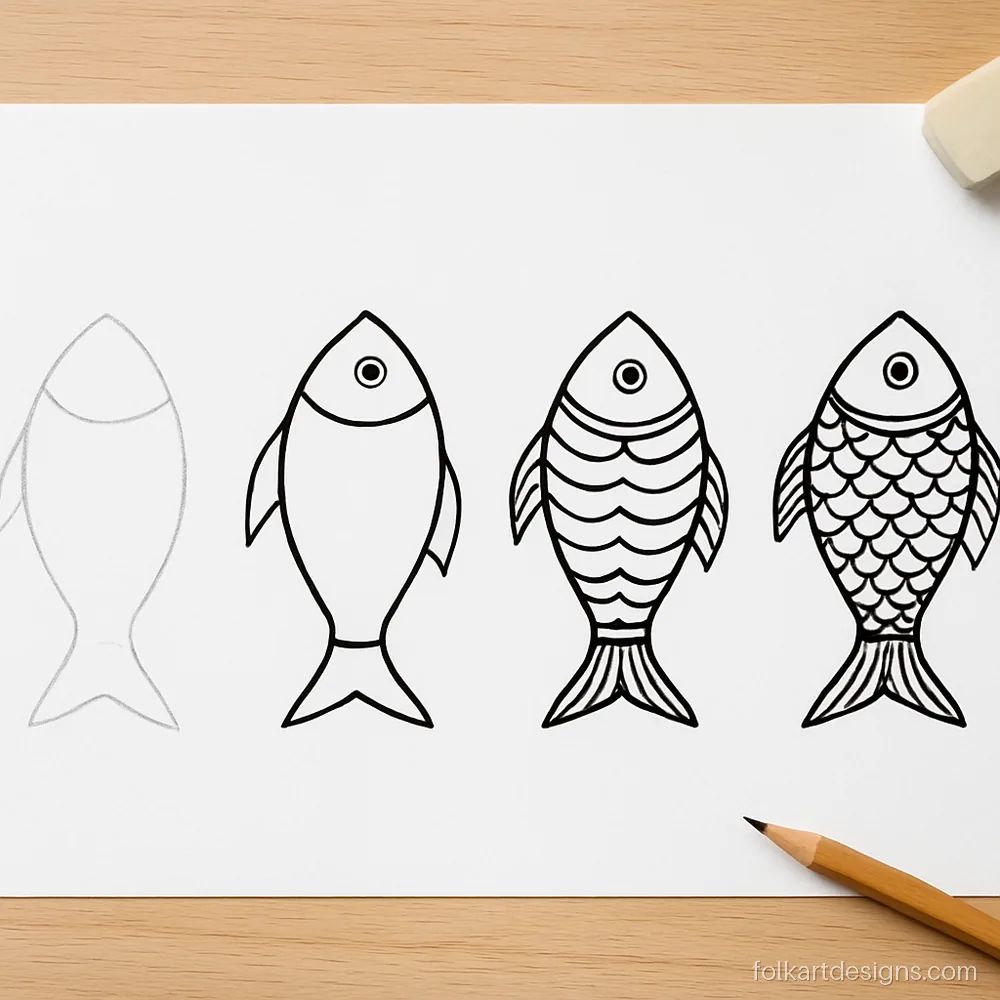
Outline, second outline, eye and fins, then the scale fill. Teachers can copy these four stages straight onto a board.
Artist tip Keep stage one in pencil. Ink it only when the shape looks right to you.
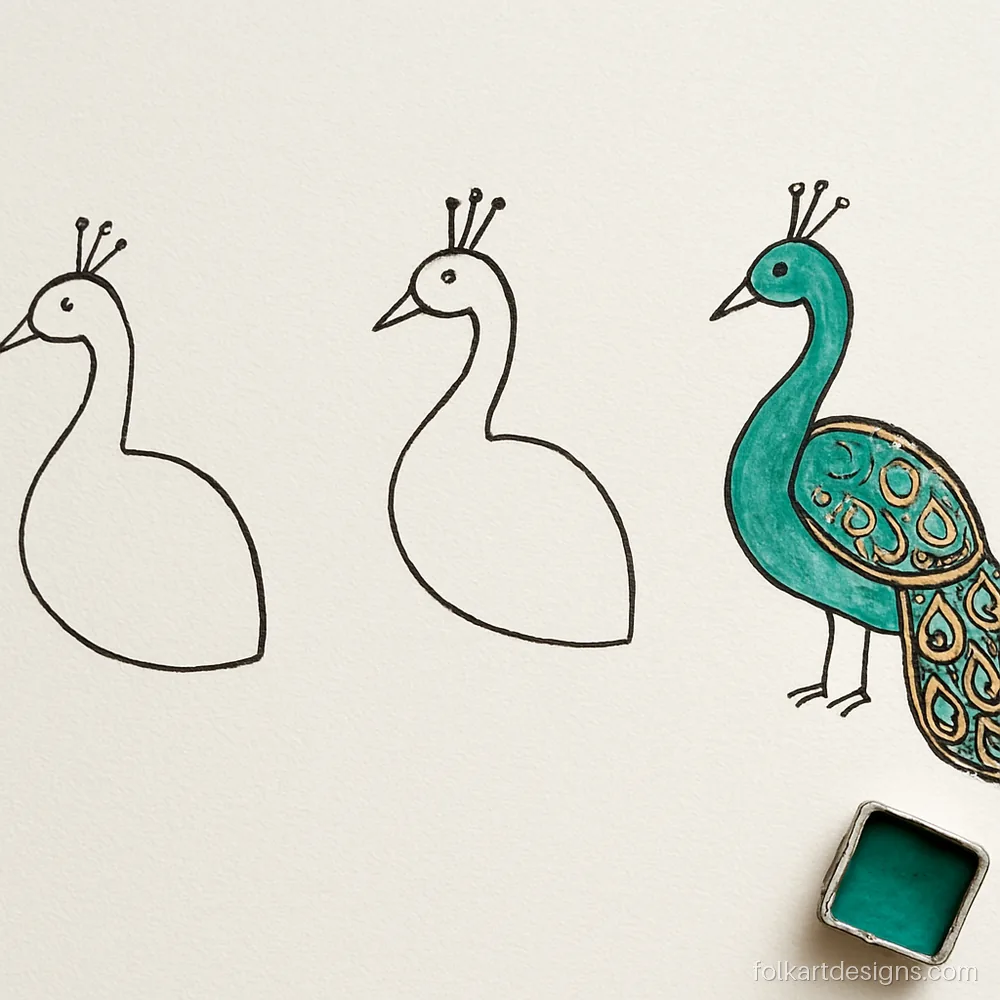
An egg shaped body, then neck and crest, then feathers and colour. Big shapes first always makes the bird easier.
Artist tip Use thick 300 gsm paper so the watercolour does not buckle the sheet.
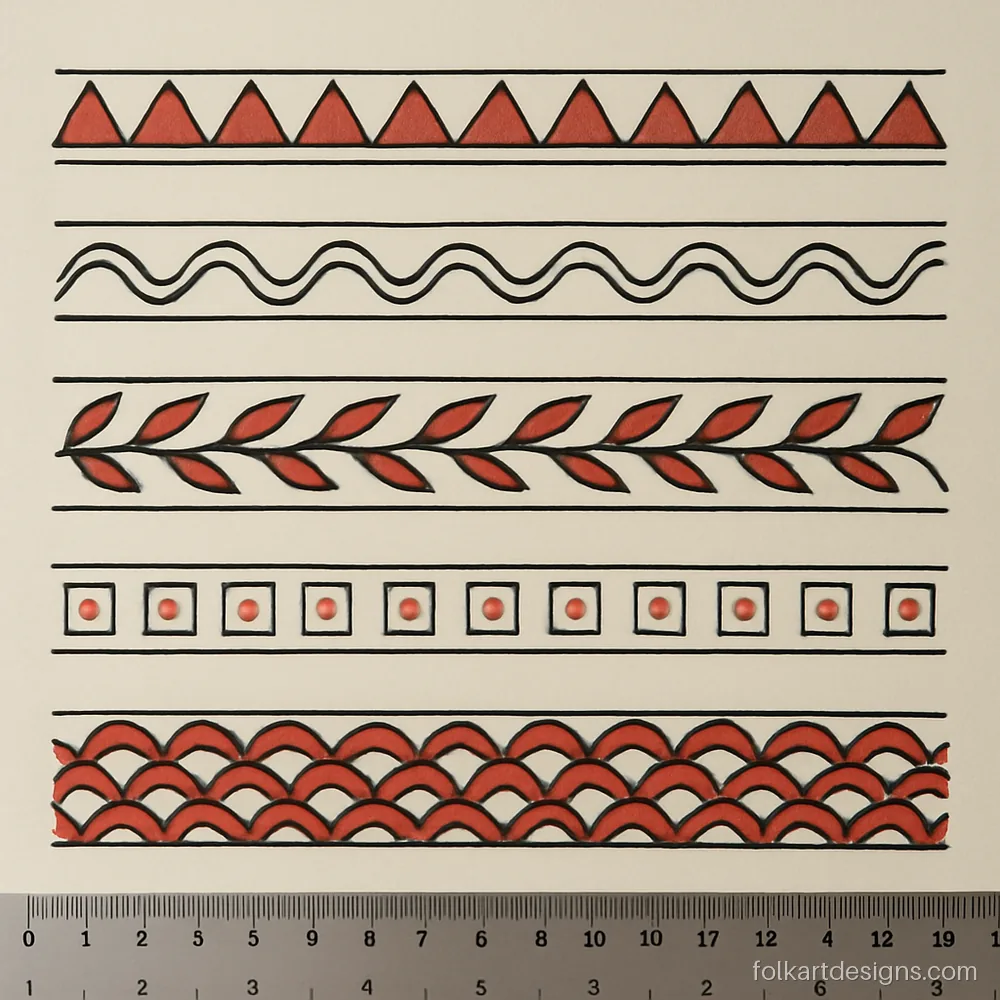
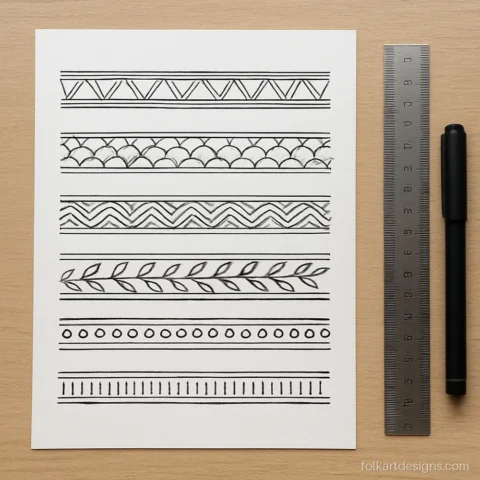
Five easy strips: triangles, waves, leaf chain, dotted squares and fish scales. Practise these and any picture looks finished.
Artist tip Draw two pencil lines 1 cm apart before each strip. It keeps the band straight.
Small Madhubani Painting for Class Projects
Need something neat for an art period or a school file? These small pieces are cheap to make, dry fast and look tidy on display day.
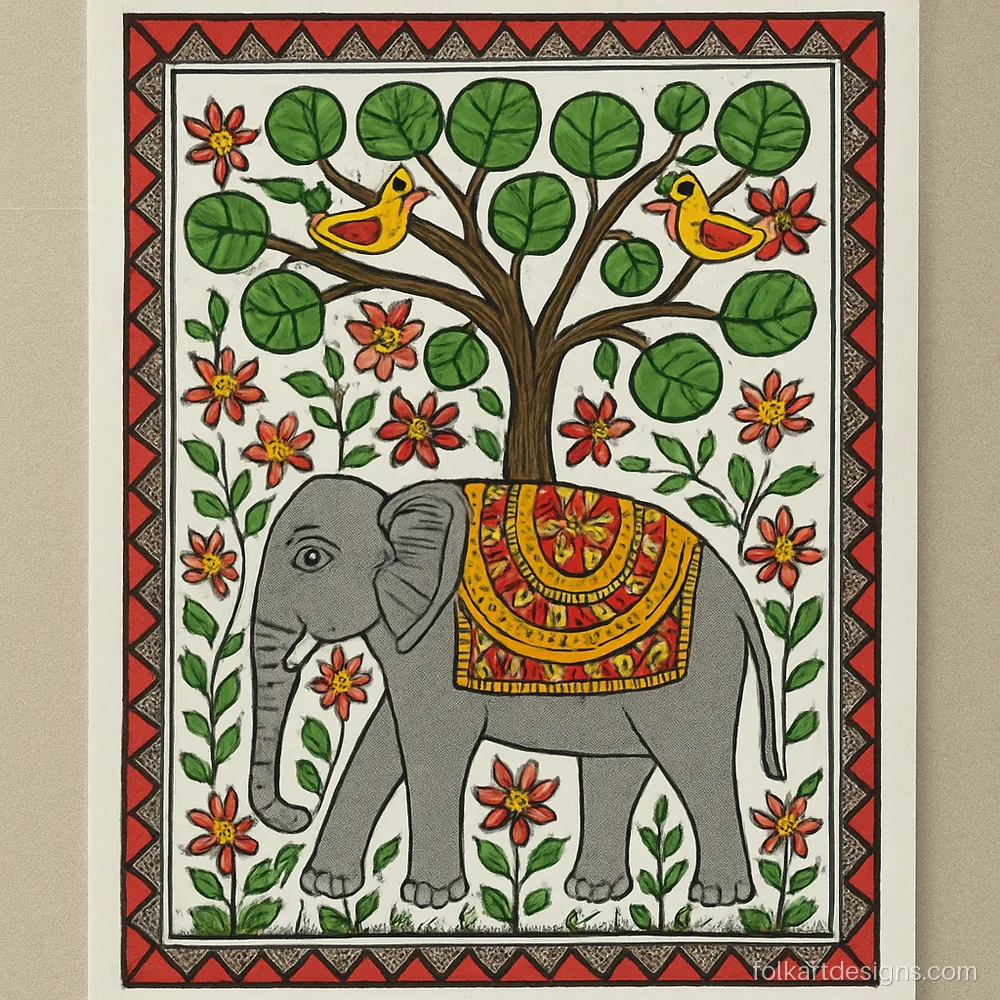
One elephant under a leafy tree, framed by a bold red and black band. Strong enough for a classroom wall.
Artist tip Paint the border last. A neat border hides small slips near the edges.
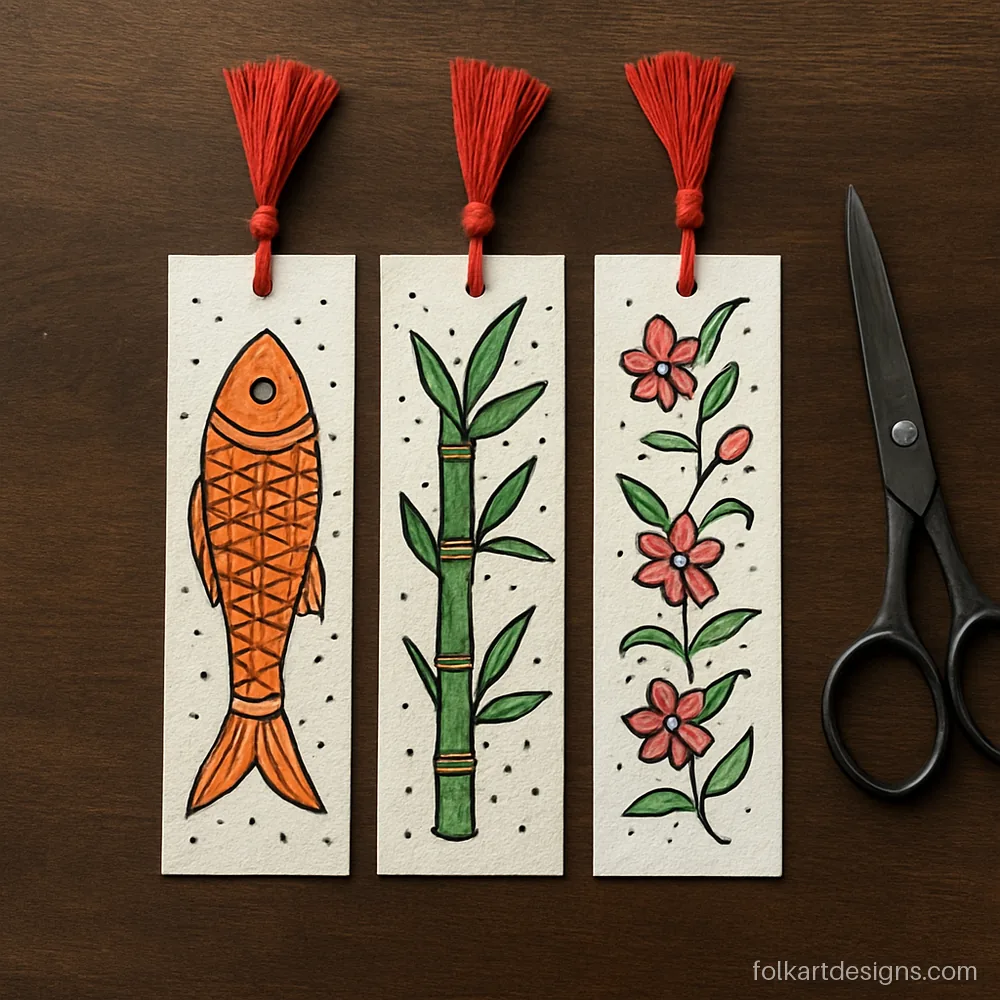
Three narrow bookmarks: a fish, a bamboo stem and a flowering vine. A whole class can make a set from one sheet of card.
Artist tip Cut the bookmarks after painting, not before. The edges stay clean and straight.
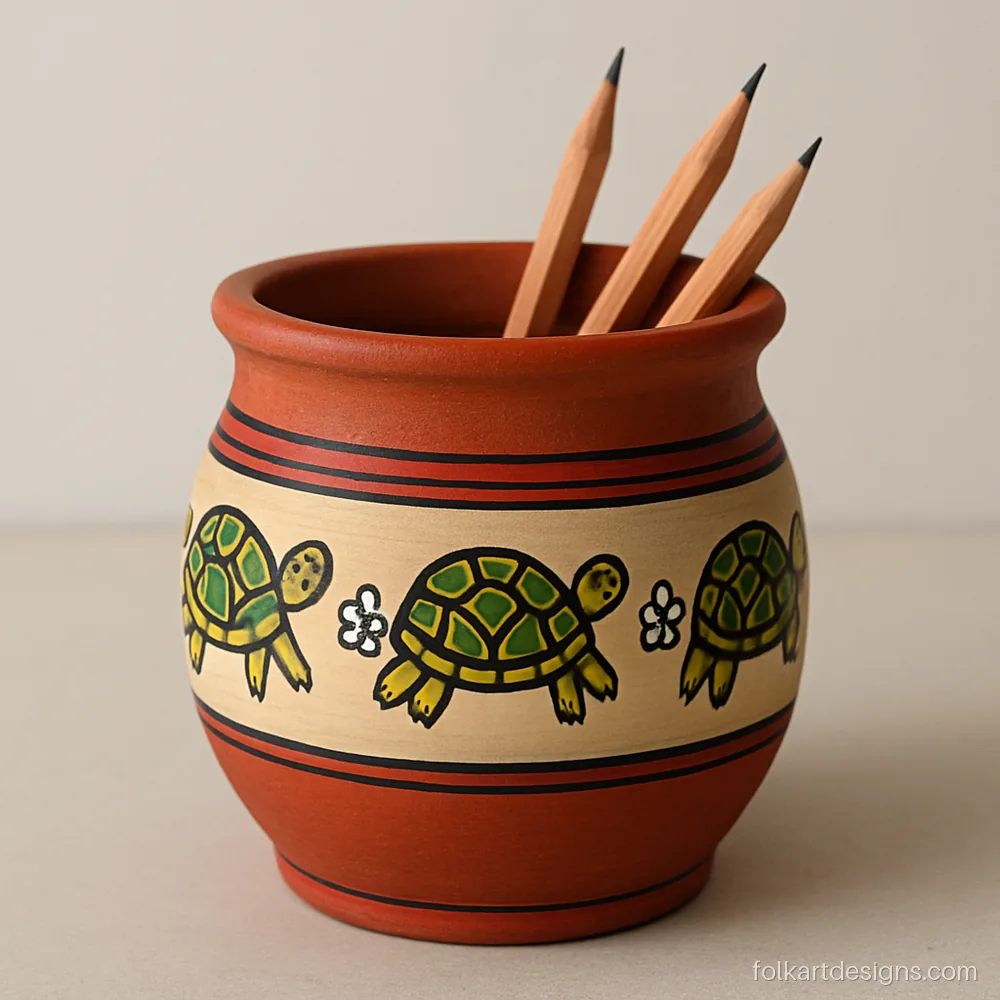
A small terracotta pot with a band of turtles and dot flowers. It turns into a sweet pen stand.
Artist tip Seal with matt varnish after a full day of drying so the paint does not chip.
Materials and Madhubani Basics
Old Mithila work used natural colours: lamp black, turmeric yellow, indigo and red, applied with a bamboo stick or nib. At home you can start with far less.
| Item | What to use | Why |
|---|---|---|
| Paper | 200 to 300 gsm drawing or watercolour paper | Stays flat under paint |
| Pens | 0.3 and 0.5 mm black fineliners | Neat double outlines |
| Paint | Poster colour or acrylic | Bright, flat fills |
| Brushes | Round size 0 and size 4 | Detail and filling |
| Extras | Pencil, eraser, compass, ruler | Planning and borders |
Acrylic dries in about 20 minutes and resists water. Poster colour is cheaper and fine for school work. If you prefer pens only, simple madhubani art in black and white needs nothing but paper and two fineliners. Our madhubani drawing page shows line work in more detail.
Tips for Teachers and Parents
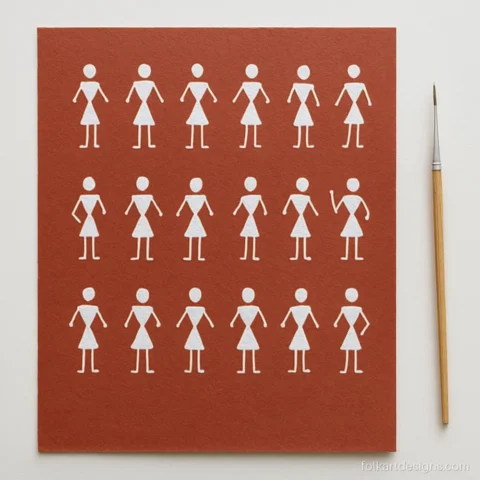
Begin with one fish, then a pair, then a scene with a tree. Short sessions of 30 to 40 minutes keep young learners fresh. For colourful pattern ideas, browse madhubani art designs. If your group enjoys this, try easy warli art or mandala art for kids next.
Questions about these designs
Is madhubani art easy to learn for beginners?
Yes. Madhubani art easy pieces use simple shapes like fish, leaves and suns. The skill is in the double outline and in filling gaps neatly, which improves with each sheet.
What is the best madhubani painting for kids?
A single fish, a turtle or an elephant drawn big in the middle of the page. Use thick black pens for outlines and sketch pens or crayons for colour. Keep it to three or four colours.
Which colours are used in madhubani easy painting?
Traditionally black, yellow, red, indigo and green. Today poster colour and acrylic in the same bright shades work well. Use black for every outline so the colours stay crisp.
Can I do black and white madhubani painting easy at home?
Yes. Take a 0.5 mm black pen and fill shapes with lines, dots and scales instead of paint. It is quick, cheap and has no drying time.
Where does madhubani painting come from?
Its home is Mithila, a region that covers north Bihar (Madhubani and Darbhanga districts) and part of Nepal. Village women first made it on house walls and floors. It moved onto paper and cloth much later.
How long does a small madhubani painting take?
An A5 piece with one motif takes about one to two hours. Add another hour for a full border. Let acrylic dry for 20 minutes before inking over it.