Indian Folk Art: A Gallery of Traditional and Tribal Designs
Original Indian folk art designs: mandala, madhubani, lippan, warli, kalamkari, gond and more, with the medium, motifs and an artist tip on every design
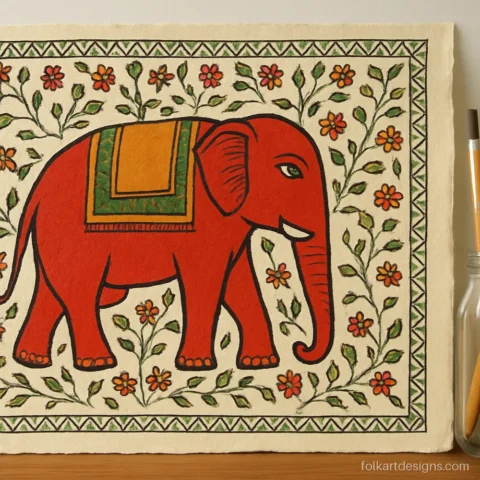

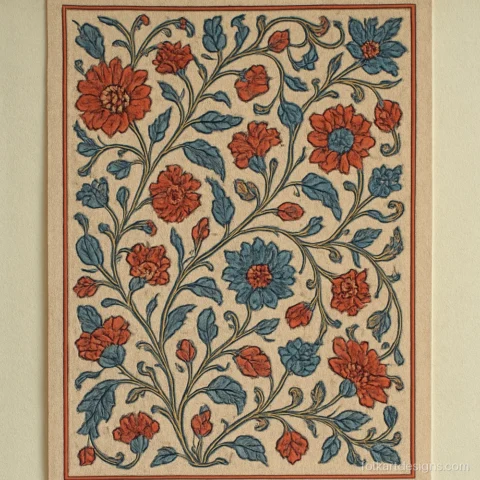
Indian folk art is the art of everyday people, made on walls, floors, cloth and metal with whatever the land gave them: mud, chalk, plant dyes, brass and silver. India has dozens of these living traditions, and each one has its own shapes, colours and stories.
This site is a gallery of original designs you can draw, paint, make or wear. Every picture comes with its medium, its key motifs, the people or rooms it fits best and a hint from the work table. You will find mandalas for your sketchbook, lippan mud art for your wall, madhubani fish and peacocks for your notebook, warli for a class project, kalamkari for your wardrobe and much more.
Scroll the highlights below, then open the full gallery for any style you like. If you are a complete beginner, easy mandala art, easy warli art and easy madhubani painting are the friendliest places to start.
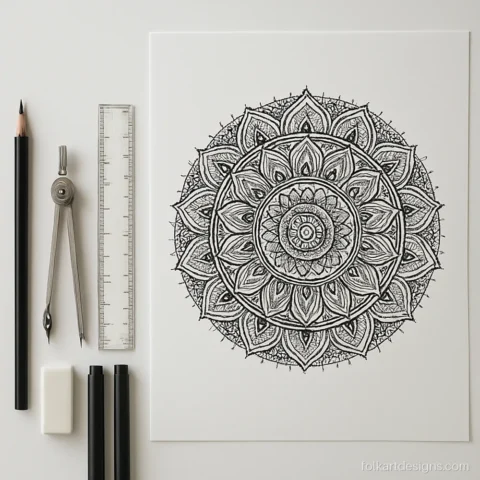
Mandala Art: Circles Built from the Centre
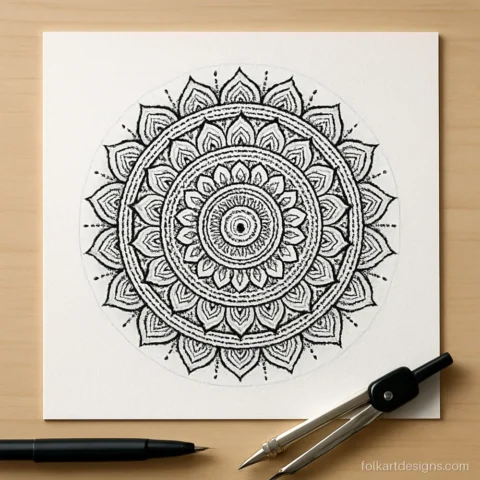
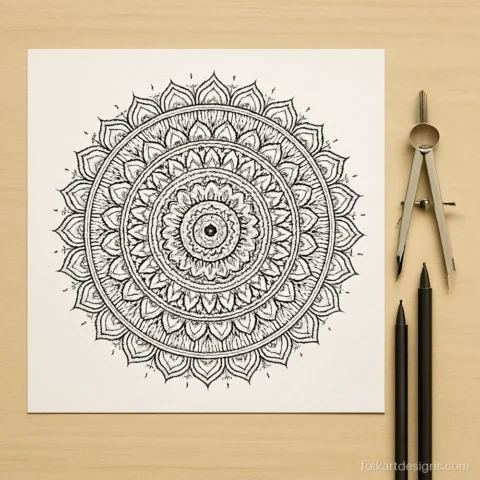
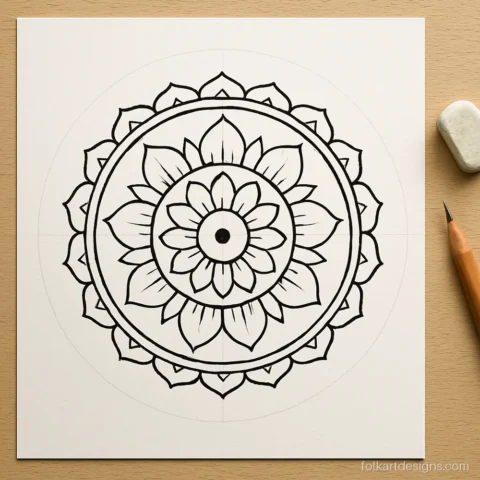
A mandala grows outward from one dot in rings of repeated shapes. It needs only a pen, a compass and patience. See the full mandala art gallery for hundreds of ideas.
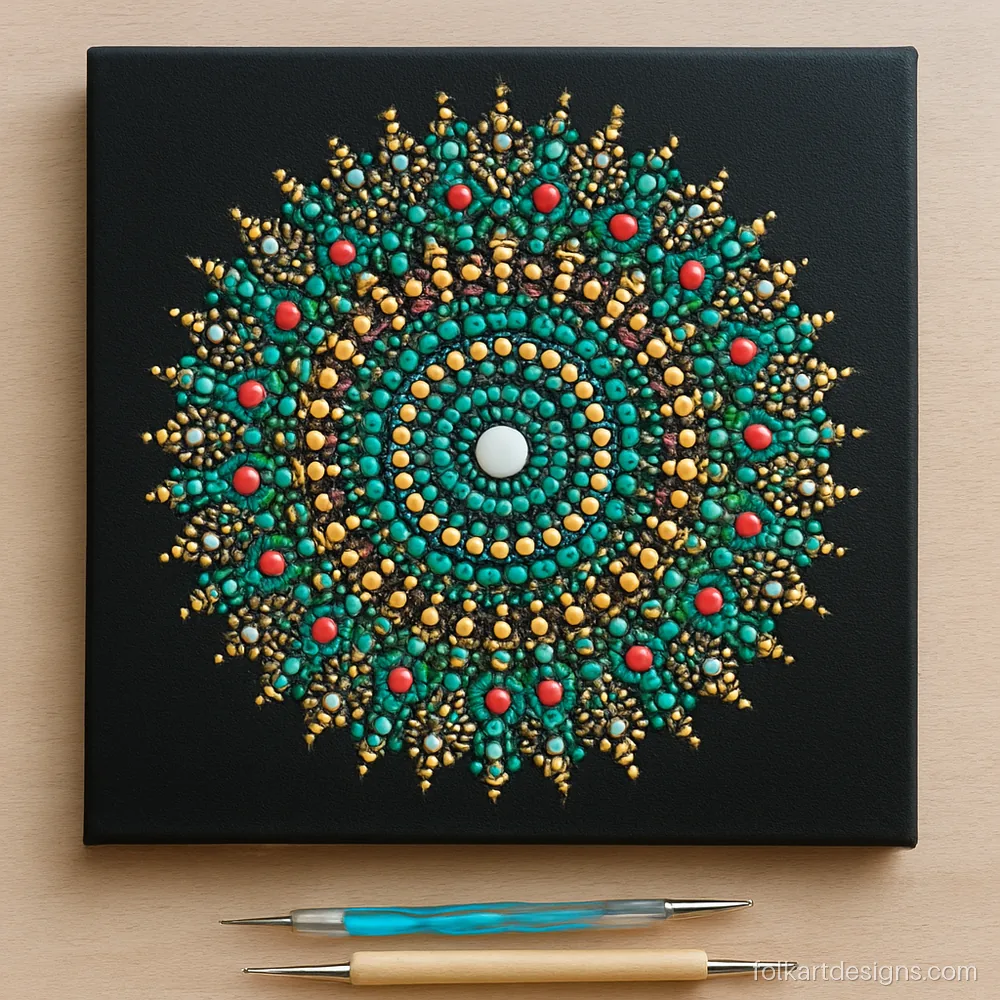
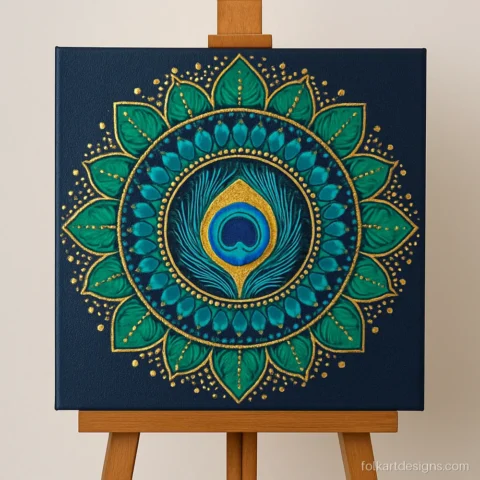
Rings of raised dots in teal and gold glow against black. A calm, cheerful handmade painting for a living room shelf.
Artist tip Thin acrylic to a yoghurt-like flow so each dot sits round and does not form a peak.
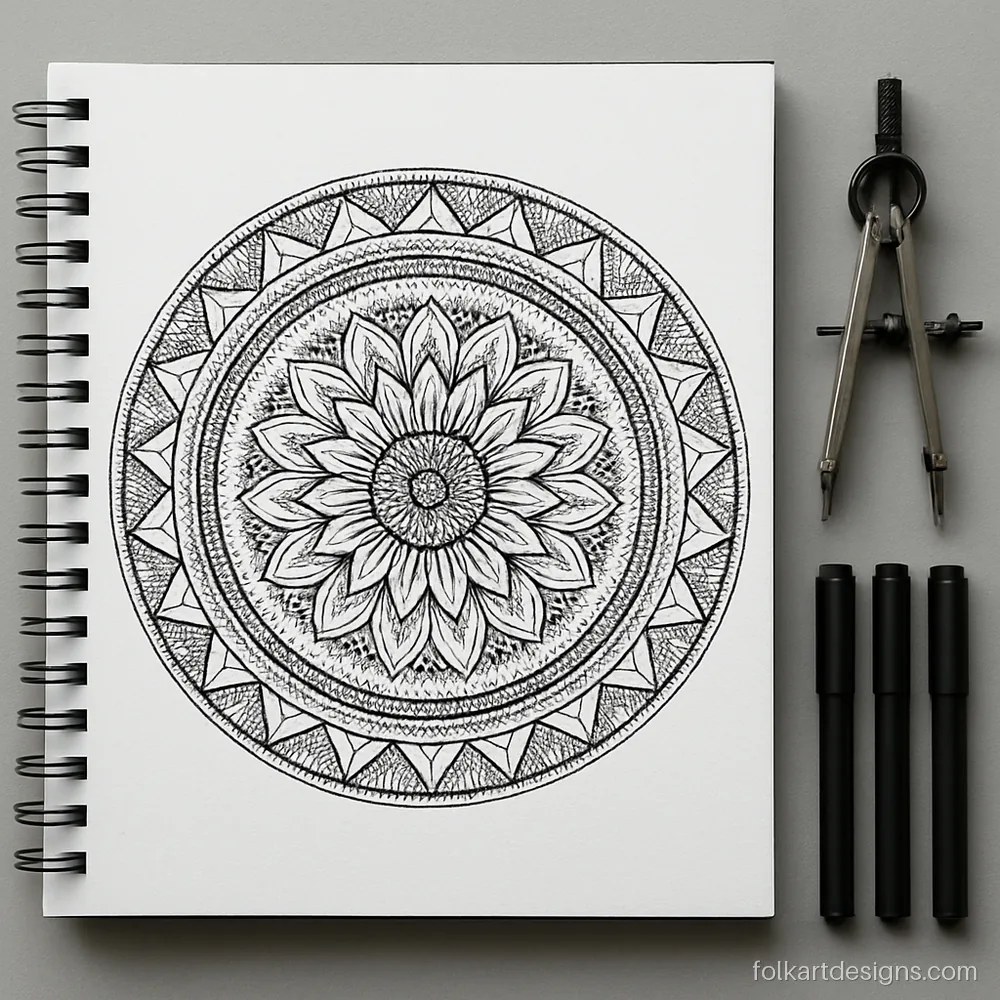
Fine black lines in many weights build a deep lotus. Perfect for students who love quiet, detailed drawing.
Artist tip Mix 0.1, 0.3 and 0.8 mm pens; the change in line weight gives the drawing depth.
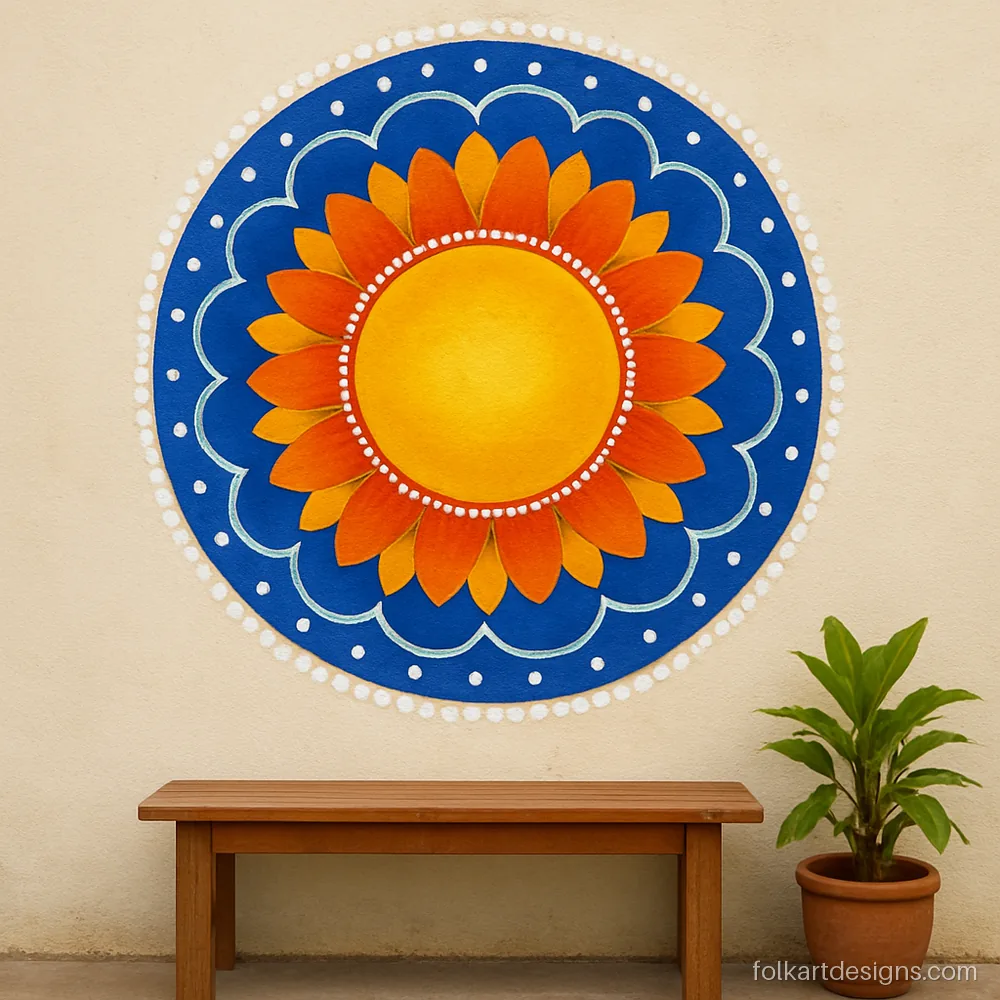
A big painted mandala turns a plain wall into the focus of the room. Hand painted walls like this suit balconies and cafes.
Artist tip Use a string tied to a pencil at the centre point to draw big guide circles on a wall.
Mud Art and Mirror Work: Lippan from Kutch
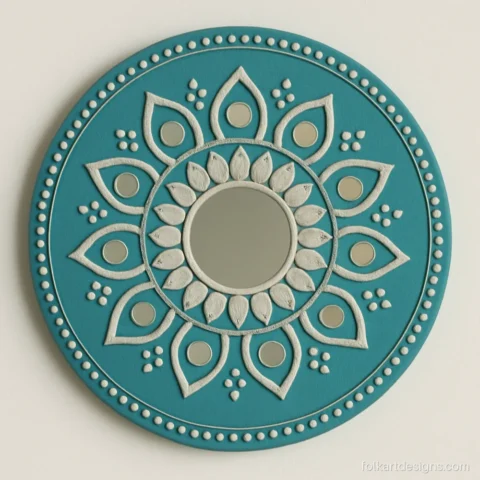
Lippan, also spelled lipan, began as clay and mirror decoration on the round mud homes of Kutch, Gujarat. Now hobby artists make it with clay on MDF. Explore the full lippan art gallery.
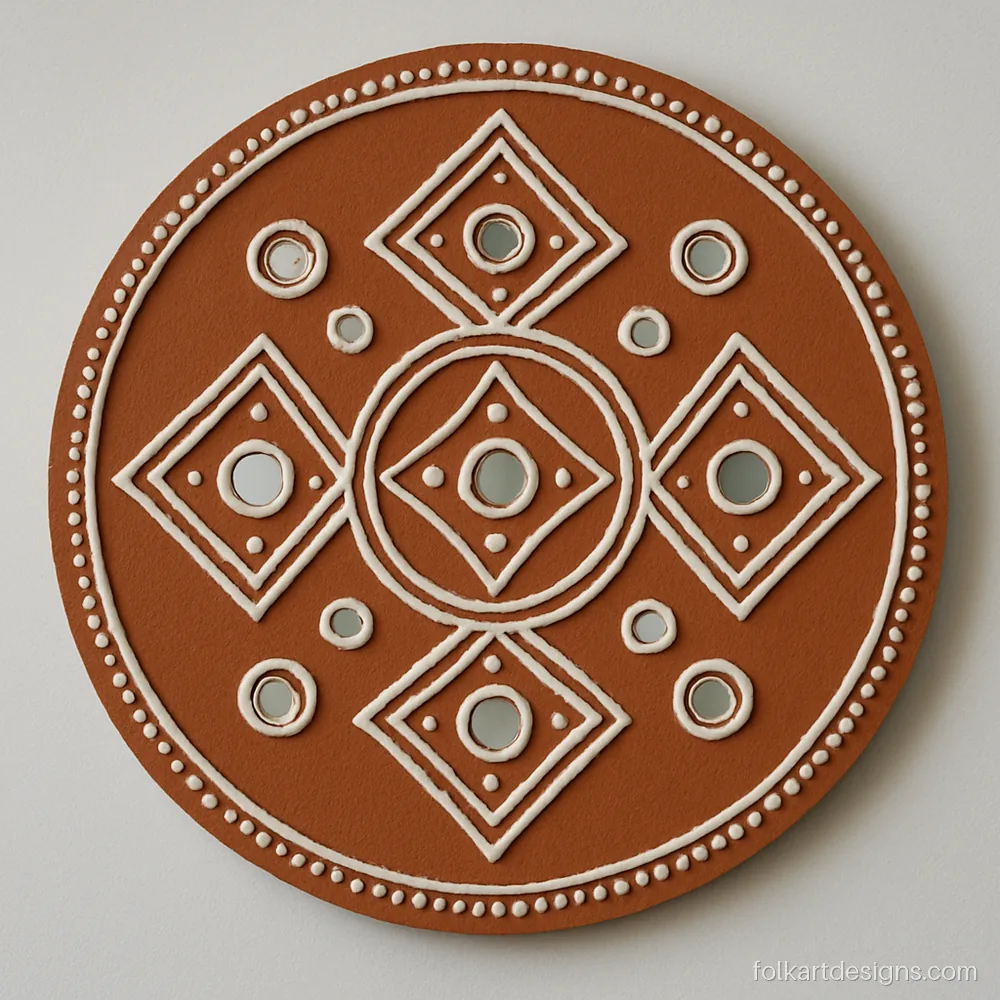
Classic white clay lines with small mirrors catch light from every angle. Simple mirror work wall decoration for any entrance.
Artist tip Roll clay into thin snakes about 3 mm thick for neat, even lippan lines.
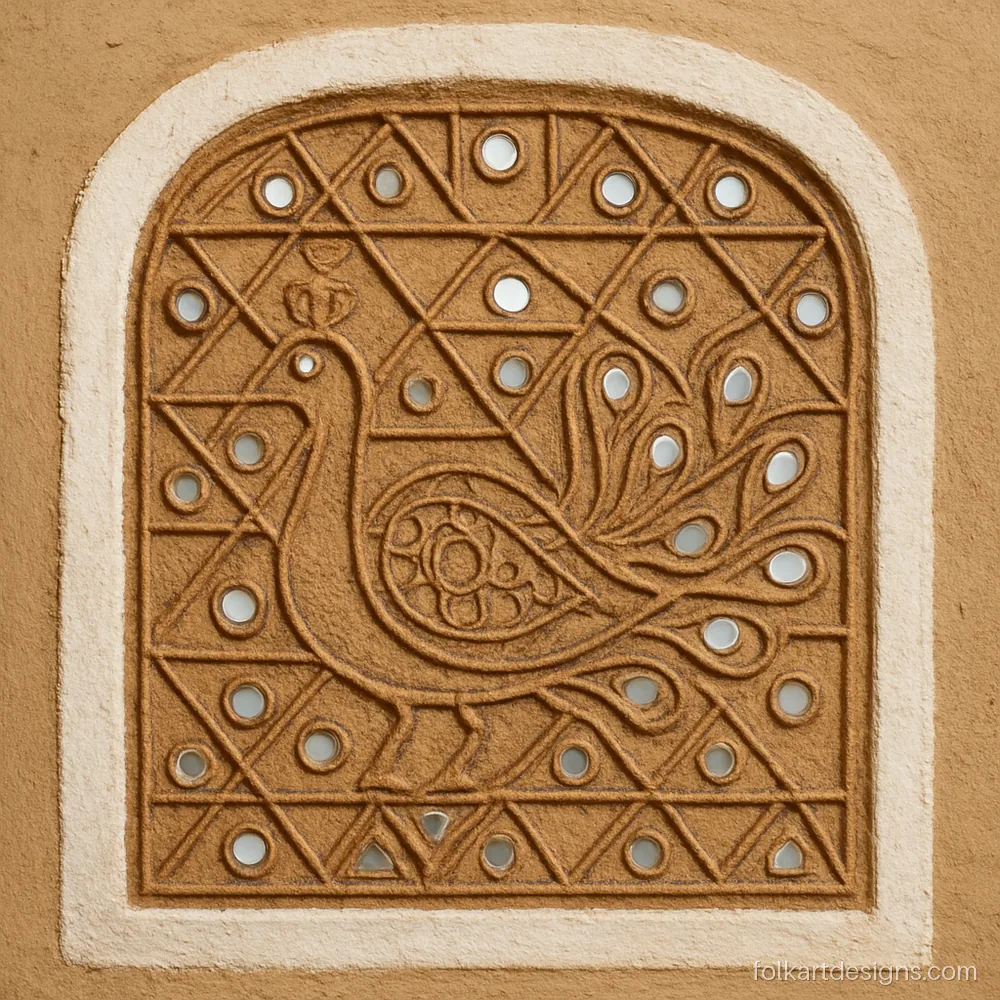
Earthy relief lines and mirrors on a mud plastered wall show where the craft began. Great reference for mud art designs at home.
Artist tip On a real wall, prime first and use air-dry clay with a little white glue for grip.
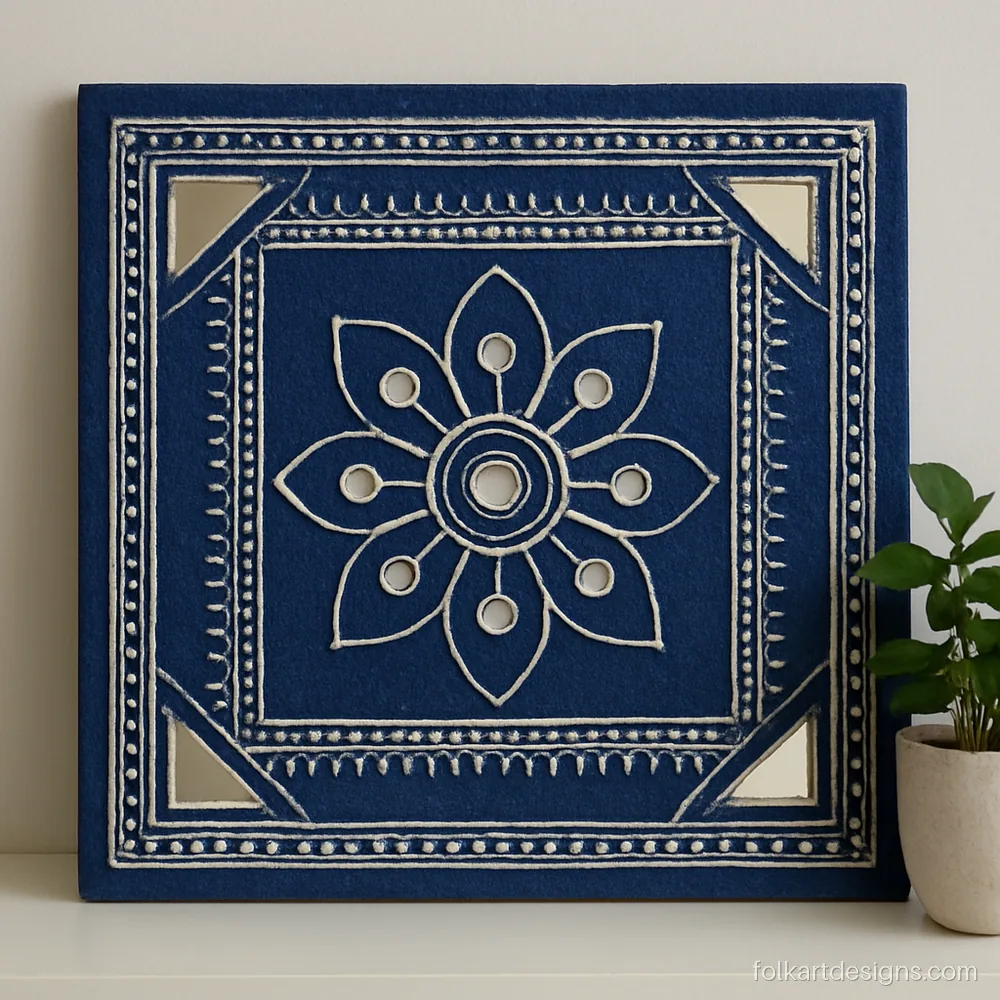
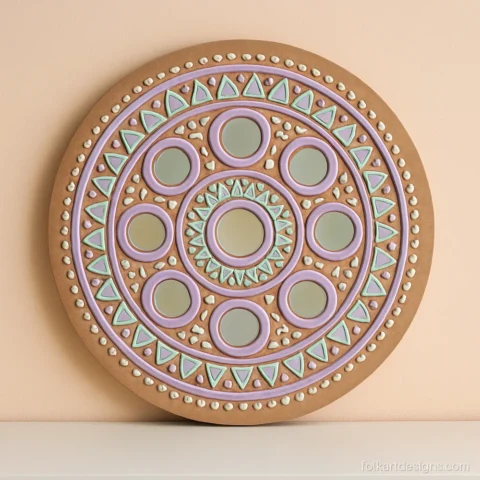
Modern lippan often adds paint behind the clay. This indigo board looks fresh and bold in a modern flat.
Artist tip Paint the MDF and let it dry fully before pressing on clay, or the paint will lift.
What Is Indian Folk Art?
Indian folk art is the traditional art made by village and tribal communities and passed from parents to children. It was never made for galleries. This traditional Indian art decorated homes, festivals, clothes and daily objects, which is why it tells you so much about Indian art and culture in each region.
Most folk and tribal art shares a few things:
- Local materials: mud, cow dung, rice paste, chalk, plant dyes and metal.
- Repeated motifs: trees, birds, animals, fish, flowers and the sun.
- Flat, bold forms: outlines filled with lines, dots and patterns rather than shading.
- Meaning: every shape tells you about the land, the season or the community's way of life.
Many regions also have floor and wall traditions such as rangoli, mandana and aaipan, the red and white floor art of Uttarakhand. On this site we focus on the forms listed below.
Tribal Art Painting: Warli, Sohrai, Gond and Bastar
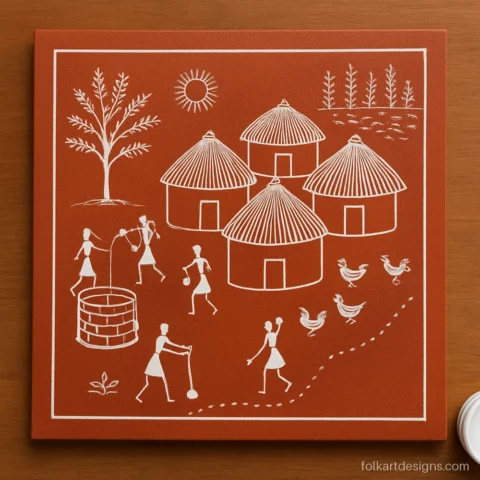
Much of India's tribal art began on mud walls. Warli comes from the Sahyadri hills near Thane and Palghar, sohrai from the Hazaribagh area of Jharkhand, gond from Madhya Pradesh and Bastar wall painting from Chhattisgarh. Open the warli art, sohrai art and gond art galleries for more.
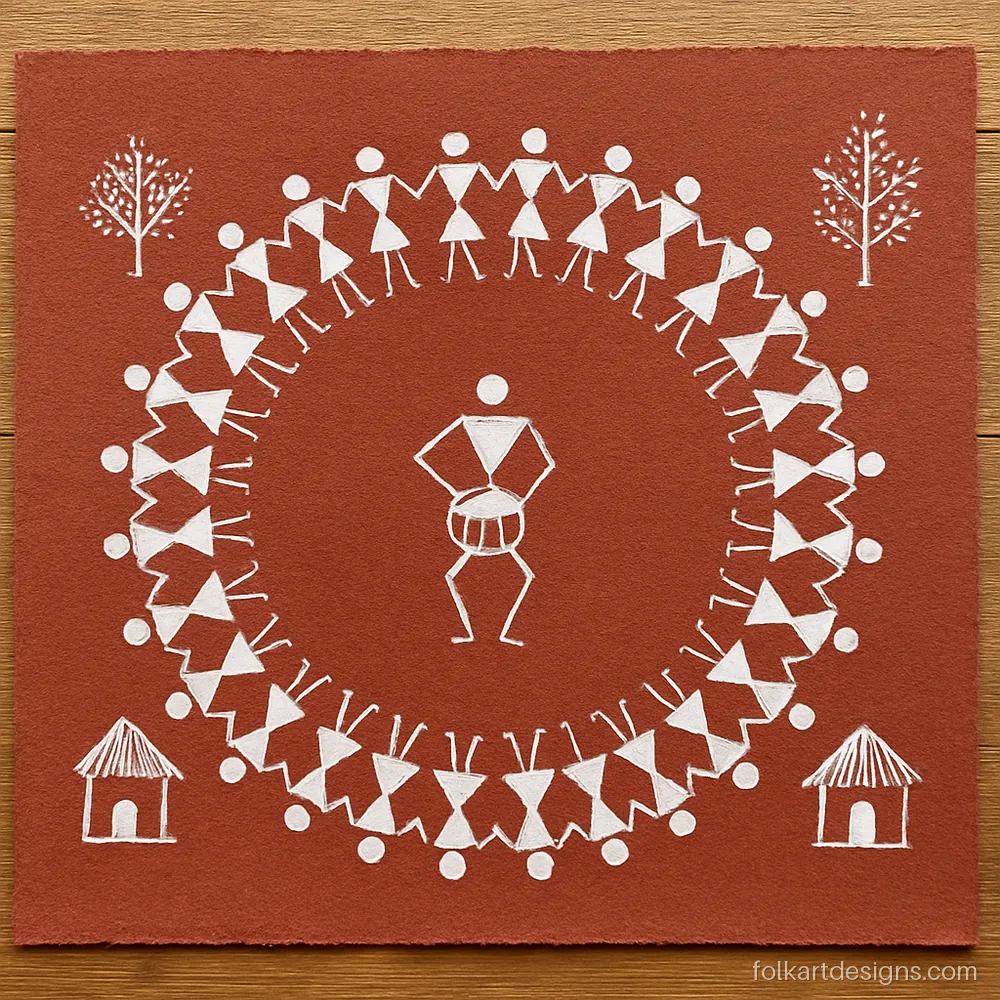
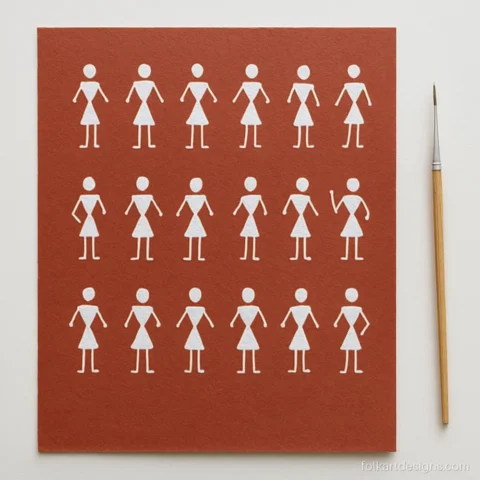
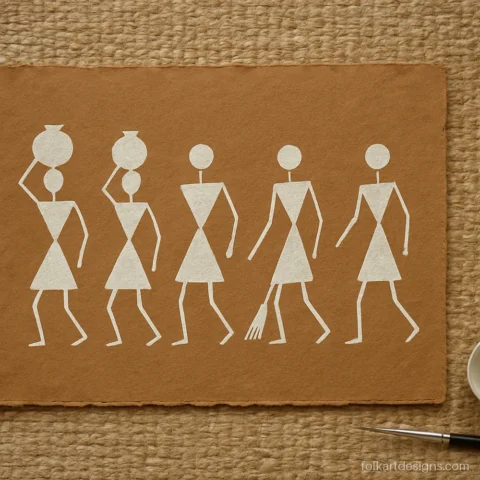
Rings of joined triangle figures dance around a musician, the best-loved Warli theme. Great for school projects.
Artist tip Draw two joined triangles for each figure and keep all of them the same size.

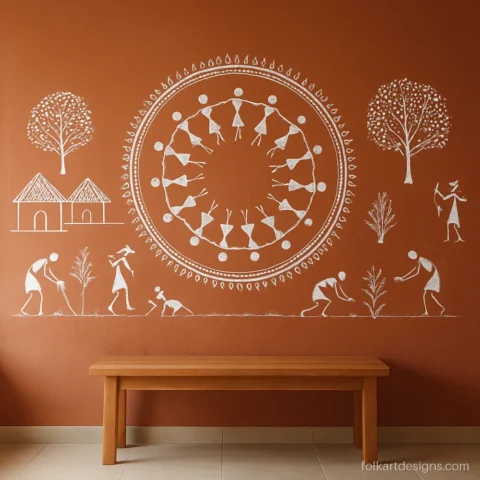
Farming, cooking and trees fill a whole wall in white lines. Hand painted walls in Warli suit verandahs and schools.
Artist tip Use a 0 or 1 size liner brush and slightly thinned white acrylic for smooth wall lines.
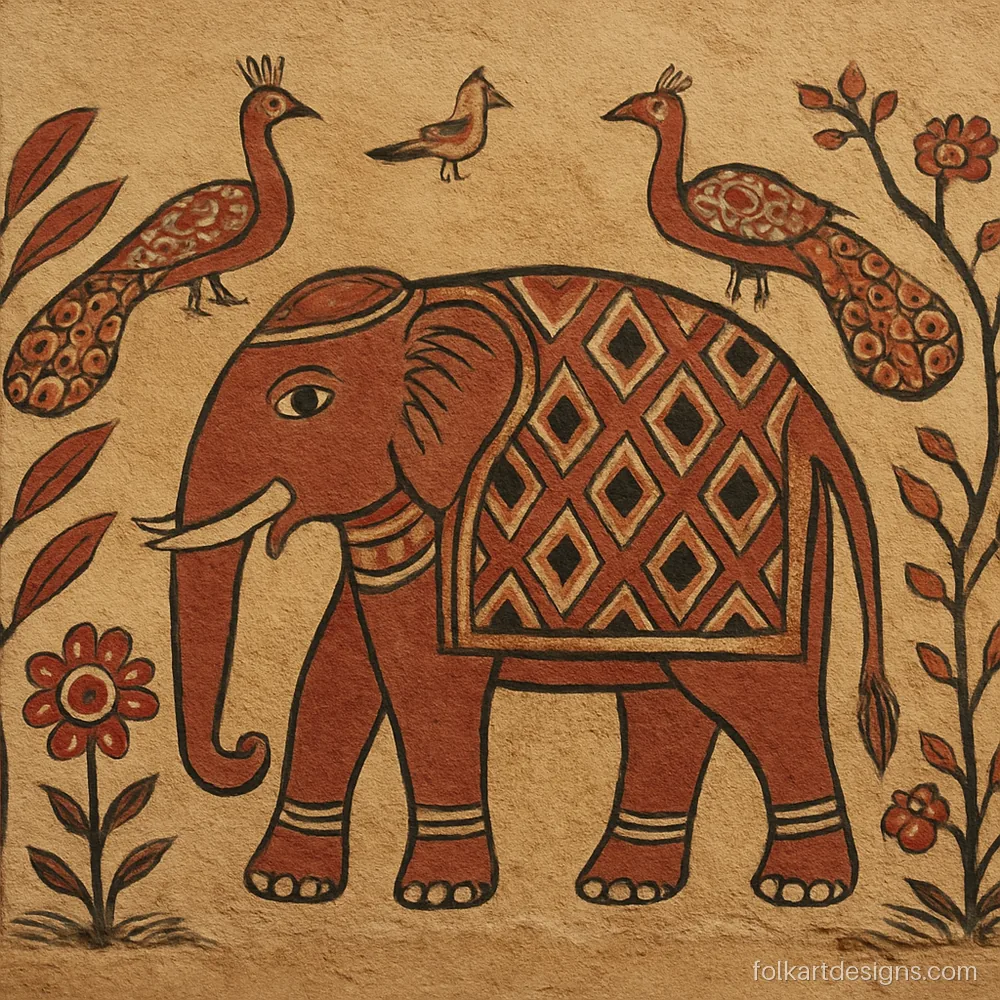
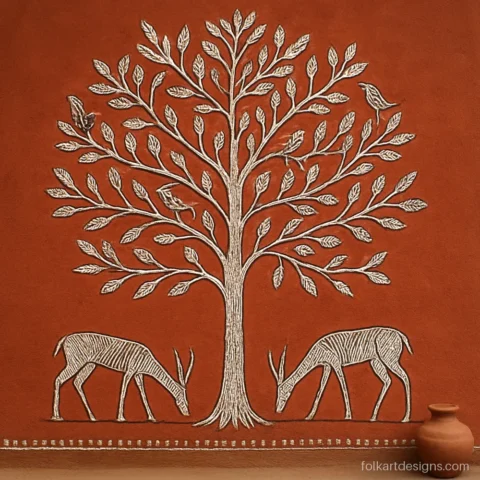
Women of the Hazaribagh area paint walls like this around harvest time. The big animal at the centre with plants around it is a typical sohrai layout.
Artist tip Lay a flat coat of red earth first, let it dry fully, then outline in black.
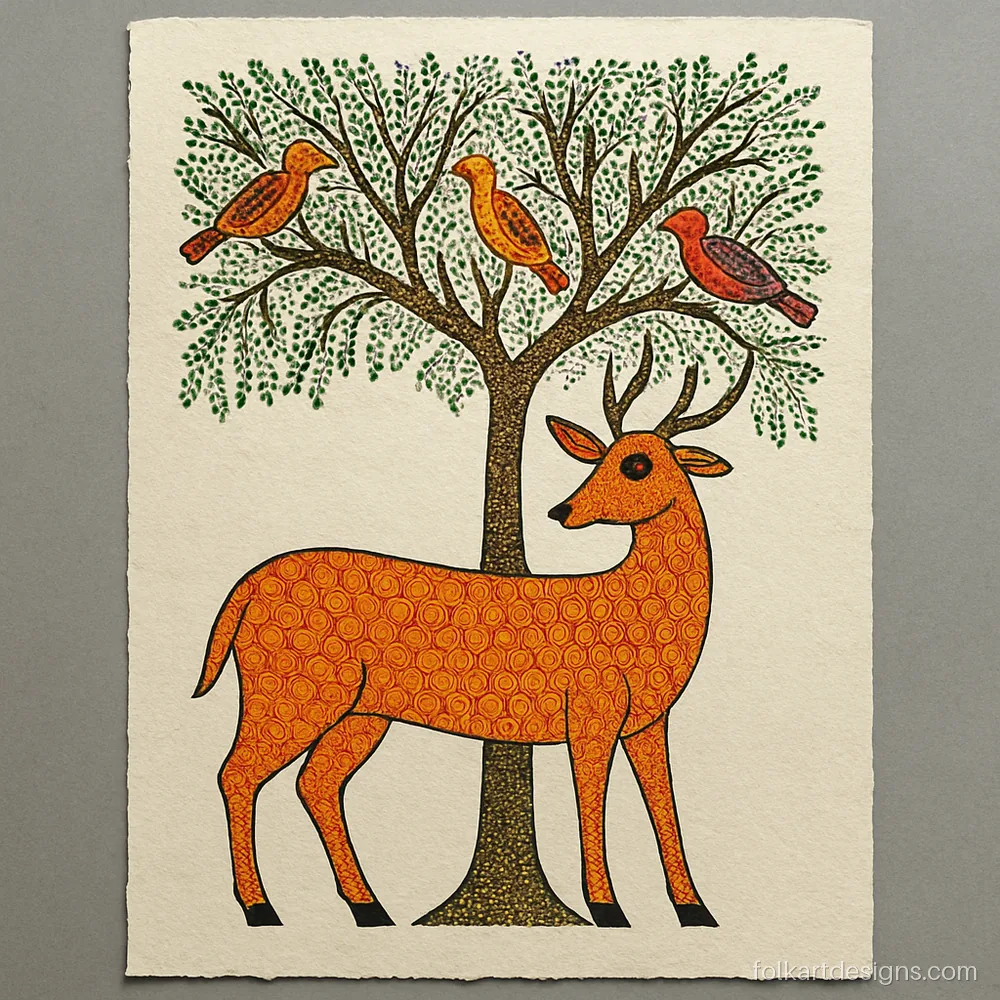
Every shape is packed with dots, dashes and fish scale lines. A bright, cute painting for a child's room.
Artist tip Fill one shape at a time and change the pattern for each part of the animal.
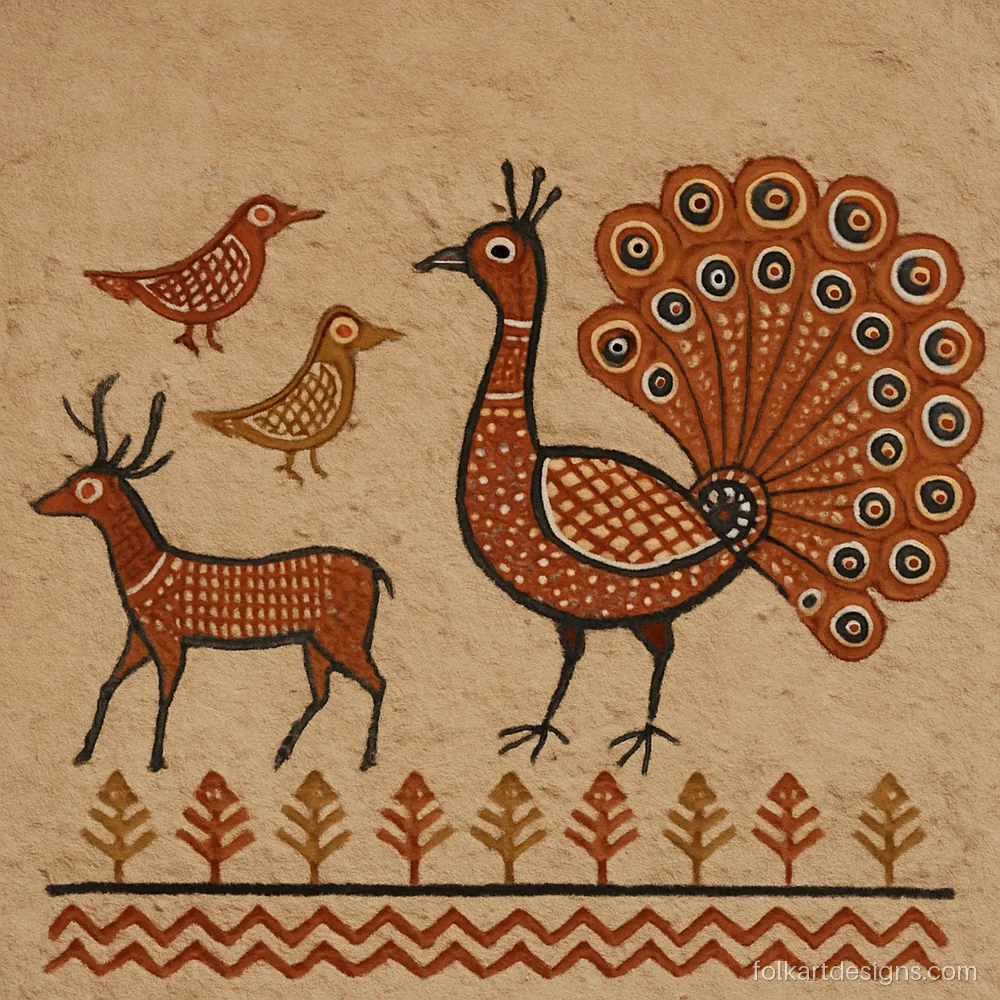
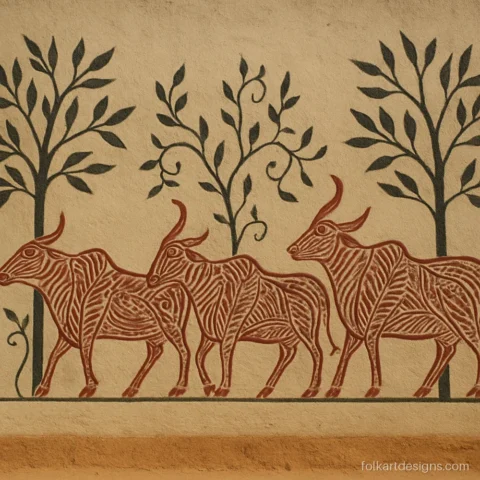
Simple animals and birds painted in earth tones show the tribal art of Chhattisgarh on mud walls.
Artist tip Mix powdered earth colour with a little white craft glue and water for a matte, wall-safe paint.
Madhubani Painting: Maithili Art from Bihar
Madhubani, also called Mithila or Maithili painting, grew up in the villages of Mithila in north Bihar, in districts like Madhubani and Darbhanga, and across the border in Nepal. Women once painted it on walls and floors. Today this Bihar painting is made on paper and cloth with double outlines and no empty space. See the full madhubani painting gallery and our madhubani art designs.
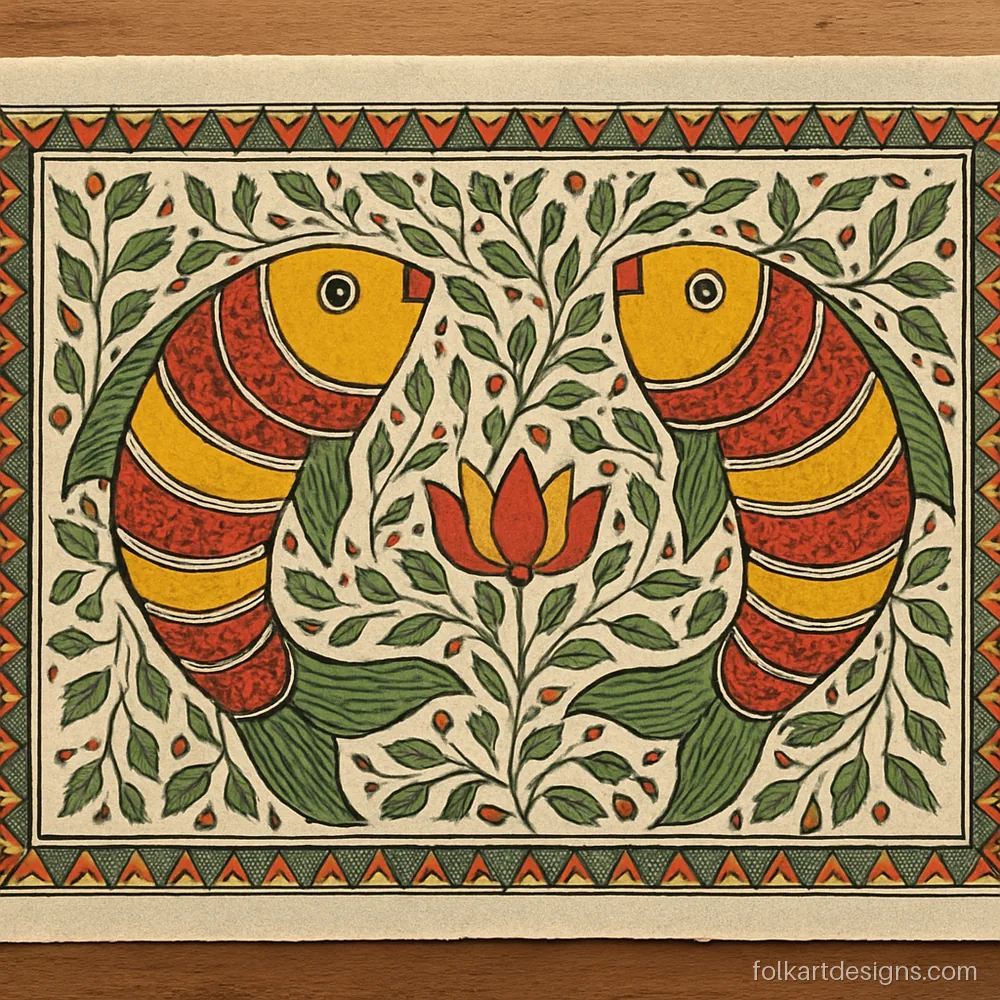
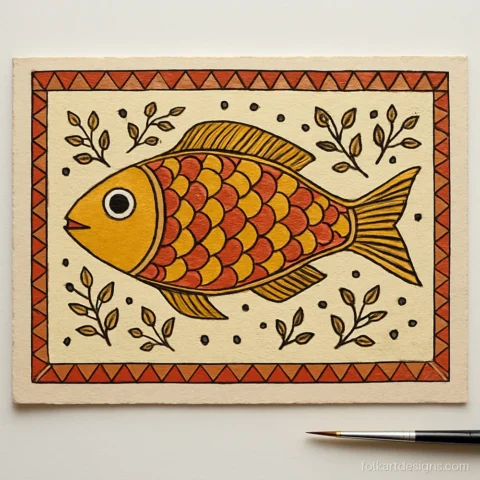
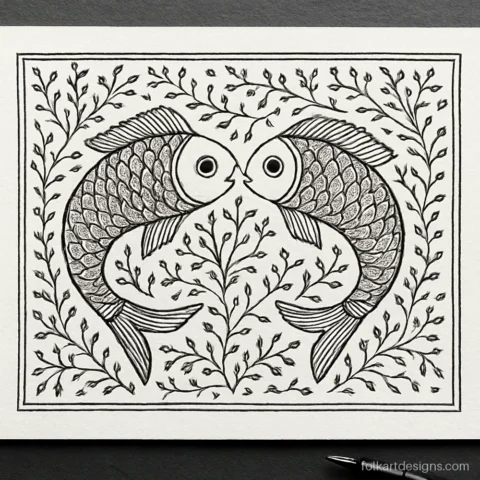
Two fish curving towards each other are the most loved Mithila motif. Bharni style fills every shape with flat, bright colour, so it reads well from across a room.
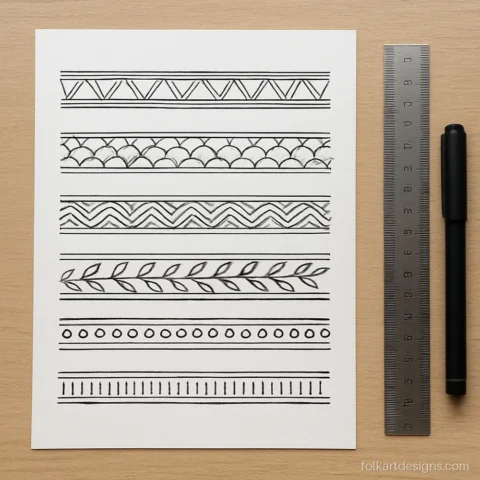
Artist tip Draw every outline twice with a small gap, then fill the gap with tiny lines.
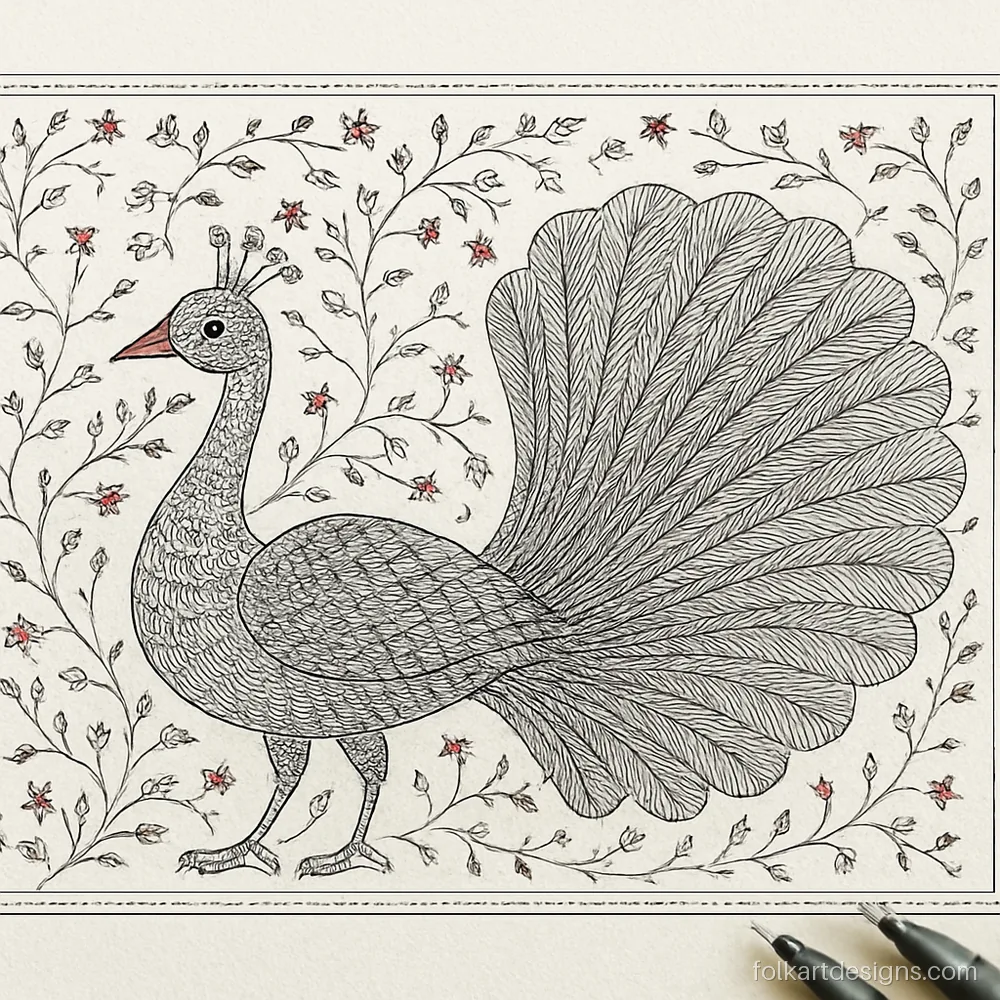
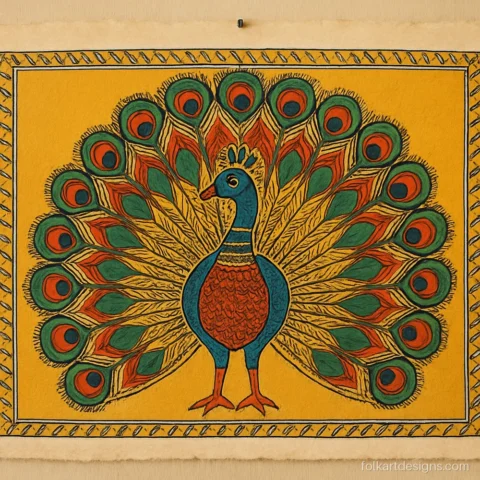
Kachni style uses only lines, no solid fills. One or two colours and patient hatching give this peacock its rich texture.
Artist tip Use a 0.3 mm pen for hatching and a 0.8 mm pen for the double outline.

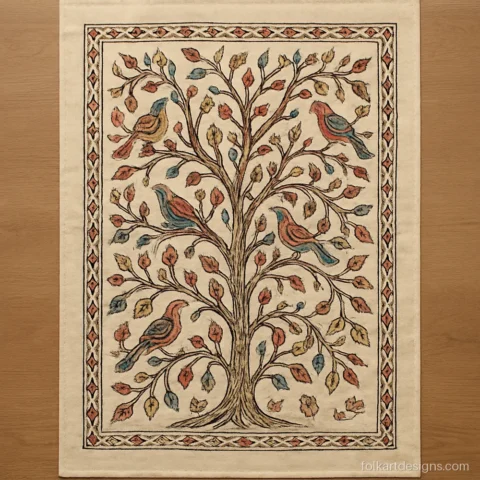
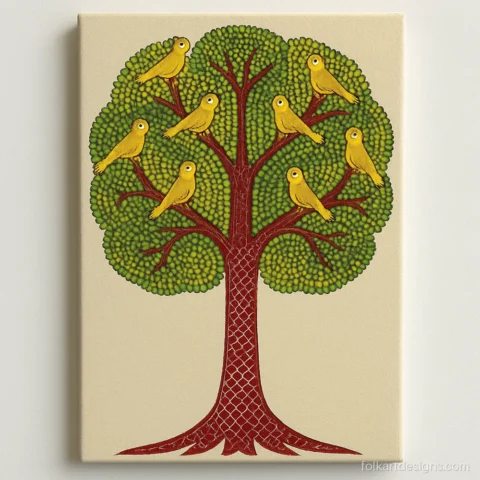
The tree of life fills a tall piece neatly, and each branch makes room for a bird. Natural colours on cloth give it a soft, earthy finish.
Artist tip Paint the trunk first, then fit birds and flowers into the spaces between branches.

Godna uses rows of small repeated marks, like a tattoo pattern. The elephant shape is simple, so the marks do the work.
Artist tip Keep each row of marks the same size; slow, even rhythm matters more than speed.
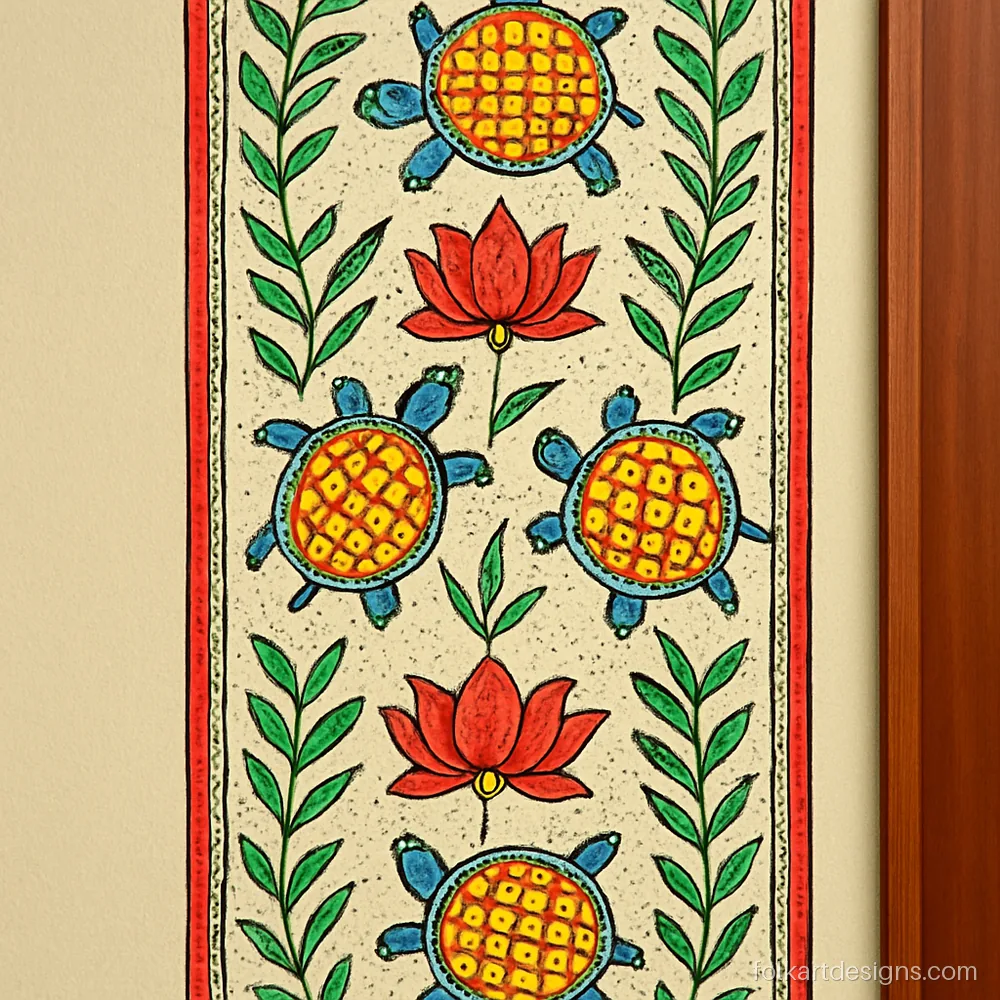
Hand painted walls are where Mithila art began. Turtles and lotuses in a long border make a cheerful frame around a door or window.
Artist tip Mark the border with chalk first and paint motifs in repeats so the spacing stays even.
Kalamkari and Indian Textiles: Handmade Painting You Can Wear
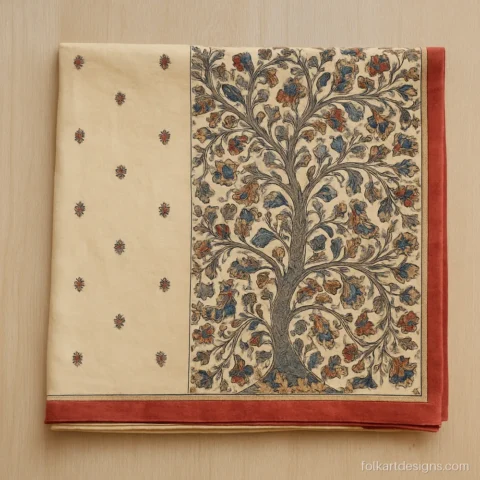
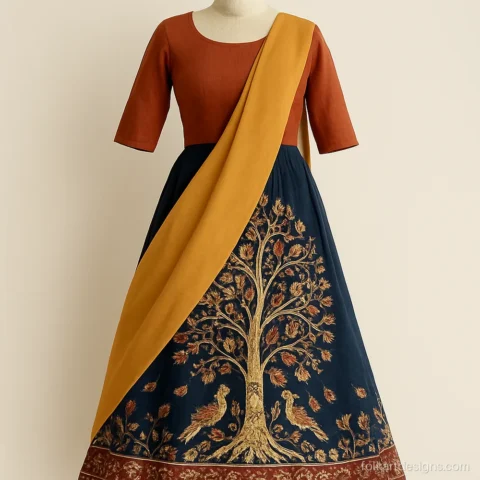
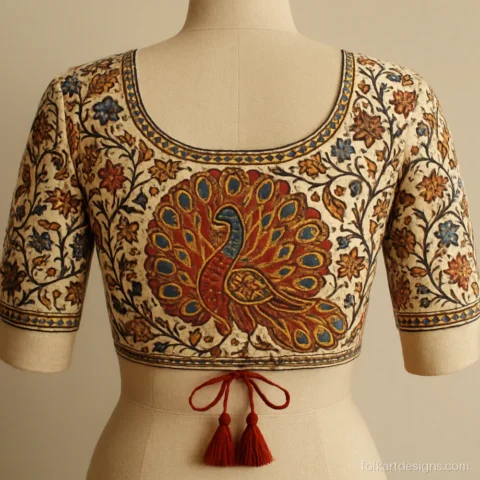
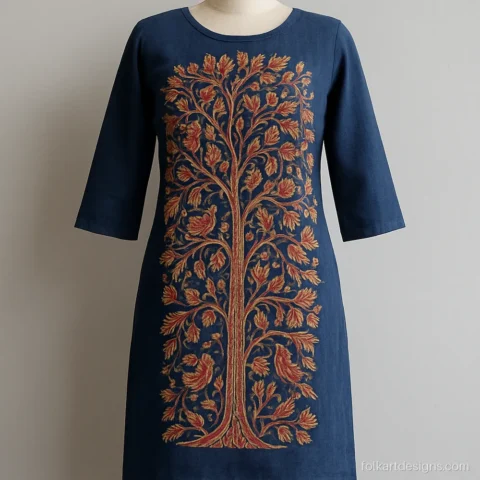
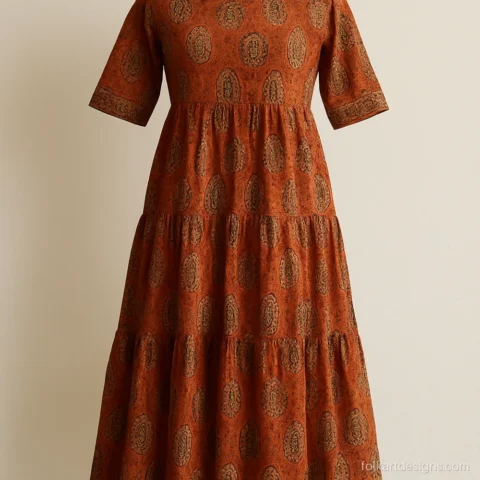
Kalamkari means pen work, and it comes from Andhra Pradesh. Artists either sketch it freehand using a bamboo kalam or stamp it with carved blocks, always in plant and mineral dyes. Browse kalamkari art and kalamkari sarees.
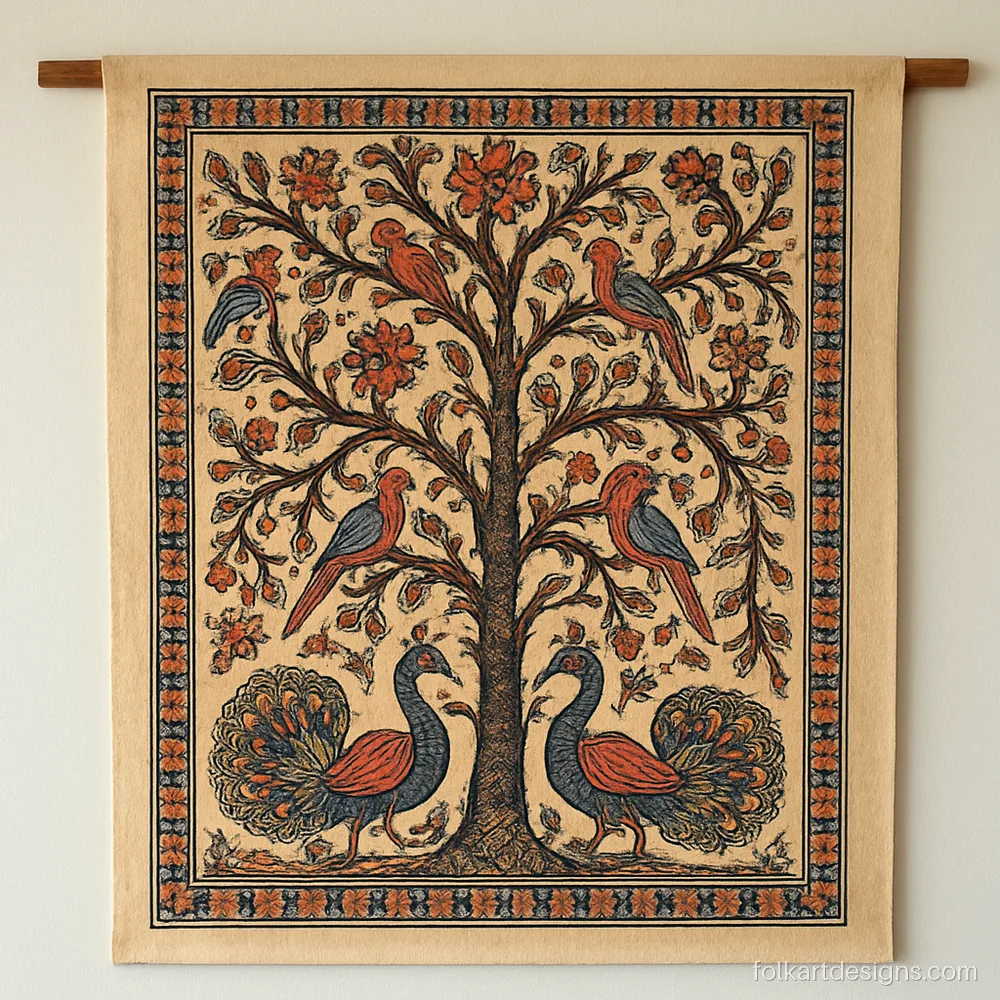
A tree of life with birds and peacocks fills the whole cloth. A rich handmade artwork for a dining room wall.
Artist tip Hang cloth art on a wooden rod and keep it out of direct sun to protect natural dyes.
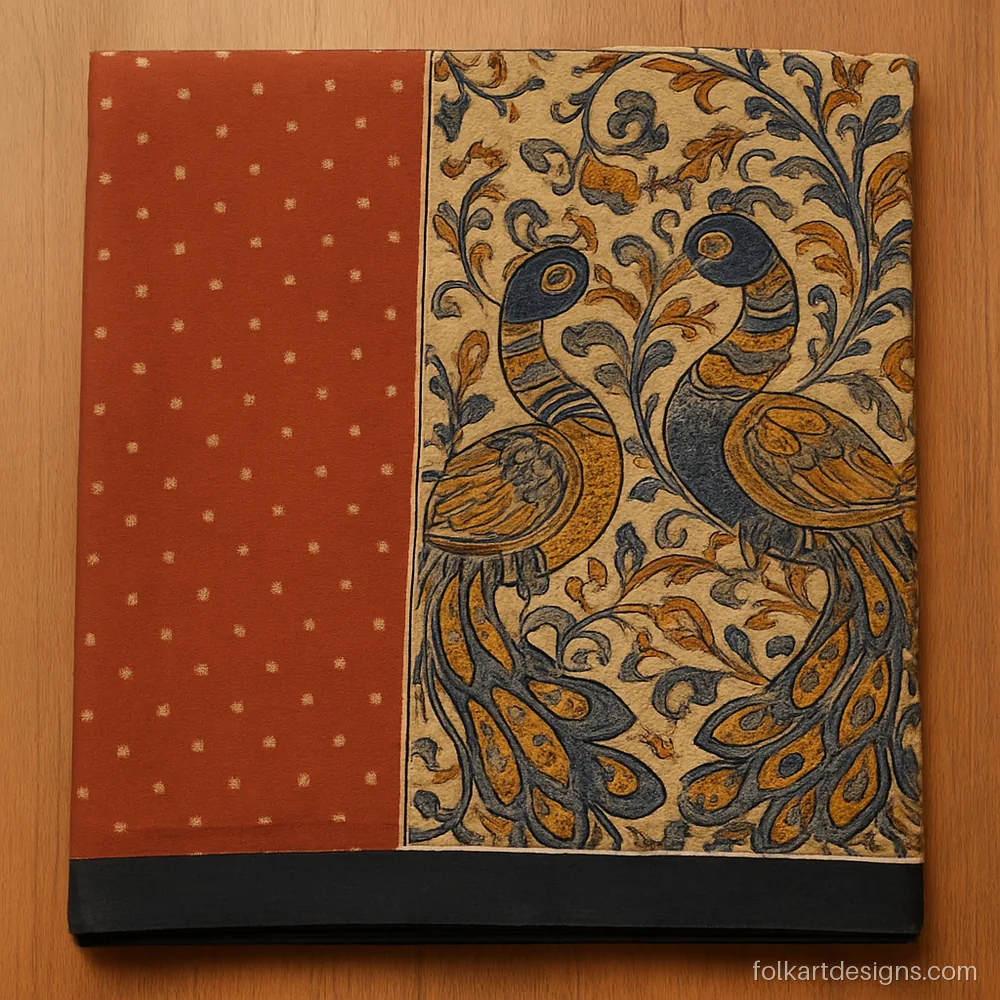
A peacock pallu and fine border make this saree a favourite for work and festivals alike.
Artist tip Wash it alone the first time in cold water, then dry it in shade.
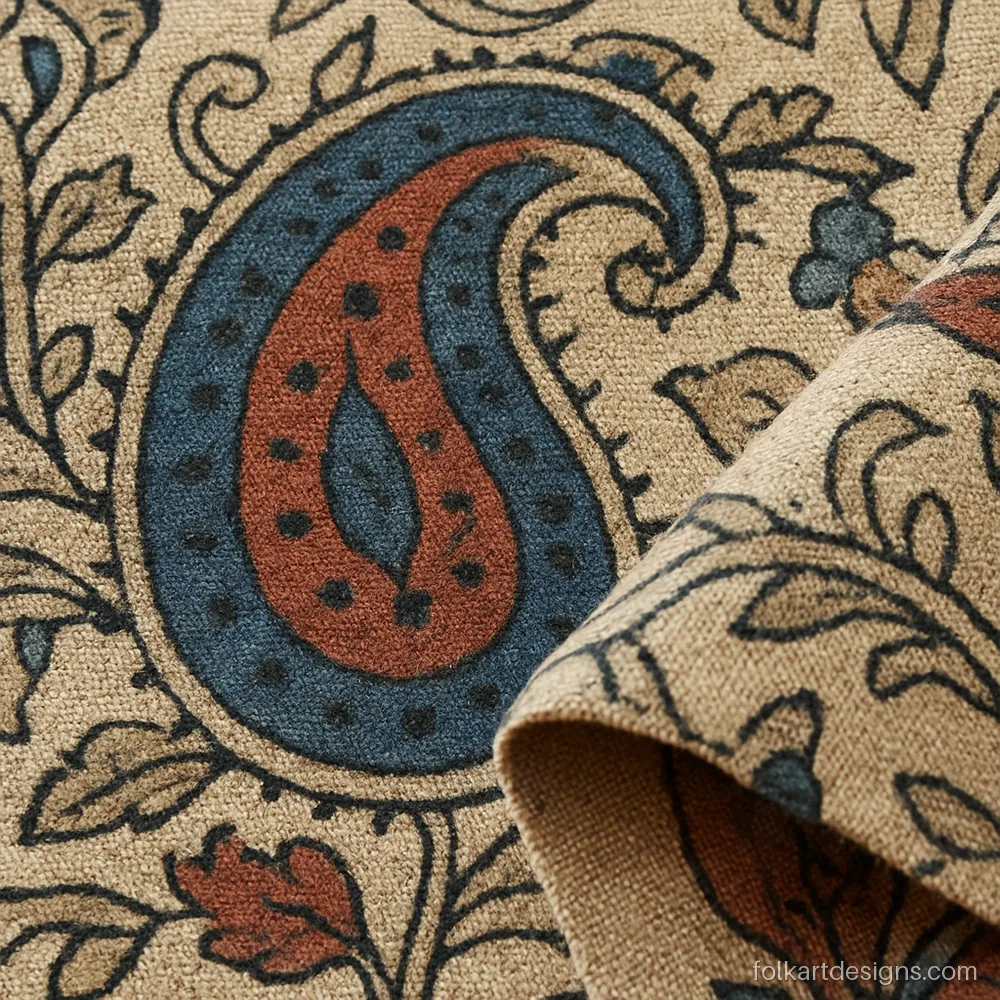
Look closely: wavy pen lines and colour that bleeds a little into the weave show the cloth is drawn, not screen printed.
Artist tip Flip the cloth; on real kalamkari the colour shows strongly on the back as well.
Indian Art Paintings of the East: Pattachitra, Manjusha and Kalighat
Odisha painting, Bihar's manjusha and traditional Bengali art from Kolkata each have a strong look of their own. Pattachitra is known for ornate borders, manjusha for serpent borders in three colours, and kalighat for quick, bold brush strokes. See pattachitra, manjusha art and kalighat painting.
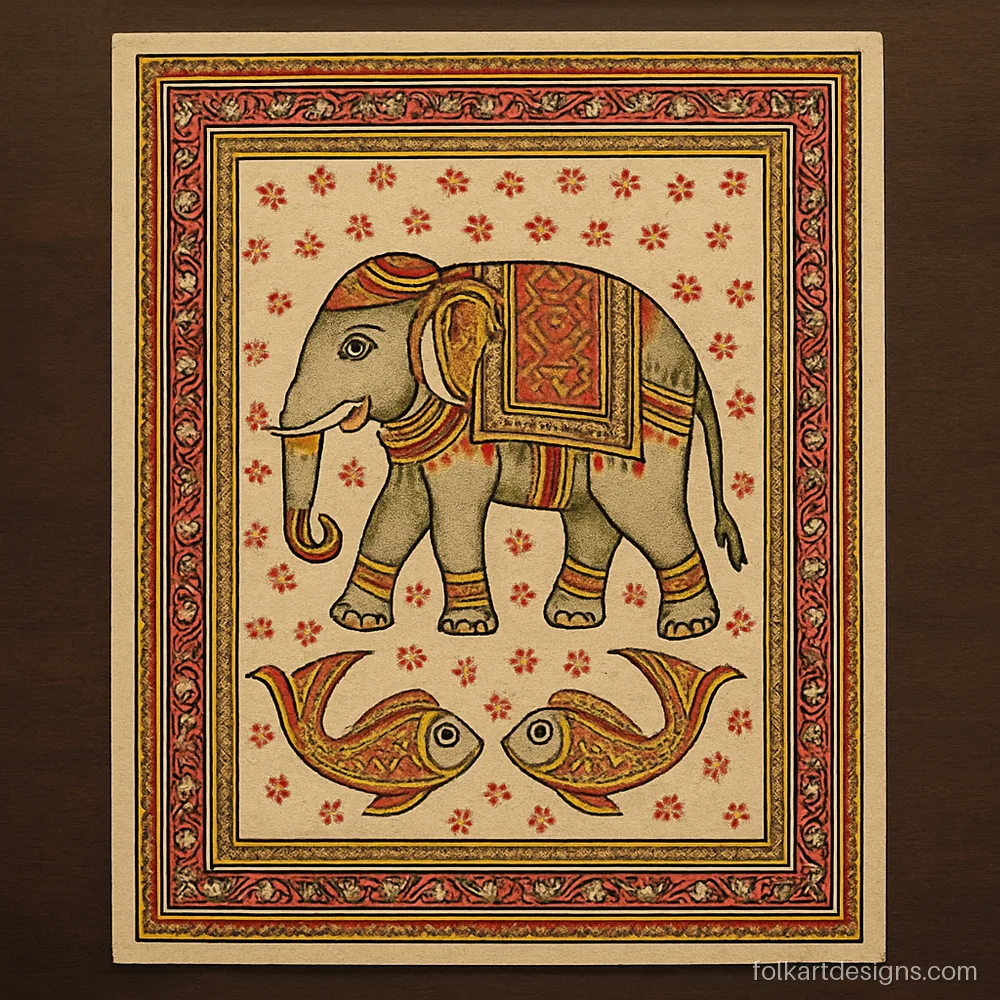
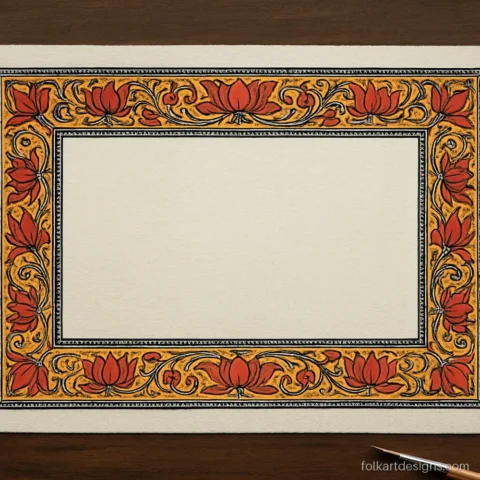
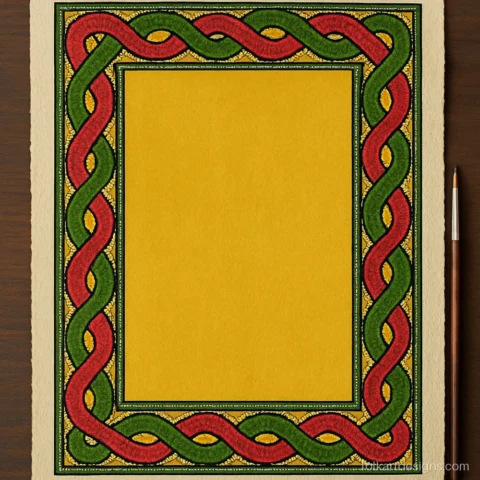
Ornate red and yellow borders frame a single elephant and fish. A traditional art piece with a strong story feel.
Artist tip Draw the border first in pencil with a ruler, then fill the centre.
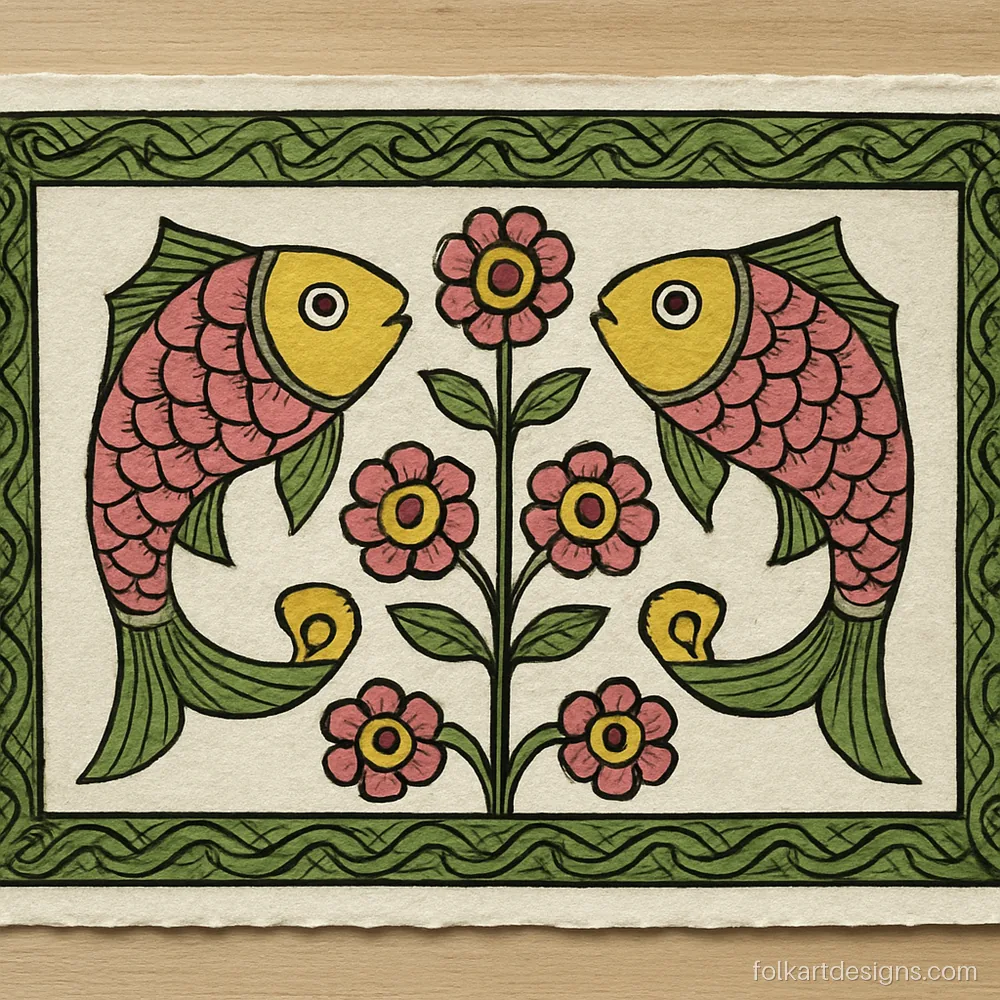
Manjusha from Bhagalpur uses three main colours and a curling serpent border. Fish and flowers inside the frame keep it bright and simple.
Artist tip Stick to pink, green and yellow with black outlines, just as the tradition does.
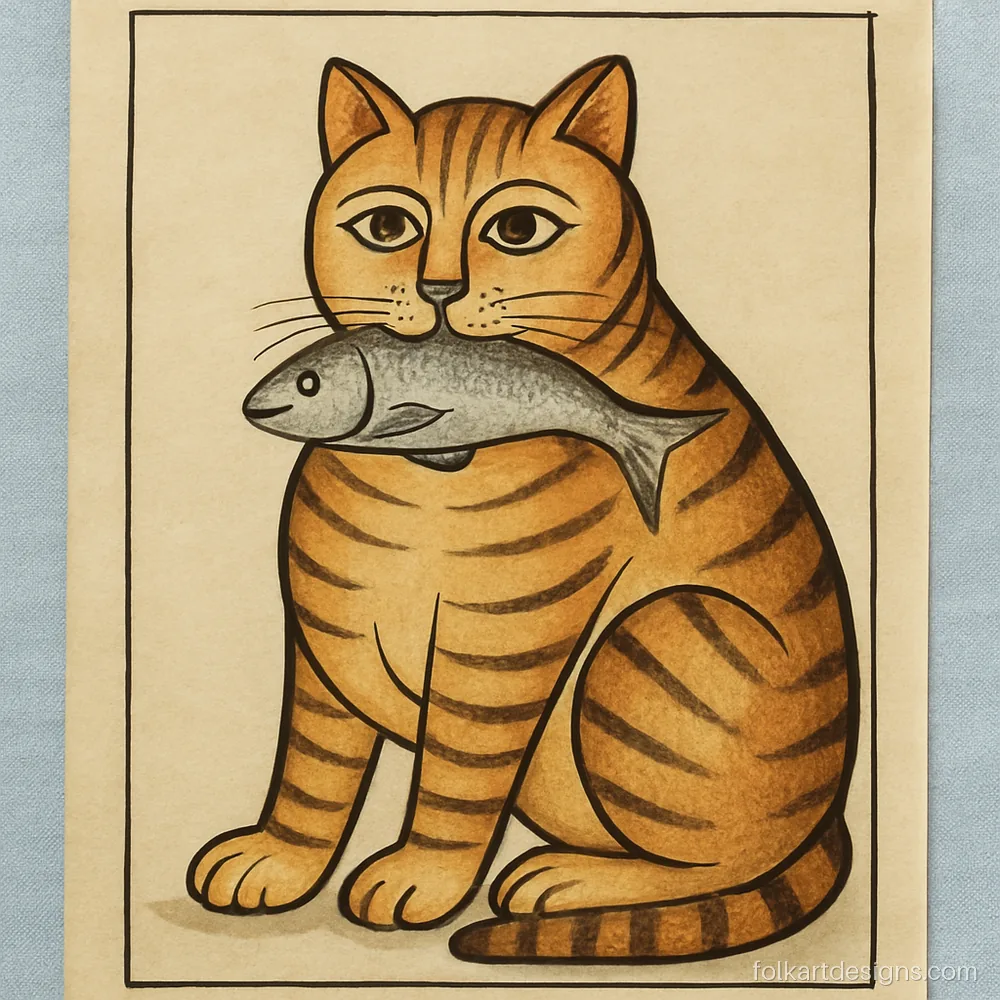
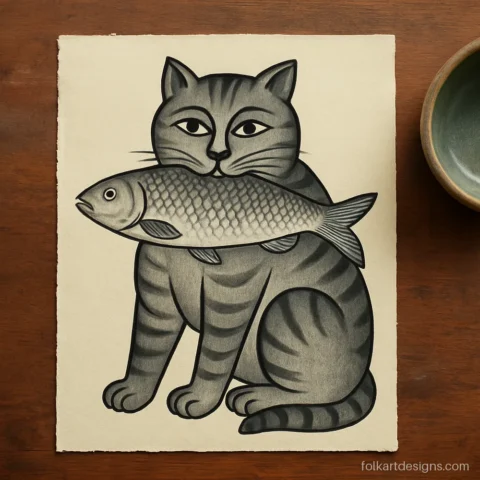
The cat with a fish is a famous kalighat subject, painted fast with a loaded brush. The plain background keeps all the attention on the curve of its body.
Artist tip Load a round brush fully and draw each curve in one stroke; do not go back over it.
Indian Folk Art on Scrolls and Miniatures: Pichwai, Rajasthani, Cheriyal and Kangra
These Indian traditional paintings are made on cloth scrolls and fine paper. Pichwai and phad are traditionally devotional and narrative, but we show only animals, trees, palaces and patterns. Browse pichwai, rajasthani folk art, cheriyal scroll painting and kangra painting.

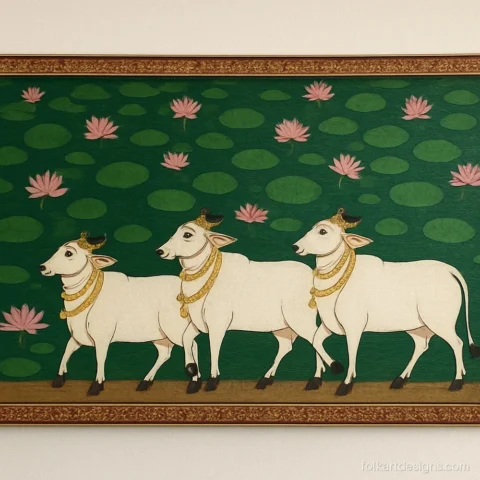
Rows of pink lotuses and gold leaves on deep green make a calm, rich wall piece. See more in our pichwai gallery.
Artist tip Paint lotuses from the darkest pink at the base to almost white at the petal tips.
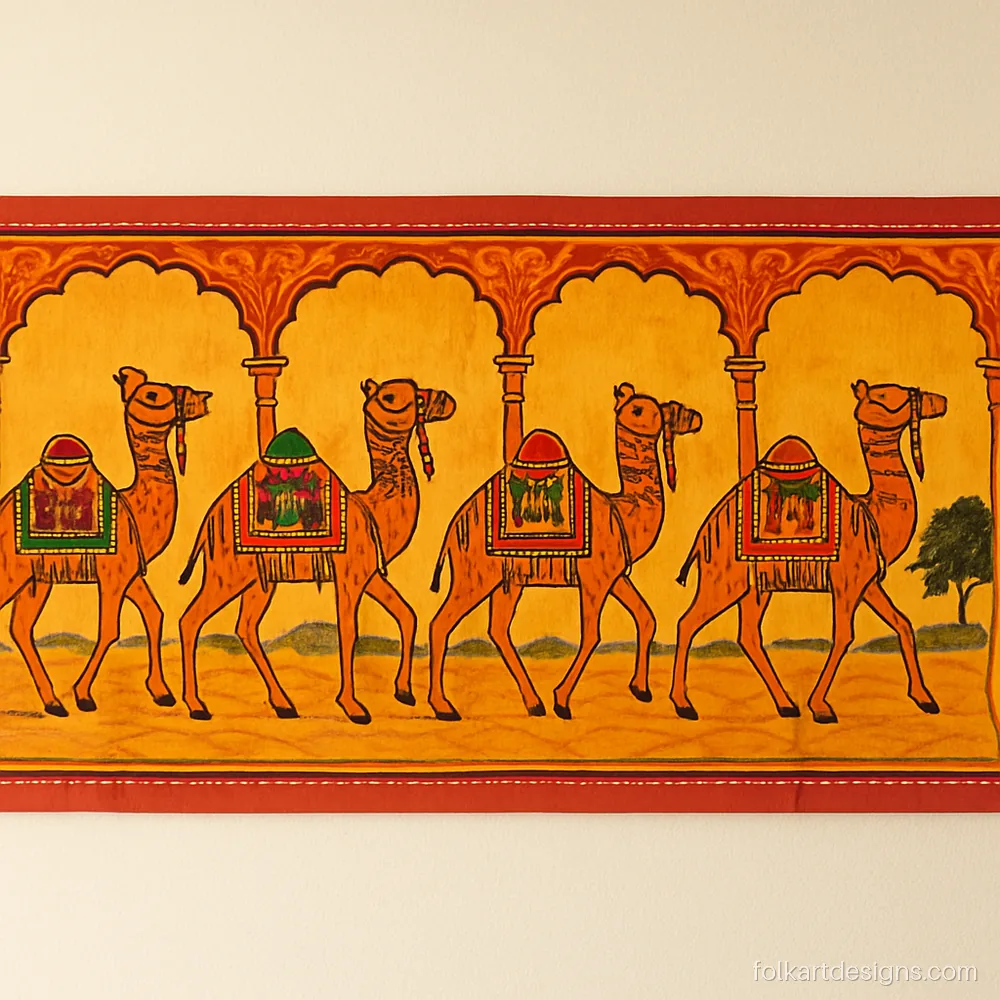
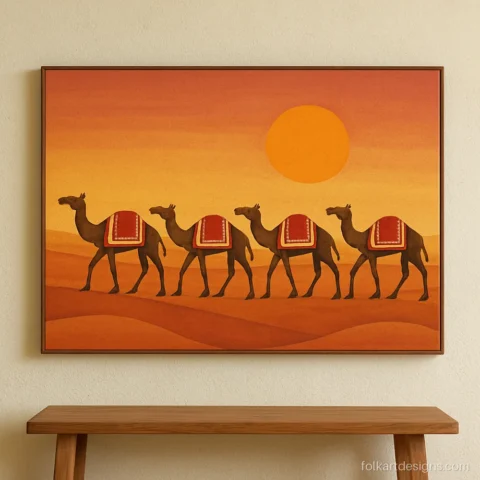
A line of camels under scalloped arches shows the desert in phad-style colours. Hang it over a sofa or bed where a wide piece is needed.
Artist tip Paint the arches in one colour across the whole row first, then add the camels.

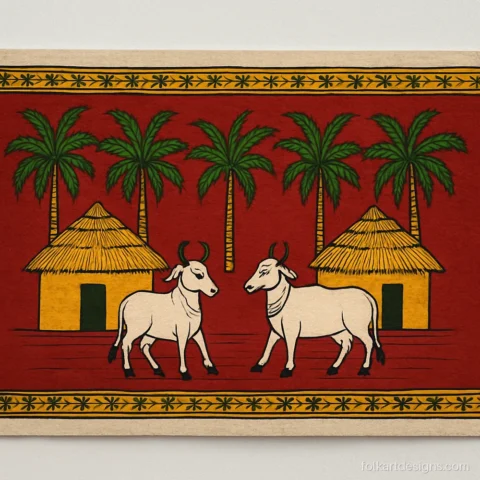
Cheriyal scrolls from Telangana are divided into panels like a comic strip. Here each panel shows a quiet village scene with animals and trees.
Artist tip Divide the scroll into panels with a ruler and pencil before you paint any colour.
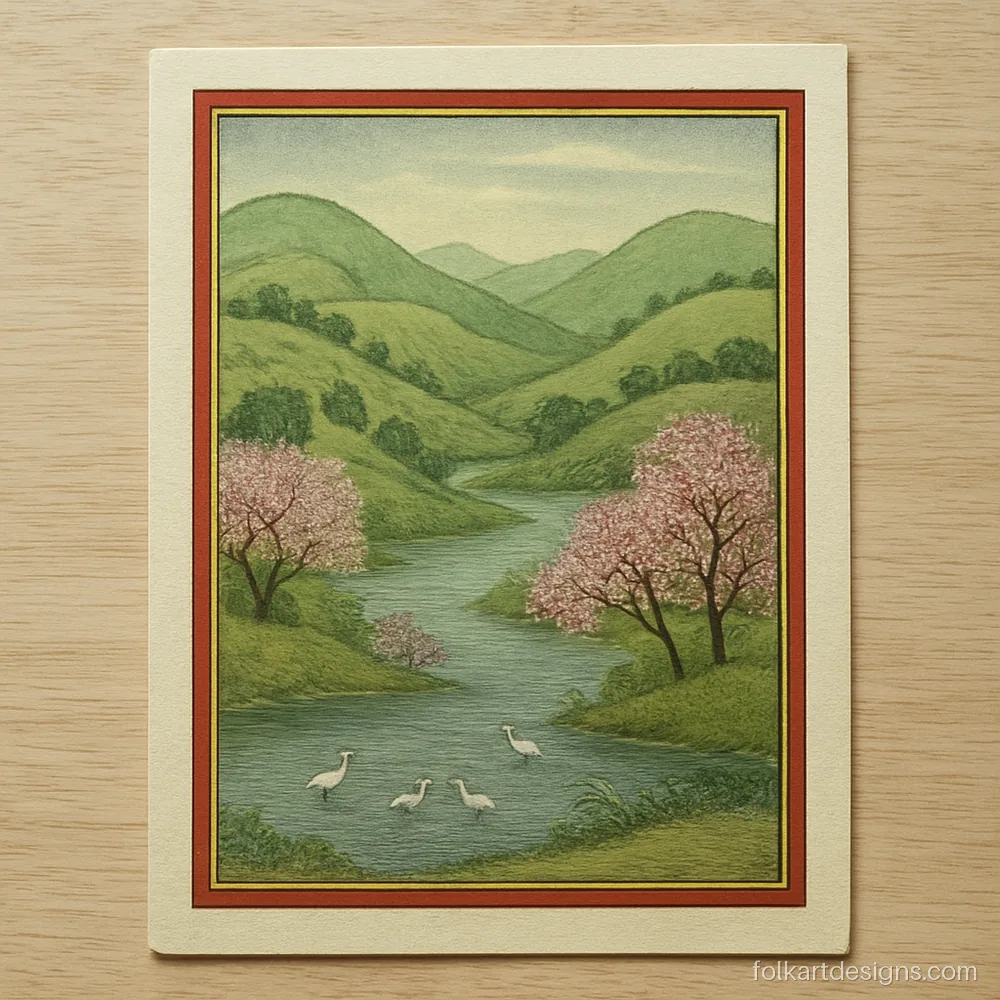
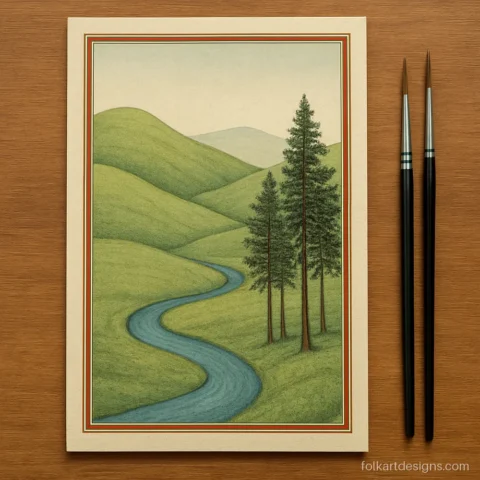
Layers of soft green hills and pink blossoms make a peaceful himachal painting for a study.
Artist tip Work from the sky down and keep the far hills the palest.
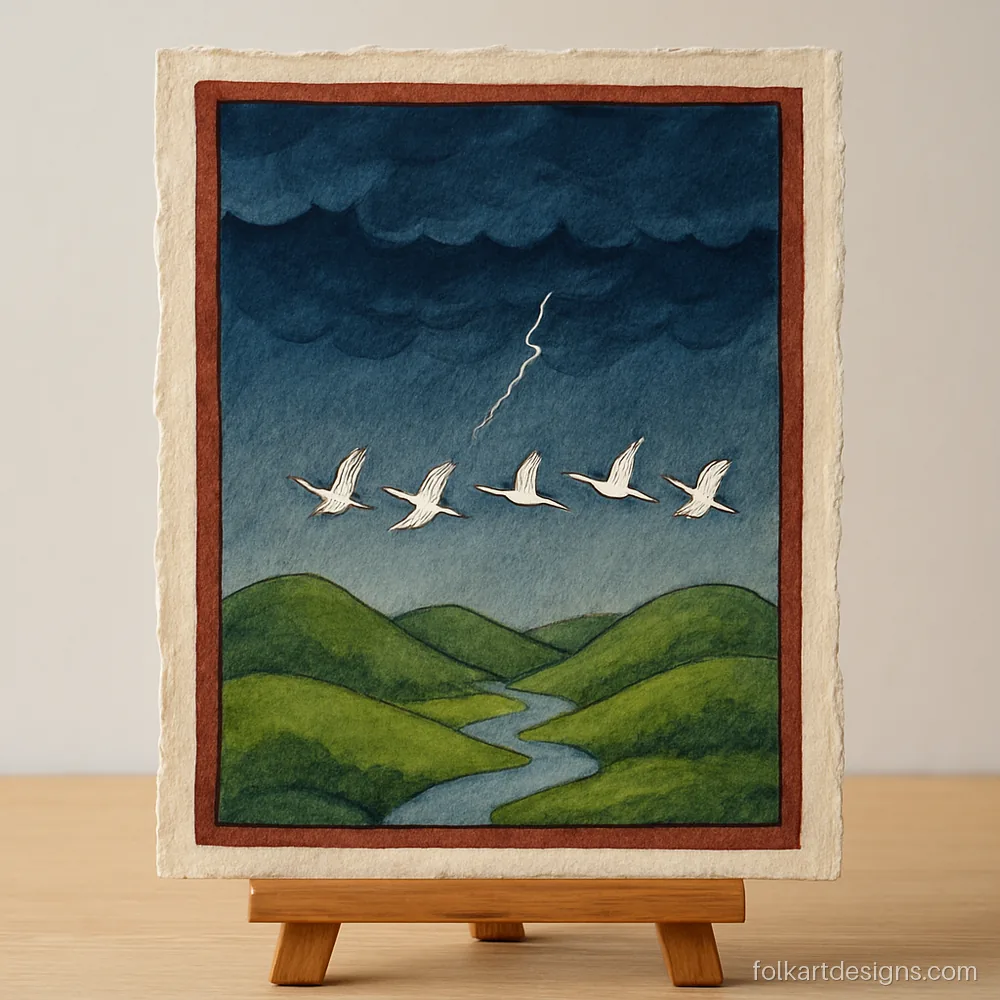
Dark rain clouds and white cranes capture the rainy season so loved by hill painters.
Artist tip Leave a thin line of paper unpainted for lightning instead of adding white later.
Indian Metal Craft: Dhokra, Bastar Iron and Bidri
Indian metal craft has two very different faces. Dhokra is lost-wax casting in brass, made in Bastar, Odisha, Jharkhand and West Bengal, while bidri from Bidar in Karnataka is black metal set with silver. See dhokra art, bastar art and bidri art.
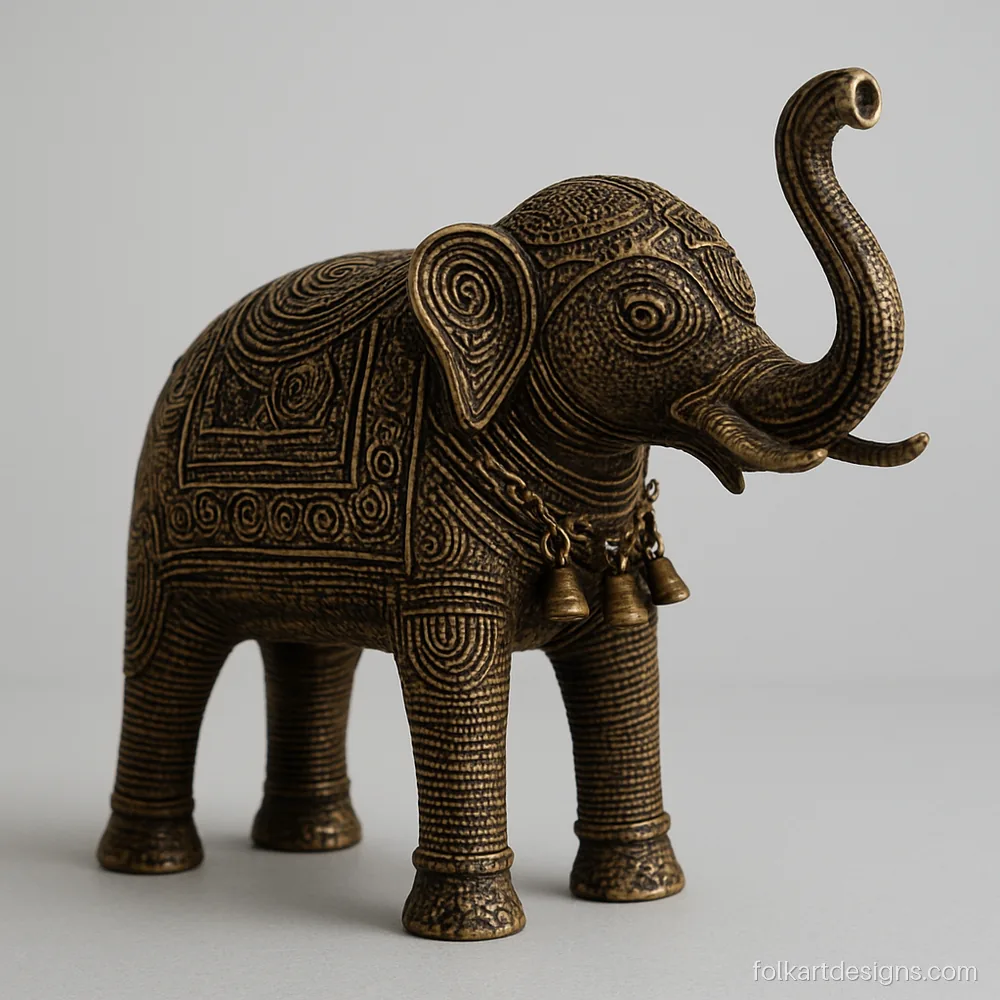
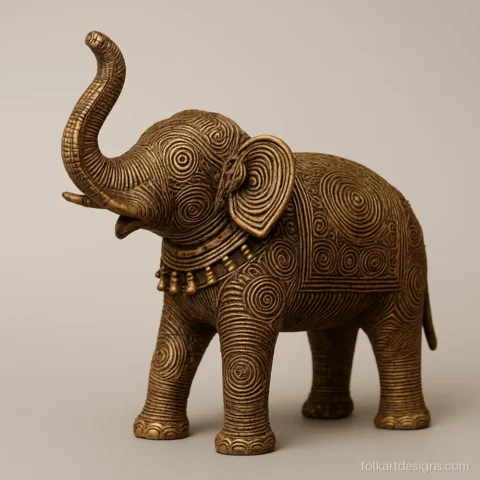
Thin wax threads leave a lace of lines on the metal. A sturdy, handmade art piece for a console table.
Artist tip Clean dhokra with a dry soft brush; avoid water and polish to keep the old finish.
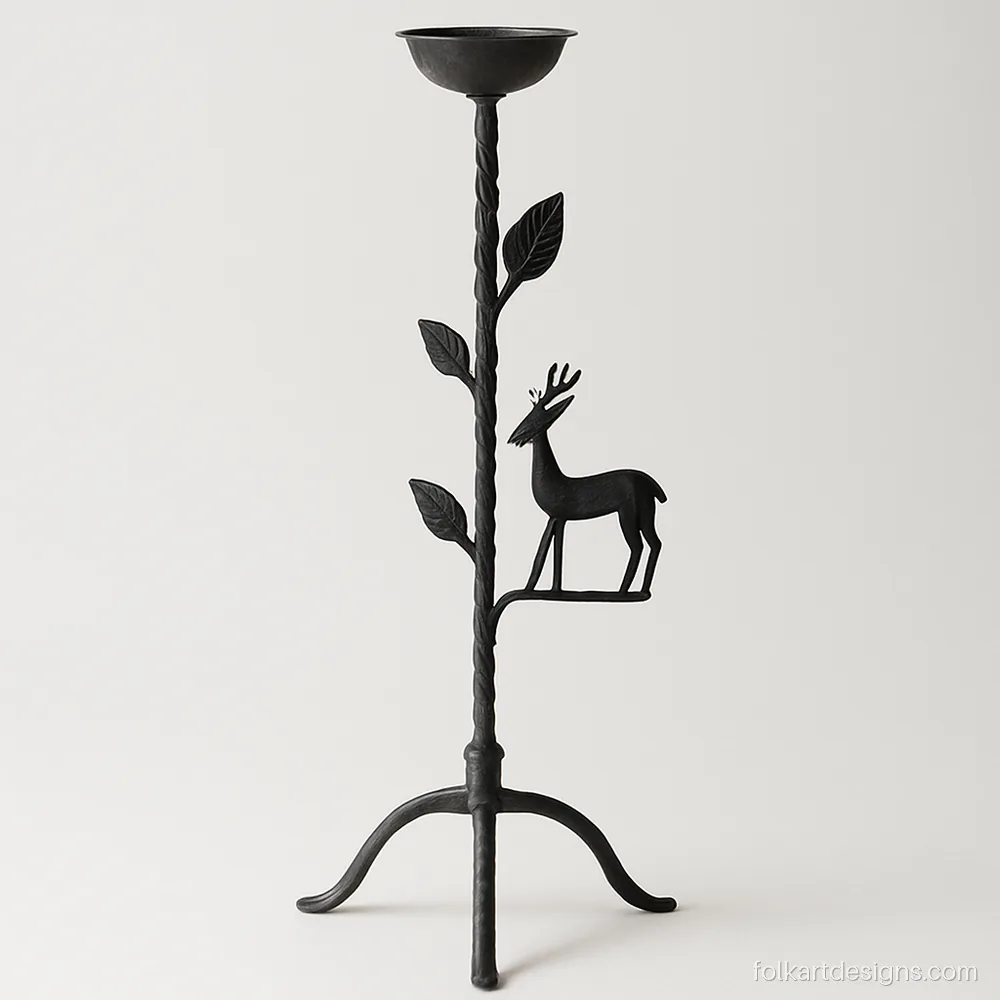
Bastar smiths shape iron into thin animals and leaves. A tall lamp stand like this is pure Chhattisgarh art and craft.
Artist tip Wipe iron pieces with a little oil once a month to stop rust in damp weather.
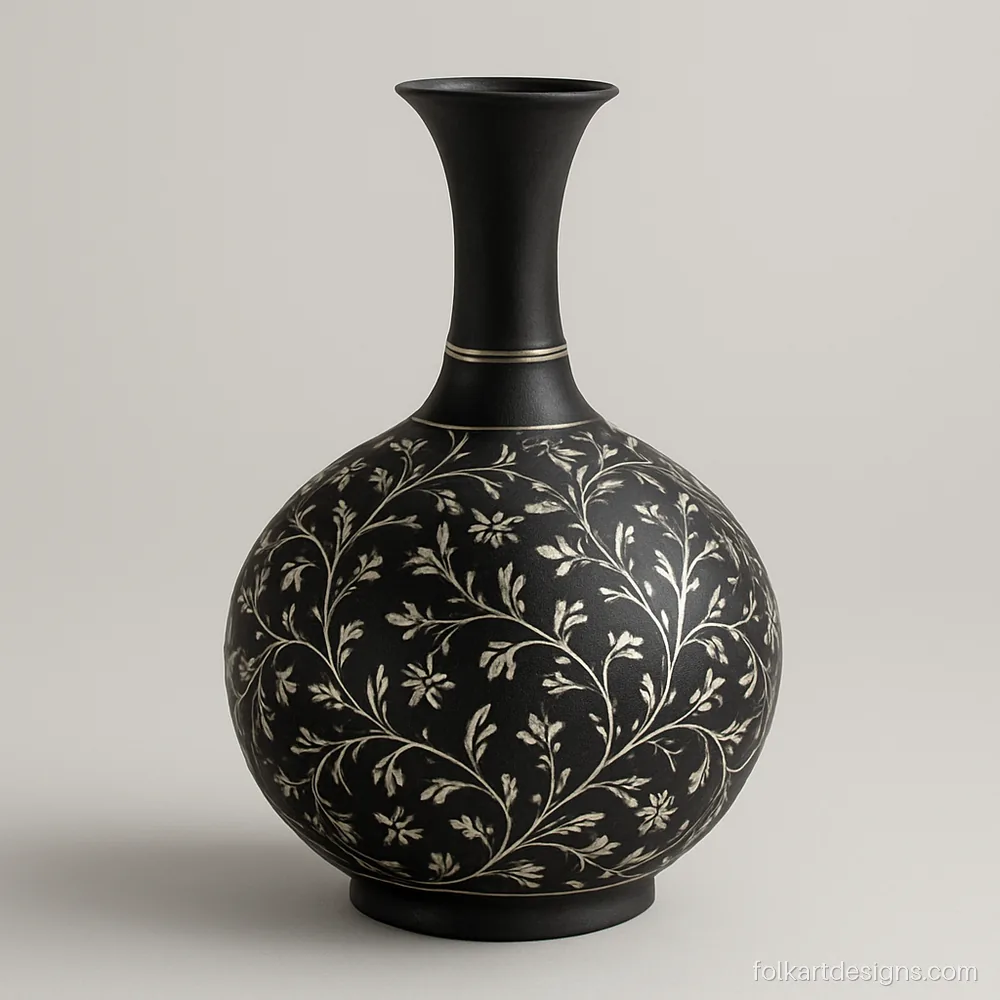
The deep black body and bright silver vines make bidri easy to spot. One piece on a side table is enough to lift a corner.
Artist tip Wipe bidri with a dry cloth only; water and polish spoil the black finish.
Main Indian Folk Art Forms by State
| Art form | State | Medium | Signature motifs |
|---|---|---|---|
| Mandala | Practised all over India | Pen, paint on paper or canvas | Rings, petals, dots |
| Lippan | Kutch, Gujarat | Mud or clay with mirrors | Circles, diamonds, peacocks |
| Warli | Maharashtra | White on ochre or mud | Triangle figures, tarpa dance |
| Madhubani (Mithila) | Bihar and nearby Nepal | Natural colour, acrylic, ink | Fish pairs, peacocks, double outlines |
| Sohrai and khovar | Hazaribagh, Jharkhand | Earth colours on mud walls | Animals, birds, plants |
| Manjusha | Bhagalpur, Bihar | Pink, green, yellow on paper or jute | Serpent borders, flowers, fish |
| Kalighat | Kolkata, West Bengal | Watercolour on paper | Cats with fish, bold curves |
| Pattachitra | Odisha | Natural colour on coated cloth | Ornate borders, fish, elephants |
| Kalamkari | Andhra Pradesh | Natural dyes on cotton or silk | Tree of life, peacocks, paisleys |
| Cheriyal scroll | Telangana | Paint on long cloth scrolls | Red ground, story panels |
| Pichwai | Nathdwara, Rajasthan | Paint and gold on cloth | Lotus ponds, cows, trees |
| Phad, mandana, miniature | Rajasthan | Cloth, mud walls, paper | Camels, peacocks, arches |
| Gond | Madhya Pradesh | Paint and ink | Dotted animals, fish scale fills |
| Bastar | Chhattisgarh | Wall paint, iron, metal | Animals, birds, trees |
| Dhokra | Chhattisgarh, West Bengal, Odisha, Jharkhand | Lost-wax metal casting | Elephants, horses, lamps |
| Bidri | Bidar, Karnataka | Blackened alloy, silver inlay | Poppies, vines, geometric |
| Kangra | Himachal Pradesh | Fine brush on paper | Hills, rivers, flowering trees |
Pichwai, pattachitra, phad and kangra are traditionally devotional, and manjusha traditionally tells a folk legend. Our galleries show only nature, animals, borders and patterns.
Types of Indian Paintings at a Glance
People often ask how many types of Indian paintings there are. There are far too many to count, but most Indian painting styles fall into a few easy groups:
- Wall and floor painting: warli, sohrai, mandana and early madhubani, done on mud with earth colours. These are the oldest living kind of Indian wall art.
- Cloth and scroll painting: kalamkari, pichwai, pattachitra, phad and cheriyal, made to be rolled, carried or hung.
- Paper painting: kalighat, manjusha and modern madhubani and gond, quick to make and easy to frame.
- Miniature painting: kangra, Pahari and Rajasthani schools, with very fine brushwork on small sheets.
Ancient Indian paintings survive mostly on cave walls and old manuscripts, and that is a subject for history books. The traditional painting styles here are still made today, so you can learn them, buy them from makers and try them at home. Each one is Indian culture art you can hold in your hands, not only look at in a museum.
How to Start: Materials for Beginners
You do not need a big budget to begin. Start small and add tools as you grow.
- For mandala and line art: black fineliners in 0.1, 0.3, 0.5 and 0.8 mm, a compass, a protractor, an HB pencil and 180 to 300 gsm paper.
- For dot art: acrylic paints, a set of dotting tools and a black canvas board. Thin the paint with a few drops of water until it flows like thick cream.
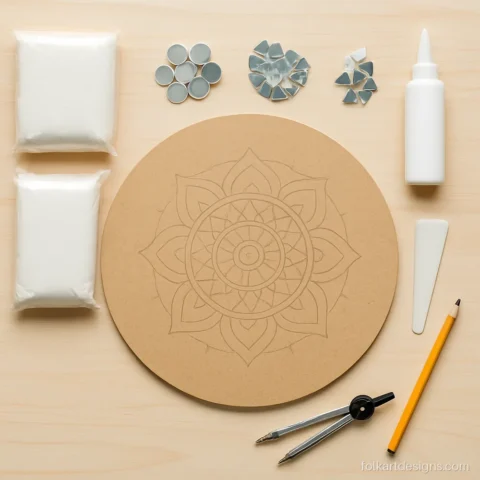
- For lippan: an MDF board, air-dry or shilpkar clay, small glass mirrors in round, diamond and triangle shapes, and strong craft glue. Clay pieces dry in 24 to 48 hours.
- For warli and gond: brown or black paper, white poster colour, a size 0 liner brush and a 0.3 mm pen.
- For madhubani: a nib pen or a 0.3 and 0.8 mm fineliner, acrylic or poster colours and 250 gsm paper. Draw double outlines first and colour last.
- For fabric painting: fabric paint, not acrylic, so it survives washing. Heat set it with an iron after 24 hours.
Our mandala art supplies and lippan art materials pages go into more detail.
How to Display Folk Art at Home
- One big piece per wall. A large kalamkari cloth or pichwai works best alone on a plain wall.
- Group small pieces. Hang three or five small lippan boards or mandalas in a row at eye level.
- Hand painted walls. A warli or mandala mural suits verandahs, kids' rooms and staircases. Use exterior acrylic outdoors.
- Light for mirrors. Place mirror work art where a lamp or window can hit it, so the mirrors sparkle.
- Protect from sun and damp. Natural dyes fade in strong light, and paper art needs glass framing.
- Shelf pieces. Dhokra and iron figures look best on wooden shelves with space around them.
How to Tell Handmade Art from Printed
Handmade artwork is worth more because it takes hours, sometimes weeks. Here is how to check:
- Look for small differences. Repeated motifs on a hand made painting are never exactly the same.
- Check the texture. Paint and clay stand up from the surface. Prints are flat.
- Look at the back of cloth. On real kalamkari and block print, the colour soaks through.
- Use a magnifying glass. Prints show tiny even dots. Paint shows brush marks.
- Ask about materials. Natural dyes, silk, gold leaf, real mirrors and large sizes all raise the cost.
Hand made paintings carry the maker's hand in every line. That small unevenness is the proof, not a flaw.
Questions about these designs
What is Indian folk art?
Indian folk art is traditional art made by ordinary people in villages and tribal communities, usually with local materials. It includes wall painting, cloth painting, mud relief and metal craft. Each style has its own motifs and colours.
Which Indian folk art is easiest for beginners?
Warli and simple mandala art are the easiest. Warli uses only circles, triangles and lines in white, and a mandala needs just a pen, a compass and repeated shapes. A single madhubani fish is a good next step.
What is Madhubani painting and where is it from?
This Mithila tradition belongs to north Bihar, mainly the Madhubani and Darbhanga districts, and to the Nepal side of the border. It is known for double outlines, bright fills and no empty space. Main styles are bharni, kachni and godna. See our madhubani painting gallery.
Which is the folk painting of Bengal?
Kalighat painting from Kolkata is the best known Bengali folk art. It uses quick, bold brush strokes and watercolour on paper. Bengal also has scroll painting traditions, and its neighbour Odisha is famous for pattachitra.
Are there cute paintings in folk art for a kids' room?
Yes. Gond animals, madhubani fish, kalighat cats and colourful mandalas are bright and playful. Choose paper art behind glass or washable acrylic on canvas so little fingers do not damage it.
What is the tribal art of Chhattisgarh?
Chhattisgarh tribal art is centred on Bastar. It includes wall painting, wrought iron figures and dhokra metal casting made by the lost-wax method. Animals, birds, horses and lamps are common subjects.
Mandala art
 Mandala art24 designs
 Mandala designs24 designs
 Easy mandala24 designs
 Creative mandala18 designs
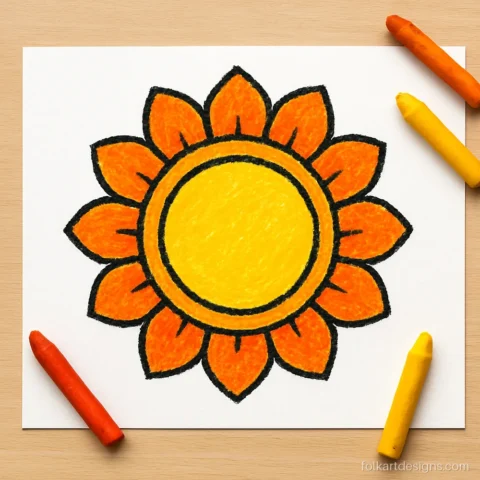 Mandala for kids15 designs
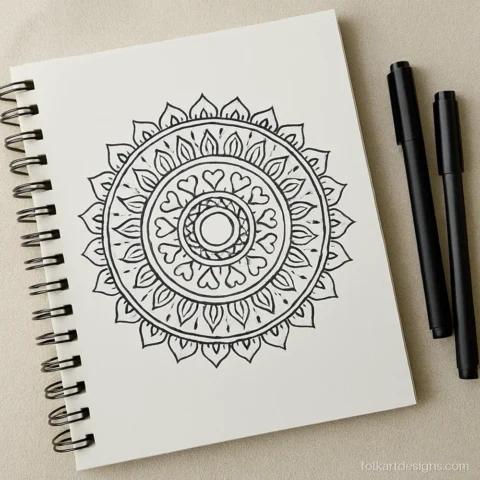 Doodle mandala18 designs
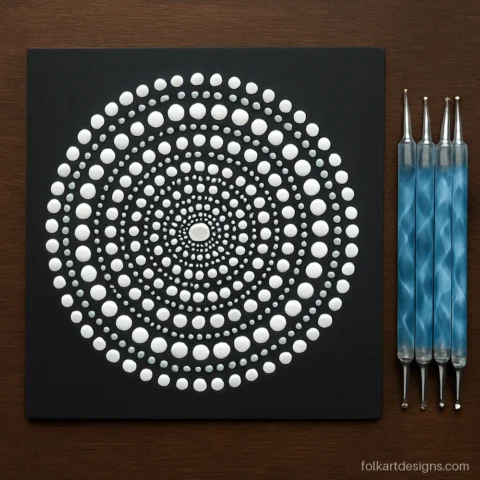 Dot mandala12 designs
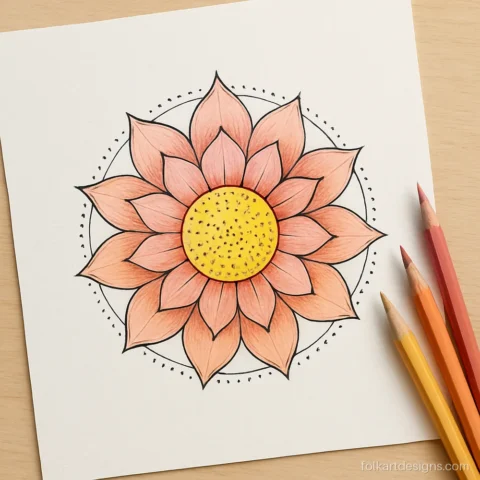 Flower mandala15 designs
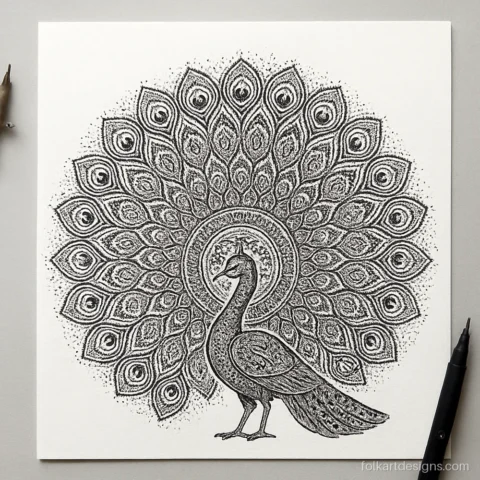 Animal mandala15 designs
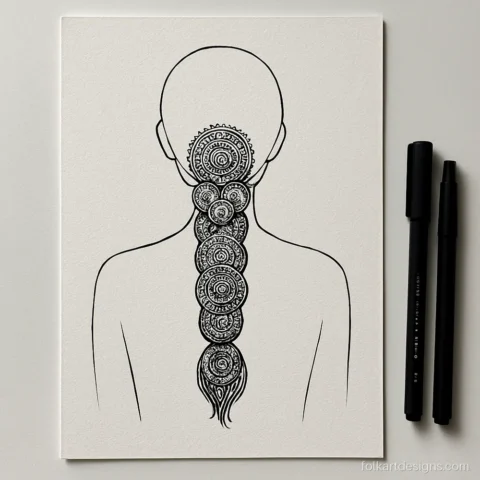 Mandala girl15 designs
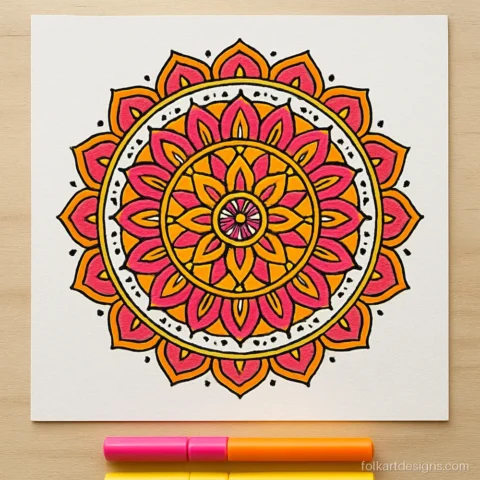 Colourful mandala15 designs
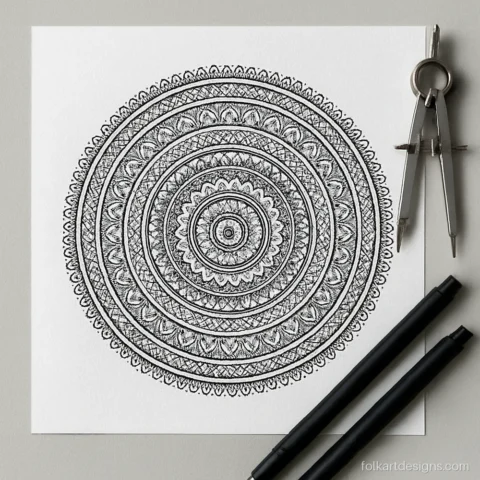 Black and white mandala12 designs
 Mandala on walls and objects15 designs
 Mandala supplies12 designs