Pattachitra Painting: Odisha Designs You Can Make
18 designs Folk paintings Updated 9 Oct 2026
Pattachitra painting is the cloth scroll art of Odisha, known for bold outlines, natural colours and ornate borders. The name joins "patta" (cloth) and "chitra" (picture).
Pattachitra is traditionally devotional. In this gallery we show only its nature side: borders, trees of life, fish, elephants, birds and flowers. Under each picture you will find the base, the motifs, who would enjoy it and a working tip.
Raghurajpur, a village near the coast of Odisha, is a well-known home of pattachitra artists. If you like painted folk art from other states, compare it with pichwai painting from Rajasthan and Kangra painting from the hills.
Pattachitra Border Design and Frames
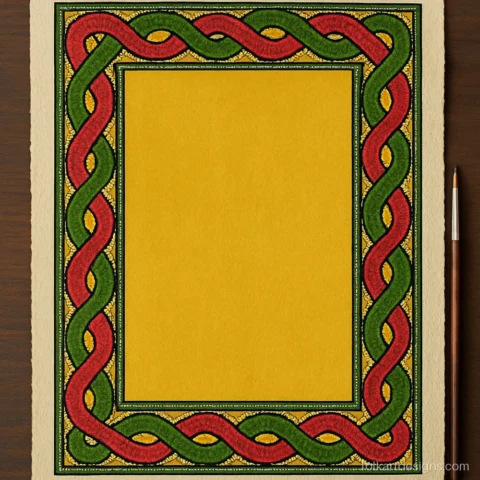
Wide, busy borders are a signature of Odisha pattachitra. Many painters spend as long on the frame as on the centre panel.
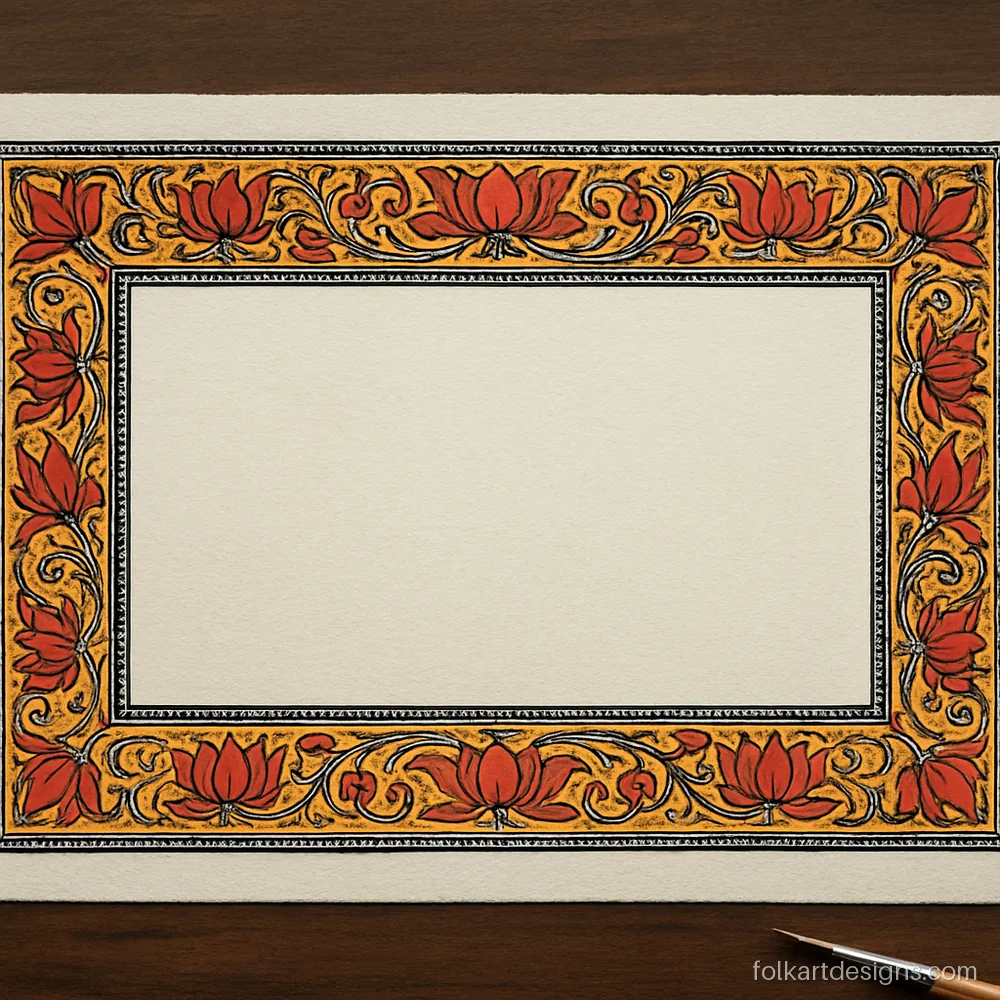
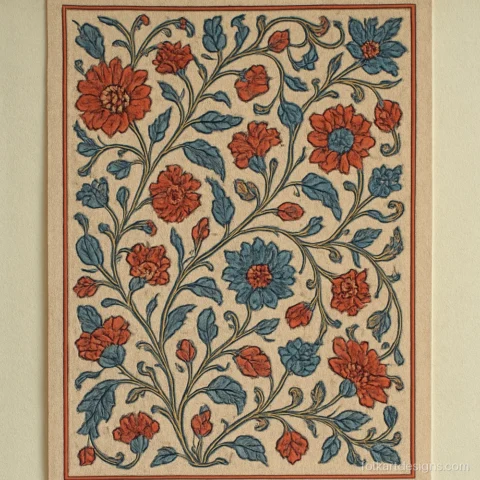
Lotus buds sit between curling creeper lines in a wide band. Use it to frame any small painting.
Artist tip Paint the border before the centre so the main panel gets a clean edge to meet.

One plain band and one patterned band give a neat frame. The corner birds soften the straight lines.
Artist tip Rule the bands with a pencil and steel ruler, then use the fine brush only for pattern.
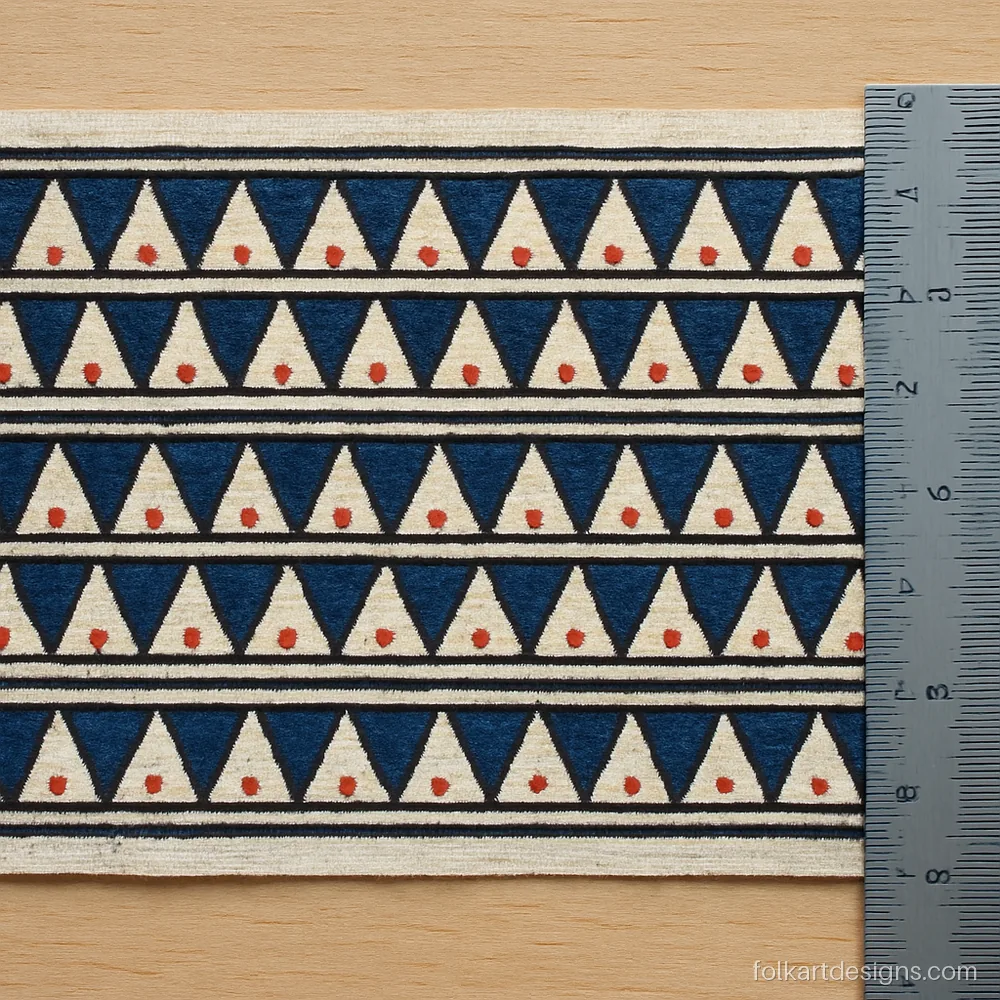
A geometric border suits beginners who are not yet sure with curves, and it still looks traditional.
Artist tip Keep every triangle the same size by marking a dot grid along the border first.
Pattachitra Tree of Life Paintings
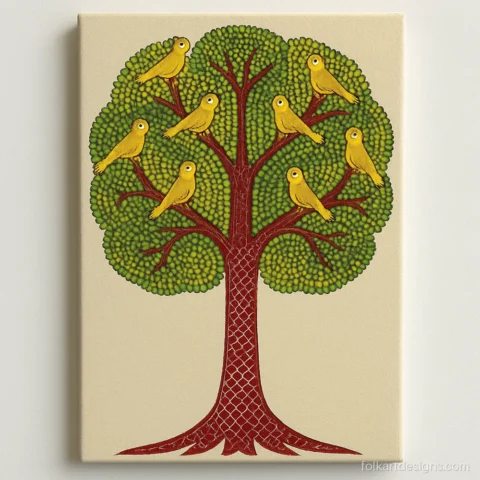
The tree of life is a favourite of pattachitra Odisha painters, because it fills a panel evenly and gives room for birds, buds and leaves.

Curling branches fill the panel evenly, with a parrot on every main bough. A strong piece for a living room.
Artist tip Add the final black outline after colouring to sharpen every leaf and feather.
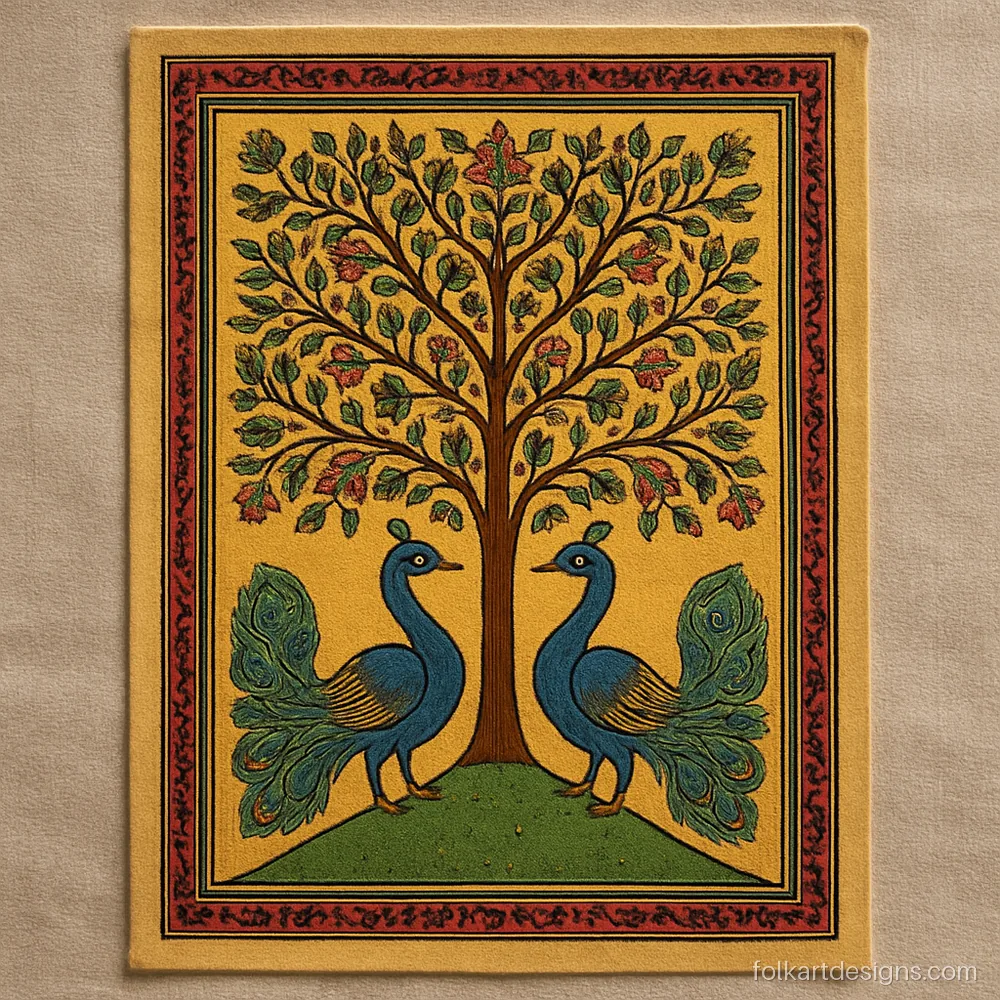
Two mirrored peacocks give perfect balance at the foot of the tree. It suits a wedding gift or an entry wall.
Artist tip Draw one peacock, trace it, and flip the tracing for the other side.
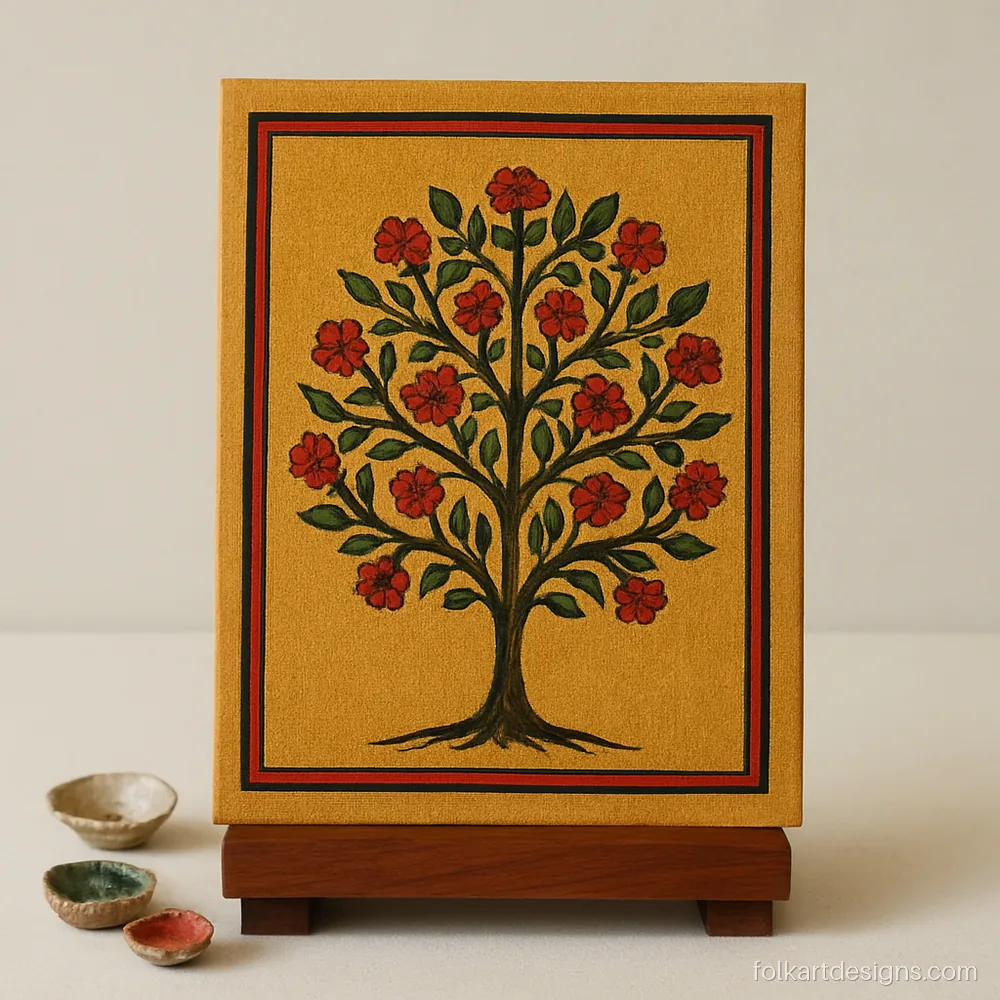
A small panel with one tree is a good first full painting. Hang it in a study or reading corner.
Artist tip Mix colours with a little gum water so they hold on the coated cloth without cracking.
Pattachitra Painting Odisha Style: What It Is
Pattachitra is a cloth-based scroll painting from Odisha. The cloth is coated with chalk and gum so it turns stiff and smooth, ready for fine brushwork. Painters use natural colours and finish with crisp black outlines.
| Feature | What to look for |
|---|---|
| State | Odisha, with Raghurajpur as a well-known artists' village |
| Base | Cloth coated with chalk and gum, or etched palm leaf |
| Colours | Natural colours, often red, yellow, black, white and indigo |
| Borders | Wide, ornate bands of creepers, buds and triangles |
| Motifs on this site | Tree of life, fish, elephants, birds, flowers |
Fish and Elephant Pattachitra Painting
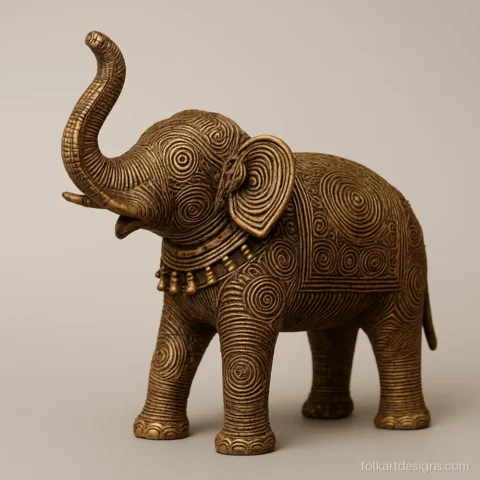
Animals in pattachitra are covered in pattern from head to tail. Fish and elephants are favourites because their big, simple shapes hold lots of detail.
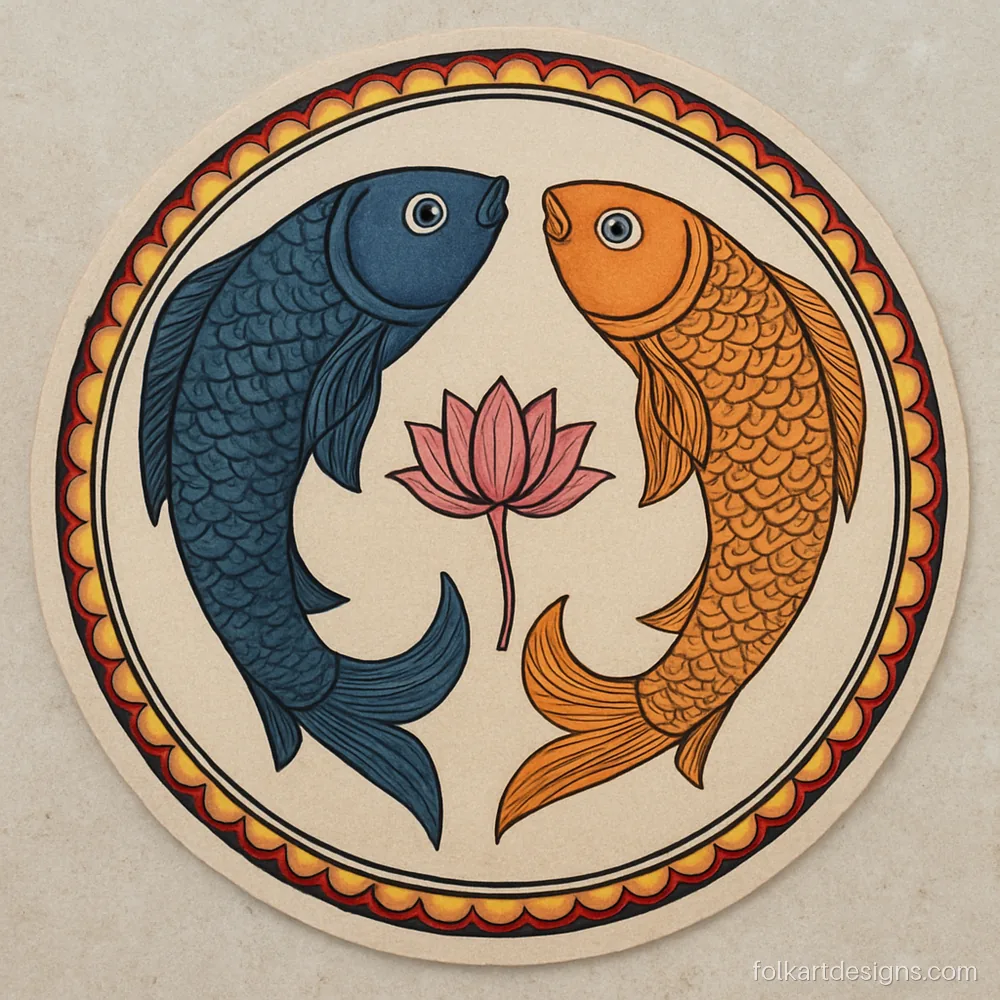
Two curved fish chase each other round a lotus centre. Fish are among the best known pattachitra motifs.
Artist tip Fill scales with tiny curved lines and leave a hair gap so colour shows between.
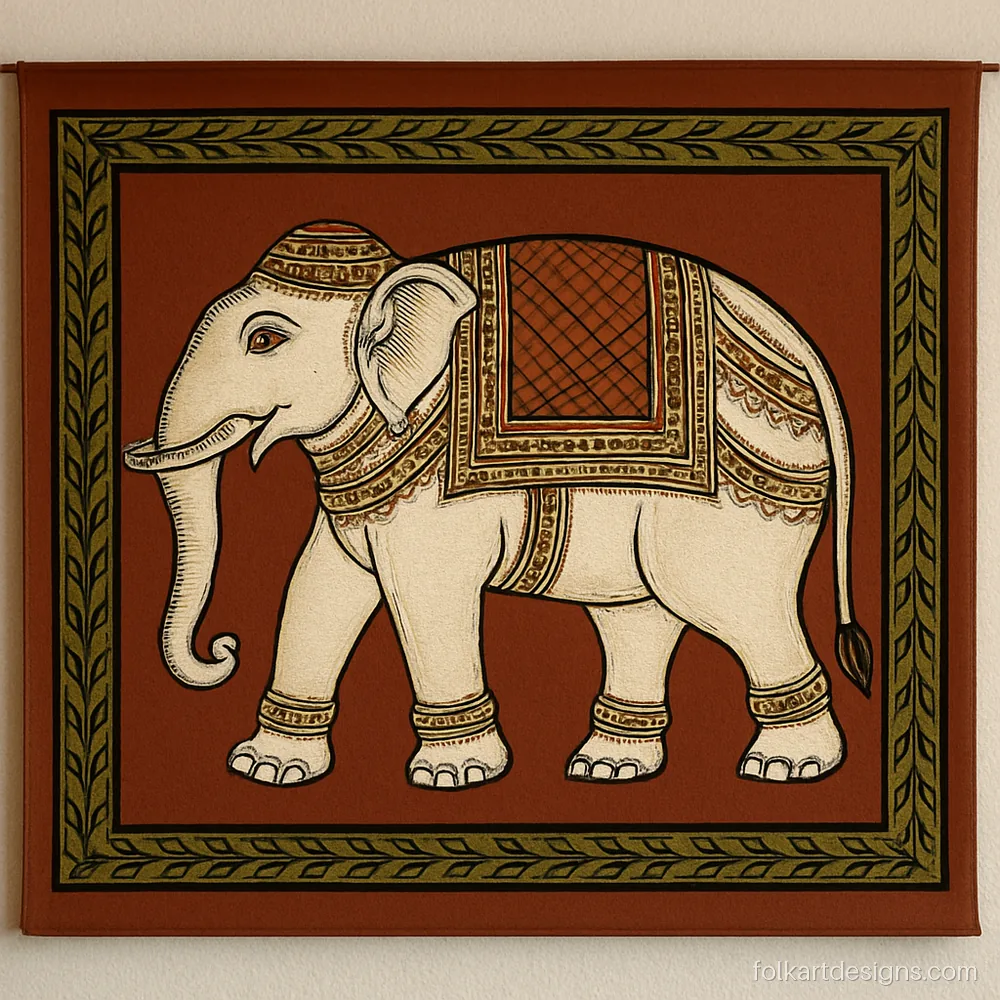
Every part of the elephant carries pattern, from ears to anklets. Popular for a nursery or corridor wall.
Artist tip Plan body patterns in pencil bands that follow the round shape of the elephant.
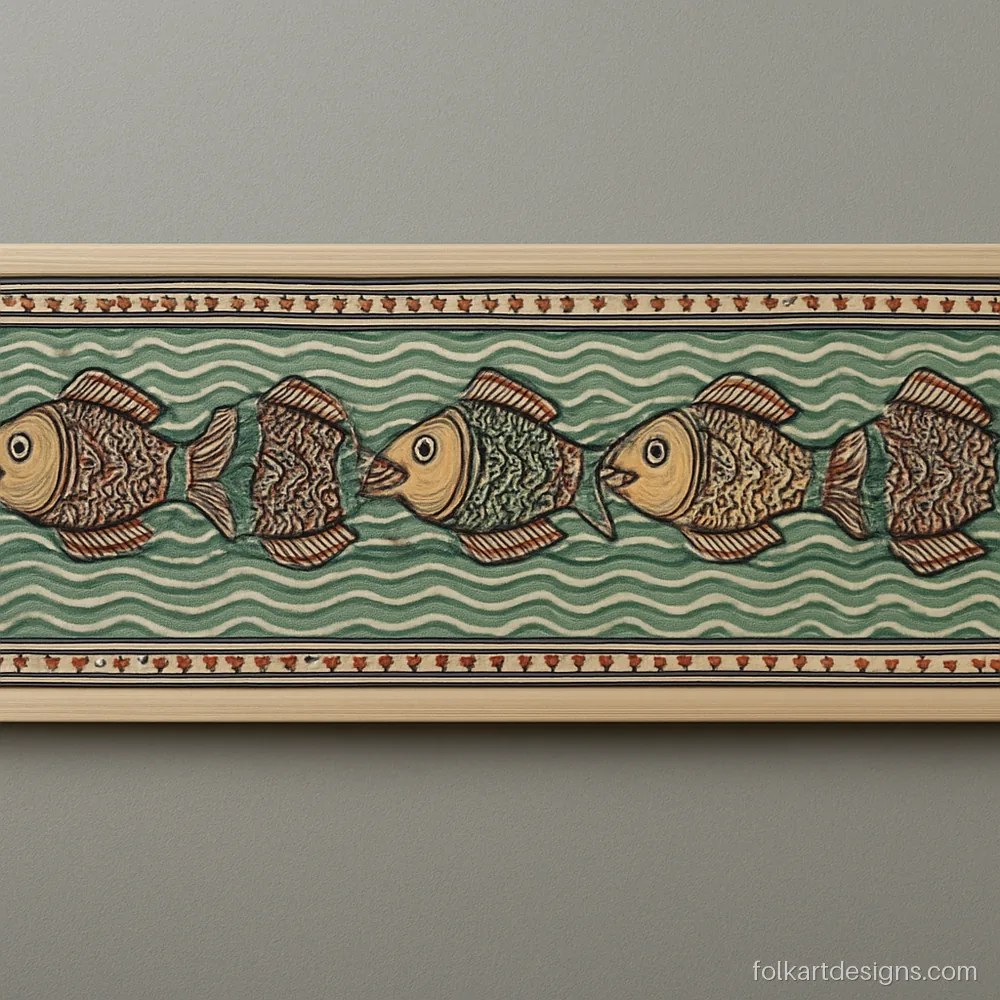
A long panel of fish fits above a door or along a corridor. All the fish face one way for rhythm.
Artist tip Cut one fish template from card and trace it five times for even size.
Easy Simple Pattachitra Painting for Beginners
Easy pattachitra art keeps the bold outline, flat colour and border but uses fewer motifs. These also work as easy pattachitra art for kids. For other folk styles with a simple start, see gond art.
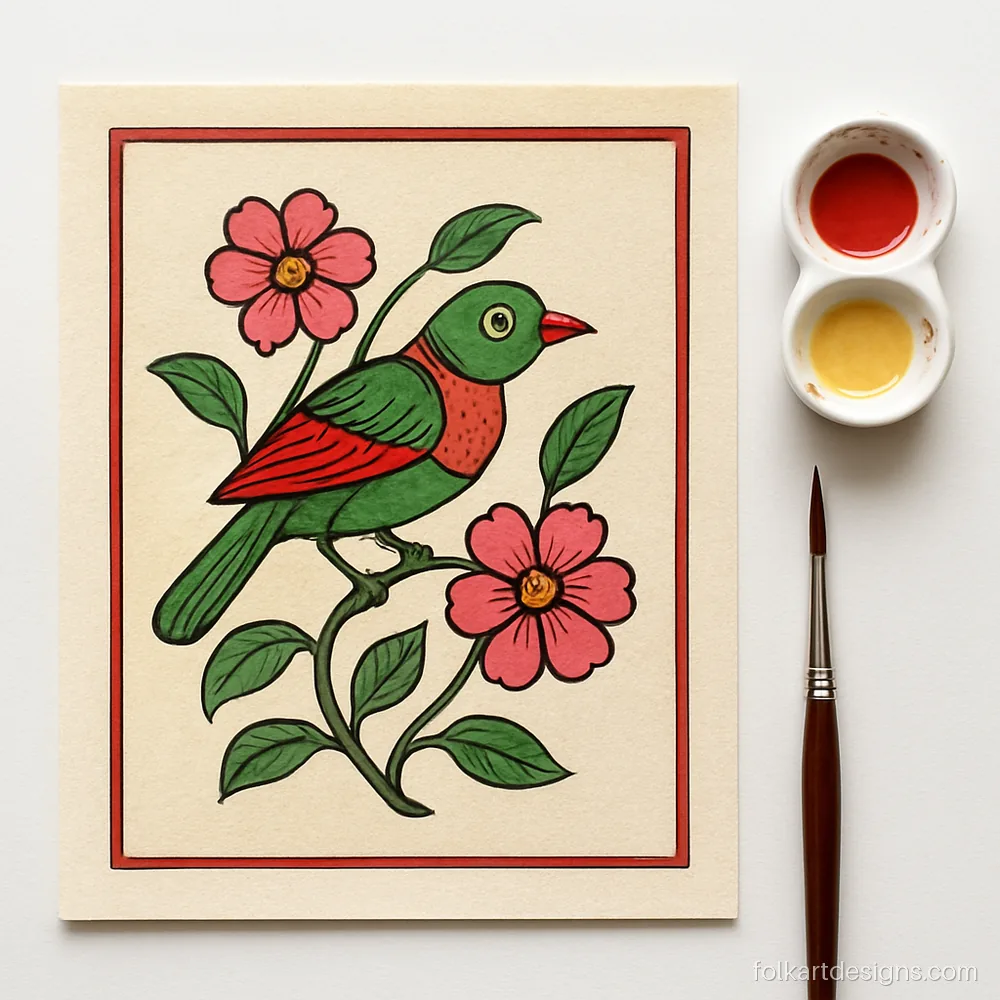
One bird, one branch and a simple border are enough for a first try. Good for school projects.
Artist tip Tone 300 gsm paper with a thin coat of cream acrylic to copy the look of coated cloth.
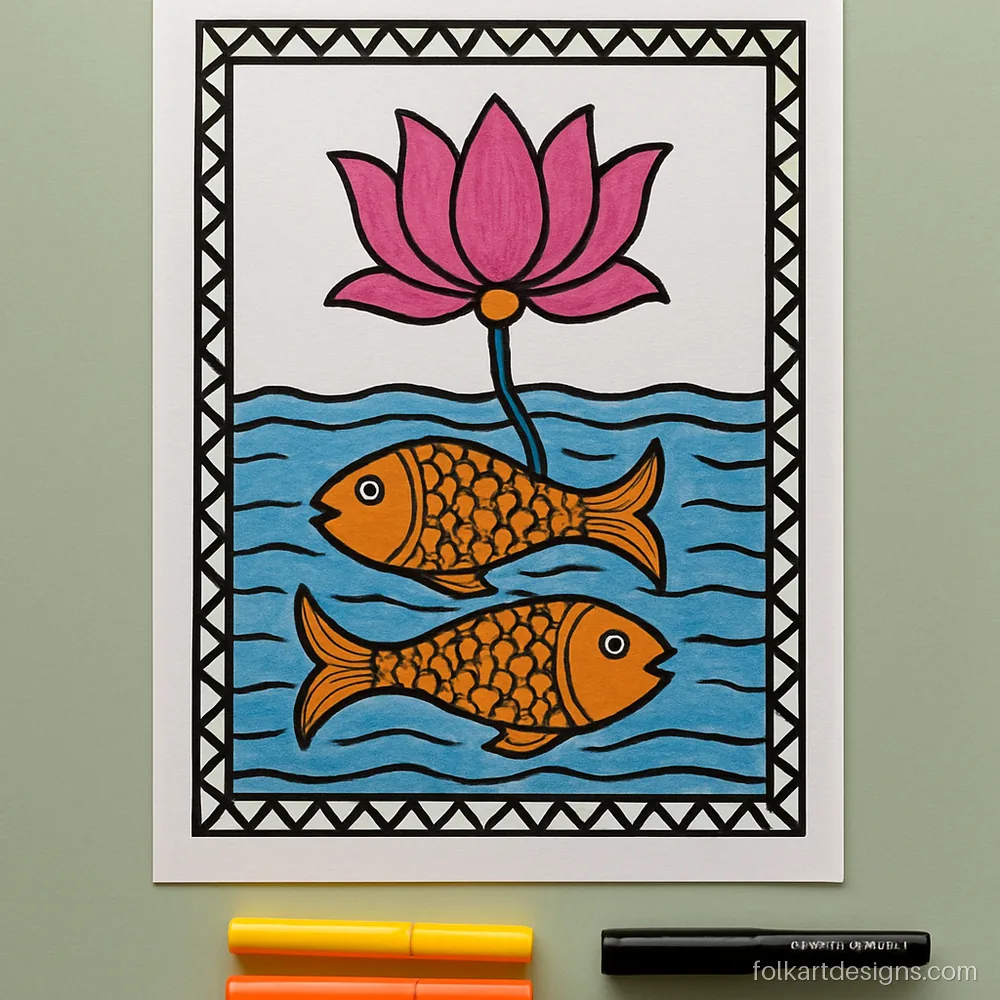
Bold black outlines and flat colour make this easy for young learners, and it fits an A4 sheet.
Artist tip Colour first, then add the black outlines at the end with a thick marker.
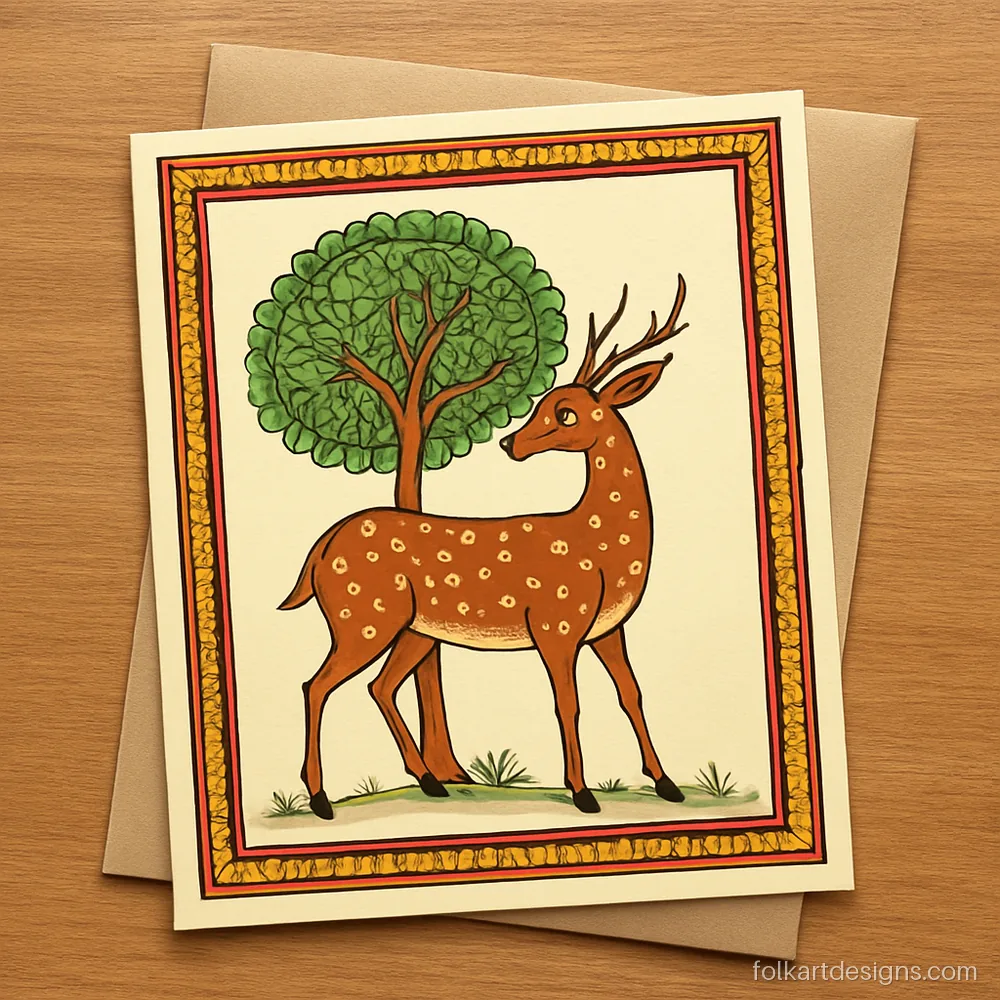
A postcard size piece takes one evening and teaches the main style. Lovely as a handmade greeting.
Artist tip Use a size 0 brush for outlines and a size 4 brush for flat colour areas.
Pattachitra Saree, Dupatta and Decor Pieces
Pattachitra motifs also appear on sarees, dupattas and small decor. A painted piece costs more than a printed one, because each motif takes hours of work. For other painted textiles, see kalamkari sarees.

The pallu carries the main painting while the body has small scattered motifs. A rich choice for weddings and functions.
Artist tip Dry clean painted silk for the first few washes to protect the colours.
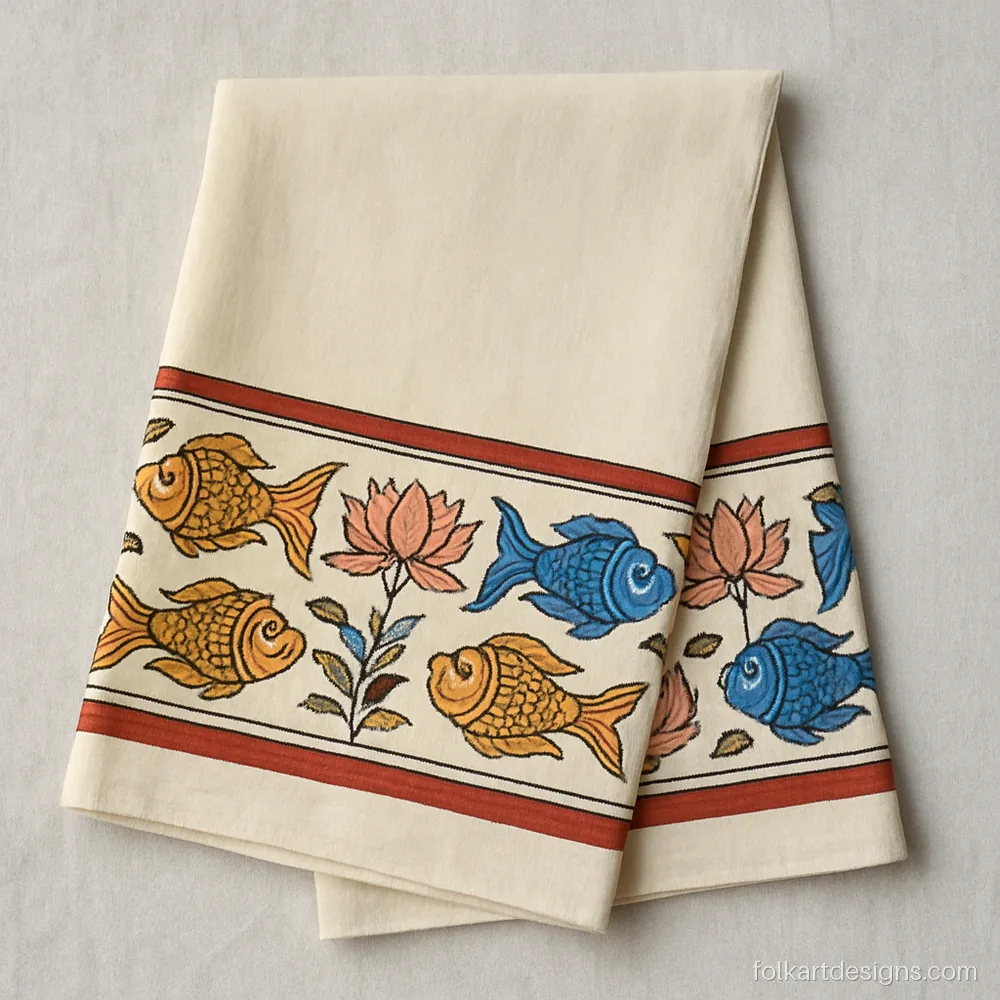
Fish and lotus run along both ends, leaving the middle plain. Pair it with a solid kurta.
Artist tip Turn it inside out and rinse in cold water so the painted side does not rub.

A painted bottle makes a small decor piece from leftover paint. A good seller at craft fairs.
Artist tip Prime the glass with white gesso so the colours grip the smooth surface.
Palm Leaf Talapattachitra Style
Talapattachitra is the palm leaf form of the art. Lines are etched into dried palm leaf strips and darkened with colour, and the strips are tied together with thread.
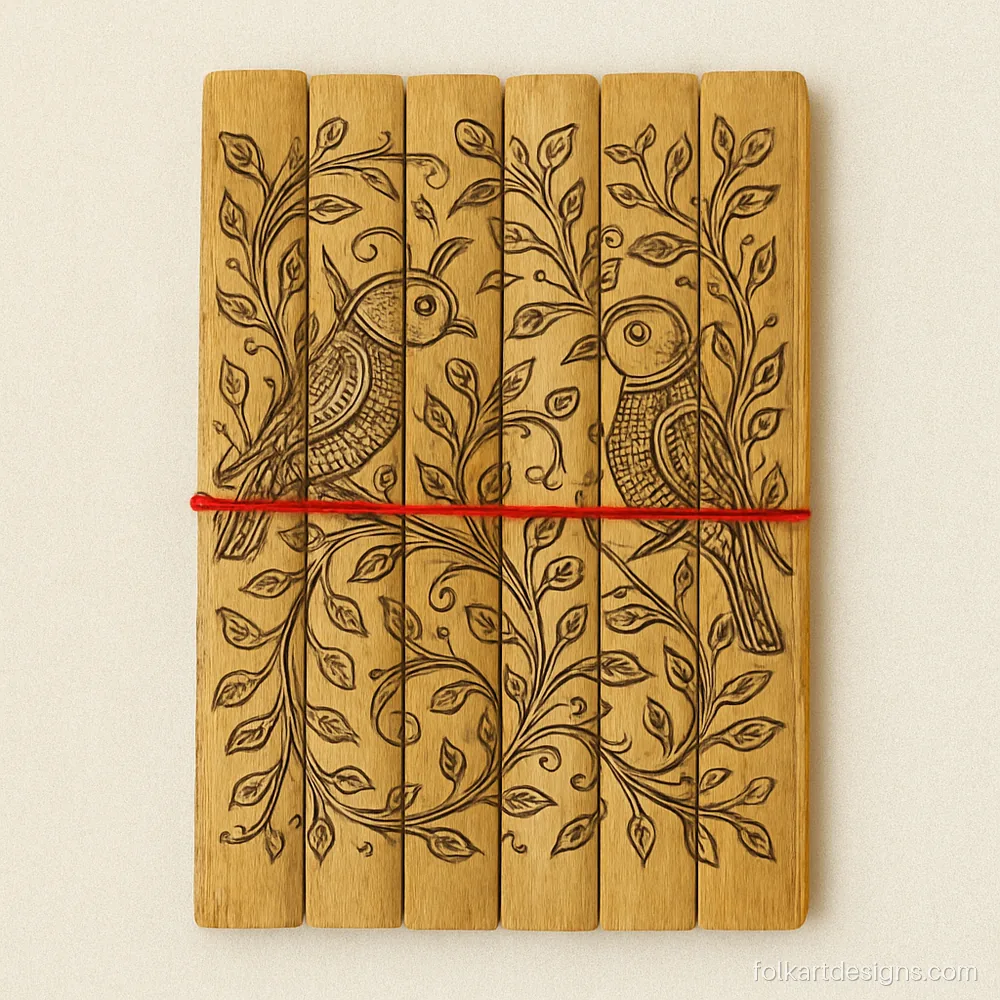
Thin strips are etched with a fine stylus and rubbed with black so the lines show. They fold like a small book.
Artist tip Rub black colour into the etched lines, then wipe the surface clean with a soft cloth.
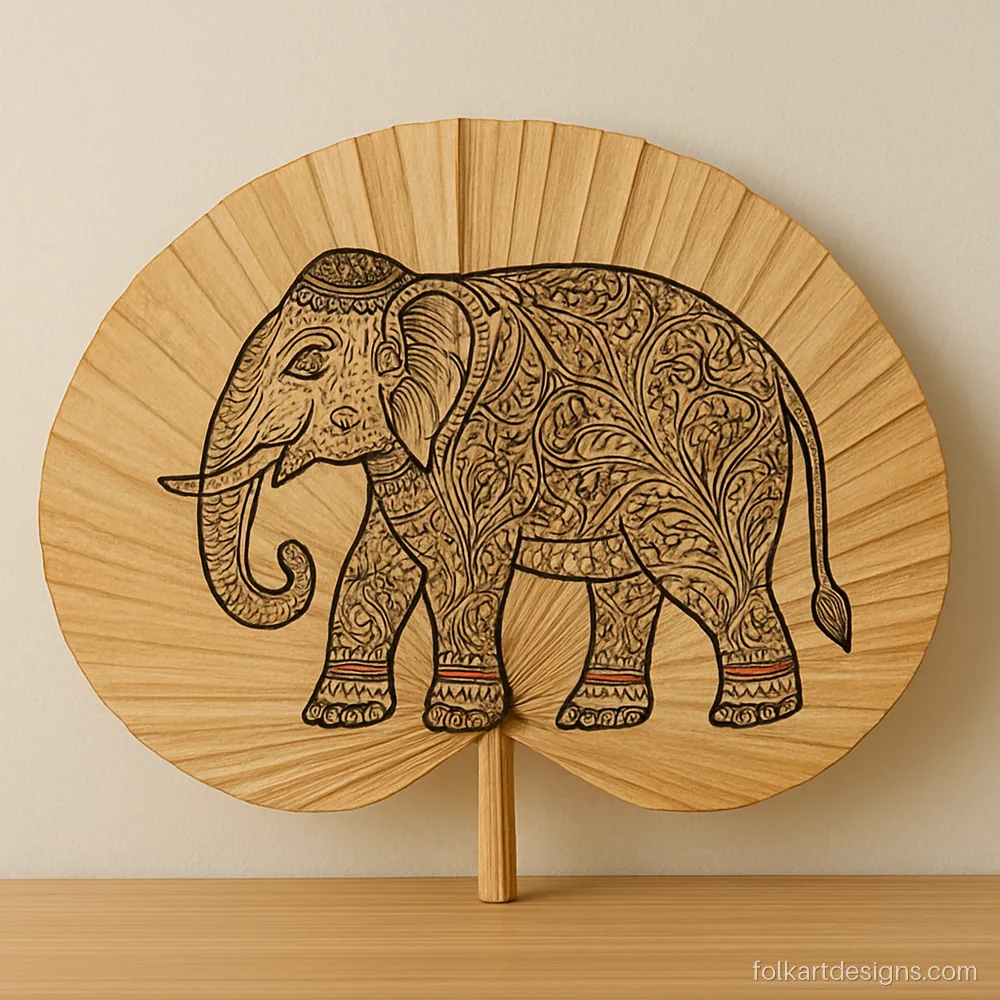
When the strips open like a fan, the elephant appears whole. A clever piece for a display shelf.
Artist tip Plan the full image on paper first, then mark where each strip edge will fall.
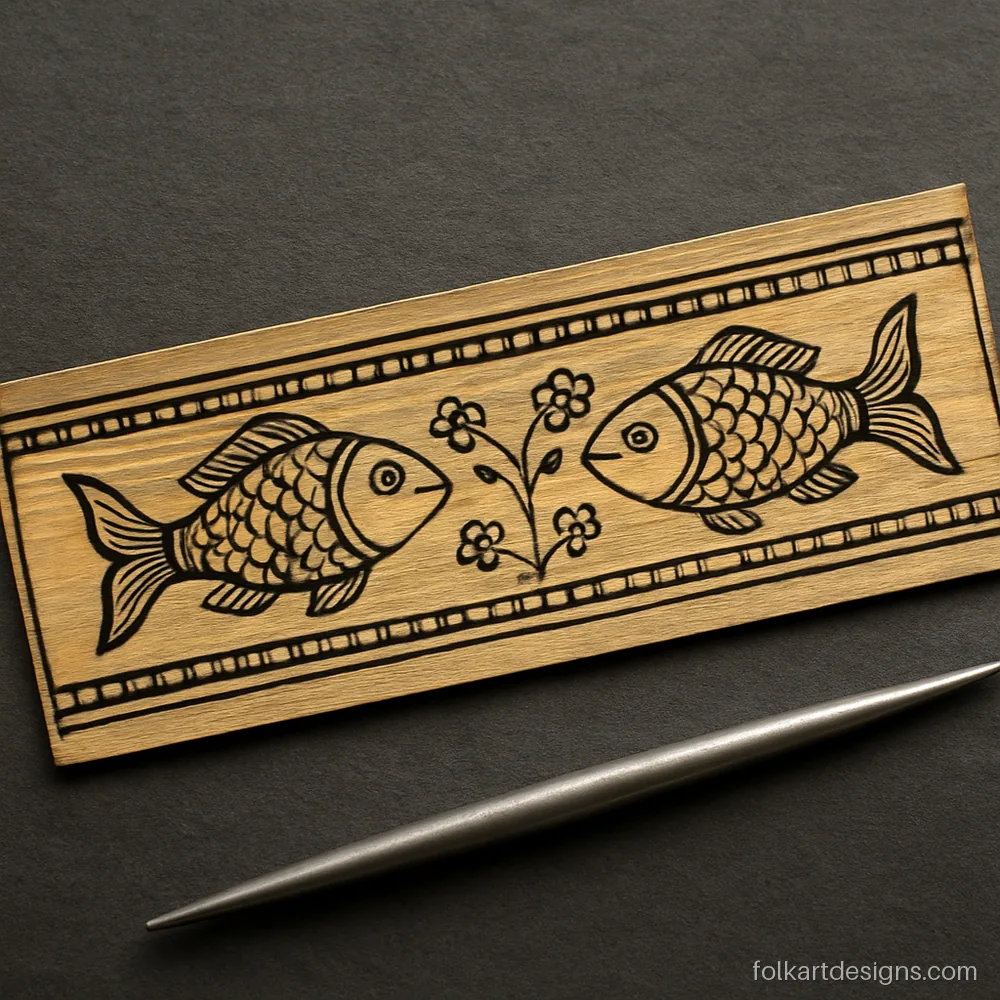
One strip works as a bookmark or a small framed piece. It is the easiest way to try the palm leaf style.
Artist tip Practise etching on thick card first, because palm leaf does not forgive a slip.
How to Make Easy Pattachitra Painting at Home
- Prepare the base. Coat cotton cloth with a paste of chalk and gum, let it dry for a day, then rub it smooth. Beginners can use 300 gsm paper toned cream.
- Draw the border. Rule two or three bands with pencil, leaving a clear centre panel.
- Sketch the motif. Keep shapes large: one tree, two fish or one elephant.
- Fill flat colour. Red ground first, then yellow, green and white. Let each colour dry about 30 minutes.
- Outline in black. Use a size 0 brush for the final outlines and small patterns.
- Protect it. Hobby pieces can take a thin coat of matte varnish after a full day of drying.
For a craft from Odisha that uses metal instead of paint, see dhokra art.
Questions about these designs
Pattachitra painting is from which state?
Pattachitra painting is from Odisha. Raghurajpur is a well-known village of pattachitra artists. The word means a picture on cloth.
What is pattachitra?
Pattachitra is a cloth-based scroll painting. The cloth is coated with chalk and gum, then painted with natural colours inside ornate borders. There is also a palm leaf form called talapattachitra.
Is pattachitra art of Odisha easy for beginners?
The full style takes years to master, but simple pieces are easy to start. Pick one motif, such as a fish or a bird, add a two band border and keep the colours flat. Bold black outlines at the end make even a first try look neat.
What colours are used in pattachitra?
Traditional pieces use natural colours, mostly red, yellow, white, black and blue tones. Hobby artists often use gouache or acrylic in the same shades. Avoid neon colours if you want the traditional look.
How can I tell a painted pattachitra saree from a printed one?
A painted saree shows small differences between repeated motifs and slightly uneven brush lines. Printed ones repeat perfectly. Painted pieces cost more because of the hours of work, the silk base and the size of the painting.
What are common pattachitra motifs?
Common nature motifs include the tree of life, fish, elephants, parrots, peacocks, lotus and creepers. Borders are almost always wide and patterned. The tradition is also known for devotional themes, which we do not show here.