Kalamkari Fabric: Pen Kalamkari, Block Prints and Running Material
15 designs Kalamkari art and wear Updated 9 Oct 2026
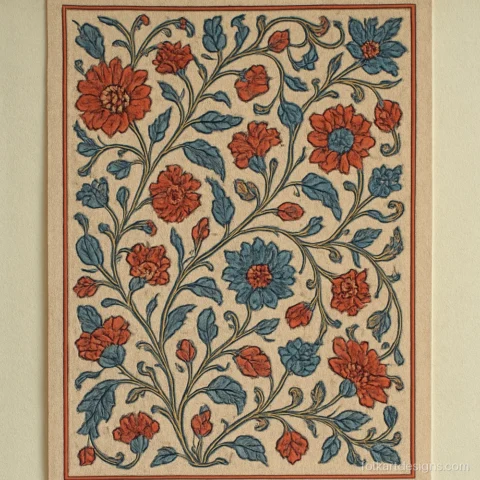
Kalamkari fabric is cotton or silk cloth decorated with natural dye drawings or block prints from Andhra Pradesh. The name joins "kalam" (pen) and "kari" (work). This gallery shows 15 of our own kalamkari print designs, from fine pen work to bold repeat blocks.
Kalamkari fabrics are sold as panels, as running material by the metre and as ready home linen. Each picture below lists the cloth, the motifs and what it suits best, from sarees and kurtis to cushion covers.
Read the guide at the end to learn how to spot original kalamkari fabric, what makes it cost more and how to wash it so the dyes last.
Pen Kalamkari Fabric in the Srikalahasti Style
Pen kalamkari is drawn freehand with a bamboo pen, the Srikalahasti kalamkari way. Lines vary a little from stroke to stroke, and that is the charm.

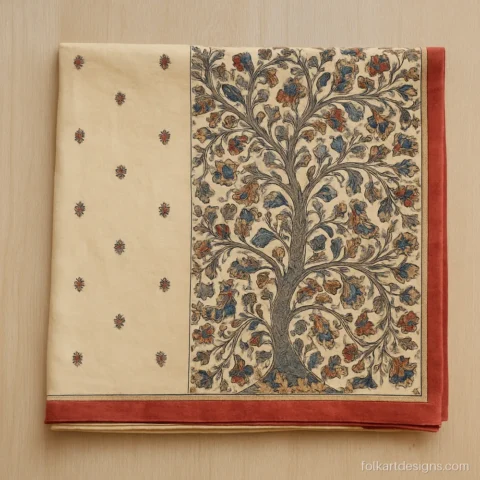
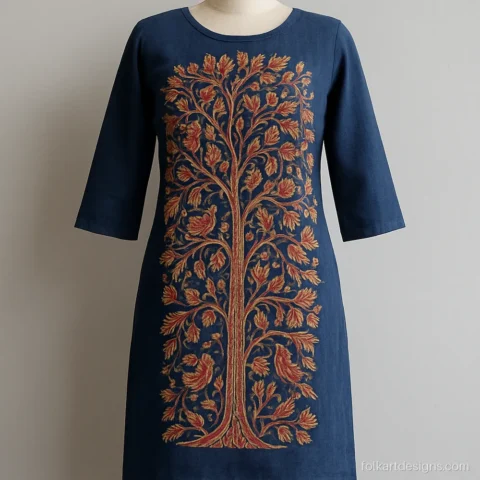
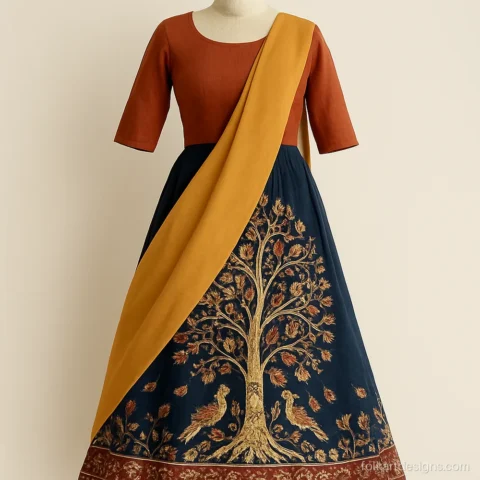
One large tree of life fills the panel, so it works as a wall hanging or the centre of a kurta yoke. Natural reds and blues look soft, not loud.
Artist tip Buy an extra 10 cm when cutting a panel so the tree is not cut off at the roots.

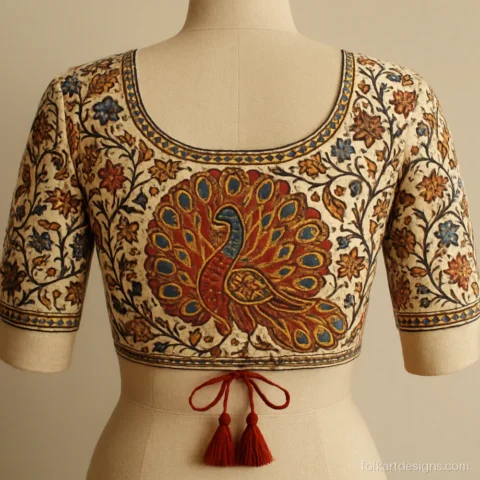
Two peacocks facing each other make a balanced panel for a blouse back or a cushion front. Mustard yellow lifts the dark outlines.
Artist tip Place the pair in the centre of the blouse back before you mark the neckline.
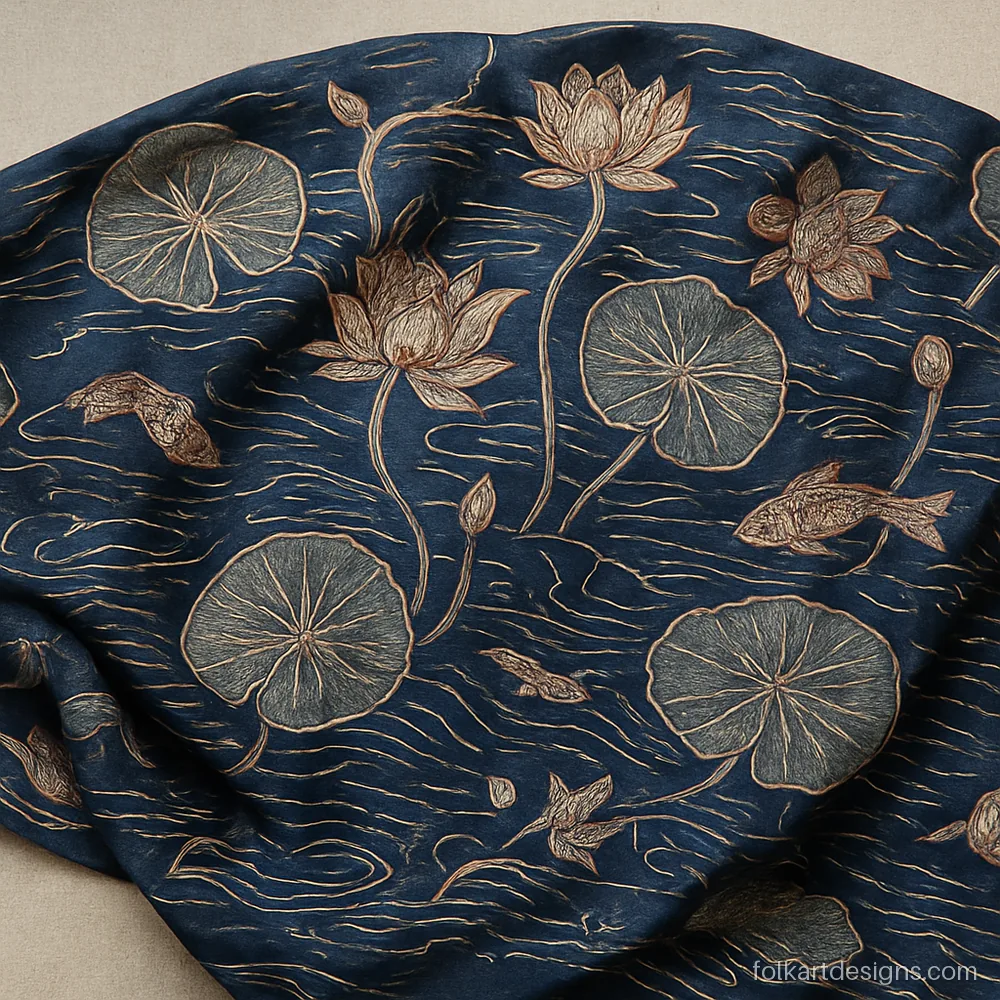
Pen work on silk shows finer lines and a soft sheen. It suits a festive dupatta or a framed panel.
Artist tip Dry clean silk kalamkari for the first wash, as natural dyes can shift on silk.
Block Printed Kalamkari Prints from Machilipatnam
Machilipatnam kalamkari uses carved wooden blocks to stamp repeat patterns. These kalamkari prints suit yardage for kurtis, dresses and home linen.
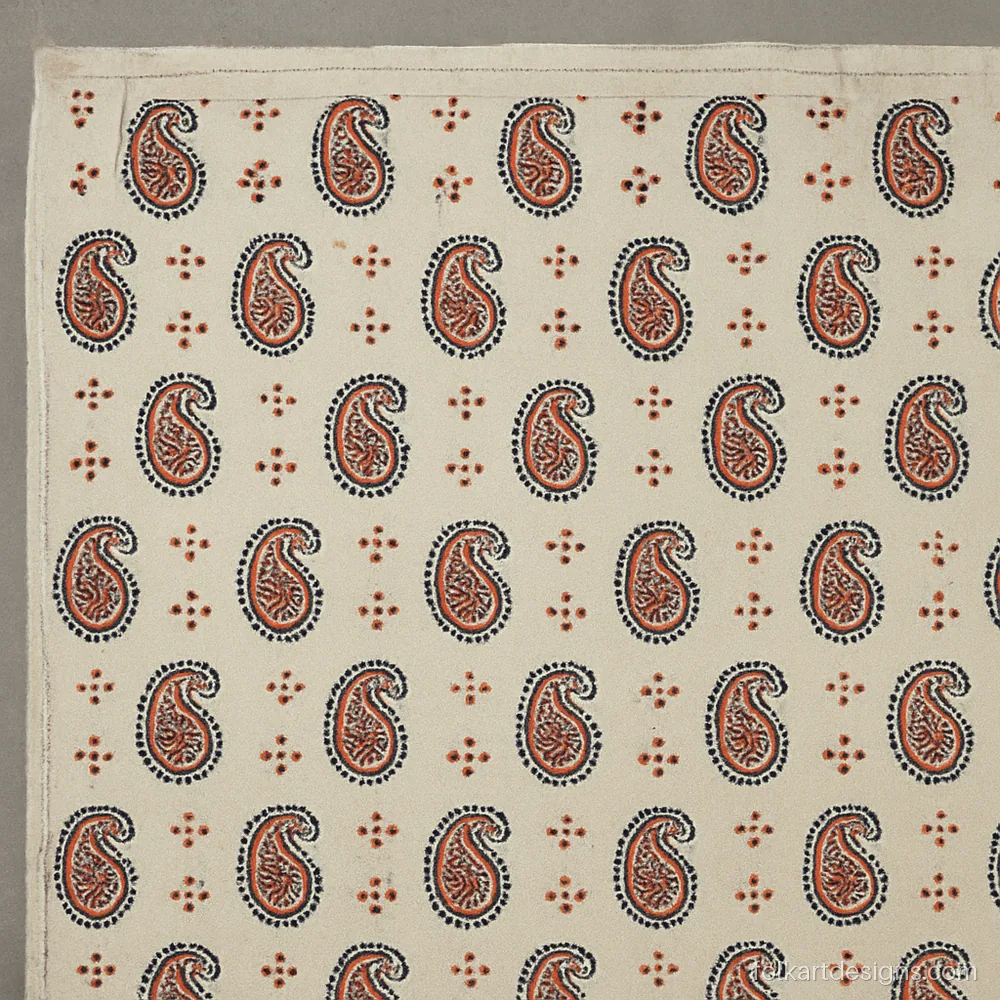
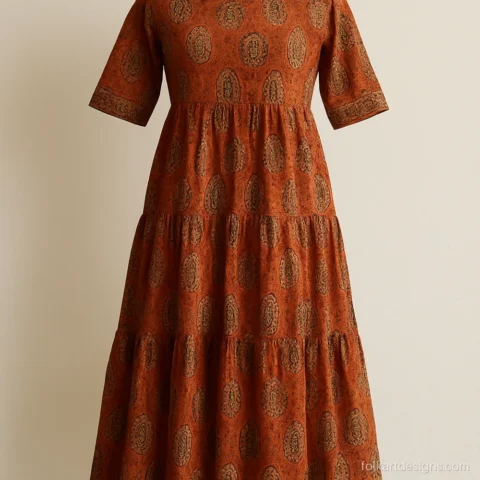
Small paisleys in a tight grid hide wear and stay neat after many washes. Good for daily kurtis and girls' frocks.
Artist tip Match the paisley rows at the side seams so the repeat looks continuous.
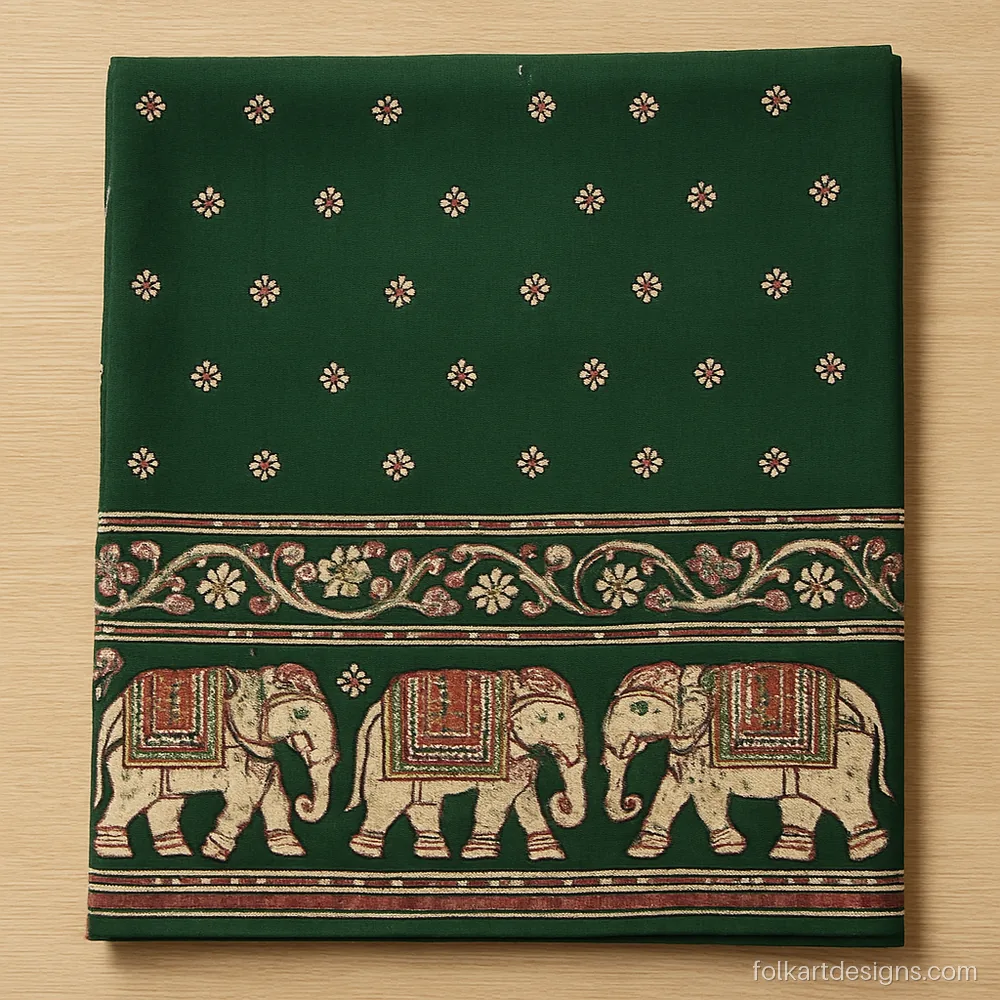
A wide elephant border is perfect for a dress hem or the bottom of a curtain. Green with red and cream gives a festive feel.
Artist tip Cut the border strip first, then use the plain middle for sleeves or lining.
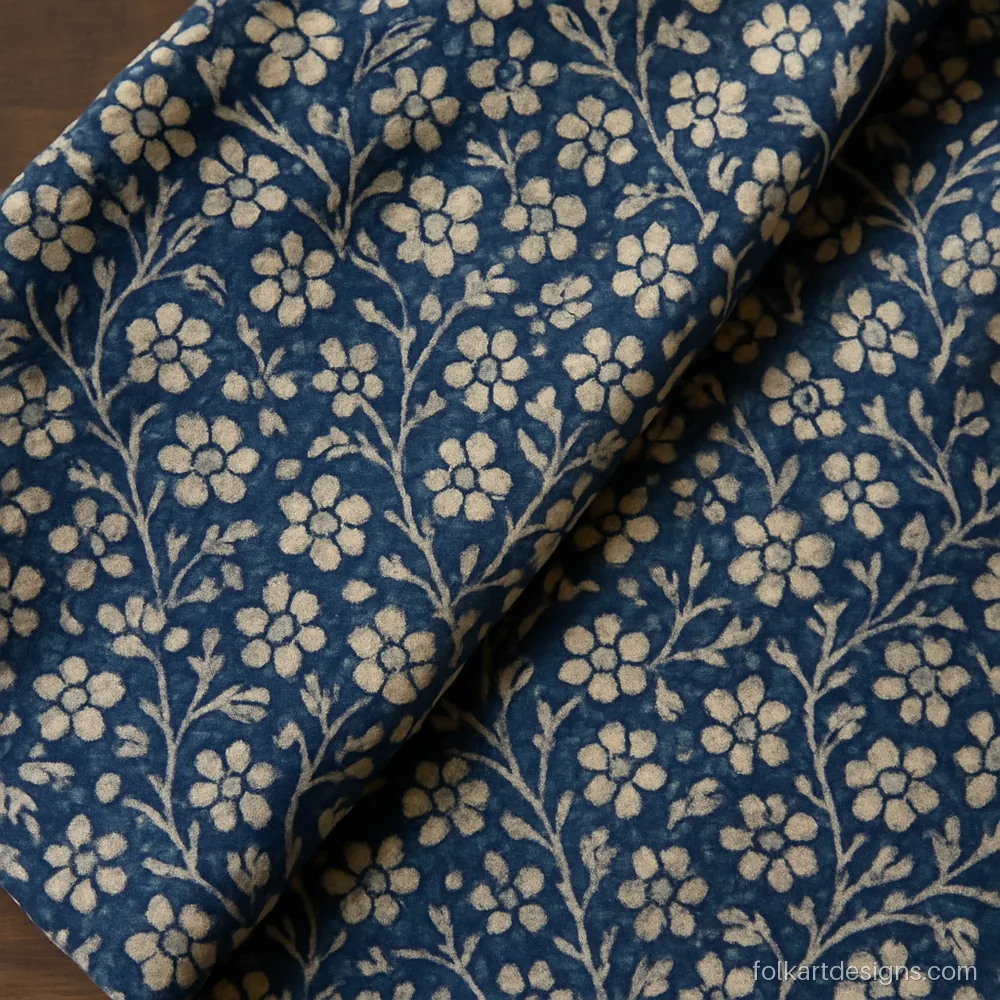
An all-over floral jaal works for both men's shirts and women's kurtis. Indigo feels fresh in summer.
Artist tip Wash new indigo fabric alone in cold water for the first few times.
What Is Kalamkari Fabric? Pen vs Block Print
Kalamkari comes from Andhra Pradesh and has two main styles. Here is a quick comparison of the kalamkari cloth you will find.
| Style | How it is made | Typical look | Best uses |
|---|---|---|---|
| Srikalahasti (pen kalamkari) | Drawn freehand with a bamboo pen, filled with natural dyes | Fine lines, big panels, tree of life | Wall panels, blouses, dupattas |
| Machilipatnam | Stamped with carved wooden blocks, natural dyes | Repeat paisleys, florals, borders | Kurtis, dresses, home linen |
The colours come from plants and minerals: indigo for blue, madder and other roots for red, pomegranate rind for yellow and an iron-based black for outlines. The cloth goes through many rounds of washing, dyeing and sun drying, so one piece can take weeks. Learn more about the art itself on our kalamkari art page.
Kalamkari Cotton Fabric and Silk Running Material
Kalamkari running material is sold by the metre for suits, kurtis and churidar sets. Cotton is easy for daily wear, and silk is for occasions.
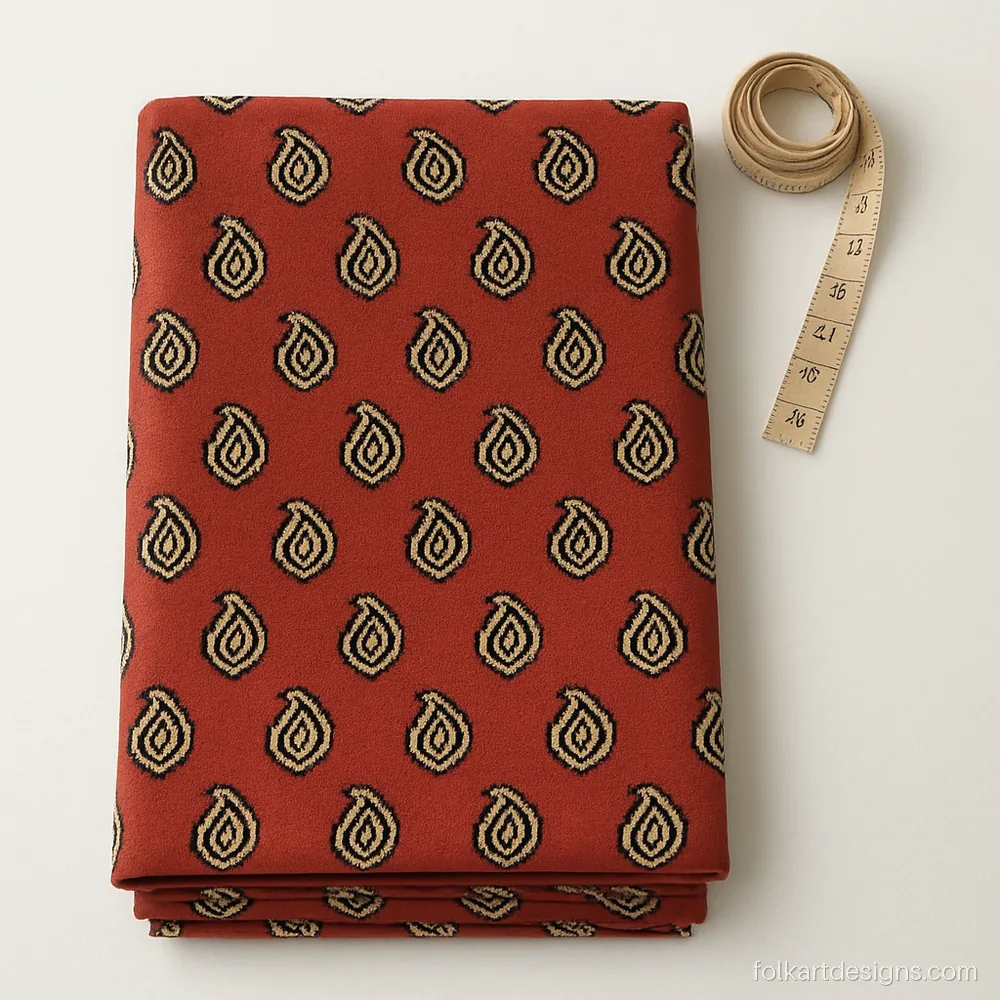
Small buttis spread evenly mean less waste when you cut a kurti. Madder red softens into a warm brick shade over time.
Artist tip Two and a half metres is enough for a knee-length kurti with full sleeves.
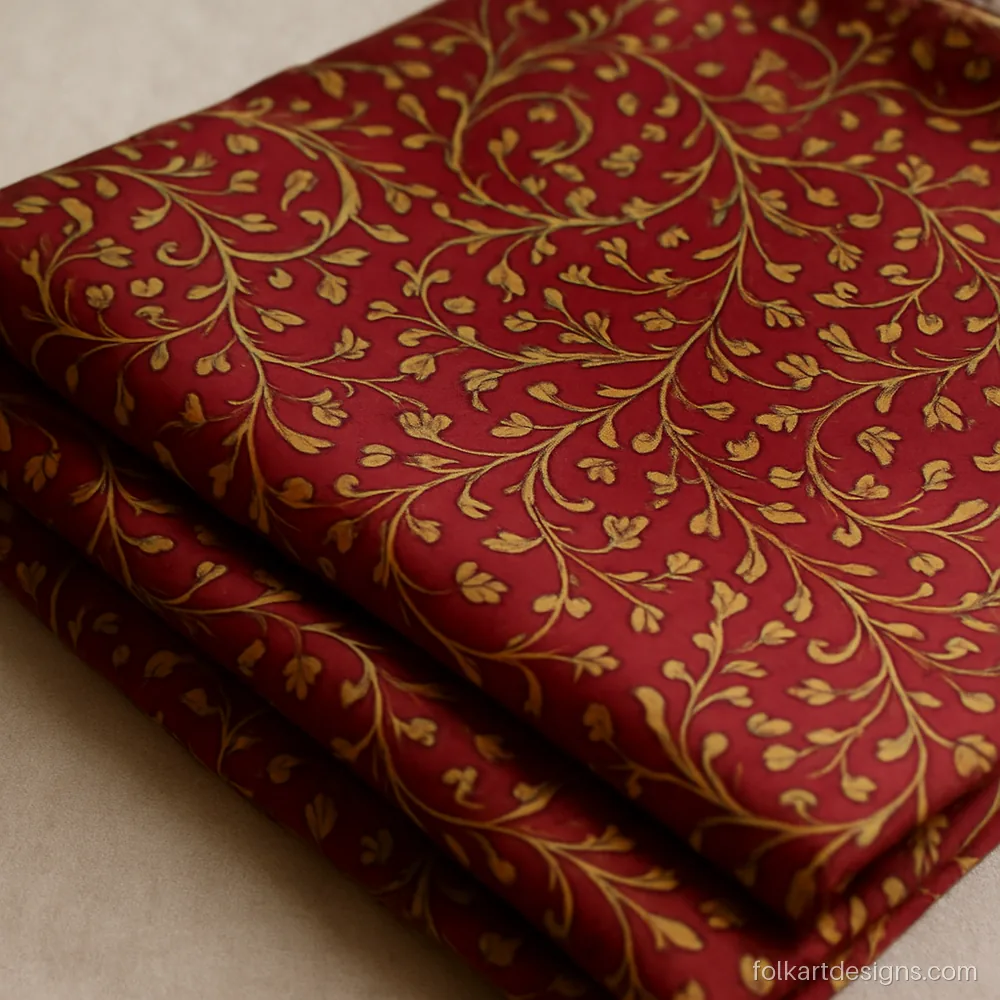
Silk takes natural dyes with a deeper glow, so creepers look rich without any zari. It suits an anarkali or a festive kurta.
Artist tip Line a silk kalamkari kurta with soft cotton so it breathes and lasts longer.
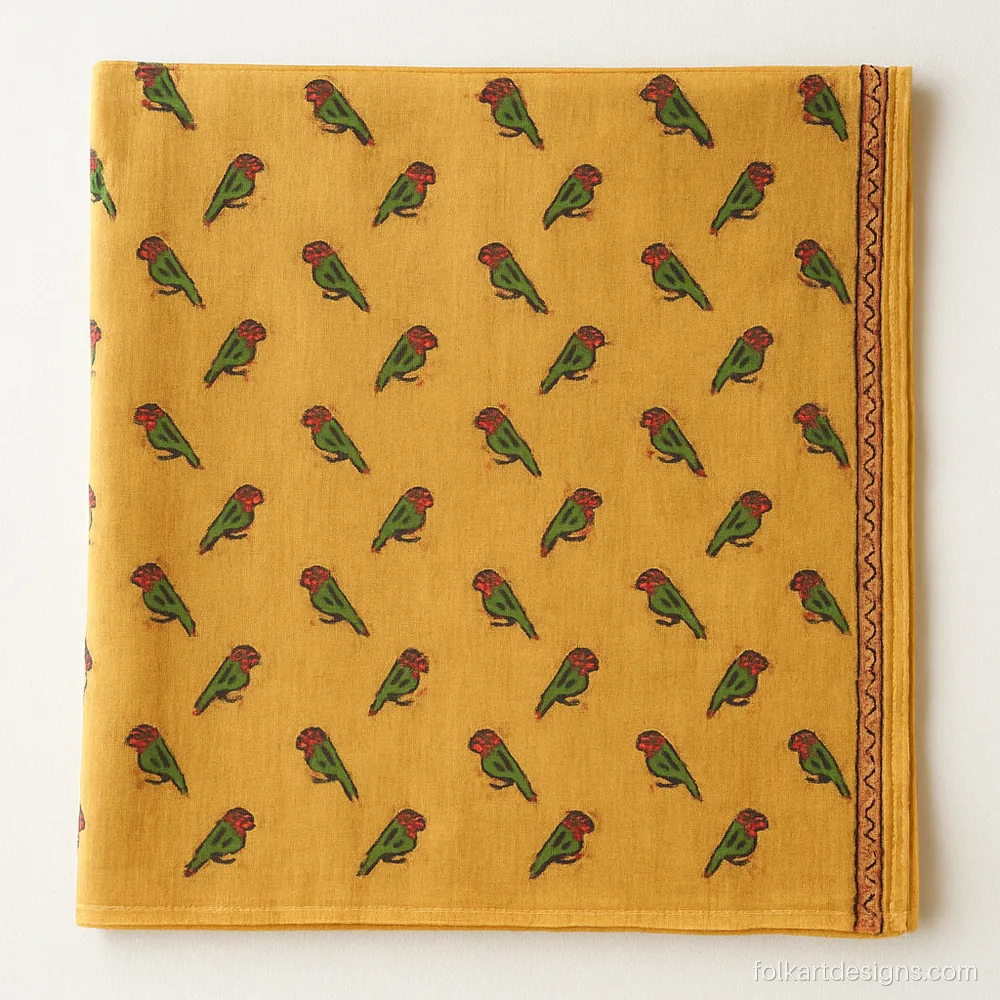
Chanderi is light and slightly sheer, so the print looks soft and airy. Good for summer dupattas and dresses.
Artist tip Iron chanderi on low heat with a thin cotton cloth on top to protect the print.
Kalamkari Prints for Home: Cushions, Bedsheets and Bags
Kalamkari fabric brings colour to cushion covers, kalamkari bedsheets, curtains and kalamkari bags. Choose bold block prints for home linen, as they hide daily wear.
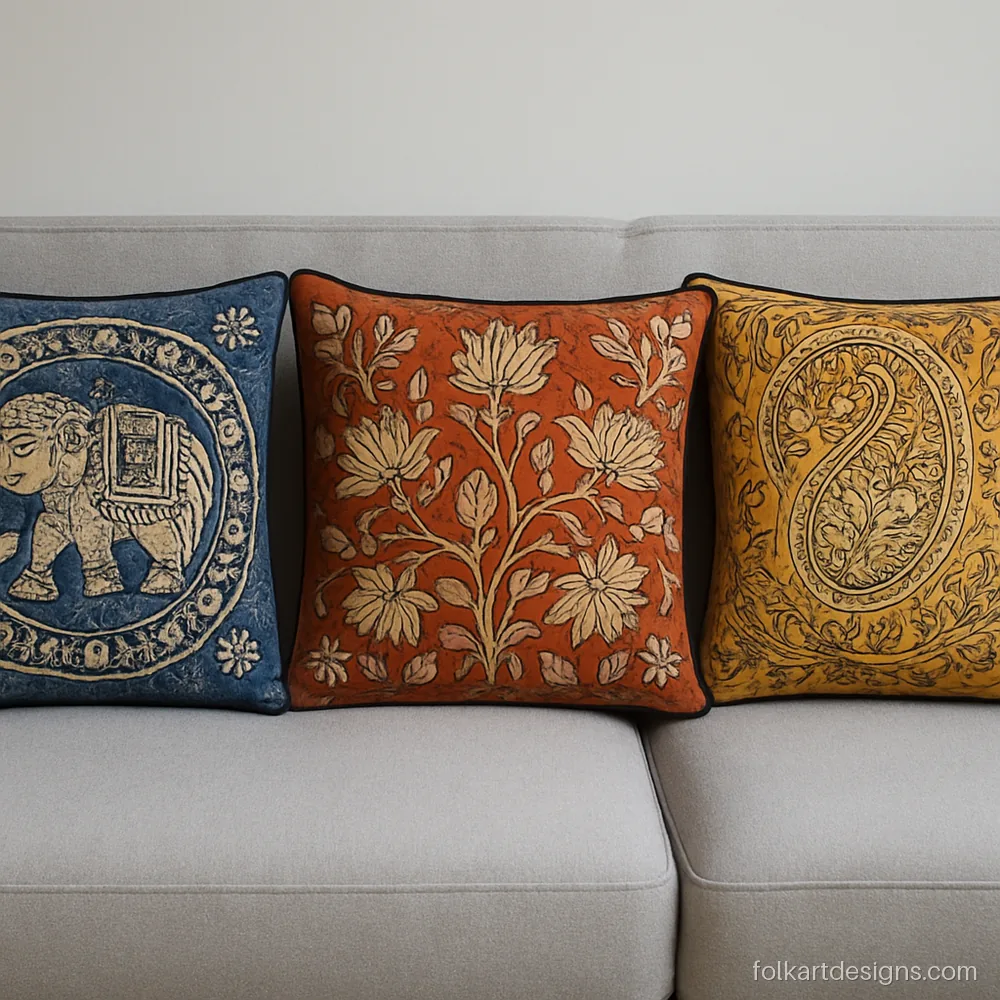
Mixing three colours from one print family keeps a sofa lively but tidy. Kalamkari cushion covers are an easy first sewing project.
Artist tip Add a zip on the back so you can wash the covers in cold water often.

A central medallion and a wide border give a bedroom one calm focal point. Pick cotton for daily use.
Artist tip Dry bedsheets inside out in the shade so the reds stay bright longer.

A small leftover panel becomes a sturdy tote. Kalamkari tote bags are a good product line for small sellers.
Artist tip Back the panel with canvas or fusible interfacing so the bag keeps its shape.
Original Kalamkari Fabric vs Screen Print
Not every kalamkari print is made with real dyes and pens or blocks. These close-ups show what to check before you buy.
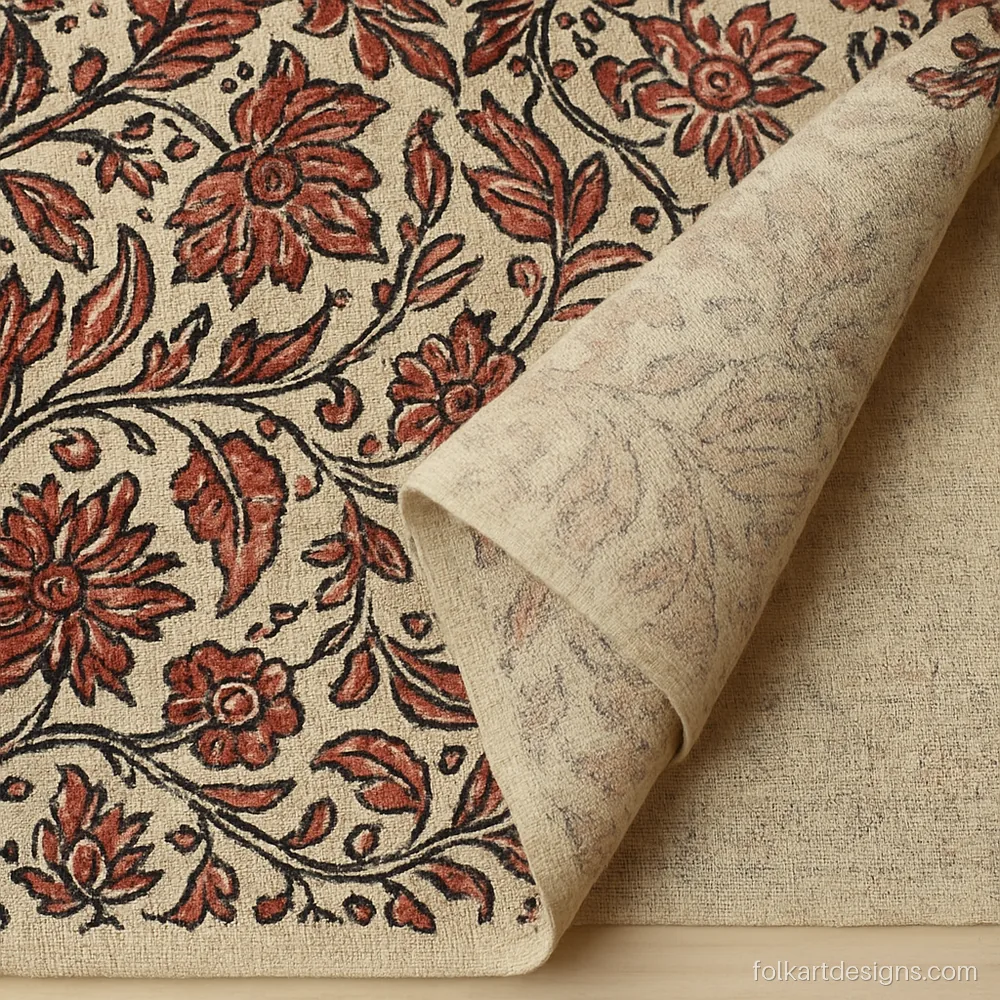
In real dye work the colour soaks through, so the back looks like a softer copy of the front. Screen prints usually stay pale on the back.
Artist tip Turn the cloth over in daylight before buying and check that the colour shows on the back.
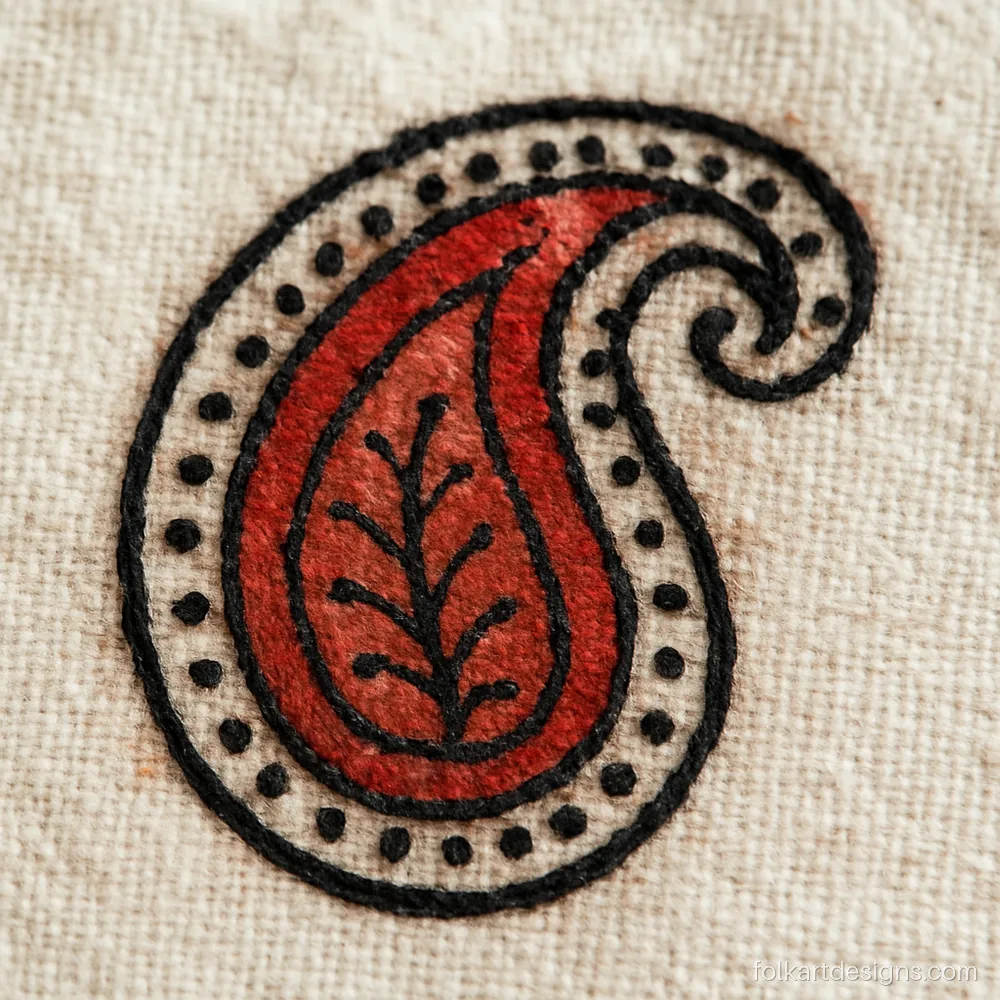
Look closely at the outlines: real pen lines thicken and thin, and the dye spreads a little into the threads. A perfectly sharp line often means a screen print.
Artist tip Use your phone camera zoom to check the line edges for a soft halo of dye.

Side by side, the dye painted swatch looks softer and less even, while the screen print looks flat and bright. Teachers can use a pair like this in textile class.
Artist tip Keep a small swatch from a trusted piece and compare new cloth against it in daylight.
How to Choose Kalamkari Material and What Makes It Cost More
- Pen vs printed: pen kalamkari fabric takes days of drawing and dye baths, so it costs far more than block or screen prints.
- Natural dyes: real dye work looks a little soft and uneven. Neon pinks and very bright greens usually mean synthetic colour.
- Base cloth: silk and chanderi cost more than cotton, and handloom cotton costs more than mill cotton.
- Panel size: one large tree of life panel costs more than small scattered buttis.
For a first kurti or dress, block printed cotton is a safe choice. Save pen work for a dupatta or a blouse you will keep for years.
Washing and Caring for Kalamkari Cloth
- Hand wash in cold water with a mild liquid soap, and do not soak for long.
- Wash dark pieces separately for the first three washes.
- Do not wring. Roll the cloth in a towel and press the water out.
- Dry it inside out in the shade, because strong sun fades natural dyes.
- Iron on the reverse, on medium heat for cotton and low heat for silk.
Store silk kalamkari wrapped in an old cotton dupatta, not plastic, so the fabric can breathe.
Questions about these designs
What is kalamkari fabric?
It is cotton or silk cloth painted with a pen or printed with wooden blocks using natural dyes. It comes from Andhra Pradesh. Common motifs are the tree of life, peacocks, elephants, lotus, creepers and paisleys.
What is pen kalamkari?
Pen kalamkari is the Srikalahasti style, where the artist draws freehand on cloth with a bamboo pen and then fills colour with natural dyes. Every piece is one of a kind, so small irregular lines are normal.
What is the difference between Srikalahasti and Machilipatnam kalamkari?
Srikalahasti work is drawn by pen and often shows big single panels. Machilipatnam kalamkari is block printed, so it has neat repeat patterns that suit running material and home linen.
How can I tell original kalamkari fabric from a print?
Check the back: real dye work shows colour on both sides. Look for slight wobbles in the lines and a soft spread of dye at the edges. Screen prints look flat, very even and pale on the back.
Which kalamkari material is best for a kurti?
Block printed cotton is best for daily kurtis, as it is breathable and easy to wash. For festive wear, choose silk or chanderi. See our kalamkari kurti designs for cuts and layouts.
Does kalamkari fabric fade?
Natural dyes soften a little over time, which many people like. To slow fading, wash in cold water, use mild soap and always dry in the shade.