Kalamkari Sarees: Pen, Cotton, Silk and Festive Designs
18 designs Kalamkari art and wear Updated 9 Oct 2026
Kalamkari sarees carry the tree of life, peacocks, elephants, lotus and paisleys from Andhra Pradesh onto six yards of cloth. The name comes from kalam, a pen, and kari, work.
There are two main styles. Srikalahasti artists sketch every outline freehand using a bamboo kalam, then colour it in plant dyes. Machilipatnam work is printed with carved wooden blocks. Both are real kalamkari, and both look lovely in a drape.
Each kalamkari saree below is an original design with its fabric, motifs, best occasion and one styling or care tip. For the art behind the cloth, read our kalamkari art page, and to match a top, see kalamkari blouse designs.
Pen Kalamkari Sarees Drawn Line by Line
Pen kalamkari sarees are drawn with a bamboo pen dipped in dye, so no two motifs are exactly alike. They take the most time and are the easiest to fall in love with.

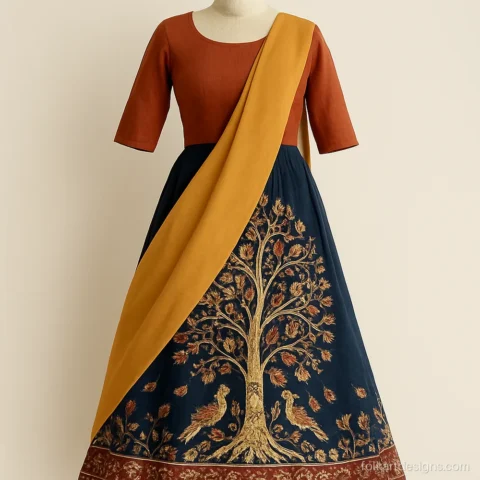
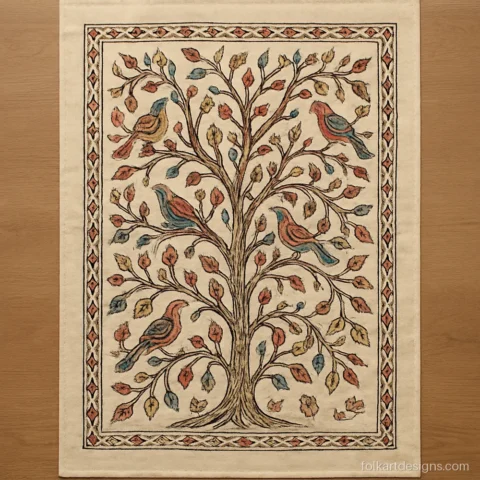
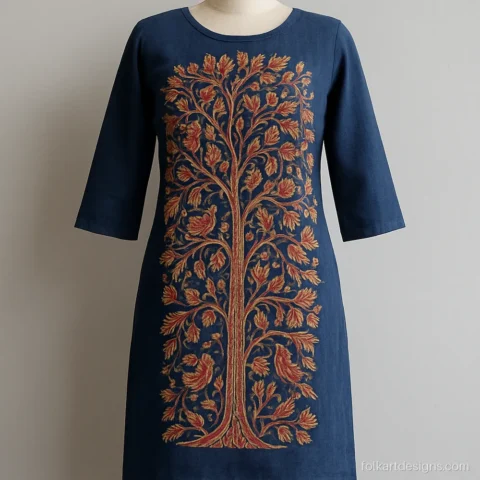
The pallu carries one big tree of life, drawn branch by branch with a bamboo pen. A strong pick for weddings and family functions.
Artist tip Turn the pallu over: on true pen work the dye shows clearly on the back too.
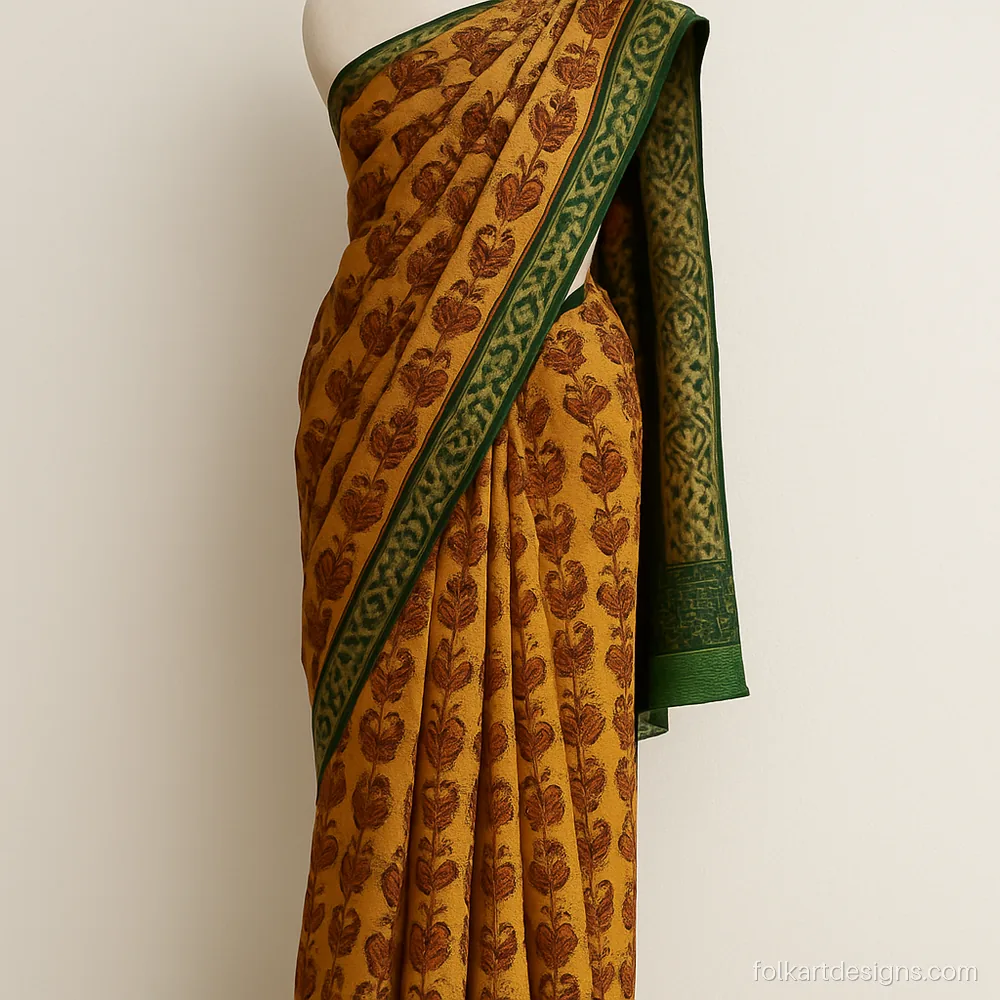
Rows of small peacocks march along a mustard body, each one a little different from the next. Good for festive lunches and naming ceremonies.
Artist tip Tiny differences between repeated peacocks tell you the saree was drawn, not machine printed.
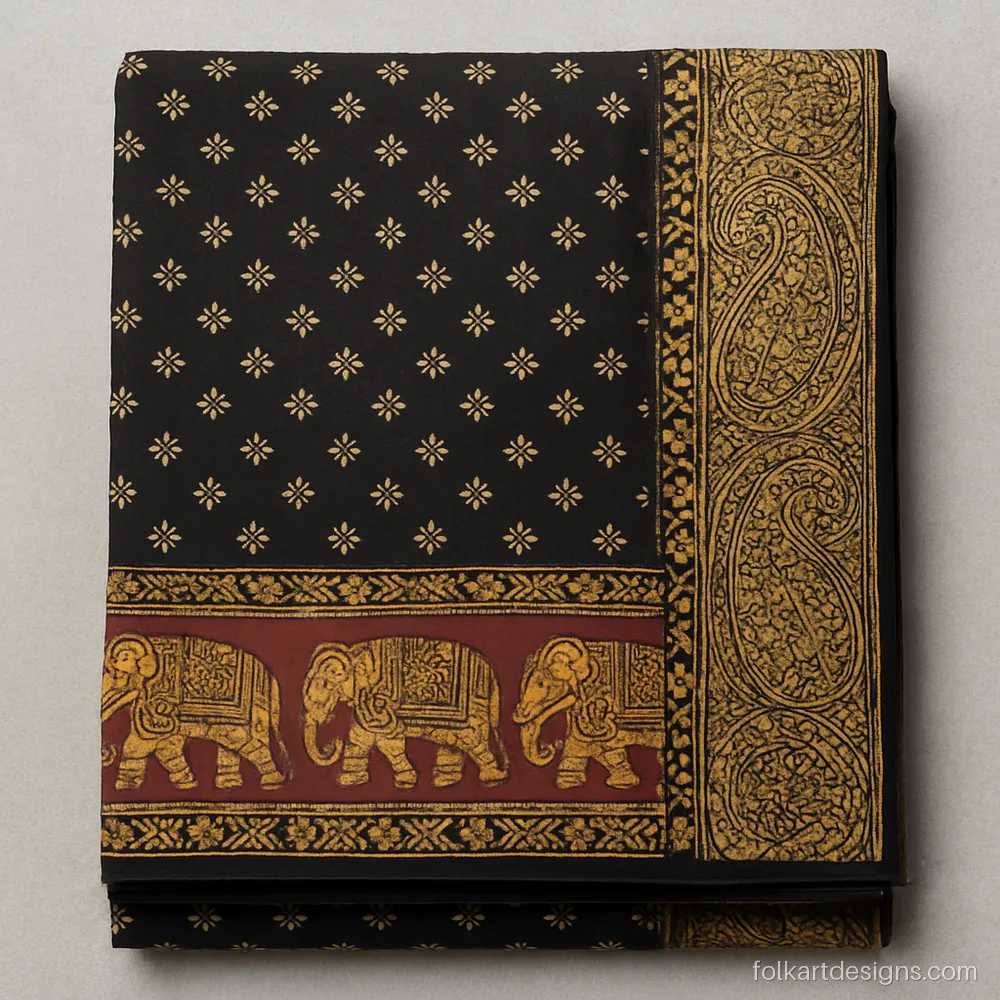
A deep black ground makes the red and yellow elephants stand out. It suits evening events and anyone who likes a bold look.
Artist tip Iron-based black can turn brownish with hot water, so rinse this saree only in cold water.
Kalamkari Cotton Sarees for Everyday Wear
Kalamkari cotton sarees are light, breathable and easy to wash at home. They are the best place to start if you want a first kalamkari piece.
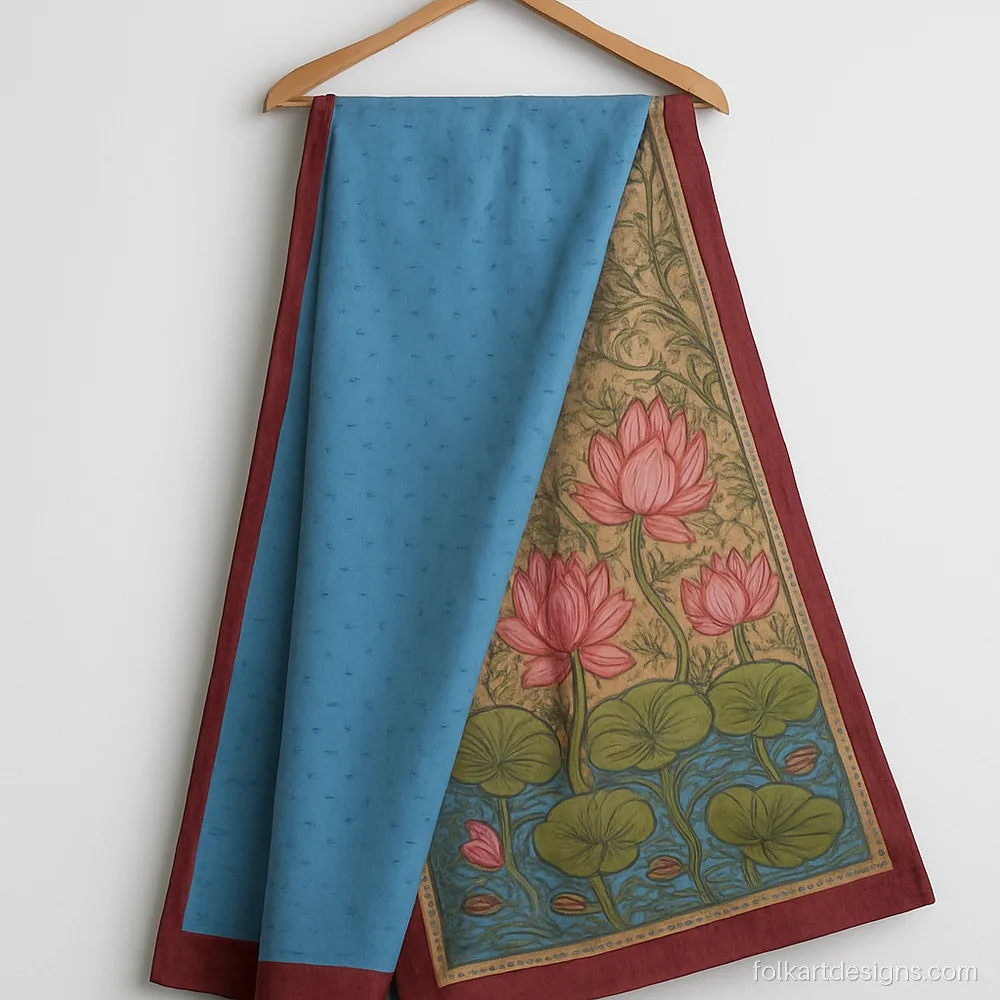
Light cotton with a lotus pond pallu keeps you cool on hot days. Easy for daily wear, teaching and college events.
Artist tip Starch a cotton kalamkari saree lightly so the pleats stay crisp through a long day.

All-over paisleys hide small creases, so this one is practical for busy days. Pair it with a plain black blouse.
Artist tip Machilipatnam block prints have crisp repeats, while pen work has wavier lines. Both are genuine.
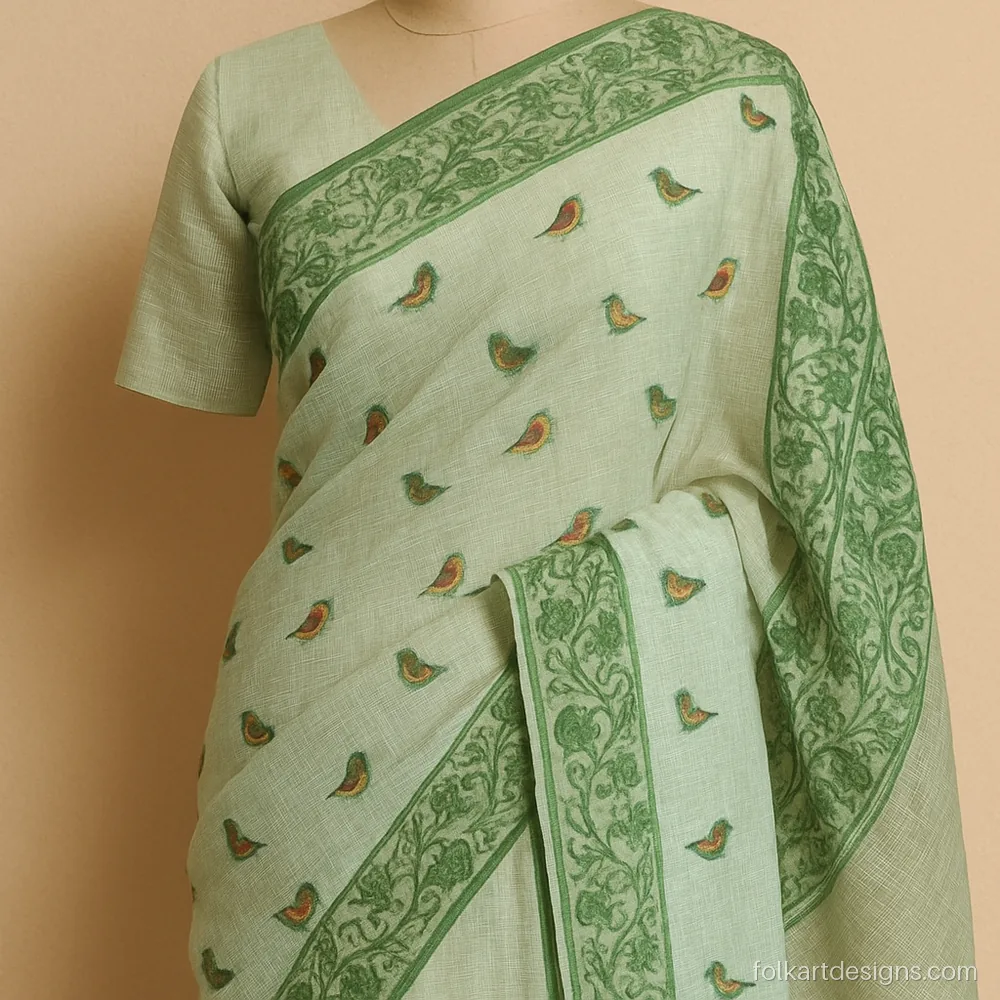
Sheer kota checks with small printed birds give a very light drape. Good for summer office days and travel.
Artist tip Kota is see-through, so choose a cotton petticoat in exactly the same shade.
How to Spot an Original Kalamkari Saree
Many shops sell a screen printed copy as an original kalamkari saree. Check these points before you buy:
- Small irregularities. Pen lines vary in thickness and repeated motifs are never identical.
- Slight dye bleed. Natural dyes spread a little into the threads at the edges of each shape.
- Colour on the back. Turn the fabric over. On pen and block work the colour soaks through. Screen prints look pale on the reverse.
- Earthy smell and tone. Natural dyes give soft, slightly muted shades, not neon brightness.
A pen kalamkari saree costs more than a block print because one saree can take weeks of drawing and dyeing. Silk, natural dyes, zari and a heavily drawn pallu also raise the price.
Kalamkari Silk Sarees, Pattu and Mysore Silk
Kalamkari silk sarees add sheen and weight, so they work for weddings, receptions and big family days. Natural dyes look slightly softer on silk than on cotton.
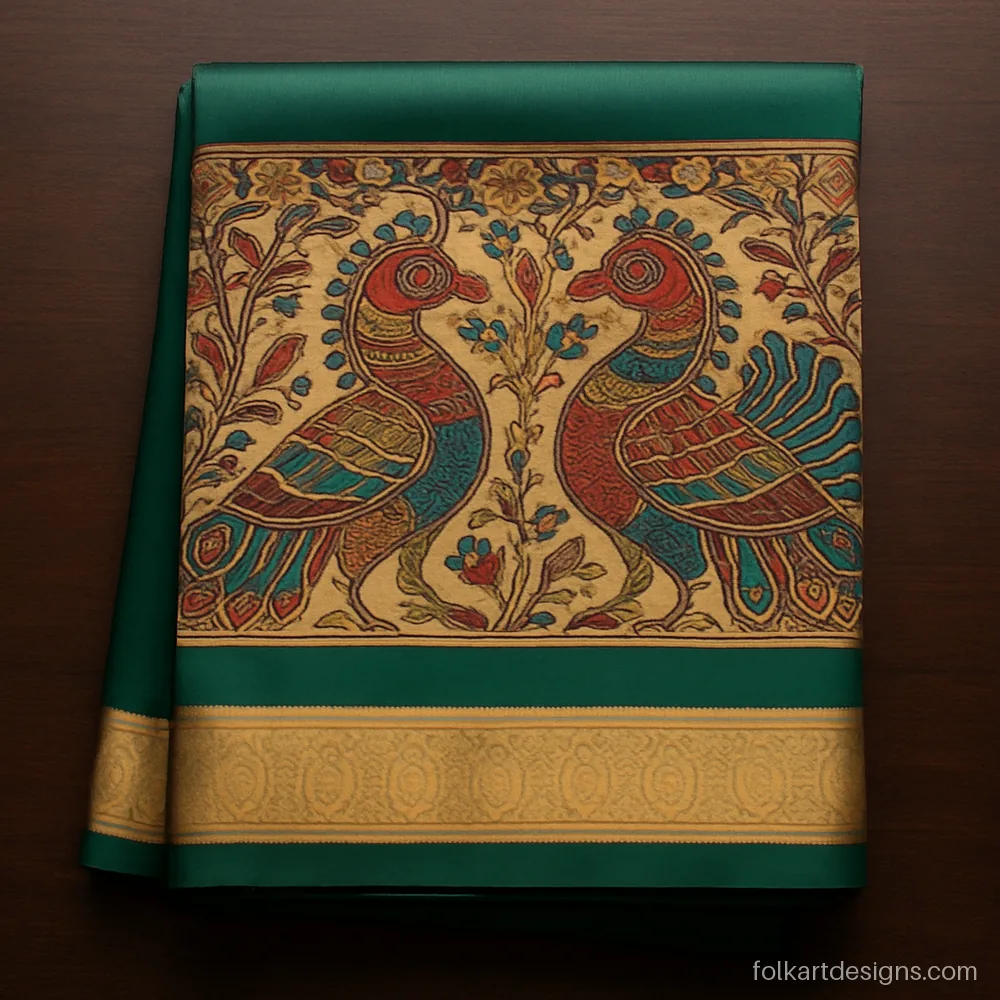
The pattu body brings sheen and zari, while the kalamkari pallu brings the story. A fine choice for weddings and receptions.
Artist tip Wrap pattu sarees in soft cotton cloth and refold them every few months to protect the zari.

Mysore silk is light and smooth, so it drapes neatly for long events. The lotus buttas keep the look gentle and graceful.
Artist tip Mysore silk crushes easily, so press it gently on a cool setting through a muslin layer.
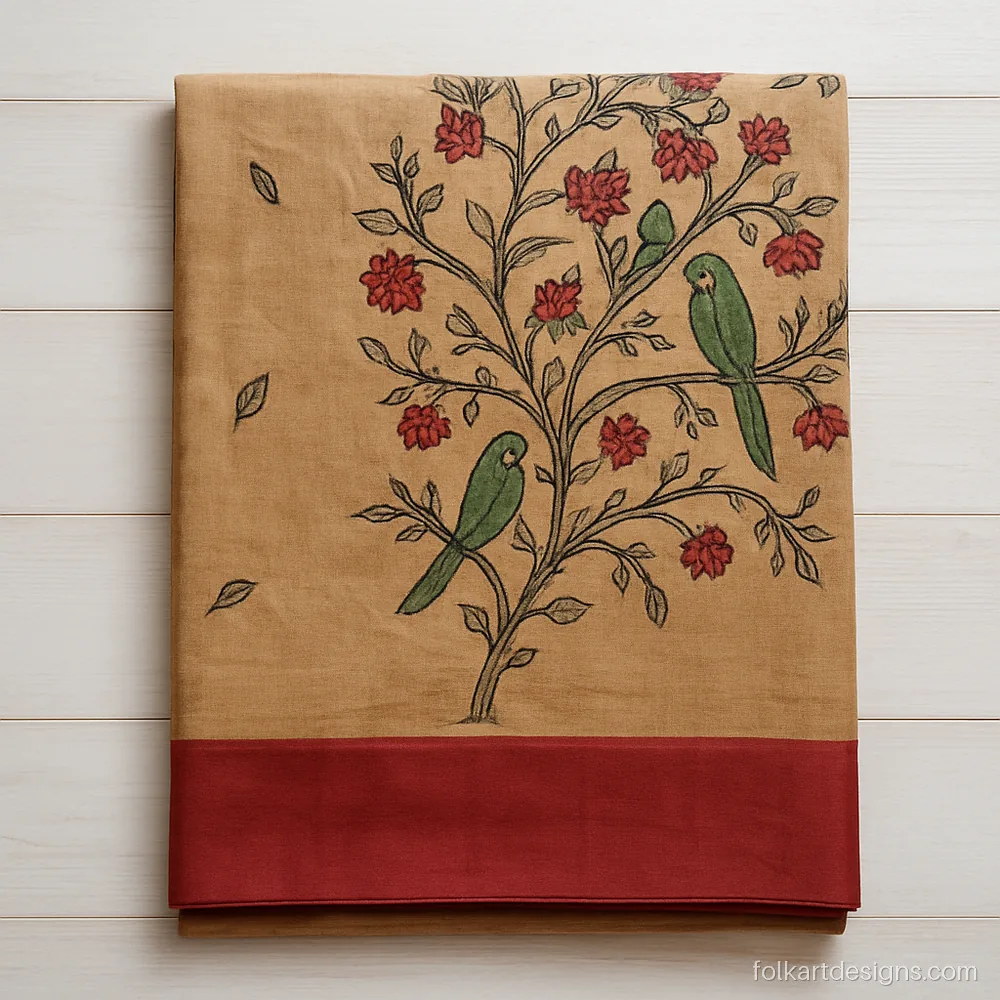
Tussar has a slightly rough, golden texture that suits earthy dyes. It looks rich without a single thread of zari.
Artist tip Tussar takes dye a little unevenly; that soft patchiness is natural, not a fault.
Kalamkari Sarees with Contrast Borders
A contrast border frames the printed body and makes even a simple saree look dressy. Kanchi style and pattu borders are the most loved.
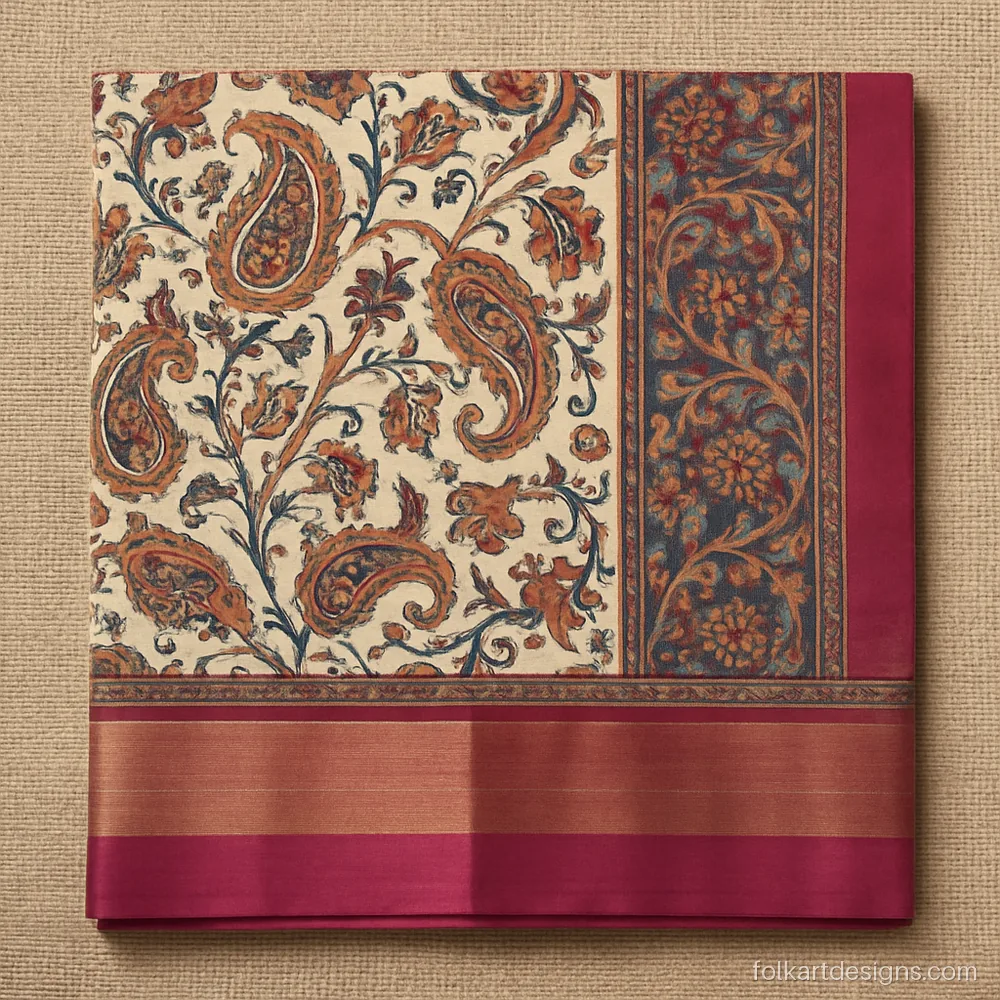
A heavy Kanchi style border frames a light printed body, so you get silk shine with less weight. Good for family weddings.
Artist tip Match your blouse to the border colour, not the body, for a neat finish.
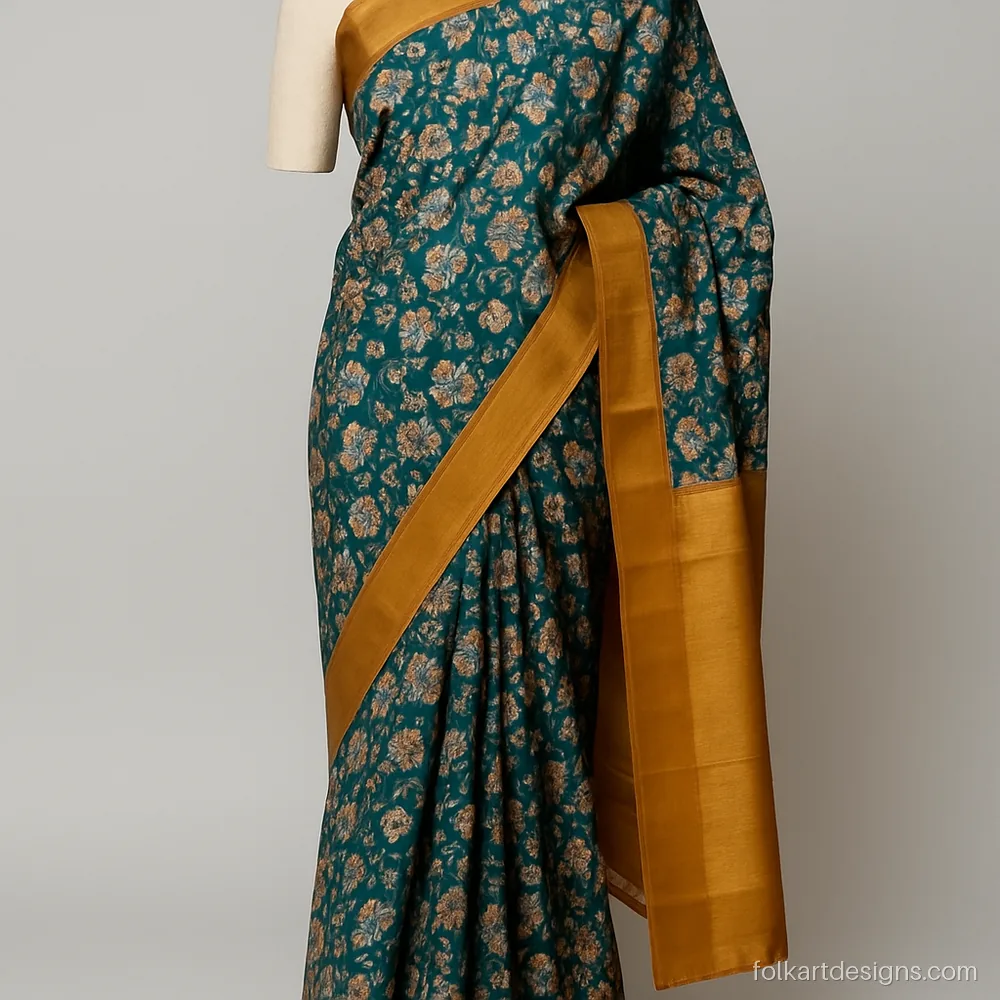
Teal and mustard is a classic South Indian pairing that flatters most skin tones. It works for festivals and evening functions.
Artist tip Wear gold or oxidised jhumkas; both suit a teal and mustard kalamkari drape.
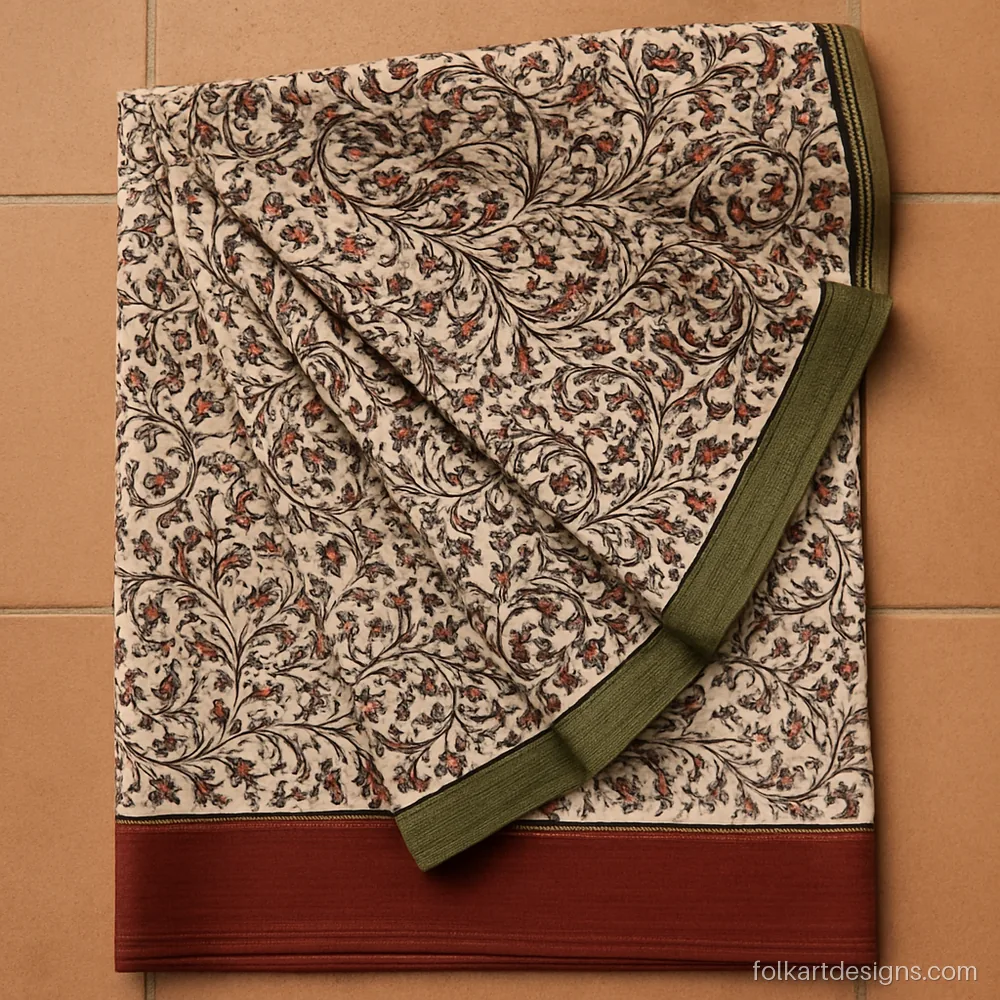
One border is red and the other is green, so the saree shows a different colour on each edge. A fun, budget friendly way to look dressed up.
Artist tip Drape with the green border showing in front for day and the red border for evening.
Kalamkari Print Saree Ideas for Office Wear
For office wear, pick smaller motifs, calm colours and light fabric. A kalamkari print saree with tiny buttis looks neat from morning meetings to the commute home.
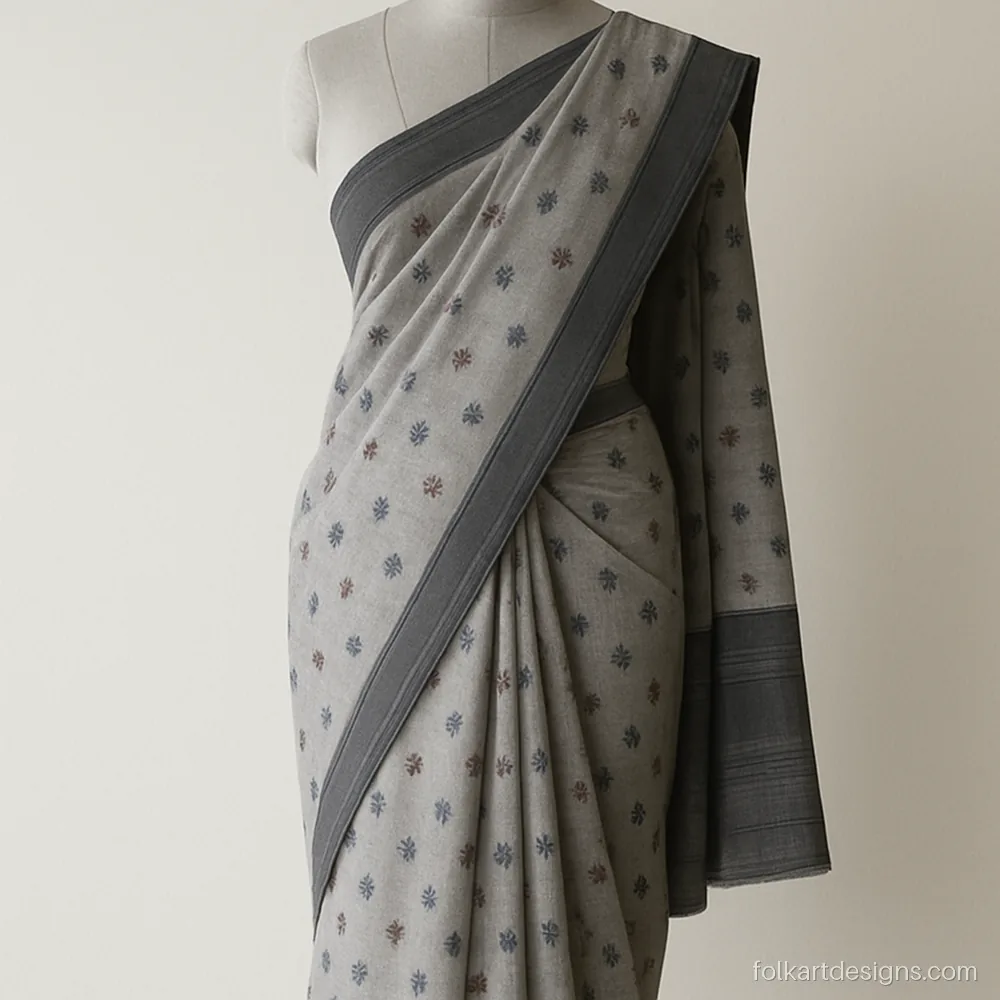
Mangalagiri cotton has a crisp weave, and the small buttis keep it calm and professional. Ideal for teachers, bankers and office staff.
Artist tip Keep office drapes simple: five or six pleats and a pinned, narrow pallu.
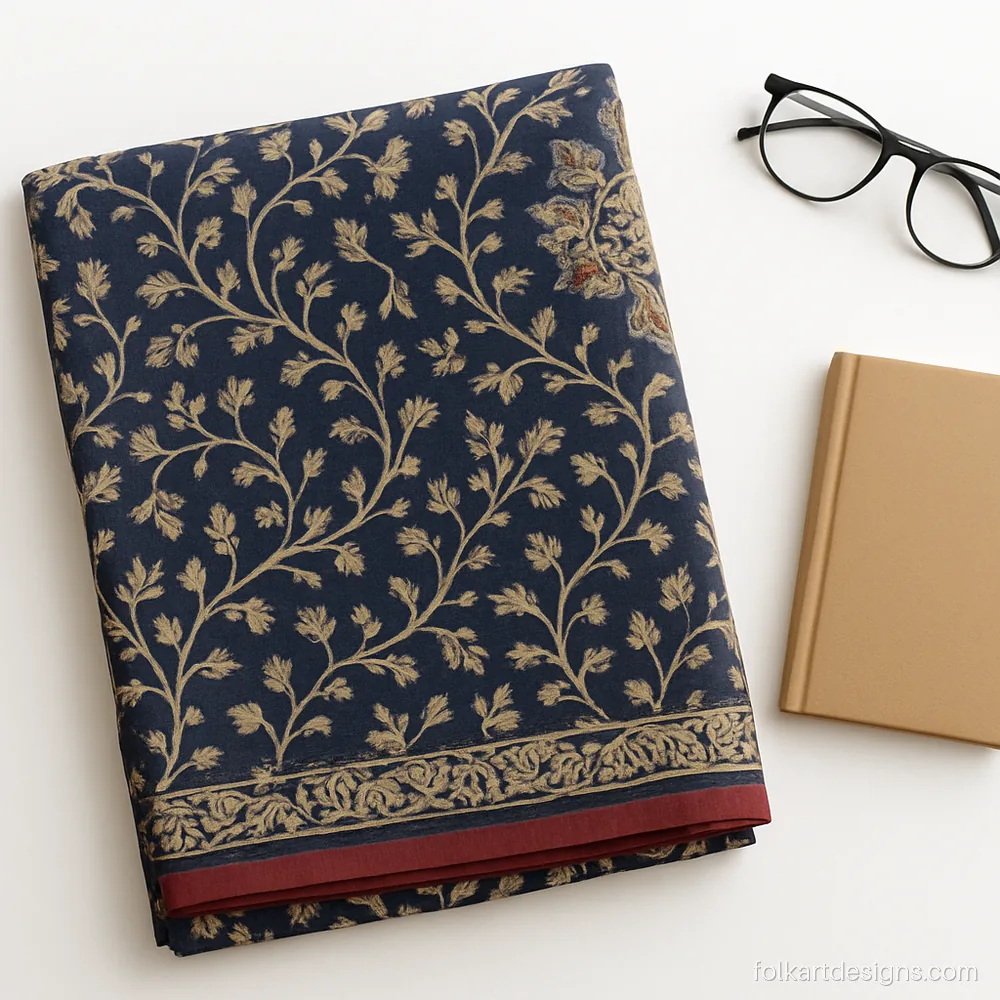
Navy reads formal, and the thin red border adds just a little colour. Good for interviews, presentations and parent meetings.
Artist tip A blue kalamkari saree like this pairs well with a plain white or grey cotton blouse.

Chanderi has a soft sheen that looks smart without being heavy. A lovely choice for office parties and seminars.
Artist tip Chanderi is delicate, so dry clean the first time and avoid wringing it after any wash.
Festive Kalamkari Saree Designs
Festive kalamkari sarees use bright grounds, bigger motifs and sometimes zari. These pieces suit Diwali, Onam, Pongal and wedding season.
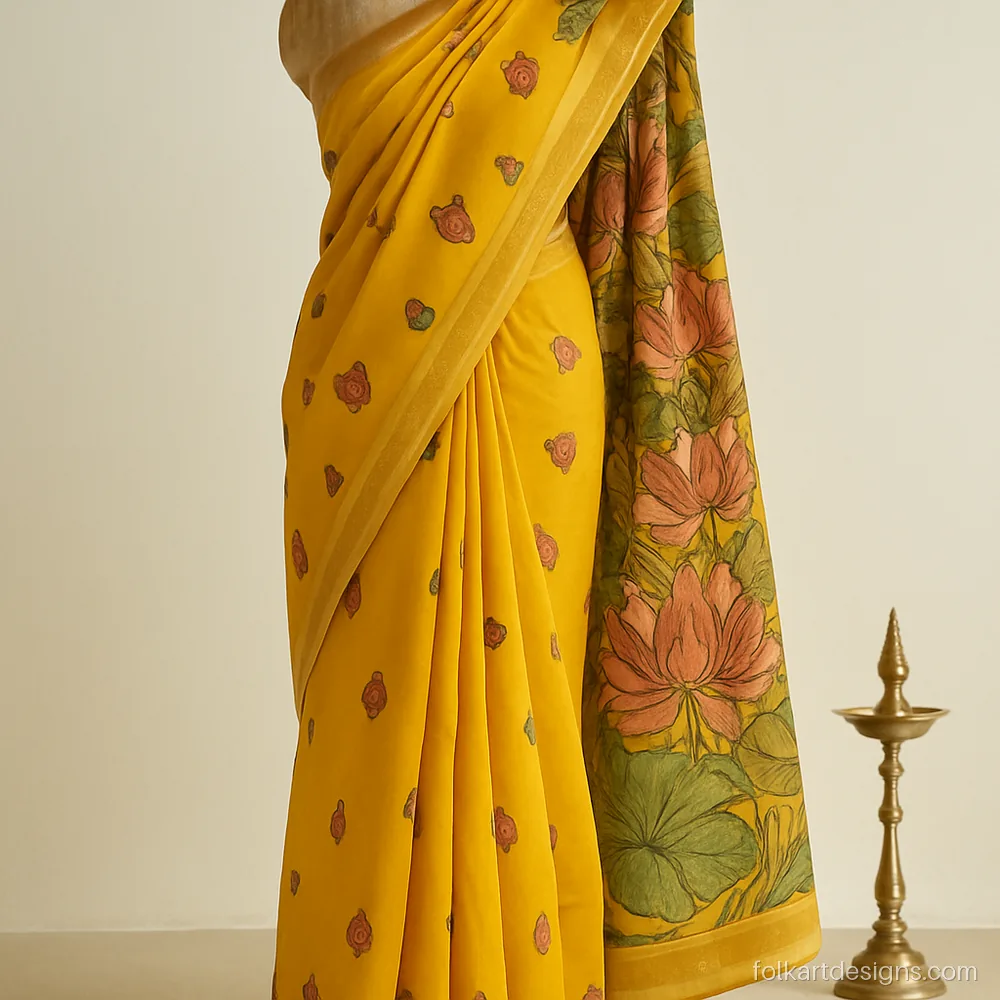
Bright turmeric yellow with pink lotuses feels joyful and fresh. Perfect for haldi functions and daytime festivals.
Artist tip Pomegranate rind yellow is gentle and dulls under harsh sunlight; hang this one reversed under a shady roof.

Georgette flows well and keeps the drape slim, while the parrots and vines add movement. Great for sangeet nights.
Artist tip Georgette slips, so use two safety pins at the shoulder and one at the pleats.
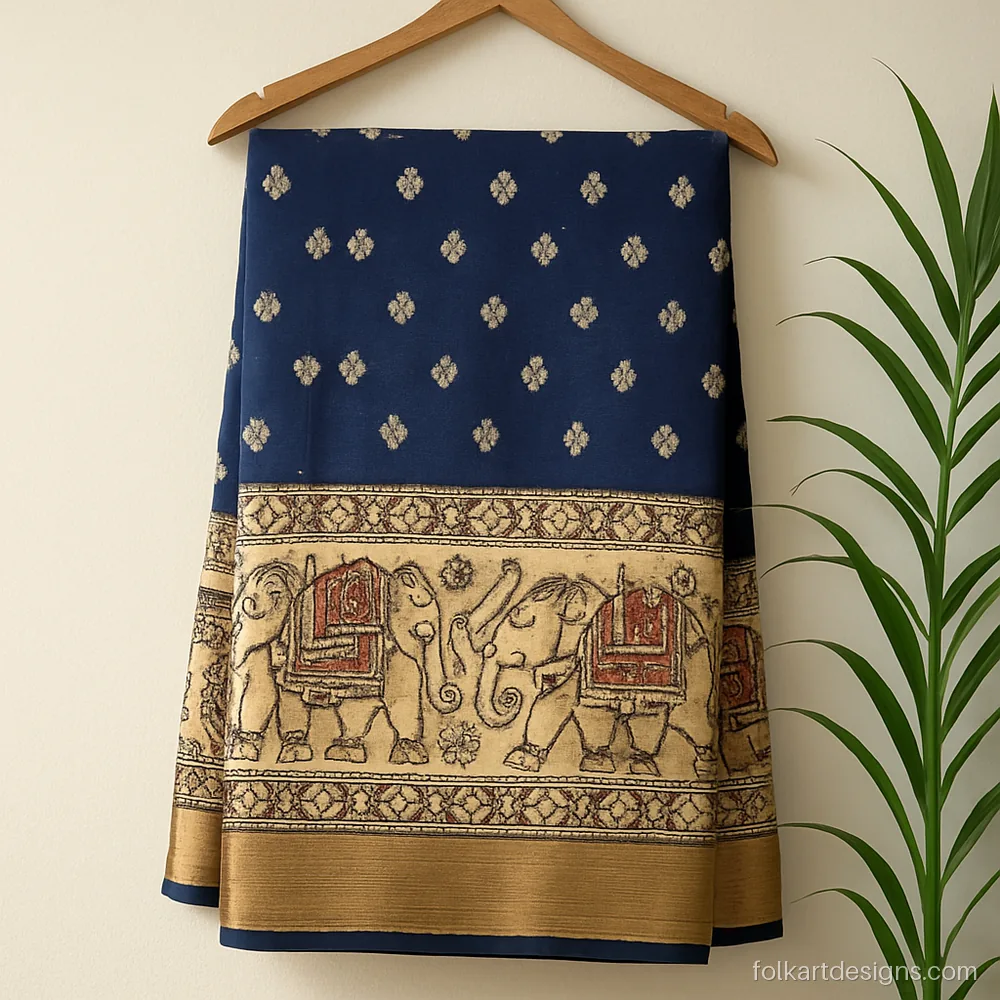
Deep indigo with cream elephants feels regal but not loud. A good saree for Diwali dinners and anniversary parties.
Artist tip Natural indigo may bleed a little in the first wash, so soak it alone in cold salted water.
Kalamkari Saree: Cotton or Silk, and How to Style It
| Fabric | Feel | Best for |
|---|---|---|
| Cotton | Light, breathable, matte | Daily wear, teaching, summer |
| Kota or chanderi | Sheer, airy, soft sheen | Office, travel, light events |
| Mysore silk | Smooth, light, drapes close | Receptions, office parties |
| Pattu or tussar silk | Rich, heavier, golden sheen | Weddings, festivals |
Busy prints look best with a plain blouse in a colour picked from the border. Plain body sarees with a drawn pallu can take a printed blouse. For lighter pieces in the same craft, see kalamkari half sarees and kalamkari dupattas.
Caring for Kalamkari Sarees
- Dry clean silk and zari pieces. Give cotton sarees a gentle swish in a bucket of cool water and a little mild soap.
- Do not soak printed cotton for more than ten minutes, and never use bleach.
- Dry in shade, inside out, so the natural colours stay rich.
- Press the reverse side, keeping the iron warm for cotton and barely warm for silk.
- Fold in muslin and air the saree every few months.
If you want to buy the cloth by the metre for your own stitching, our kalamkari fabric guide explains widths and fabric types.
Questions about these designs
Is a kalamkari saree cotton or silk?
It can be either. Cotton is the most common and the easiest to care for, while silk versions include pattu, Mysore silk and tussar. Choose cotton for daily wear and silk for weddings and festivals.
What is the difference between pen kalamkari and a kalamkari print saree?
Pen kalamkari, the Srikalahasti style, is sketched outline by outline using a sharpened bamboo kalam. A print saree is made with carved wooden blocks in the Machilipatnam style, or sometimes with a screen. Pen work has wavier, uneven lines and costs more because it takes far longer.
Which state are kalamkari sarees from?
The craft belongs to Andhra Pradesh, where Srikalahasti leads in pen drawing and Machilipatnam in block printing. Today the sarees are worn all over India.
How do I identify an original kalamkari saree?
Look for small irregularities in the lines, a slight bleed of dye at the edges, and colour that shows clearly on the back of the cloth. Natural dyes give softer shades than chemical screen prints.
Do kalamkari sarees fade?
Natural dyes fade slowly with time, which many people like. Washing in cold water, drying in shade and avoiding harsh detergents keeps the colours bright for years.
What blouse goes with kalamkari pattu sarees?
Pick a plain silk blouse in the border colour or in a deep contrast like maroon or bottle green. A kalamkari printed blouse can also work if the saree body is plain.