Madhubani Painting: Mithila Art from Bihar, Its Styles and Colours
24 designs Madhubani art Updated 9 Oct 2026
Madhubani painting is the folk art of the Mithila region, known for double outlines, bright colours and a page with no empty space. Women around Madhubani and Darbhanga painted it on mud walls and floors. Today it appears on paper, cloth, canvas and sarees.
This madhubani folk art gallery has 24 original pieces, from classic bharni work to wedding motifs and murals, each with its medium, motifs, best use and a tip.
Want patterns to copy? See our madhubani art designs page.
Classic Madhubani Painting: Double Outlines and Bright Fills
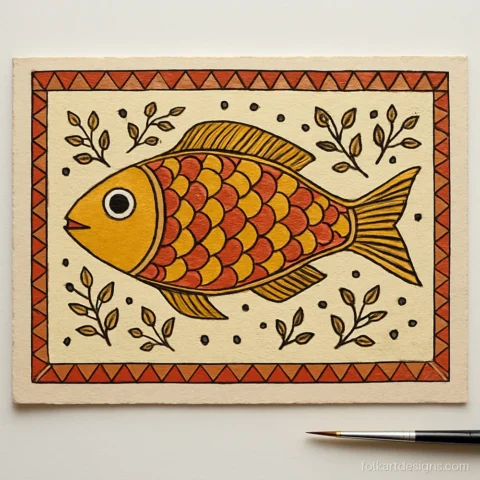
The look most people picture: a black double outline, flat bright colour and no bare paper. Bharni fills shapes with solid colour, kachni uses fine hatching and godna repeats small tattoo-like marks.
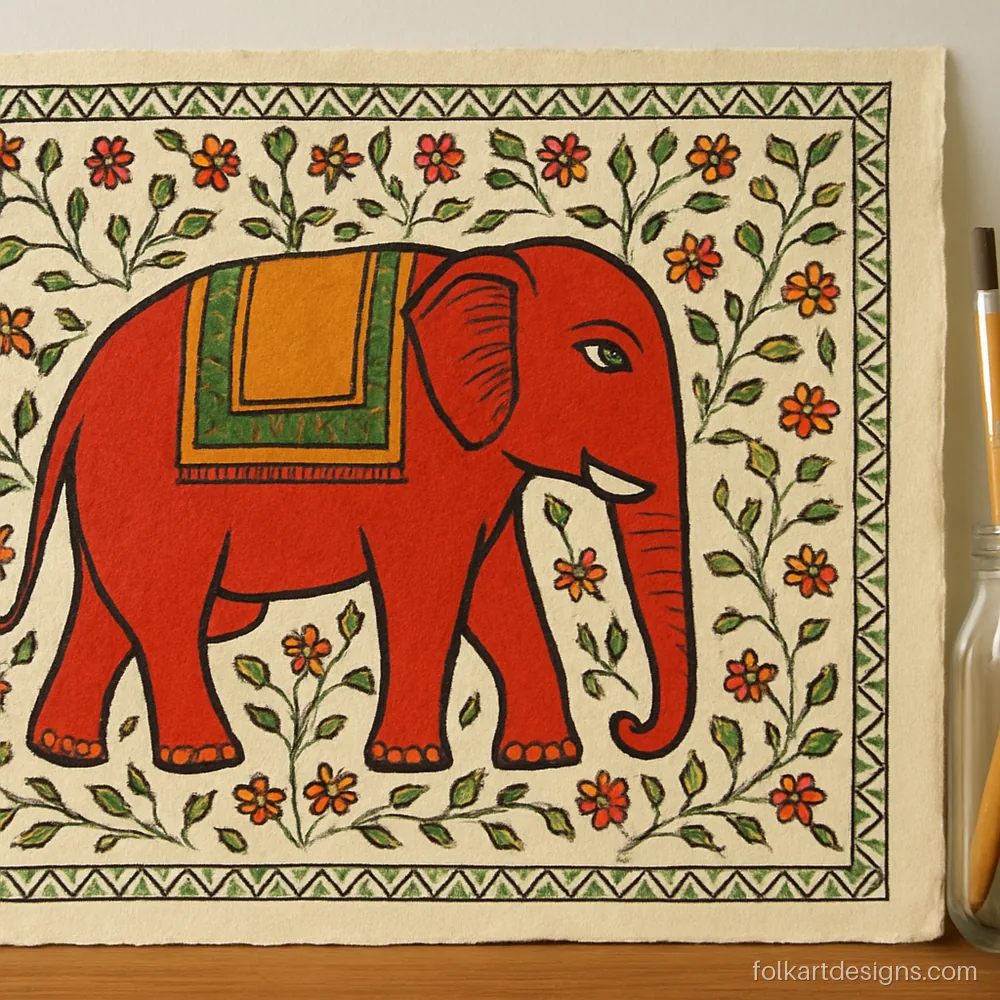
Solid red, yellow and green inside a double black line. Bold enough to read from a hallway.
Artist tip Paint the flat colour first and add the double outline last, so the black stays crisp.
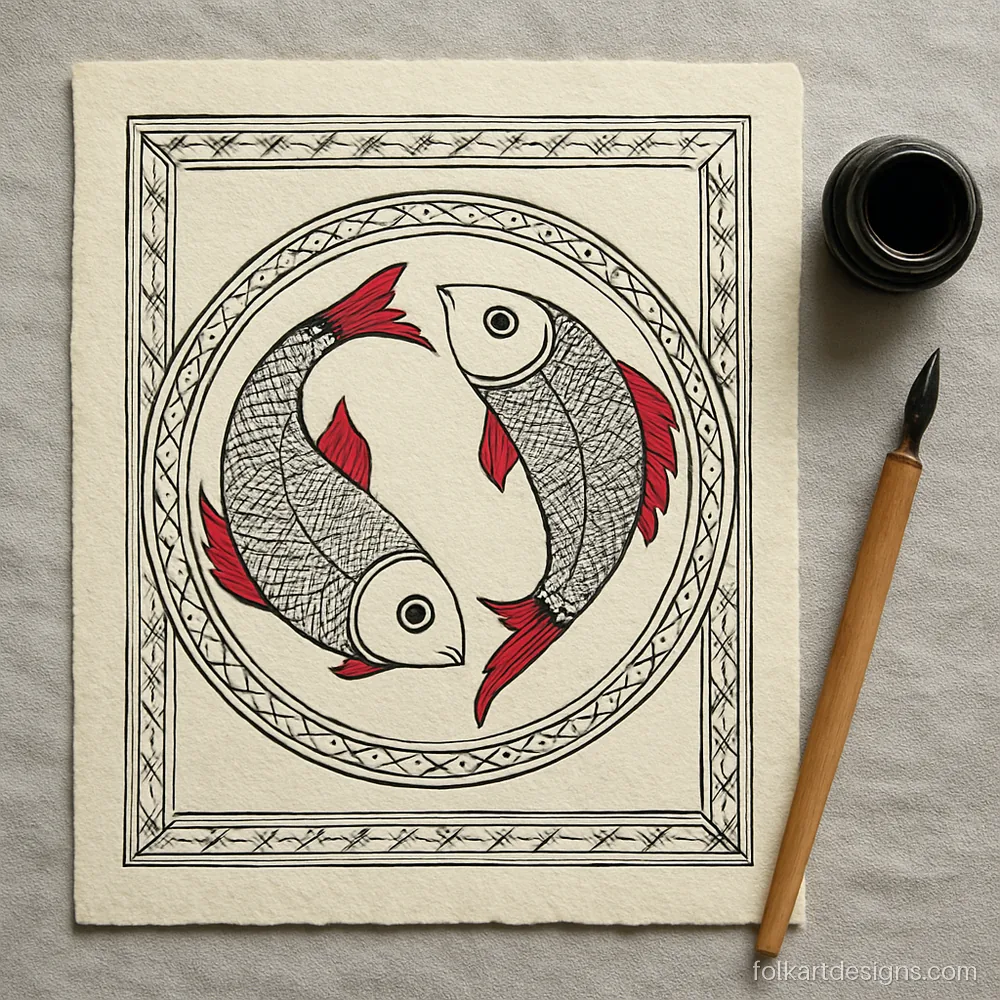
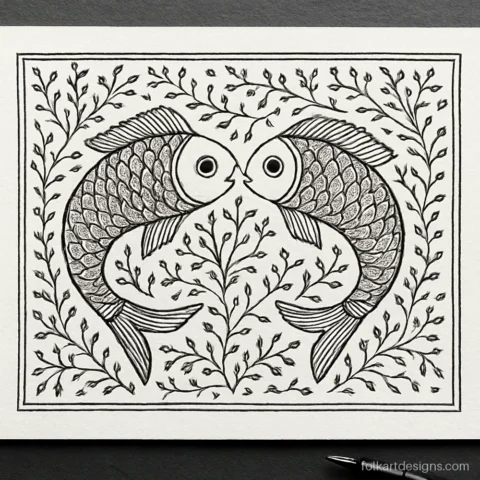
Kachni needs only two inks. Close hatching gives the fish their scales and shade.
Artist tip Keep a steady speed with a 0.1 mm pen. Slow strokes wobble and fast ones skip.
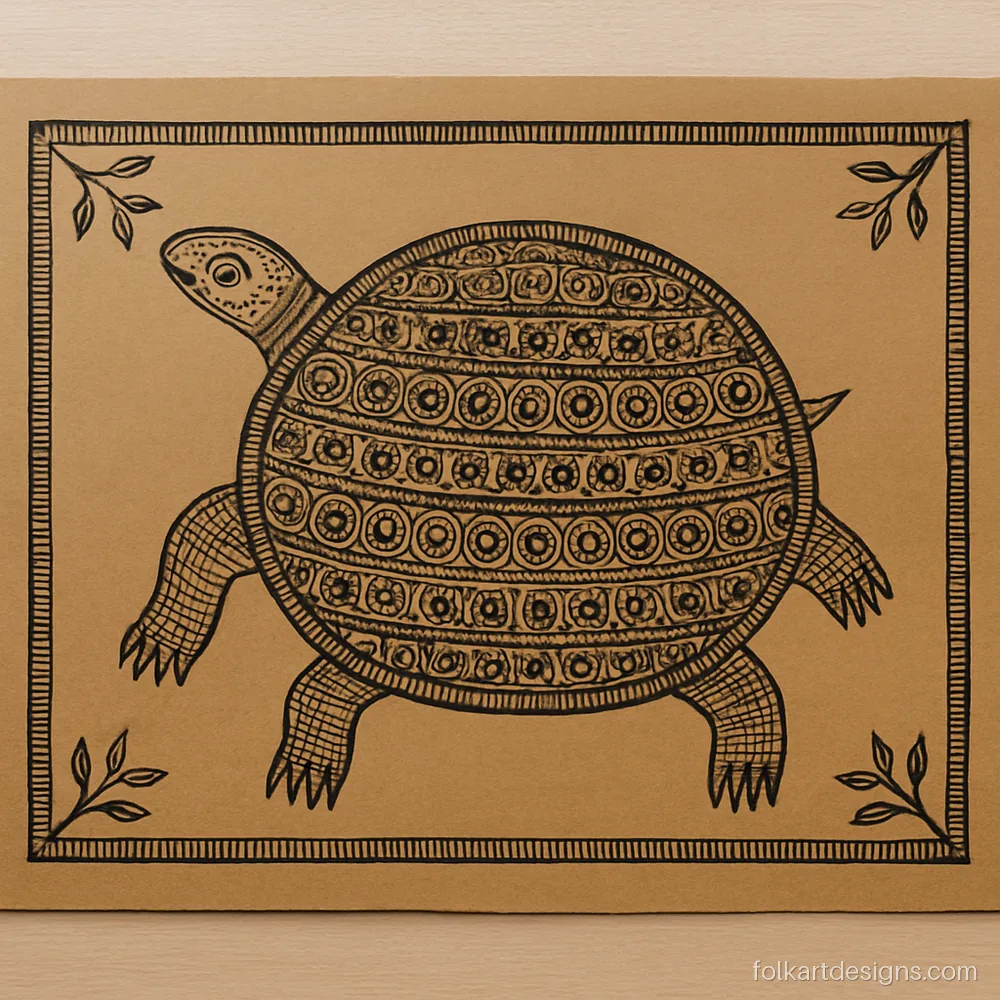
One small mark, repeated in rows, turns the shell into a tidy grid.
Artist tip Choose one mark, like a ring or a short dash, and repeat it in rows before switching.
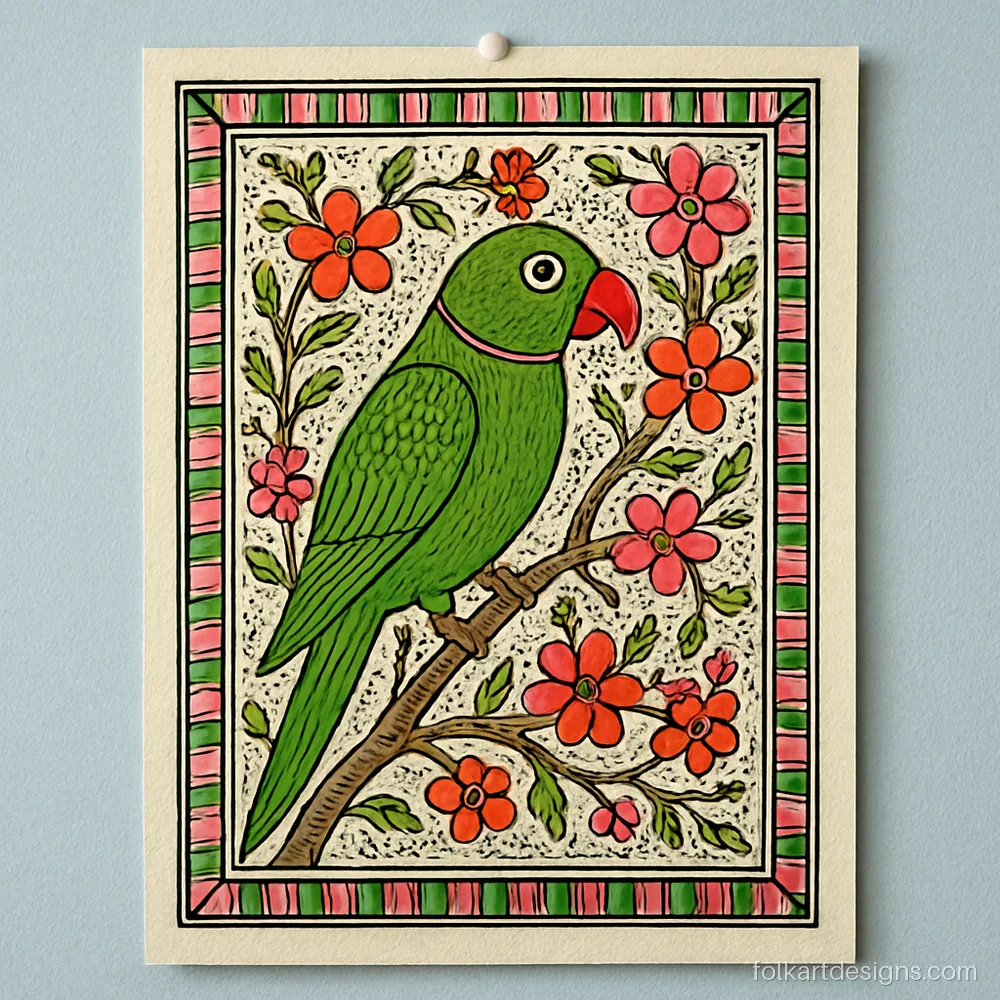
A beautiful madhubani painting needs only one subject. Here, a parrot on a flowering branch for a bedroom.
Artist tip Add water to poster colour drop by drop until it spreads smoothly to the outline.
Madhubani Peacocks and Fish Pairs
In Mithila homes the fish stands for plenty and the peacock for beauty. More versions are on our madhubani peacock and fish motifs page.
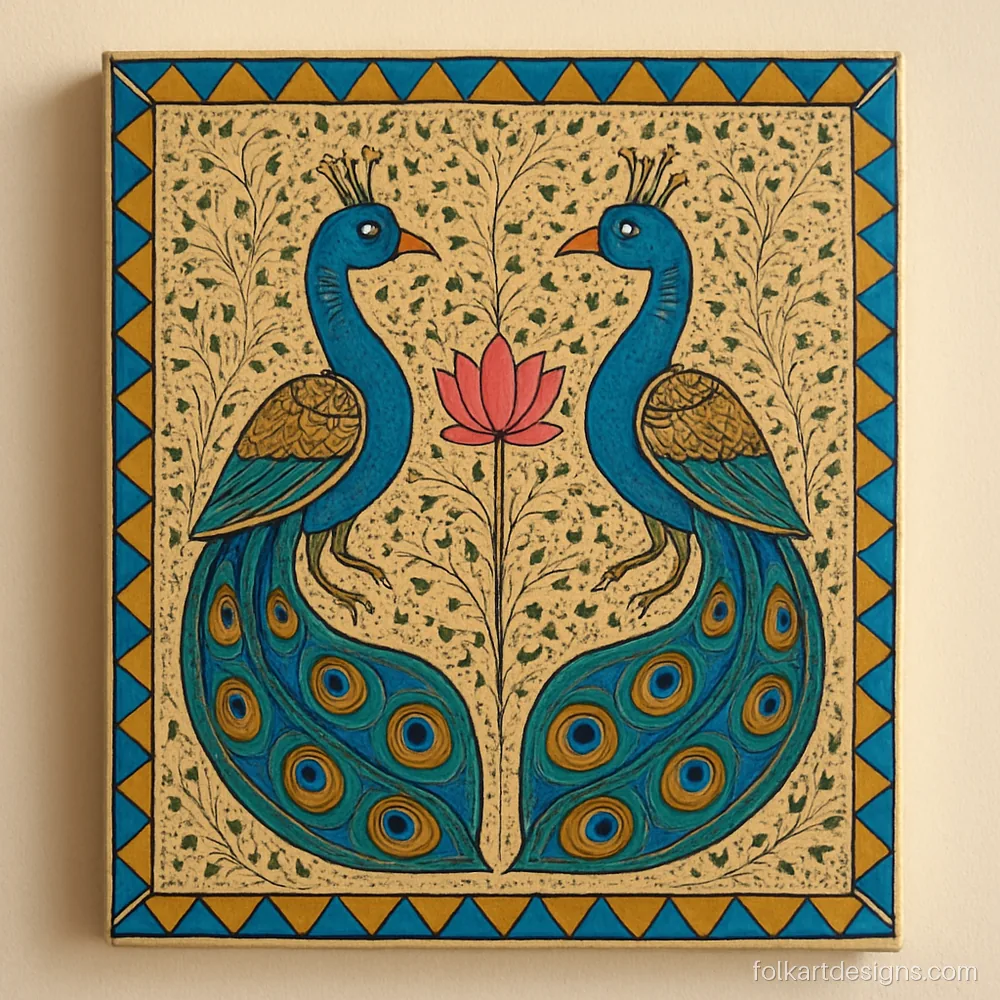
Mirrored birds over a lotus feel balanced above a sofa.
Artist tip Fold tracing paper in half to copy the first peacock as an exact mirror image.
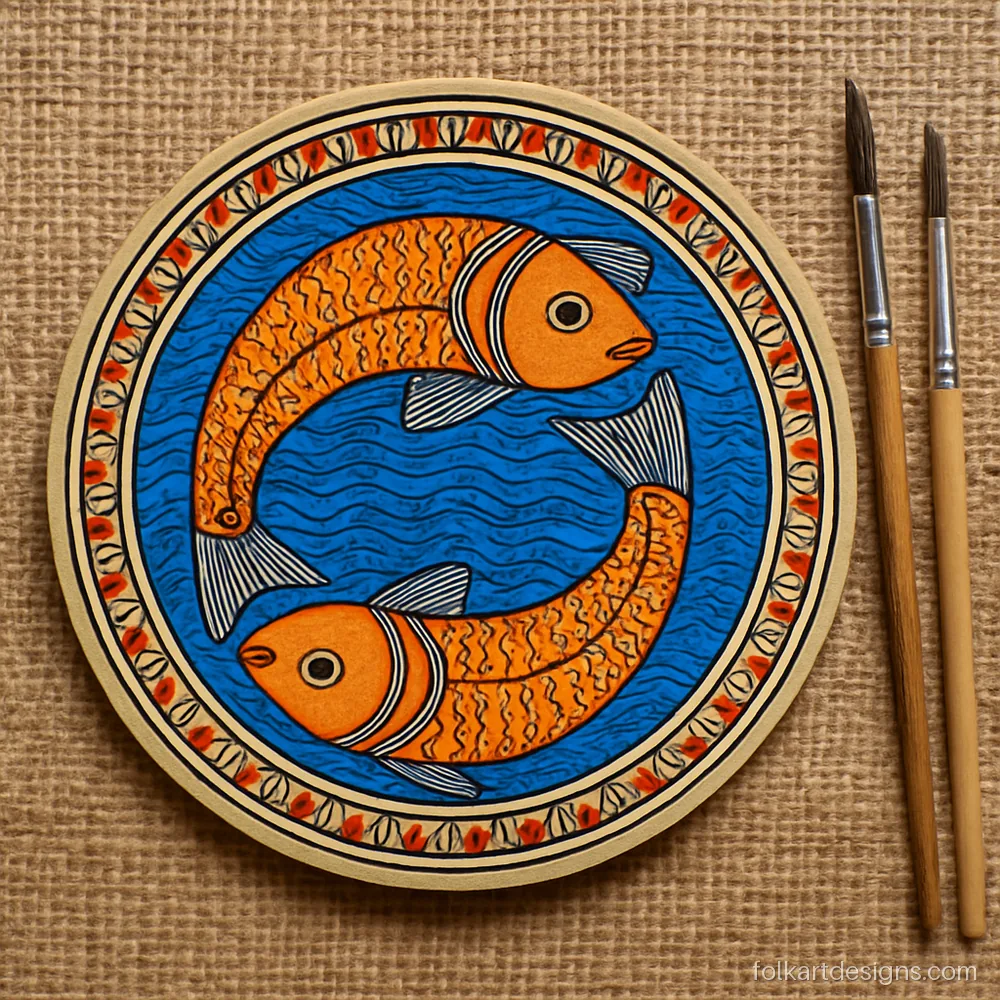
Among the oldest Mithila motifs, set in a ring that suits a round frame.
Artist tip Pencil a light circle first and keep both fish touching that line.
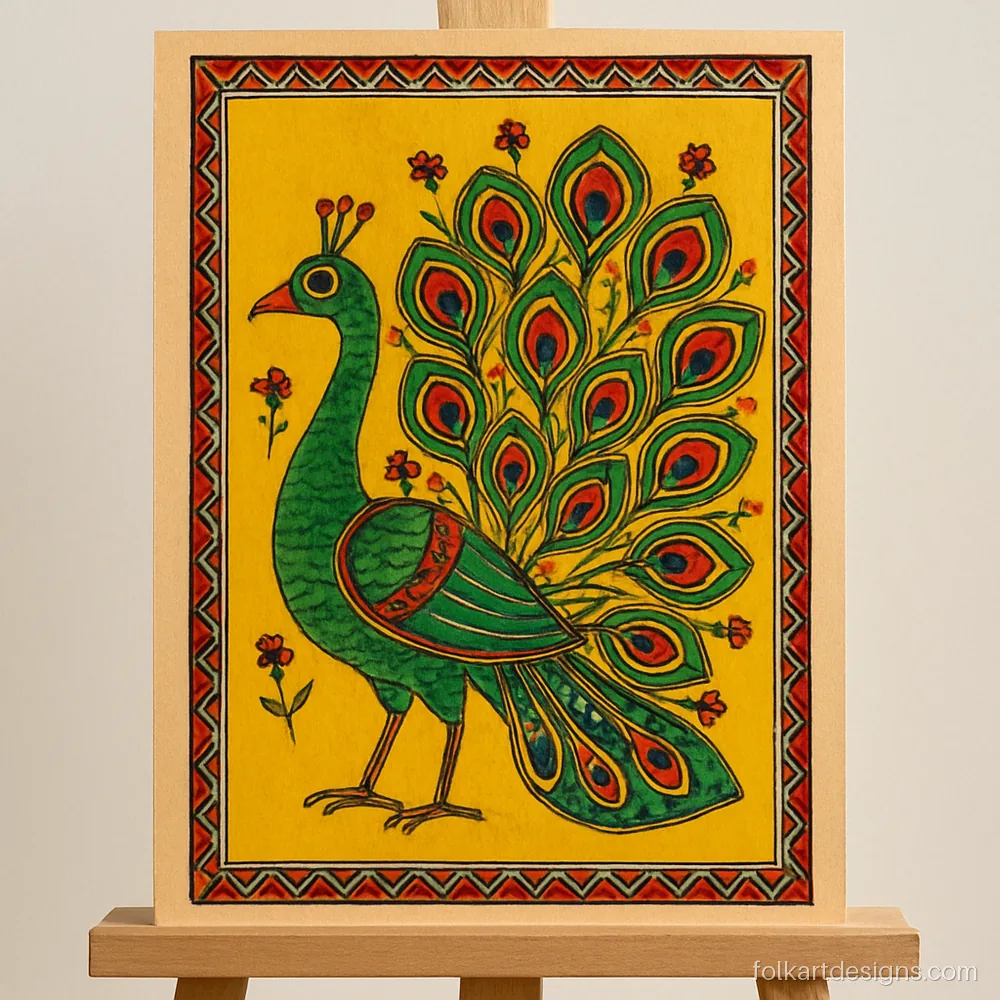
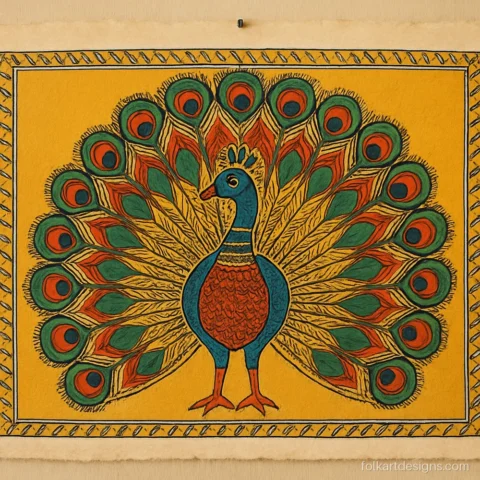
Yellow is a classic Mithila ground, and the tail glows on it.
Artist tip Paint each feather eye as three rings: red, then green, then a small black dot.

Water below, branch above, pen only. A tidy school project.
Artist tip Outline at 0.8 mm and fill at 0.3 mm for two clear line weights.
What Is Madhubani Art? Mithila Painting and Its History
Madhubani art is a folk painting style from the Mithila region of Bihar, chiefly the Madhubani and Darbhanga districts, with the same tradition across the border in Nepal. So for anyone asking madhubani painting which state, the answer is Bihar. It is also called Mithila painting, Mithila art, or in Hindi madhubani chitrakala.
Women painted it on the mud walls and floors of their homes for weddings and family events. Its move onto paper and cloth is the heart of madhubani painting history.
A madhubani painting depicts nature and home life. The famous madhubani painting look rests on three habits: a double outline round every shape, bright flat colour and no empty space, with a border of repeated patterns to close the picture.
Mithila Painting Tree of Life
Trees appear in almost every Mithila wall painting, and one full tree makes a strong centrepiece at any size.

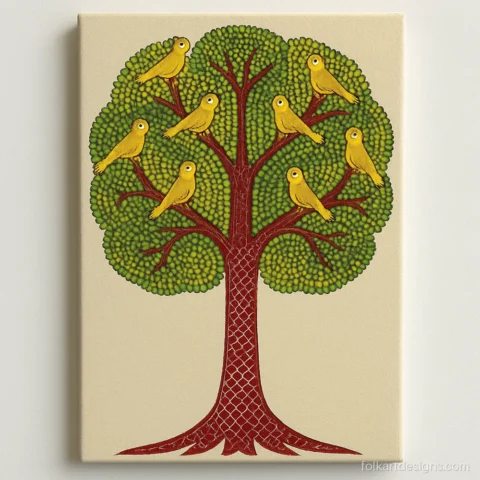
A bird on nearly every branch, and green leaves that pop on red.
Artist tip Draw the trunk and main branches, place the birds, and only then add leaves.
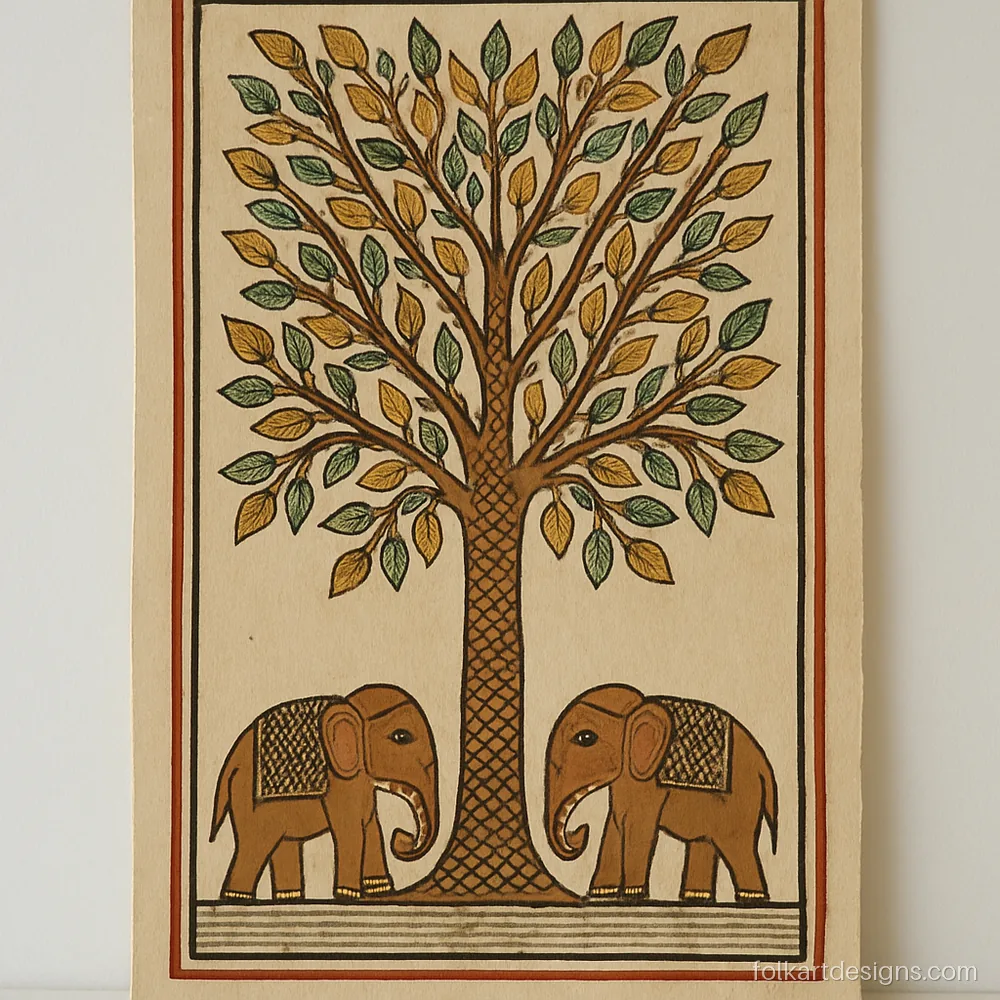
Elephants at the roots anchor the tree. Fits a tall, narrow frame.
Artist tip Natural colours dry matt and dusty. Fix them with a light spray varnish after a day.
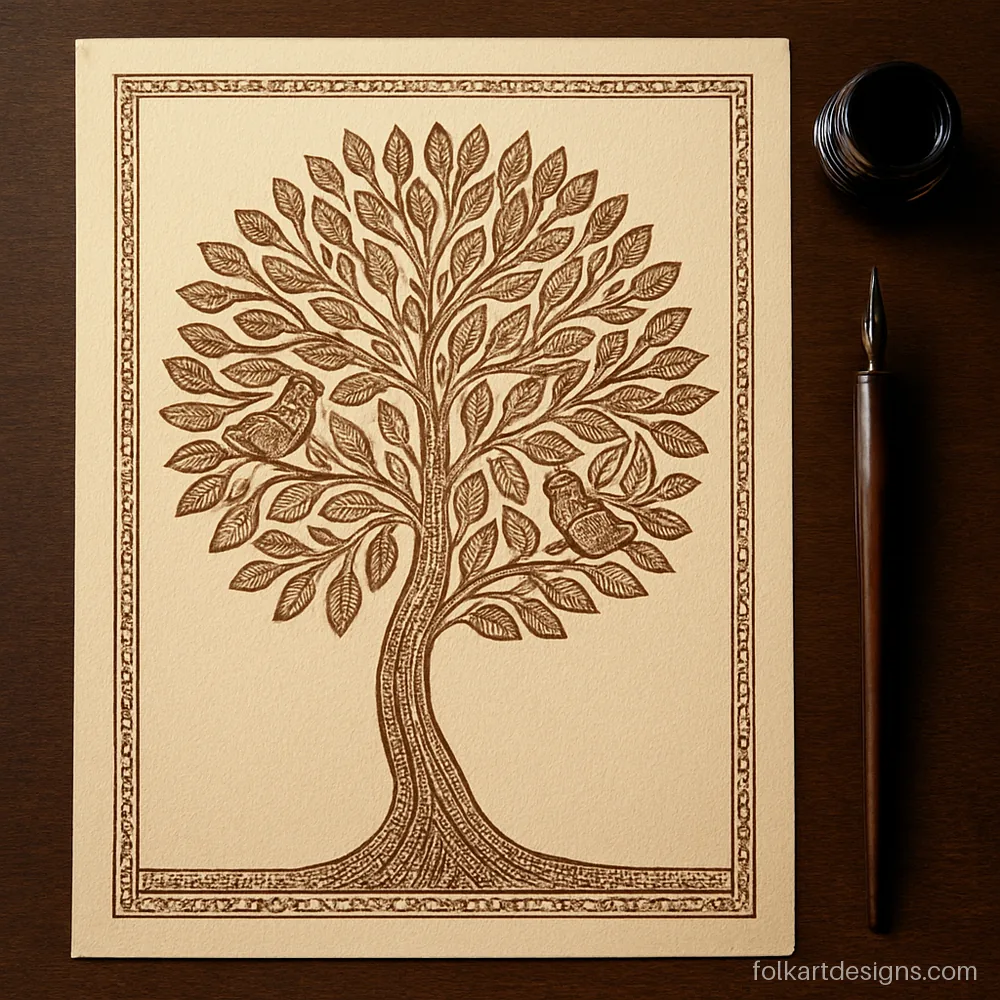
No fills at all. Hatching changes direction leaf by leaf, so it still feels full.
Artist tip Rotate the sheet while hatching so you always pull strokes towards you.
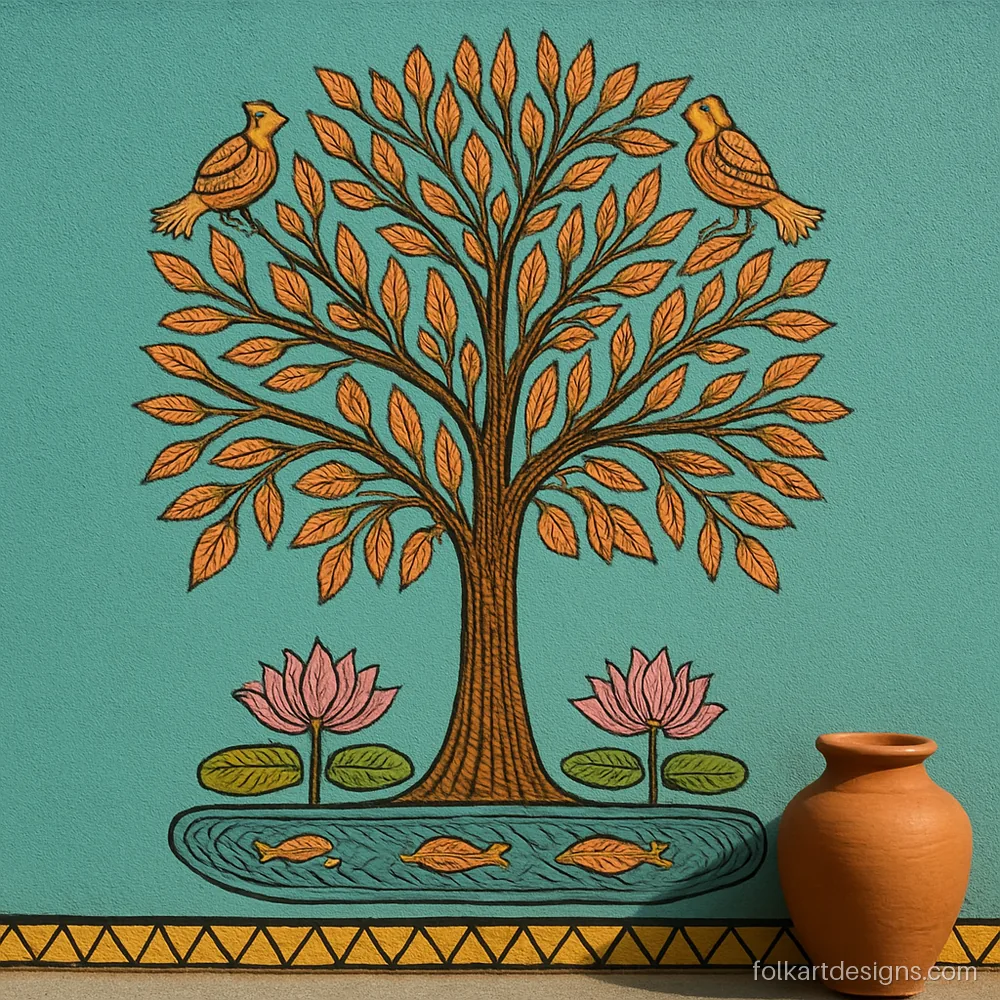
On a wall the tree can grow big, with a lotus pond adding colour low down.
Artist tip Outline with a size 2 liner brush and keep a damp cloth close to wipe slips at once.
Madhubani Sun and Moon Designs
Sun and moon discs often sit in the top corners of a Mithila painting. We paint them as round patterns of rays and petals.
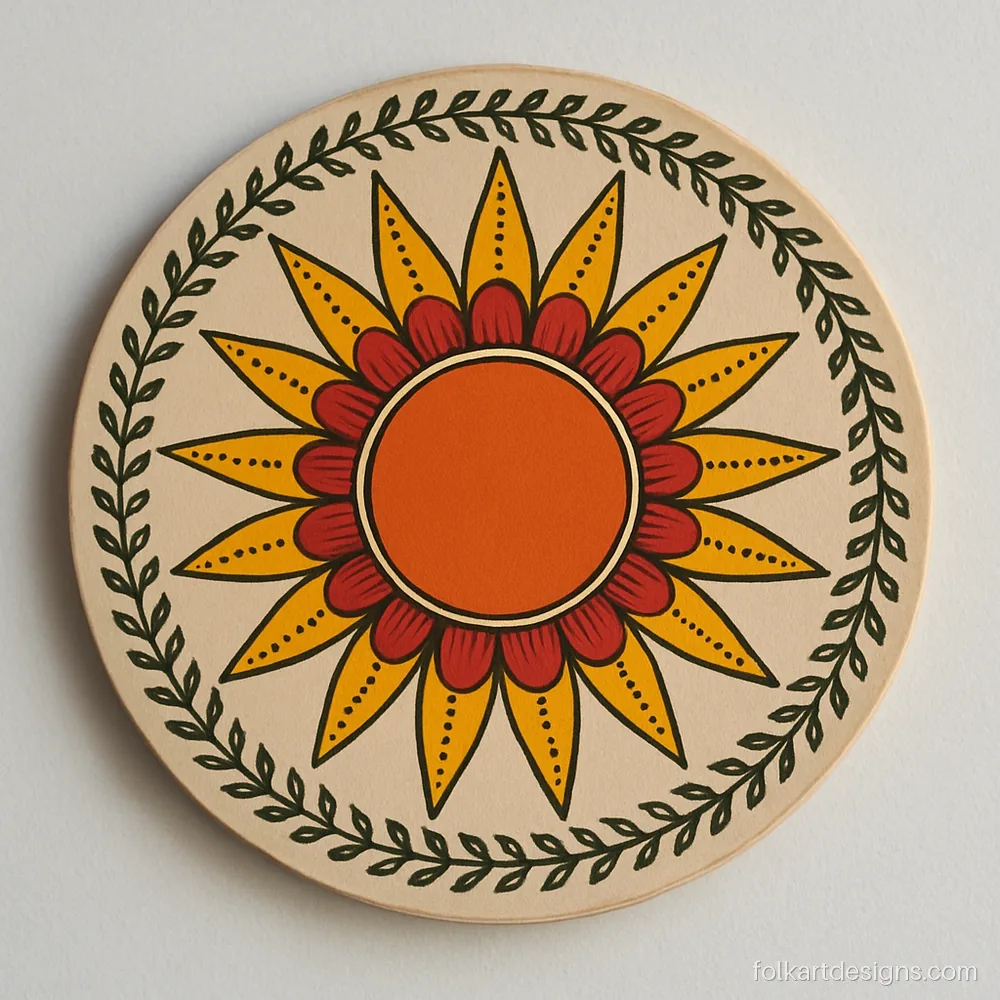
Pure pattern: petals, then pointed rays. Cheerful in a kitchen.
Artist tip Mark 16 rays with a protractor so the points stay evenly spaced.
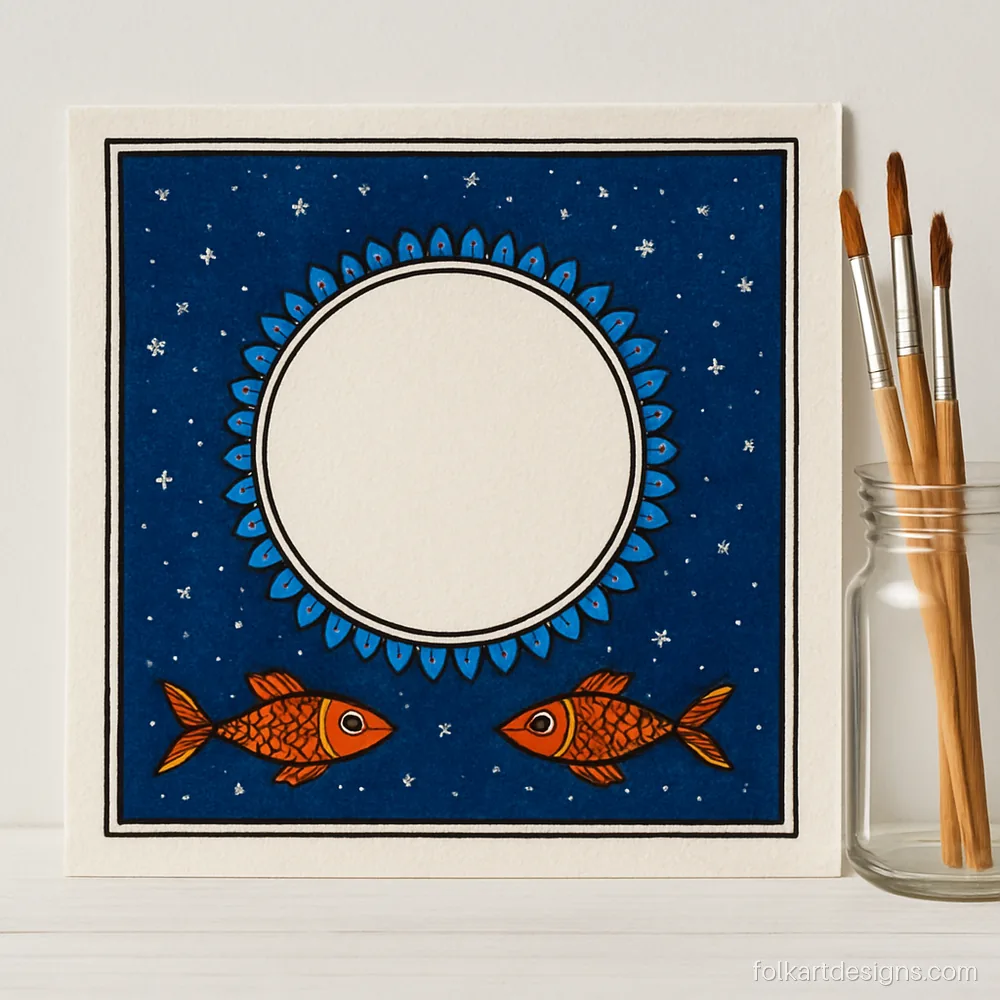
An indigo night with tiny stars. Hang it beside the sun piece.
Artist tip Paint indigo in two thin coats. One thick coat tends to crack as it dries.
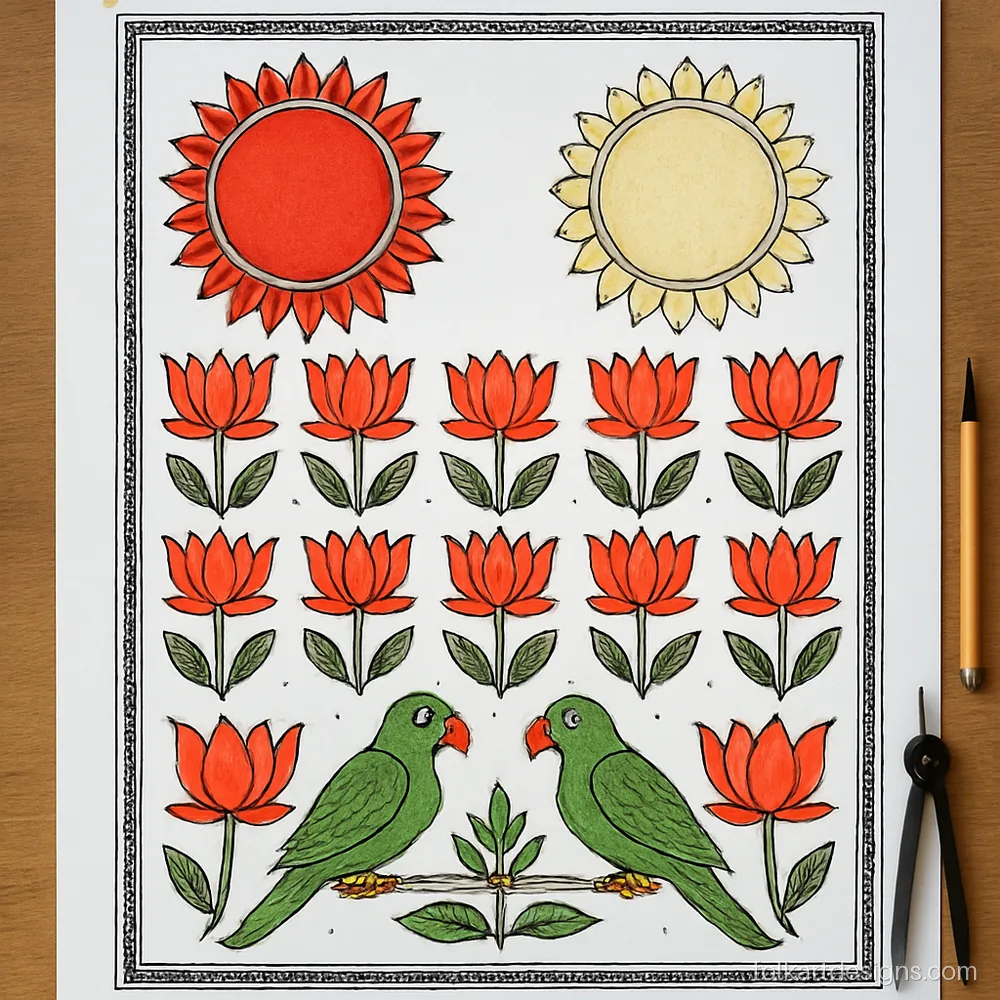
The classic placement, sun and moon in the top corners. A good chart paper starter.
Artist tip Draw both corner discs with a compass first, then fill the space between them.
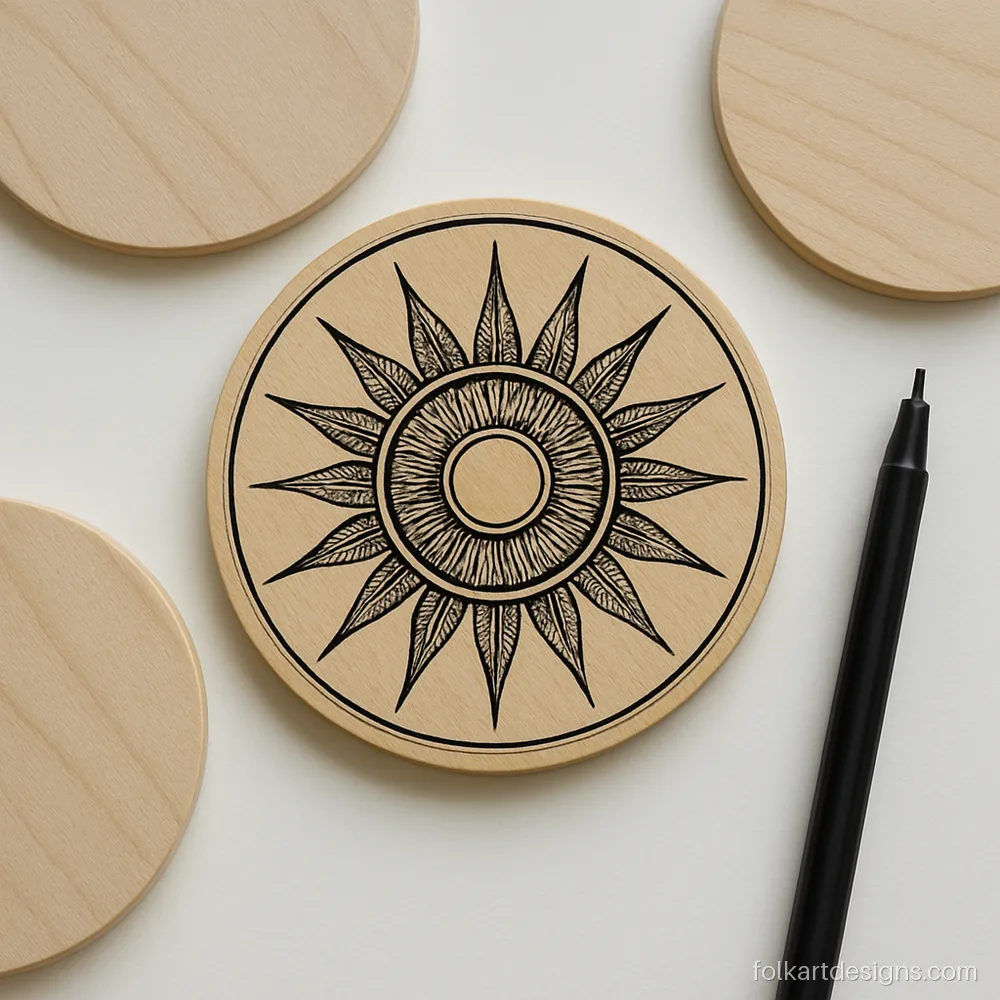
A tiny sun on pine. Quick to make, easy to gift.
Artist tip Seal with two coats of clear varnish so wet cups do not smudge the ink.
Madhubani Wedding Motifs: Lotus, Bamboo, Fish and Parrots
Kohbar painting was traditionally made for the wedding room and has ritual roots we leave aside. We keep its nature motifs: lotus, bamboo, fish and parrots.
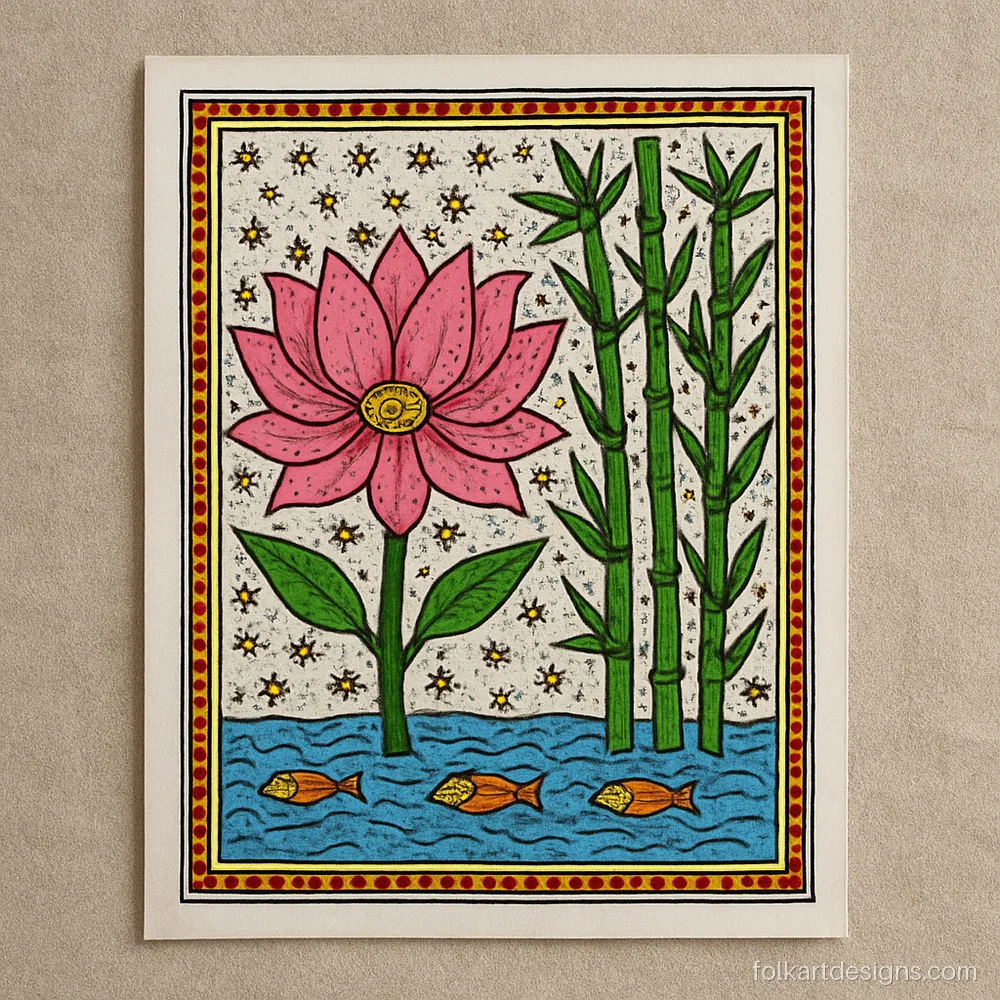
A pairing seen often on Mithila wedding walls, in soft bedroom colours.
Artist tip Draw bamboo as stacked rectangles, then round the joints a little so it looks alive.

Two parrots sharing one bloom. Small, so it is finished in an evening.
Artist tip Work on 300 gsm card so the wet paint does not buckle the fold.
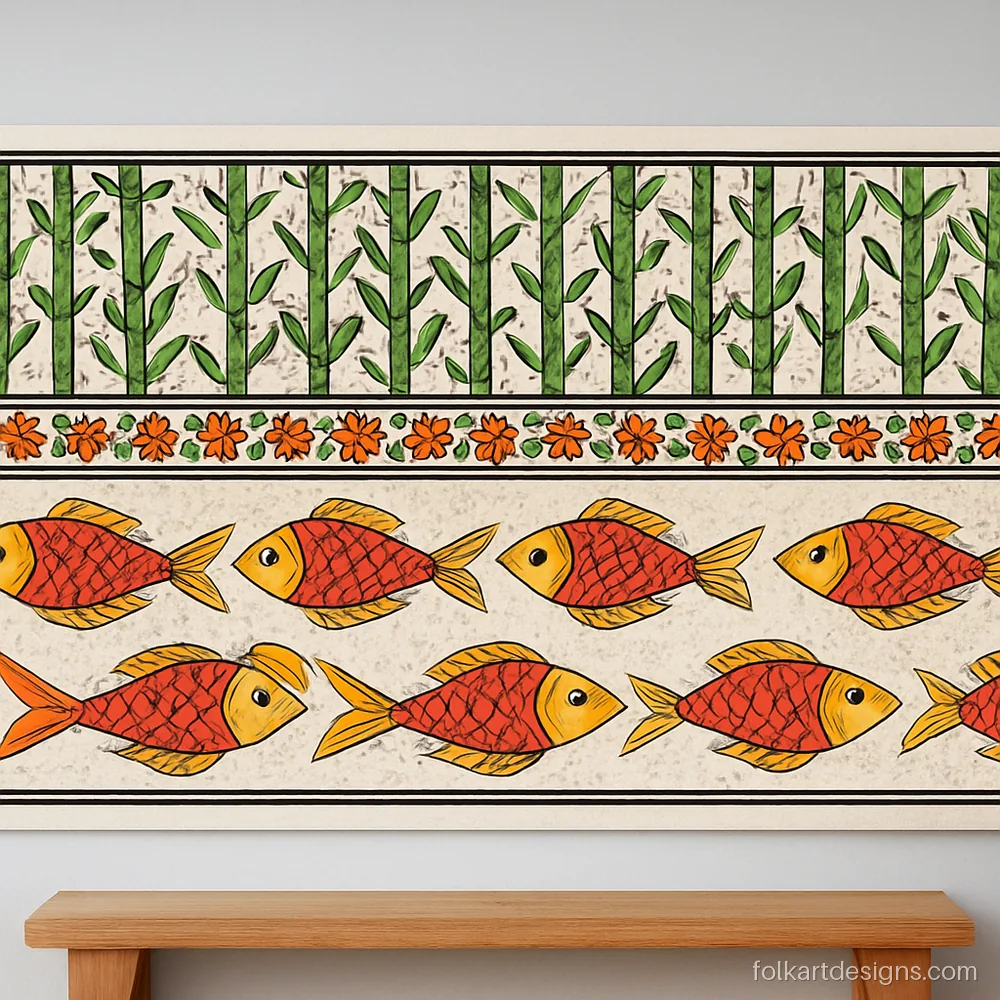
Two rows of repeats make a long panel for above a bed.
Artist tip Cut one paper fish stencil and trace it so every fish stays the same size.
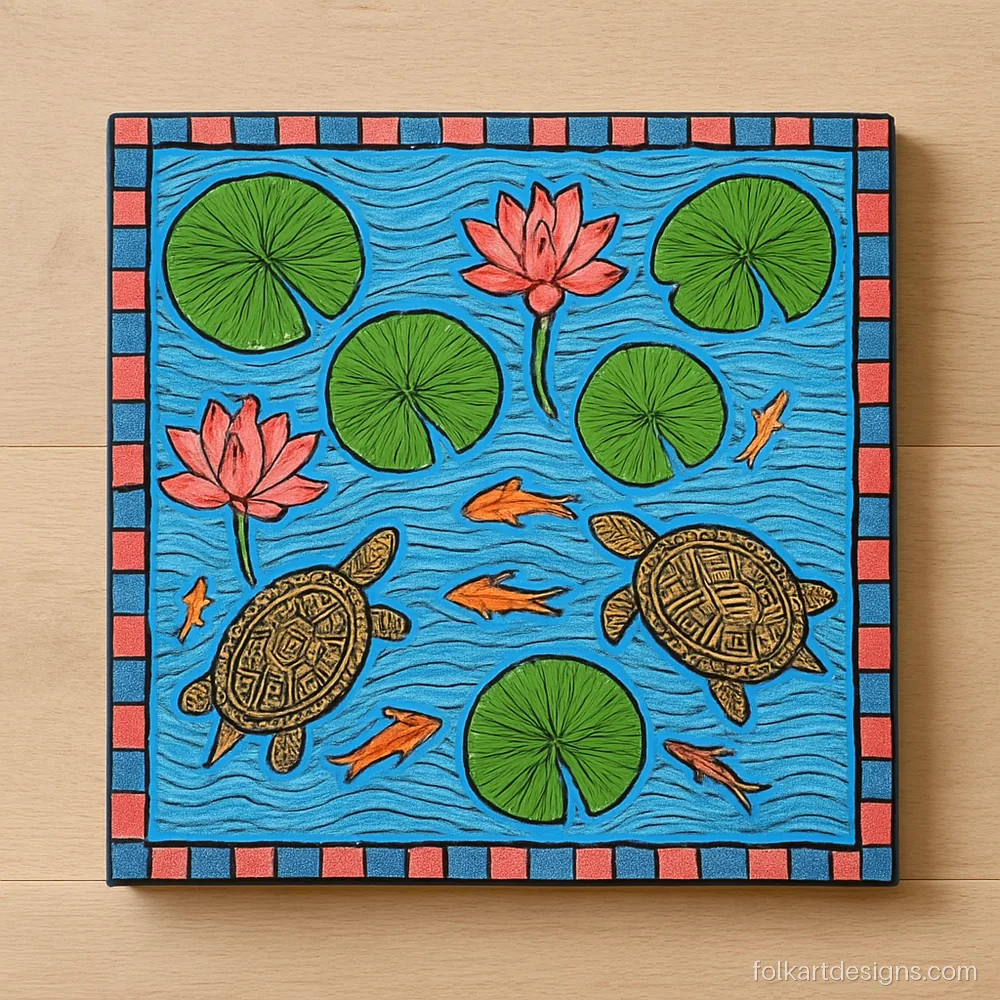
A pond seen from above, calm enough for a living room corner.
Artist tip Paint the round lotus leaves flat green first. Add vein lines once they are touch dry.
Madhubani Art Painting on Canvas, Cloth and Walls
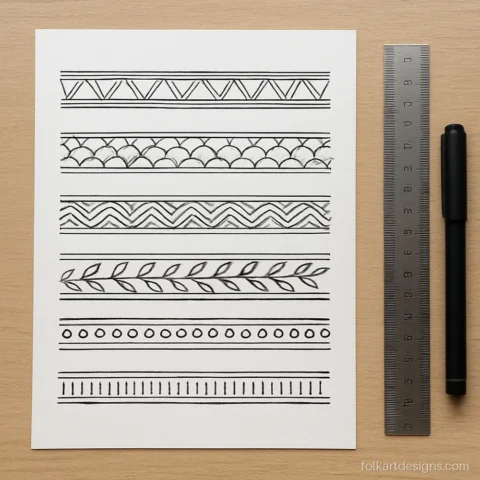
The art began on mud walls, then moved to paper, cloth and canvas. For outlines to copy, see madhubani drawing.

A canvas this size takes several days and anchors a main wall.
Artist tip Prime raw canvas with one coat of white gesso so outlines stay sharp.

Tussar keeps colours bright and the cloth soft. Use as a hanging or cushion front.
Artist tip Once dry, iron the back on medium heat for two minutes to fix the paint.
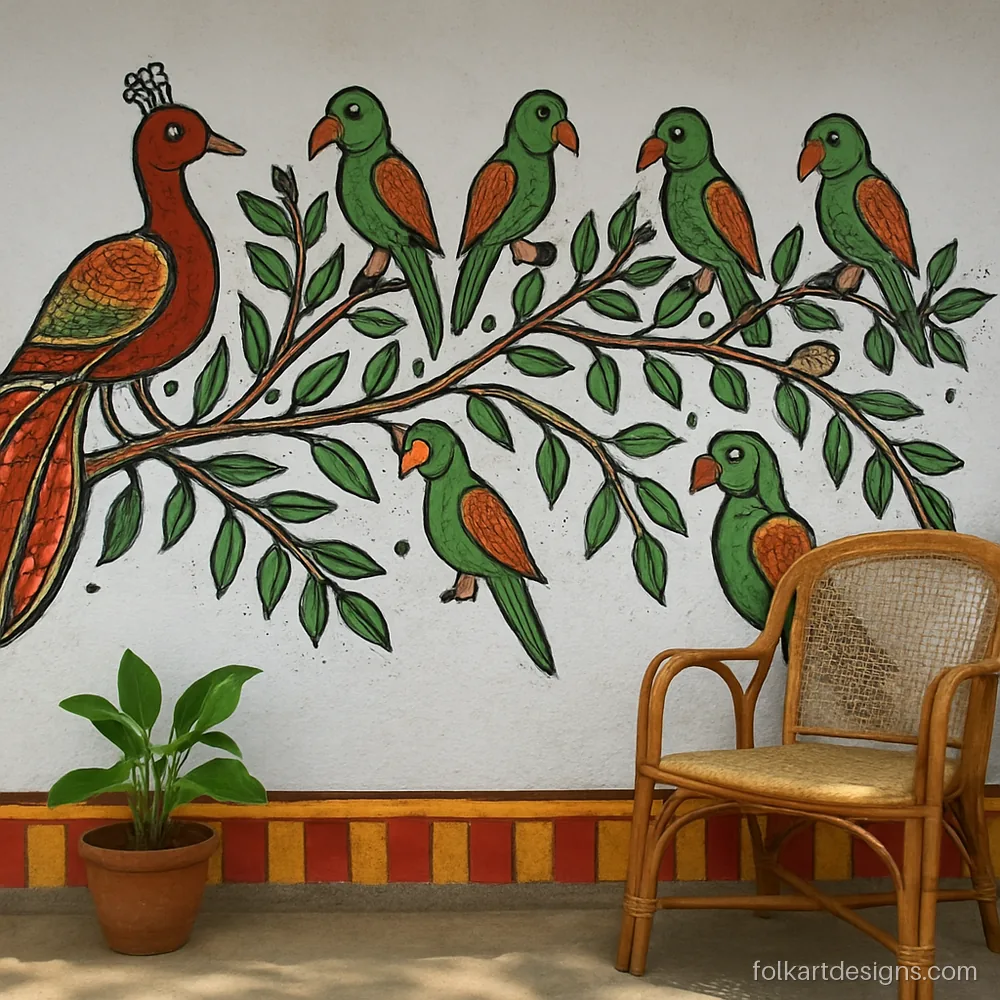
This is how the art first lived, on the wall of a home.
Artist tip Use exterior emulsion outdoors. It handles sun and rain better than craft acrylic.

Earth colours give a soft, old look. This is folk art madhubani painting at its simplest.
Artist tip Mix natural pigments with a little gum arabic so they hold on paper.
Madhubani Folk Art Styles and Natural Colours
| Style | What it looks like |
|---|---|
| Bharni | Shapes filled with solid bright colour |
| Kachni | Fine line hatching in one or two colours |
| Godna | Rows of small tattoo-like marks |
| Tantrik | Traditionally ritual, not shown here |
| Kohbar | Traditionally for the wedding room; we show only its nature motifs |
Village painters mixed colours from soot, turmeric, indigo and red earth, and drew lines using a nib or bamboo stick pen. Hobby painters now reach for acrylic and fineliners. Modern madhubani art still keeps the double lines and full fillings, which is what makes Indian madhubani art easy to spot.
How to Make a Madhubani Painting Step by Step
- Sketch: draw one motif lightly in pencil on 250 to 300 gsm paper.
- Border: rule a double line 1 to 2 cm from the edge.
- Outline: ink the shape with a 0.8 mm pen, then add a second line 2 to 3 mm inside it.
- Fill: paint flat colour with a size 2 or 4 round brush and let it dry for 30 minutes.
- Close the gaps: add dots, leaves and hatching with a 0.1 or 0.3 mm pen.
That is how to learn madhubani painting: repeat one motif many times before a full page. Begin with easy madhubani painting, then compare manjusha art, also from Bihar, and gond art.
Questions about these designs
What is madhubani art?
The folk painting of the Mithila region, known for double outlines, bright colours and gaps packed with flowers and dots. It began on house walls and now lives on paper, cloth and canvas.
Madhubani art belongs to which state?
Bihar. It comes from the Mithila region around Madhubani and Darbhanga, and continues over the border in Nepal.
What does a madhubani painting show?
Older work covers family events, weddings and religious themes. This gallery keeps to fish, birds, elephants, turtles, trees, lotus, bamboo and borders.
What are the five styles of madhubani painting?
Bharni (solid colour), kachni (fine hatching), godna (repeated marks), tantrik and kohbar. The last two are traditionally ritual, so we show only kohbar's nature motifs.
Which colours are used in traditional madhubani painting?
Lamp black, turmeric yellow, indigo and red. Today acrylic and fabric paint are common, with black pens for outlines.
How can I tell a hand-painted piece from a madhubani print?
Hand-painted work has small changes in line width and dot size, and on cloth the colour often shows faintly on the back. A print looks perfectly even. Natural colours, silk and size all add to the cost.