Kalamkari Painting: Designs, Motifs and How It Is Made
24 designs Kalamkari art and wear Updated 9 Oct 2026
Kalamkari painting is cloth art from Andhra Pradesh, made with a pen or a carved block and coloured only with natural dyes. The name joins two words: kalam, meaning pen, and kari, meaning work.
This gallery shows 24 original kalamkari designs on panels, cushions and practice sheets, grouped by style and motif. Each one lists the medium, the main motifs and one tip for drawing, buying or caring for it. Once you know the motifs, you will spot them everywhere, from kalamkari sarees to dress material.
Pen Kalamkari Painting, Srikalahasti Style
In the Srikalahasti style every line is drawn freehand with a bamboo kalam dipped in dye. Expect small irregularities, which are part of the charm.
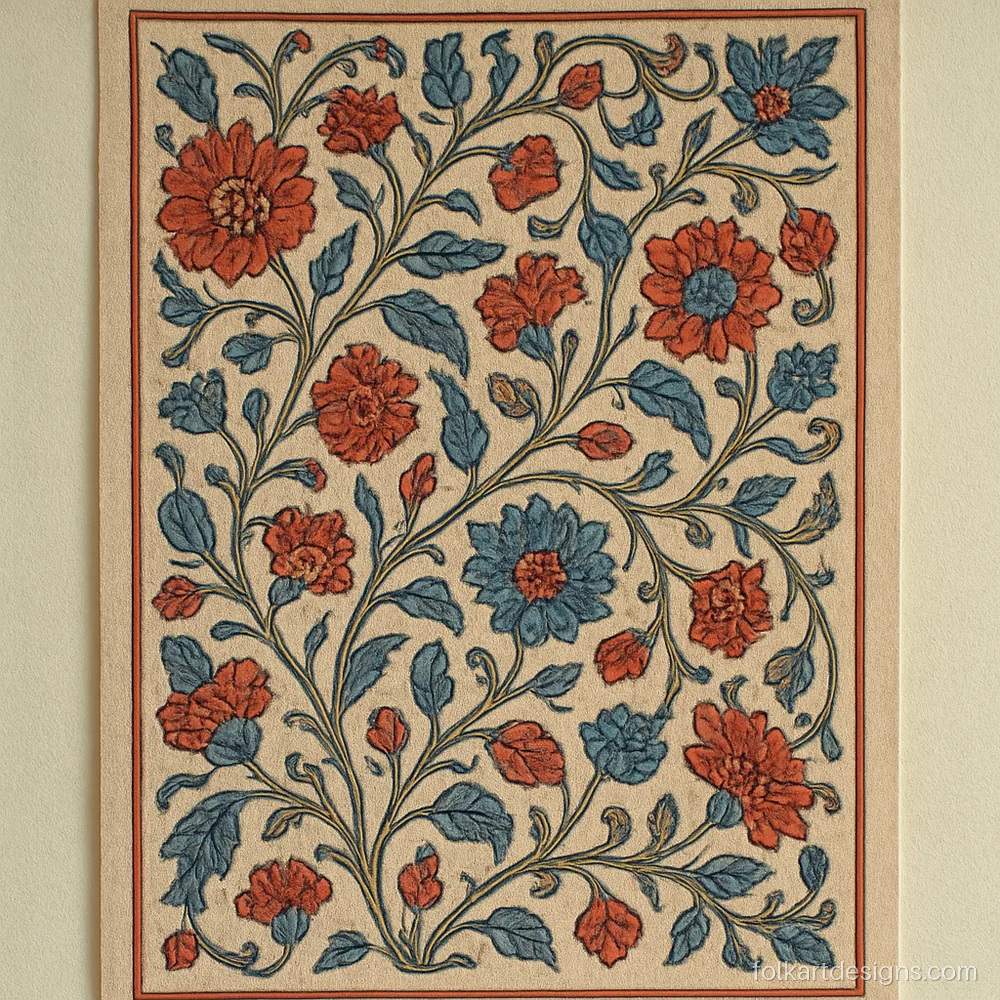
Free-flowing creepers drawn with a bamboo kalam fill the whole panel. Tiny wobbles in the lines show it was drawn, not printed.
Artist tip Hang cotton panels away from direct sun, because natural madder red fades in strong light.

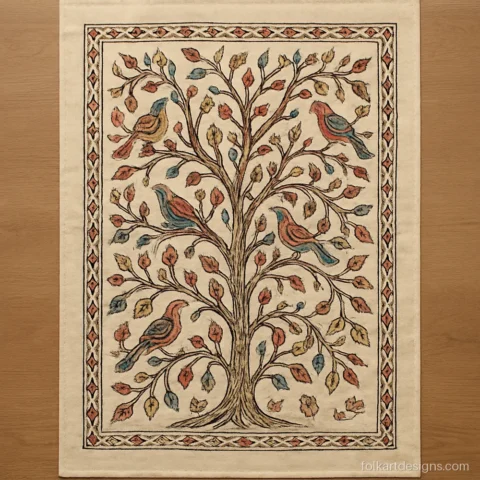
Pairs of parrots and mynas perch on curving branches. The black outlines come from an iron-based dye that deepens with age.
Artist tip Flip the cloth over: true pen kalamkari shows the colour clearly on the back as well.
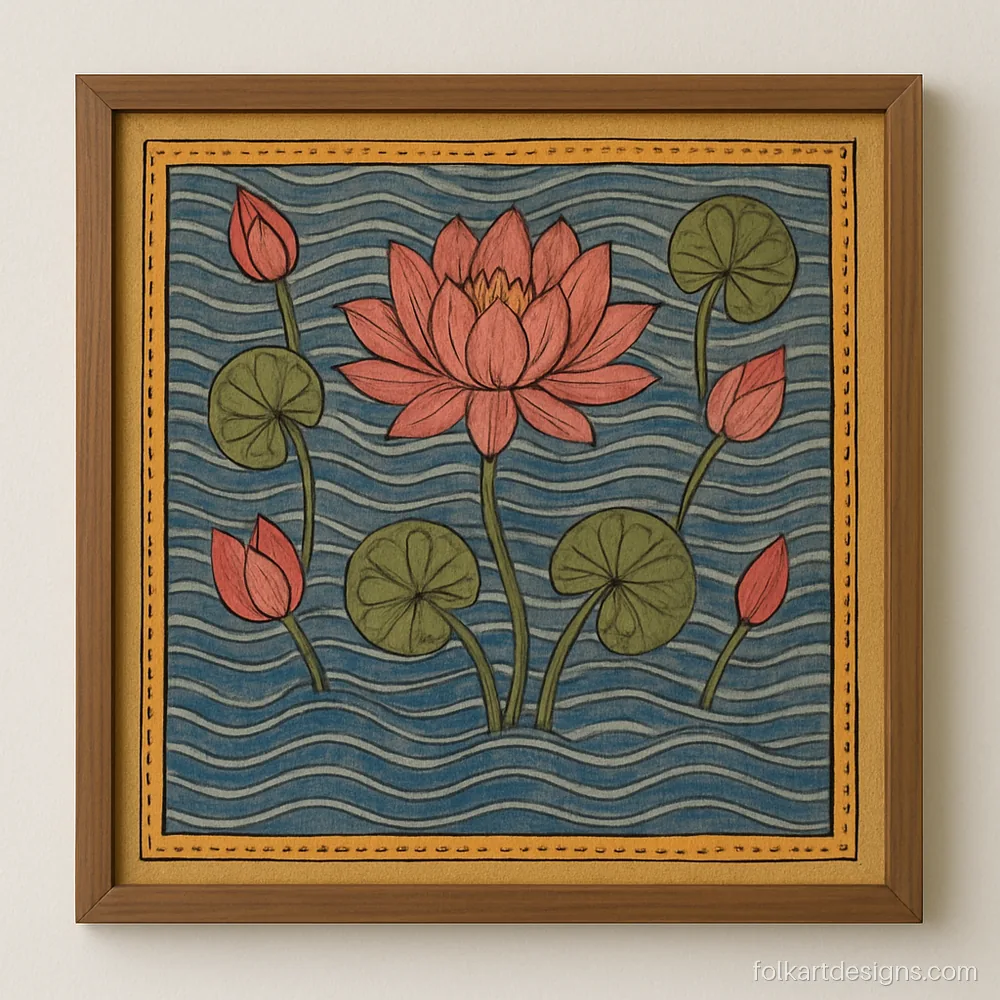
Open lotus flowers, buds and round leaves float on a wavy indigo pond. A calm square piece that frames well.
Artist tip Frame cloth panels behind glass with a small spacer so the fabric does not press flat against it.
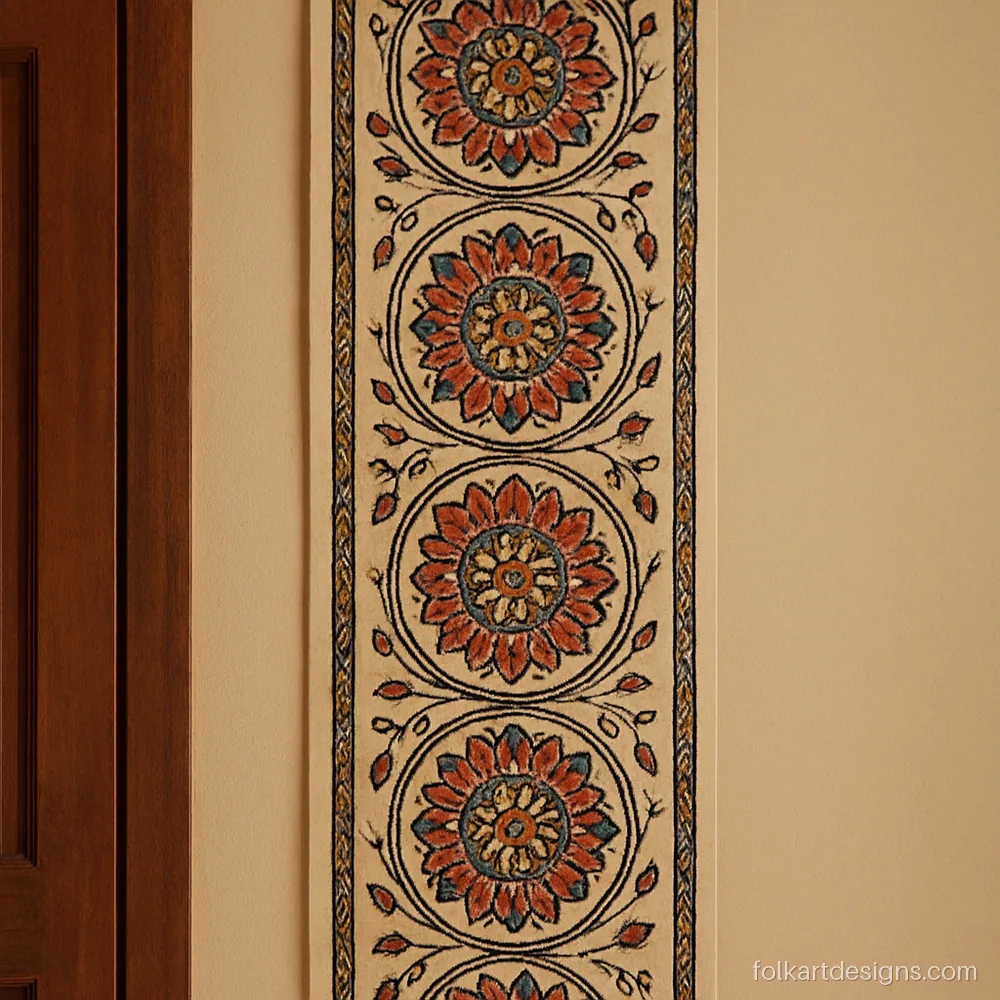
Five stacked medallions make a slim runner for a narrow wall beside a door or a staircase.
Artist tip Stitch a rod sleeve at the top and a light dowel at the bottom so the long panel hangs flat.
Block Printed Kalamkari Designs, Machilipatnam Style
Machilipatnam kalamkari is printed with carved wooden blocks, then coloured in natural dye baths. It suits repeat patterns and longer lengths of cloth.

Carved wooden blocks stamp the same paisley in neat rows. Slight shifts between repeats show true block work.
Artist tip Look for tiny gaps or overlaps where two block impressions meet; screen prints are perfectly even.
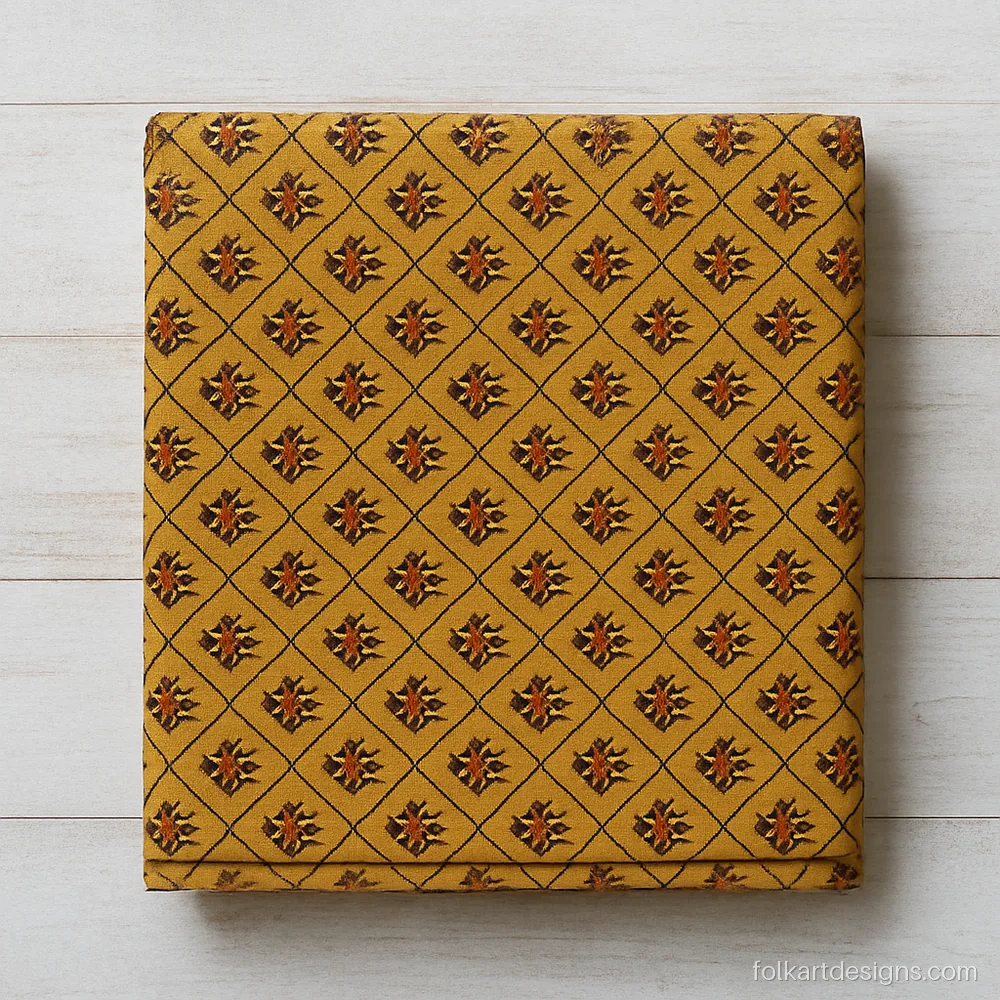
A jaal is a net-like grid. Small flowers sit inside each diamond, giving an all-over print that hides daily wear.
Artist tip Wash block printed cotton on its own for the first two washes, as loose dye can run.
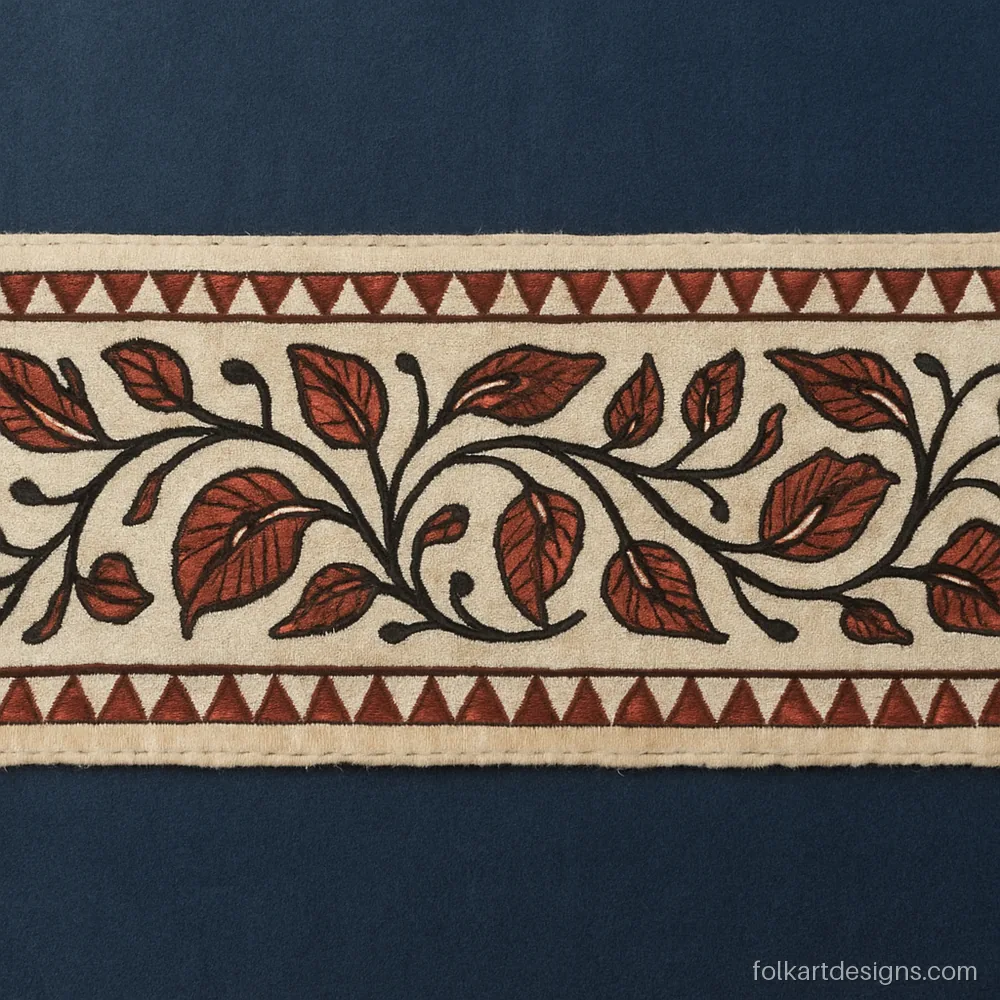
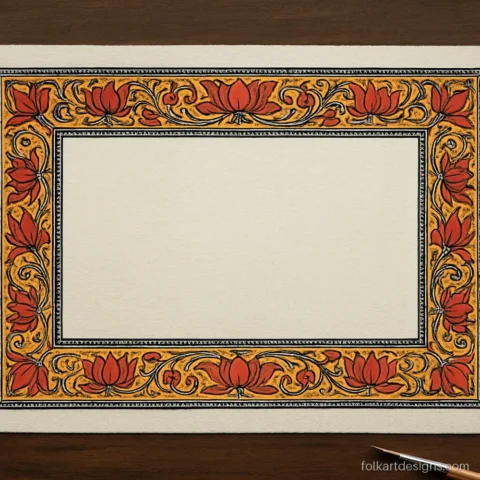
A narrow kalamkari border design like this finishes a cushion, a curtain or the edge of a plain saree.
Artist tip Buy border strips by the metre and stitch them onto plain cloth for a quick, low-effort upgrade.
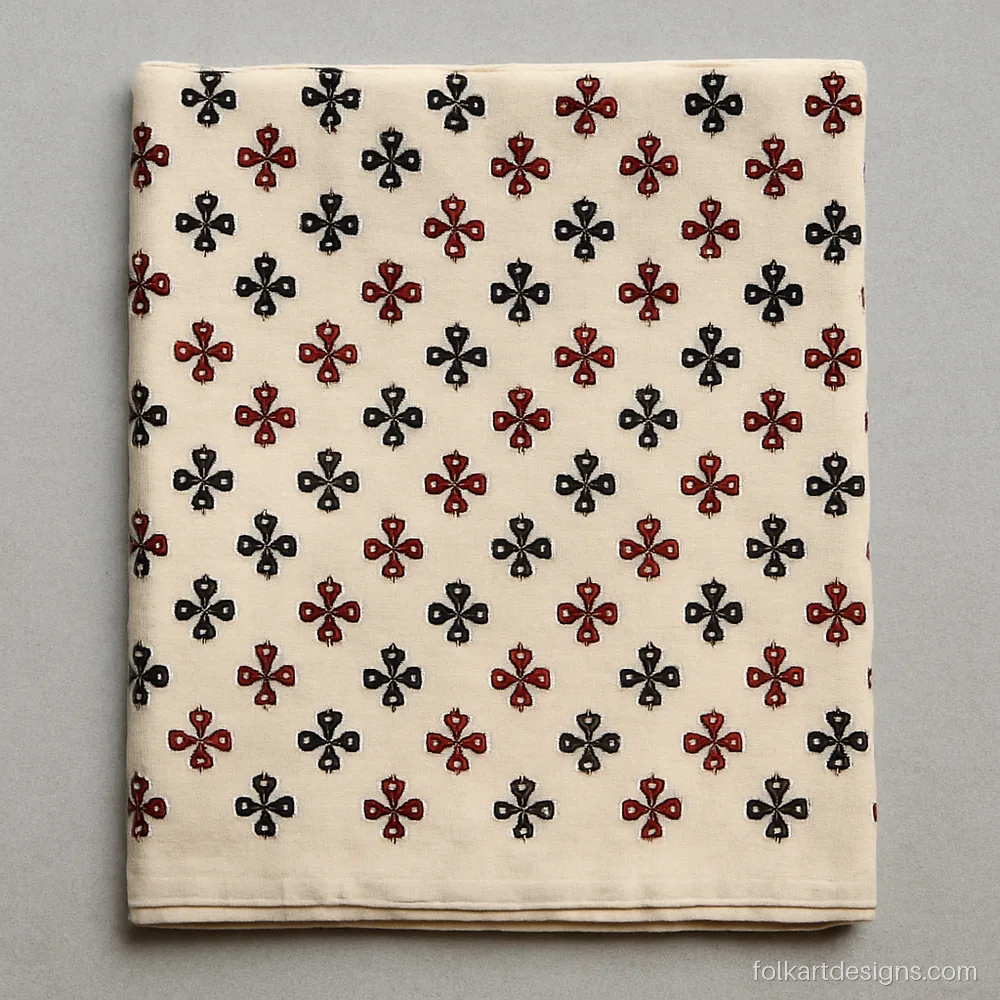
Tiny flower butas in staggered rows make a quiet print that suits shirts and everyday kurtas.
Artist tip Staggering each row by half a motif hides small alignment errors during printing.
What Is Kalamkari Art?
Kalamkari is a way of decorating cotton with natural dyes. The cloth is first treated so it holds colour well. Then outlines are drawn or printed in iron-based black, and each colour is added in turns, with washing and drying in between. One panel can go through many rounds before it is finished.
You will meet the same kalamkari motifs again and again: peacocks, elephants, lotus flowers, creepers, paisleys and, above all, the tree of life. Older pieces were also traditionally devotional story cloths, but the designs on this page stay with nature, animals and pattern.
Tree of Life Kalamkari Painting
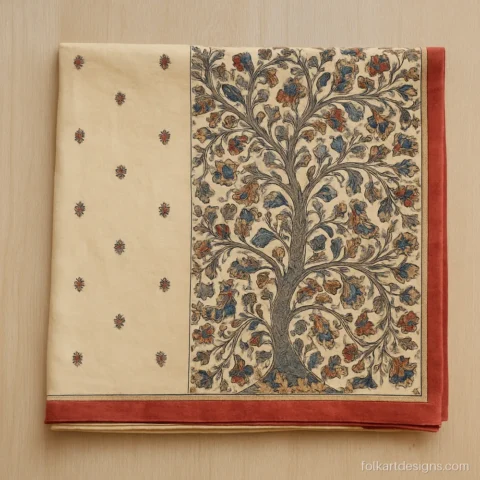
The tree of life is the best known kalamkari motif. A strong trunk rises in the centre and branches spread out, full of flowers and birds.
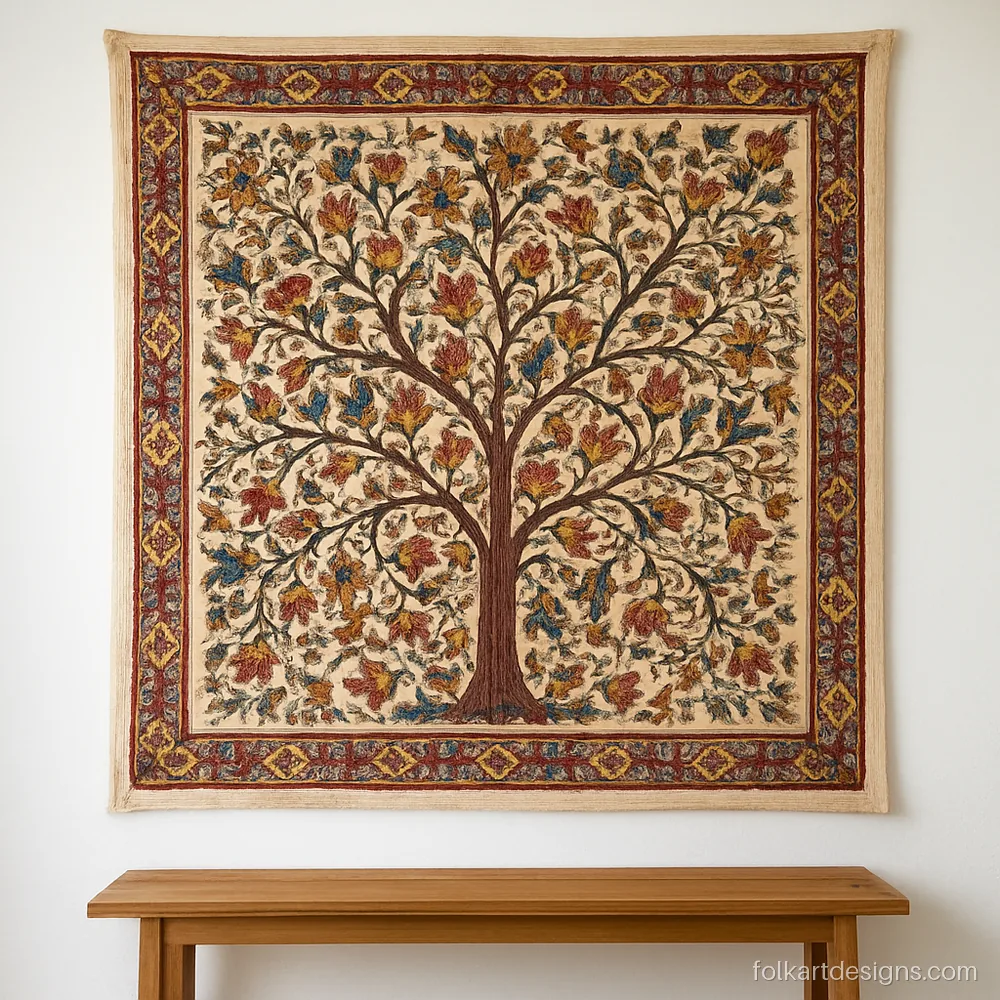
Birds and flowers fill every branch around a strong central trunk. This is the classic showpiece of the craft.
Artist tip A large panel like this can take weeks of pen work, which is the main reason it costs more.

The tree rises from a rocky mound with a small deer on each side. Matching halves keep it formal and calm.
Artist tip Iron black outlines can weaken old cotton, so roll the panel for storage instead of folding it.

A small tree fitted into a square makes a cushion cover with a strong centre point.
Artist tip Turn cushion covers inside out before a cold hand wash to protect the dyes.
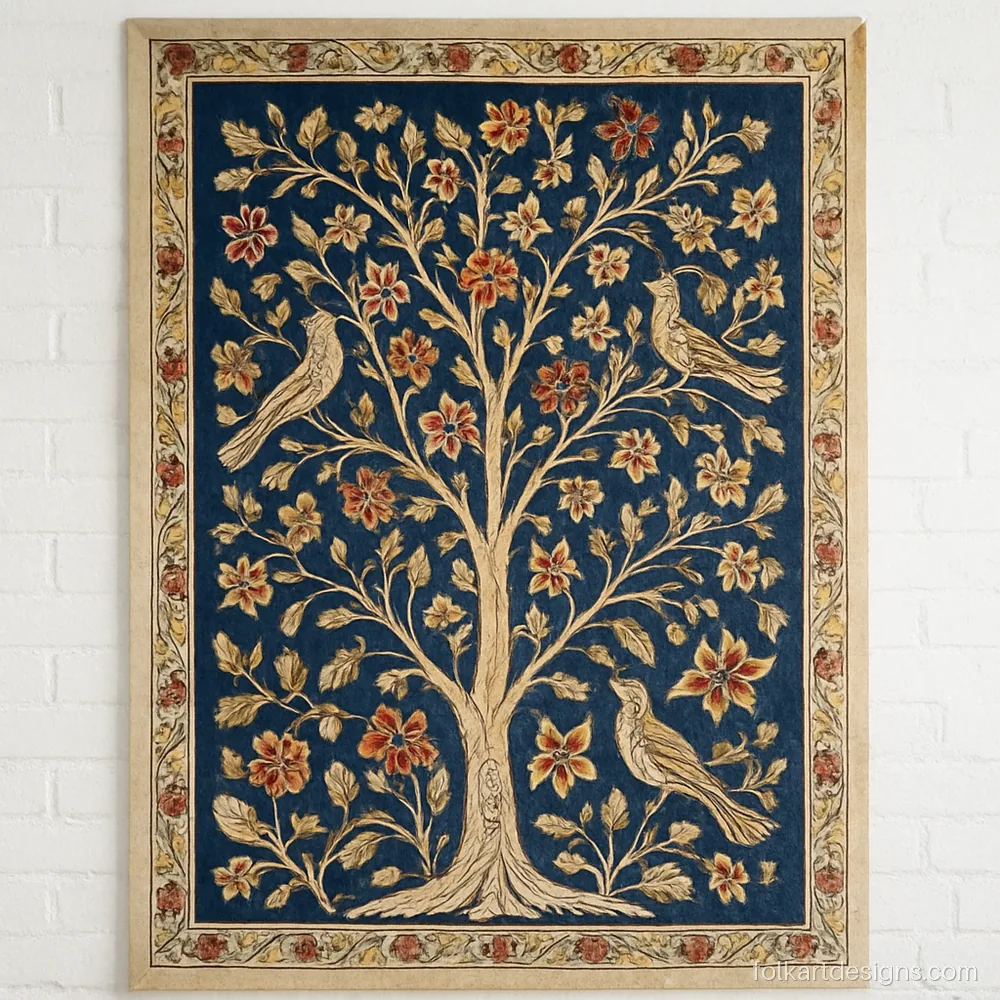
Dark indigo ground with red and yellow flowers gives a bolder look for a modern room.
Artist tip Check the edges of each flower: clean outlines against indigo show careful resist work.
Peacock and Elephant Kalamkari Designs
Peacocks and elephants are the two animals you will meet most in kalamkari. Both are easy to recognise and easy to place in borders or panels.
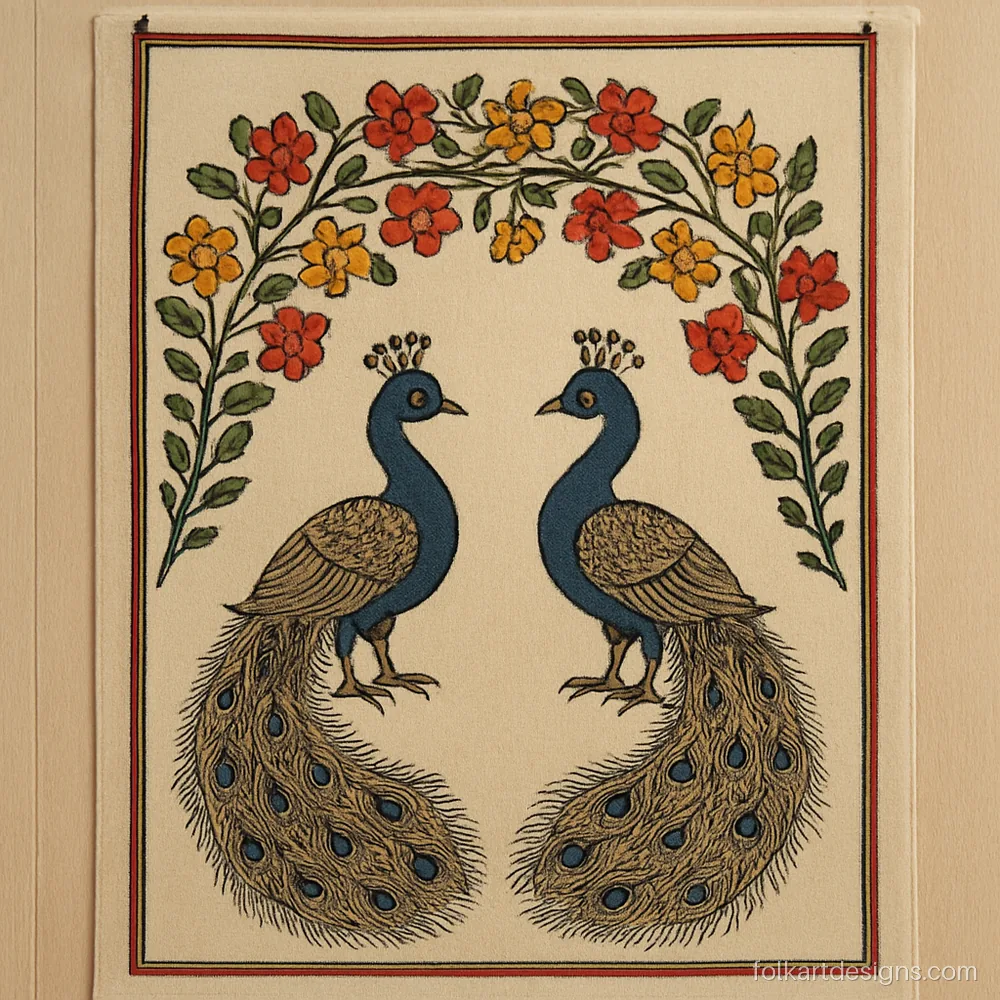
Two peacocks face each other beneath an arch of flowers. Their long tails are filled with fine pen strokes.
Artist tip When copying, draw the tail feathers last so they flow naturally over the other shapes.
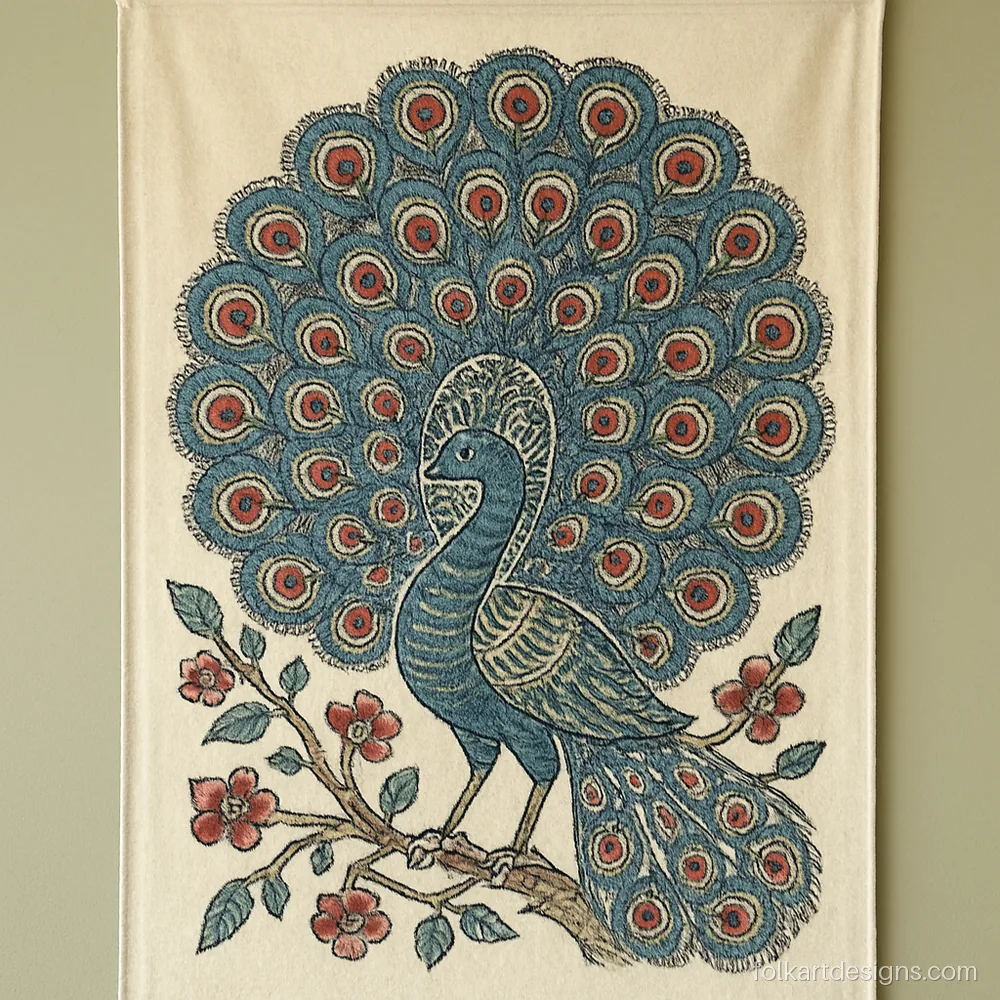
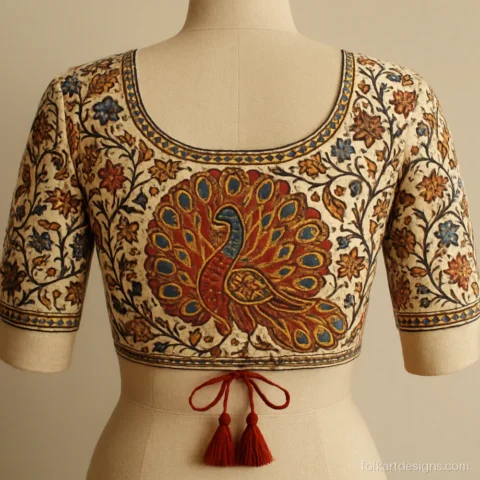
One peacock with an open tail fills a tall panel. The green comes from yellow dyed over indigo.
Artist tip Count the feather eyes on one side of the fan and match the number on the other side.
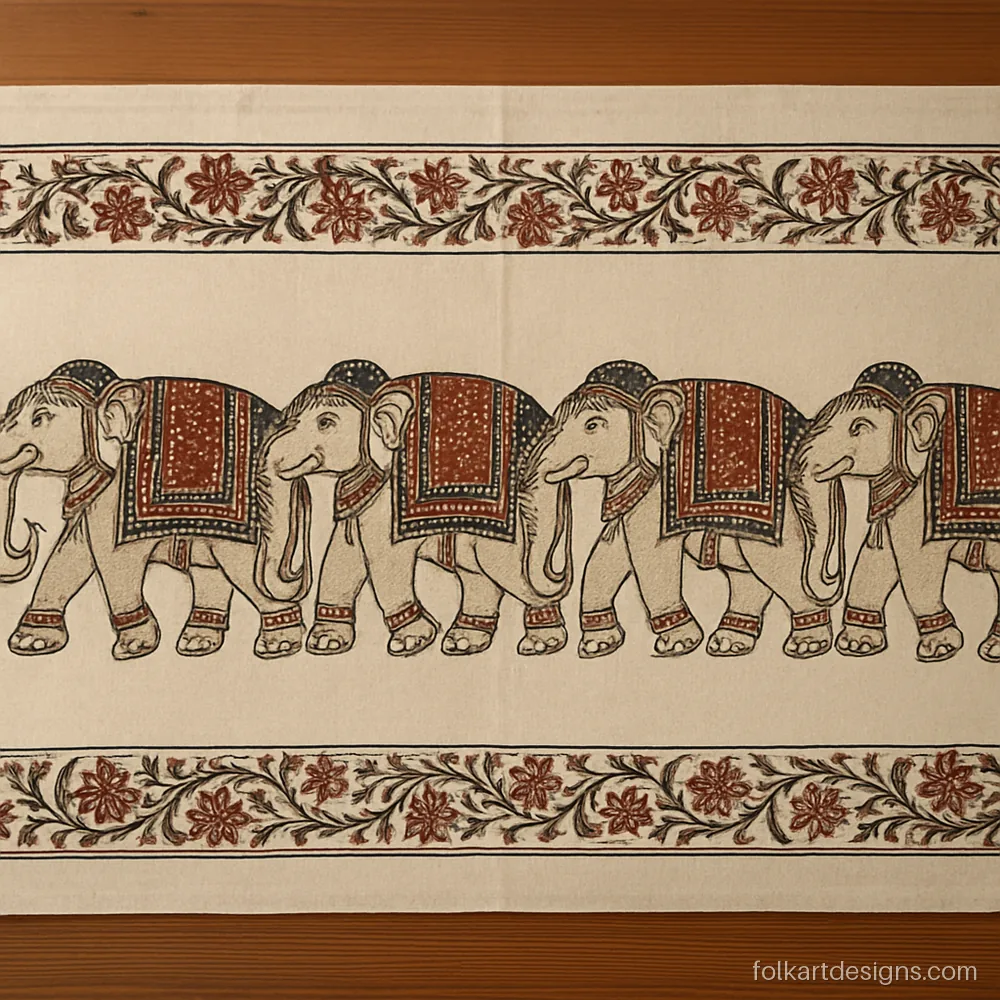
A row of decorated elephants walks along the panel, each wearing a patterned saddle cloth.
Artist tip Sketch each elephant from simple circles and rectangles first, then add the trunk, ears and legs.

One elephant sits inside a round medallion of lotus petals. A compact motif for bags and pouches.
Artist tip Keep the elephant outline thick so it still reads clearly when the motif is small.
Kalamkari Art Drawing for Beginners
You do not need a bamboo pen or natural dyes to learn the shapes. Simple kalamkari drawing on paper builds the hand control first.
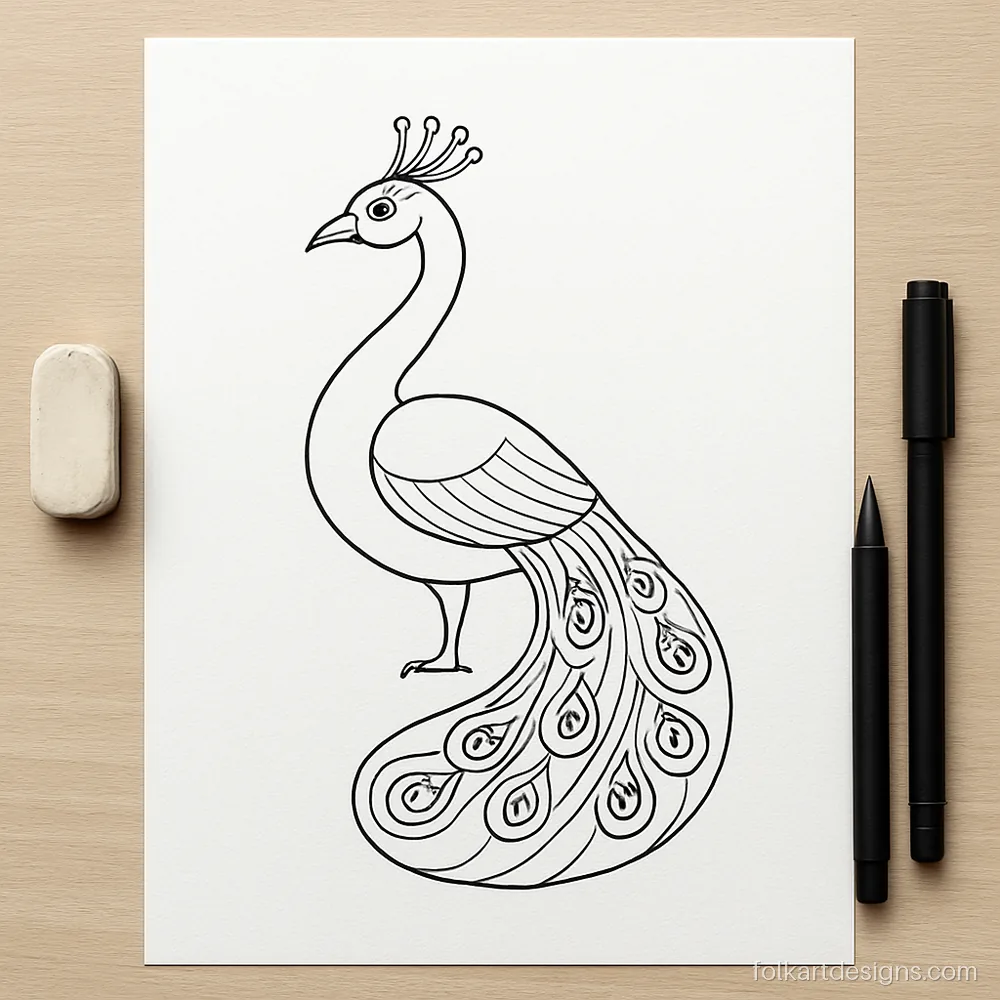
A clean peacock outline is the best first exercise. Practise the curve of the neck before adding any feather pattern.
Artist tip Use a 0.5 mm pen for outlines and a 0.1 mm pen for the tiny lines inside each feather.
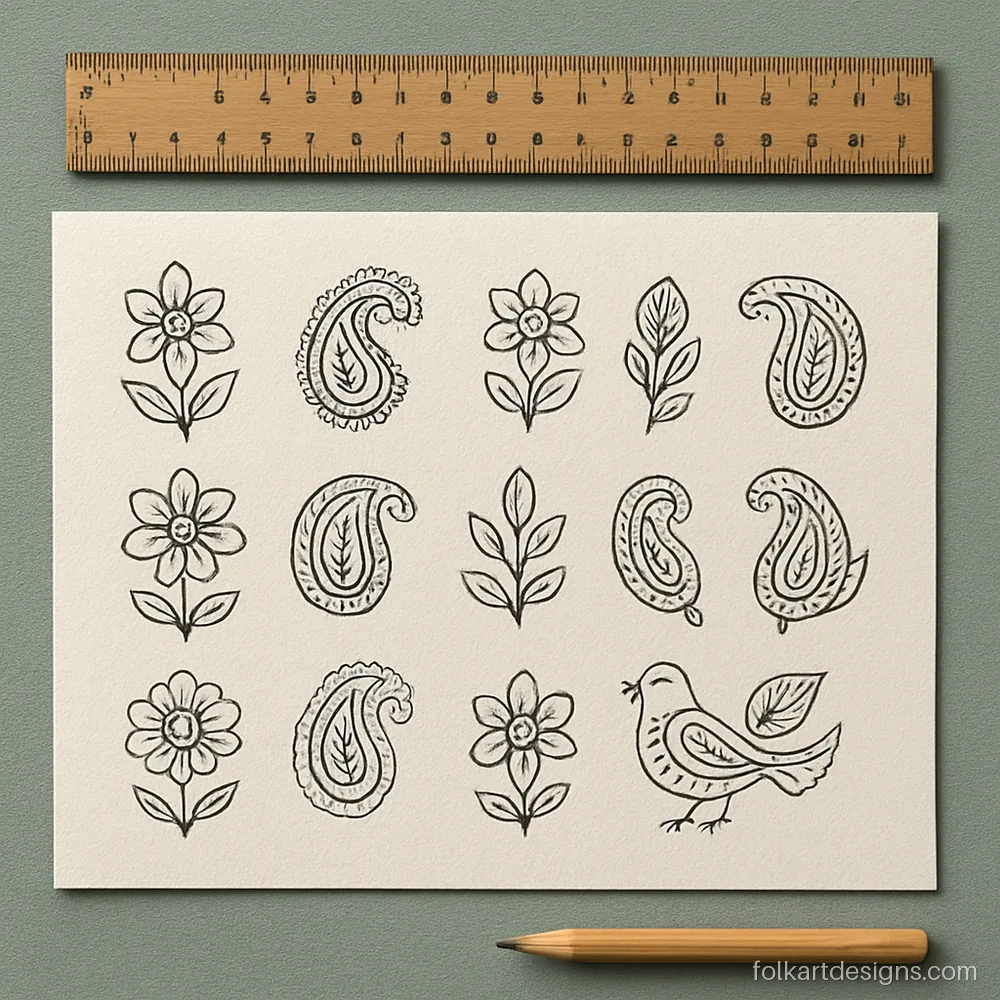
A sheet of single motifs, each drawn three times. Kalamkari motifs are learnt this way, one shape at a time.
Artist tip Repeat each motif until your third copy looks as confident as the first one.
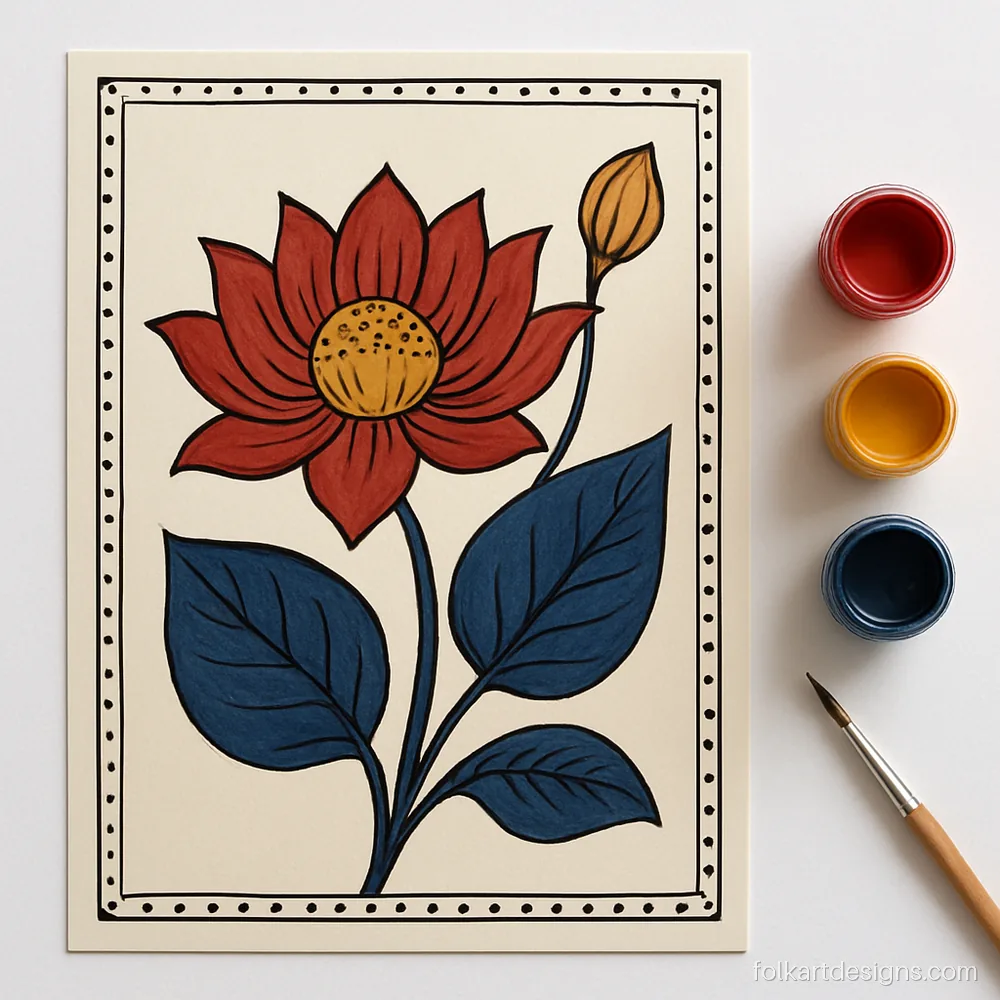
Easy kalamkari painting in poster colours copies the look of natural dyes for a school project.
Artist tip Mix a dull brick red and a deep indigo; bright shop shades look less traditional.
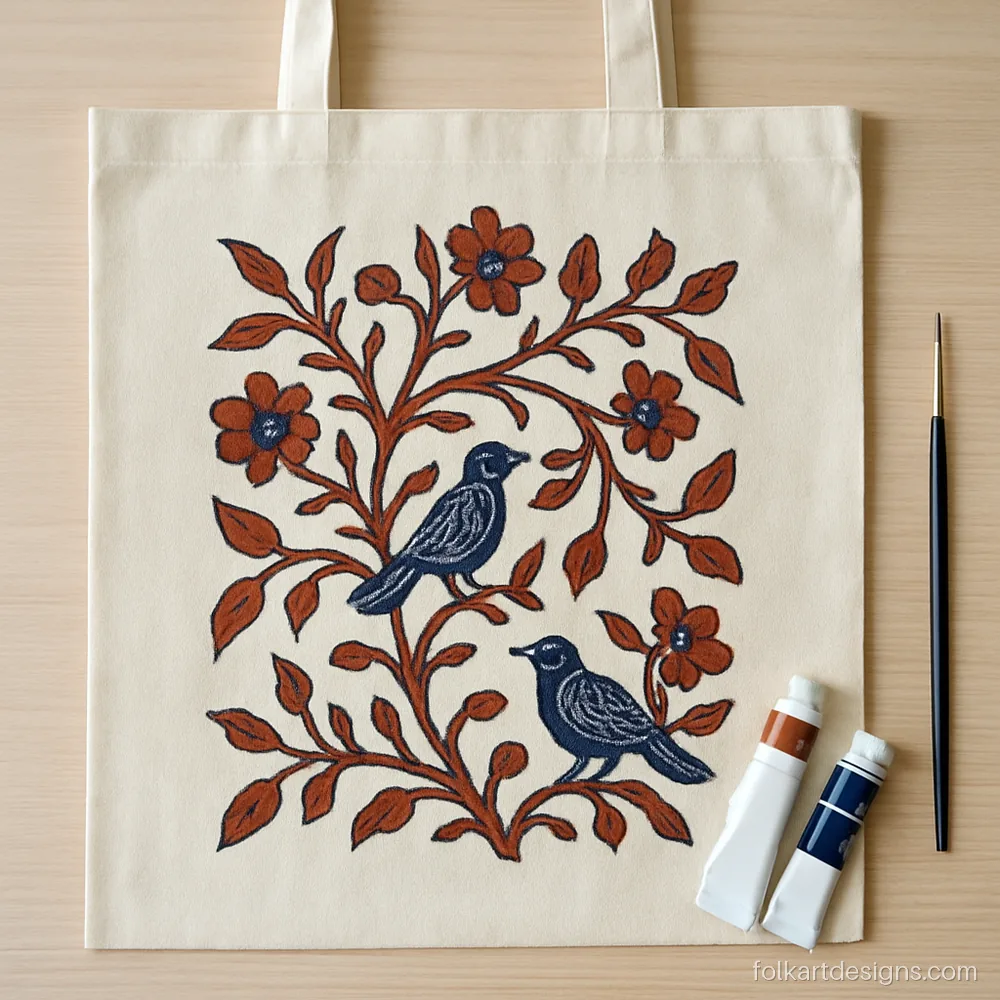
Copy a simple creeper onto a plain tote bag with fabric paint and a fine liner brush.
Artist tip Iron the dry fabric paint from the reverse side to heat set it before the first wash.
Natural Dye Colours in Kalamkari
Real kalamkari uses a small, earthy palette. Knowing where each colour comes from helps you judge a piece and copy it well.

Four swatches show the classic palette: madder red, indigo blue, pomegranate-rind yellow and iron black.
Artist tip Natural colours look slightly uneven, which is a good sign that real dyes were used.

Madder gives warm reds and pinks. Here it fills the ground while the flowers stay cream.
Artist tip Wash madder dyed cloth in cold water with mild soap to keep the red rich.
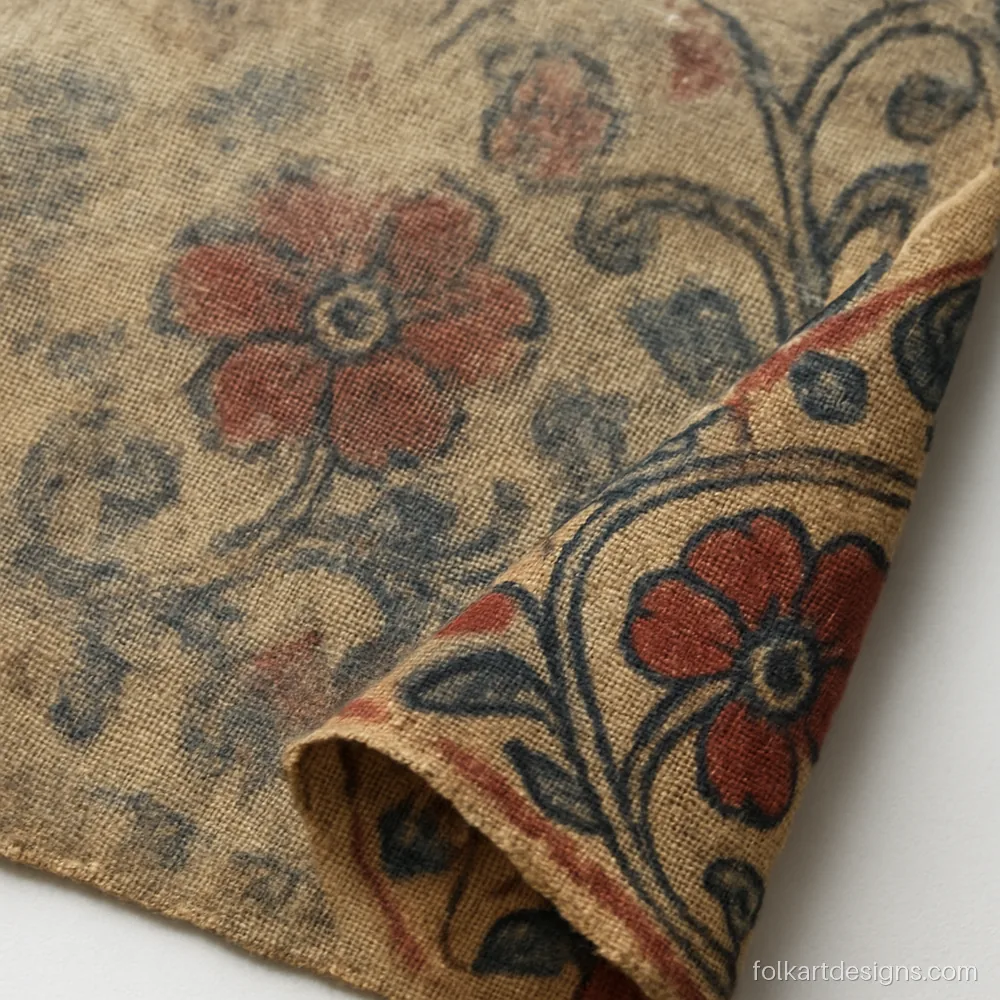
Turn the cloth over. In pen kalamkari the colour shows on the back, while most screen prints stay pale behind.
Artist tip Also check the colour edges: a slight bleed into the weave is normal for real dyes.
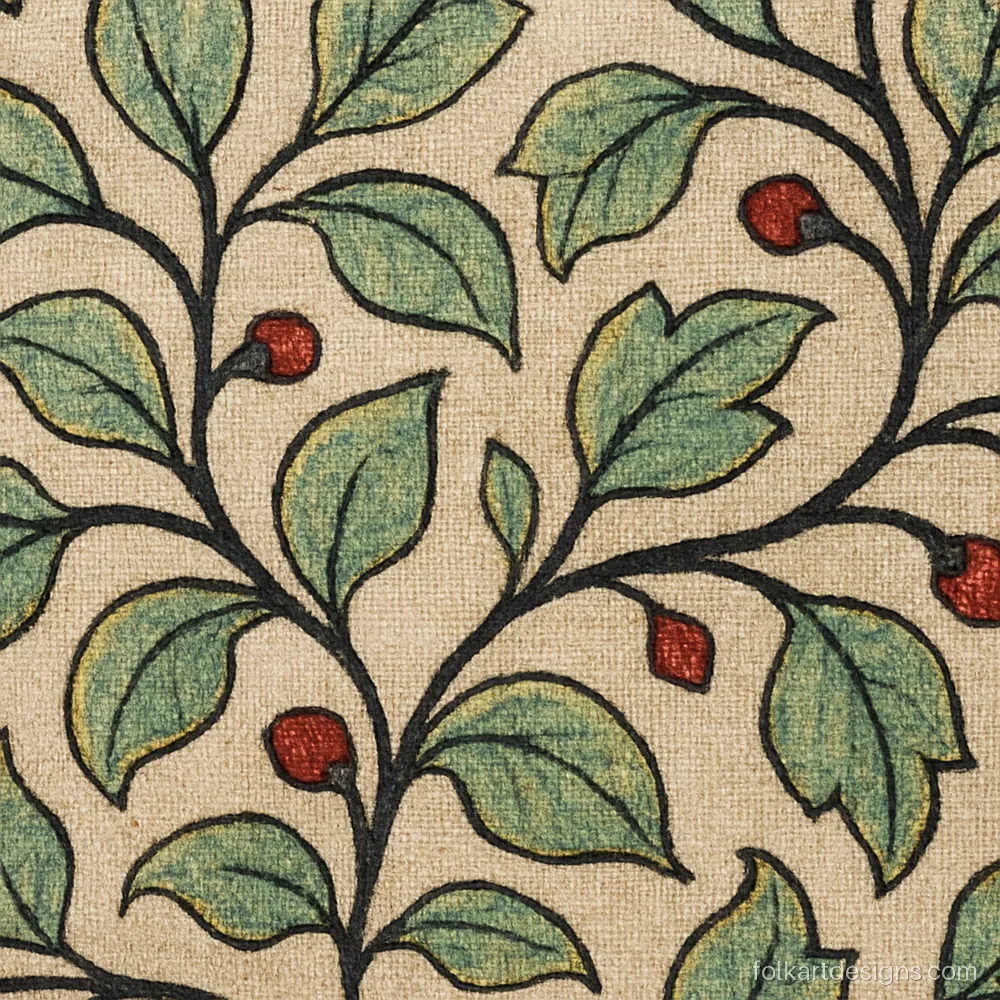
Green is not a separate dye. Pomegranate-rind yellow painted over indigo gives the soft leaf greens.
Artist tip Look closely at green leaves: you can often see a thin blue or yellow edge.
Kalamkari Painting: Which State and Which Style
Kalamkari art of Andhra Pradesh grew in two centres, and each has its own look.
| Style | How it is made | Look | Best for |
|---|---|---|---|
| Srikalahasti | Drawn freehand with a bamboo pen | Flowing lines, large scenes, small irregularities | Wall panels, framed art |
| Machilipatnam | Printed with carved wooden blocks | Neat repeats, borders, all-over prints | Sarees, dress fabric, home linen |
Both centres share one palette. Blue comes from indigo, the reds from madder roots, yellow from pomegranate rind, and the black outlines from an iron-based dye. Green and purple come from layering one colour over another.
How to Tell Real Kalamkari and Care for It
- Look for small irregularities. Pen lines vary a little in thickness, and block repeats shift slightly.
- Check the dye edge. Natural dye bleeds a tiny bit into the weave. Screen prints have sharp, flat edges.
- Turn it over. The colour should be clearly visible on the back too.
- Know what raises the cost. Pen work over block printing, natural dyes over chemical ones, silk over cotton, larger size and more hours of work.
For care, hand wash in cold water with mild soap, never soak for long, and dry in the shade. Iron on the reverse. More fabric tips are on our kalamkari fabric page, and you can see the motifs on lighter cloth in kalamkari dupatta designs.
Questions about these designs
What is kalamkari, in one line?
It is a cotton textile art from Andhra Pradesh, drawn with a bamboo pen or printed with wooden blocks, and coloured with natural dyes.
Kalamkari painting which state is it from?
Andhra Pradesh. The pen style is linked with Srikalahasti and the block printed style with Machilipatnam.
Which kalamkari painting easy designs suit beginners?
Start with a single lotus, a paisley or a peacock outline. Draw it in pencil, ink it with a 0.5 mm pen, then fill with brick red, indigo and ochre. Avoid the tree of life until you can draw leaves and birds quickly.
How is a kalamkari art drawing different from a regular sketch?
Kalamkari shapes always have a strong black outline, and the inside is filled with fine lines, dots or flat colour. Borders are a big part of the design. Shading with light and shadow is not used.
Is block printed kalamkari less valuable than pen kalamkari?
It is usually more affordable, because blocks make repeats faster. Both are real kalamkari when natural dyes are used. Pen pieces cost more for the hours of freehand work.
Is kalamkari similar to other Indian cloth paintings?
It shares the use of natural colours and ornate borders with Odisha's pattachitra painting, but kalamkari is dyed into the cotton rather than painted on a chalk coated cloth.