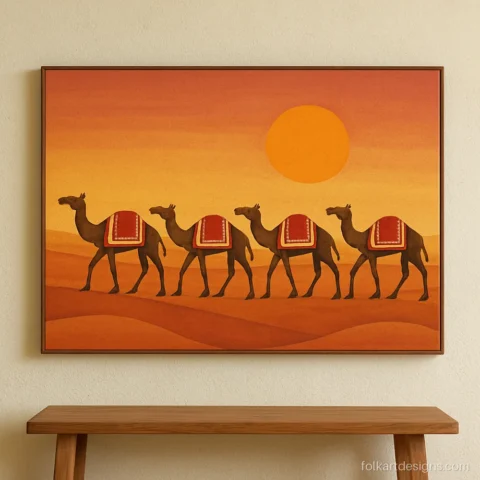
Manjusha Painting: Bihar Folk Designs to Try
12 designs Folk paintings Updated 9 Oct 2026
Manjusha painting is the folk art of Bhagalpur in Bihar, part of the old Anga region, so many people also call it Angika art. You can spot it at once: thick outlines, flat colour and only three main shades, pink, green and yellow.
Manjusha art traditionally tells a folk legend, painted in long panels on boxes made of jute and paper. In this manjusha gallery we leave the story aside and show what you can practise: wavy serpent borders, champa flowers, pots, birds, fish and elephants. Each picture lists the base, the motifs, who it suits and one tip.
If you enjoy Bihar's painted styles, keep Madhubani painting open in another tab. The two share a love of borders but look very different side by side.
Manjusha Art Borders and Snake-like Serpent Bands
About manjusha borders: they are never an afterthought. Wavy, snake-like bands, leaf chains and rows of triangles hold every panel together, and each one is planned before the main picture.

Two wavy bands twist around each other on all four sides. The plain yellow centre waits for any motif you like.
Artist tip Draw one wave on tracing paper, then repeat it around the frame so every curve matches.
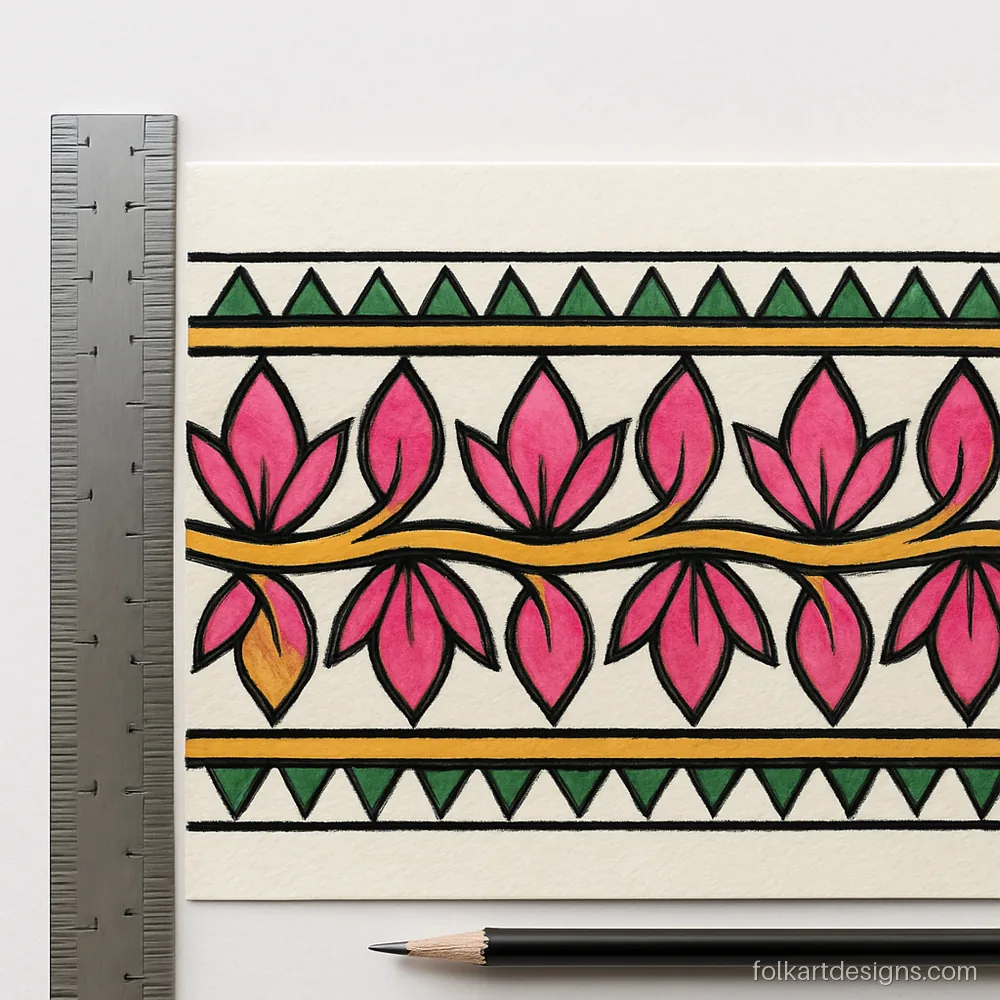
A leaf chain runs between two rows of triangles. It is a calm, geometric choice for students who find curves hard.
Artist tip Mark small pencil ticks every 1 cm along the edge so the triangles stay the same width.
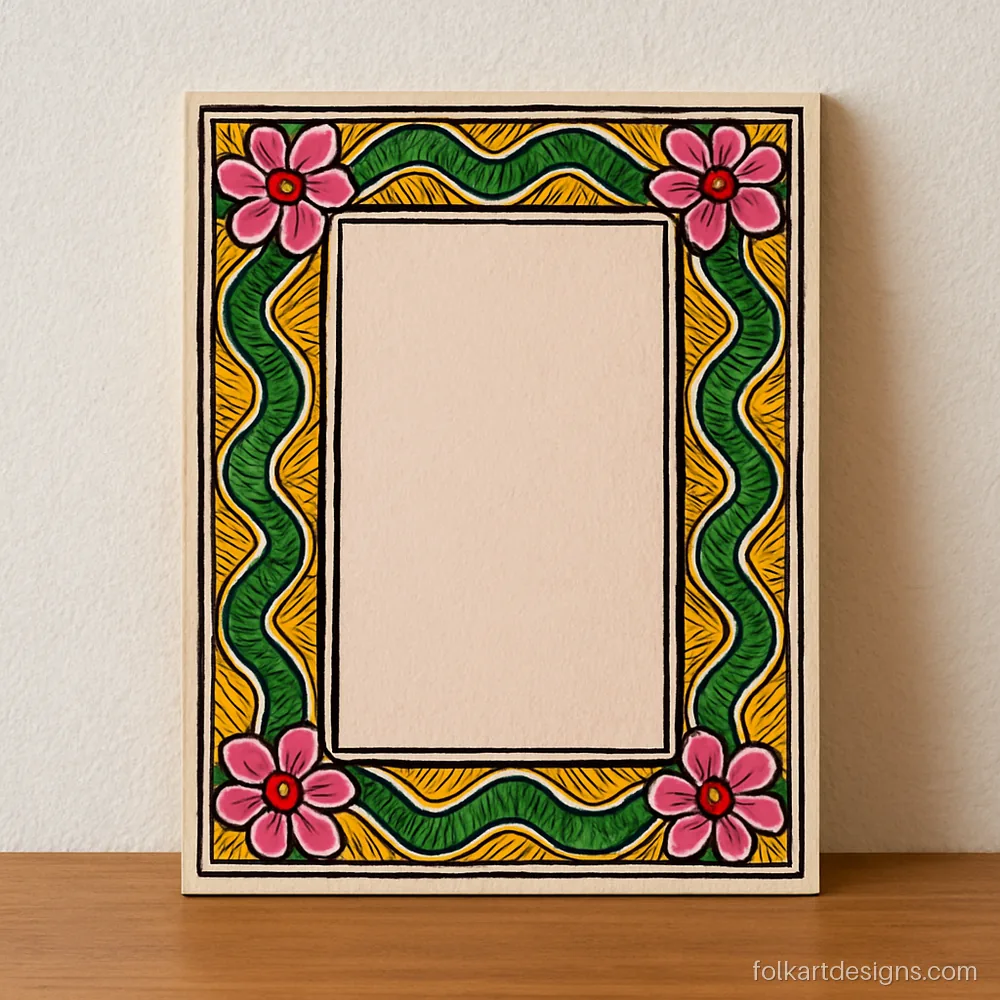
The wave bands curl into the corners, where a champa flower covers each joint. Corners are where most borders go wrong, so this hides the join neatly.
Artist tip Paint the corner flowers first, then join the bands to them from both sides.
Manjusha Painting Flowers and Pots
The champa flower is the best known flower in manjusha kala painting. Painters pair it with round pots, leafy stems and plain dots, all kept flat and bold.
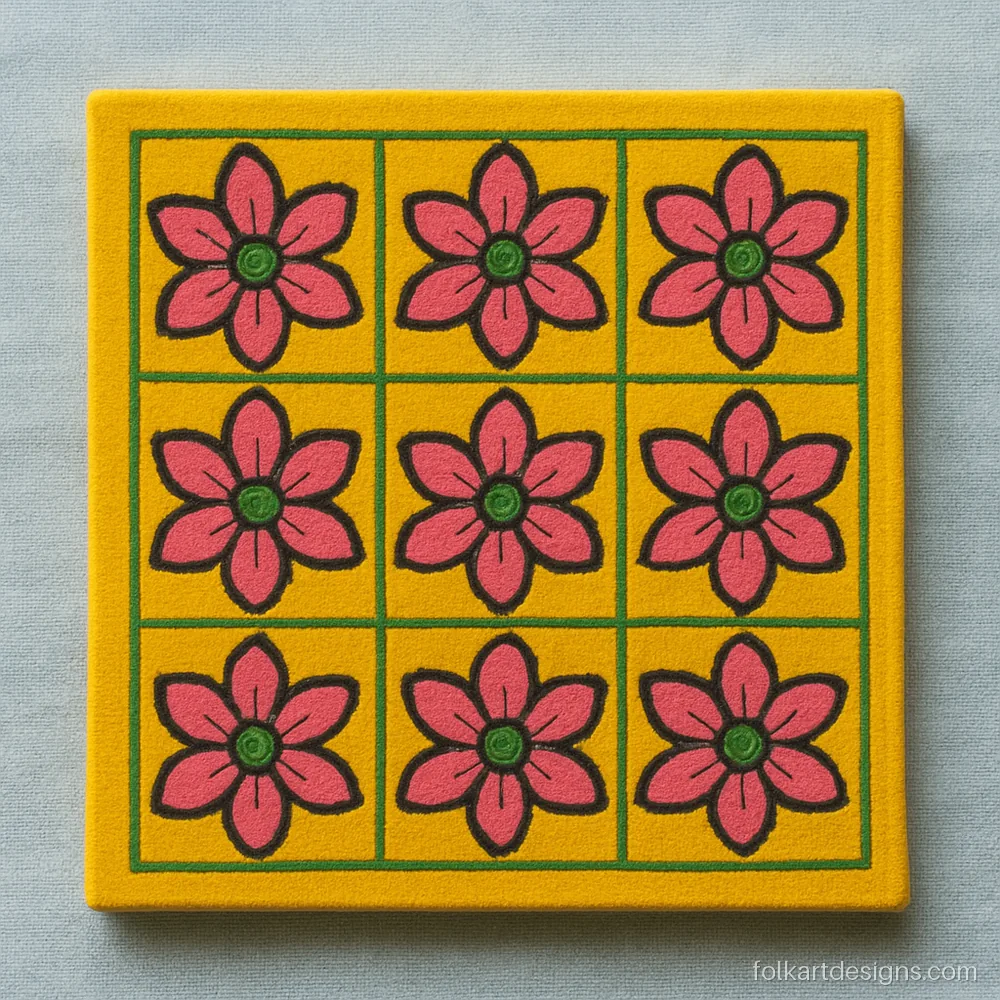
Nine champa flowers sit in neat squares, each with a green centre. A simple grid like this teaches the flower shape fast.
Artist tip Fold the paper into nine squares first, then use the folds as your guide lines.

A round pot holds three stems of champa. The green ground makes the pink flowers stand out across a room.
Artist tip Use a compass to draw the pot body, then add the neck and rim by hand.
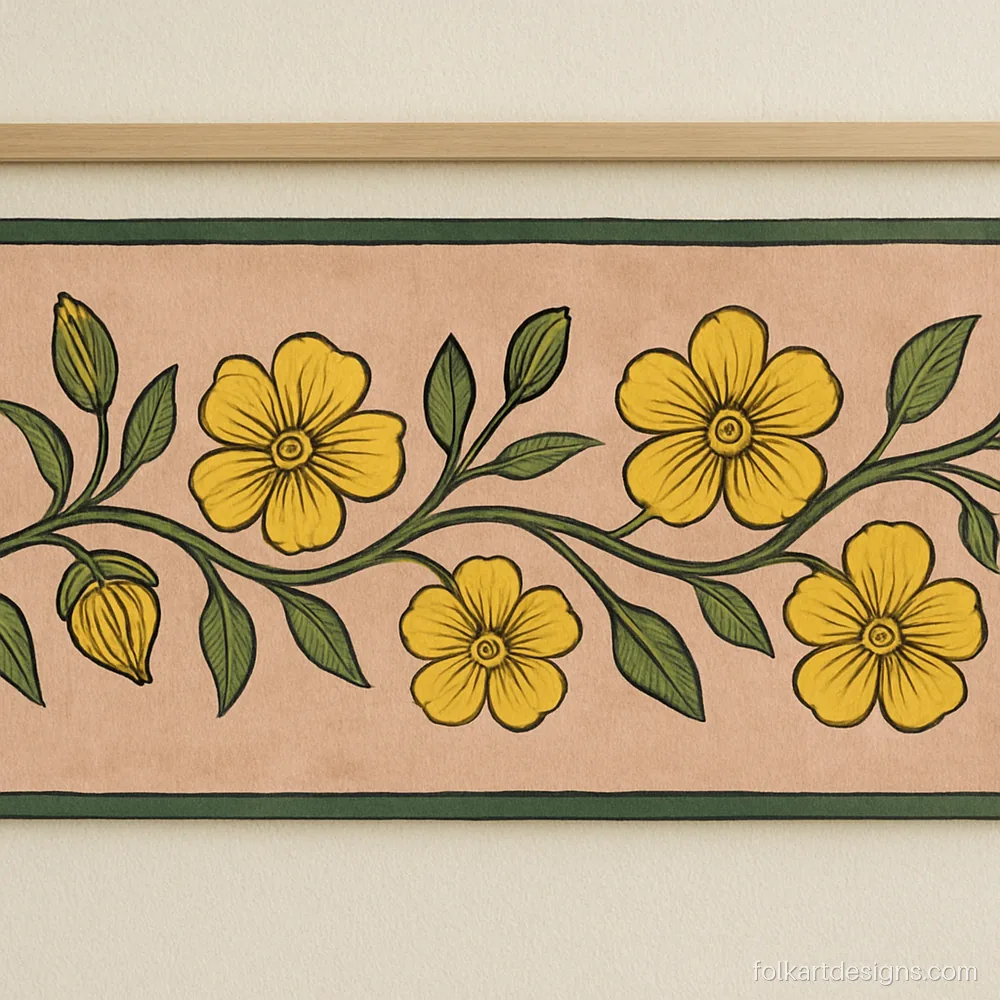
One vine carries alternating champa and buds along a narrow strip. It fits above a door or along a bookshelf edge.
Artist tip Paint the long stem in one slow stroke with a size 4 round brush, then add flowers.
Manjusha Art Bihar: History and Origin
Manjusha art history is tied to Bhagalpur, a city on the Ganga in eastern Bihar. The area was once called Anga, which is why the style is also known as Angika art. A manjusha is a box, and the art was first painted on boxes made of jute and paper.
Manjusha art traditionally tells a folk legend, told panel by panel across the box. Today manjusha art Bhagalpur painters and others also paint it on paper, cloth, sarees and wall panels.
| Feature | What to look for |
|---|---|
| State | Bihar, around Bhagalpur (old Anga region) |
| Colours | Three main shades: pink, green and yellow |
| Lines | Thick, bold outlines with flat colour inside |
| Borders | Snake-like serpent bands, leaf chains, triangles, waves |
| Motifs on this site | Champa flowers, pots, birds, fish, elephants |
Its neighbour on the map, sohrai art of Jharkhand, uses earth colours on mud walls instead.
Manjusha Images of Birds, Fish and Elephants
Animals in manjusha folk art are drawn side on, with big eyes and flat colour. Birds, fish and elephants are the easiest to begin with because their outlines are simple.

Two mirrored birds share one branch, with champa flowers between them. Balanced pieces like this make a warm wedding gift.
Artist tip Draw one bird, fold the sheet down the middle and trace the mirror image against a window.
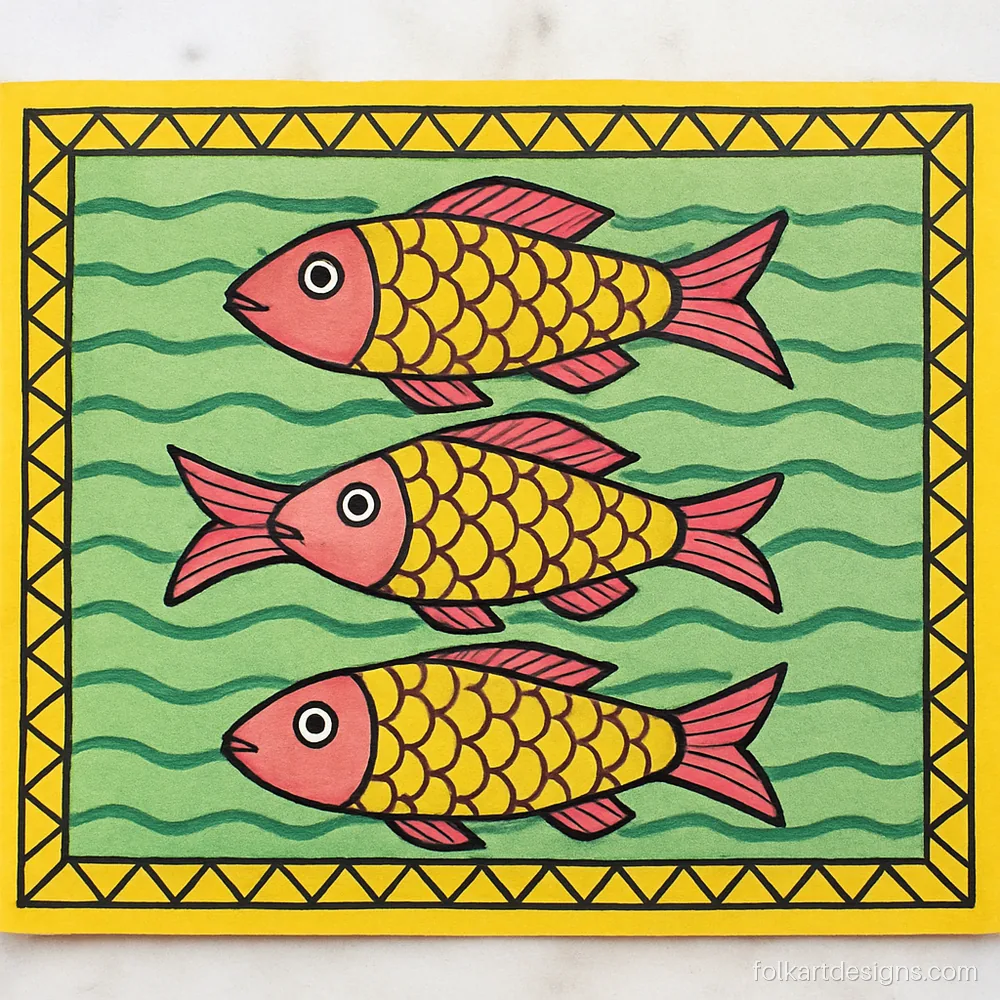
Three fish swim the same way between wavy water lines. Scales are a row of simple curves, so it is quick to finish.
Artist tip Fill each fish with flat colour first and add the scale curves with a 0.8 mm black pen.
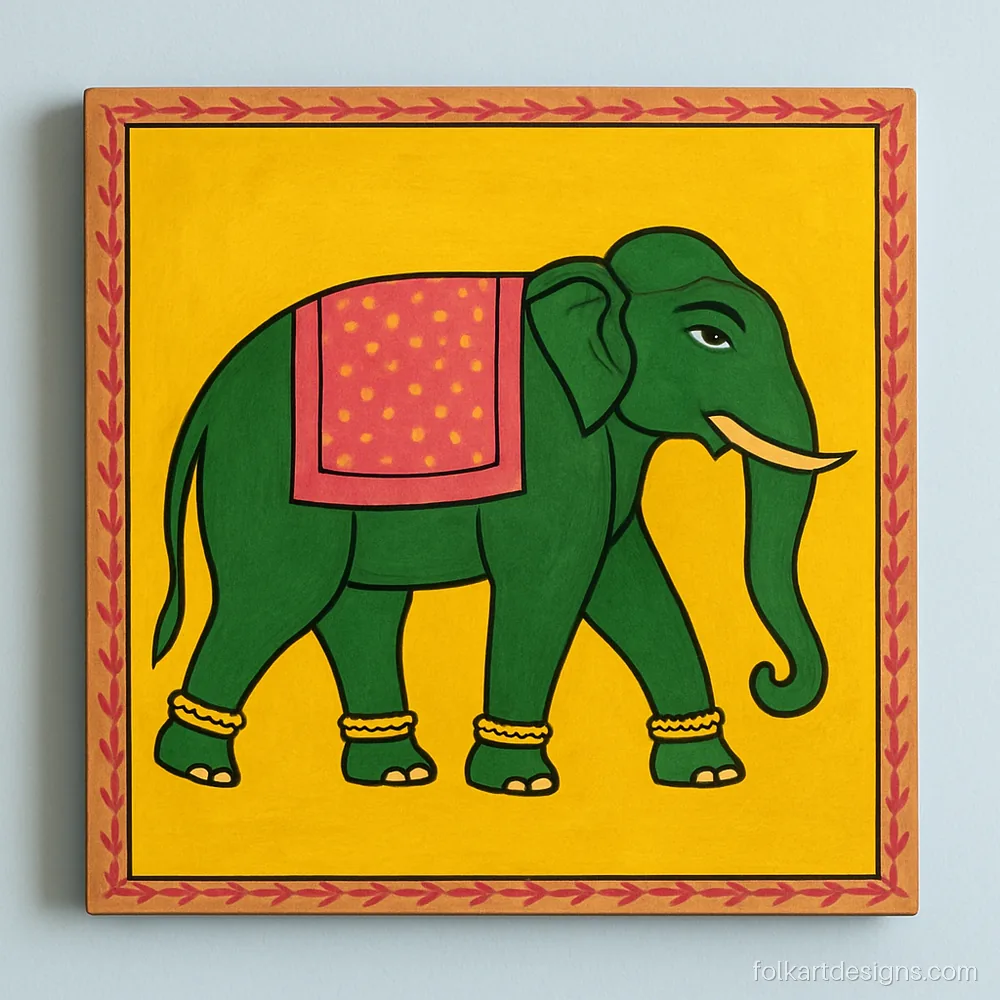
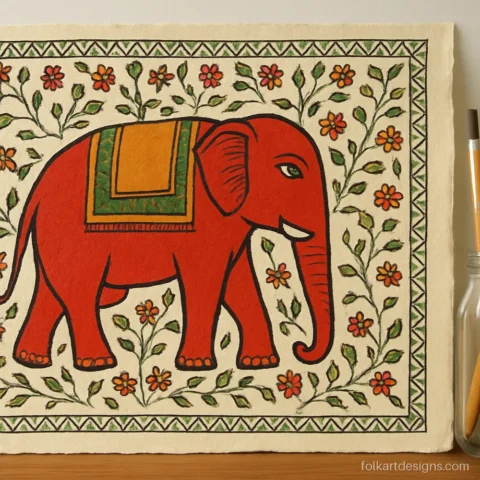
A green elephant wears a pink saddle cloth covered in dots. Big shapes like this are good for a nursery wall.
Artist tip Seal MDF with one coat of white primer first so the colours stay bright.
Simple Manjusha Art Drawing on Paper, Fabric and Boxes
The art began on boxes, and it still looks right on any flat surface. These pieces suit beginners, gift makers and small sellers. For more folk work in bold colour, see gond art.
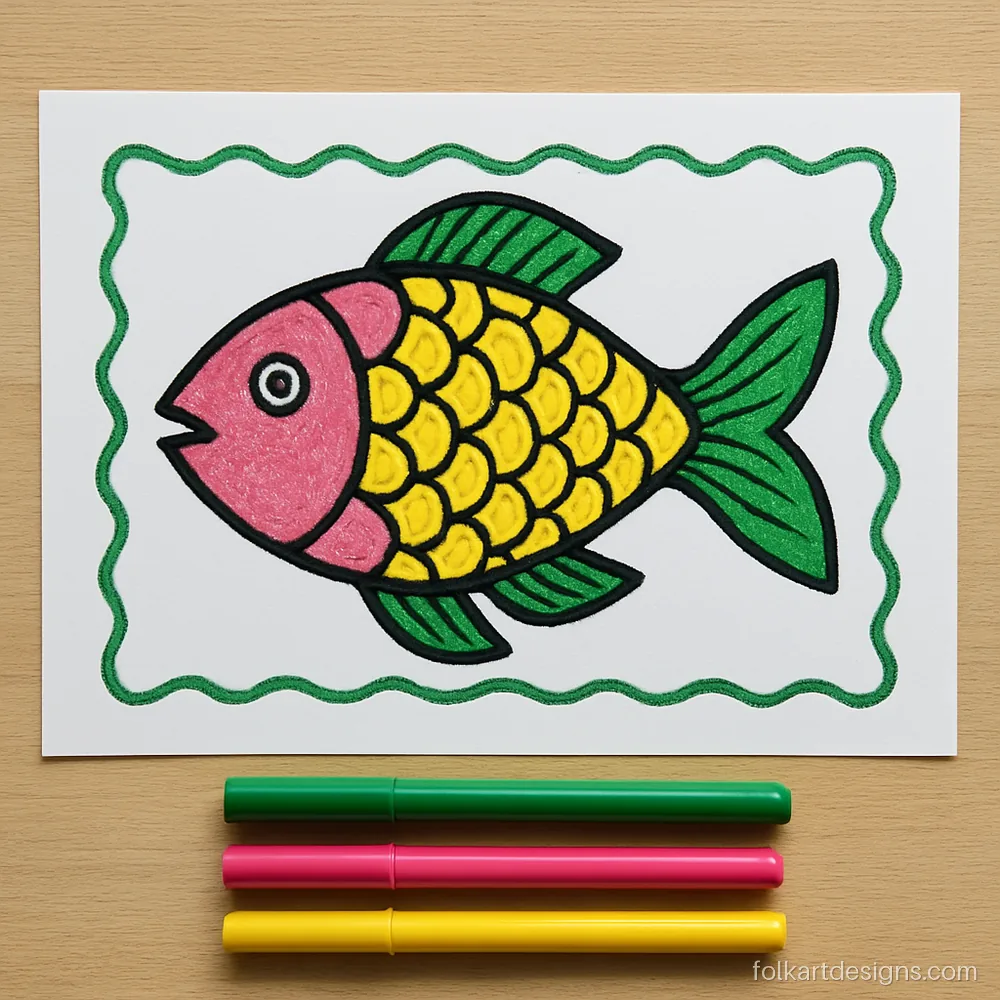
One large fish and a wavy border fill an A4 sheet. A neat first try for school projects and young learners.
Artist tip Keep to pink, green and yellow only, so even a quick sketch looks like true manjusha.
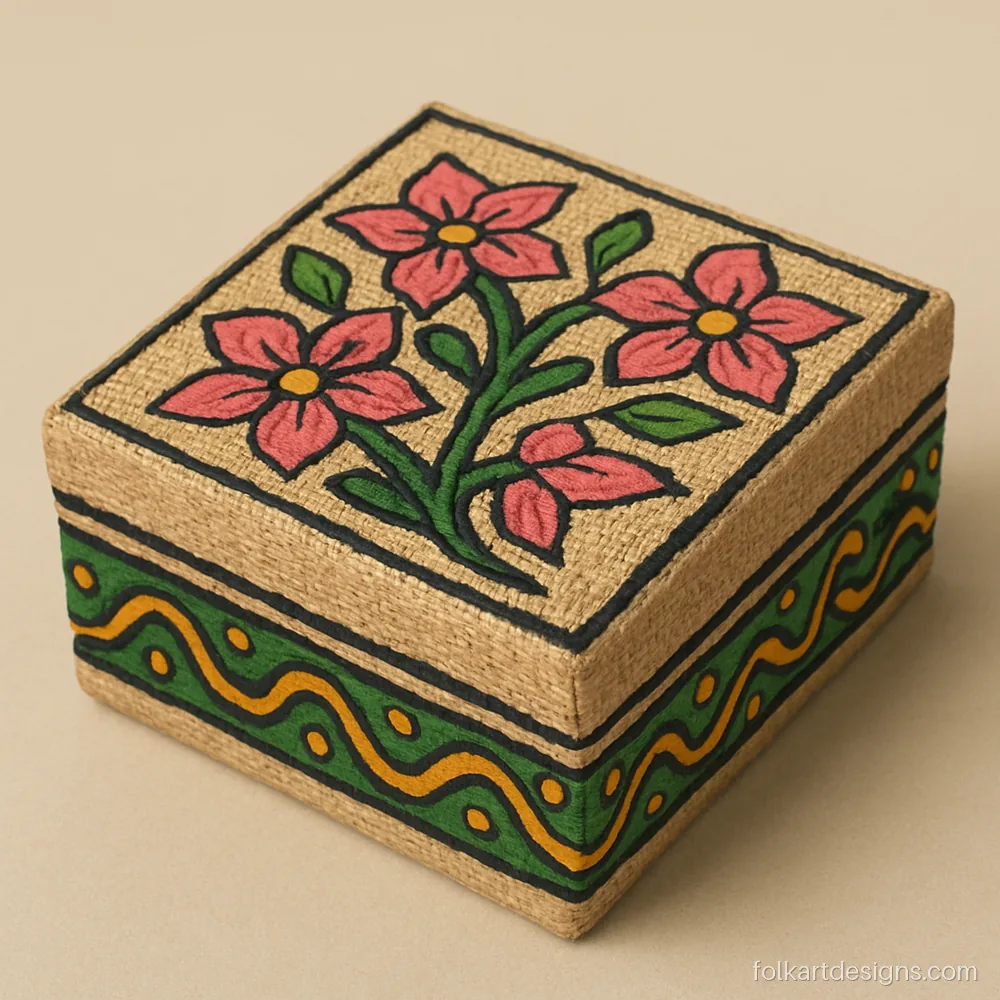
A painted jute box goes back to the roots of the art. It makes a good gift box or a stall item at craft fairs.
Artist tip Brush thinned white acrylic over the jute first to close the weave before painting.
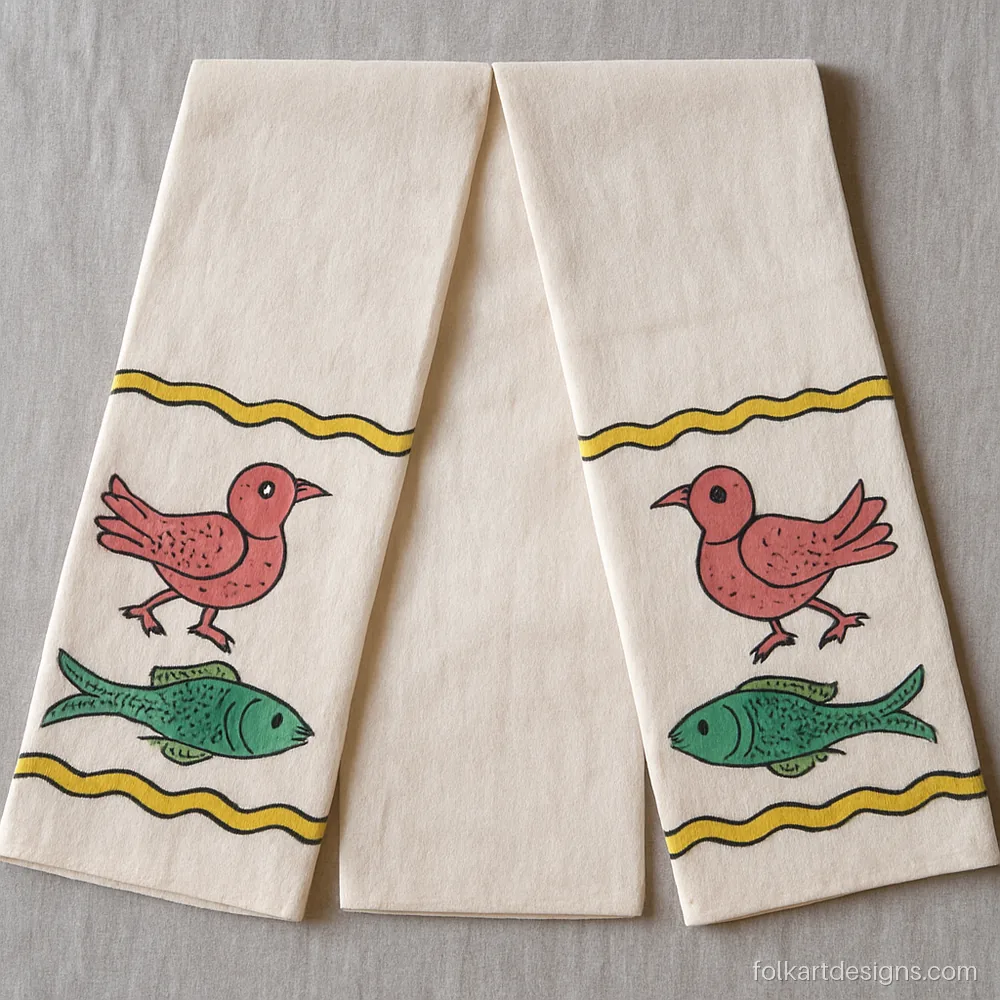
Birds and fish line both ends, with the middle kept plain. Pair it with a solid kurta for college or office.
Artist tip Wait a full day, press the reverse with a hot iron to set the paint, and wash it cold.
How to Make a Manjusha Painting at Home
- Pick your base. Use 250 to 300 gsm paper, canvas board or primed MDF. Thin paper buckles under poster colour.
- Plan the border. Leave 2 to 3 cm on each side and draw a wave or triangle band in light pencil.
- Draw one large motif. A fish, a bird or a pot of champa flowers is plenty for a first piece.
- Fill flat colour. Stick to pink, green and yellow. Let each colour dry for 20 to 30 minutes before the next one touches it.
- Outline last. Go over every edge with a size 1 brush in black, or a 0.8 mm pen on paper.
- Finish. After a full day, a thin coat of matte varnish protects board and box pieces.
If you like this flat, bold look, try the quick brush lines of Kalighat painting next.
Choosing Painted Manjusha Arts and Crafts
When you buy manjusha arts and crafts, look closely at the lines. A painted piece shows small changes in line width and slightly uneven curves, while a printed one repeats perfectly. Pieces cost more when they are painted rather than printed, larger, on silk, or packed with fine border work that takes many hours.
Keep paper work out of direct sun so the pink does not fade. Dust boxes and boards with a soft dry brush. Wash painted cotton in cold water, inside out, and dry it in shade.
Questions about these designs
What is manjusha art?
Manjusha art is a folk painting style from Bhagalpur in Bihar. It uses bold outlines, flat colour and mainly pink, green and yellow. It was first painted on boxes of jute and paper, and it traditionally tells a folk legend in panels.
Manjusha painting is from which state?
Manjusha painting is from Bihar, mainly the Bhagalpur area. That region was once known as Anga, so the art is also called Angika art. For another Bihar style, see Madhubani painting.
Why does manjusha painting have snake-like borders?
Wavy serpent bands are one of the signature border types of manjusha painting, along with leaf chains, triangles and waves. They frame each panel and give the work its rhythm. On this page we draw them as decorative wave bands.
What colours are used in manjusha kala painting?
Manjusha kala painting uses three main colours: pink, green and yellow, with black for the outlines. Hobby artists use poster colour or acrylic in these shades. Avoid adding blue or orange if you want the traditional look.
What should students remember about manjusha art for UPSC?
For manjusha art UPSC notes, remember four points. It comes from Bhagalpur, Bihar, in the old Anga region. It uses a limited palette of pink, green and yellow with bold outlines. It was painted on boxes of jute and paper and traditionally tells a folk legend.
Is manjusha art drawing easy for beginners?
Yes, it is one of the friendlier folk styles to start. Shapes are simple, colours are few and the outline goes on last, so small slips get covered. Begin with one fish or one flower inside a wavy border.